
A revolutionary method for innovation, leadership, and unlocking value in a volatile world—with Prof. Sylvain Bureau
In a world increasingly shaped by complexity, ambiguity and systemic upheaval, conventional business methods often struggle to deliver meaningful solutions. At the intersection of creativity, entrepreneurship and disruption, Sylvain Bureau, professor of entrepreneurship at ESCP Business School, offers a compelling alternative: Art Thinking.
A researcher, educator and co-founder of the Art Thinking Collective and the Jean-Baptiste Say Institute for Entrepreneurship, Bureau has spent more than a decade refining the Art Thinking method in collaboration with artists, executives and cultural institutions across the globe. He describes it simply as a method designed to help people create the improbable with certainty.
We spoke with him to explore how Art Thinking can help build the futures we can’t yet imagine, but urgently need.
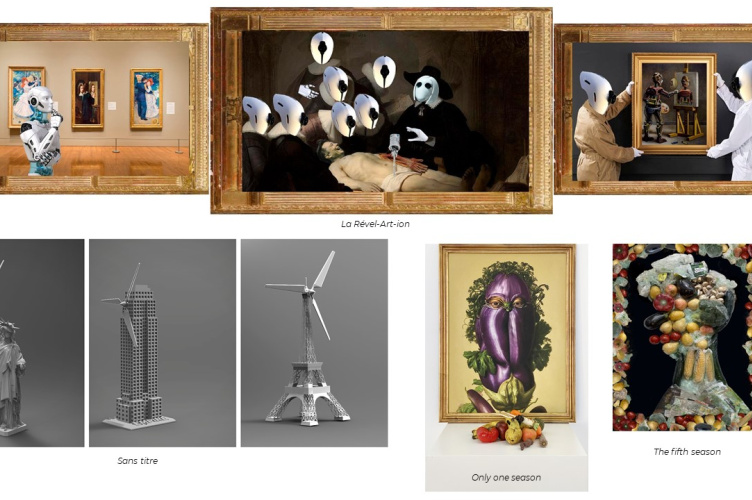
.jpg) An Art Thinking project from an Improbable Seminar
An Art Thinking project from an Improbable Seminar What Is the Art Thinking Method?
Art Thinking invites participants to adopt an artist’s mindset to spark innovation. Rather than refining what already exists, it focuses on generating new forms of value, even in unlikely or ambiguous places. “It doesn’t aim to turn everyone into Picasso or Steve Jobs,” Bureau says, “but instead empowers individuals, even those outside traditional creative fields, to generate new value in uncertain contexts.”
While design thinking typically starts with user needs and existing problems, Art Thinking avoids what Bureau calls the “installed client.” Instead, it begins with personal values and ideological friction. “It doesn’t begin with what’s probable,” he explains. “But with personal values and ideological commitments. It is as much about inner coherence as it is about societal transformation.”
The method is structured around three core dimensions:
- Theoretical content – foundational concepts, frameworks, and case studies.
- Practical skills – honed through exercises and creative experimentation.
- Extraordinary experience – culminating in the public display of participant artworks, often in major cultural venues.
It unfolds through six steps: Donate, Deviate, Destroy, Drift, Dialogue, and Display — each designed to disrupt conventional logic. “In this context,” Bureau says, “the unknown becomes an artistic material. Art Thinking equips people with a heuristic for working with the unknown — not as a problem to solve, but as a resource to activate.”
The method has been taught in more than 15 countries, from Japan to Armenia. Participants include artists, educators, executives and organisations like Orange, KLM, BPCE, and SACEM. Its power, Bureau argues, lies in combining values, emotion, and critique — “elements all too often absent from innovation culture.”
It doesn’t aim to turn everyone into Picasso or Steve Jobs but instead empowers individuals, even those outside traditional creative fields, to generate new value in uncertain contexts.
The Improbable Seminar: breaking with convention
Art Thinking comes to life in the Improbable Seminar, where participants are invited to create and exhibit their own artwork. The goal is not technical skill, but critical reflection. “The core challenge is learning to unlearn,” Bureau says. “Many of our participants are high performers — excellent students, experts — but in a world of AI, instability, and the Anthropocene, excellence alone can lead to obsolescence.”
The core challenge is learning to unlearn. Many of our participants are high performers — excellent students, experts — but in a world of AI, instability, and the Anthropocene, excellence alone can lead to obsolescence.
 Sylvain Bureau
Professor of entrepreneurship
ESCP Business School
The method resonates most with three groups:
- Talents – individuals with high potential, seeking to move beyond conventional excellence.
- Innovators – professionals already fluent in innovation who want to push further.
- Leaders – executives shifting from hierarchical to collaborative models, often driven by climate realities, social fragmentation or intergenerational demands.
One foundational exercise asks participants to create an artwork using three criteria: subversive critique, efficiency, and personal resonance. The effect, Bureau says, is not just cognitive but embodied: “participants shift roles, challenge their assumptions, and create something that is improbable, critical, and embodied.”
A method born at the crossroads of art and entrepreneurship
The method’s origins are, fittingly, improbable. In 2008, at a wedding, Bureau met artist Pierre Tectin and the pair found themselves deep in conversation about art, politics, and the nature of creativity. That dialogue sparked a collaboration that led to the first Art Thinking seminar — Improbable — held in 2011. Its format: no fixed syllabus, just a collective dive into uncertainty.
“We used the method itself to develop the method — an iterative, living process,” Bureau says. As the model evolved, he noticed recurring themes in successful creative work — whether in science, business or the arts: drift, critique, emotional intensity, and the willingness to act without knowing the outcome.
“It has been refined through incremental improvements: research, trainer education, contributions from experts like theoretical physicist and artist Christophe Bruno. Though the methodology stabilised around 2018, Bureau describes it as deliberately open — “dynamic and adaptive by design.” The method adapts to its environment rather than imposing a single model. For Bureau, this responsiveness is a key differentiator: “It avoids the homogenisation that characterises much of global business education.”
We used the method itself to develop the method — an iterative, living process.
Art Thinking at ESCP
At ESCP, Art Thinking is not simply taught — it is practised. The Improbable Seminar is integrated into the curriculum, including the entrepreneurship track of the Master in Management Programme, and delivered through partnerships with cultural and public institutions across Europe. In 2024, MSc in Digital Transformation students at ESCP’s London campus participated in their first Improbable Seminar, culminating in an exhibition that challenged identity, society, and the environment.
The method also underpins the work of the Improbable Chair with Galeries Lafayette, within the ESCP Innovation & Entrepreneurial Transformation Institute, where Bureau serves as Scientific Director. The Chair is a platform for experimentation, dialogue and research, exploring how artistic practice can intersect with strategy, ethics, and the future of commerce. “Companies use Art Thinking to rethink leadership, processes, recruitment, and even entire business models,” Bureau says.
Through the Chair, artists, students, executives and researchers explore issues ranging from sustainability and identity to reimagining retail spaces. The goal is not simply to generate ideas, but to provoke new ways of seeing. “Art doesn’t have to be useful — it needs to be essential.”
Today’s leaders must navigate not just economic crises and technological upheaval, but moral and environmental imperatives. Art Thinking equips them to do so not through templates or tools, but through radical empathy, critical thought, and creative resistance. As Bureau puts it: “Algorithms optimise. Artists critique. The more machines we build, the more we must ask what makes us human.”
Art Thinking as a compass for the future
As the boundaries between disciplines blur and the need for radical innovation grows, Art Thinking offers a powerful compass for navigating the unknown. By reconnecting business with imagination, emotion, and critical thought, it prepares the next generation of leaders to not only adapt — but to shape the future.
As business education faces mounting pressure to address global challenges, Art Thinking offers a way forward — not by providing fixed answers, but by reframing the questions we ask. “Artistic approaches can help us reframe the world’s biggest challenges — from climate change to social fragmentation — and invent new ways forward. That’s the power of Art Thinking.”
Artistic approaches can help us reframe the world’s biggest challenges — from climate change to social fragmentation — and invent new ways forward. That’s the power of Art Thinking.
Listen to Sylvain Bureau discuss the power of Art Thinking on the We All Make Mistakes podcast
Learn more about the Improbable Chair by Galeries Lafayette
Discover the ESCP Innovation & Entrepreneurial Transformation Institute
Frequently Asked Questions
What is the Art Thinking method?
A method that blends artistic practice and innovation to help individuals create the improbable in times of uncertainty.
Who created the Art Thinking method?
It was co-developed by ESCP Professor Sylvain Bureau and artist Pierre Tectin, and has been tested and refined globally since 2011.
What is the goal of the Art Thinking method?
To equip individuals and teams with the mindset and tools to radically reimagine what’s possible — not through optimisation, but through transformation.
Where is the Art Thinking method taught?
At ESCP Business School and through seminars, workshops, and collaborations with global institutions, cultural organisations, and corporate partners.
Campuses
Inside ESCP’s AI 1000 Champions initiative
ESCP Business School has launched a bold initiative to integrate generative AI into its academic and operational ecosystem. At the heart of this transformation is a cross-campus network of AI Champions.
Imagine a scenario in which Bruce Wayne—yes, Batman—asks students to devise a plan to boost tourism in Gotham City. This isn’t a scene from the latest superhero blockbuster but The Future of Gotham—an innovative AI-powered role-playing simulation developed by Professor Vitor Lima to challenge students with high-stakes marketing strategies under real-world business constraints.
The Future of Gotham is just one example of the larger AI transformation underway at ESCP. Professor Lima is among the school’s 1,000 AI Champions—a network of professors, students, and staff taking part in the proof-of-concept phase of ESCP’s generative AI (GenAI) integration strategy with OpenAI.
Exploring AI’s potential in business education
In October 2024, ESCP became the first French higher education institution to begin rolling out ChatGPT Edu, a version of the generative AI (GenAI) platform tailored to educational institutions. Supported by the ESCP Foundation, this early-stage deployment forms part of a wider strategy to integrate AI thoughtfully across teaching, research, curriculum development, and administrative operations at ESCP.
“ESCP is proud to be among the first business schools in Europe to work with OpenAI to understand the potential of AI in higher education,” says Anne-Laure Augeard. Augeard is part of the core AI team that is led by Associate Professor Louis-David Benyayer and includes Alexandre Lavallée, an ESCP alumnus and AI specialist. Together, they have helped to implement a platform for experimentation and knowledge-sharing across the ESCP community.
ESCP is proud to be among the first business schools in Europe to work with OpenAI to understand the potential of AI in higher education.
 Anne-Laure Augeard
Project Manager Academic Affairs
ESCP Business School
Championing the ethical use of AI in education
Since the rapid rise of GenAI, organisations have been racing to adapt and integrate these tools into their workflows and cultures. At ESCP, the implications are vast, with the implementation of AI tools across the school’s sprawling multi-campus ecosystem and community
Enter ESCP’s AI 1000 Champions, trained to explore how ChatGPT can enhance learning, research, and operations through real-world, experimental projects tied to the ESCP value chain. Projects were selected following a school-wide call for proposals in November 2024.
“A cornerstone of this project is the group of profs who volunteered to be GenAI champions,” says Professor Benyayer. “Their role is to empower students and colleagues with the technology, and to innovate in their teaching and research practices.”
The 73 professor champions represent a broad mix of disciplines, teaching styles, and campuses and are united by a shared commitment to responsible innovation. Since the initiative’s launch, they have been meeting monthly to share insights, discuss challenges, and track progress across campuses.
Integrating AI into teaching and learning
Nine academic programmes are now running AI projects, ranging from ESCP’s Master in Management to its Global Executive PhD. While the experiments vary in design and ambition, they all aim to answer the same question: how can AI enhance, not replace, human creativity and judgement?
“AI is already a reality for most of our students' academic and professional lives. Our role as educators is to make sure that students have the skills to use it responsibly and strategically,” says Augeard.
Professor Alisa Sydow has woven ChatGPT into the Entrepreneurship Lab for MSc students in Digital Transformation. The tool serves as an ideation partner, helping students refine business models and accelerate MVP development. Meanwhile, PhD candidate Valentin Mesa is experimenting with a chatbot that helps students understand assignment expectations and improve their work.
At the doctoral level, Professor Frédéric Fréry and Margot Drancourt - de Lasteyrie, Director of the Global Executive PhD programme, are leading an initiative within the programme focused on the ethical use of AI in research.
“AI is going to be maybe the biggest thing in our lifetime,” says Dr Alara Tascioglu, Postdoctoral Research Fellow in Information & Operations Management at ESCP. “If we didn’t have this initiative, we would feel left behind.”
AI beyond the classroom
The AI 1000 initiative is not limited to the lecture hall. ESCP’s internal operations are also evolving through 73 staff-led projects, each designed to explore how AI can streamline workflows and improve the student and staff experience.
The school’s 45 staff champions meet weekly for training, practice-sharing, and cross-campus collaboration, with projects grouped into five thematic clusters:
- AI for Analysis, Research, and Recruitment
- Data Management and Verification
- Student Experience and Pathway Development
- Generative AI Tools and Administrative Support
- Learning Support, Quality Assessment, and Pedagogy
One standout example comes from Abderrahime Fikri, who oversees web operations. His team developed custom GPTs to automate SEO workflows and enhance content production across ESCP’s platforms. “We used AI tools to improve our website and also the user experience. After the partnership, we got licenses that helped us create custom GPTs. We created a script that gives us more efficient, accurate SEO and helps us produce more content.”
Shaping the future of AI in education
Embracing AI is a strategic imperative at ESCP—central to redefining business education and preparing the next generation of leaders to thrive in an AI-driven world. Through its AI champions, the school’s approach isn’t top-down. It’s powered by experimentation, collaboration, and community-wide engagement.
For Professor Benyayer, this transformation begins with culture. “GenAI in higher education is transformational,” he says. “We engaged in a grassroots approach to get ready—and to trace our own, singular path.”
That approach—bottom-up, values-driven, and inclusive—has shaped ESCP’s strategy from the inside out. Faculty, staff, and students are not just adapting to AI; they are co-designing how it’s used, tested, and scaled.
Francesco Rattalino, Executive Vice-President at ESCP, sees this collaborative model already delivering results. “I’m proud to see initiatives like this coming to life at ESCP,” he says, “showcasing how AI can enhance collaboration and performance across our community.”
GenAI in higher education is transformational. We engaged in a grassroots approach to get ready—and to trace our own, singular path.
 Louis-David Benyayer
Associate Professor at ESCP
and Coordinator for ESCP Artificial Intelligence Initiatives
I’m proud to see initiatives like this coming to life at ESCP, showcasing how AI can enhance collaboration and performance across our community.
 Francesco Rattalino
Executive Vice President
and Dean for Academic affairs & Student Experience
Campuses
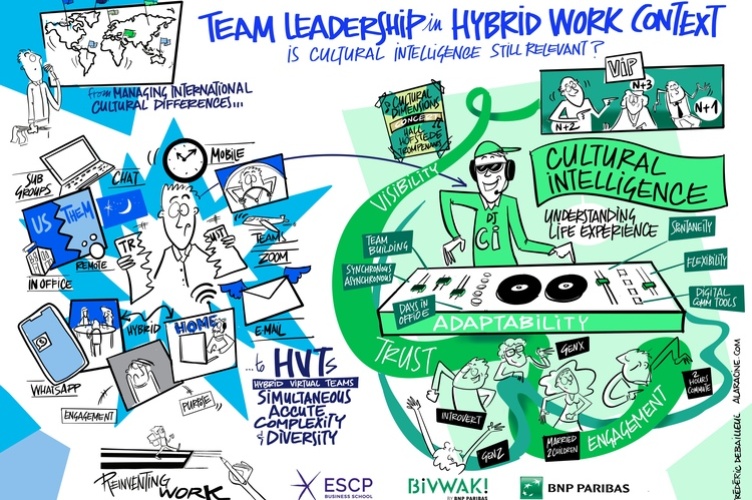
Cultural intelligence & team leadership in hybrid work context A fascinating project launched in April 2024
Research context
The shift to hybrid work has reshaped traditional workplace dynamics, positioning hybrid work as a critical factor for employee attraction, retention, and productivity. As the ongoing debate between Return- To-Office and Work-from-Home shows, leading Hybrid Virtual Teams (HVTs), i.e. teams that combine a mix of Face-to-Face / in presence and virtual interactions, introduces unique challenges, including fostering engagement, cohesion, and trust, managing work-life boundaries, and addressing employee well-being.
This research investigates the impact of hybrid work on team leadership, with a focus on the role of Cultural Intelligence (CI) in effectively managing HVTs. Indeed, traditionally in global organizations, CI was seen as a critical skill for team leaders to successfully adapt to unfamiliar settings and positively influence team performance. Our study extends beyond traditional intercultural contexts to identify the key qualities and competencies team leaders need to address the unique challenges of managing HVTs. It aims to deliver actionable insights that help organizations navigate the complexities of hybrid work to foster sustainable team performance and enhance employee satisfaction.
Research question
Which leadership qualities and competencies, including Cultural Intelligence, are essential for effectively managing Hybrid Virtual Teams?
Methodology and milestones
This study employs a case-study method with semistructured interviews conducted across various entities with different implementations of hybrid work. Each entity includes 5 to 7 participants, balancing team managers and members to capture perspectives from both leadership providers and receivers. This approach allows for an in-depth exploration of hybrid work dynamics and leadership strategies across diverse cultural and operational contexts.
Interviews began in June 2024, with 30 interviews completed so far (averaging 50 minutes, in French or English) across seven BNP Paribas entities (IMEX, NIKEL, Real Estate, Finance & Strategy, Risk, IT, and Europe Méditerranée). Interviews will continue until data saturation is reached, expected by early Q1 2025.
Research team
- Isabelle Bouisse-Bloigu (ESCP, Paris campus)
- Petros Chamakiotis (ESCP, Madrid campus)
Research keytake aways
- Situational Responsiveness: Some leaders shift between hands-on and hands-off leadership styles based on corporate and operational context, hybrid work configuration, and individual team member needs. CI could be valuable to enhance their adaptability and leadership style fluidity.
- Purposeful Face-To-Face Interaction
Design: Strategically planned in person engagements strengthen team cohesion, trust, and creativity. CI could guide in defining the appropriate Face To-Face purpose and format to meet team-specific needs. - Tailoring Hybrid Work Practices: Some leaders customize hybrid work practices within policy constraints, aligning with roles, team life cycles, and hierarchy dynamics. Leveraging CI could help this process balance operational efficiency and relational harmony.
Next steps
We will continue interviewing until we reach saturation (i.e. when interviews do not yield new insights) which we expect for early Q1 2025, probably reaching at around 45 interviews in total. In parallel, we will transcribe, anonymize, and analyze the data gathered. We target to submit our work at academic conferences during early Q2 2025 and present our findings during those avenues and preparing for journal publications in Q3 2025.
Key outcomes
Published academic papers
■ Provide insights to HR and Learning and Development managers to develop and justify potential hybrid-specific trainings (including but not limited to CI).
■ Propose actionable strategies via frameworks or “best practices” for e-leaders and team members to leverage CI and key competencies to adapt leadership and communication styles, resolve conflicts, foster trust and engagement, and design hybrid team configurations that enhance cohesion, creativity, and performance.
Campuses
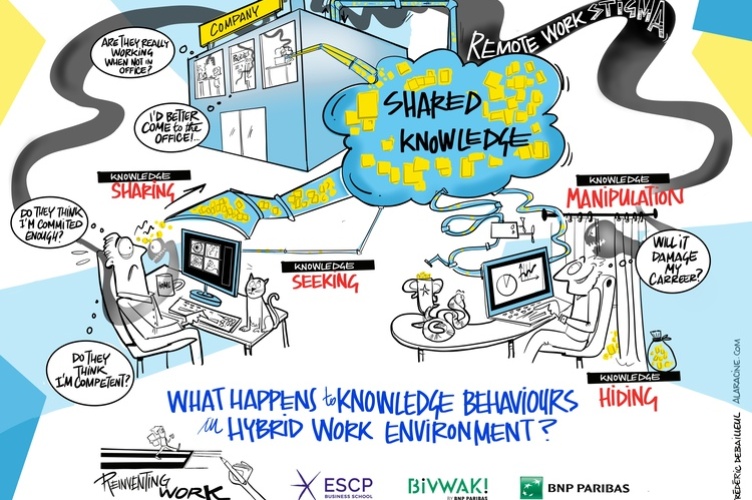
Knowledge management practices in the hybrid work environment A fascinating project launched in May 2024
Research context
Pre-COVID research suggested that remote work could inhibit knowledge seeking and sharing due to the lack of face-to-face interactions, reducing serendipitous informal exchanges and diminishing trust between colleagues. However, the contemporary hybrid work environment offers opportunities for face-to-face interactions alongside new technologies for online communication. This raises the question: do these earlier concerns still hold today?
This project explores the idea that the intensity of knowledge exchange depends not only on the objective opportunities for face-to-face interaction (e.g., days worked in the office) but also on subjective perceptions and norms surrounding remote work. Launched within BNP Paribas Wealth Management (WM), the project aims to understand the effects of remote and hybrid work on knowledge behaviors.
Research question
How the shift to hybrid work influences knowledge exchanges among employees – that is, knowledge seeking, knowledge sharing and knowledge hiding behaviours?
Methodology and milestones
The study involved over 1100 participants across six countries (France, Luxembourg, Portugal, Hong Kong, Singapore, Taiwan) within BNP Paribas Wealth Management. It targeted employees in three professional categories—financial and technical expertise, sales development, and customer relationship management—where knowledge exchange is critical for successful role execution.
An online questionnaire was conducted in two waves: spring and summer 2024. The survey was distributed to 1130 participants, with over 400 responses for the first wave and 150 responses across both waves.
Data collection was completed in Q3 2024, followed by data cleaning in Q4 2024. Data analysis is currently underway and is expected to conclude in Q1 2025. Preliminary findings will be presented in conference paper drafts and a report for BNPP in Q2 2025.
Research team
- Tatiana Andreeva (Maynooth University, Ireland)
- Argyro Avgoustaki (ESCP, London campus)
- Emmanuelle Léon (ESCP, Paris campus)
Research keytake aways
- The persistence of remote work stigma has important consequences on knowledge behaviors
- Perceptions of whether remote work is risky for their career vary between different groups of employees, depending on their job roles, age and country where they work. Such variations can inhibit optimal uptake of remote work and collaboration between employees with different levels of remote working.
- Employees with the lowest level of remote work have higher levels of remote work stigma. Such perceptions may inhibit both the optimal level of remote work uptake for these employees, and their effective collaborations with those who do hybrid work.
- Remote work stigma can harm knowledge exchange among employees
- Since remote work may limit employee visibility, managers should actively create structured opportunities for increasing visibility of this employee group.
- Manage multiple interpretations of hybrid work availability. Employee perceptions of the organisational hybrid work policy and whether they can avail of hybrid work vary and are not always accurate. Many employees work remotely less than the policy allows and than they would prefer, because they have different concerns about technical feasibility of remote work for their role.
Key outcomes
Published academic papers
■ Abstract paper submitted to EGOS conference (2025)
■ Short conference paper to be submitted to Academy of Management Annual Meeting conference in January 2025
■ Full article to be submitted to a journal in Q3 2025
Campuses
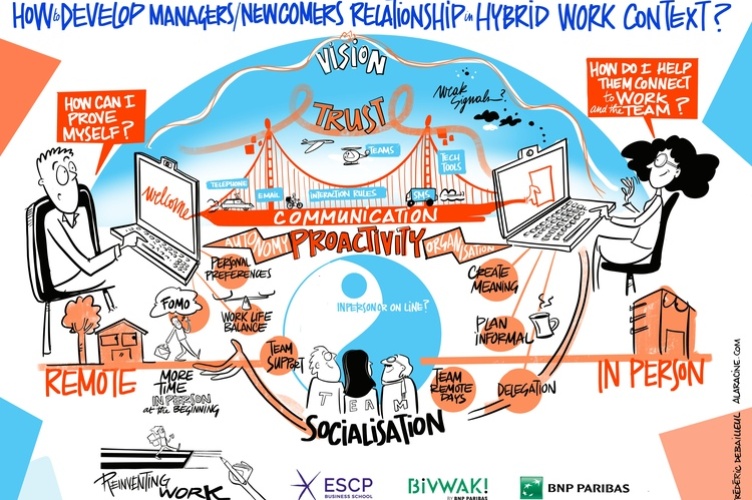
Onboarding practices: developing managerial relationships in a hybrid environment A fascinating project launched in December 2023
Research context
This project has been designed to address the challenges of adapting to hybrid work conditions.
Hybrid work, in particular, adds complexity to the integration and socialization of new hires, posing significant challenges for managerial practices that must adapt to this evolving context. These challenges raise critical concerns regarding employee engagement and retention. This research aims to highlight the best practices for onboarding practices and for developing positive and efficient manager employee relationships.
Research question
How does hybrid work affect the development of employee-manager relationships and how can onboarding practices foster the quality of this relationship?
Methodology and milestones
This research uses a mixed-methods approach:
- Quantitative: Online questionnaires, administered to up to 500 newcomers (in English or French) four times within their first year, aim to understand how employee-manager relationships develop during this period and their long-term impact. Managers also provide matching perspectives.
- Qualitative: Interviews with ~40 managers and newcomers explore how hybrid contexts affect relationships and onboarding practices.
Data collection started in December 2023 and will conclude by June 2026. Quantitative results are expected in Q4 2026. Manager interviews are complete, and newcomer interviews will occur in early 2025, with feedback expected mid-2025.
Research team
- Marie-Colombe Afota (Université de Montréal)
- Véronique Robert (Toulouse School of Management)
- Pedro Gonzalo (Toulouse School of Management)
- Emmanuelle Léon (ESCP, Paris campus)
Research keytake aways
- Hybrid work has fundamentally transformed onboarding and relationship dynamics within teams. Managers now view onboarding as a collective effort, involving the entire team rather than being solely their responsibility. This shift, however, often slows down the process of building strong relationships, as hybrid settings prioritize task completion over individual connections. Remote interactions, in particular, tend to be more instrumental and work-focused, making it harder to detect subtle signals or address personal needs. In-person time, while valuable for informal and spontaneous exchanges, requires intentional planning to fully leverage its benefits.
- Another key challenge of hybrid work lies in monitoring the integration and performance of newcomers. Managers find it harder to assess the quality of relationships and work outcomes, as hybrid settings lack immediate visibility. This requires relying on diverse sources of information, such as input from peers, team members, or data provided by technological tools.
- The use of communication tools and the introduction of newcomers to the company’s culture demand special attention. Newcomers often lack an understanding of organizational dynamics, such as power relations and interaction norms. Managers must dedicate additional time to educate them, ensuring they feel integrated and aligned with the company's way of working.
Key outcomes
Published academic papers
■ Submission of abstracts to different European conferences in 2025: “XXIIIrd International Congress of Work Psychology” (July 2025), XXIInd Europena Congress of Work and Organizational Psychology
Campuses
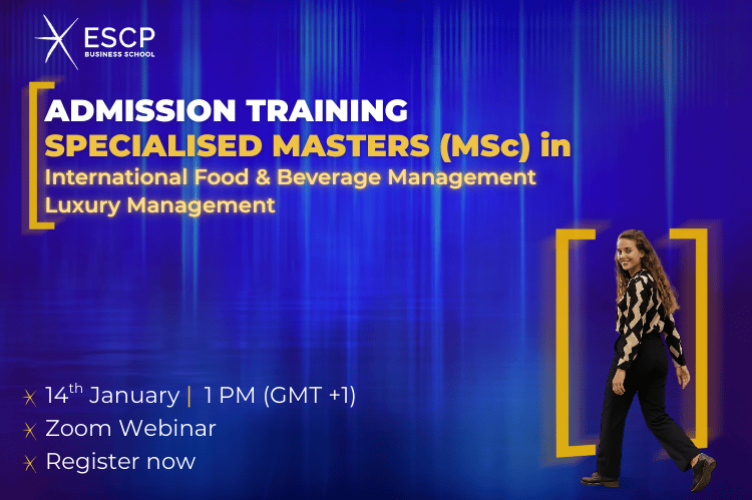
Specialised Masters (MSc) Admission Training
Wednesday, January 14th, 1 pm (GMT +1)
Zoom Webinar
ESCP Business School invites prospective students of the MSc in International Food & Beverage Management and the MSc in Luxury Management to join an exclusive online Admission Training session led by our admissions team.
If you're considering applying for one of these prestigious programmes, don’t miss this opportunity!
Join our Admission Training Online session on Wednesday, 19th January at 1.00 pm (GMT+1).
Can’t attend live? Register anyway to receive a recording by email!
Why Join
This event provides invaluable insights into completing your application, tips to make your profile stand out, and support to help you excel in the admissions interview.
During the session, you’ll receive a step-by-step guide through the application process—from completing your application to succeeding in the individual interview.
You’ll also have the chance to ask questions about requirements, necessary documents, certifications, and selection criteria.
Get all the essential details on the admissions process:
- Overview of the MSc in International Food & Beverage Management and MSc in Luxury Management application processes at ESCP
- Expert tips for a strong application (structuring your CV, writing a compelling Personal Statement and Motivation Letter, and preparing for the oral interview)
- Q&A with the Admissions Team in Turin: resolve any doubts about your application
The Programmes
- MSc in International Food&Beverage Management:
A 15-month full-time, English-taught MSc offering a multi-campus experience between Turin and Paris.
It blends core management training with specialised Food & Beverage expertise through hands-on projects and real business cases.
Strong industry connections, company visits, expert workshops, and internships, prepare students for global F&B careers. - MSc in Luxury Management:
A 15-month full-time MSc combining a dual-campus experience (starting in Turin, then moving to Paris)
It blends core management fundamentals with specialised luxury-industry training, retail, marketing, innovation, sustainability and supply-chain management for premium brands.
Strong industry connections: company-sponsored projects, consulting assignments, and a 4-month global internship to kick-start a career in luxury.
Location
Organiser: ESCP Turin Campus
Online - Worldwide
MapDate
Start date: 14/01/2026
Start time: 1:00 PM
End time: 2:15 PM
The Rise of Emotionally Intelligent AI: Bridging the Human-Machine Gap
Artificial intelligence (AI) is advancing at a pace that few could have predicted, upending industries and shaping the future of work. In 2024, 72% of organisations integrated AI into at least one business function, up from 55% in the previous year. With the rapid evolution of AI, time and again, experts have pointed to one skill that remains uniquely human: emotional intelligence (EQ)—the ability to recognise, understand, and manage emotions.
But increasingly, these two forms of intelligence are intersecting in ways that challenge our understanding of human-AI collaboration. What does this mean for the future of leadership, decision-making, and the workplace? In this context, ESCP Business School is equipping future leaders with the skills to balance technological acumen with irreplaceable human insight in an AI-driven world.
Artificial Intelligence: Beyond Logic, Toward Creativity and Emotion
In recent years, artificial intelligence has drawn increasing attention for its ability to improve productivity, automate processes, and drive innovation. Traditionally, AI was seen as a tool for logic-driven, data-based decision-making, handling structured tasks faster and more accurately than humans. However, it is now expanding into areas once thought to require uniquely human traits—such as creativity, empathy, and emotional intelligence.
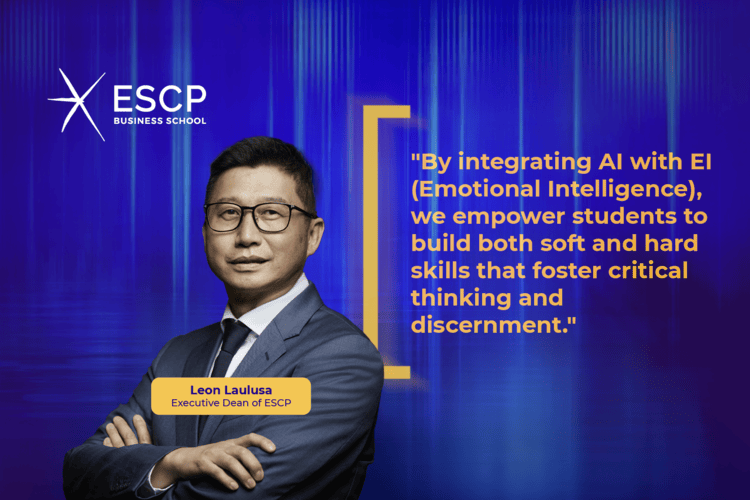
In embracing GenAI, we also emphasize the future-proof skills essential for ethical and responsible AI use. By integrating AI with EI (Emotional Intelligence), we empower students to build both soft and hard skills that foster critical thinking and discernment.
 Léon Laulusa
Dean and Executive President of ESCP Business School
Understanding Emotional Intelligence and Its Role in Connection
Popularised by psychologist Daniel Goleman, EQ is the ability to recognise, understand, and manage one’s own emotions while navigating those of others. Goleman highlighted EQ’s role in leadership, conflict resolution, and empathy-driven decision-making, emphasising its relevance across settings—from corporate boardrooms to family dinners.
High levels of EQ lead to better communication, stronger mental health, and improved collaboration with team members, even bridging generational gaps. As workplaces become increasingly global and diverse, EQ also overlaps with cultural intelligence, reinforcing our ability to connect and adapt to different social norms and emotional contexts.
How Does AI Intersect with Emotions?
AI is quickly evolving to recognise and respond to human emotions with increased efficiency—a field known as affective computing. By leveraging machine learning (ML), AI can:
- Analyse facial expressions to detect emotions like happiness, frustration, or surprise.
- Interpret tone of voice, pitch, and speech patterns to gauge emotional states.
- Use sentiment analysis to assess emotional intent in written text, such as customer reviews or social media comments.
- Examine physiological signals, like heart rate variability, to detect stress or anxiety.
AI relies on vast datasets of labelled emotional expressions and pattern-identifying neural networks to recognise emotional cues, predict responses, and simulate human-like interactions.
The global Emotion AI market is projected to grow from USD 2.74 billion in 2024 to USD 9.01 billion by 2030, highlighting the rapidly increasing investment and adoption of these transformative technologies.
Benefits of merging AI and emotional intelligence
When thoughtfully integrated, AI and EQ can unlock new opportunities. Embedding EQ in AI can result in numerous benefits including higher levels of user engagement and trust. These benefits apply across industries, enhancing workplace collaboration, leadership effectiveness, and customer engagement.
Boosting Workplace Collaboration with Emotional AI
AI tools improve workplace collaboration. AI-powered tools that monitor team sentiment can allow managers to recognise potential conflicts before they escalate, fostering inclusivity, psychological safety, and stronger team cohesion. By merging human-centric design with data-driven insights, organisations can create workplaces that are more efficient, collaborative, and adaptive.
Enhancing Customer Experience with Emotion-Aware AI
Emotion-aware AI is also transforming customer experience, enabling chatbots and service platforms to interpret sentiment through text, voice tone, and behaviour patterns. AI-driven sentiment analysis tools are already being used in customer service to gauge frustration and adjust responses accordingly.
By tailoring responses based on a user's emotional state, AI can enhance personalisation, improve engagement, and strengthen brand loyalty. This fusion of AI and emotional intelligence is already shaping industries such as healthcare, marketing, and customer service, where human-like interaction plays a crucial role in satisfaction and trust.
Can AI Make Humans More Emotionally Intelligent?
Beyond customer and workplace applications, AI is even helping humans refine their own emotional intelligence. Sentiment-tracking apps provide users with insights into their emotional patterns. AI-driven simulations and role-playing exercises train people in empathy, negotiation, and conflict resolution.
By reflecting emotional data back to individuals, AI has the potential to bridge emotional gaps, making emotional intelligence a more tangible and teachable skill in an increasingly digital world.
Challenges of Integrating Emotional Intelligence into AI
Despite remarkable advancements, artificial intelligence and emotional intelligence do not perfectly blend. True EQ involves empathy, self-awareness, and the ability to interpret complex social cues—elements that are inherently challenging for algorithms to replicate.
Why AI Struggles to Understand Complex Emotions
Human emotions are fluid, contradictory, and subject to personal and cultural interpretation. Variables such as sarcasm, cultural norms, past experiences, and unconscious biases are difficult to encode into data-driven models, making AI less reliable in contexts requiring deep empathy or moral discernment.
Ethical Concerns in Teaching AI Emotional Intelligence
Teaching AI to recognize and “interpret” human emotions raises legal and ethical questions about privacy, consent, and the potential for emotional manipulation. A number of questions arise including:
- Can AI be used to manipulate emotions for profit? For example, influencing consumer behaviour of vulnerable groups through targeted emotional triggers.
- Who owns emotional data? Should companies have access to employees’ emotional analytics?
- How do we prevent bias in emotional AI? Ensuring diverse training data to avoid discrimination.
Emotional data is highly sensitive, and improper handling could lead to breaches of trust, compromised mental health, or discrimination against vulnerable groups.
The Future of AI and EQ: Preparing Tomorrow’s Leaders
Leaders must be equipped to navigate a world where emotional intelligence and artificial intelligence increasingly intersect. The challenge is twofold: understanding the technological capabilities and limitations of AI while ensuring its ethical and human-centred application.
Enhanced oversight mechanisms can improve AI decision accuracy by 15–20%, reinforcing the need for responsible leadership. From corporate decision-making to public policy, the ability to integrate AI responsibly while preserving the irreplaceable value of human empathy and ethical reasoning will define leadership in the years to come.
How AI and EQ Intersect at ESCP
ESCP is preparing future decision-makers to harness the power of AI responsibly. As part of a strategic partnership with OpenAI, the school is rolling out ChatGPT Edu—an accessible AI solution designed for universities to deploy across students, faculty, researchers, and campus operations. This will introduce AI-powered tools to enhance learning, teaching, research, curriculum development, and administrative processes at ESCP.
At ESCP, we see AI as a partner in fostering essential leadership skills such as decision-making, emotional intelligence, and strategic thinking. By integrating AI into our programmes, we empower students to lead with empathy and agility in an increasingly complex and dynamic world.
AI Project Manager in ESCP’s Department of Academic Affairs
ESCP also recognises that future leaders must go beyond technological literacy—they need the skills to critically assess AI’s role in shaping organizations, industries, and society. Through interdisciplinary learning and programmes, we are equipping students with the analytical skills to leverage AI effectively.
Developing AI-Powered Leadership Simulations
To prepare students for the challenges of leadership in an AI-driven world, ESCP is developing AI-powered leadership simulations.
“Students will use ChatGPT to navigate complex team dynamics, resolve conflicts, and make decisions under pressure. We hope this approach will allow them to practice empathy, communication, and adaptability,” says Augeard.
These simulations will provide a realistic, hands-on environment where students can apply AI-driven insights while honing essential leadership skills.
Research and Ethical AI Development
ESCP faculty and researchers are actively exploring AI’s ethical implications in leadership, corporate governance, and public policy. ESCP research is:
- Engaging critically with real-world AI challenges.
- Assessing AI’s role in ethical and strategic decision-making.
- Showing how to balance AI-driven efficiency with human-centred leadership.
ESCPal: AI for Emotional Well-Being
Beyond leadership education, ESCP is leveraging AI to support student well-being. One such initiative is the development of ESCPal, an AI-powered mental health chatbot designed to help students manage stress and develop resilience through Cognitive Behavioural Therapy (CBT) techniques.
“We are exploring ways to use AI not only to improve technical and operational learning but also to foster emotional and social intelligence among our students,” explains Augeard. “While ESCPal focuses on mental well-being, it will also encourage students to reflect on their emotions and develop self-awareness, which are critical components of emotional intelligence.”
Why Emotional Intelligence Matters in the Age of AI
The intersection of artificial intelligence and emotional intelligence represents a transformative frontier in the digital era. As AI continues to evolve, its ability to analyse emotions and even enhance human EQ is becoming increasingly sophisticated. Yet, true leadership in an AI-driven world hinges on a delicate balance: leveraging AI’s computational power while preserving the empathy and ethical insight that define human intelligence.
In a world increasingly dominated by algorithms and automation, the leaders of tomorrow will be defined by their ability to connect, empathise, and inspire. ESCP Business School’s commitment to fostering these traits ensures that its graduates are not just ready for the future—they are prepared to lead it.
Learn More About AI Initiatives at ESCP Here.
Frequently Asked Questions
What is artificial intelligence and emotional intelligence?
Artificial intelligence (AI) refers to the use of algorithms and machine learning to perform tasks that typically require human intelligence, such as data processing, pattern recognition, and decision-making. Emotional intelligence (EQ), on the other hand, is the ability to recognise, understand, and manage one’s own emotions while navigating and influencing the emotions of others. While AI excels at logic and automation, EQ is essential for effective communication, leadership, and relationship-building.
Will AI replace emotional intelligence?
No, AI will not replace emotional intelligence. While AI can analyse emotional cues and even simulate emotional responses, true EQ involves empathy, self-awareness, and moral reasoning, which are uniquely human capabilities. AI can enhance emotional intelligence by providing insights and tools for better emotional management, but it cannot fully replicate human intuition or ethical judgement.
Can artificial intelligence understand emotions?
AI can detect and analyse emotional expressions, vocal tones, and written sentiment, but its understanding remains superficial. Unlike humans, AI lacks personal experience, social context, and deep emotional awareness, making it prone to misinterpreting complex emotions such as sarcasm, cultural nuances, or mixed feelings. While AI can assist in emotional analysis, true comprehension of emotions remains a uniquely human trait.
Does AI have an EQ?
Currently, AI does not possess genuine emotional intelligence as it lacks consciousness, empathy, and subjective experience. AI can identify and respond to emotional data, but it does so without true understanding or personal connection. However, ongoing advancements in affective computing aim to improve AI’s ability to process and simulate emotional states, which may enhance its applications in customer service, mental health support, and workplace interactions. Despite this progress, human emotional intelligence remains irreplaceable in leadership, ethics, and interpersonal relationships.
Campuses
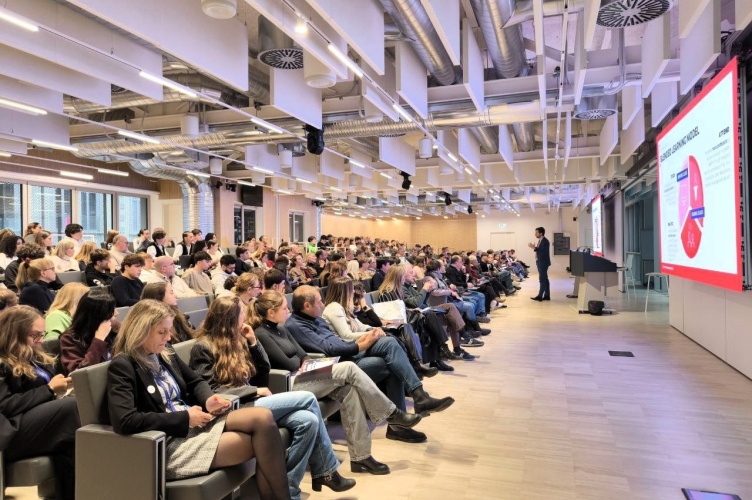
580+ guests joined ESCP in Turin to explore our programmes and campus life
On 15 November 2025, the ESCP Business School in Turin welcomed more than 580 prospective students and their families for a dynamic Open Day experience. Attendees discovered our Bachelor, Master, MSc, and MBA programmes, met faculty and student ambassadors, and explored what it means to be part of a global, diverse and forward-looking academic community.
An engaging day of discovery and connection
The Turin Open Day offered an immersive experience into life at ESCP. Across the day, participants joined programme presentations, explored our student services, and connected directly with professors, staff, and ambassadors. The event embodied ESCP’s unique energy and sense of community, reflecting the school's commitment to a personalised, international learning journey.
Key moments included:
- Presentation of the business school with a welcome speech by Prof. Alberta di Giuli, Dean of ESCP Turin Campus, followed by an overview of the services provided by the Student Experience, Careers Centre, Blue Factory (ESCP’s business incubator), and the Programme Office teams.
- Presentations of the Bachelor in Management (BSc), Master in Management (MiM), MSc in Luxury Management, MSc in International Food & Beverage Management and MBA in International Management. These sessions were led by the Academic Directors with recruiters, admissions officers, programme managers, and current students, and included extended Q&A sessions, offering participants the chance to engage directly with the speakers and clarify any aspect of the programmes.
- Interactive stands featuring the Student Experience team, Careers Centre, Blue Factory, admissions staff, student ambassadors, and representatives from the other ESCP European campuses, where visitors could ask questions and receive personalised guidance.
Save the date: our next in-person Open Day in Turin will take place on 21 February 2026. Don’t miss this opportunity to meet our community face to face and discover your future at ESCP.
Highlights from the programme presentations
Throughout the day, prospective students participated in tailored sessions focused on the academic content, career outcomes, and international exposure offered by each programme:
- Prof. Daniele Battaglia, Local Academic Director of the Bachelor in Management, introduced the programme’s multidisciplinary approach, designed to develop critical business skills while providing international exposure.
- Prof. Chiara Succi, Local Academic Director of the Master in Management, highlighted the programme’s flexibility, allowing students to tailor their studies with specialisations and international experiences that align with their career aspirations.
- Prof. Isabella Maggioni, Academic Director of the MSc in Luxury Management, shared insights on how the programme immerses students in the luxury industry through company projects, networking opportunities, and expert-led courses.
- Prof. Francesco Venuti, Academic Director of the MSc in International Food and Beverage Management, showcased the programme’s focus on global food and beverage markets, sustainability, and leadership in a highly dynamic sector.
- Prof. Francesca Pucciarelli, Local Academic Director of the MBA, outlined how the programme equips professionals with the strategic mindset and leadership skills needed to accelerate their careers on a global scale.
These sessions offered participants the chance to ask questions, meet academic directors, and explore career opportunities across sectors.
Meeting the community: the heart of the ESCP experience
One of the most engaging parts of the event took place in the Library area, where attendees met representatives from across the ESCP ecosystem:
- Student Ambassadors shared real-life experiences of studying and living at ESCP.
- Visitors explored students and career support, entrepreneurial initiatives, and life on different campuses.
- ESCP staff provided guidance on the application process.
Thank you to our outstanding Student Ambassadors: Anita Tottene, Caroline Schippers, Julien Zhang, Yuxuan Zhang, Federica Ghiott, Angelina Suzan Steingraf, William McAndrew, Lucrezia Pio, Andrea Di Leo, and Maria Antonietta Fiocchi. Their first-hand insights brought the ESCP journey to life, helping guests imagine their own future at our School.
Missed the November Open Day? Here’s what’s next
If you couldn’t join us in November, don’t worry: the next ESCP Open Day in Turin is scheduled for 21 February 2025. You’ll have another opportunity to:
- Meet faculty, students, and staff in person.
- Discover the Bachelor, Master, MBA and MSc programmes.
- Get personalised advice on admissions, career opportunities, and student life.
Programme Presentations on demand
For those who prefer an online format, you can explore our recent online Open Days on-demand from the comfort of your home. Prospective students can follow our virtual sessions covering:
- Bachelor in Management [ITA]
- Bachelor in Management [ENG]
- Master in Management [ITA]
- MSc in Luxury Management [ENG]
- MSc in International Food & Beverage Management [ENG]
- MBA [ENG]
Admissions Training Sessions
Another must-attend event for prospective students is the online Admission Training, designed to provide a comprehensive understanding of the admissions process and offer valuable guidance on how to apply to ESCP successfully:
The Open Day was a memorable opportunity to connect with the ESCP community and envision your path as a future business leader. We look forward to welcoming you again soon in Turin or online!
FAQ
What programmes were presented during the Turin Open Day?
The event included presentations of the Bachelor in Management, Master in Management, MSc in Luxury Management, MSc in International Food & Beverage Management and MBA.
Who can I talk to during an Open Day?
You can meet professors, student ambassadors, programme managers, recruiters, and staff from admissions, student services, and careers.
When is the next Open Day at ESCP Turin Campus?
21 February 2025. Stay tuned on the Open Day page for registration details.
How can I learn more about admissions?
Explore our ESCP Turin Campus Admissions Guide or register for an upcoming Admission Training session.
Campuses
Related stories
Event 21/02/2026
Turin Events
Turin Campus Open Day
Il 21 Febbraio 2026 partecipa all'Open Day del Campus di Torino per conoscere da vicino i programmi offerti da ESCP Business School.
Turin

News 01/12/2025
Admission tips
ESCP Turin Campus Admissions Guide
Learn more about the ESCP's Admission Process and how to succeed in your application.
Turin

News 07/07/2023
company experience
Unveiling Luxury Marketing’s Secrets: ESCP Students’ Immersive Journey into the World of Prestigious Brands
In the ever-evolving luxury industry, characterised by digital advances, globalisation and shifting consumer trends, luxury marketing plays a crucial role in attracting discerning consumers seeking status, prestige and indulgence. In ESCP Business School’s Master in Management Luxury Marketing specialisation, students are exposed to the many facets of luxury through immersive company visits, allowing them to explore Italy as the home of luxury and excellence in various sectors.
Turin