
The Greenprint series explores the distinctive sustainability identities of ESCP’s campuses, highlighting the people and initiatives shaping a shared vision for responsible leadership and collective impact.
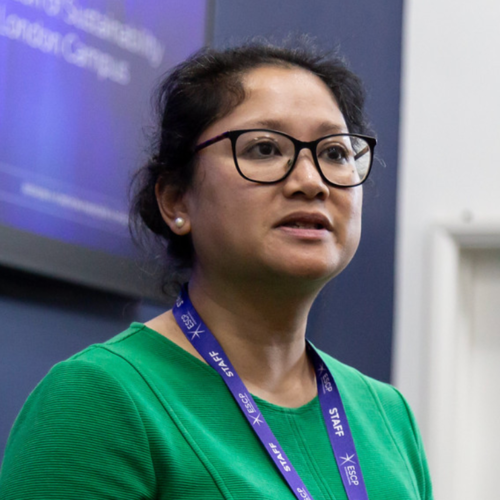
As Sustainability Lead for ESCP’s London Campus, Christina Bartholomew heads the London Green Office and supports initiatives led by students, faculty, and staff to drive environmental and social impact. With a background in law, sustainable strategy, and education, she focuses on operationalising sustainability and fostering collaboration across ESCP’s London network. We spoke to her about how the campus’s sustainability work reflects its place, people, and purpose.
It’s been a great pleasure working with so many committed stakeholders across my own campus and beyond to build and refine our sustainability initiatives.
 Christina Bartholomew
Sustainability Lead, ESCP London Campus
Sustainability team at the ESCP London Campus
 Emily Centeno De Abols
Management
Christina BartholomewManagement
 Vanezza Scanlon
Affiliate faculty
The local lens
The London Campus’s sustainability identity is grounded in strong local partnerships and a commitment to social impact across its home in the London Borough of Camden. The campus is building relationships with the Camden Council, the Camden Climate Alliance, and a range of local NGOs designed to serve the interests of the community, from consulting businesses and addressing local challenges to pledging commitments and engaging the local community through social initiatives.
“Despite being home to major international companies such as Google and Microsoft, Camden also faces deep social challenges,” shares Christina. “The ESCP London Campus works with local partners to support community initiatives that address inequality and promote inclusion.” These collaborations position ESCP as more than an academic presence and an engaged community partner.
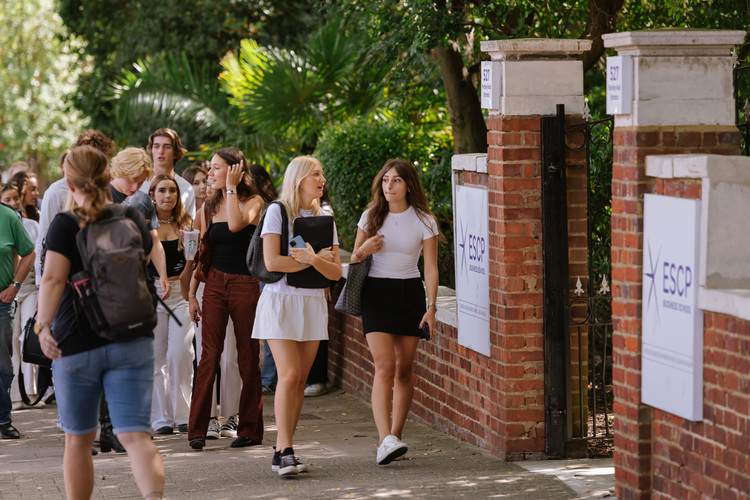
Since 2022, the London Campus has also effectively established a staff-student environmental, social and governance (ESG) committee, setting an example on how institutional sustainability strategy can remain both relevant and practical. The Committee’s work has been instrumental in rolling out a reusable eco-cups initiative for all staff and students, nearly eliminating single-use container waste on campus.
More recently, the London Campus has also been shortlisted in the 2025 Times Higher Education Awards, Outstanding Estates Team of the Year category, commending the School’s efforts in putting sustainability at the core of its 10-year Estates Masterplan that transforms its historic Victorian site into an innovative, sustainable and low-carbon space and supports ths School's growth, sustainability, and community engagement goals.
Initiative Spotlight: The Social Impact Festival
Each year, ESCP London Campus hosts the Social Impact Festival, a flagship event that reflects the campus’s commitment to inclusive leadership and social change. The Festival offers students a dynamic platform for cross-sector collaboration, innovation, and action.
Keynotes, panel discussions, and workshops bring together a wide range of changemakers from business, civil society, and academia to explore bold thinking and practical tools for creating social value.
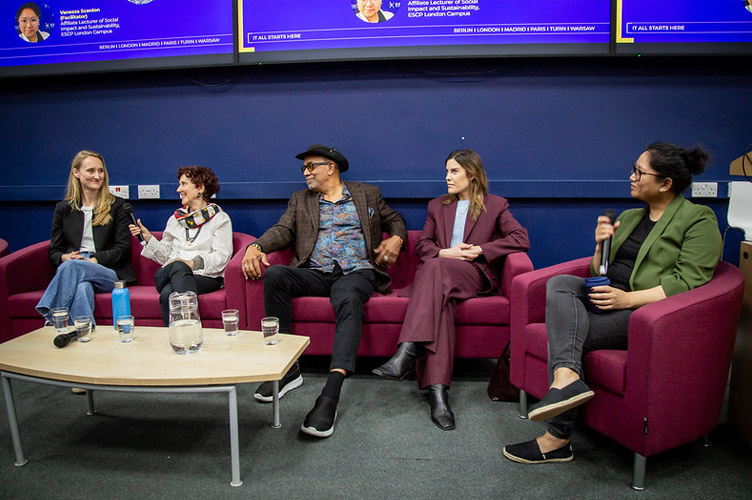
“The Festival gives students from different programmes the opportunity to interact and co-create impactful solutions,” Christina explains. This event has become a cornerstone of the London Campus’s sustainability calendar — a meeting point between learning, creativity, and local engagement.
The Social Impact Festival continues to grow, with the latest edition being the biggest to date, focusing on critical, forward-thinking discussions exploring key themes like entrepreneurial talent and inclusion, social mobility and business as a force for good, balancing people, planet, and profit, and unlocking human potential.
Engaging with the ESCP community
As with all ESCP campuses, sustainability is embedded across the London Campus curricula, reflecting the School’s federal strategy to ensure that 100% of students are trained on sustainability throughout their studies.
This year, around 170 first-year Master in Management students took part in Climate Pitch, a conference-style workshop delivered by Planet on Stage. The sessions explored how students can respond to the climate crisis both individually and collectively, reinforcing the idea that every choice matters.
“The Climate Pitch was an opportunity to signal ESCP’s commitment to sustainability and to encourage students to join in the efforts, setting them on the right track for the two-year study ahead,” shares Christina.
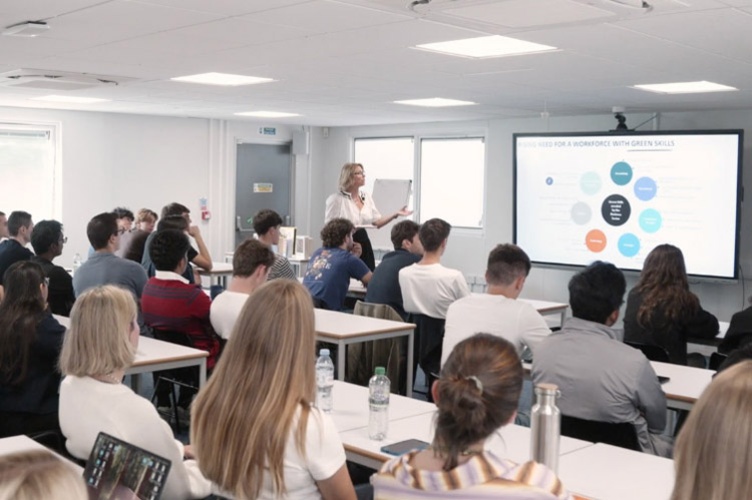
As part of the curriculum for the MSc in Marketing & Creativity programme, students at the London Campus collaborate with various external partners who are at the frontlines of creating societal well-being and impact. For example, during the Entrepreneurship Festival 2024, ESCP students worked with Camden Council, One Kilburn, Think & Do Camden, and London Clean Air over a month to deliver entrepreneurial solution proposals addressing local needs. Later, ESCP further engaged with the council through a student consulting project for Good Life Camden, offering branding advice and outreach strategies to engage a diverse range of audiences.
Last year, the London-based Bachelor in Management students spent six weeks developing business plans for the Brent Cross Town regeneration project, focusing on the local park’s development, several of which are now under review for implementation.
At the same time, the London branch of ESCP's European start-up incubator, the Blue Factory, systematically seeks ways to engage the local community beyond ESCP and has also helped local startups such as Adexa Labz, supporting local innovation.
What’s next?
Looking ahead, Christina shares how the London Campus is focusing on deepening community partnerships and expanding opportunities for student engagement. “We are developing new impact projects for the coming year to give students a chance to draw from their learnings to make tangible social impact—and, importantly, nurture a conscious and impactful leadership mindset for their future careers.”
Beyond the classroom, student societies are also playing a crucial role in advancing the campus’s sustainability mission. This winter term, AGORA, ESCP’s international student union, is preparing a Green / AI Hackathon. The event will invite teams of students, corporate partners, and community members to co-design solutions to real sustainability challenges, blending innovation, teamwork, and purpose.
For Matti Lievenbrück, MSc in Energy Management student and AGORA Head of Sustainability, the hackathon represents how student-led innovation can turn ESCP’s sustainability principles into tangible outcomes. “The upcoming Green & AI Hackathon is a great opportunity to show how sustainability at ESCP can turn into something hands-on and collaborative,” he shares. “It’s exciting to see students from different backgrounds team up to tackle real environmental challenges using AI, skill, and creativity.”
“After working with many different stakeholders, I have greatly benefited from the strong support of the London Campus, whose members have actively contributed their experience and network. This shared vision is what makes initiatives like the Green / AI Hackathon possible and helps turn good ideas into real impact.”
—Matti Lievenbrück, MSc in Energy Management student and AGORA Head of Sustainability
Relevant links
Campuses
Business with Purpose:
Rethinking Impact Through Responsible Models
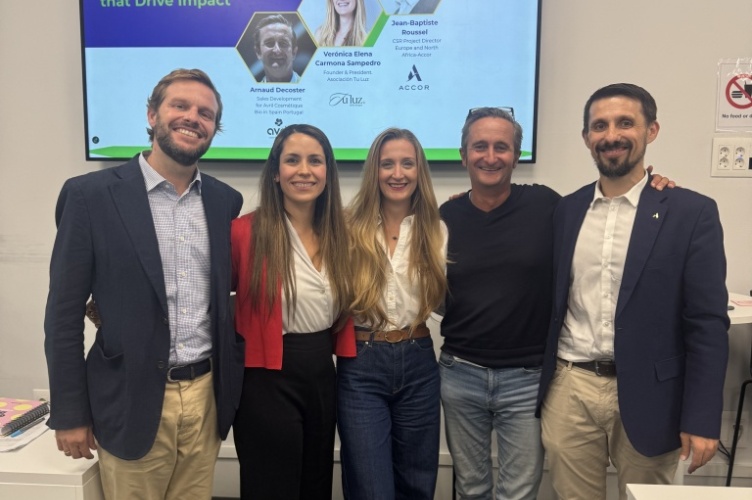
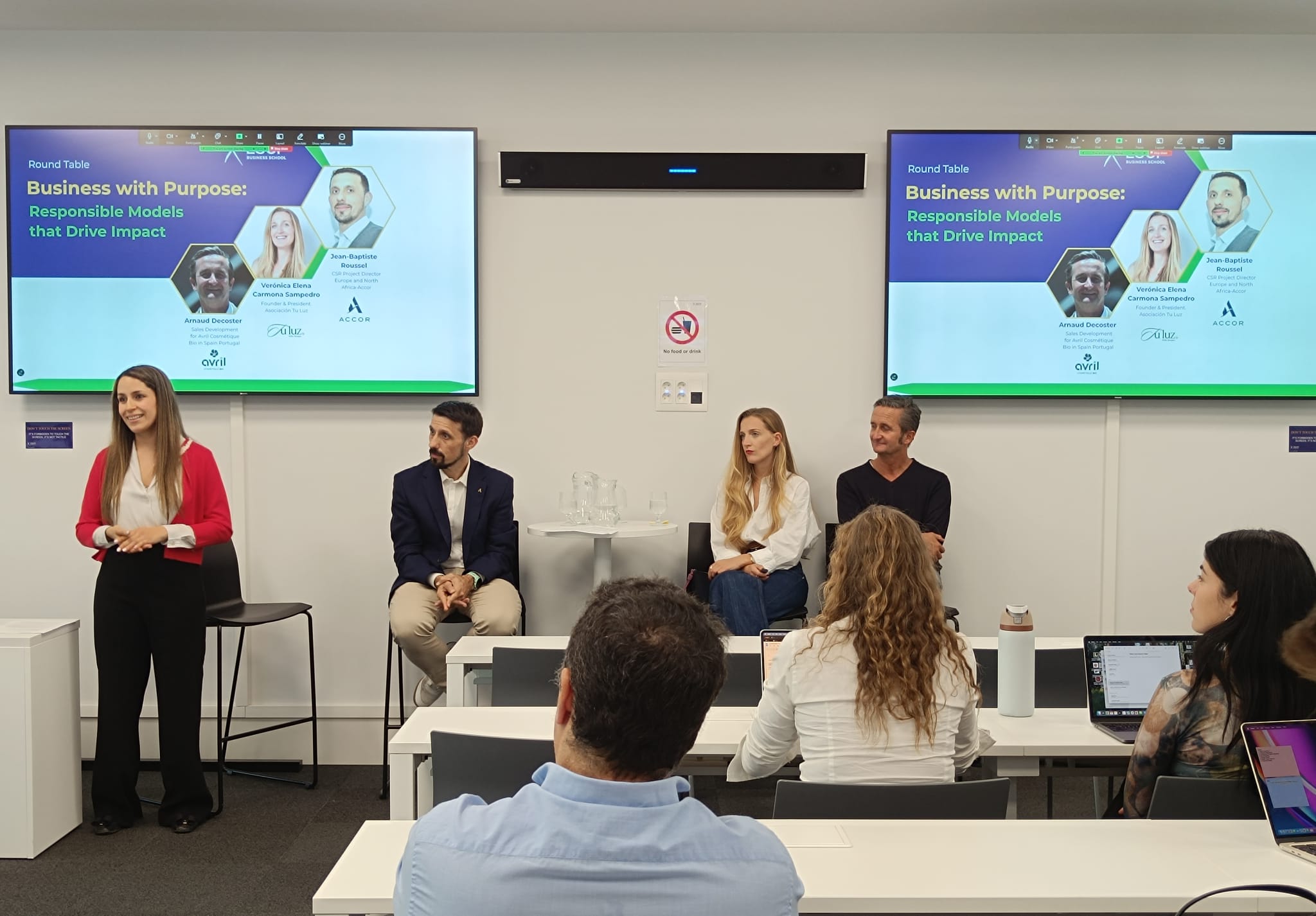
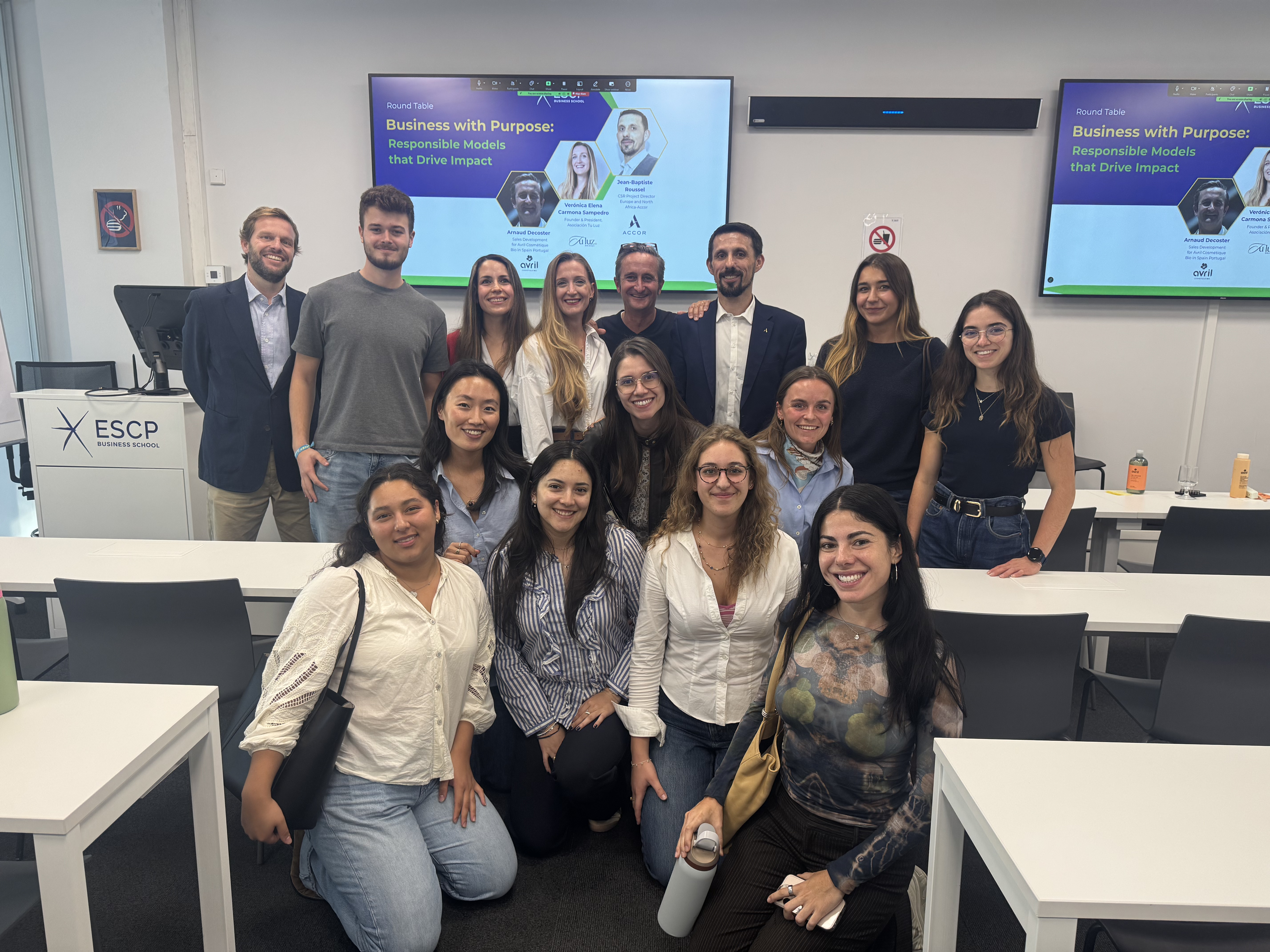
Hosted by the Green Office at ESCP Business School Madrid, the “Business with Purpose” round table brought together inspiring voices exploring how responsible business models can drive real, lasting change.
A conversation on purpose and responsibility
What does it truly mean to do business with purpose in today’s world? That question guided the latest Green Office initiative at ESCP Madrid: “Business with Purpose: How Responsible Models Drive Impact.”
During this inspiring round table, participants reflected on the role of values, leadership, and innovation in creating meaningful social and environmental impact.
The discussion proved both insightful and practical, revealing how purpose-driven strategies are reshaping industries from within.
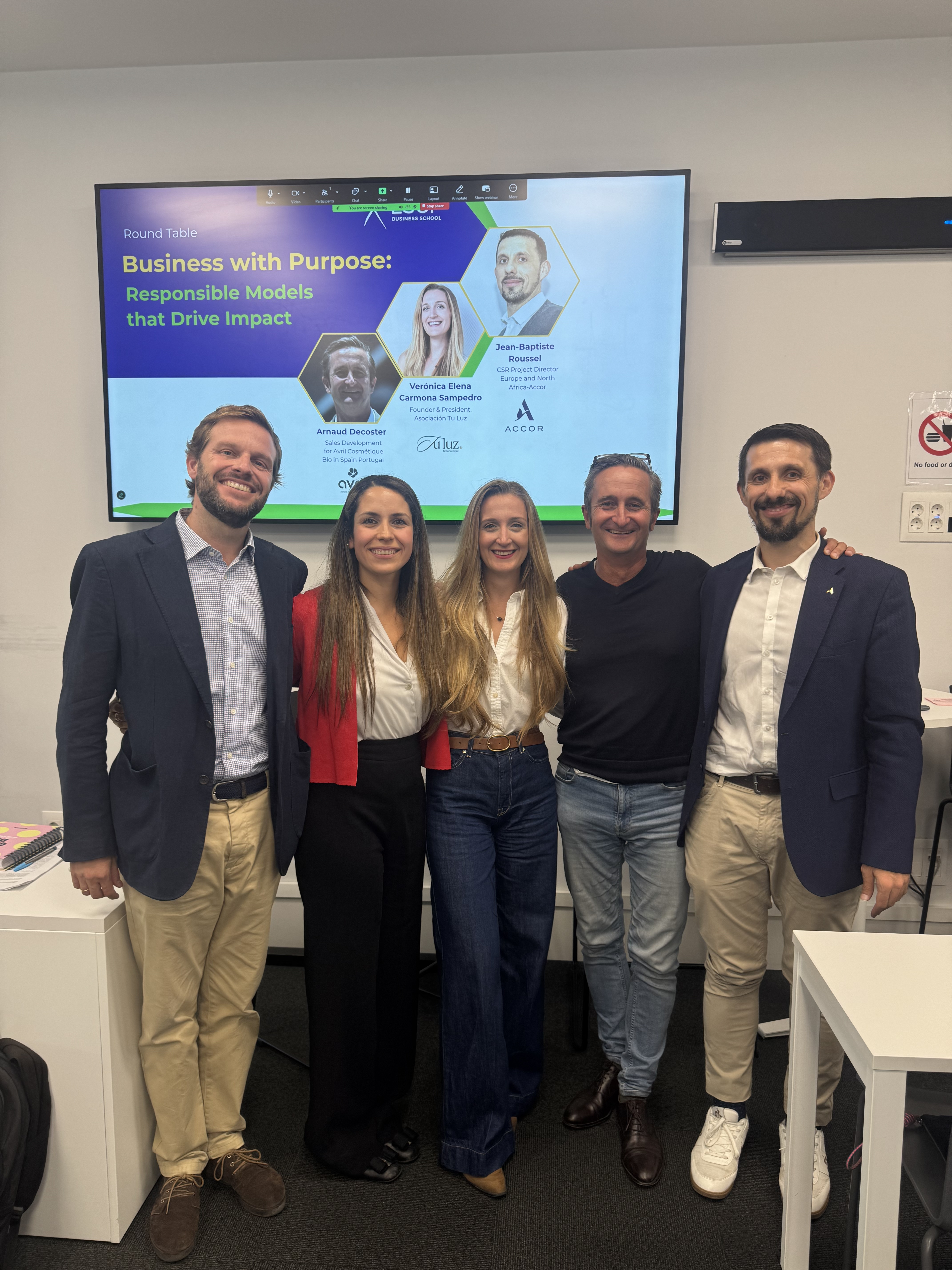
Meet the panellists
The session gathered three distinguished professionals, each leading change in their respective fields:
- Verónica Elena Carmona Sampedro, Founder and President of Asociación Tu Luz, an organisation promoting conscious leadership and female empowerment.
- Arnaud Decoster, Sales Development Lead for Spain and Portugal at Avril Cosmétique Bio, a pioneer in sustainable and circular cosmetics.
- Jean-Baptiste Roussel, CSR Project Director for Europe and North Africa at Accor, leading decarbonisation and responsible business initiatives across the hospitality sector.
Transforming business through purpose and innovation
Each speaker offered unique perspectives on what it means to lead with purpose.
“Values are the true engine of transformation,” said Verónica Carmona. “When people and organisations act from purpose, change becomes sustainable.”
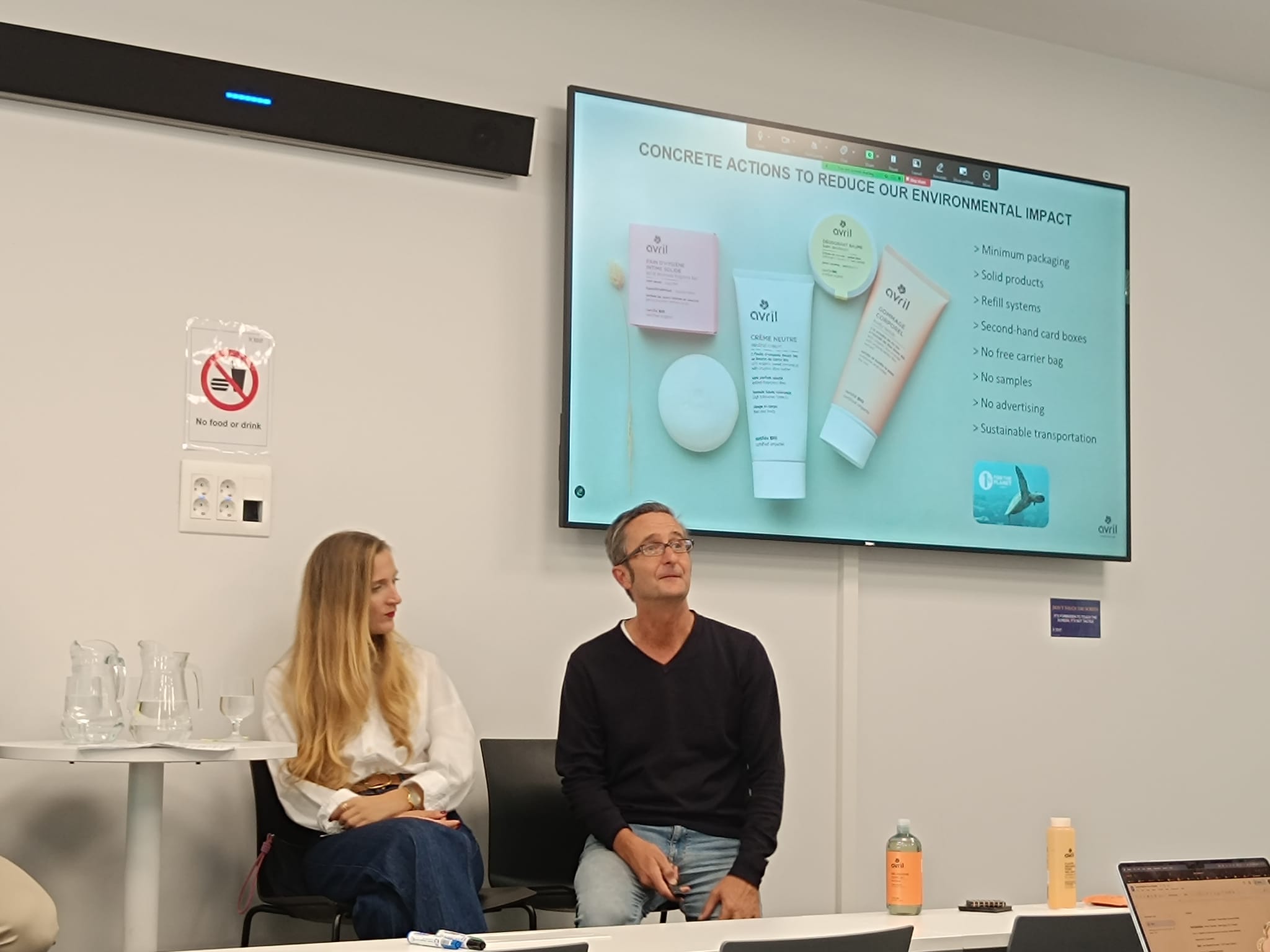
For Avril, innovation in the circular economy means questioning long-standing industry practices. Arnaud Decoster explained how the company’s eco-designed soaps — sold in small sachets to be mixed with water at home — eliminate unnecessary transport of water, reducing emissions and packaging waste. “Small, incremental innovations,” he emphasised, “can create significant impact.”
Accor, one of the world’s largest hospitality groups, is also redefining what responsibility looks like at scale. Jean-Baptiste Roussel shared how the company translates ESG goals into concrete actions: from energy efficiency and waste reduction to strengthening partnerships with local suppliers. “Even in a large, established organisation,” he said, “we can continue to innovate for good.”
Shared lessons from the discussion
Throughout the event, several key ideas stood out:
- Purpose-driven leadership is critical for meaningful social impact.
- Responsible business models can balance economic success with environmental and societal value.
- Collaboration and continuous learning across sectors are essential to scale positive change.
The conversation also highlighted how both emerging entrepreneurs and established corporations can challenge traditional systems — each in their own way — to accelerate the transition toward a more sustainable economy. .
An engaged and inspired audience
The discussion concluded with a lively Q&A session, where students and faculty members shared reflections and asked thoughtful questions. The energy in the room reflected a genuine desire to integrate sustainability into future professional paths.
About the Green Office
The Green Office at ESCP Madrid promotes sustainability initiatives, awareness, and education across the campus. By fostering dialogue between students, professionals, and organisations, it helps drive a culture of responsibility and positive impact — one conversation at a time.
Campuses
The award highlights the School’s unique multi-campus model and global strategy, commitment to innovation and sustainability, and bold vision for the future.
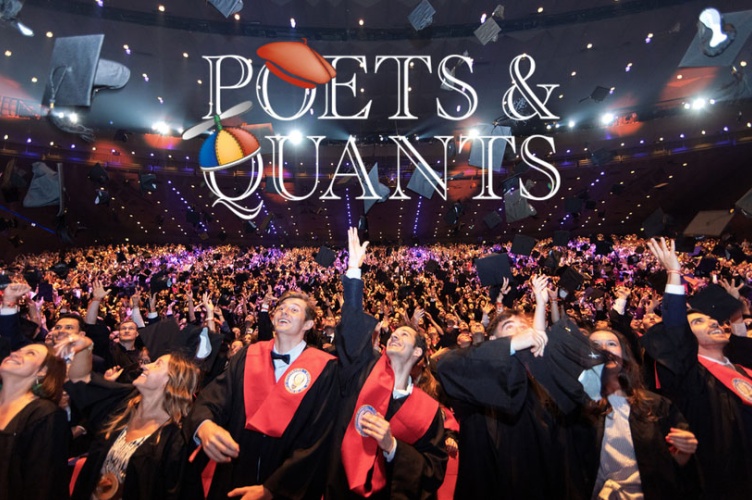
ESCP Business School has been named 2025 Business School of the Year by Poets&Quants. This recognition celebrates the School’s distinctive European multi-campus model, its emphasis on innovation and sustainability, and the transformative vision driving its new strategic plan, Bold & United.
This achievement also affirms the collective excellence of ESCP’s students, alumni, faculty and community, and it is a powerful endorsement of the School’s strategy to prepare accountable, bold and creative leaders for a rapidly changing world.
A bold European vision and global outlook
Poets&Quants commended ESCP for its unique position as a truly pan-European institution. Through its six-campus model, ESCP delivers a learning experience rooted in multiculturalism, mobility, and academic innovation.
The Bold & United strategy builds on this foundation, setting out ESCP’s ambition to become the first European University of Management by 2030, with plans to add the ESCP School of Technology in 2027 and the ESCP School of Governance in 2029.
“We are preparing the world of tomorrow, not just by teaching skills and competencies, but also by shaping attitudes and values,” Prof. Léon Laulusa, Dean and Executive President of ESCP, told Poets&Quants.
Master in Management (MiM) student Lauren Wilkins shared how these values translate into practice. “The multi-campus model and the mix of nationalities in every classroom mean you’re always adapting, learning from new perspectives, and approaching problems in different ways. The education feels alive in that sense.”
We both fit the context of today’s world and anticipate what the future will be. We are preparing the world of tomorrow, not just by teaching skills and competencies, but also by shaping attitudes and values.
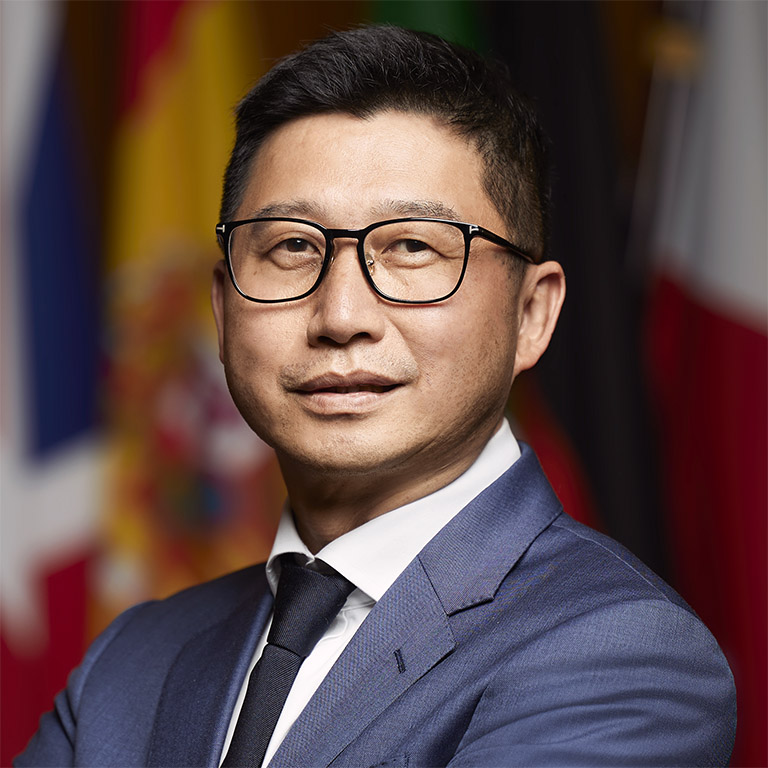 Leon Laulusa
Dean and Executive President of ESCP Business School
Championing innovation, entrepreneurship and sustainability
Poets&Quants also highlighted ESCP’s leadership in shaping the future of business through responsible innovation, entrepreneurial action, and a commitment to sustainability.
ESCP has emerged as a pioneer in integrating artificial intelligence and emerging technologies into business education. Through partnerships with OpenAI and Hugging Face, a mandatory course on generative AI, and the forthcoming School of Technology, the School is building a living lab for responsible innovation where technical fluency and human insight go hand in hand.
“We want to equip our students with the skills that matter most in a world where AI is abundant: critical thinking, creativity, complex problem solving, emotional intelligence and leadership,” shared Prof. Louis-David Benyayer, Associate Professor of Strategy and AI Initiatives Coordinator.
Innovation and entrepreneurial spirit are also nurtured at ESCP through the Blue Factory, the School’s startup incubator. Shop Circle co-founders and MiM alumni Luca Cartechini and Gian Maria Gramondi credited ESCP’s entrepreneurial ecosystem and practical exposure as key to their success. They represent how the School’s learning environment translates into real-world impact.
The “innovation with purpose” mindset also underpins ESCP’s long-standing commitment to sustainability—a central pillar of the Bold & United strategy. Prof. Gorgi Krlev, Associate Dean for Sustainability, shared how sustainability is seen as a strategic advantage at ESCP that defines how the School educates future leaders. 100% of students receive sustainability training, and sustainability is embedded across ESCP’s research, partnerships and governance.
A school and community rising together
This recognition is also a celebration of the strength, diversity and engagement of ESCP’s community. As Prof. Alberta Di Giuli, Dean of the Turin Campus, explained, each campus has its own identity, shaped by local culture and industry, yet all are united by a common mission and values. This balance between diversity and collective purpose defines ESCP’s strength.
And this spirit extends beyond the campuses. ESCP’s alumni play a vital role in the School’s evolution, supporting its growth through engagement, mentorship and philanthropy. The ESCP Foundation’s “Rising Together” fundraising campaign is supporting the implementation of the Bold & United strategy and reflects the School’s ambition for the years ahead.
Brynhild Dumas, Executive Director of the ESCP Foundation, says the award is a culmination of that shared momentum—a community rising together, confident in its European identity and global impact. “Alumni see a school transformed – a ‘sleeping beauty’ that has become a dynamic European leader – and they want to be part of that journey.”
I truly believe ESCP is one of the best business schools globally. If I could go back, I’d choose it all over again, and I never hesitate to recommend it.
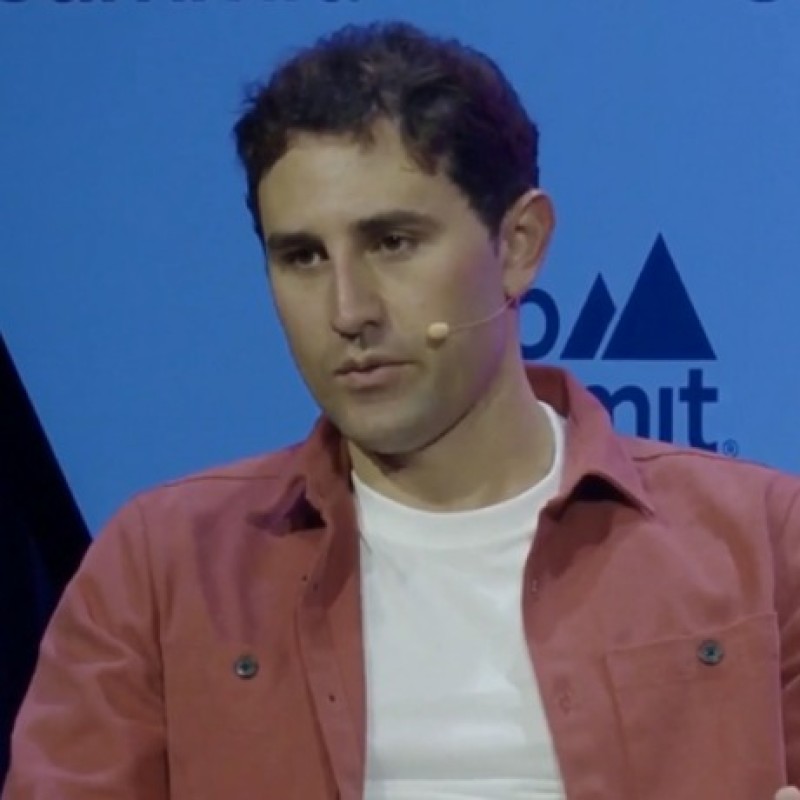 Luca Cartechini
Co-founder of Shop Circle and MiM alumnus
Campuses
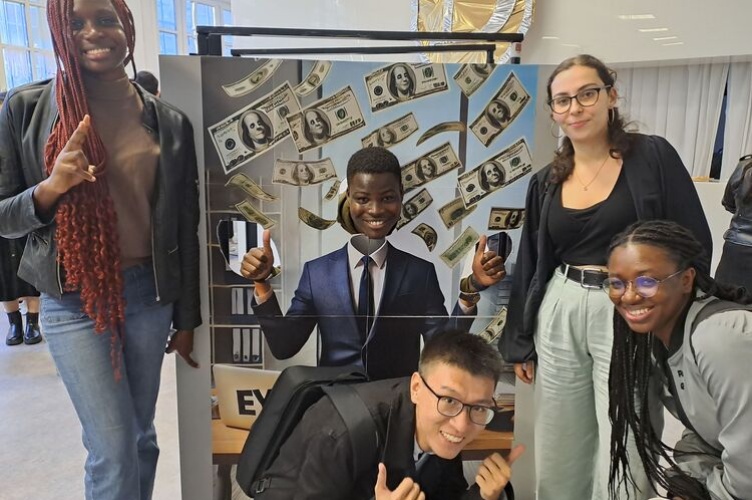
ESCP Prof. Sylvain Bureau’s Art Thinking method wins Bronze at the QS Developing Emerging Skills & Competencies Award
ESCP Business School is proud to announce that IMPROBABLE: An Art Thinking Experience, co-created by Professor Sylvain Bureau and the artist Pierre Tectin, has won Bronze in the Developing Emerging Skills & Competencies category at the QS Reimagine Education Awards 2025.
This year’s competition was fierce, with more than 1,600 submissions across 18 categories and the first round of evaluations conducted by over 800 international judges. IMPROBABLE ranked in the top 20% of projects worldwide, securing its Bronze win and confirming its impact as a pioneering approach to teaching, learning, and leadership.
Making the Improbable possible
The mission of IMPROBABLE is clear: “creation can change the world — and the improbable is its most powerful tool”. Too often, individuals and organisations remain confined by the expected or the probable. Through Art Thinking, Professor Bureau and his collaborators equip changemakers with the mindset, tools, and practices to imagine beyond conventional boundaries, break dominant norms, and drive innovation for a sustainable future.
The Art Thinking method is taught through the Improbable Seminar, an immersive experience where participants create and exhibit artwork designed to challenge assumptions and open new perspectives. This process pushes learners beyond traditional business solutions and introduces artistic, agile, and critical approaches to leadership.
Since its launch in 2011, the seminar has been delivered over 250 times in more than 17 countries, across four continents. It has reached thousands of learners at every level of education — from Bachelor to PhD, as well as MBA and executive education — and across sectors from academia to industry. Partner institutions and organisations include Stanford University, Stockholm School of Economics, École Polytechnique, HEC Montréal, Université Mohammed VI Polytechnique, Air France-KLM, Canon, EDF, Galeries Lafayette, and OCP Group, among many others.
The method is also the foundation of the Improbable Chair with Galeries Lafayette, within the ESCP Innovation & Entrepreneurial Transformation Institute, where Bureau serves as Scientific Director.
A transformative experience
The seminar’s impact is consistently described as transformative. Participants are invited to confront uncertainty and complexity not only intellectually but also emotionally and physically. By embracing ambiguity and critical reflection, they develop the capacity to lead with creativity, courage, and responsibility.
Feedback from participants underscores this profound influence, with testimonials describing the experience as “an unforgettable moment,” “a stepping stone,” and “a true eye-opener.” Executive education satisfaction scores range between 3.5 and 3.8 out of 4, highlighting both the quality and resonance of the programme. Many learners go on to initiate real-world projects inspired by their experience.
Building future-ready skills
IMPROBABLE has demonstrated measurable improvements in learning outcomes and employability. Beyond gaining traditional hard and soft skills, participants cultivate “mad skills”, the ability to challenge norms and invent new systems of value. Academic research confirms that Art Thinking enhances entrepreneurial self-efficacy, fosters distributed leadership, and strengthens ecosystem-building capabilities.
In an era marked by climate change, technological disruption, and systemic uncertainty, these skills are essential. By equipping learners to rethink leadership and innovation, IMPROBABLE is helping shape a new generation of responsible, imaginative leaders prepared to act with creative agency.
Relevant links
Campuses
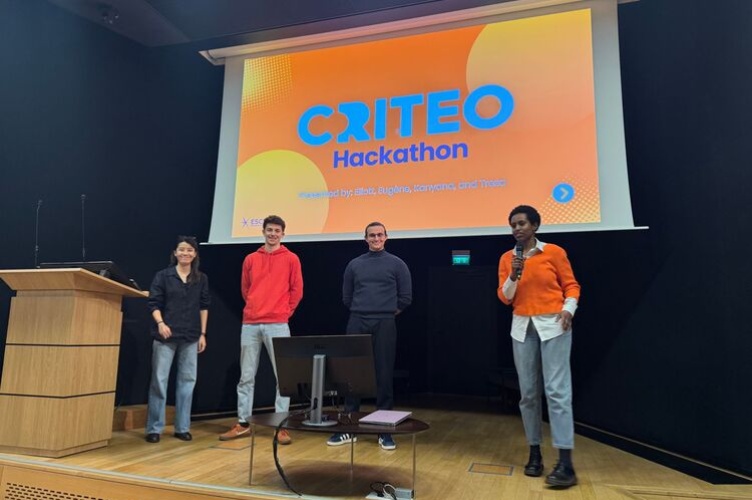
Seven leading companies challenging MSc students to tackle real-world problems through the power of data analytics
After an intense week of creativity, collaboration, and relentless problem-solving, the annual ESCP MSC in Big Data and Business Analytics Hackathon reached a thrilling conclusion. From 17-21 February, ESCP students in the programme transformed complex challenges into innovative solutions, showcasing their passion and ingenuity in every project.
Organised in partnership with seven leading companies, the hackathon exemplified ESCP’s hands-on approach to learning: bridging theory and practice, and enabling students to work on real-world challenges with real impact.
We extend our warm thanks to our corporate partners — Criteo, Catalina Marketing France, Numberly, SAMSE, Écologie Logistique, Ekimetrics, and Square Management — for providing challenges that pushed boundaries and inspired excellence.
Recognising Outstanding Achievements
After a week of collaboration and intense analysis, seven teams stood out for their originality, rigour, and impact. We are delighted to celebrate the exceptional winning teams:
Criteo – Universal Catalogue Challenge
Team 9: Eliott Barat-Chabeauti, Eugène Delecour, Kanyana Ntagungira, and Treza Bawm Win
Developed a robust semantic embedding that enabled coherent clustering and an intuitive visualisation tool, redefining brand connectivity.
Catalina Marketing France – Personalised Communication & Generative AI
Team 21: Tiago Ornelas Monteiro, Shantanu Joshi, Juliette Bourbonnais, and Ghita Benayad
Devised an innovative strategy featuring a digital twin – a ‘fake workspace’ designed to test and refine marketing strategies in a controlled environment.
Numberly – Data Collaboration & Cleanroom Concept
Team 22: Diane Besnier, Victor Lintermans, Léon Ponet, and Jean de Gruben
Conducted an analytical deep dive into how TV, contextual and retargeting campaigns affect daily sales, exploring the carryover effect of ads through the Adstock concept.
SAMSE – E-commerce Conversion Optimisation
Team 7: Mathilde Rychel, Karl Toto-Same, Benjamin De Girolamo, and Marc Albert
Impressed with their diagnostic acumen and actionable recommendations to boost e-commerce performance.
Écologie Logistique – Road Traffic Optimisation
Team 12: Diana Marroquin, Laura Maspero, Maria Salgado, and Marianna Hofmeier
Created a digital twin of road traffic in Saint-Cyr-l’École, enabling advanced analysis and strategic recommendations to optimise urban mobility.
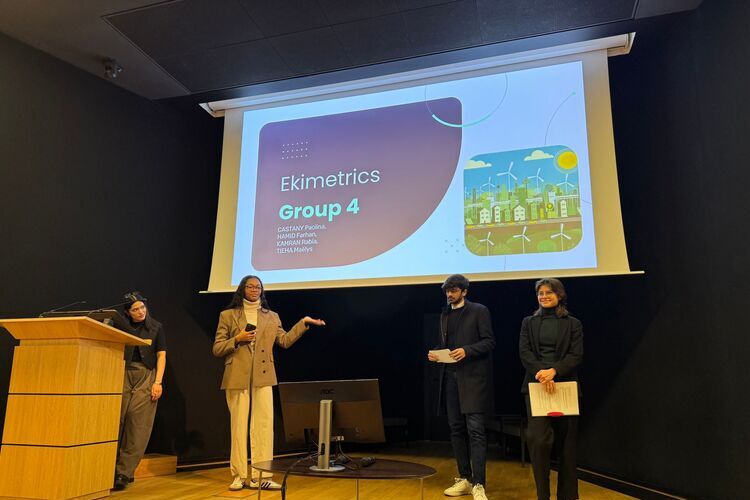
Ekimetrics – GHG Emissions Reduction
Team 4: Paolina Castany, Rabia Kamran, Syed Hamid, and Afflété Tieha
Delivered measurable and impactful solutions aimed at reducing greenhouse gas emissions.
Square Management – Enhancing Geospatial Data Accuracy
Team 15: WonJeung Choi, Suk Yi Chung, Thanh Ngan Dang, Federico Migliore, and Priyanka Kumar
Set a new standard for geospatial data accuracy, ensuring exceptional data quality and unlocking innovative business applications through refined geoanalysis.
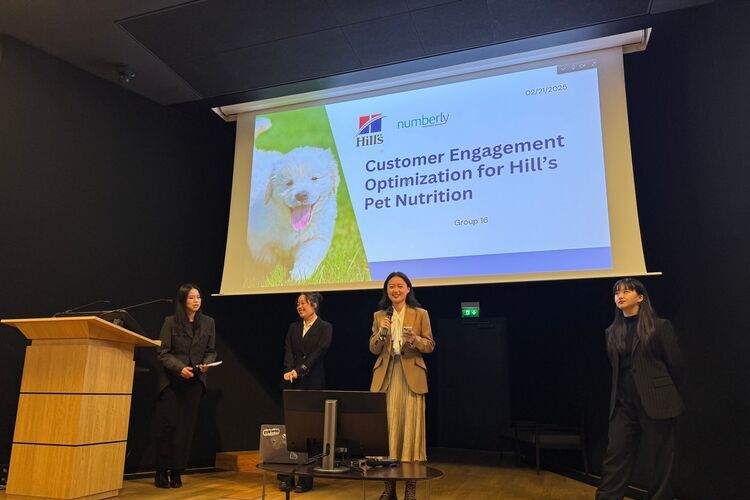
Voices from the Hackathon
The hackathon was not only a contest of technical skill but also a journey of discovery and teamwork. Participants and partners shared reflections that capture the spirit of the event:
Our partners were equally impressed by the talent and fresh perspectives on display:
A Journey of Innovation and Beyond
The dedication and hard work of ESCP MBD students throughout this hackathon have not only showcased their technical and analytical prowess but have also demonstrated an unwavering commitment to sustainable innovation and business excellence. This event has been an unforgettable experience—a true celebration of creative problem-solving, teamwork, and the spirit of pushing the boundaries of what’s possible.
A heartfelt thank you goes out to all participants, organisers, mentors, and partners for making this journey so inspiring. As we celebrate these achievements, we look forward to continuing our mission of innovation and excellence, paving the way toward a brighter and more sustainable future.
Let’s keep the spirit of innovation alive at ESCP and beyond!
Campuses
Related stories
News 04/04/2024
Big Data and Business Analytics
Hackathon 2024
Catalina, Écologie Logistique, Ekimetrics, Numberly and Square Management- Square Research Center challenged the students of the MSc Big Data and Business Analytics
Paris
News 20/03/2023
Big Data and Business Analytics
Hackathon 2023
Criteo, Ekimetrics and Square Management, in partnership with ESCP, challenged the students of the MSc Big Data and Business Analytics for an intensive one-week hackathon!
Paris
News 21/04/2022
Big Data and Business Analytics
Hackathon 2022
Criteo and Square, in partnership with ESCP, challenged the students of the MSc Big Data and Business Analytics for an intensive one week hackathon!
Paris
News 20/04/2021
Big Data and Business Analytics
Hackathon 2021
Michelin, Criteo and ESCP organised a Hackathon on the theme of IoT and connected society with emerging GDPR regulation
Paris
News 10/04/2020
Big Data and Business Analytics
Hackathon 2020
Escp’s Msc in Big Data and Business Analytics Organised Its Annual Hackathon for the Third Year Running!
Paris
Online Info Session
Your Admissions Guide to the Berlin Master Programmes
Join us for an online Admissions Webinar on Thursday, 28th May 2026, to discover how to apply to ESCP’s Specialised Master programmes offered at the Berlin Campus.
Ready to take the next steps in your study journey? Whether you’re just starting your application or getting ready to submit, this session is for you.
Our Admissions team will walk you through the entire process, share insider tips for building a strong application, and answer all your questions live. This webinar is relevant for the following Specialised Masters:
- International Sustainability Management
- Impact Entrepreneurship
- International Sales Management
- Strategy and Digital Business
Our Specialised Master programmes offer a transformative educational experience, combining academic rigor with real-world application. With access to top-tier professors, career services, and a global network of 85,000+ alumni, you’ll gain the skills and connections to stand out in today’s competitive job market.
Location
Organiser: ESCP Berlin Campus
Online - Worldwide
MapDate
Start date: 28/05/2026
Start time: 4:30 PM
End time: 5:30 PM

Listening, Talking, Learning, Acting:
The RIU x ESCP Professorship Field Mission in Zanzibar
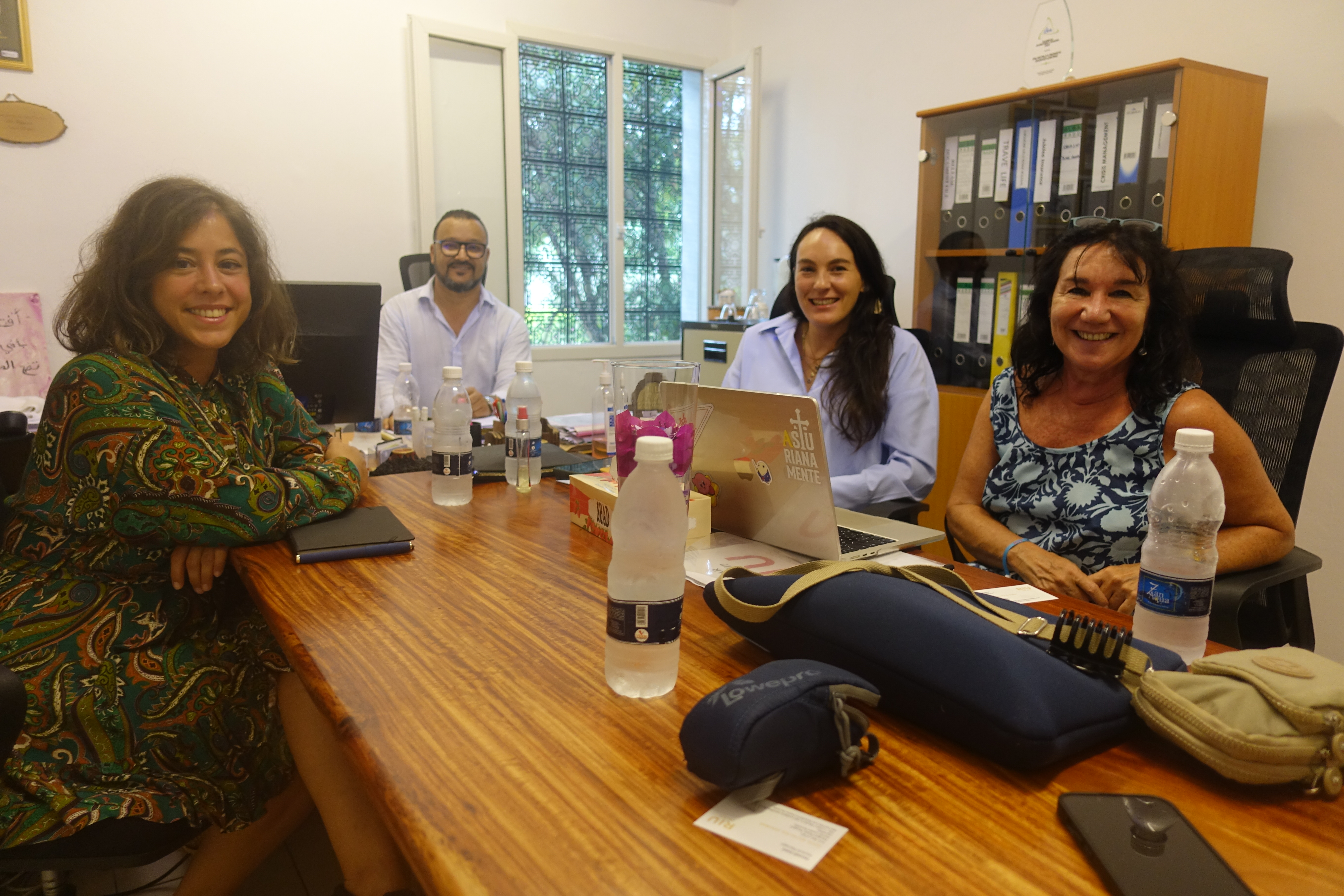
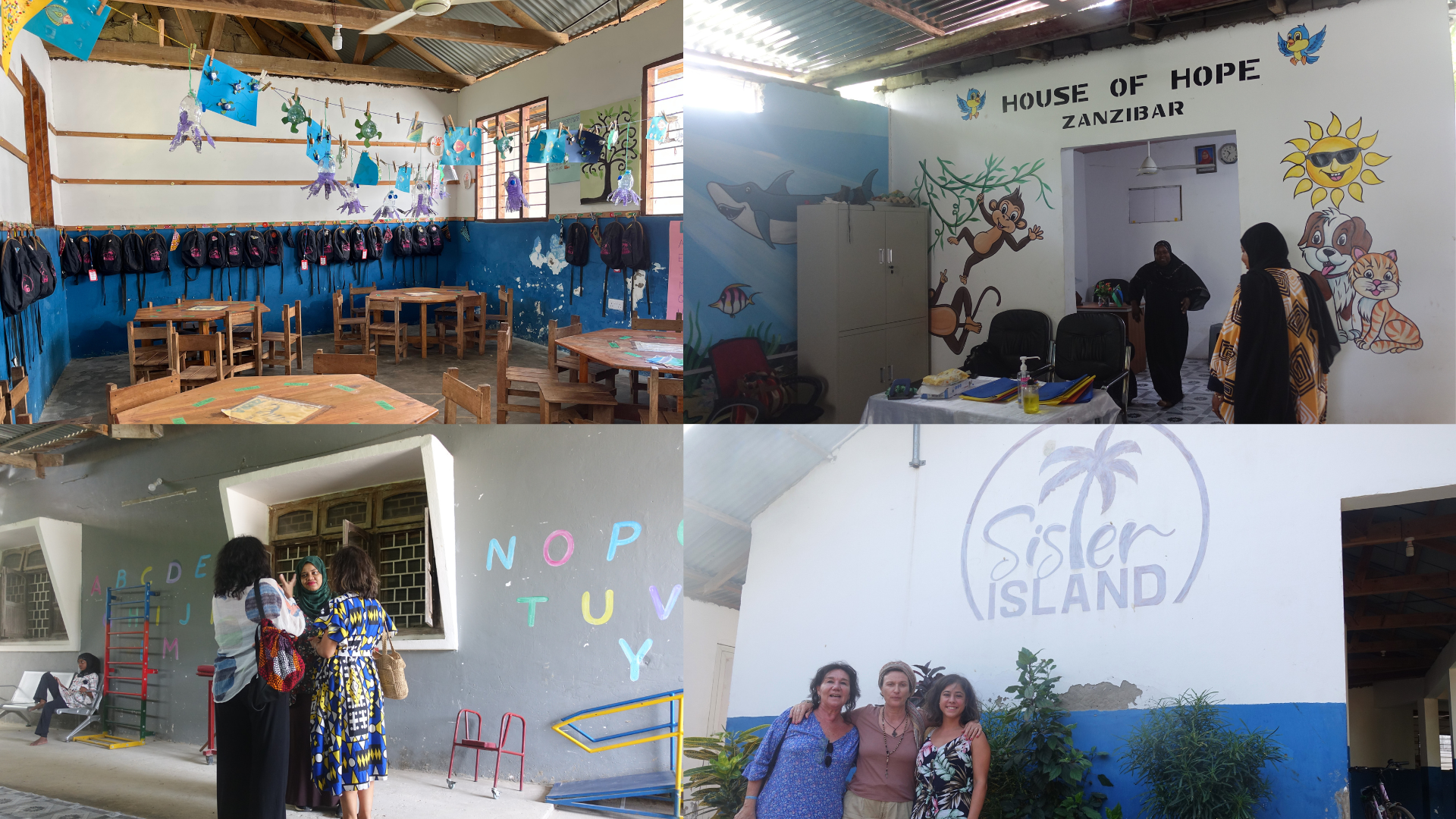
In September 2025, the RIU x ESCP Hospitality & CSR Professorship carried out a field mission in Zanzibar, Tanzania, as part of its ongoing efforts to co-develop, improve and reinforce “El Método RIU” for social investment in tourism destinations.
Measuring Social Impact Through the Lens of the CSRD: A Student Consulting Milestone
The field tryp focused on gaining a deeper understanding of the social investment projects currently underway, Kukua and NED Institute, and how they align with the needs of the communities neighboring RIU hotels in the north of the island. Over the course of the days, the Professorship team engaged with a range of local stakeholders in the fields of education, healthcare, and community development, as well as with the management teams of RIU hotels in Zanzibar. These exchanges provided valuable perspectives on how social initiatives are contributing to local challenges and how they might be better connected to the priorities of nearby communities, such as Nungwi.
The main objective of the mission was to observe, listen, talk and learn: to collect insights on the projects, identify synergies, and map opportunities for improvement in terms of child abuse prevention, and neuro-health and well-being. This groundwork is essential to ensure that the social investment approach is relevant, impactful, and responsive to the realities of the destination.
The next step will be to work with Kukua and NED Foundation teams on refining and testing the tools of Phase 3 of the RIU Method, building on the evidence gathered during the visit. This process, which will take place from now until the end of 2025, aims to strengthen project monitoring, professionalize local stakeholders, and co-design the future trajectory of the initiatives in Zanzibar.
Preliminary insights already point to promising directions for reinforcing social impact—from expanding collaborations with educational and healthcare actors to ensuring that projects generate tangible benefits for the communities closest to RIU hotels.
This fieldwork continues the Professorship’s broader journey, which began with earlier missions such as Guanacaste (Costa Rica) in 2021, or Quintana Roo (México) in 2022. The goals achieved definitively reinforce the value of combining academic research, corporate responsibility, and local engagement in building sustainable models for tourism destinations responsible development.
This mission is thus another milestone in advancing the goals of RIU’s global sustainability strategy Proudly Committed — a shared journey toward a more responsible and inclusive hospitality sector.
➡️ Stay tuned as the RIU x ESCP Professorship moves forward with the next stage of this process, testing and consolidating the tools that will help scale impact across destinations. .
Campuses
Learn how organisations measure sustainability with clear KPIs, metrics, and global frameworks. See how companies track their impact and turn data into real action.
Sustainability is no longer a side initiative. It’s a core part of how modern businesses compete, grow, and stay resilient. To turn ambition into progress, companies need to measure what matters. That means tracking emissions, analysing supply chains, evaluating social impact, and translating goals into metrics. Done well, sustainability measurement isn’t just a compliance exercise—it drives innovation and builds long-term value.
In this guide, we’ll break down the frameworks, KPIs, and global standards that help organisations measure sustainability with clarity and consistency. Whether you're curious about ESG reporting or interested in a role in sustainable business, this explainer covers the essentials.
Why Measuring Sustainability Matters
The business case for sustainability
Sustainability has evolved from being purely reputation management to a driver of performance. Tracking data—like carbon emissions, energy use, and workforce diversity—helps organisations anticipate regulation, attract talent, and meet investor expectations. In a world where proof of impact drives trust, data has become the new currency of credibility.
Measuring effectively:
- Builds trust through transparency
- Helps manage risks
- Aligns business strategy with long-term value
- Guides decision-making with real-time insight
Transparency and accountability over greenwashing
Measuring sustainability is also the best defence against greenwashing. Vague promises without evidence can quickly erode trust.
Regulators and investors now require standardised disclosures of climate risks and ESG (environmental, social and governance) performance, often verified by independent audits.
Clear, consistent data gives credibility to commitments. It allows stakeholders to assess progress and hold leaders accountable. To measure sustainability effectively, organisations rely on key performance indicators (KPIs), frameworks, benchmarks, and certification systems
Core Frameworks for Sustainability Measurement
Triple Bottom Line: People, Planet, Profit
The triple bottom line expands reporting beyond profit to include social and environmental performance. Organisations track their impact on people (equity, labour rights, community) and the planet (carbon, water, biodiversity) alongside profit.
Choosing between GRI, SASB and ISO standards
Reporting frameworks make sustainability data meaningful and comparable. Among the most widely used are:
- GRI (Global Reporting Initiative): the most widely adopted. It provides hundreds of indicators across environmental, social, and governance areas. GRI is often chosen by multinational companies that need broad disclosures to communicate with diverse stakeholders.
- SASB (Sustainability Accounting Standards Board): its strength lies in sector-specific KPIs designed with investors in mind. For example, energy companies report on reserves and carbon intensity, while apparel companies report on labour practices and supply chain transparency. SASB makes data more relevant for capital markets.
- ISO standards: rather than reporting guidelines, ISO standards set out processes and practices that companies can certify against. ISO 14001 focuses on environmental management systems, ISO 26000 on social responsibility.
Many firms combine these frameworks—GRI for transparency, SASB for investor relevance and ISO for operational credibility. The key is aligning reporting tools with strategic objectives and the audiences that matter most.
The role of Life Cycle Analysis (LCA)
While frameworks set boundaries, Life Cycle Analysis (LCA) explores depth. It evaluates a product’s environmental footprint from raw materials to end-of-life, identifying where interventions have the greatest effect—design, materials, transport or recycling. LCA prevents burden-shifting between stages, ensuring that solutions reduce overall impact rather than moving it elsewhere.
Key Metrics for Measuring Sustainability
Environmental metrics: carbon, water and waste
When it comes to sustainability, environmental metrics remain central. These KPIs measure a company's pressure on natural resources and the climate:
- Carbon Footprint: Measured in tonnes of greenhouse gas emissions (GHG), categorised into: Scope 1 (direct emissions from owned or controlled sources), Scope 2 (indirect emissions from purchased energy), and Scope 3 (all other indirect emissions in the value chain, like supply chain or employee travel).
- Water Usage: The total volume of water withdrawn, consumed, and discharged, with increasing focus on usage in water-stressed regions.
- Waste Generation: The total amount of solid or hazardous waste generated, focusing on reducing landfill waste and driving the circular economy.
Social Metrics: Equity, Inclusion and Impact
These measure a company's commitment to its people and communities:
- Diversity & Inclusion: Metrics tracking the representation of different demographics (gender, ethnicity) across various organisational levels, particularly in leadership.
- Health and Safety: Tracking the lost-time injury rate (LTIR) to assess workplace safety performance.
- Supply Chain Labour: Monitoring working conditions, wages, and human rights diligence across the entire supply chain.
Governance Metrics: Ethics and Accountability
These assess the mechanisms of leadership, compliance, and ethical conduct:
- Board Structure: Metrics on the independence and diversity of the board of directors.
- Anti-Corruption: Policies and training hours dedicated to anti-bribery and corruption compliance.
Together, these environmental, social and governance pillars form the ESG structure, the standard language of sustainability reporting. They also mirror the four dimensions of sustainability: economic, environmental, social and governance.
How Sustainability Measurement Shows Up in the Real World
You don’t have to look far to see measurement in action. Leading companies across industries are using sustainability data not just to report, but to drive business decisions. These examples demonstrate how investing in sustainability can create a competitive advantage and illustrate that green finance can also effectively respond to the climate emergency.
Ingka Group: Emissions and Growth in Harmony
Since 2016, Ingka Group has reduced its climate footprint by 30%. This wasn’t done through offsets or vague pledges. It was the result of measurable actions: retrofitting buildings, switching to renewable energy, and tracking carbon emissions across operations. All while continuing to grow revenue. Their example proves that climate goals and commercial success can coexist—when strategy is backed by data.
Walmart: Procurement as a Carbon Lever
Walmart’s “Project Gigaton” aims to cut one billion metric tonnes of emissions across its supply chain. To get there, it developed supplier scorecards and tracked progress across thousands of partners. This is sustainability at scale, and it’s made possible by investing in systems that can track impact, not just set goals.
Unilever: Linking KPIs to Supply Chain Efficiency
Through its Sustainable Living Plan, Unilever set specific targets tied to metrics like water usage, energy consumption, and responsible sourcing. The result? A more efficient supply chain, reduced costs, and stronger customer loyalty. Unilever demonstrates how clear KPIs can unlock innovation, not just reduce impact.
Patagonia: Purpose-Driven, Data-Supported
Patagonia’s brand is built on environmental values. But behind the mission are real numbers. The company rigorously measures its material inputs, emissions, and fair trade sourcing practices. It publishes detailed impact reports and uses Life Cycle Assessments (LCA) to guide design decisions. By showing its work, Patagonia turns sustainability from a marketing claim, and the company’s values-based approach has built one of the most loyal customer communities in retail.
Global Indicators and Benchmarks
UN SDGs and the Human Development Index
The UN’s 17 Sustainable Development Goals (SDGs) offer a shared global framework—from clean energy and education to gender equality. Many organisations now map their initiatives to SDG targets to demonstrate alignment with international priorities.
At the national level, the human development index (HDI)—which combines data on health, education and income—highlights the broader social and economic context in which businesses operate.
Environmental performance and ecological footprint
The environmental performance index (EPI) ranks countries on issues such as air quality, biodiversity and climate action.
The ecological footprint measures how much natural capital is consumed compared with what the planet can regenerate. These benchmarks remind companies that sustainability performance must be viewed within planetary boundaries, not in isolation.
Auditing and certifications: ISO, CDP, GRI
Independent verification builds trust. Certifications such as ISO 14001, the Carbon Disclosure Project (CDP) and GRI audits ensure that reported data is accurate and comparable. External validation turns self-reported numbers into credible evidence of progress.
Challenges and Gaps in Sustainability Measurement
Standardisation and comparability
Despite growing alignment, differences in boundaries and definitions still make comparisons difficult. One company might include supplier emissions, another might not, creating inconsistencies that reduce the usefulness of sustainability data for investors and regulators.
Data quality and timing
Sustainability data is only valuable if it is accurate and timely. Annual reports often leave decision-makers reacting to outdated information. To make sustainability truly strategic, organisations need continuous measurement, integrated analytics and real-time tracking systems.
Interdisciplinary approaches
Sustainability sits at the intersection of economics, science and society. Reducing emissions, for example, might improve environmental outcomes but affect employment in certain regions. A complete picture requires interdisciplinary collaboration, integrating environmental science, economics, and social research.
How Technology Improves Measurement
Real-time data and predictive analytics
Technology is transforming sustainability reporting from static to dynamic. Sensors, satellites, and IoT devices now monitor emissions, water use, and energy consumption in real-time. Predictive analytics adds foresight by:
- Forecasting resource needs
- Modelling climate risks such as floods and heatwaves
- Simulating long-term outcomes of business decisions
Automation and impact dashboards
AI-powered platforms automate data collection and analysis across complex operations and supplier networks, showing that digital support can indeed support a sustainable economy. They create dashboards that:
- Track progress against goals
- Flag emerging risks
- Visualise impact clearly for stakeholders
This automation reduces reporting burdens and improves transparency, giving environmental leadership better insight and stakeholders more trust.
Why Understanding Sustainability Measurement Matters for Your Career
Understanding the science of measuring sustainability is a critical, in-demand skill. Regardless of your function—be it finance, operations, or marketing—companies are actively seeking employees who can interpret sustainability metrics and translate them into strategic business plans.
- High-Demand Expertise: Roles in green finance, sustainable procurement, and environmental leadership are rapidly growing. Professionals who can analyse ESG data are positioned to drive long-term value and competitive advantage.
- Strategic Impact: Mastery of this area is a core component of strategic thinking. It allows you to see the bigger picture, align your actions with long-term objectives, and adapt effectively to new challenges, helping you lead and make better decisions.
Key Takeaways
Frameworks bring structure.
From the triple bottom line to ESG indicators, frameworks and KPIs help organisations benchmark, compare, and communicate progress.
Turn insight into transformation.
Reporting is just the beginning. When companies measure what matters, they’re more likely to reduce emissions, improve working conditions, and drive long-term performance.
Technology is a game-changer.
Automation, AI, and real-time tracking are transforming how sustainability is monitored and how fast action happens.
Strategic sustainability is a skill.
Future-ready professionals can connect sustainability metrics with business goals. It’s not about being an expert in climate science. It’s about thinking clearly, acting responsibly, and leading with purpose.
Learn Sustainability at ESCP Business School
At ESCP, sustainability isn’t just taught—it’s practised. ESCP measures its own footprint, from campus emissions to student and staff diversity. Our school invests in greener facilities and engages in community projects that extend its reach beyond the classroom.
Interested in shaping the future of business with sustainability at its core?
Students work with companies and NGOs on real-world impact projects, learning how to turn measurement into momentum. From climate strategy to circular supply chains, you’ll explore how sustainability shapes the future of leadership—and build the skills to make a measurable difference.
Equipping tomorrow’s leaders
The MSc in Sustainability Entrepreneurship and Innovation trains graduates to lead the next phase of sustainable business. By combining business skills with sustainability expertise, it prepares them to create measurable change in companies, startups, and non-profits. The MSc in International Sustainability Management trains students to operate across global contexts, aligning sustainability goals with international business strategy.
FAQ
Economic, environmental, and social.
There is no single index, but leading frameworks include GRI for disclosures, SASB for investor-focused metrics and ISO standards for certification.
Typical KPIs include carbon emissions, water and waste management, workforce diversity, labour practices and governance indicators such as board independence.
Relevant link
Campuses

A renewed alliance to champion bold, inclusive leadership
As part of its ongoing commitment to equity and inclusion, ESCP is renewing its partnership with the Women’s Forum for the Economy & Society for the 2025 Global Meeting & a new mentorship initiative.
ESCP is proud to partner once again with the Women’s Forum for the Economy & Society for their annual Global Meeting, taking place November 6th and 7th, 2025, at Place Vendôme in Paris. This year marks important milestones: the 20th anniversary of the Women’s Forum and the 4th year of ESCP’s partnership.
Exploring courage in leadership and society
This year’s theme, Courage: Bold Moves for a Better World, calls on participants to act with purpose in the face of global challenges. Through keynotes, panels, and workshops, the Global Meeting will explore what it means to stand up for values, confront injustice, and build a fairer future.
This year, ESCP Professor Alisa Sydow will speak on a panel entitled, Business will never be brave?, while ESCP alumnus Nicolas Santi-Weil will take part in the workshop, Creative Space: Empowering Women to Imagine, Nurture, and Invest in their Ideas.
ESCP is also proud to partner with the Women’s Forum 2025 Rising Talents cohort for their first-ever mentorship programme, connecting 20 ESCP students with 10 global, rising leaders.
At ESCP, we believe that Inclusion, Diversity, Excellence and Merit are not just values, but guiding principles that shape the leaders of tomorrow. Our partnership allows us to empower youth and engage with global leaders on the most pressing challenges of our time. Together, we are ensuring that talent and leadership can thrive without barriers.
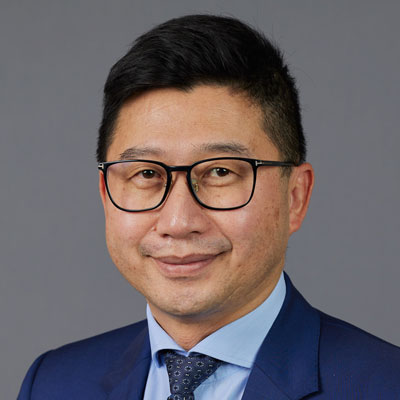 Leon Laulusa
Executive President & Dean, ESCP Business School
Championing equity and inclusion at ESCP
ESCP is committed to promoting women's leadership in the corporate world and is developing European programmes designed to address the many issues faced by women in the workplace and in leadership roles.
In line with this commitment, ESCP’s initiatives include the "Women in Leadership" certificate, dedicated course content on female entrepreneurship and leadership, and the Women in Finance Chair, launched in 2023 alongside six corporate partners to identify why women are underrepresented in the finance industry and help attract, retain, and promote women in finance.
ESCP has also recently launched Women @ ESCP, a programme aimed at supporting women through three pillars: academic, personal and professional development. An ESCP Careers Centre initiative made possible thanks to Isabelle Santenac, through a donation to the ESCP Foundation, and the support of the ESCP Alumni Association, the programme has started on the Paris campus and will expand to all ESCP campuses by 2026.
In parallel, ESCP offers dedicated scholarships for women leaders, empowering them to drive transformation in business and society. Partnerships like the Women’s Forum amplify this mission, creating platforms that uplift women’s voices and work towards a more inclusive world.
Students in the Women @ ESCP programme share what "being brave like a woman" means to them.
Campuses
A new Council of international experts will help drive accountability, innovation, and impact in ESCP’s sustainability strategy.
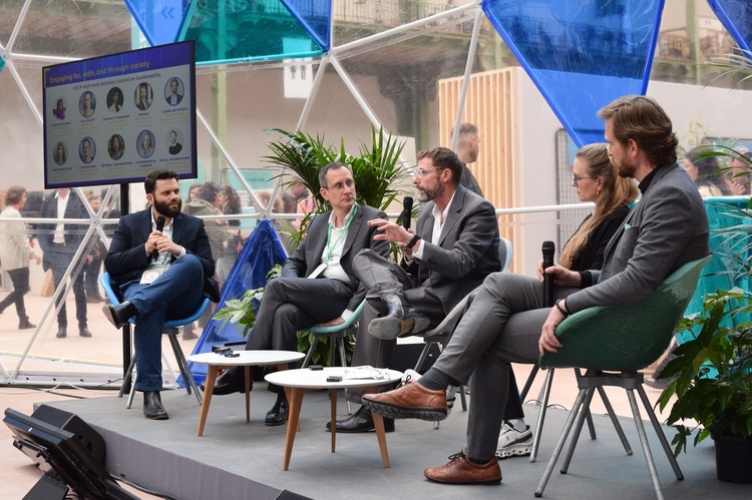
Building on its long-standing commitment to sustainability in business education, ESCP Business School has officially launched its new Sustainability Advisory Council. First announced in April 2025 at the ChangeNOW climate summit in Paris, the Council brings together 13 inspiring leaders from diverse backgrounds, including climate science, activism, public policy, finance, tech, civil society, and international development.
“Our goals with this Council are two-fold: Ensuring control and accountability of our strategy actions as well as fostering creativity, innovation and, ultimately, impact,” explains Prof. Gorgi Krlev, Associate Dean of Sustainability at ESCP Business School. “With the Council, we will harness the full breadth of environmental and social sustainability, benefiting enormously from these diverse, outside perspectives.”
Accountability, creativity and impact
The Council will help steer and inform ESCP’s sustainability strategy. Its main goals include:
- Shaping the future of business and society: Through targeted discussions, events or dialogues that will explore pressing questions like embedding sustainability in business education, reengineering current social and economic systems, or mobilising younger generations toward sustainable practices.
- Ensuring accountability and impact: Providing external oversight on ESCP’s sustainability strategy, ensuring alignment with long-term objectives, and driving measurable change.
- Creating a powerful platform for collective action: Collaborating on publications, thought pieces, and strategic initiatives, amplifying sustainability efforts in education, research, and industry.
The Members of ESCP’s Sustainability Advisory Council
The Council is presided over by Prof. Gorgi Krlev, with a mix of distinguished members that represent a broad spectrum of expertise and experience.
- Sheree Atcheson: Valtech Group Senior Vice President of Diversity & Inclusion
- Gunther Beger: Managing Director of the Directorate for SDG Innovation and Economic Transformation, UN Industrial Development Organization
- Nisreen Elsaim: Former Chair of the UN Secretary-General’s Youth Advisory Group on Climate Change
- Nicolas Froissard: Director, Sauvegarde de l’Adolescence à Paris
- Sophie Graham: IFS Chief Sustainability Officer
- Tatjana Kiel: CEO, Klitschko Ventures & We Are All Ukrainians
- Romain Mouton: Founder and President, Le Cercle de Giverny
- Emmanuel Normant: Vice President Sustainable Development, Saint-Gobain
- Daniel Nowack: Head of Social Innovation, World Economic Forum
- Hans Stegeman: Chief Economist, Triodos Bank
- Alison Taylor: Professor, NYU Stern School of Business, & author of Higher Ground
- Éliane Ubalijoro: CEO, Centre for Intern, Forestry Research
- Diana Ürge-Vorsatz: Vice Chair, IPCC
A shared commitment to rethinking business education
The members of the Council bring a wealth of diverse perspectives that will strengthen ESCP’s ability to link academia, policy, and practice.
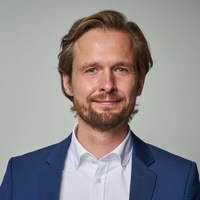
 "I think it's a bold move for a business school to open up to people who are not business-oriented, nor academic-oriented,” says Nisreen Elsaim, Member of the ESCP Advisory Council and Former Chair of the UN Secretary-General’s Youth Advisory Group on Climate Change. “It's getting more and more common right now to have people from totally different backgrounds because you can never see the bigger picture until you speak with people who see it from a different angle."
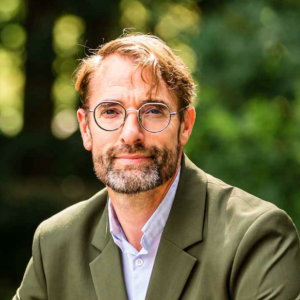
 “It really means that we get the chance to influence how ESCP is integrating sustainability into its curriculum but also how sustainability is seen amongst the future leaders of our businesses and society,” says Daniel Nowack, Member of the ESCP Advisory Council & Head of Social Innovation, World Economic Forum.
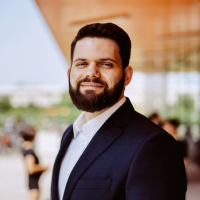
 “To have an outside view for a business school on what sustainability means—what it means for business, what it means in practice—really helps the quality of education,” says Hans Stegeman, Member of the ESCP Advisory Council & Chief Economist at Triodos Bank.
Sustainability at the core of business education
The Council is the latest expression of ESCP’s long-term sustainability strategy. For several decades, the School has worked towards a more sustainable approach, focusing on advancing curriculum transformation, reducing ESCP’s carbon footprint, and bolstering sustainable, inclusive governance.
In line with its Bold & United strategy, ESCP is ensuring that technological progress serves people and the planet. By incorporating AI tools across research, teaching and institutional practices, ESCP empowers its students, faculty and staff to drive sustainable transformation and navigate the ethical, environmental and societal challenges of our time.
In research, the ESCP Sustainability Institute is fostering innovative transfer of research and education into practice, shaping insights that inform policy and business leaders. It works closely with the ESCP Research Centre on Environmental and Societal Transitions (RESET), which addresses some of the most urgent challenges of our time, advancing interdisciplinary research on topics ranging from corporate sustainability models to the future of growth within planetary boundaries.
ESCP integrates environmental and social sustainability across all its programmes, with 100% of students receiving training in sustainability. By bridging research, education and real-world impact, ESCP strives to create a viable, carbon-neutral and fairer economy and society.
Sustainability should not be an add-on. It should be the core through which we teach finance, marketing, or economics. We are committed to shaping leaders who see sustainable, inclusive business not as an option, but as the standard.
 Gorgi Krlev
Associate Dean and Professor of Sustainability at ESCP Business School
Campuses