
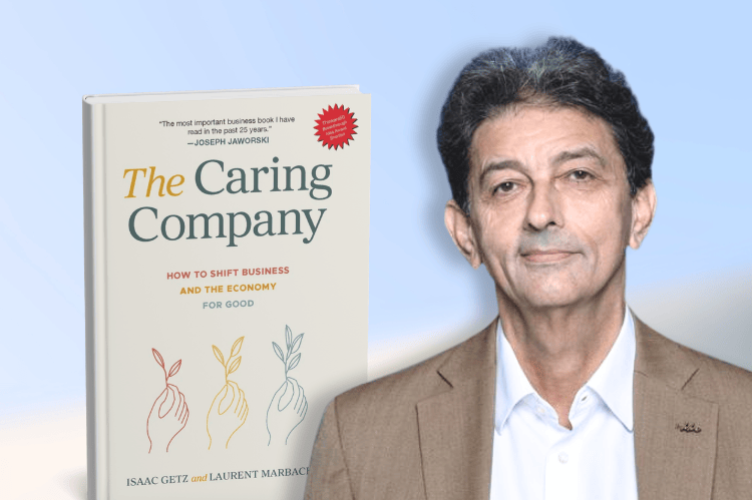
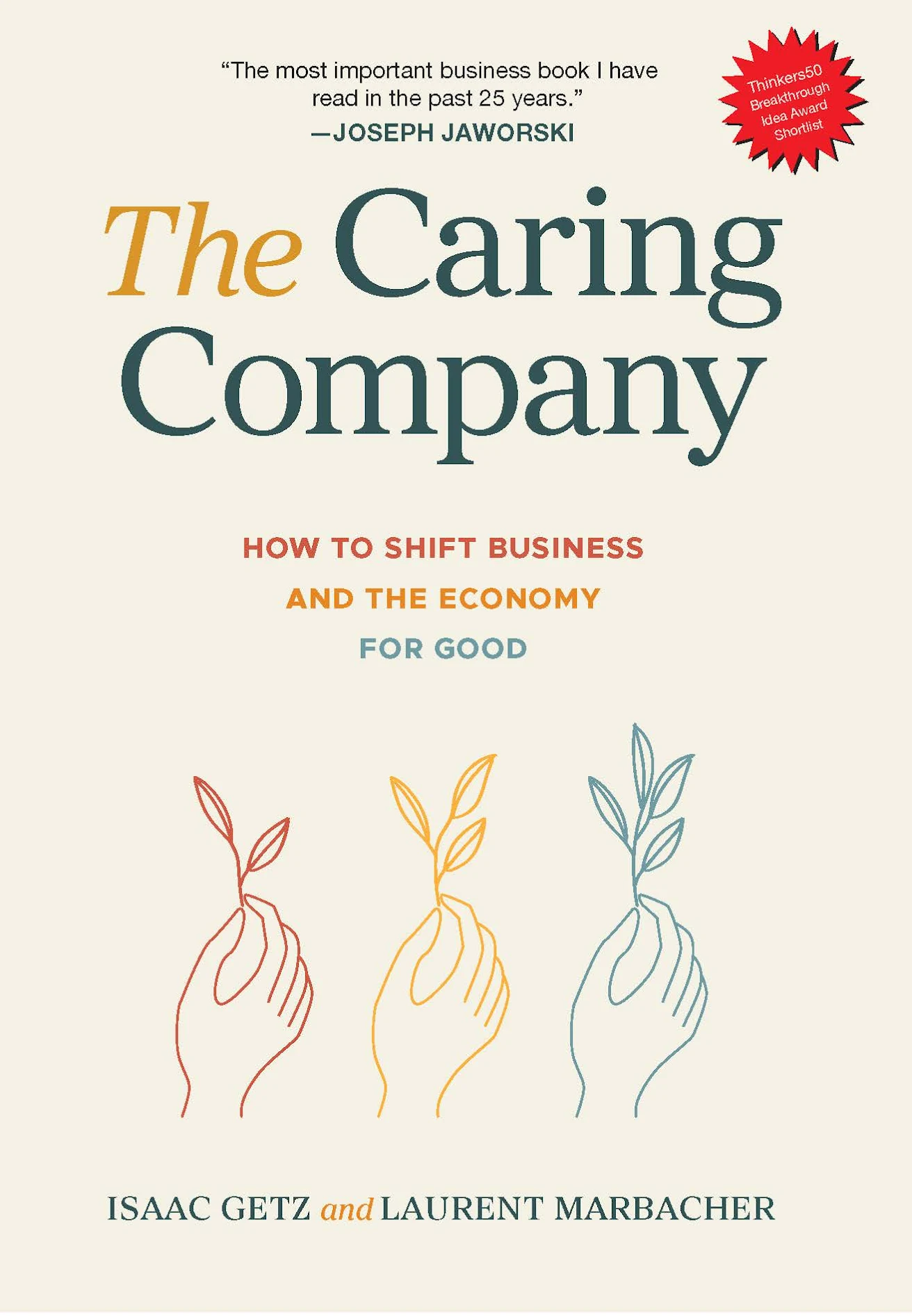
The Caring Company: A new roadmap for purpose-led business
Published and distributed by American multinational publishing company, Wiley, Getz and Marbacher’s new book is a bold roadmap for businesses that put the common good first.
The Caring Company: How to Shift Business and the Economy for Good is a timely guide arguing that organisations can make unconditional care for customers, suppliers, and communities their number one priority and outperform traditional competitors.
“Despite the many benefits that capitalism has delivered, we live in a world in which the social and environmental downsides jeopardise the positive effects. We need to urgently redefine what a business is for and take a fundamentally different approach before it is too late,” argues Professor Isaac Getz.
Grounded in a multi-year study across industries and geographies, the book blends insights from history, economics, psychology and philosophy with contemporary cases to show how caring relationships—beyond transactional interactions—generate superior, durable performance.
What makes a Caring Company
While there has been a surge in well-meaning efforts from businesses to transform their operations to balance social and environmental value with profits, research shows that these efforts are largely unsuccessful or insufficient. Instead, a radically different way, counterintuitive to traditional business thinking is required. Introducing “The Caring Company.”
Rather than treating profit as the primary goal, The Caring Company positions profit as a natural consequence of embedding social and environmental needs at the heart of day-to-day operations. The authors distinguish their approach from CSR add-ons or “balancing” frameworks (e.g. B-Corps and stakeholder capitalism) that risk “chasing several rabbits” at once.
The caring company is a company that serves its business ecosystem – clients, suppliers, and the local community – unconditionally and through its core business processes. By doing so, it enjoys unrivalled long-term prosperity.
Inside The Caring Company

- Part I — HOW TO DO – OR NOT TO DO – GOOD: A look at businesses’ past and present approaches to doing good
- Part II — THE CARING COMPANY WAY: A practical transformation playbook to become a caring company.
- Part III — SHIFTING BUSINESS AND THE ECONOMY: A reimagining of what the future of business – and of the broader economy could look like.
Case studies include: Reitan Retail (Scandinavia), Eisai (Japan), Handelsbanken (Sweden & UK), The FruitGuys and Traditional Medicinals (USA).
“Our book tells the stories of outstanding, yet often discreet companies – small and large, public, and private, in diverse industries and geographies – that are quietly reinventing what it means to operate a business successfully while meeting the world’s biggest challenges. These stories fly in the face of traditional business thinking and sound too good to be true! However, they are and offer a much-needed new approach for business to follow,” concludes Professor Isaac Getz.
Early praise for The Caring Company
Finalists for the Thinkers50 Breakthrough Idea Award, The Caring Company was praised by Thinkers50 for challenging the traditional view of business as transactional. “Your call for organisations to build unconditionally caring relationships—with customers, suppliers, and communities—offers a powerful redefinition of purpose-driven business. It’s a bold and timely contribution to rethinking capitalism for the common good.”
The book has also been endorsed by:
- Hubert Joly (Harvard Business School; former Best Buy CEO; bestselling author, The Heart of Business): “Through vivid case studies, Getz and Marbacher offer proof that we can, indeed, do well by doing good.”
- Denis Machuel (CEO, The Adecco Group): “Isaac Getz and Laurent Marbacher make a remarkable demonstration of this innovative way of reinventing leadership, business, and the economy. A must-read for every executive!”
- Joseph Jaworski (Founder, American Leadership Forum; Chairman, Generon International; bestselling author, Synchronicity and Source): “This is the most important business book I have read in the past 25 years. This solution requires courage and boldness. Don’t wait. The time is now.”
About the authors
Isaac Getz is an award-winning author, keynote speaker and professor at ESCP Business School. His work explores how businesses can transform by putting human values and care at the core of their mission. A finalist for the Thinkers50 Breakthrough Idea Award and recipient of the Marconi Creativity Award, he has shared his insights at major global gatherings, including the Peter Drucker Global Forum (Vienna) and the World Knowledge Forum (Seoul).
Over the past 25 years, Isaac has served as a senior advisor to organisations such as Decathlon, Michelin and Suez. Learn more at isaacgetz.com
Laurent Marbacher is a trusted senior advisor, working closely with global leaders, particularly from family businesses and start-ups. He engages in deep dialogues with CEOs both on their personal journey and on the transformation of their companies.
An alumnus of HEC Paris, Laurent began his career in social entrepreneurship, launching Chile’s first micro-credit bank with support from Nobel Peace Prize laureate Muhammad Yunus. Influenced by Peter Senge and the Society for Organizational Learning, as well as by Ignatian spirituality, he brings a reflective and purpose-driven approach to leadership. Laurent is also a certified team coach, trained by the pioneering Team Academy in Finland.
Campuses
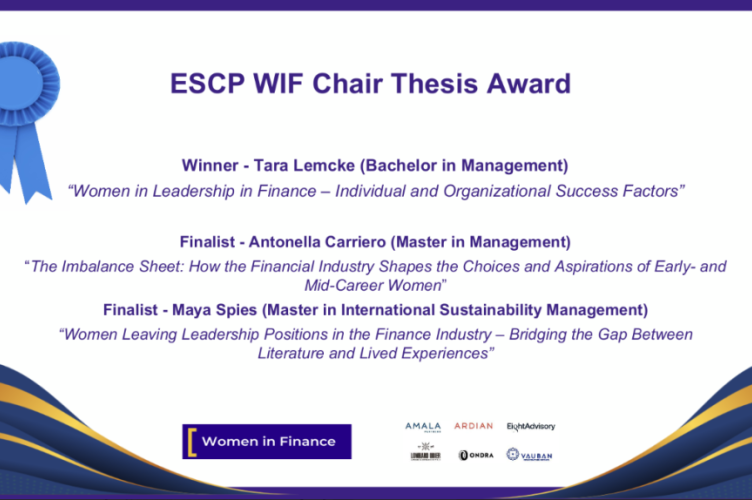
The Women in Finance Chair has awarded its Best Thesis Prize to Tara Lemcke (Bachelor in Management) for her outstanding project “Women in Leadership in Finance – Individual and Organizational Success Factors.”
Tara’s work presents a compelling and rigorously structured framework that sheds light on the barriers women face in the financial sector. What makes her thesis stand out is its holistic perspective: it not only identifies systemic and individual challenges but also emphasizes actionable corrective measures. Her cross-cutting analysis offers a comprehensive overview of the subject, combining depth with practical insights that can inform both organizations and individuals striving for greater gender equity in finance.
This year’s prize was awarded following a competitive selection among three finalists:
-
Tara Lemcke (Bachelor in Management) – “Women in Leadership in Finance – Individual and Organizational Success Factors” (learn more about it here)
-
Antonella Carriero (Master in Management) – “The Imbalance Sheet: How the Financial Industry Shapes the Choices and Aspirations of Early- and Mid-Career Women” (learn more about it here)
-
Maya Spies (Master in International Sustainability Management) – “Women Leaving Leadership Positions in the Finance Industry – Bridging the Gap Between Literature and Lived Experiences” (learn more about it here)
Campuses
Institutional and student voices converge to celebrate community, vision and transformation
On 13 November 2025, ESCP Business School Turin inaugurated the 2025–26 academic year with a ceremony that brought together students, faculty, alumni, business leaders and public officials.
A shared moment of purpose and possibility
Hosted on campus, the Academic Year Opening Ceremony embodied ESCP’s core values of excellence, diversity and European identity, through a series of high-level speeches, a student-led roundtable, and an open reflection on the School’s evolving strategic direction — a vision that is already shaping programmes, partnerships and campus life.
With more than 1,200 students from 83 countries and over 70% of them coming from outside Italy, Turin continues to stand out as one of the most international and dynamic academic environments in the country, and a key driver of ESCP’s mission to educate globally responsible leaders.
Opening speeches: a collective vision for leadership education
The event was opened by Professor Francesco Profumo, President of ESCP Business School Turin, who invited the audience to pause and reflect on how this moment marks not only the start of a new academic year, but also the beginning of a personal and transformative journey for each student.
This was followed by Professor Léon Laulusa, Executive President and Dean of ESCP Business School, who reiterated the School’s mission to unite academic excellence with human values:
“We are not just teaching skills — we are forming mindsets. Preparing tomorrow’s world means educating responsible leaders who combine knowledge, creativity and a sense of purpose,” said Prof. Laulusa.
iStéphane Fratacci, Chief Executive Officer - Paris Île-de-France Regional Chamber of Commerce and Industry, emphasised the strategic partnership between business and academia in shaping an inclusive and forward-thinking economy.
Michela Favaro, Vice Mayor of Turin and the Metropolitan City, emphasised the city’s close relationship with ESCP and its strong commitment to welcoming and supporting international students as an integral part of the local community.
Dialogue in action: students, alumni and companies shape the future of work
At the heart of the ceremony was the roundtable “Bridging Generations: Students and Companies Shaping Tomorrow’s Workplace.” For the first time in the context of an institutional event such as the Opening Ceremony, ESCP invited two student ambassadors to take the stage and lead a dialogue with business leaders. Qi Lai (MSc in International Food and Beverage Management) and Angelina Suzan Steingraf (Bachelor in Management) moderated the roundtable, marking a significant step towards amplifying student voice in key moments of the School’s public life. Their role underscored ESCP’s commitment to fostering active participation and co-creation within its international community.
The discussion featured three distinguished guests:
- Cécile André Leruste, Director of Priscus Italia, Vice-President of ESCP Business School Turin and Chair of the School’s Audit Committee
- Licia Mattioli, CEO of Mattioli S.p.A. and Board Member of ESCP Business School Turin
- Matteo Romano, Director for Micro & Small Business at TeamSystem and alumnus of ESCP’s Master in Management
Together with the student ambassadors, they explored themes including financial literacy, youth entrepreneurship, and intergenerational collaboration. Their insights bridged the gap between professional experience and academic ambition.
Closing remarks: the value of diversity and learning across cultures
Following the roundtable, Professor Francesco Rattalino, Executive Vice-President and Dean for Academic Affairs & Student Experience, addressed the audience. A key figure in the development of ESCP’s Turin campus, he reflected on the School’s learning environment:
“At ESCP, education is a collective journey. We learn from each other — across disciplines, generations and cultures. This is how we prepare students to lead with both impact and integrity,” he shared.
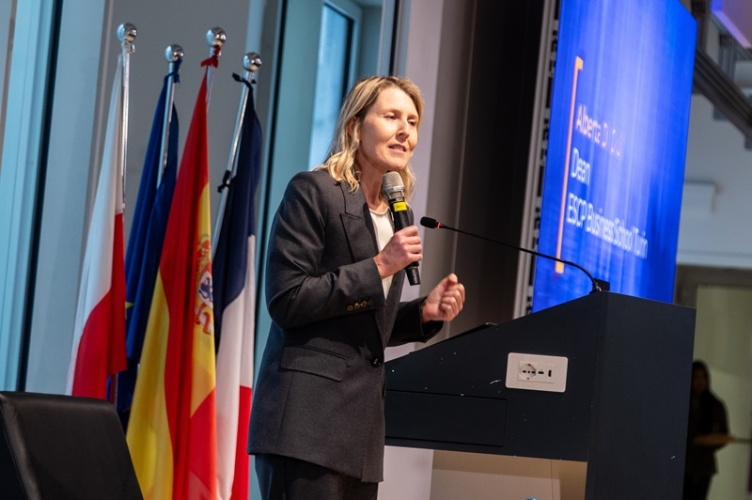
The ceremony concluded with a speech by Professor Alberta Di Giuli, Dean of ESCP Turin Campus, who underlined the importance of diversity as a pedagogical strength:
“Each student brings a unique point of view. This plurality is our greatest asset. At the Turin campus, we grow by engaging with new ideas, cultures and ways of thinking — every single day”.
A European strategy with global resonance
Recognised by Poets&Quants as Business School of the Year 2025, ESCP, with its “Bold and United” strategy, is committed to reshaping business education around innovation, sustainability and multi-campus collaboration.
As noted in Il Sole 24 Ore, La Repubblica and La Stampa, the Turin Campus will play a pivotal role in this transformation — as a laboratory for new ideas, where educational innovation is not only taught but lived.
ESCP continues to strengthen its position as a leading institution in global business education. Turin’s Opening Ceremony reaffirmed this — not only as a celebration, but as a shared commitment to shaping the future of leadership and learning.
It all starts here.
FAQ
Who spoke at the 2025-26 Opening Ceremony in Turin?
Speakers included Francesco Profumo, Léon Laulusa, Stéphane Fratacci, Michela Favaro, Francesco Rattalino, Alberta Di Giuli, and panellists Cécile André Leruste, Licia Mattioli, and Matteo Romano.
What is “Bold & United”?
“Bold & United” is ESCP’s strategic plan for 2026-2030, grounded in two core axes — Bold (renewal, technology, sustainability) and United (community, inclusion, European identity). The plan commits the School to equip future leaders with hybrid skills, foster ethical and human-centred leadership, expand flexible learning pathways and deepen its global reach while reinforcing its European roots.
What are the key milestones of the “Bold & United” strategy?
The strategy is structured around a clear timeline of major phases:
- 2026: Launch of the plan itself.
- 2027: Establishment of a new School of Technology.
- 2029: Launch of a new School of Governance and attainment of full European University status.
- By 2030: ESCP is expected to be fully operating as a European University of Management, with expanded programmes, global reach and solidified community.
What are the key academic areas of ESCP Business School Turin?
The Turin Campus focuses on four strategic sectors aligned with Italy’s areas of excellence: Luxury, Food & Beverage, Entrepreneurship, and Finance. These fields are supported by strong faculty expertise, applied research and deep industry collaboration.
Campuses
Related stories

News 22/10/2025
Awards
ESCP named 2025 Business School of the Year by Poets&Quants
The award highlights the School’s unique multi-campus model and global strategy, commitment to innovation and sustainability, and bold vision for the future.
News 24/10/2024
Opening
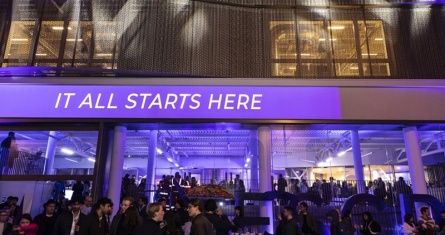
The Grand Opening of ESCP's New Turin Campus
What an exciting week it has been as we proudly inaugurated ESCP Business School's new Turin campus! This momentous occasion marks the beginning of an inspiring chapter for our institution, merging Turin's rich historical heritage with modern innovation.
Turin
News 17/01/2024
real estate
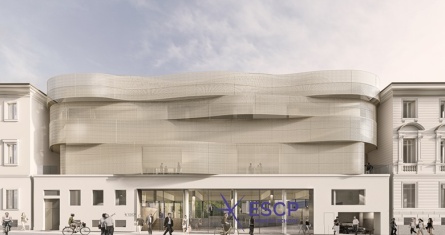
The New ESCP Turin Campus: A Symphony of Design, Innovation, and Academic Excellence
Embark on a captivating journey through the architectural marvel that is the new ESCP Turin Campus, where more than 8000 square meters of space will soon play host to nearly 1500 students from around the globe.
Turin
The ambitious project, set for completion in 2029, will reinvent the higher education experience in management, right in the heart of Paris.
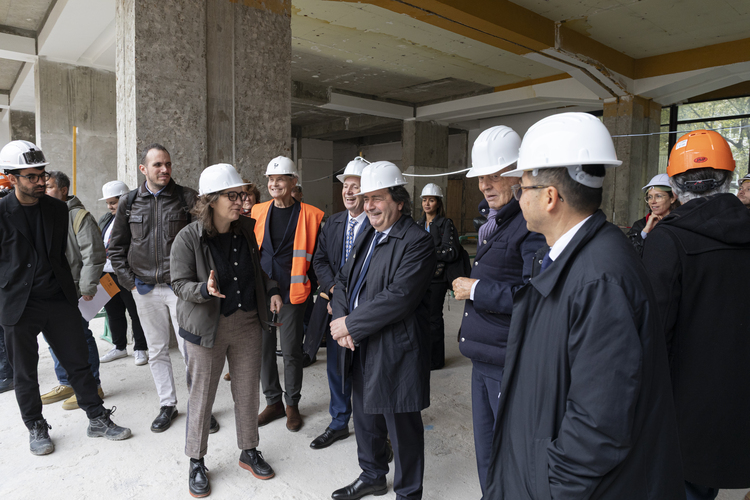
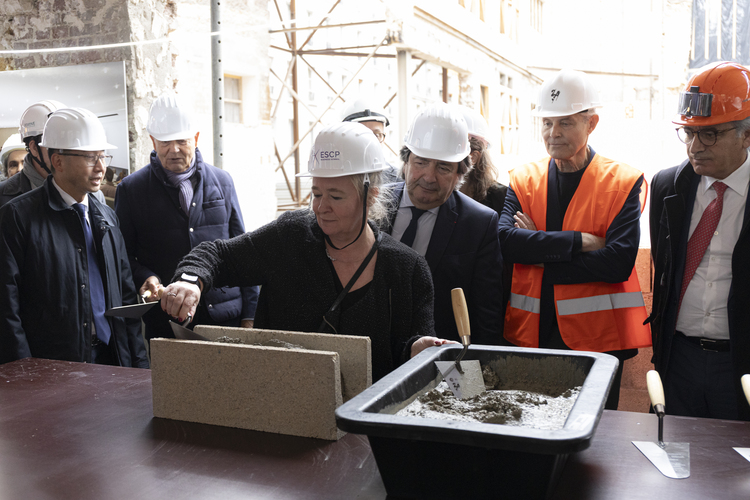
On 14 November 2025, ESCP Business School officially broke ground on the renovation of its historic campus, located on Avenue de la République in Paris’s 11th arrondissement.
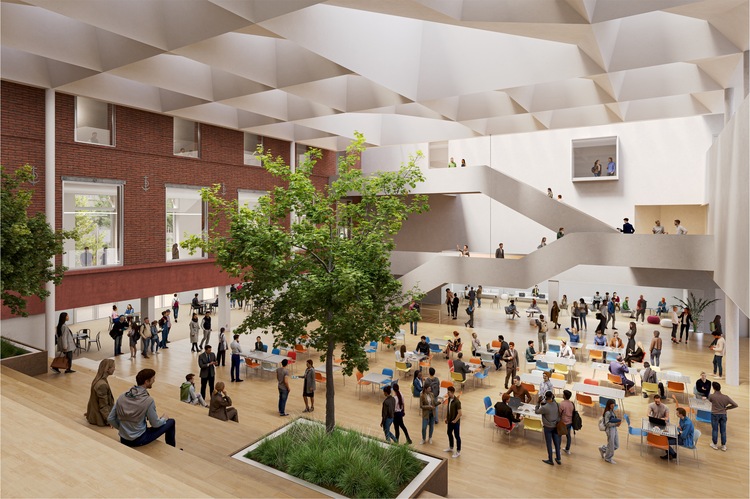
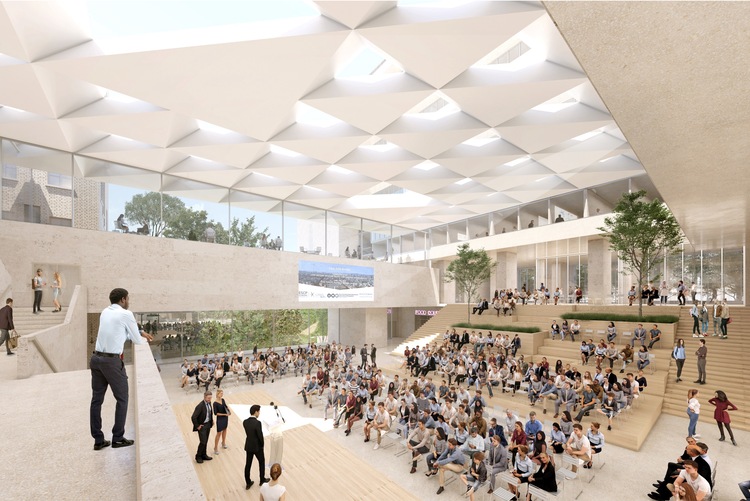
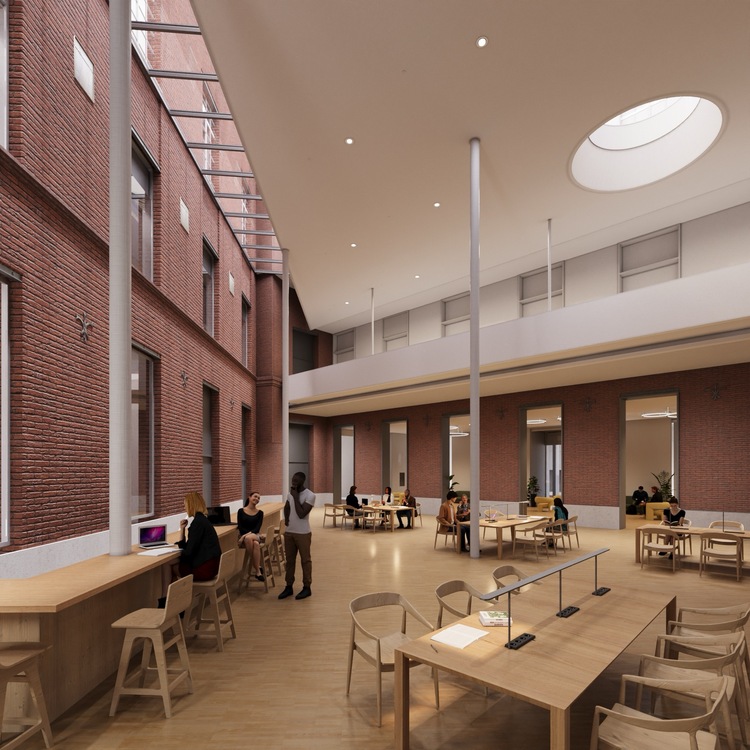
Following an initial phase of demolition, this symbolic first step marks the transformation of the School’s campus, inaugurated in 1898, into a forward-looking, responsible and sustainable campus. Designed to integrate cutting-edge technologies, the new République campus is set to reopen in 2029.
The République campus renovation is a tribute to ESCP’s heritage—founded in 1819 and established at this emblematic site since 1898. But it also reflects our ambition to build the business school of tomorrow. With this project, we reaffirm our commitment to combining academic excellence, innovation and social responsibility.
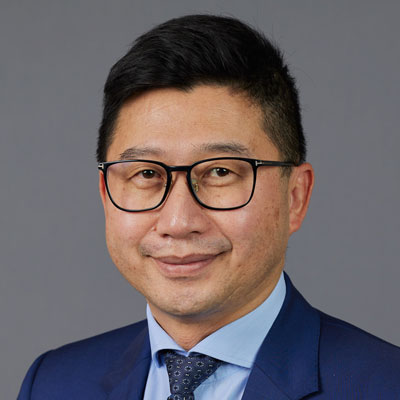 Professor Léon Laulusa
Executive President & Dean, ESCP Business School
Leading the charge in AI in education
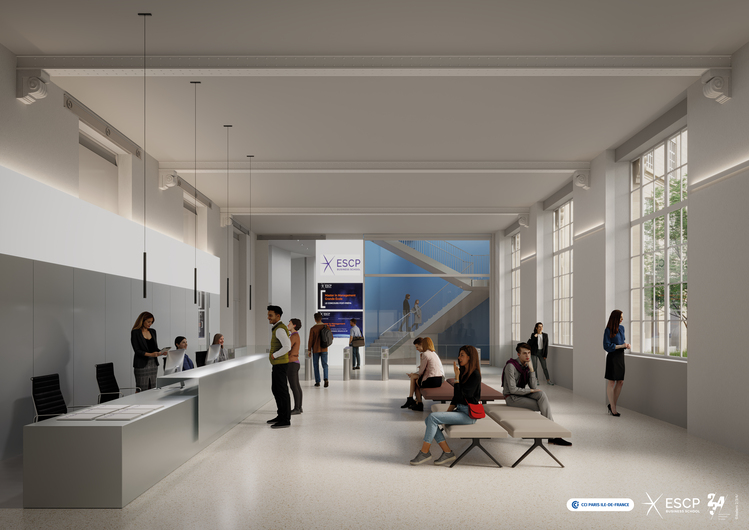
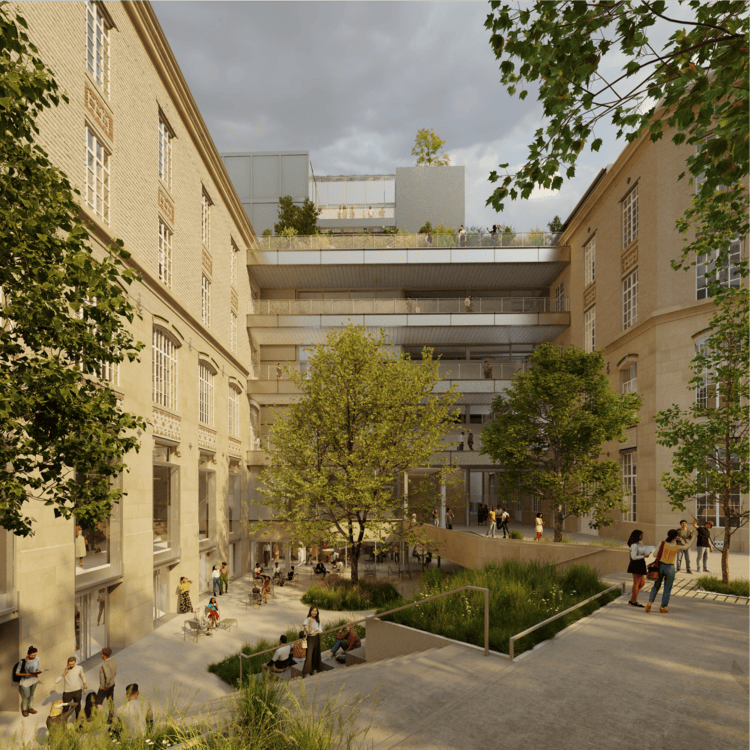
Led by the Paris Île-de-France Chamber of Commerce and Industry (CCI) and ESCP Business School, this large-scale project will give rise to a vertical, ecological and innovative campus. It has been carefully designed to meet the pedagogical, digital and environmental challenges of the 21st century.
The future campus, imagined by the architecture firm Ateliers 2/3/4/, will feature:
- Modular and collaborative spaces, aligned with new methods of teaching and research;
- A strong integration of digital tools, offering a connected and inclusive “phygital” experience;
- A focus on wellbeing and quality of life, including green spaces, terraces, sports facilities and innovative dining options;
- A responsible and sustainable approach, targeting HQE and BREEAM “Excellent” certifications.
By supporting the transformation of the République campus, the Paris Île-de-France Chamber of Commerce and Industry confirms its commitment to providing the next generation with learning environments that rise to the challenges of tomorrow.
President, CCI Paris Île-de-France
An investment in education, ambition, and impact
The République campus renovation represents a new chapter in ESCP’s bold ambitions. It also reflects the School’s commitment to creating environments that foster academic excellence, innovation and inclusion. It represents a shared vision for a campus that reflects ESCP’s values and supports the ambitions of its entire community.
“This campus will allow students to find a place to work that matches the scale of their ambitions,” said Mrs. Marie-Christine Lemardeley, Deputy Mayor of Paris in charge of higher education, research, and student life.
This project expresses our will to propel ESCP into the future while preserving what makes it unique: its historic roots in Paris and its distinctive European and international outlook.
Chairman of the Board of Directors, ESCP Business School

Campuses

How one ESCP alumna’s EMBA journey became a lived lesson in authentic, human-centred leadership.
When Nurul Tajuddin was accepted to ESCP’s Executive MBA programme, she had already spent two years preparing—gaining support at work, securing buy-in at home, and aligning finances. Then, just as the plan was in motion, life added a twist: she learned she was pregnant.
Rather than defer, she chose to move forward, backed by a shared commitment at home and a clear professional goal. “I knew the Executive MBA was key to unlocking the next phase of my career,” she says. It was her path to a more global perspective and the strategic confidence she needed to step into international leadership roles.
That choice proved pivotal. Now Programme Lead for Global People Transformation and Pay Transparency at WPP, she leads an initiative that impacts over 20,000 people across numerous countries, cultures and languages. Nurul shares how the EMBA became a powerful lesson in adaptive and inclusive leadership.
Designing her ESCP EMBA journey
For professionals with demanding lives, the EMBA’s flexibility is a defining strength. For Nurul, it was indispensable. She and her husband, both in demanding full-time roles, used seven months of shared parental leave to focus on what she calls their “mini adventure.”
That included studying in Berlin, London, Madrid, Paris and Turin, with additional modules in Brussels, Austin and Singapore. “ESCP’s flexible course structure made it possible to combine multiple modules per trip,” she says.
Balancing work, study, and a newborn was never going to be easy. But one of Nurul’s biggest challenges was internal: reconciling her roles as a mother, professional, student and partner. “I often wrestled with the perception that you couldn’t be both an ambitious leader and a good parent.”
That tension led to a breakthrough. “I quickly realised I couldn’t — and didn’t need to — separate those identities. My family travelled with me to every seminar. Far from being a liability, their presence made the experience richer.”
Her cohort also welcomed it and encouraged her. “They reminded me that the barriers I feared were often the ones I imposed on myself.” What began as an academic pursuit soon became a lived exploration of what human-centred leadership could be.
The value of a supportive community
At every stop, Nurul and her family leaned on each other and on the community they found at ESCP. “The ESCP community became an extension of our family. The staff were consistently supportive—even finding private rooms for meals or feeding when needed.”
One moment stands out. At the Paris campus, when security hesitated to allow her baby in for feeding, the late EMBA Director Inès Khedhir intervened personally. “That moment still moves me. It showed me that at ESCP, we’re seen as individuals — not just students, but people with families, needs and lives beyond the classroom.”
Those small gestures, she says, embodied the empathy and inclusion that now shape how she leads.
Nurul’s leadership style today reflects a shift that began years earlier. In her twenties, she launched a farm-to-fork export startup, raised £2 million in venture capital and poured herself into the business. “It wasn’t a commercial success,” she says. “And my relationships suffered. That experience taught me what really matters.”
From that experience, she learned to lead in a different way. In Austin, she and her family arrived early for her module. “We carved out time to explore the city together. A small gesture — but a reminder that my family isn’t just supporting the journey. They’re part of it.”
For her, leadership is no longer about sacrifice or separation, but about integration, empathy, and sustainability.
A transformative lesson in leadership
Today, Nurul leads transformation programmes on a global scale. The EMBA, ranked third in the world by the Financial Times, gave her the skills and network to do so — but perhaps more importantly, it reshaped how she thinks about ambition, balance and partnership and how this has influenced her approach to leadership.
She credits the programme with shaping a leadership style that builds trust fast. Leading the global Workday HR and Finance transformation, she used that approach to unite diverse stakeholders and bring transparency to complex decisions.
These experiences have reinforced Nurul’s conviction that the next era of leadership will be defined by empathy, integration, and the courage to bring one’s whole self to the table. She believes that sustainable transformation happens when leaders unite ambition with humanity, turning complexity into collaboration and creating impact that lasts.
Relevant Link
Campuses

Welcoming new achievements in case writing excellence for ESCP
ESCP ranks among the world’s top business schools for its teaching cases’ impact and launches new Case Collection
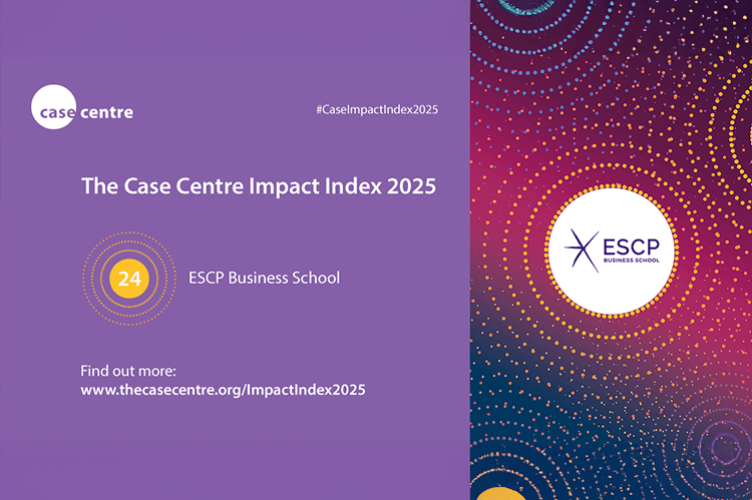
ESCP Business School ranked 24th in the 2025 Case Centre Impact Index, a seven-place rise from the previous year and our first entry into the global top 25. This recognition reflects the School’s growing influence in case-based management education and the success of its cross-campus initiative, the Case Project (CaP) @ ESCP.
Launched in 2023, the Case Centre Impact Index ranks institutions annually based on the reach and influence of their faculty-authored teaching cases. ESCP’s rise highlights the calibre of its faculty and reflects a broader shift toward a collective, strategic institutional approach to case production and dissemination.
We are incredibly proud of this achievement, which shows what becomes possible when individual creativity is guided by shared purpose. The Case Project has demonstrated that when inspired faculty efforts are channelled through a common vision and strong institutional support, their impact multiplies—reaching new classrooms, deepening critical discussions, and amplifying ESCP’s international influence. Our leap in the Case Centre’s Impact Index is powerful evidence of that multiplier effect.
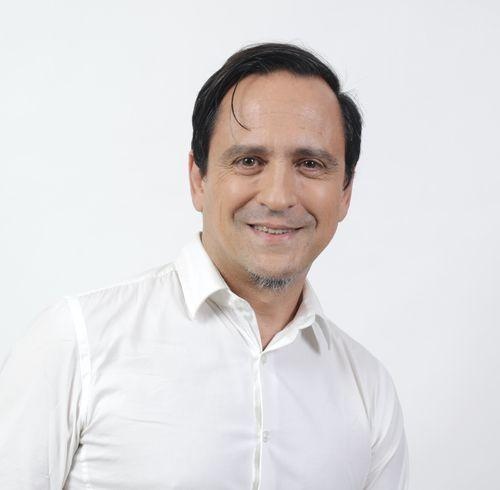 Ezequiel Reficco
Associate Professor, Editor of the Case Project @ ESCP
Global recognition for ESCP’s impact in case writing
ESCP has long demonstrated excellence in case writing. The School’s current portfolio includes 63 faculty-authored cases listed with The Case Centre, six of which are prize-winning cases. In the past academic year, 16 ESCP cases were taught at 53 institutions across 24 countries, reaching over 8,000 students.
Each case not only broadens ESCP’s international footprint but also enriches our own classrooms—bringing fresh managerial insights and lived business dilemmas directly into the learning experience. Standout prize-winning faculty include:
- Professor Alberta Di Giuli: Prada’s Hong Kong IPO
- Professors Marion Festing & Tobias Schumacher: Moving Tomorrow – A Cultural Journey
- Professor Martin Kupp: Driving Digital Transformation at Faurecia
- Professor Valérie Moatti: Louis Vuitton: New Product Introductions vs Product Availability
- Professor Maral Muratbekova-Touron: The Acquisition Experiences of KazOil
- Professor Ezequiel Reficco: TecSalud’s Response to COVID-19
This year, Professor Martin Kupp also received the Outstanding Contribution to the Case Method Award from The Case Centre, alongside Professor Urs Mueller of SDA Bocconi. Together, they have trained over 1,300 educators through more than 80 global workshops and co-authored The Ultimate Case Guide to advance excellence in case method education.
These achievements demonstrate how ESCP’s faculty are shaping global business education through the creation of high-quality, practice-based pedagogical materials and resources.
The launch of ESCP’s Case Collection
This year’s ranking coincides with the official launch of ESCP’s institutional Case Collection on The Case Centre platform. The collection brings together all ESCP-authored cases under a dedicated, branded portal—boosting global visibility, simplifying adoption, and reinforcing the School’s academic reputation.
With a committed community of faculty authors, an institutional infrastructure to support and scale our work, and a curated Case Collection now live, ESCP is strengthening its presence and influence in the global case method landscape.
The launch of our Case Collection is a milestone in ESCP’s long-term commitment to pedagogical excellence. It shines a light on our collective effort and reinforces our ambition to contribute to global management education. Most importantly, it helps us bring world-class, practice-based learning into our classrooms—enhancing the student experience and connecting theory with real managerial practice.
Ezequiel ReficcoAssociate Professor, Editor of the Case Project @ ESCP
The ESCP Case Project: scaling case writing excellence under a shared vision
ESCP’s growing influence in case-based learning is supported by the launch of CaP in 2023. Historically, the School’s case writing output was driven by accomplished faculty working independently. Today, CaP serves as a cross-campus initiative that connects, supports, and scales the work of case writers across all six campuses.
Through CaP, faculty receive dedicated research funding, peer review, editorial and proofreading support to ensure high-quality pedagogical output. Beyond supporting individual authors, CaP has become a platform for institutional learning. It has created shared processes, mentoring structures, and editorial standards that make case writing a collective capability.
Since its launch, CaP has significantly increased collaboration between campuses and accelerated case production. ESCP-authored cases are now distributed through popular managerial educational platforms such as Harvard Business Publishing and The Case Centre, expanding their reach and visibility worldwide.
Looking ahead, ESCP aims to build on this momentum to embed case-based learning more firmly within its broader pedagogical vision. The Case Project is laying the groundwork for the integration of our teaching, case-work, and academic research—advancing a model of active learning that is distinctly ESCP.
Visit The Case Centre to browse ESCP’s cases and prize winners.
Campuses

At ESCP in Turin, 417 students unite with 48 organisations to solve real-world challenges, creating impact far beyond the classroom
What happens when international business students team up with cross-sector organisations, guided by one of Europe’s leading business schools?
You get Collective Projects: a transformative ESCP initiative rooted in the Turin Campus and now in its ninth edition. This hands-on consultancy programme pairs second-year Bachelor in Management students with startups, SMEs, non-profits and public institutions—mostly from Piedmont, but also from other Italian regions—to tackle real business and societal challenges.
A growing ecosystem of learning and impact
Since its launch, the Collective Projects initiative has become a powerful example of how business education can engage with society—creating meaningful connections between international students and a wide variety of organisations.
From environmental innovation to inclusive growth, the projects respond to real challenges faced by partner organisations—transforming them into opportunities for shared learning, practical experience and tangible value.
“The Collective Projects are more than an educational tool—they are a living laboratory for change,” says Prof. Alberta Di Giuli, Dean of ESCP Turin Campus.
“Our students engage with the complexity of real challenges, while the organisations benefit from fresh insights and high-quality deliverables.”
In just the last three editions (2022–2024), the programme has involved over 920 students,145 projects delivered and 130+ organisations supported.
Each edition has built on the last, broadening its reach and refining its impact. The 2025/26 edition marks a new high point:
- 417 students from 64 nationalities
- 61 projects
- A diverse mix of participating 48 organisations:
- 36,1% startups
- 34,4% small and medium enterprises (SMEs)
- 24,6% non-profit and third-sector organisations
- 4,9% consulting companies
While most partner organisations are based in Piedmont, the initiative also engages actors from Lombardy, Liguria, Tuscany, Emilia-Romagna, Apulia, highlighting the programme’s growing geographical reach and cross-sector relevance.
Each collaboration addresses a concrete business or societal challenge—ranging from market positioning and digital communication to business development, sustainability, or internationalisation. While many projects blend multiple categories, from marketing to fundraising, all give students the opportunity to contribute meaningfully to real-world progress, while organisations benefit from fresh insights, analytical rigour and entrepreneurial drive.
Learning by doing: a dynamic platform for students and organisations
Social good meets business rigour
While students gain hands-on experience and build real-world skills, participating organisations—whether startups, SMEs, social enterprises or non-profits—benefit from fresh insights, strategic tools, and dedicated support they often wouldn’t access otherwise.
Projects are tailored around five key pillars:
- Business development
- Marketing and communication
- Fundraising and financial sustainability
- Internationalisation
- Innovation and knowledge management
“We translate the needs of organisations—be they businesses or non-profits—into clear challenges, match them with student teams, and support the process through mentoring and guidance.”- says Lisa Orefice, Director of Réseau Entreprendre Piemonte. "Our goal is simple: to create shared value by transforming students’ energy into tangible results for startups, companies, and third-sector organisations across the region.”
Building lasting partnerships for shared growth
At the heart of the Collective Projects is a collaborative ecosystem that brings together education, entrepreneurship and community engagement. With the support of Fondazione Compagnia di San Paolo and the coordination of Réseau Entreprendre Piemonte, the initiative fosters meaningful connections between ESCP students and a wide network of organisations.
Réseau plays a key role in translating organisational needs into clear, actionable briefs and guiding teams throughout the process—ensuring that each project delivers mutual value. This structured yet flexible model has helped cultivate a community that is not only more resilient, but also more connected and forward-looking.
Crucially, the impact doesn’t end when the projects conclude. Many organisations return for multiple editions, integrating student contributions into their operations, deepening the collaboration over time, and even recruiting talent from their project teams. This continuity is a testament to the initiative’s long-term value and replicability, reinforcing its role as a driver of regional innovation and sustainable growth.
Equipping students for real-world impact
To ensure students are fully prepared to navigate the complexity of these real-world challenges, the 2025/26 edition will include a dedicated cycle of four practical masterclasses delivered by Réseau Entreprendre Piemonte and ESCP academic tutor.
These sessions will provide essential tools and frameworks for strategic thinking and effective collaboration:
- Understanding Customer Needs
- Business Model Canvas
- AI for Project Management
- Project Management Essentials
These training sessions are designed to bridge theory and practice, helping students adopt a consultant mindset and deliver high-quality, actionable outcomes for their host organisations.
FAQ
What are the Collective Projects at ESCP?
They are six-month consultancy-style projects where second-year Bachelor students work in teams with external organisations to solve real-world challenges.
What is the main goal of the Collective Projects?
To generate lasting impact by uniting international students and local organisations around real challenges that drive regional and social progress.
What types of challenges do projects address?
Projects span business strategy, marketing, digitalisation, fundraising, internationalisation, and innovation, often with a sustainability or social focus.
Who benefits from this initiative?
Students gain hands-on consulting experience. Organisations gain strategic insights and support. The region benefits from stronger ecosystems.
Who can participate as a partner organisation?
When the annual call for applications opens, startups, SMEs, non-profits, corporates and public institutions can apply to host a project and benefit from the support of ESCP student teams.

Campuses
Related stories
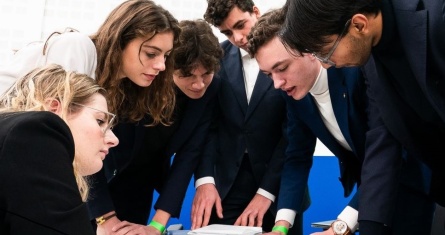
News 31/07/2024
Collective Projects
How ESCP's Collective Projects Transform Student Learning into Real-World Impact
ESCP Business School's Bachelor in Management programme has once again demonstrated the success of its innovative Collective Projects initiative. Promoted by ESCP with the support of the Fondazione Compagnia di San Paolo and Réseau Entreprendre Piemonte, the Collective Projects provide a strong bridge between local companies and a global and multicultural context.
Turin
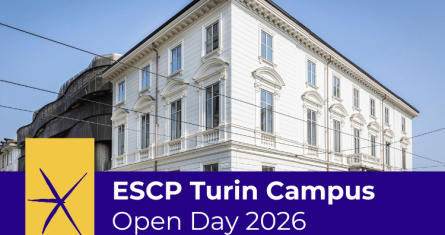
Event 21/02/2026
Turin Events
Turin Campus Open Day
Il 21 Febbraio 2026 partecipa all'Open Day del Campus di Torino per conoscere da vicino i programmi offerti da ESCP Business School.
Turin
Professor Valentina Carbone on why sustainability requires rethinking the very foundations of business education
Ten years after the launch of the United Nations Sustainable Development Goals, the question of what progress really means is back in the spotlight. A recent Nature editorial urged researchers to “end GDP mania” and help design new indicators of human and planetary prosperity that go beyond growth. Business schools, too, face an uncomfortable reckoning: are they truly preparing leaders to live and work within planetary limits?
Few are tackling that question as directly as Professor Valentina Carbone, Professor of Sustainability and Supply Chain Management and Scientific Director of the PhD Programme at ESCP Business School.
Valentina’s research critically examines how global value chains reproduce or can challenge environmental degradation and social injustice. In her latest reflection piece, “Practically Re-imagining Business Education for Sustainability”(European Management Journal, 2025), co-authored with Lucy McCarthy and Anne Touboulic, she invites fellow educators to pause and reconsider the foundations of business education itself, suggesting that business schools have a crucial role to play in enabling the profound transformation required in the face of accelerating socio-environmental degradation.
The illusion of progress
Asked how she would grade business schools on their readiness to meet the SDGs, Valentina doesn’t hesitate: “I would give them a C. Many have adopted the vocabulary and imagery of the SDGs, but too often it’s cosmetic, a branding exercise rather than a structural transformation.”
She suggests that part of the problem is structural as SDGs themselves are broad, uneven, and non-binding. “There have been many promises, but not many are on track. Some goals have advanced, such as access to basic services, others are definitely lagging behind, such as hunger and biodiversity integrity, and some even conflict: economic growth versus environmental protection, for example. The framework is inspiring in its harmonising effort, but realising its promises requires sharper priorities, context-based, and actionable levers for change.”
This coexistence of ambition and contradiction embodies what she describes as the “paradox of sustainability” in higher education:
We celebrate sustainability while leaving unexamined the assumptions on which our teaching rests.
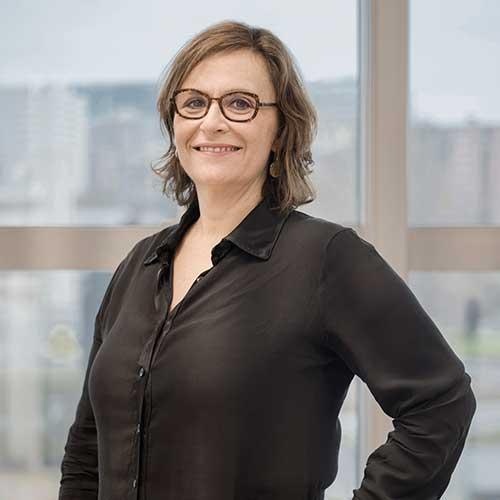 Valentina Carbone
Professor of Sustainability and Supply Chain Management and Scientific Director of the PhD Programme at ESCP Business School.
Questioning the foundations
Valentina argues that the biggest misconception about sustainability in business schools is that it can be addressed by adding a few dedicated courses. “We often think that a class on ethics or climate change will be enough to steer the transformation,” she says. “But real change requires revisiting the foundations of business education itself.”
Her recent article identifies these foundations as the legacies of Western modernity: among them a worldview that treats nature as a set of resources to be controlled and managed, and positions humans as separate from the natural world. Here, she draws inspiration from the work of Philippe Descola and Bruno Latour, two French anthropologists and philosophers who questioned that very separation.
Descola’s research on Amazonian societies challenged the Western idea that only humans possess subjectivity. He showed that many cultures perceive continuity between humans, animals, and the environment, a “world of relationships” rather than domination. Latour extended that reasoning to modern science, arguing that the world is a web of connections between human and non-human actors: technologies, species, and environments that shape one another.
“For management education, this deep and often unquestioned assumption matters profoundly,” Valentina explains. “As long as we view the economy as separate from nature, sustainability will remain superficial. But once we understand that every decision is embedded in ecological and social systems, our sense of success can begin to move beyond growthism and short-term efficiency.”
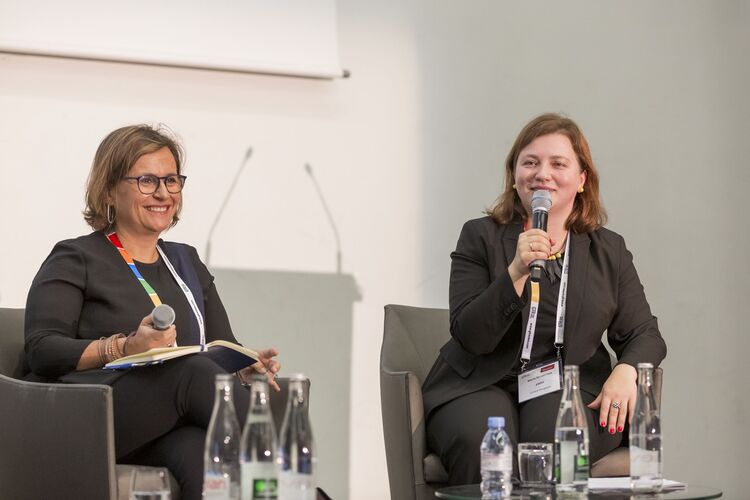 Professor Valentina Carbone speaking at GTR Europe 2019, where experts discussed Europe’s economic outlook, trade policy, and sustainability in global value chains.
From add-ons to transformation
In both her research and teaching, Valentina encourages students to question inherited hierarchies of knowledge:
“At the moment, we teach the logic of business first and only afterwards mention environmental or social issues. This approach is flawed. We should begin from the Doughnut Economics logic — the ecological ceilings that define planetary boundaries and the social foundations required for justice and well-being — and then ask how business can thrive within them.”
This inversion, she argues, does more than rearrange the syllabus. It redefines what counts as competence and leadership. “When you start from the limits, you teach creativity under constraint, collaboration instead of domination, long-term thinking instead of short-term gain. You’re training people to operate in a finite world.”
Principles for re-imagining business education
Valentina’s recent paper suggests several principles that could guide this transformation. The first is reflexivity: the willingness of educators to question their own assumptions, emotional reactions and teaching habits. “Transformation can feel overwhelming,” she says, “but reflection is something everyone can do. From there, small but meaningful changes ripple outward.”
A second principle is pluralism: exposing students to different ways of knowing and being.
Business education has long assumed the universality of Western economic logic. But there are many other traditions—indigenous, cooperative, community-based—that see prosperity as collective and relational. By engaging with them, we expand our imagination of what business can be.
Valentina CarboneProfessor of Sustainability and Supply Chain Management and Scientific Director of the PhD Programme at ESCP Business School.
A third is coherence between thought and practice. “We need to connect reflection to action—through project work, collaboration with local organisations, and direct engagement with ecological realities. Sustainability isn’t something to talk about in the abstract; it’s something to practice.”
These ideas are not just theoretical. At ESCP, Valentina is the scientific director of the PhD Programme which ensures that that emerging ESCP researchers understand the realities of operating within planetary limits and offers a specialised track in sustainability. Her classes integrate live projects and partnerships that bring students into contact with real-world sustainability challenges.
Learning from others
For Valentina, openness to dialogue extends beyond academia. She hosts a monthly French-language web show, Supply Chain Durable, dedicated to environmental issues in logistics and production, and she serves on the board of HOP – Halte à l’Obsolescence Programmée (Stop Planned Obsolescence), a French NGO that campaigns for more durable products and circular design.
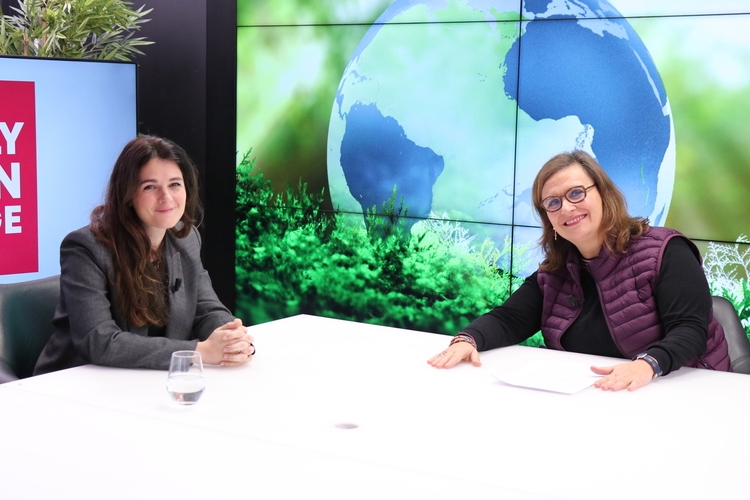 Professor Valentina Carbone with Clotilde Charaix, Transdev’s Director of Climate and Environmental Strategy, on Supply Chain Durable.
 In all of this, she insists on bridging reflection and activism. “Sustainability education isn’t neutral. It’s ethical, emotional and political. We have to acknowledge that the way we teach carries values and consequences.”
A message for the next generation
Asked what she wants her students to take away from their time at ESCP, Valentina doesn’t hesitate:
“Don’t try to be the best leader of the old world. Dare to challenge it. Co-build, with humility and solidarity, a new world where business thrives only within the limits of the planet and caring for people’s needs. Be conscious of inequality, and of the fragility that defines our shared space.”
For Valentina, sustainability is not an optional layer of ethics but a shift in consciousness. “We live in a finite world. Recognising that is not a constraint — it’s what allows us to create differently.”
Related stories

The Choice
Professor Ben Voyer talks with ESCP’s Valentina Carbone about why true sustainability demands systemic change and how companies can avoid greenwashing.
Campuses
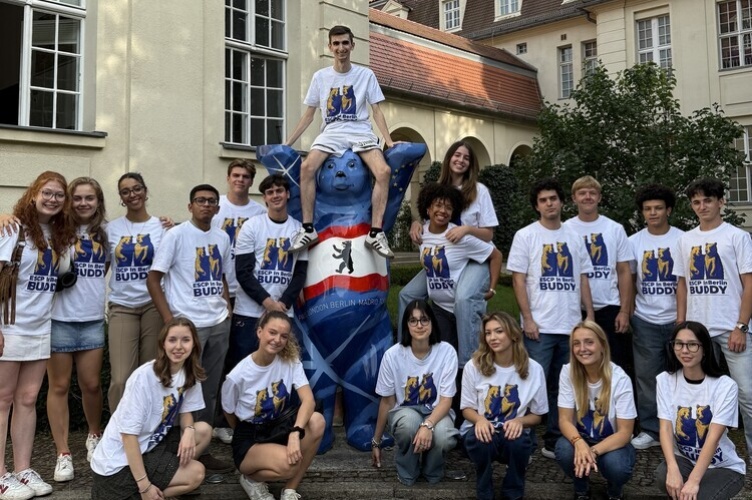
Induction events promoted connection, D&I and community
ESCP Berlin launched the new academic year with an energising series of well-being events and D&I-driven initiatives, welcoming a diverse cohort of students from around the world. Under the theme of “Being United,” these activities gave tangible expression to ESCP’s Bold & United 2026–2030 Strategic Plan with a call to strengthen belonging and D&I values.
Over several dynamic induction days, the ESCP Berlin Well-being Department collaborated with students, staff and external partners to foster community, inclusion and creativity from day one.
“We ensure that all students feel welcome in the ESCP family and have the opportunity to grow personally and professionally,” said Sabrina Saase, Health & Well-being Manager at ESCP’s Berlin Campus. “These initiatives show how ESCP’s values of inclusion, diversity, and student agency can come to life in inspiring and actionable ways.”
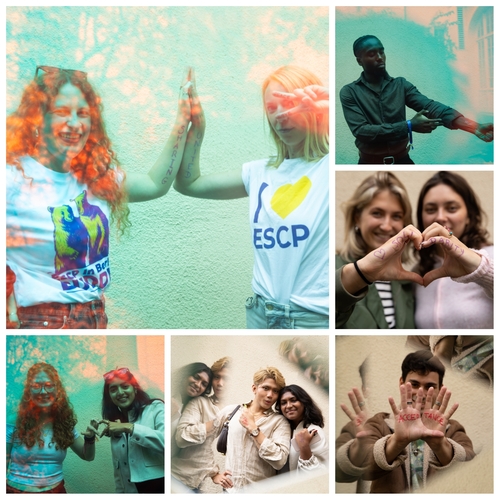
From Words to Action: A Solidarity Photo Exhibition
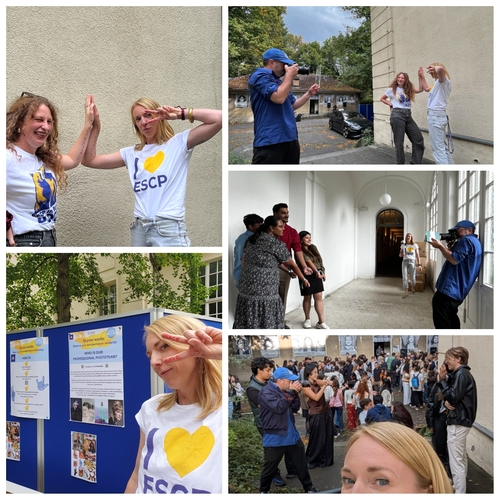
In partnership with the AGORA student society and creative studio Schall & Schnabel, students participated in the “In Your Words: Show us your perspective on solidarity” photoshoot. Each student selected a word they believed essential to solidarity and unity—then wrote it on their hand as a symbolic gesture of commitment. The resulting group portraits will be exhibited as “From Words to Action” during the UN Women’s 16 Days of Action Against Gender-Based Violence campaign in November.
A New Buddy System Driving Creativity and Innovation
This semester marked the launch of a Buddy System for the youngest group of new students. Through the programme, Buddy Juniors are linked with more experienced peers, or Buddy Seniors, with an interest in entrepreneurship. Supported by Blue Factory Berlin, the mentorship initiative promotes belonging, leadership and innovation.
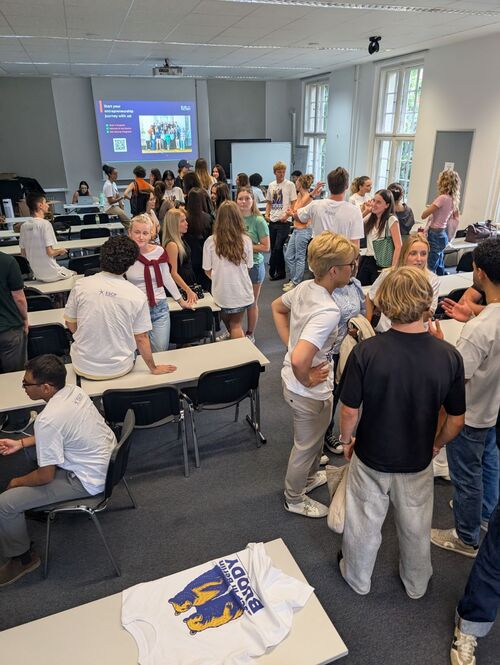
As part of a joint kick-off event, students attended the semi-final pitches for Stage 2, a pan-European competition for the best startups spinning out of leading universities. At the event, ESCP student entrepreneurs presented their start-up ideas, competing for a place in the next round.
After the event, the Buddies attended an exclusive exhibition showcasing the results of the entrepreneurial workshop “Improbable: An Art-Thinking Method” from participants in the Executive Master in Digital Innovation and Entrepreneurial Leadership Programme. The experience spotlighted ESCP’s commitment to imaginative problem-solving and cross-disciplinary thinking.
Diversity & Inclusion in Practice: Workshop with Un rôle à jouer
As part of the induction series, students participated in a diversity and inclusion workshop facilitated by Un rôle à jouer. The session tackled key topics including:
- Gender-based violence
- Racism and LGBTQIA+ discrimination
- Ableism and other systemic barriers
The training focused on raising awareness, recognising and preventing sexism, racism, and all forms of violence, harassment, and discrimination, along with knowing where to turn for help at ESCP.
Promoting Connection Through Team-Building
Students also engaged in ice-breaker and team-building events designed to spark meaningful conversations. These sessions encouraged students to reflect on the values they share—such as sustainability, creativity, and curiosity—while celebrating difference as a source of innovation.
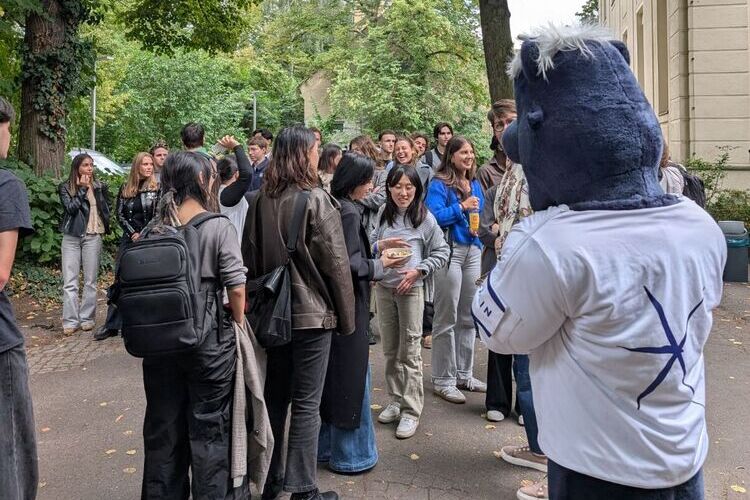
These successful well-being events are a best practice example of successful teamwork across departments and in cooperation with students and external partners.
 Sabrina Saase
Health & Well-being Manager at ESCP Berlin
A warm thank you to the ESCP staff who helped coordinate and facilitate these activities and made them visible for our students:
- Alma Péli-Çelik, Programme Manager, ESCP Berlin Campus
- Betty Lapeyre, Programme Manager, ESCP Berlin Campus
- Livia Zimermann, Head of the ESCP Blue Factory Berlin
- Alison Masse, Senior Manager for Executive Degree & Entrepreneurship Programmes
- Mallika Singh, Digital and Brand Communication Manager
- René Mauer, Professor for Entrepreneurship and Innovation
- Andrea Gommans, Head of Student Experience, Student Experience Berlin
Campuses

From Heritage to Global Impact:
ESCP Alumni Abdelghani Hammoud's Journey with WeBerber
Abdelghani Hammoud, an ESCP Madrid alumni and recipient of the 42-Telefónica Scholarship, is gaining international recognition for his entrepreneurial venture WeBerber, recently featured in Traveler Magazine. His company, founded in 2017, bridges Moroccan Berber traditions with sustainable innovation, empowering local artisans while bringing their craftsmanship to a global audience.
A third-generation artisan from the Atlas Mountains of Morocco, Abdelghani first entered the world of business almost by accident—selling his family’s handmade rugs online to support his film studies. This early experience sparked a passion for digital storytelling and entrepreneurship, which later found fertile ground at ESCP Business School.
“Reflecting on my time at ESCP, I am profoundly grateful for the opportunities that shaped my personal and professional growth,” Abdelghani shares. “The 42-Telefónica Scholarship was instrumental, providing me with the support to explore programming and digital innovation while immersing myself in a learning environment that emphasized business with social impact.”
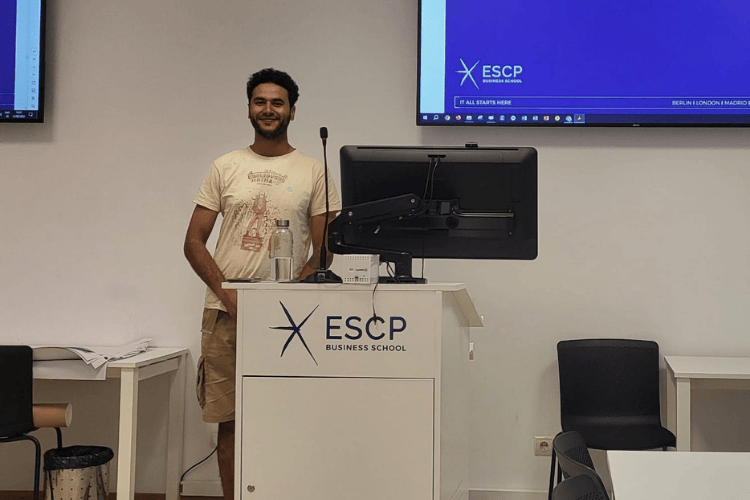
Through the Option-E Programme in Madrid, Abdelghani deepened his understanding of how entrepreneurial skills can serve societal challenges. This academic foundation proved crucial in shaping the mission and strategy behind WeBerber: preserving Moroccan Berber weaving traditions while ensuring fair trade practices.
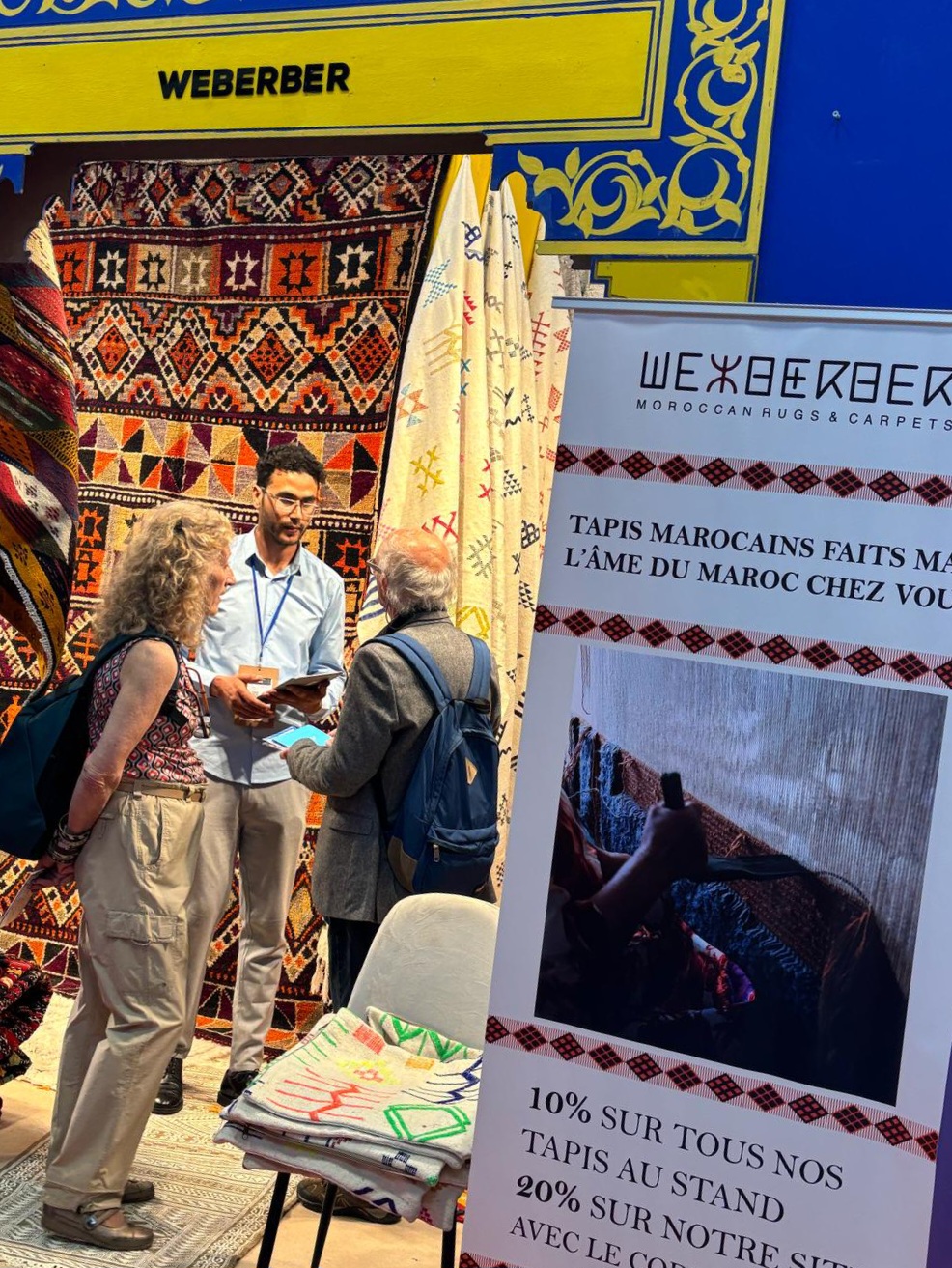
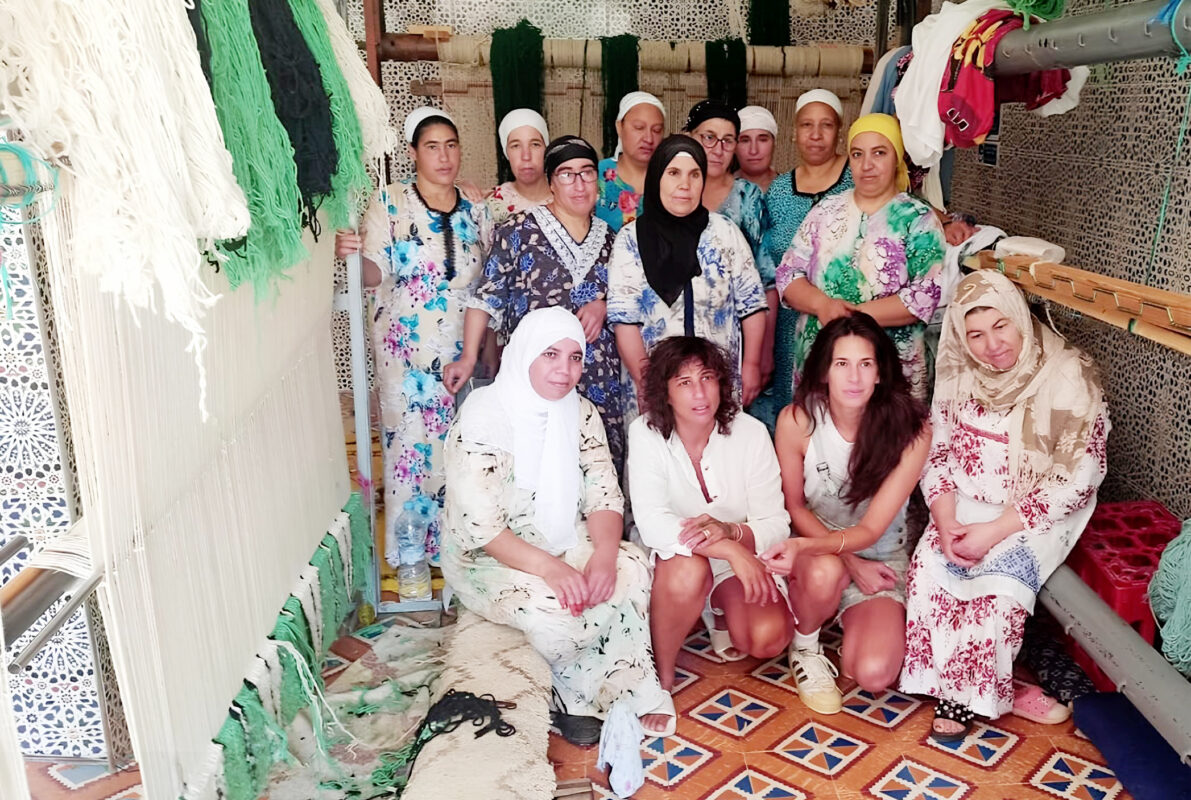
The company collaborates with international designers and works in partnership with Label STEP, a non-profit committed to ethical working conditions in the handmade carpet industry. Each rug is handmade using locally sourced wool and organic dyes, honoring ancestral techniques while embracing contemporary design and global sustainability standards.
“The interdisciplinary approach at ESCP, combined with the scholarship’s focus on tech advancement, gave me a unique blend of business and technical expertise. This fusion allowed me to connect heritage with digital platforms, and ultimately to build WeBerber as a modern, fair-trade business with deep cultural roots.”
As Abdelghani continues to develop WeBerber — with its rugs now featured in global exhibitions and design magazines — he remains connected to his academic path, occasionally returning to Madrid to further his tech training.

His story stands as a powerful example of how education, tradition, and innovation can come together to create lasting impact. As Abdelghani puts it: “I hope my experience inspires current and prospective students about the transformative potential of ESCP and its scholarship programmes.”
Campuses