
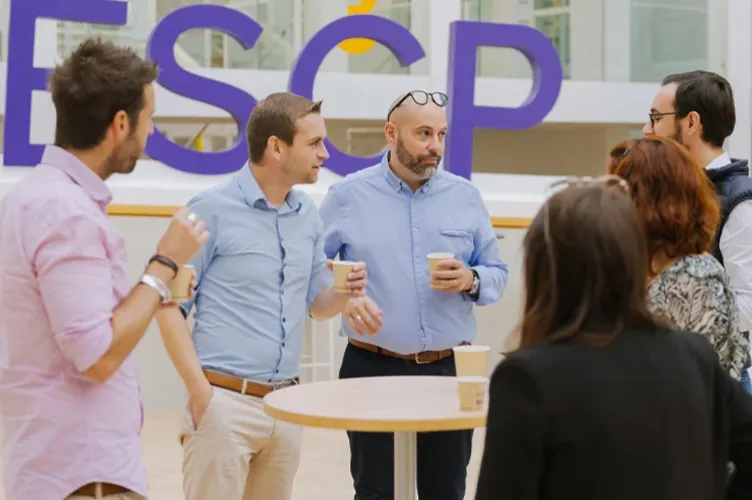
Playfulness for Professional Equity: Exploring Inclusion Through Interaction
Led by Jamie L. Gloor (University of St. Gallen) with collaborators Eugenia Bajet Mestre, Huong Pham, Mihwa Seong, Isabelle Engeler, and Raina Brands, this session examines how playfulness—spontaneous, interactive, and pleasurable—can be leveraged to foster equity and inclusion, helping leaders and teams break down barriers, build connection, and cultivate fairness in everyday interactions.
The programme will open with a 20-minute lightning talk, “Between the Spotlight and the Shadows: Women’s Agency and (In)Visibility in Finance.” A study using an agency lens to understand how women experience and manage (in)visibility in a highly masculine context, conducted by the Women in Finance Chair (Almudena Cañibano, Marion Festing, Amira Rahmat).
This collaboration between LIMI and WISE reflects ESCP’s mission to advance impactful research at the intersection of leadership, inclusion, and well-being—generating insights that enrich academic dialogue and shape healthier, more inclusive workplaces.
Learn more
Location
Organiser: ESCP Business School
Madrid - Spain
MapDate
Start date: 03/12/2025
Start time: 12:00 PM
End time: 1:30 PM
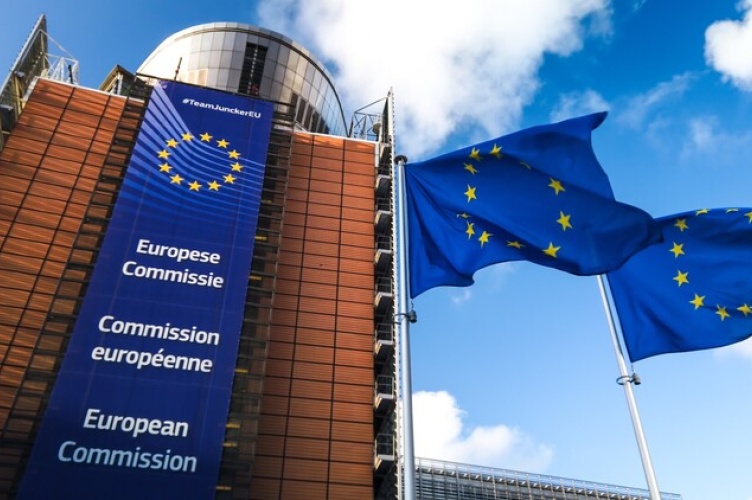
As part of the European Commission’s Housing Advisory Board, ESCP’s Professor of Real Estate contributes to key financial innovations for a more sustainable housing future in Europe.
In the face of rising housing costs and deepening social inequality across Europe, the European Commission has released a bold new framework: “Towards a European Affordable Housing Plan.” The report outlines 75 policy recommendations aimed at supporting national and EU-level action on housing affordability, supply, and sustainability.
Among the 15 experts selected from over 200 applicants is Professor Jaime Luque, Full Professor of Real Estate at ESCP Business School. His appointment to the Housing Advisory Board reflects a significant recognition of his expertise in real estate and housing policy at the European level.
Professor Luque contributed directly to Chapter 5 of the report, which focuses on funding mechanisms to unlock capital for affordable housing development. His recommendations include:
- A European Affordable Housing Investment Fund to channel institutional and household savings into long-term affordable housing;
- Preferential ECB collateral treatment for affordable housing securities, improving their attractiveness to investors;
- Tax Increment Financing (TIF) districts that allow cities to fund housing from future increases in property tax revenue.
Europeans hold €33 trillion in savings — half of it outside Europe,” Professor Luque explains. “We now have an extraordinary opportunity to attract part of this patient capital to expand our stock of affordable housing. By combining public guarantees with private investment, we can make affordability a permanent feature of our housing system — not a temporary fix.
“If the ECB recognises affordable housing securities as good collateral, it could unlock new financing streams while also giving the central bank an additional tool for long-term price stability.”
In the same spirit, Professor Luque emphasises the importance of aligning financial innovation at the municipal level with broader social goals:“The Tax Incremental Financing (TIF) framework would allow municipalities to dedicate part of their future tax revenues of new housing developments as equity grants for affordable housing developers. The more we design financial architecture around social outcomes, the stronger and more resilient our housing systems will be.”
The report argues for a fundamental shift in how Europe approaches housing — not as a speculative asset, but as essential social infrastructure on par with energy, health, or transport systems. The final European Affordable Housing Plan is expected to be published in early 2026.
Professor Luque’s participation reaffirms ESCP’s role at the intersection of finance, sustainability, and policy leadership, and highlights the School’s growing contribution to high-level European initiatives.
Related stories

Commission appoints members of Housing Advisory Board
Campuses
Campuses
At the 20th edition of the Women’s Forum, ESCP students joined leading changemakers and walked away with bold new perspectives on leadership
From self-belief to salary negotiation, from inclusive innovation to climate justice, the 2025 Women’s Forum was a masterclass in courageous leadership. Held November 6-7 in Paris, this edition welcomed leaders, changemakers, and allies from over 100 countries to explore the theme: “Courage: Bold Moves for a Better World.”
Marking the 20th anniversary of the Women’s Forum—and the fourth year of ESCP’s academic partnership—the event deepened an ongoing dialogue between the school and the Women’s Forum community. For the ESCP students in attendance, the Forum was a transformational two days of listening, questioning, and connecting with the women shaping tomorrow.

Courage on stage: inspiring stories and conversations
Whether in the front rows or behind the scenes, students felt the power of representation. “Seeing so many women with diverse yet successful paths at the Women’s Forum is truly inspiring,” shared Inès Ould Ali, Master in Management (MiM) student. “Each speaker and participant brings a unique story of resilience, leadership, and purpose.”
Meanwhile, onstage, ESCP brought the spirit of courageous leadership to life. ESCP Professor Alisa Sydow joined the New York Times Debate on whether business will ever be brave. Alumnus Nicolas Santi-Weil (ESCP 2001), CEO of AMI Paris, joined Pascal Morand, Executive President of the Fédération de la Haute Couture et de la Mode and former ESCP Paris dean, for a breakout session on how creative disruption can drive inclusion and cultural change.
Seeing so many women with diverse yet successful paths at the Women’s Forum is truly inspiring.
 Inès Ould Ali
Master in Management (MiM) student
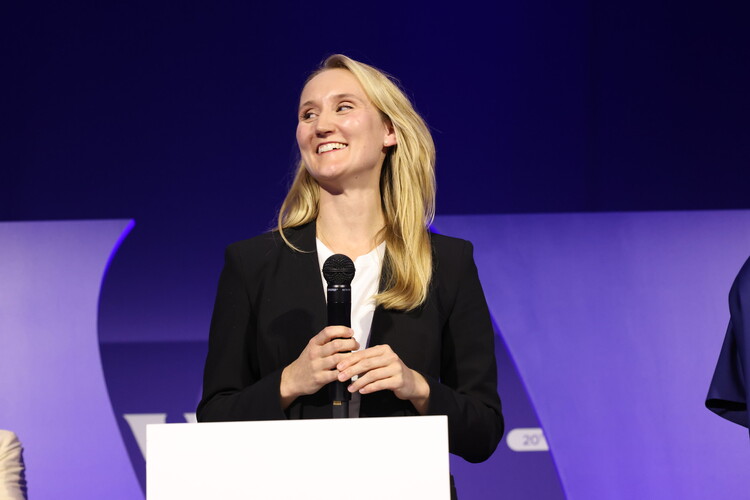 Professor Alisa Sydow on stage at the Women’s Forum
 Practical lessons in leadership
Throughout the Forum’s 30+ talks and breakout sessions, the urgency of inclusive leadership was palpable. Conversations moved beyond headline issues—gendered pay gaps, bias, harassment—to examine accountability, allyship, and the systemic and concrete shifts needed to build more equitable organisations.
Students also took away actionable advice on navigating early careers. “I’ve gotten a lot of really good tips about salary negotiation,” shared Agathe Dewitte, MiM student. “One thing that I’m going to take away is the fact that we still have so much to do.”
Rising Talents × ESCP Mentorship: A New Chapter Begins
The Forum also marked the official launch of the first-ever Rising Talents mentorship initiative, that will bring together 20 ESCP students and 10 exceptional women leaders for a year-long programme dedicated to leadership development, cross-sector learning, and personal growth.
At the mentorship kickoff session, members of the 2025 Rising Talents cohort shared formative moments from their lives: stories of risk, reinvention, and resilience.
“What resonated with me most was the Rising Talents’ perspective on growth; if your journey is linear, it’s because you’re not taking enough risks," shared MiM student Marie-Catherine Deschênes, reflecting on her key takeaways from the session. “Failure should be seen as a catalyst to grow and learn rather than a setback.”
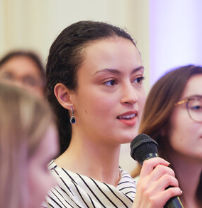
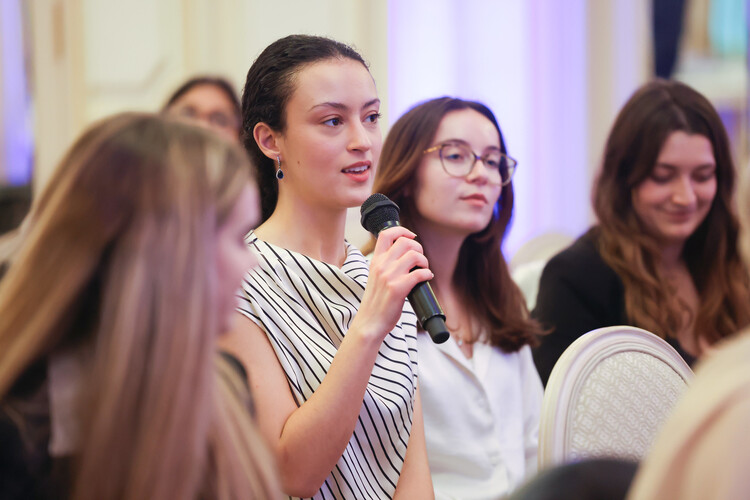 Inès Ould Ali, Master in Management (MiM) student poses a question to Rising Talents panel
Since 2007, Rising Talents has identified and supported high-profile women under 40 on their way to becoming influential global leaders. Today, the network includes more than 270 women worldwide, including leading voices in business, policy, and innovation.
“The discussions highlighted how valuable it is to build connections across sectors. Engaging with people from various sectors enriches our thinking and strengthens our ability to create meaningful change,” added Marie-Catherine. “I’m excited to continue this mentorship journey throughout the year and carry these lessons with me moving forward.”
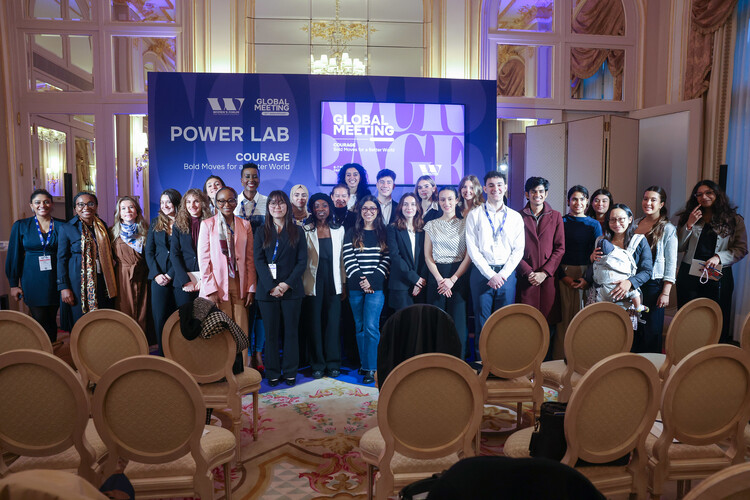 The first-ever Rising Talents mentorship cohort
Building courage, one connection at a time
Across the Forum, one message became clear for ESCP students: courage grows through connection, curiosity, and the willingness to stay true to yourself. “The Forum is a powerful reminder that success takes many forms, and that staying true to one’s values is what ultimately drives impact,” shared Ines.
The Women’s Forum reminded students that leadership isn’t a fixed role; it’s a lifelong practice of learning, listening, and choosing to lead with courage. Asked to share her key takeaway, Marie-Catherine didn’t hesitate. “Be bold, be disruptive, and don't be afraid.”
My key takeaway is be bold, be disruptive, and don't be afraid.
 Marie-Catherine Deschênes
MiM student
Relevant Links
Campuses
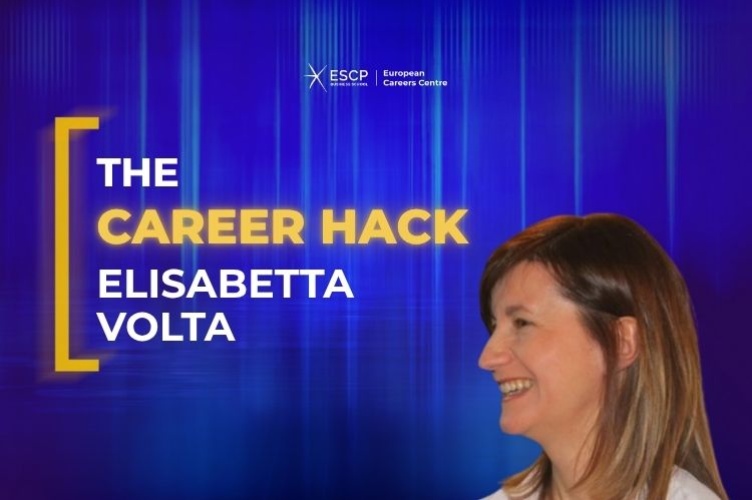
“Curiosity, empathy and adaptability matter more than mastering every tool” — Elisabetta Volta, Talent Attraction Director at KPMG
In a rapidly evolving consulting landscape shaped by AI, human qualities like empathy, adaptability and purpose remain central. In this interview, part of the series The Career Hack — a student-focused content powered by the ESCP Business School Careers Centre team in Turin — Elisabetta Volta, Talent Attraction Director at KPMG, shares practical and inspiring advice for students eager to launch their careers in consulting. From decoding talent acquisition trends to shaping a meaningful early career path, her perspective blends data-driven strategy with deep human insight. Discover how to stand out, stay curious and grow with purpose at the start of your professional journey.
Everyone’s got a personal career motto. What’s yours, and how does it guide you?
Working in a constantly evolving environment, my career motto is to keep learning while creating the best match between individuals and organisation, enabling both personal and professional growth while serving a shared purpose. It guides how I listen, how I lead and how I build connections. I believe in combining analytics with empathy to truly understand people.
AI & Recruitment: Human-Centred, Data-Driven
In today’s AI era, how are data and analytics reshaping talent acquisition processes and trends?
In the age of Artificial Intelligence, data and analytics are redefining how we connect with talent, empowering rather than replacing human intuition. By reading trends, mapping emerging skills and guiding smarter, more inclusive decisions, we are shaping a talent strategy that looks ahead, not behind. At KPMG, we are moving toward a predictive and human-centred approach, where insight meets empathy to shape the future of work.
Considering the rise of AI, what’s your best advice for students on how to prepare smartly for applications in this industry and what’s not really worth stressing about?
My advice? Focus on curiosity, adaptability and digital fluency. AI thrives on minds that connect dots creatively. Don’t stress about mastering every tool; instead, work on your soft skills and maintain a positive mindset. Show that you can learn fast and think ahead with curiosity. We value potential as much as experience, and what truly makes the difference is a learning mindset.
What Recruiters Notice – and What Students Should Seek
Recruiting is always a two-way street: what makes a candidate stand out to you, and what should students look for when choosing their first workplace – which drivers really matter?
What makes a candidate stand out to our organisation is integrity, teamwork and a genuine desire to keep learning. I’m always impressed by those who respect individuality and lead with purpose, even early in their careers. When choosing your first workplace, I’d say be patient and look at the bigger picture: focus on learning and on the future career path, while searching for a culture that helps you grow as a person, not just as a professional. In the end, the right environment shapes the right future.
Can you share an example of a great pitch from a young talent that really impressed you?
What always impresses me in a young talent’s pitch is authenticity, when someone speaks with passion, clarity and a genuine understanding of their own story. This often happens during our Employer Branding events (e.g. challenges or hackathons), when participants are asked to present their work.
Gen Z at Work: Purpose, Collaboration and Career Growth
Gen Z is entering the workforce with strong values around purpose, sustainability, and work–life balance. How is KPMG adapting to these expectations to stay attractive to young talents?
Gen Z is definitely reshaping the workplace. We are investing in purpose-driven careers and sustainability initiatives that truly matter. What inspires me most about this generation is their clarity on what they value and the courage to ask for it. We foster a culture of respect, continuous learning and transparency, where everyone can grow with authenticity. Young talents want impact and balance, and we are evolving to offer both, shaping the future together.
Once in, young consultants often work side by side with much more experienced professionals. What’s your advice for our students on bridging the generational gap and building strong, effective relationships at work?
Build relationships with humility and curiosity. Experienced colleagues have stories, insights and lessons worth listening to, while you bring fresh energy and new perspectives. Don’t be afraid to ask, share and challenge respectfully. Generational gaps close through mutual trust and openness. The best teams grow through genuine dialogue.
How should young consultants set their goals and structure their growth to truly shine as internal talents?
Young consultants should set goals that reflect their values and long-term aspirations, not just short-term results. Staying open to feedback and continuous learning makes all the difference. Building trusted relationships and showing initiative are key to standing out. Growth needs both structure and adaptability. Those who take ownership of their journey make a difference that lasts.
From embracing AI with empathy to cultivating purpose-driven careers, this conversation reminds us that success in consulting starts with mindset. Whether you're preparing your first pitch or shaping your long-term path, authenticity and a learning attitude will help you grow — both as a professional and as a person.
FAQ
What is The Career Hack?
The Career Hack is a content series developed by the ESCP Careers Centre in Turin. It features professionals across industries sharing actionable advice with ESCP students.
Which programme should I choose to work in consulting?
Explore the Bachelor in Management (BSc) or Master in Management to develop a strong foundation for a consulting career..
How is ESCP preparing students for the future of work?
With its focus on sustainability, innovation, and global leadership, ESCP offers interdisciplinary learning across campuses and strong career support through its Careers Centre.
Campuses
Related stories

News 26/11/2024
Corporate Partnership
Driving Innovation and Leadership in a Changing World: An Interview with Marco Perrone, Partner at KPMG
We are excited to announce a strategic corporate partnership between the ESCP Business School Turin Campus and KPMG, a global leader in professional services. We interviewed Marco Perrone, Partner at KPMG, to celebrate this new partnership.
Turin
News 23/07/2025
Careers Centre
Linking Talent and Business: 2024–2025 Highlights in Turin
Explore ESCP Business School Careers Centre achievements at the Turin Campus for 2024–2025: mentorship programmes, career fairs, recruiting events, and strong corporate partnerships with 21 companies shaping global business leaders.
Turin
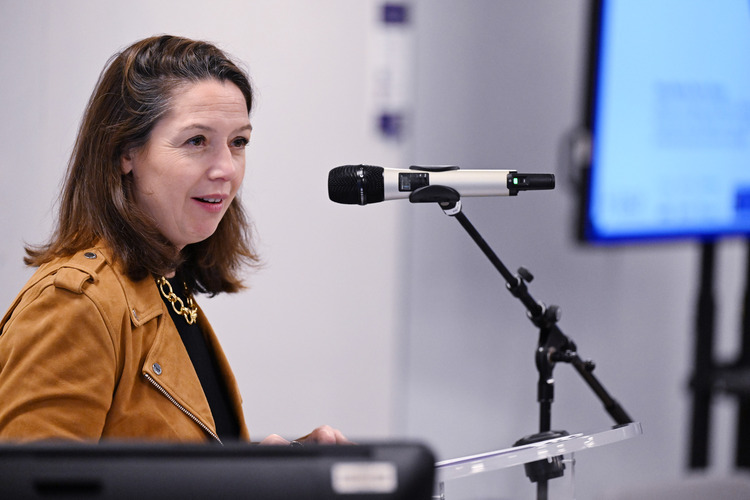
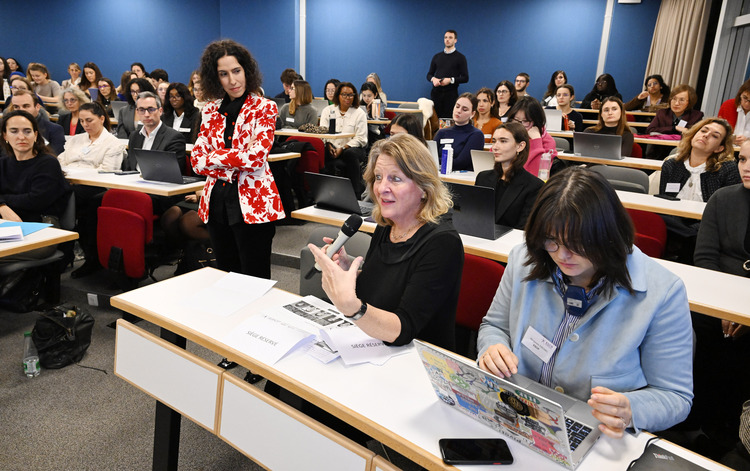
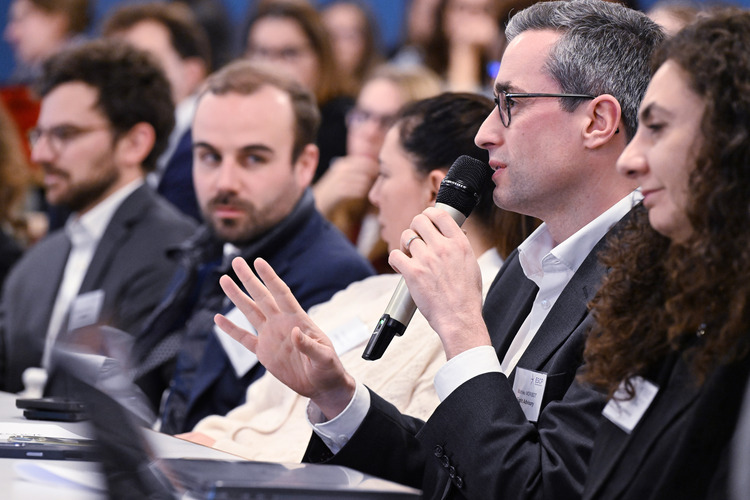
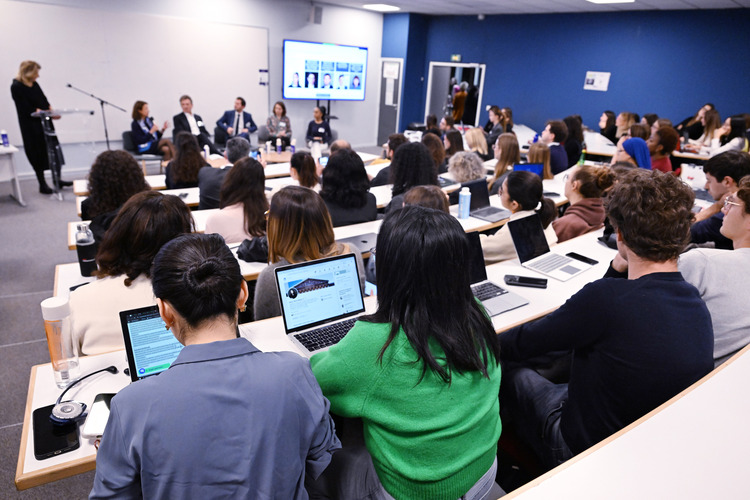
Bridging academia, industry, and the student community, the Chair Annual Event explored the structural reforms and professional networks needed to strengthen women’s influence in finance
Opening And Research Highlight
The event began with a warm welcome from Professors Almudena Cañibano and Marion Festing, Scientific Directors of the Chair, who presented the latest research findings. Their presentation underscored the importance of evidence-based understanding in shaping more inclusive financial environments.
Drawing on three recent studies, they highlighted:
- The need to encourage early exposure to finance among young women, helping them build confidence and interest to specialise in this field;
- How well-designed paternity leave policies can shift cultural norms and promote gender equality at home and in the workplace;
- The importance of supporting women’s agency in managing their visibility and recognition within financial careers.
More details on these insights can be found here.
Keynote Speech: Le Pouvoir Économique Des Femmes
The keynote speech was delivered by Marie-Pierre Rixain, Member of the French Parliament and architect of the landmark Rixain Law on women’s professional and economic equality. Her address emphasized the transformative power of women’s economic participation and the importance of legislative frameworks in driving systemic change.
Madame Rixain recalled Simone de Beauvoir’s assertion that economic independence constitutes a fundamental prerequisite for the realization of civil rights. She situated this idea within the context of a society undergoing a profound transformation, one with the potential to redefine power dynamics and advance women’s financial autonomy. This evolution, she noted, stems not only from women’s longer life expectancy compared to men but also from their increasing capacity to seize emerging opportunities derived from collective progress and intergenerational legacy.
According to recent research cited by Madame Rixain, women now save at rates comparable to men. However, due to an ingrained and socially constructed aversion to risk, rooted in long-standing disparities in remuneration and non-existence of women’s own economic identity, they tend to invest less frequently.
Consequently, she argued, it is imperative to dismantle, step by step, the systemic inequalities that continue to obstruct the establishment of a genuinely egalitarian society. Transforming dormant capital into instruments of autonomy, she contended, is an essential step in this process.
Women are progressively becoming autonomous economic and fiscal agents, equal to men and no longer constrained by outdated household models that impede their financial independence, such as barriers to opening individual bank accounts. Nonetheless, Madame Rixain emphasized the persistent lack of fiscal independence, which continues to impede married women’s capacity for effective and autonomous long-term financial planning. Furthermore, she highlighted the broader democratic significance of this transformation, stressing the importance of sustained vigilance against political movements or regimes that may attempt to erode women’s rights.
Madame Rixain concluded by saying that it is with tenacity and patience that we can progressively start changing behaviours and reforms that will transform the money in women’s hands into power. A power to exist, to choose, to leave, and to create.
Panel Discussion: Women, Money And Power
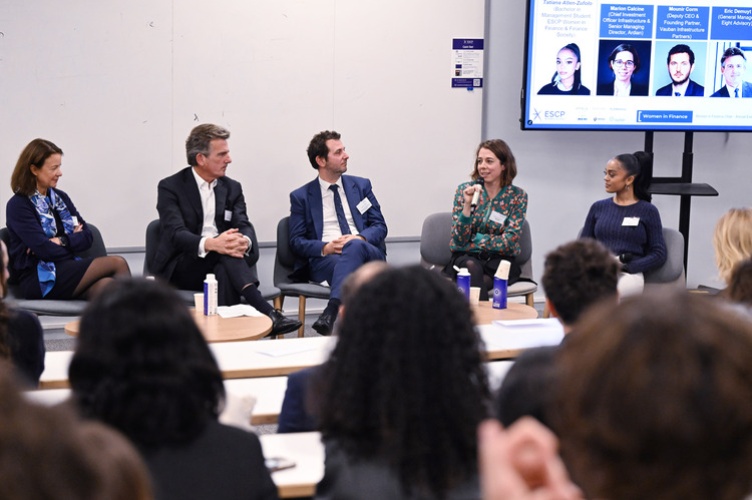
A dynamic panel discussion followed, moderated by Tatiana Allen-Zufolo, ESCP Bachelor in Management Student, and member of ESCP Finance Society. The panel featured leading voices in the financial industry:
- Marion Calcine, Chief Investment Officer Infrastructure & Senior Managing Director at Ardian
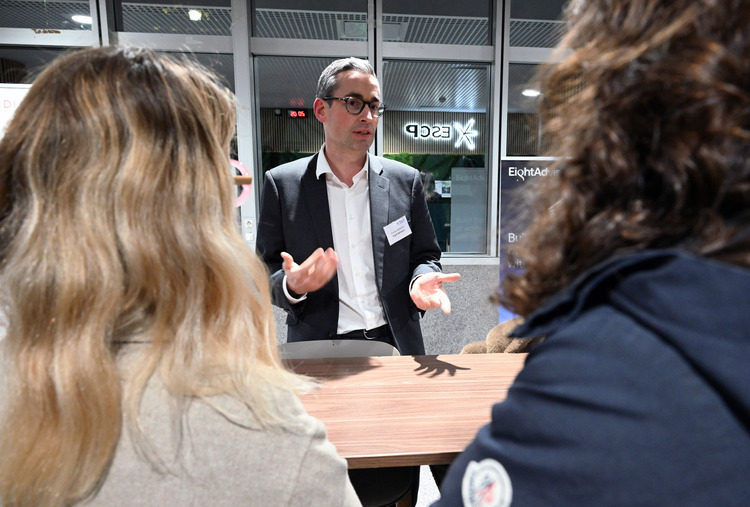
- Eric Demuyt, General Manager & Founder at Eight Advisory
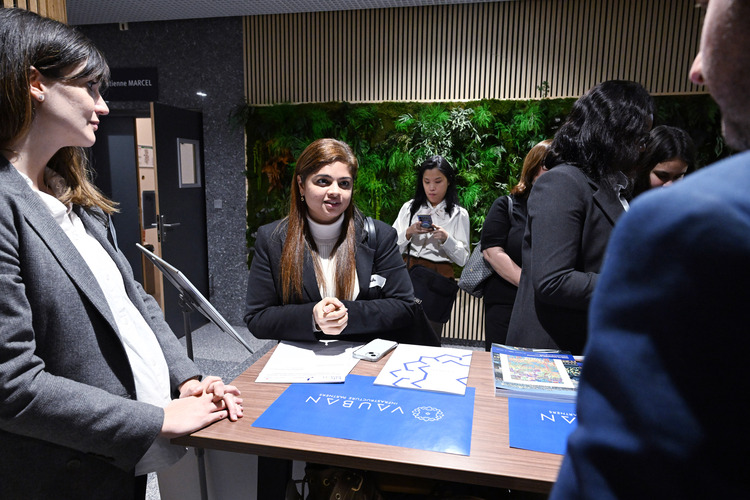
- Mounir Corm, Deputy CEO & Founding Partner at Vauban Infrastructure Partners
- Nathalie Rossiensky, Senior Private Banker & Capital Partner at Lombard Odier
The panellists discussed the most effective tools for advancing women into senior leadership, highlighting the importance of intentional talent development and visible role models and sponsors. Nathalie Rossiensky noted that progression begins with identifying key talent early, establishing clear career paths, and ensuring employees have both mentorship and strong sponsorship who are advocates that could actively champion their advancement. Mounir Corm added that gender parity must also be modelled by leadership, citing Vauban’s female-led structure, 40% women across functions, transparent promotion criteria, and extended parental leave as critical levers for cultural change.
The conversation turned to navigating credibility in male-dominated sectors such as infrastructure, advisory, and private equity. Marion Calcine described the subtle but persistent discomfort women can face, yet emphasised openness to new opportunities, reliability, and sponsorship as key to building influence. Eric Demuyt underscored that diversity strengthens performance and stressed that leadership must enforce equal compensation and take a proactive approach to identifying and promoting female talent.
On the impact of gender diversity at senior levels, panellists agreed that mixed teams lead to more balanced, long-term-oriented decision-making. Nathalie Rossiensky pointed to women’s strengths in active listening, inclusive discussion, and long-range thinking. Marion Calcine echoed this, noting that women often bring heightened risk awareness and stronger focus on sustainable growth, which can influence board dynamics and investment policies. ranging from ESG priorities to responsible travel standards.
The panel also addressed the invisible norms that continue to hinder progress despite formal DEI policies and the broader political backlash surrounding such initiatives. Mounir Corm described Vauban’s multicultural environment as a buffer against regression, explaining that strong convictions, consistent policies, and alignment with measurable outcomes help maintain momentum. Eric Demuyt emphasised the responsibility of leaders to uphold progress and ensure that newly promoted talent feels confident and supported, rather than questioning their legitimacy.
Networking And Reception
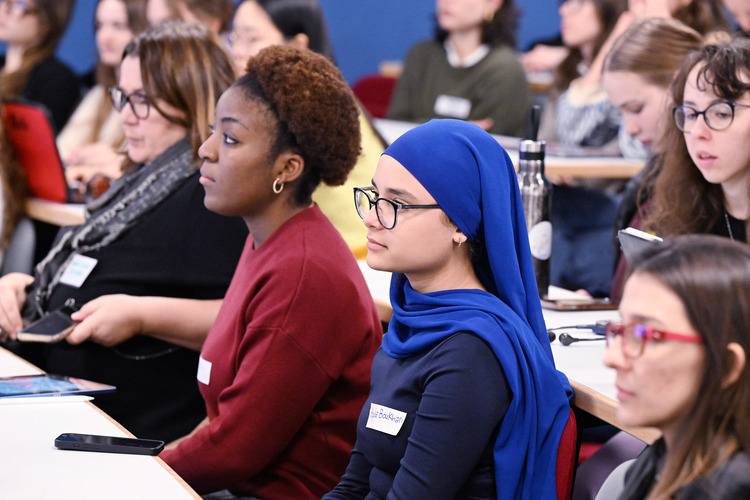
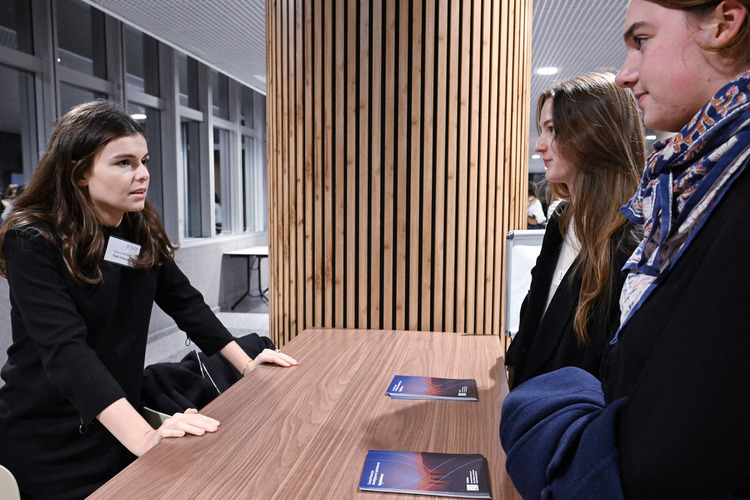
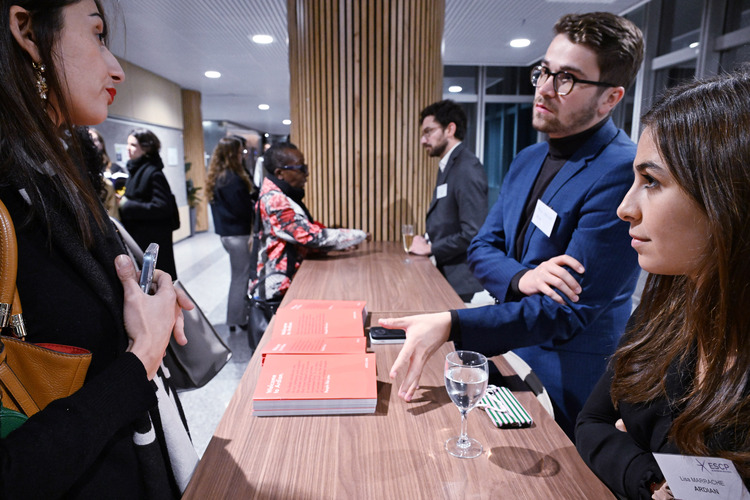
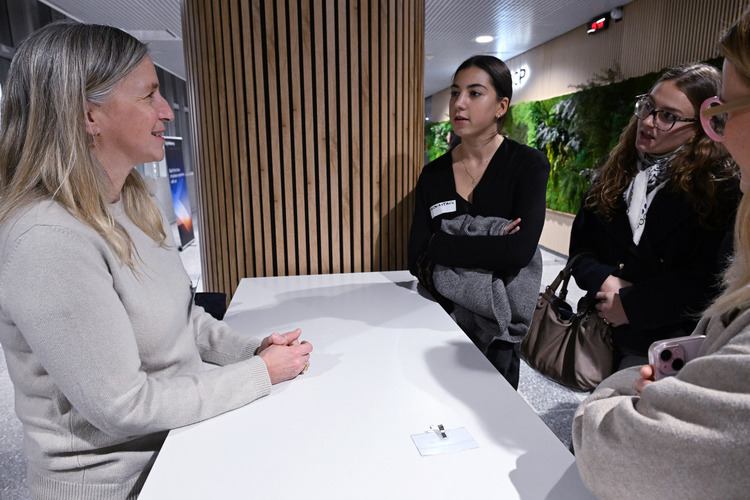
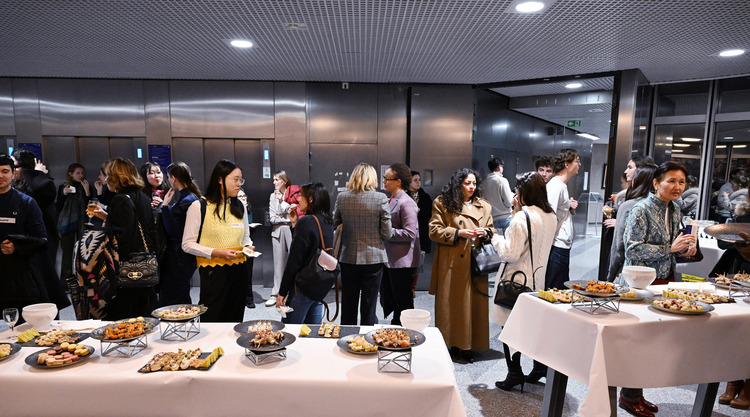
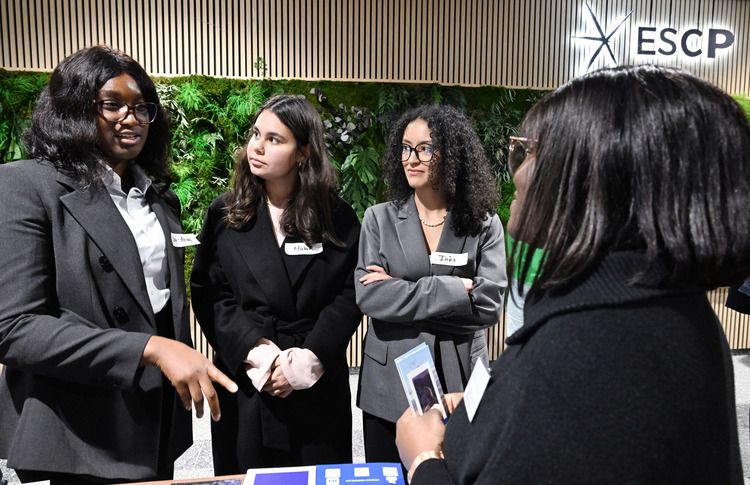
The evening concluded with a cocktail reception, provisioning ESCP students with valuable networking opportunities alongside the Chair’s sponsoring companies and distinguished guests.
The Women in Finance Chair continues to expand its impact through mentoring programs, employer branding competitions and cutting-edge research projects. With over 150 mentor-mentee pairs, collaborations with industry networks, and ongoing studies on women in finance experiences and diversity initiatives, the Chair is shaping the future of finance by breaking cycles of underrepresentation and promoting inclusive leadership.

Campuses
Episode 1
From the series "Standing together: ESCP community united against gender-based and sexual violence"
A conversation between Ghada Hatem (ESCP 11), founder of La Maison des Femmes in Saint-Denis (2016), a holistic centre providing care and support to vulnerable women and survivors of violence, and Louise Blin (Bachelor 2025 alumna and MSc in International Business & Diplomacy student).
An unusual career path
Louise: Your career path is quite unusual: you studied medicine in Paris at the Necker-Enfants Malades hospital, specialising in obstetrics and gynaecology. After several years of practice, you completed a first master’s degree in medical management, then a second one at ESCP, before founding La Maison des Femmes in 2016. What led you to this evolution?
Ghada: My journey is often described as “unconventional,” and it’s true. I began in medicine, convinced that understanding the body meant understanding life. But very quickly, through my patients, I discovered that medicine isn’t just about treating organs: it’s also about listening, welcoming stories, silences, and wounds. Appointed quite young as head of maternity at Les Bluets, I felt it was essential to train in medical management to lead my team toward greater efficiency—hence my studies at EMAM, the public hospital management school.
Working with migrant and underprivileged populations strengthened my interest in “social medicine,” which considers context, life experiences, and invisible traumas. When I later took over the maternity ward at Saint-Denis Hospital, I again felt the need for management training—the challenges of transforming that ageing service were immense. That’s why I chose ESCP’s Specialised Master’s in Medical Management.
Finally, my patients’ stories helped me better understand how past experiences of violence impacted their health. That’s when I envisioned a care pathway dedicated to this issue. Addressing violence requires stepping outside traditional medical boundaries—organising multidisciplinary care involving professionals from healthcare, justice, and law enforcement. That’s how the Maison des Femmes model was conceived: with a holistic ambition to support and empower victims.
La Maison des femmes as a model
Louise: La Maison des Femmes has now become a model replicated even beyond France. Can you tell us more about its international development and what it represents to you?
Ghada: The Maison des Femmes in Brussels was our first “little sister.” That wasn’t initially planned—the model was designed only for Saint-Denis. But this adventure paved the way for others. It’s challenging, of course, since healthcare systems differ and public authorities aren’t always as involved as we’d hope.
Yet while health policies may vary, suffering looks the same everywhere. This international growth is close to our hearts, because women in many countries face compounded forms of violence, often tied to harmful traditions that must urgently be eradicated. And soon, Dakar will open its own Maison des Femmes, coinciding with the International Day of Zero Tolerance for Female Genital Mutilation in early February.
Education as a driver of change
Louise: In your view, what are the most effective levers to change behaviour—in education, law, media, or business?
Ghada: Prevention is the key. At our modest scale, our collective leads many initiatives. Raising awareness—at schools, universities, and workplaces—is crucial. It can sometimes change behaviours, but above all, it helps people understand victims’ experiences and aggressors’ logic. This makes it easier to detect early warning signs, support victims, and even identify perpetrators within organisations.
Education from an early age remains the most powerful—and longest-term—lever for deep transformation.
The media also play a vital role, both in spreading awareness and driving political advocacy.
Louise: People often reduce the fight against violence toward women to a feminist cause. Yet this struggle goes far beyond that. What place can—and should—men have in it?
Ghada: This fight does not belong only to women, nor should it be confined to feminism. It’s a matter of society, justice, public health, and human rights. Men have a crucial role to play. They must question their privileges, their inheritance, their silences, their relationship to power—and this patriarchal culture that has shaped behaviours for centuries. It’s not about accusation, but about raising awareness. Because living without men is neither desirable nor possible, we must build together. On this topic, I recommend two books: Do Men Really Want Equality? by Patric Jean, and How to Be Less Stupid in 10 Steps by Quentin Delval—humorous yet pragmatic.
The power of a committed young generation
Louise: ESCP trains the leaders of tomorrow. How can we instil in them a more inclusive, egalitarian vision of leadership? And what role can younger generations play in combating sexist and sexual violence?
Ghada: Training is good—but inspiring is better. Young generations crave meaning, fairness, and justice. They want to reinvent power structures. We must highlight diverse leadership figures and encourage more horizontal, human-centred management styles.
Laws such as the Copé-Zimmermann and Rixain Acts, promoting gender parity in leadership, also play a role. Yet there’s still much to do: 51% of young people believe a mother should stop working when she has a child, and 77% of girls say they feel uncomfortable in male-dominated spaces. These figures remind us that equality must be taught from the earliest age. Enhancing education on emotional and sexual life, tying public funding to gender equality criteria, and redesigning school curricula—these are concrete ways to move forward. The road will be long, but every step counts.
Louise: Looking back, what advice would you give ESCP students who want to balance their careers with social engagement?
Ghada: I would simply tell them: choose with love. Choose what moves you, what uplifts you, what gives meaning. Life will confront you with choices—between comfort and conviction, security and passion. But if you follow what truly resonates with you, you’ll always find your place. Choose a path aligned with who you are, not just what others expect. If your social commitment is sincere, you’ll always find a way to make it the heart of your professional life. Sometimes you must choose between comfort and conviction, career and cause—but following what deeply moves you means never betraying yourself. And I have faith: this next generation will follow that path with courage, creativity, and heart.
Ghada: Louise, I know you’re already aware of these issues, since your mother co-founded La Maison des Femmes Marseille Provence in 2020. First, I'd like to ask you, how do students in your generation react when faced with sexist behaviour in public?
Louise: In my generation, reactions to sexist behaviour depend greatly on its nature. Most often, we encounter what I’d call “everyday sexism”: normalised remarks, so-called “harmless jokes.” It’s precisely in those cases that reactions are the most muted. Many hesitate to intervene for fear of seeming “too much” or spoiling the mood.
The result, unfortunately, is a form of passive tolerance toward micro-violence—even though it’s the most common form. Conversely, when behaviour becomes more explicit or aggressive, responses are much firmer. Students are more willing to step in to remind others that it’s unacceptable. And when it comes to physical aggression or overtly violent behaviour, I believe there’s strong, almost unanimous mobilisation—among both women and men. That’s a hopeful sign: passivity is receding.
Ghada: What do you think could truly promote equality between women and men—freeing everyone from sexist stereotypes?
Louise: Like you, Ghada, I’m convinced that everything begins with education. For men, it means learning from childhood to recognise stereotypes, understand privilege, and adopt a more conscious, responsible stance—the only way to prevent patriarchal patterns from repeating indefinitely.
For women, the challenge is learning early that their voice has value, that they have both the right and legitimacy to speak out, and that raising awareness is not being “extreme.” Breaking stereotypes also means strengthening confidence and autonomy—exactly what La Maison des Femmes does with its patients. More broadly, better education on emotional and sexual health, more gender-equal educational content, and truly sensitised learning environments could change a great deal.
Campuses
Related stories
News 10/12/2025
Interview
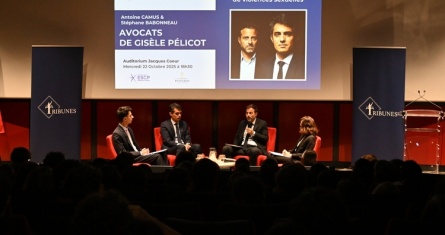
#2 How Tribunes, an ESCP student association, creates a space for students to learn, question, and commit to change
A conversation between Aurélie Dumond, Inclusion & Diversity Officer at ESCP and Ariane Bailet and Antonin Rousseau, ESCP students and members of the student society Tribunes.

News 22/01/2026
Interview
#3 The role of publishing in addressing gender-based and sexual violence
An interview where ESCP faculty member Isabelle Beyneix and alumna Marie-Pierre Gracedieu discuss publishing’s role in addressing gender-based violence, following the release of Mazan: An Anthropology of a Rape Trial—part of ESCP’s Standing Together series.
News 16/02/2026
Interview
#4 Art in action: sharing ESCP staff competencies and creativity in addressing gender-based and sexual violence
Sandrine Kiefer, Head of Internal Communications at ESCP, and Sabrina Saase, Health & Well-Being Manager at ESCP’s Berlin Campus, share their activism.