
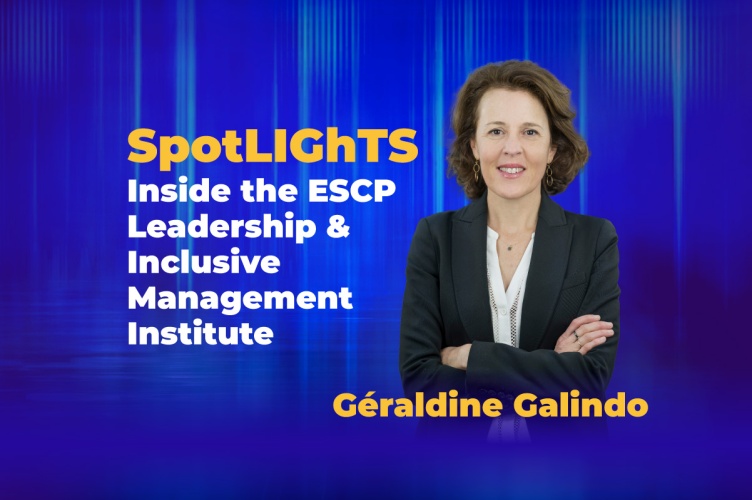
Rethinking Leadership: Inside ESCP's Leadership and Inclusive Management Institute
As diversity, equity, and inclusion (DEI) initiatives face mounting scrutiny in various global contexts, ESCP Business School has chosen to deepen its engagement with these themes. At the centre of this commitment is the Leadership and Inclusive Management Institute (LIMI), one of five institutes created under the LIGhTS framework—ESCP’s strategic platforms for addressing major societal and economic challenges. These institutes bring together faculty expertise and external partnerships to generate research that informs decisions, shapes policy, and supports transformation in business and society.
From Academic Silos to Collective Action
“One of the founding ideas behind LIMI was to make our work more visible—both within ESCP and beyond,” says Professor Géraldine Galindo, Director of the Institute. “There are many researchers across our campuses who are working on these topics. We wanted to build an ecosystem that connects their research and translates it into real-world impact.”
There are many researchers across our campuses who are working on these topics. We wanted to build an ecosystem that connects their research and translates it into real-world impact.
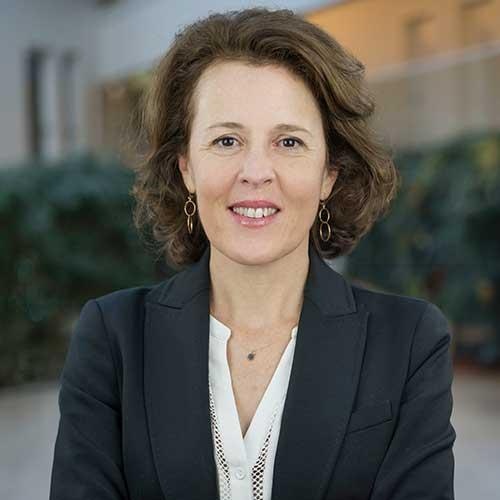 Géraldine Galindo
Professor, ESCP Business School
That ecosystem now includes a growing roster of initiatives. The Invisible Identities Project explores non-visible dimensions of identity—such as neurodivergence, mental health, and religious affiliation—while the Religious Diversity Study develops inclusive practices around belief expression at work. The Workplace Wellbeing Initiative focuses on psychological safety and mental health, and the Women in Finance Chair, co-led by Professors Almudena Cañibano and Marion Festing, investigates persistent barriers to gender inclusion in the financial sector.
Other LIMI-affiliated work addresses how different facets of diversity such as gender, sexuality, social background, and culture shape both access to opportunity and the experience of navigating professional environments; while the Reinventing Work Chair examines how the workplace is evolving in response to remote work, digital transformation, and changing expectations around flexibility. Each of these projects shares a common aim: to give structure, depth, and empirical grounding to issues often discussed through slogans or surface-level narratives.
Pushing the Boundaries of Inclusion Research
Géraldine, a recognised expert in religious diversity and workplace identity, has long championed subjects that were once considered marginal in business education. “Back in 2009, when I started researching religion in the workplace, it was almost taboo in French management studies,” she recalls. Today, she is leading efforts to investigate how religion, mental health, and neurodivergence intersect with perceptions of competence, belonging, and leadership potential.
Recent work under LIMI explores how religious identity can either reinforce or mitigate impostor syndrome—a nuanced take on what it means to feel like a fraud in environments that reward conformity.
The Institute is also examining how structural hiring practices, such as employee referral schemes, may inadvertently exclude neurodivergent candidates.
Through projects like Identity at Work, the team is also gathering data directly from students to inform research and institutional practice.
The Classroom as a Site of Transformation
For Géraldine, research and education are inseparable. “I believe education is not just about transmitting knowledge, but about creating space for self-reflection,” she explains. Her courses challenge students' assumptions, encouraging them to interrogate their own biases and understand the structures that shape organisational life.
This extends to how leadership itself is defined. In a recent ESCP Impact Paper co-authored with postdoctoral researcher Zuzanna Staniszewska, Géraldine explores how artificial intelligence is reshaping leadership roles—not eliminating them, but transforming them. “The leaders of tomorrow won’t be charismatic figureheads,” she says. “They’ll be ethical mediators, systems thinkers, and guardians of alignment between human values and technological tools.”
Rethinking Inclusion for the Long Term
In a time when diversity policies are under increased political scrutiny, LIMI offers a steady platform for constructive engagement. The Institute works to shape long-term thinking—through partnerships with companies, student-facing programmes, and public scholarship.
“We’re here to introduce complexity, to ask difficult questions, and to help organisations think more critically about what inclusion really means."
This work also demands a shift in how leadership itself is understood. “Inclusive leadership starts with searching within,” says Géraldine. “You need to confront your own blind spots, your assumptions—that’s what allows you to recognise and elevate profiles that don’t fit the dominant mould."
These are not just ethical imperatives but practical leadership skills for navigating plural workplaces. By centring intersectional perspectives—religious, cognitive, social, and beyond—LIMI aims to expand the definition of who gets to lead, and how.
We’re here to introduce complexity, to ask difficult questions, and to help organisations think more critically about what inclusion really means.
Géraldine GalindoProfessor, ESCP Business School
The Legacy LIMI Hopes to Build
Looking ahead, Géraldine hopes to anchor LIMI more deeply in both the academic and professional landscape. “My goal is to ensure LIMI becomes a lasting part of ESCP’s identity—not a passing initiative, but a reference point,” she says. Part of that vision includes creating research outputs that serve as benchmarks for practitioners: nuanced, evidence-based materials that companies can actually use.
For students, the message is equally clear. “Whatever your role—in finance, marketing, operations—you will be managing human beings. And that means leading inclusively is not optional,” Géraldine insists. “It’s not a side topic. It’s a core leadership skill.”
*This article draws on a conversation with Professor Géraldine Galindo, held in July 2025.
Campuses
ESCP and Hugging Face join forces to drive AI innovation in business education.
As part of the School’s ongoing commitment to integrating artificial intelligence into education, research, and operations, ESCP has signed a new partnership with Hugging Face, the leading open-source AI platform, co-founded by ESCP alumnus Clément Delangue.
The partnership will provide ESCP’s community of over 12,000 students, faculty, and staff with free access to the Hugging Face platform’s Academia Hub, offering hands-on opportunities in learning, research, and entrepreneurship through advanced tools, enhanced collaboration, and exclusive resources. The partnership also extends access to Hugging Face’s “Learn” hub, reinforcing AI literacy across ESCP’s six European campuses.
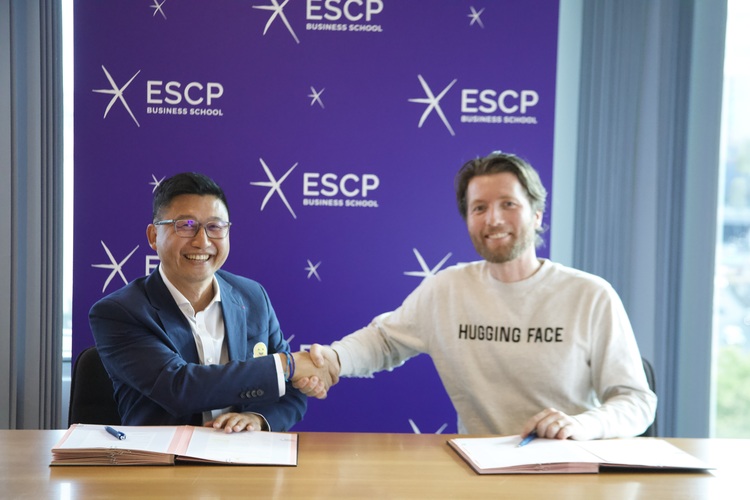
Prof. Léon Laulusa, Executive President and Dean of ESCP Business School, with Clément Delangue, Hugging Face CEO and ESCP 2012 Master in Management alumnus, at Partnership Signing
Leading the charge in AI in education
This collaboration builds on ESCP’s portfolio of pioneering AI initiatives – including the collaboration with OpenAI for ChatGPT Edu access, the training of 1,000 “AI Champions” among students, faculty, and staff, and the integration of AI into programmes and operations. It also reflects ESCP’s broader Bold & United strategy and its ambition to shape accountable, bold & creative leaders at the intersection of business, technology, and global affairs.
“By partnering with Hugging Face, our students, faculty, and staff are not only learning about artificial intelligence, they are building with it,” says Prof. Léon Laulusa, Executive President and Dean of ESCP Business School. “This partnership reflects our "Bold and United" strategy and our conviction that AI is not just an augmented tool but a new language for management and innovation. With this approach, ESCP positions itself as a unique living lab of Generative AI in management education.”
“Building on this foundation, ESCP’s next ambition will be to create a sovereign and transformative platform for its community,” adds Prof. Laulusa. “Known as AIM – ESCP Intelligent Assistant Multirole – this initiative will redefine personalised learning, research, and administration, while fostering a vibrant entrepreneurial ecosystem around AI.”
This partnership reflects our "Bold and United" strategy and our conviction that AI is not just an augmented tool but a new language for management and innovation. With this approach, ESCP positions itself as a unique living lab of Generative AI in management education.
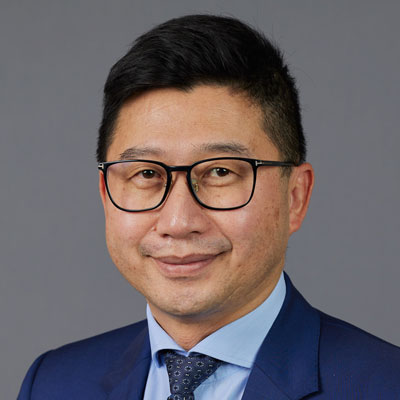 Prof. Léon Laulusa
Executive President and Dean of ESCP Business School
Developing AI literacy and empowering students
Through Hugging Face, students will gain access to powerful tools and models that support a wide range of applications, including:
- Learning data science inside and outside the classroom: Working with large language models (LLMs), vision, and multimodal AI systems for class projects, applied research, and assignments.
- Showcasing and certifying skills: Publishing projects on Hugging Face’s global platform, contributing to open-source initiatives, and strengthening CVs with visible, verifiable evidence of technical expertise valued by recruiters.
- Accelerating entrepreneurship: Leveraging Hugging Face to rapidly prototype and integrate open-source AI into minimum viable products (MVPs), enabling students in ESCP’s European startup incubator, the Blue Factory, or leading entrepreneurial ventures to innovate without significant infrastructure or licensing costs.
“While the entire ESCP community will benefit from access to Hugging Face’s ‘Learn’ hub, students in data science and technology-focused courses will have the opportunity to engage more deeply with these tools through applied learning and project work,” notes Francesco Rattalino, Executive Vice-President of Academic Affairs and Student Experience at ESCP Business School.
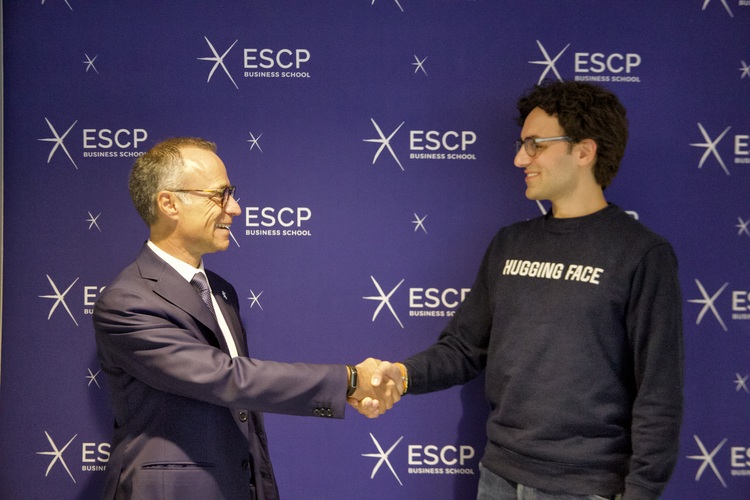
Francesco Rattalino, Executive Vice-President of Academic Affairs and Student Experience at ESCP Business School, with Adrian Lepers, Global Monetisation Operations and Strategy at Hugging Face.
Enhancing learning, enabling innovation
Faculty will also benefit from the partnership, with access to Hugging Face for designing interactive resources, customised learning materials, and research applications. Professors will receive tailored training in September 2025, while students will be onboarded from October, ensuring seamless integration across ESCP’s multi-campus ecosystem.
“At ESCP, we advocate for the responsible use of AI under the shared conviction that technology itself isn’t good or bad; it's how we use it that counts,” shares Prof. Louis-David Benyayer, AI Initiatives Coordinator at ESCP Business School. “We are proud to partner with Hugging Face, whose commitment to open-source development and ethical AI complements our values and offers practical benefits across the School’s academic and entrepreneurial ecosystem.”
We are proud to partner with Hugging Face, whose commitment to open-source development and ethical AI complements our values and offers practical benefits across the School’s academic and entrepreneurial ecosystem.
 Prof. Louis-David Benyayer
AI Initiatives Coordinator at ESCP Business School
For Hugging Face CEO and ESCP 2012 Master in Management alumnus Clément Delangue, the partnership represents a chance to give back to the academic community where his entrepreneurial ambitions first took root. “I started my entrepreneurial journey at ESCP Business School 15 years ago, so I’m beyond excited to be able to give back and foster the next generation of builders here in France and across ESCP’s European campuses,” says Delangue.
“AI is transforming education, and it’s great to see ESCP Business School, the oldest business school in the world - created in 1819, completely embracing it. By joining the Hugging Face academia hub, its 12,000+ students, professors and staff will not only be able to use AI but take an active part in building AI themselves, thanks to open science and open-source AI, all for free.”
AI is transforming education, and it’s great to see ESCP Business School, the oldest business school in the world - created in 1819, completely embracing it. By joining the Hugging Face academia hub, its 12,000+ students, professors and staff will not only be able to use AI but take an active part in building AI themselves, thanks to open science and open-source AI, all for free.
 Clément Delangue
 Hugging Face CEO and ESCP 2012 Master in Management alumnus
ESCP students and faculty can sign up for a free Hugging Face account with their ESCP email address here.
Follow AI at ESCP
Campuses

A guide for future leaders
Increasingly, emotional intelligence is seen as a must-have skill for leaders. It affects how well teams work together, how conflicts are resolved, and how trusted a leader is. In today’s fast-paced, people-focused workplaces, being a smart leader isn’t just about making sharp decisions or having the best ideas. It’s also about understanding, managing, and responding to emotions—your own and others'.
But what exactly is emotional intelligence? Why does it matter in leadership? And, most importantly, can it be developed? Whether you’re a student, a new manager, or just curious about what makes a great leader tick, this guide breaks it all down for you.
What is emotional intelligence (EQ)?
A simple definition for early-career leaders
Emotional intelligence, or EQ, is your ability to understand and manage emotions effectively. That includes recognising your own feelings, making sense of others’ emotions, and using that awareness to guide your actions and relationships.
The good news is that you don’t need to be a natural empath or a seasoned manager to use emotional intelligence. In fact, research shows that EQ is something you can build over time. And it can be just as important to success as technical knowledge or IQ.
The 4 core components of emotional intelligence
Most experts agree that EQ consists of four main components. Together, they shape how you interact with others, handle stress, and lead with empathy.
1.Self-awareness:
This means knowing what you’re feeling and why. Self-aware leaders can recognise their emotional triggers and understand how their mood or tone affects the people around them.
2.Self-management:
This means knowing what you’re feeling and why. Self-aware leadersOnce you’re aware of your emotions, the next step is managing them. Can you stay calm under pressure? React thoughtfully instead of impulsively? That’s self-management.
3.Social awareness:
This means knowing what you’re feeling and why. Self-aware leadersOften referred to as empathy, social awareness involves tuning into how others are feeling. It helps you pick up on unspoken cues in meetings or notice when a teammate is struggling, even if they don’t say it out loud.
4.Relationship management:
This means knowing what you’re feeling and why. Self-aware leadersThis is where everything comes together. Relationship management means using your awareness (of yourself and others) to communicate well, build trust, resolve conflict, and inspire others.
Why emotional intelligence is essential for leadership
EQ vs. IQ: what truly sets leaders apart
While cognitive intelligence (IQ) often determines academic or technical success, emotional intelligence shapes the quality of interpersonal relationships and leadership impact. Leaders with high EQ tend to make better decisions in complex situations, not just because they understand the facts, but because they understand the people involved.
Research consistently shows that emotional intelligence is a stronger predictor of leadership effectiveness than IQ or technical expertise. It enables leaders to stay composed under stress, listen with intent, and motivate teams towards shared goals. In roles that demand influence, collaboration, and adaptability, EQ and positive leadership become key differentiating factors.
The role of EQ in team performance and trust
Teams are built on trust, and emotional intelligence helps leaders earn and sustain it. A leader who communicates transparently, listens actively, and responds to feedback with openness fosters a work environment where people feel heard and valued. This psychological safety is closely tied to stronger collaboration, innovation, and resilience.
When leaders manage their own emotions, they are better positioned to de-escalate conflict, balance competing priorities, and guide their teams through uncertainty. High EQ enables leaders to create a consistent and supportive presence, which is especially critical during times of change or crisis.
Emotional intelligence and employee engagement
Employee engagement relies heavily on how connected people feel to their work and their team. Leaders with strong emotional intelligence contribute to that connection by recognising effort, showing empathy, and adapting their leadership style to different personalities and contexts.
These leaders don’t just manage tasks, but also pay attention to motivation, morale, and well-being. This attention translates into higher retention rates, increased job satisfaction, and improved performance across the board.
Emotional intelligence in the workplace: real-world examples
Leading through change: a case from (company or alumni example)
One of the most frequently cited modern examples of emotionally intelligent leadership comes from Satya Nadella’s transformation of Microsoft’s culture following his appointment as CEO in 2014. Nadella shifted the company’s mindset from a competitive "know-it-all" culture to one rooted in learning and empathy—an intentional move grounded in emotional intelligence.
Rather than relying on hierarchical control, Nadella focused on self-awareness and empathy. He encouraged listening, collaboration, and psychological safety, helping engineers and executives alike feel safe to share ideas—even those that initially felt experimental or controversial. That shift played a key role in reviving morale and driving innovation across teams.
This EQ-driven leadership approach yielded tangible results. Microsoft saw improved cross-functional performance, greater transparency in decision-making, and a cultural renewal that supported its growth into AI, cloud, and enterprise solutions markets.
EQ-driven culture at Patagonia
Patagonia is often cited as a brand where values and culture are tightly aligned. Emotional intelligence is embedded in its leadership practices: from transparent communication to compassionate decision-making. Managers are trained to hold meaningful one-on-one conversations, resolve tension respectfully, and lead with a long-term view that considers both people and planet.
This EQ-infused and purpose-driven leadership style is one reason why Patagonia consistently ranks high in employee satisfaction and retention. Leaders are expected to engage with emotional context—not dismiss it—especially in moments of pressure or public scrutiny.
When emotional intelligence is missing: common pitfalls
On the other hand, a lack of emotional intelligence in leadership often leads to disengagement, miscommunication, and high turnover. In companies that fail to integrate more emotional intelligence practices, a common pattern of reactive behaviour can be observed: leaders who speak without listening, or let frustration drive decision-making.
Other red flags include:
- avoiding difficult conversations
- failing to recognise team burnout
- applying a one-size-fits-all leadership style
In these cases, technical skills may be strong, but leadership impact remains limited.
How to build your emotional intelligence as a future leader
Daily habits that strengthen EQ
Emotionally intelligent leaders are not necessarily born empaths. In fact, EQ can be developed over time through intentional habits and reflection.
Small, consistent actions can make a meaningful difference:
- Pause before reacting: When emotions rise, take a moment to assess your response. This short pause improves self-regulation and prevents escalation.
- Name your emotions: Identifying what you’re feeling—and why—builds self-awareness and sharpens your internal compass.
- Observe body language: Noticing how others behave in meetings, presentations, or casual settings can help you better understand unspoken dynamics.
- Practice perspective-taking: Ask yourself how a colleague or team member might experience a situation differently from you.
Listening, feedback, and self-reflection exercises
Active listening is one of the most powerful ways to grow emotional intelligence. This means focusing entirely on the speaker—without interrupting, formulating a response too early, or making assumptions.
Asking for feedback regularly is another practice that builds EQ. It shows humility and helps uncover blind spots in how your behaviour affects others.
After receiving feedback, take time to reflect: What did you learn? What patterns can you notice? What adjustments might you try?
Journaling or brief check-ins at the end of the week can help you track emotional patterns and leadership challenges. Over time, this builds deeper self-understanding and clarity.
Tools and resources to develop emotional intelligence
Several frameworks and tools can support your development:
- Emotional intelligence assessments, such as EQ-i 2.0 or Goleman’s Emotional and Social Competency Inventory (ESCI)
- Mindfulness practices that improve focus, emotional regulation, and presence
- Leadership coaching focused on behavioural change and interpersonal effectiveness
- Books and articles from trusted sources such as Harvard Business Review or Daniel Goleman’s foundational work on EQ
In ESCP programmes, such as the MSc in Digital Transformation Management & Leadership, students are encouraged to use these tools to better navigate the interpersonal aspects of innovation and change.
Common misconceptions about emotional intelligence
“EQ is just about being nice” and other myths
Emotional intelligence is sometimes mistaken for being agreeable or avoiding conflict. In reality, it involves a more complex set of skills, including setting boundaries, giving constructive feedback, and navigating difficult conversations.
High-EQ leaders are not necessarily easygoing or accommodating at all times. They are able to balance empathy with clarity and assertiveness with respect. Emotional intelligence isn’t about suppressing emotions, but understanding and directing them with intention.
Can emotional intelligence be learned, or is it fixed?
Another common myth is that EQ is an innate trait—you either have it or you don’t. In fact, emotional intelligence is a dynamic skill set that develops over time, especially through feedback, coaching, and practice.
While some people may show early strengths in emotional awareness or interpersonal skills, long-term EQ depends more on self-awareness and effort than personality. This is why leadership development programmes increasingly include emotional intelligence as a core focus.
At ESCP, for instance, the Master in Digital Innovation and Entrepreneurial Leadership integrates self-leadership and emotional competence alongside strategic thinking and business planning.
Why emotional intelligence matters for your career
Leadership potential beyond technical skills
Technical skills can open doors, but emotional intelligence determines how far you go. In early-career roles, strong EQ helps you collaborate effectively, manage pressure, and communicate with clarity. As responsibilities grow, the ability to build trust, navigate complexity, and lead diverse teams becomes increasingly important.
Hiring managers often look beyond qualifications. They pay close attention to how you interact with others, adapt to feedback, and handle stress. Emotional intelligence signals leadership potential, regardless of your job title.
EQ in interviews, group projects, and early roles
During interviews, recruiters assess more than just your CV. They listen to how you describe past challenges, how you reflect on feedback, and how you approach teamwork. Demonstrating emotional intelligence can set you apart from equally qualified candidates.
In group projects (whether academic or professional), EQ shapes your ability to collaborate, resolve friction, and support your peers. Early-career professionals with high EQ often emerge as informal leaders: trusted by teammates, proactive in managing tension, and skilled at turning feedback into progress. These qualities build your reputation and set the foundation for future leadership roles.
Key takeaways: Emotional intelligence in leadership
- Emotional intelligence (EQ) is a foundational leadership skill shaping how you lead yourself and others.
- It includes four core components: self-awareness, self-management, social awareness, and relationship management.
- Leaders with strong EQ foster trust, collaboration, and performance—especially during times of change or uncertainty.
- Emotional intelligence can be developed through daily habits, feedback, and intentional practice.
- EQ plays a decisive role in early-career success, from interviews and group projects to future leadership opportunities.
- At ESCP, emotional intelligence is embedded in leadership education through real-world projects, coaching, and cross-cultural learning.
Whether you're preparing for your first leadership role or planning a long-term career in business, strengthening your emotional intelligence will give you a lasting advantage—in every team, every project, and every decision you make.
Leadership at ESCP Business School
How ESCP integrates EQ into leadership education
At ESCP, leadership development goes beyond academic theory. Programmes are designed to cultivate the full spectrum of leadership skills, including emotional intelligence. From day one, students are encouraged to explore how self-awareness, empathy, and communication influence decision-making and team dynamics. Our goal is to create a learning environment where emotional intelligence is not just discussed but actively practised as well.
Courses, projects, and international exposure
Many ESCP programmes include dedicated courses on leadership and interpersonal dynamics. For example, the Master in Management features modules where students engage in real-world projects that test not only their strategic thinking but also their ability to collaborate, influence, and adapt in a multicultural environment. Through collaborative feedback, each student can learn how to respond to challenges that arise during teamwork.
The Master in Luxury Transformation & Leadership also offers a powerful example of how emotional intelligence is cultivated within industry-specific leadership training at ESCP. Designed for professionals navigating the evolving world of luxury, the programme combines strategic insight with a strong focus on self-awareness, cultural sensitivity, and people-first leadership.
Through immersive modules across global fashion and luxury capitals, participants engage in collaborative projects, leadership coaching, and real-world case studies, strengthening their ability to lead with empathy, navigate complexity, and drive transformation in a high-touch, emotionally nuanced industry.
Because ESCP operates across multiple campuses in Europe, students also gain cross-cultural experience, which is a vital setting for developing empathy, listening skills, and flexibility. Understanding how emotions are expressed and perceived in different contexts is a key part of becoming an emotionally intelligent leader.
FAQ
What is emotional intelligence in leadership?
Emotional intelligence in leadership is the ability to recognise, understand, and manage your own emotions while effectively navigating and influencing the emotions of others to build trust, inspire teams, and make sound decisions.
What are the 5 components of emotional intelligence in leadership?
The five components are self-awareness, self-regulation, motivation, empathy, and social skills.
How to increase EQ level?
You can increase your EQ by practising self-reflection, seeking feedback, developing active listening habits, managing stress, and strengthening empathy through perspective-taking.
What are the 3 C's of emotional intelligence?
The three C's are consciousness (of your own emotions and others’), compassion (responding with empathy and care), and connectedness (the ability to get on with others).
Relevant link
Campuses
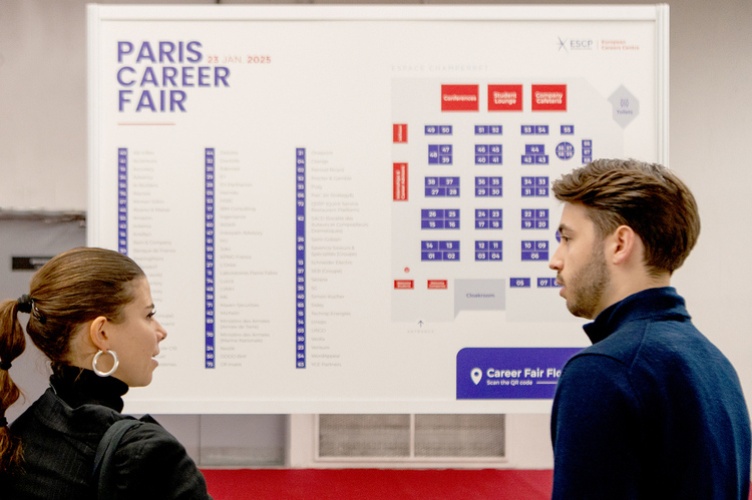
Paris Career Fair 2026 - 22 January 2026
Connect with Tomorrow's Top Talent at the 2026 Paris Cross-Industry Career Fair
The European Careers Centre invites you to participate in the 2026 Cross-Industry Career Fair in Paris. This premier event will bring together 80 leading companies and hundreds of ambitious students seeking to grow their networks and mentorship opportunities.
Why Participate?
- Access Top Talent: Connect with exceptional students from our MiM, MSc, BiM, and MBA programs.
- Build Brand Awareness: Showcase your company to a highly engaged audience of future professionals.
- Network with Industry Leaders: Participate in 30-minute conferences and engage with other industry experts.
Event Highlights
- Showcase Your Business: Your company will be featured in our exclusive Company Handbook, giving you prime visibility.
- Seamless Networking with TalentConnect: Gain access to JobTeaser’s TalentConnect to digitalise your interactions with students. Browse CVs, rate and annotate profiles, and connect with top talent even after the event.
- Personalised Welcome: A dedicated student ambassador will greet you upon arrival and assist you throughout the event.
- Exclusive VIP Lounge: Enjoy a complimentary lunch, with refreshments available all day onsite.
Event schedule
- 8:30 AM: Welcome exhibitors
- 9:30 AM: Opening time for students
- 6:00 PM: Closing time
Location
Organiser: ESCP Business School
- Champerret Paris Campus
MapDate
Start date: 22/01/2026
Start time: 8:30 AM
End time: 6:00 PM
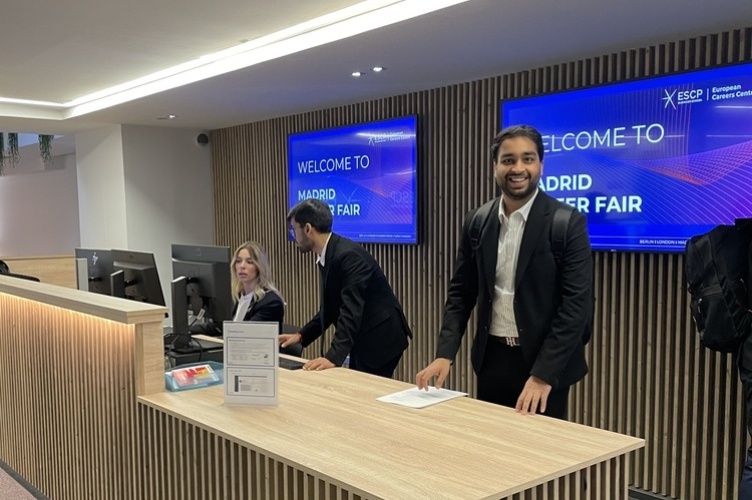
Madrid Career Fair 2026 - 25 February 2026
Connect with Tomorrow's Top Talent at the 2026 Madrid Cross-Industry Career Fair
The European Careers Centre invites you to participate in the 2026 Cross-Industry Career Fair in Madrid. This premier event will bring together leading companies and hundreds of ambitious students seeking to grow their networks and mentorship opportunities.
Why Participate?
- Engage with Future Leaders: Connect with high-potential students from ESCP’s MiM, MS, MSc, BiM, and MBA programmes—each equipped with a global mindset and strong business acumen.
- Boost Employer Brand Visibility: Position your company among top-tier recruiters through live presentations and a physical presence on campus. Showcase your culture, opportunities, and differentiators.
- Build Talent Pipelines: Meet qualified candidates face-to-face, exchange CVs, and begin conversations that can lead to future hires.
Event Highlights
- Corporate Presentations: Deliver a focused 25-minute talk to present your company’s value proposition and career paths to an engaged student audience.
- Company Booth Presence: Engage with students at your stand throughout the day. Share your insights, answer questions, and collect CVs.
- Student Ambassador Support: Receive personalized assistance from a dedicated student ambassador to ensure a seamless experience from arrival to wrap-up.
Event schedule
- 9:00 am - 02:00 pm & 3:30 pm - 6:00 pm: Company Stands & Booths
- 9:00 am - 02:00 pm & 3:30 pm - 6:00 pm: Companies Presentations
Location
Organiser: ESCP Business School
Madrid Campus -
MapDate
Start date: 25/02/2026
Start time: 9:00 AM

A Look Back at ESCP’s Signature Sailing Event in Ischia
From May 15-18, the island of Ischia was a vibrant gathering point for the ESCP community, where sunny days, open waters, and shared experiences brought students, alumni, and partners together in an unforgettable atmosphere.
The XVII edition of the ESCP Regatta brought together more than 400 participants, 30+ boats, and over 15 sponsoring partners in what has become one of the school’s most emblematic community traditions. What began in 2007 as a student-led sailing event has since evolved into a moment of European cohesion, one that unites current students, alumni, faculty, staff, and partners in an environment that fosters leadership, resilience, and shared purpose.
A Tradition in Motion
Founded in 2007 by ESCP student Flavio Nappi and brought to life each year by Eventures and student organisers, the Regatta is a true pan-European event. It connects all ESCP campuses — Berlin, London, Madrid, Paris, Turin, and now Warsaw — and unites generations.
This year, over 30 boats competed, crewed by a diverse mix of current students and alumni. But while competition defined the water, collaboration defined the experience.

Wind, waves, and one mission — the Regatta race in full sail.

Victory on the water, celebration on land — a winning crew shares a moment of triumph.
Five Pillars, One Purpose
The Regatta’s daytime programming reflected its five guiding pillars: Sport, Education, Networking, Sustainability, and Fun. Each day was designed to activate both body and mind:
- The official Regatta Race pushed teams to perform under pressure and build trust at sea.
- Mornings kicked off with a scenic run, an exclusive Tesla breakfast, and the BCG Strategy Game, inviting participants to think critically and work collaboratively.
- Afternoons brought people together onshore — with beach parties, tastings, and outdoor activities across Ischia’s coastal settings.

From workshops to water games, daytime experiences were built for engagement.

Beyond competition, the Regatta was about pure joy — from open waters to spontaneous dives.
Celebrating Cohesion Across Campuses
Each night of the Regatta was an opportunity to experience ESCP’s diversity in one place. From welcome dinners to elegant receptions, each night offered a chance to relax and connect.

From formal to festive, events brought together all generations of the ESCP community.

As the sun set on Ischia, guests gathered poolside for one of the Regatta’s signature evenings of connection.
Sailing with Purpose
Environmental responsibility was a thread through every detail — from boat selection to event waste management — reflecting ESCP’s growing commitment to sustainable leadership.

This year’s Regatta looked ahead — integrating low-impact choices to build a cleaner, shared future.

In the heart of the Regatta: teams navigating, bonding, and enjoying the rhythm of the sea together.
Nights to Remember
From sunset aperitifs to themed celebrations, every evening offered space for camaraderie, cross-campus bonding, and sheer joy.
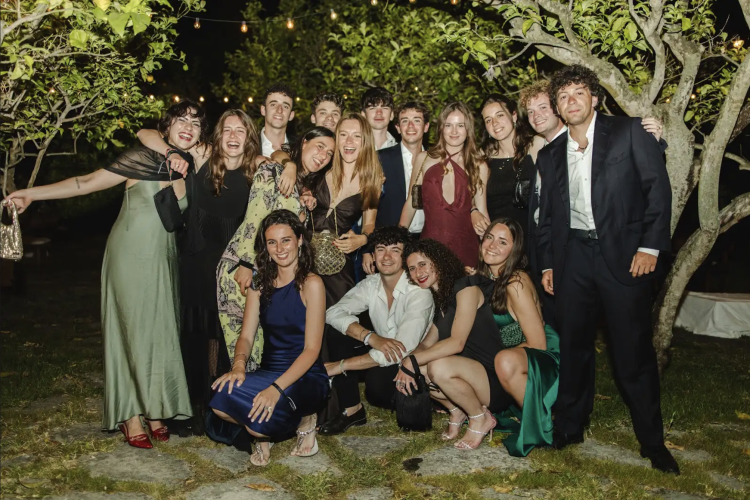
Different campuses, one community. Nightlife moments made memories that will last beyond graduation.

Each night brought new energy — dancing, music, and the shared spirit that defines the Regatta experience.
Relevant links
Campuses
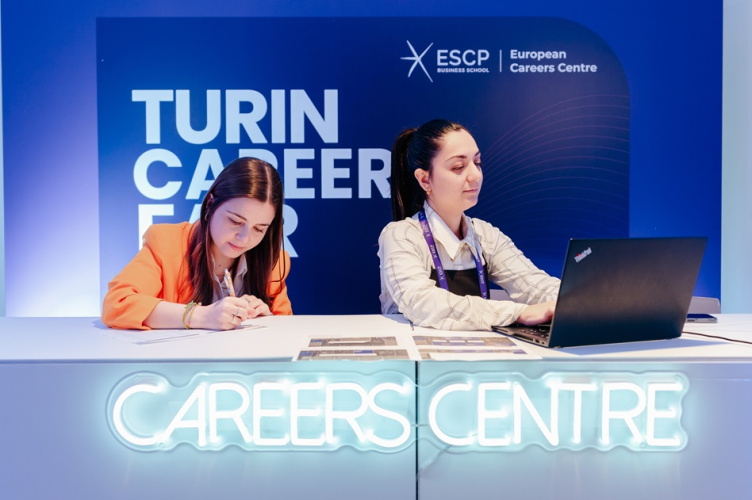
Highlights from a Year of Mentorship, Employer Engagement and Real-World Learning.
The European Careers Centre at ESCP Business School continues to play a pivotal role in preparing students for the professional world. Throughout the 2024–2025 academic year, the Careers Centre at the Turin Campus curated a comprehensive programme of initiatives designed to foster career development, strengthen employer engagement, and provide students with hands-on, real-world experiences.
This year’s highlights include:
- 25 Career Development Workshops (e.g. LinkedIn Masterclass, Negotiation Skills, Job Interview Prep)
- 17 Company Presentations
- 12 Company Experiences
- 7 Project Collaborations (Business Challenges & Company Projects)
- 15 Guest Lectures & Teaching Sessions
- 4 Mentorship Programmes with major global employers
- 4 Multi-Company Events (Turin Career Fair, F&B Recruiting Days, Green Hackathon, Startup Night)
- 3 Alumni Networking Events
With the support of 21 strategic corporate partners, ESCP Turin Campus continues to foster valuable relationships between students and global employers.
Green Hackathon 2024: Innovation for Impact
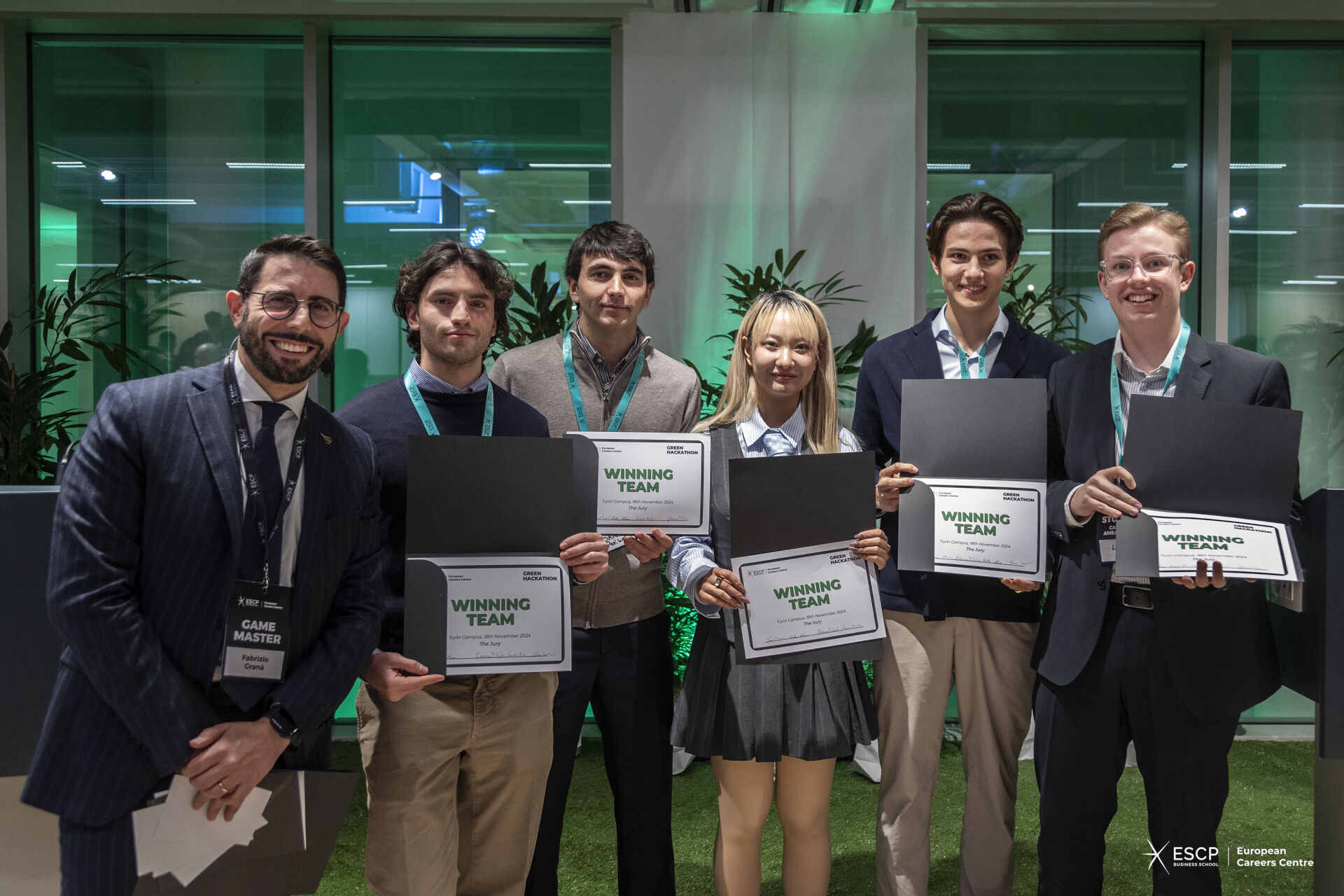
The 5th edition of the ESCP Green Hackathon highlighted the Turin Campus as a dynamic space for innovation and sustainability-driven learning. The event brought together 120 international students, leading companies and academic experts to develop ideas aligned with the United Nations Sustainable Development Goals (SDGs).
Structured into four key phases – brainstorming, development, consolidation and output definition – the day challenged participants to work in teams and present creative, high-impact solutions to real-world issues.
The Green Hackathon was supported by a strong group of event partners, including AlixPartners, Bain & Company, BNL BNP Paribas, KPMG, BIP, Caffè Vergnano 1882, DOLDER LTD., Facile.it, Eurofins, TeamSystem, and U.G.A. Nutraceuticals. Keynote speeches from Francesca D’Angelo (Sostenibilità Consulting) and Enrica Arena (Orange Fiber) further inspired participants to drive impact through innovation.
The Hackathon concluded with the pitch of the top three projects, selected by a jury of professionals and faculty members. The winning project, EduBridge – For People, From People, was developed by Team Green Eyes (Lukas de La Trobe, Luca M. Wartini, Yongqi Fan, Ruowei Gan, Zeno Ragazzoni and Dante Perinotti). It proposed a cross-cultural tutoring platform connecting students in the UK, Ireland and Nigeria to foster inclusive education for learners with ADHD and underserved communities. As part of their prize, the team visited KPMG’s offices, where they engaged with professionals and explored career opportunities.
Career Fair 2025: A Gateway to Global Employers
Held on 20–21 February 2025, the Turin Cross-Industry Career Fair brought together around 800 international students and more than 50 global companies, offering a unique opportunity to explore career paths, engage with employers, and expand professional networks.
Over two intensive days, students had the chance to interact with recruiters and talent acquisition teams from a wide range of sectors, from consulting and finance to tech, luxury and FMCG, fostering meaningful connections and opening doors to future internships.
Participating companies:
20 February: Accenture, AlixPartners, Amazon, American Express, Argos Wityu, Artemest, BIP, BNP Paribas, BPI, CDP Equity, Clearwater International, Davines, Eaton, Eurofins, EY, Facile.it, Generali, IT Value Partners, Kearney, Lavazza, Luxottica, Mediobanca, QSRP, Strategy& (PwC), TeamSystem, U.G.A. Nutraceuticals, Venchi.
21 February: Altman Solon, Amplifon, Azimut Benetti, Bain&Company, Banca Mediolanum, Banco BPM, Bregal, Capgemini, Crédit Agricole, Danone, Ferrero, Fincantieri, Giorgio Armani, Intesa Sanpaolo, Jakala, Kering, KPMG, Lazard, L'Oreal, Petronas, Protiviti, Reply, Santander, Sella, TNP, Vitale&CO.
This year’s edition once again confirmed the ESCP Turin Campus as a strategic hub for cross-industry recruiting, where students and employers meet in an environment that encourages dialogue, ambition, and shared opportunities.
Startup Night: Exploring Entrepreneurial Pathways
Organised in collaboration with Blue Factory, the ESCP startup incubator, the first Startup Night at ESCP Turin attracted 100+ students and 17 early-stage companies for a night of pitches, networking, and recruitment.
Participating startups: 12Venture Società Benefit, Acus, Builtdifferent, Citiculture, Djungle Studio, Guanxi Group, IMBA® – Embedded Insurance Solutions, Khoraline, LOKI – Laboratory Of Key Innovations, MarketRock, Nevomo, Plug and Play Tech Center, Space for Imagination, SUNSPEKER, VirtualE (VE), Wibo, Menumal
This event celebrated innovation and entrepreneurship, connecting students to purpose-driven companies and alternative career paths.
Food & Beverage Recruiting Days
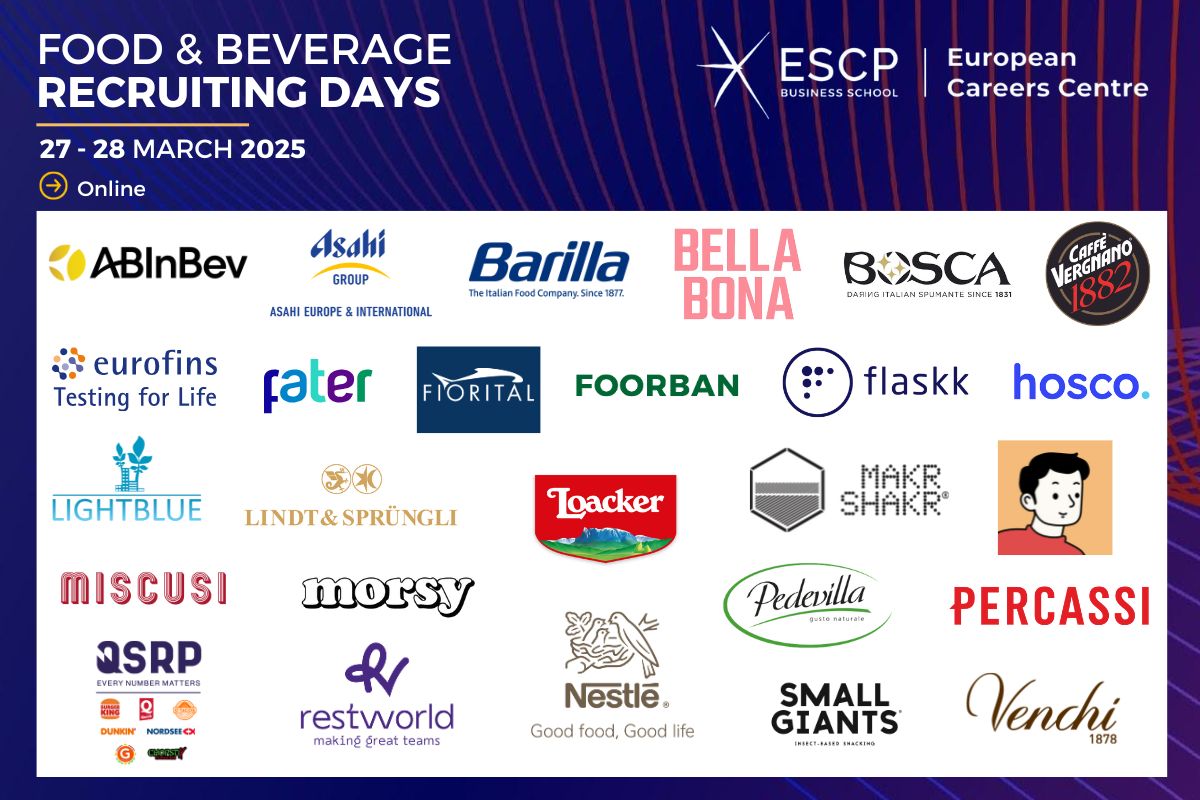
This year’s F&B Recruiting Days welcomed 460 students, 52 recruiters, and 26 leading companies, with 95 job opportunities presented.
Participating companies: Asahi Group Holdings, Barilla Group, Bosca SpA, Caffè Vergnano 1882, Fater, Fiorital S.p.A., Gruppo Nestlé Italia, Lindt & Sprüngli, Loacker, Makr Shakr, PEDEVILLA SPA – Società Benefit, PERCASSI, AB InBev, Bella&Bona, Eurofins, Flaskk, Foorban, Hosco, LightBlue Consulting, Menumal, miscusi, Morsy, QSRP, Restworld, Small Giants, Venchi.
These sector-specific online recruiting events offer students exposure to both multinational corporations and dynamic food-tech startups.
Mentorship Programmes: Personalised Guidance from Industry Leaders
Four bespoke mentorship programmes delivered in 2024–2025 exemplify ESCP Turin Campus’ commitment to student-centred career development:
- AlixPartners – Women Mentorship Programme: This initiative offered female students at ESCP the opportunity to connect with experienced consultants at AlixPartners, exploring career paths in consulting through a gender-inclusive lens. The programme featured mentoring sessions designed to empower participants as they prepare to enter a competitive field.
- Accenture – Navigate the Consulting Industry: 26 students benefited from a tailored series of individual meetings with Accenture professionals. The programme covered career orientation, case interview simulations, and sector insights.
- OC&C Strategy Consultants: Five selected students took part in a dual-stage programme involving career mapping and mock consulting interviews, guided by OC&C consultants in Italy.
- Gucci: Delivered to 19 MSc in Luxury Management students, this programme provided one-to-one mentoring sessions focused on CV refinement, confidence-building, and interview preparation, facilitated by Gucci’s HR team.
These programmes reflect the value of one-to-one learning in building confidence, developing soft skills, and accelerating professional readiness.
21 Strategic Corporate Partners: Building the Future Together
The Turin Campus proudly collaborates with 21 corporate partners across sectors such as consulting, finance, fashion, energy, and technology. These partnerships fuel career events, employer branding activities, HR meetings and teaching sessions with senior executives.
ESCP Turin’s 21 Corporate Partners:
AlixPartners, Amplifon, Argos Wityu, Avio Aero, Azimut Benetti Group, Bain & Company, BCG, BNL BNP Paribas, Eaton, EssilorLuxottica, EY, Facile.it, Generali Italia, Kearney, KPMG, Lavazza, Lazard, Petronas Lubricants International, Reply, TeamSystem, U.G.A. Nutraceuticals.
These companies play a crucial role in shaping the ESCP student experience, offering inspiration, insight, and opportunity at every step.
Academic Sponsorships: Bringing Business Insight into the Classroom
At ESCP Turin Campus, we strongly believe that academic excellence is enhanced when paired with the practical insights of industry. Through our Academic Sponsorship model, we invite leading companies to take an active role in the learning experience by contributing real-world business cases, interactive lectures and co-designed course content. This synergy between academia and the corporate world allows students to apply theory in context, and develop the competencies demanded by today's employers.
In the 2024–2025 academic year, we were proud to continue our collaboration with two prestigious organisations as Academic Sponsors of the Master in Management, each supporting a specialised track:
- BNP Paribas – Investment Banking Specialisation: BNP Paribas brought valuable expertise to a programme designed to equip students with the technical skills, financial knowledge and analytical rigour required in the fast-paced, high-stakes world of international finance. Through practical casework and in-class contributions, students explored the tools and frameworks needed to succeed in investment banking and capital markets.
- EY – Strategic Consulting for Business Transformation Specialisation: EY supported a track aimed at shaping forward-thinking consultants and business strategists, helping students develop the capabilities to respond to rapidly evolving markets, sustainability challenges, and digital transformation. EY professionals engaged with students through interactive sessions and real-life business scenarios, fostering a mindset aligned with strategic innovation and impact.
These partnerships reflect ESCP's commitment to applied learning, combining academic expertise with employer insight. Together with our Academic Sponsors, we help shape learning experiences that are practical, relevant and aligned with today’s job market.
Looking Ahead
“Career development at ESCP is about more than job placement, it’s about preparing students to lead with purpose and impact in an evolving global business landscape. Thanks to the strong support of our corporate partners, the many companies we collaborate with, and the engagement of our Alumni community, we bring business into the classroom and open the doors of industry to our students. Through mentorships, applied projects and direct interaction with professionals, we help them build the skills, mindset and networks needed for long-term success.” said Erica Brignolo, Head of Corporate Relations at ESCP Turin Campus.
As we look ahead to the next academic year, ESCP Turin reaffirms its commitment to employer engagement, international careers, and developing the business leaders of tomorrow.
Campuses
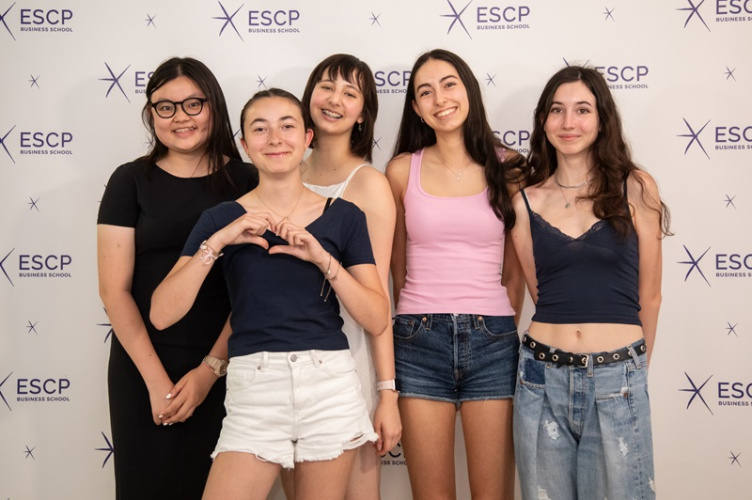
Students from around the world explored management education, career skills, and the vibrant city of Turin during a two-week immersive programme.
This July, ESCP Business School welcomed 50 high school students from 20 countries to its Turin Campus for an intensive two-week International Summer School, held from 7 to 18 July 2025. Aimed at curious and ambitious young minds aged 16–18, the programme offered participants an early insight into business education while nurturing a spirit of global citizenship.
The initiative marked the first time ESCP organised its Summer School in Turin, further strengthening the campus’s role in promoting international learning experiences at all academic levels.
An Academic Journey into the World of Business
Through a multidisciplinary curriculum led by ESCP Turin Campus faculty, students were introduced to key topics in management and entrepreneurship. The academic content included modules in Marketing & Consumer Behaviour, Finance, Interpersonal Skills at Work, and the Accelerated Innovation Lab: Igniting Ideas for Change.
Professors Gaia Giambastiani, Alessandro Lanteri, Marie-Catherine Mignault and Silvia Dalla Fontana guided students through sessions designed to foster critical thinking, creativity, and communication, fundamental skills for future business leaders.
In addition to academic learning, the programme featured hands-on workshops such as Public Speaking, Time Management in the Age of AI, and CV and cover letter training, helping students gain confidence and prepare for future educational and career opportunities.
Business Meets Culture: Exploring Turin Beyond the Classroom
The Summer School offered far more than classroom learning, it provided an authentic and dynamic experience of Turin as a city of innovation, history, and cultural richness.
The first company visit took place at MiScusi, an innovative restaurant chain reimagining the Italian pasta tradition. After a team lunch, students took part in a pasta-making workshop and a business challenge to develop their own pasta factory concept, blending entrepreneurship with culinary creativity.
At the Intesa Sanpaolo skyscraper, students were hosted by the IMI Corporate & Investment Banking Division, who delivered a hands-on introduction to investment banking through case-based learning and interactive discussions, showing students the real dynamics of the finance sector.
Another key moment was the visit to Green Pea, the world’s first retail park dedicated to sustainability. After a guided tour of the centre, students met the CEO, who shared the brand’s founding vision, redefining retail to protect the planet and inspire responsible consumerism.
A visit to OGR Tech, Turin’s innovation hub housed in a former railway workshop, gave students a behind-the-scenes look at cutting-edge tech ventures and start-ups. The tour illustrated how historic spaces can be transformed into engines of digital innovation and collaborative enterprise.
Students also discovered the city’s cultural heritage through a guided walking tour of Turin’s historic centre, exploring key landmarks and learning about the city’s architectural evolution, urban identity, and royal past.
A few days later, they visited the Basilica of Superga, arriving by the historic cogwheel train. The visit offered the chance to discover one of Turin’s most iconic religious and historical landmarks, located in a unique panoramic setting overlooking Turin and the Alps.
They also explored the National Cinema Museum, housed inside the Mole Antonelliana, one of Italy’s most iconic cultural landmarks and a symbol of the city of Turin. The museum offered an engaging journey through the history of film, from early animation devices to contemporary cinema, with interactive exhibits and immersive installations that fascinated students of all interests.
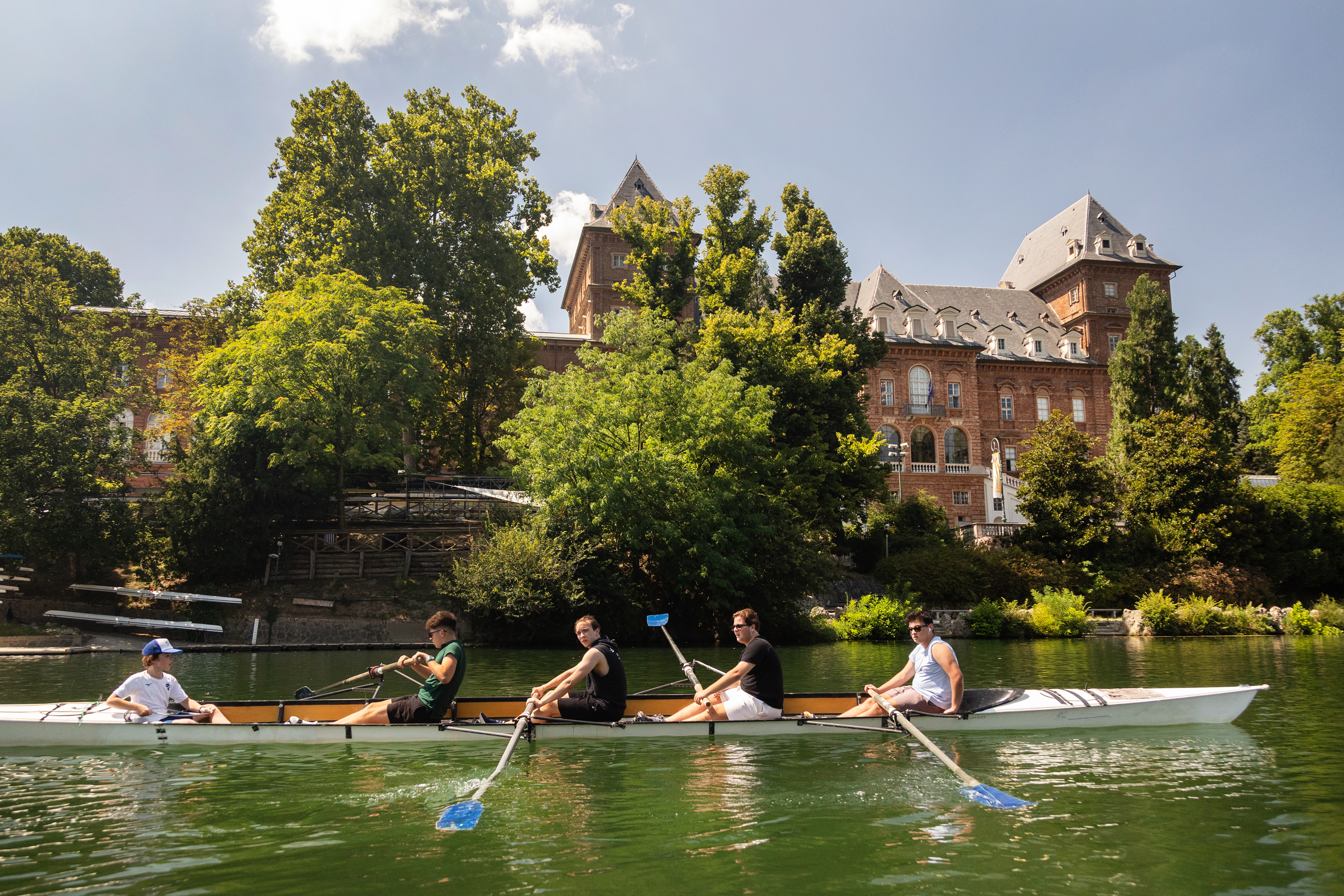
To round off their experience, students took part in a rowing session on the Po River, one of Turin’s most traditional sports. Guided by professional instructors, the activity encouraged teamwork, coordination, and resilience, while offering a fun and active break from classroom learning.
A Platform for Growth and Global Connection
By combining academic content, professional development, and cultural exploration, the Summer School offered a comprehensive introduction to ESCP’s educational approach, rooted in internationalism, innovation, and responsibility.
Career orientation sessions run by ESCP’s Careers Centre encouraged students to reflect on their goals and begin shaping their future academic and professional pathways. Throughout the programme, a sense of community emerged among students, who formed strong intercultural bonds through learning, teamwork, and shared experiences.
Prof. Alberta Di Giuli, Dean of the ESCP Turin Campus, reflected on the success of the programme: “This first edition, which attracted students from every continent, confirmed the strong desire among young people to engage with a truly international environment. Welcoming them to Turin means fostering meaningful exchanges, opening up new perspectives, and offering a first, significant access point to European managerial culture.”
Lasting Impressions
Participants left the Summer School with fresh perspectives, practical skills, and unforgettable memories. Some described the experience as a turning point in their academic journey, a moment that broadened their horizons and inspired long-term ambitions. To reflect the diversity and depth of the experience, we share here the voices of three students who took part in the programme:
“I’d recommend this experience to other students because you learn not only about business, but also how to balance your time better — to study, rest and enjoy life. And you meet people from all over the world, which helps you step out of your bubble.” — Diane El Haj, 16-year-old, from Lebanon.
“This experience helped me realise my interest in marketing — I’ve always loved writing, and I discovered they’re connected. I also overcame my fear of finance. The academic support and interactive classes made it all clearer and more engaging.” — Zikun Qin, aged 17, from China.
“What I’ll remember most is meeting people from everywhere — my group had friends from Poland, New Zealand, China and France. I became more confident, more open, and even discovered rowing, which was a really fun challenge!” — Chloé Marchesseau, 17-year-old French student living in Hong Kong.
As the Summer School came to a close, what remained were the smiles, the stories, and the sense of shared discovery. For many students, it was their first step into the world of business and international education, a meaningful experience they will carry with them for years to come.
Campuses
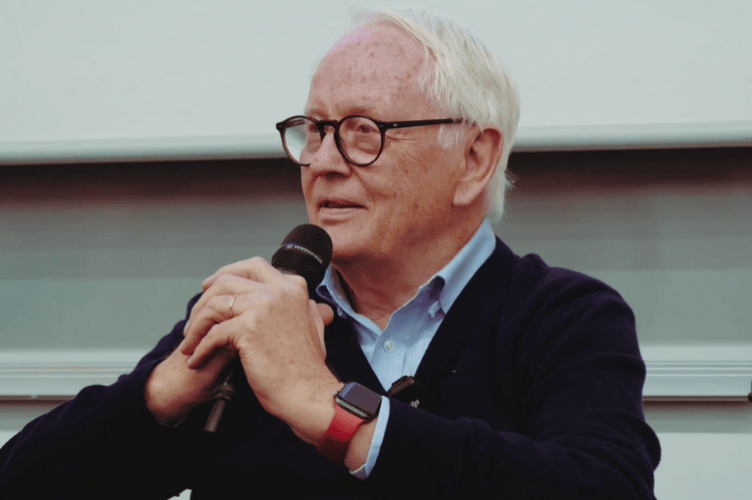
Leadership, Authenticity, and Responsibility in Challenging Times: A Conversation with Werner M. Bahlsen
In a recent conversation with Executive MBA participants and alumni on ESCP's Berlin Campus, Werner M. Bahlsen, long-time leader of the family-owned Bahlsen Group, shared compelling insights on leadership, organisational culture, and entrepreneurial responsibility.
His reflections drew on decades of experience in steering a traditional company through transformation while remaining rooted in values. Below are some the key takeaways from the event, the entirety of which can be streamed below on Spotify or watched on YouTube.

Leading with authencity and honesty
Bahlsen underscored the importance of authenticity in leadership. Recounting a pivotal moment in the company’s history, he described how a major restructuring - requiring a reduction of over 200 jobs at a production site site - was handled transparently and respectfully. Rather than outsourcing the process to external consultants, Bahlsen assembled an internal team to analyse operations using lean production methods inspired by the Japanese Kaizen approach.He personally communicated the difficult news to affected employees, focusing on clarity and honesty. His open communication style earned him respect and even applause, a testament to the trust built through authenticity. The process took several years, during which even those who knew they would be leaving remained committed until the end.
Building a sustainable culture
When asked about practical tools for leading people and fostering company culture, Bahlsen rejected the idea of “tricks”. Instead, he stressed the basics: listening carefully, being present, and showing consistency between words and actions. He emphasised that successful cultures are not built through slogans but through daily behaviour aligned with core values.
Responsibility beyond profit
In light of global conflicts and economic uncertainty, Bahlsen reflected on the broader responsibility entrepreneurs carry - not just for their businesses, but for the people behind them and for society as a whole. He framed entrepreneurial responsibility as both economic and civic. “We are all citizens,” he noted, urging leaders to stay engaged in public life, whether in sport, education, or political activity.Success without leaving others behind
Responding to a question about whether personal success requires leaving others behind, Bahlsen firmly rejected the notion. He argued that leadership means inspiring others to move forward as well. Success, in his view, should be measured by positive impact and the ability to motivate people across all areas of life - from teams to family.
Reinvestment and long-term thinking
On the topic of profits and reinvestment, Bahlsen shared his family company’s policy of retaining 75–85% of profits within the business to fund growth and innovation. He also spoke about smaller side projects, including support for food startups in Berlin through an initiative called "KitchenTown", which offers technical infrastructure to early-stage companies. Though not all these initiatives have been commercially successful, Bahlsen sees value in experimentation and long-term support for innovation.Werner Bahlsen’s leadership philosophy is rooted in values: authenticity, responsibility, and long-term thinking. In a time of volatility, his message is clear: business leaders must remain honest, engaged, and committed not only to results, but to people and society.
Campuses