
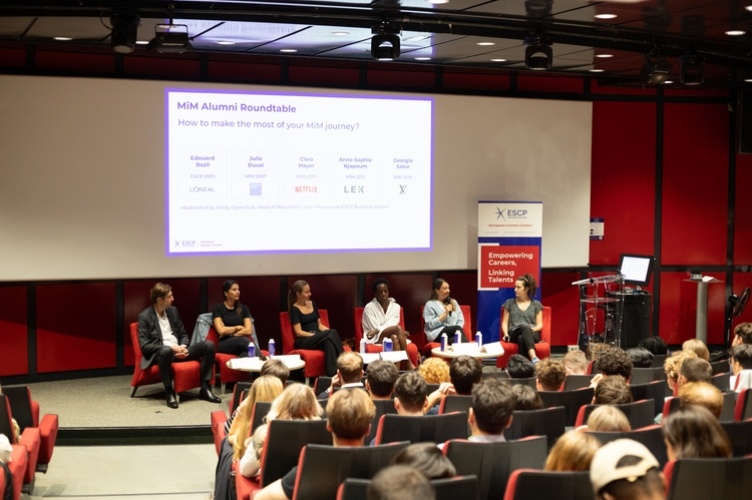
Five Master in Management (MiM) alumni shared their advice on navigating the classroom, choices, and careers. Discover the skills, mindsets, and relationships that shaped their journeys.
Careers take shape where personal ambition meets opportunity and bold choices are made. On September 10, 2025, at the ESCP Paris Campus, five MiM alumni — spanning consulting, finance, luxury, and technology — participated in a panel organised by the ESCP European Careers Centre to share the lessons that shaped their exceptional career journeys.
To the audience of over 350 first-year master’s students, the distinguished alumni at various stages of their careers shared candid reflections on their paths, from pivotal choices to unexpected detours. The result was a rare blend of inspiration and practical advice to help new MiM students navigate the road ahead with confidence.
Meet the panel
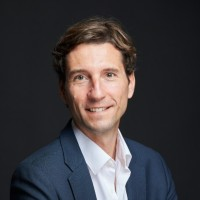
Edouard Bazil
ESCP 2003
General Manager, Transformation Projects, L'Oréal
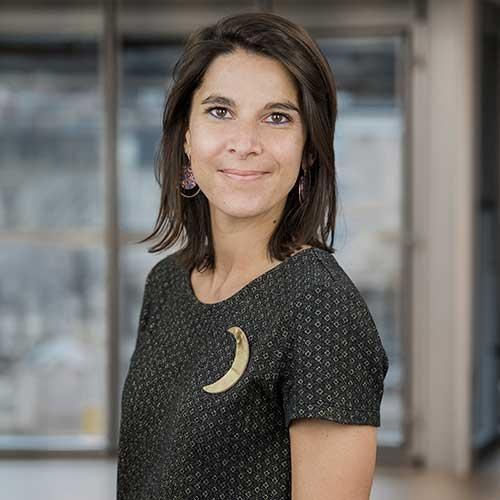
Julie Duval
MiM 2008
Managing Director, Goldman Sachs

Clara Mayer
MiM 2017
Senior Sales Partner, Netflix
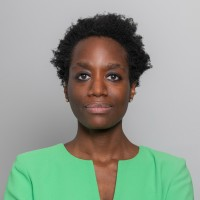
Anne-Sophie Njapoum
MiM 2012
Principal (Healthcare Services & MedTech), L.E.K. Consulting

Giorgia Salce
MiM 2015
Global Merchandising Manager, Louis Vuitton
Insights from the panel
Start with your compass and determine your why
"Three key factors that have always guided my choices: motivation, cultural fit, and people." Clara Mayer shared her cheat code for navigating career decisions. Does the role energise you and stretch your strengths? Do the company’s values and mission ring true? Will you be surrounded by colleagues and leaders who challenge, support, and inspire you? While she shared her three factors, she encouraged students to find their own “career compass” and use it to make choices that will make their careers fulfilling.
Anne-Sophie Njapoum also advised students to get really honest with themselves about why they want to pursue a role. Whether it's for altruistic or more practical reasons, she suggests thoroughly understanding your true motivations to stay aligned with your goals.
# Take action
Write your own three-point compass. Keep it visible. Use it to choose associations, electives, and internships
Three key factors that have always guided my choices: motivation, cultural fit, and people.
Clara MayerSenior Sales Partner, Netflix
Master the fundamentals
Njapoum shared her perspective as someone who regularly interviews and hires. When you’re applying for junior roles, soft skills won’t compensate if the fundamentals aren’t there.
Edouard Bazil echoed the message with a long-term view. In the workplace, things and time move quickly. Now is your moment to master the basics, so later you can challenge assumptions with authority. You’ll only get that confidence if you go deep now.
# Take action
Pick one course where you’ll go beyond the syllabus (case memos, extra problem sets, a mini project).
Please study all your books, read the exercises. It’s very basic, but just do it. As each and every one of us is interviewing you, we will be chasing those technical skills.
Anne-Sophie NjapoumPrincipal (Healthcare Services & MedTech), L.E.K. Consulting
Use ESCP as a sandbox for ideas and interests
Bazil also urged students to see their time at ESCP as a chance to experiment and apply their learning. "Imagine you want to launch a startup, then do your accounting class, your marketing class, your legal class, all while working on that hypothetical project."
Mayer echoed the value of applying skills outside the classroom and developing an entrepreneurial mindset. For her, student associations were a way to test interests in practice, discover new fields, and collaborate on real-world projects. She was part of the association Noise, which gave her a chance to work with young graduates launching social startups. "It brought a lot of value, because I could see the backstage of entrepreneurship and get involved in a field I probably wouldn’t have touched otherwise."
# Take action
Pick an idea and run it as your personal case study. Apply your courses, test assumptions, and see how your thinking evolves. Even if you never launch it, you’ll graduate with sharper skills and a clearer sense of what it takes to build something from scratch.
Imagine you want to launch a startup, then do your accounting class, your marketing class, your legal class, all while working on that hypothetical project.
 Edouard Bazil
General Manager, Transformation Projects, L'Oréal
Don’t panic about the perfect path and build from your skills
"I studied gemology, thinking I would be a diamond hunter, and I ended up running coverage at Goldman Sachs." Julie Duval didn’t set out to work in banking. She followed her curiosity, listened to trusted peers, and doubled down on the skills she actually had: strong data analysis and emotional intelligence. That mix, along with her interesting profile, opened doors she didn’t anticipate. "It was really like a mix of listening to people I trusted, getting inspired by what my friends were doing, and also being super clear on what my skills were."
Giorgia Salce reinforced that careers are not about racing toward the next milestone with some advice from her own mentor. "Don’t be in a rush to gain money or take the step up. Take the time to really learn and get the best out of your experience before moving on."
# Take action
List the three hard skills and three soft skills you want to be known for, then pick projects that help you develop them.
It was really like a mix of listening to people I trusted, getting inspired by what my friends were doing, and also being super clear on what my skills were.
Julie DuvalManaging Director, Goldman Sachs
Design your network
"Networking is a muscle." Mayer’s point was echoed by several speakers. Your ESCP network isn’t just a list of names; it’s a behaviour. Reach out, follow up, give back regularly. Most messages won’t get a reply, but the one that does could change everything.
Salce added a complementary angle that the relationships you build at ESCP will become one of your most valuable long-term assets. This skill has enabled her to make wise moves across Dior, Gucci, and Louis Vuitton.
# Take action
Reach out to one classmate and one alumnus you don’t know yet.
An important skill is really to create strong relationships because this kind of asset is something no one else could ever take away from you.
Giorgia SalceGlobal Merchandising Manager, Louis Vuitton
Make deliberate bets and know when to take risks
Turning points came up repeatedly. Duval left a comfortable decade at JP Morgan (with a six-month-old at home) to take a stretch role. "I decided to take more risks. That was the moment when I learned to trust myself. I decided to believe that if I was offered the opportunity, it was because I deserved it and had the skills."
Her story showed that growth often requires stepping out of security and into uncertainty, even when the timing doesn’t feel perfect or you’re fighting imposter syndrome.
# Take action
Write one risk you’ll take this year. Define the skills or relationships that bet will build for you.
I decided to take more risks. That was the moment when I learned to trust myself. I decided to believe that if I was offered the opportunity, it was because I deserved it and had the skills.
Julie DuvalManaging Director, Goldman Sachs
Inspiring the next generation
For ESCP’s newest MiM students, the panel was a reminder that careers are not linear but shaped by choices, risks, and the people who walk alongside us. With the support of the European Careers Centre and the example of alumni who once sat in their place, today’s students are equipped to approach their journey with confidence, curiosity, and purpose.
Beyond helping students secure internships and connect with recruiters, the mission of the European Careers Centre is to foster these encounters and bring into students’ journeys inspiring, impactful, and supportive figures who give meaning to their careers.
 Eun Paig
Head of Careers Development MiM
Campuses
The ESCP-CEIBS Global Master in Management enables students to complete their studies in 14 months while studying in four different countries.
ESCP Business School, in collaboration with CEIBS (China Europe International Business School), has officially launched the new ESCP-CEIBS Global Master in Management. This fast-track dual degree programme allows students to complete their studies in just 14 months across four international business hubs: Shanghai, Paris, London, and Zurich.
Four countries, two degrees
The programme, taught entirely in English, is designed to prepare the next generation of global leaders with deep insights into both the European and Chinese markets, essential for today’s international business landscape.
Graduates will earn two prestigious master’s degrees, one from CEIBS, a leading business school in Asia, and one from ESCP, Europe’s oldest and top-ranked business school, and gain access to the expansive alumni networks of both institutions.
China edge, global experience
Offering a “China Edge, Global Experience,” students will benefit from extensive international immersion, corporate visits, case studies, and collaborative multicultural projects. The first cohort will begin in August 2026, spanning 20 months, including a 6-month work placement:
- August-December 2026 (Shanghai): Core Management Courses
- January-April 2027 (Paris): Specialisation & Electives
- May-July 2027 (London): Specialisation
- August-October 2027 (Zurich): Specialisation
- Global Internship/Work Placement: 6 months or more of professional experience.
The ESCP-CEIBS Global Master in Management is a natural extension of ESCP’s mission to prepare leaders for a truly international and intercultural world. Partnering with CEIBS enables us to deepen our presence in China while offering our students a transformative, high-impact journey across Europe and Asia.
 Leon Laulusa
Dean and Executive President of ESCP Business School
The ESCP-CEIBS Global Master in Management is not merely a programme, it is a statement of intent - to shape, to inspire, and to propel a new generation of leaders. Born of Europe and China, the degree is not simply international, it is intercultural, intergenerational, and interdisciplinary.
 Frank Bournois
Dean and Vice-President of CEIBS
Relevant link
Campuses
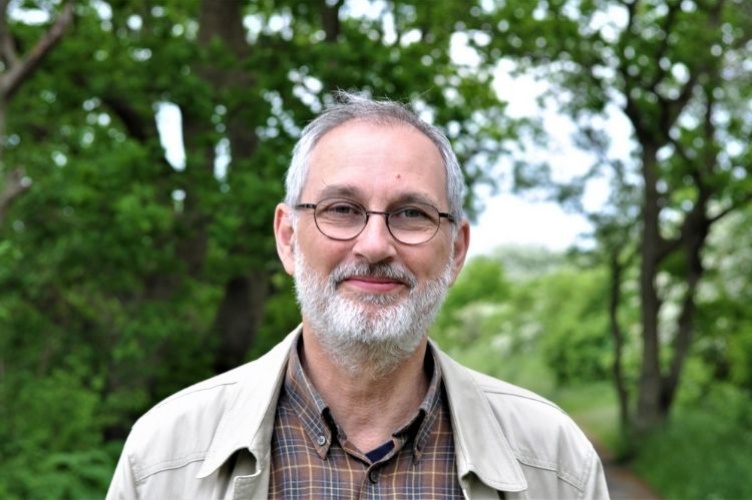
In Memoriam: Professor Dr Rolf Brühl
The European ESCP Business School and ESCP Europe Wirtschaftshochschule Berlin e.V. mourn the loss of Professor Dr Rolf Brühl, who passed away on 21 September 2025 after a brief and severe illness.
Since his appointment in 1996, Professor Brühl held the Chair of Business Ethics and Management Control at ESCP Berlin.
Over these decades, he was instrumental in shaping the academic identity of our institution: he designed and led the doctoral programme from its inception in 2003 until 2024, oversaw master-level teaching and research, and engaged in a wide range of scholarly contributions in the fields of controlling, business ethics, legitimacy theory, trust, responsibility, and organizational accountability. His textbooks, especially in German, on controlling, accounting, CSR, and philosophy of science have been widely used and respected.As a colleague, he was known for his unwavering integrity, deep professionalism, and intellectual rigor. As a teacher, he was admired for his fairness, clarity, and ability to make complex topics accessible. He fostered a culture of inquiry and mentorship, guiding many doctoral candidates to successful completion and establishing lasting academic legacies. His loss leaves a profound void in teaching, research, and our broader community.
We honour the memory of Professor Dr Rolf Brühl with gratitude. Our deepest condolences go to his wife, Gabriele Brühl, and to his family.
-On behalf of the leadership, faculty, and staff of the European ESCP Business School and ESCP Europe Wirtschaftshochschule Berlin e.V.
Campuses
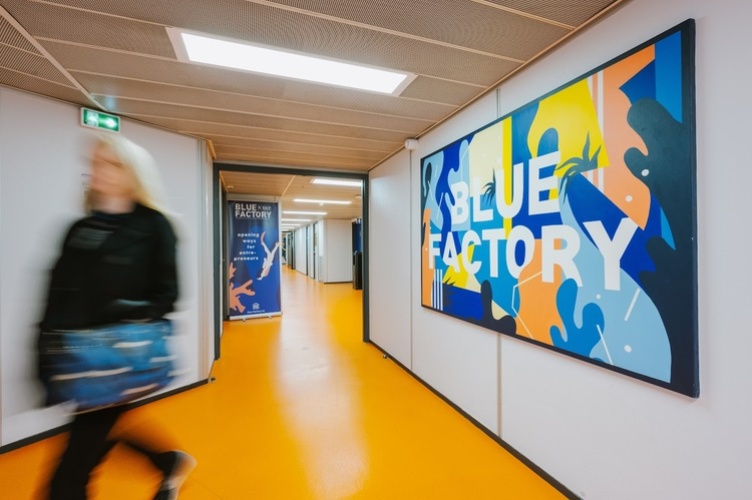
The ESCP Blue Factory is now a thriving multicampus hub, supporting entrepreneurs at every stage of their local and global journeys.
Originally launched in Paris in 2009 during the inaugural ESCP Entrepreneurship Festival, the ESCP Blue Factory has grown from its roots as a single-campus initiative to a thriving multicampus hub supporting entrepreneurs at every stage of their local and global journey.
A multicampus hub for entrepreneurship
As of 1 March 2025, the Blue Factory is present across ESCP’s five European campuses—Paris, Berlin, London, Turin, and Madrid—each serving as a regional entrepreneurship hub while remaining deeply connected to ESCP’s European network. By engaging with local ecosystems, including accelerators, investors, and media, the Blue Factory fosters an unparalleled environment for collaboration and innovation.
This Europeanisation was made possible thanks to the support of the ESCP Foundation and alumnus Nicolas Motelay (‘87).
“Entrepreneurship is a driving force for innovation and positive change in today’s world. At ESCP, we are committed to fostering this spirit by supporting our community of students and alumni across Europe. The Blue Factory embodies this mission, by leveraging our unique multicampus presence to create a truly global network of innovation that empowers aspiring entrepreneurs to transform ideas into impactful ventures.”
Léon LaulusaExecutive President & Dean of ESCP Business School
Tailored support for every stage of the entrepreneurial journey
The Blue Factory offers an integrated support system, guiding entrepreneurs through four key stages of their development:
- Explore: Open events and personalised consultations to spark and refine ideas.
- Start: Comprehensive program focused on entrepreneurship fundamentals from ideation to prototyping.
- Launch: Support for entrepreneurs at the prototyping stage, gaining their first users or clients.
- Seed: Tailored assistance to help ventures achieve product-market fit.
This structured approach is complemented by access to mentorship, funding opportunities, and resources, as well as a global network of 12,000 entrepreneurial alumni.
“Entrepreneurship isn’t just about profits or cutting-edge technology—it’s about transforming passion into meaningful impact. With 15 years of practice behind us, we are excited to continue enabling entrepreneurs to thrive, innovate, and build the future, one step at a time.”
 Maeva Tordo
Head of the Blue Factory
15+ years of impact in entrepreneurship
The Blue Factory’s journey began humbly in 1999 as an experimental incubator. By 2009, it formalised its mission during the first Entrepreneurship Festival in Paris, establishing itself as a launchpad for budding entrepreneurs.
Since its creation, the Blue Factory has made a significant impact:
- Over 1,200 individuals supported through selective programmes.
- More than 4,500 students trained through workshops and community events.
- A strong community of alumni entrepreneurs, including notable names like Clément Delangue, co-founder of unicorn Hugging Face; Alexis Fogel, co-founder of Dashlane and Stonly; Justine Lecallier, co-founder of Circul'egg; and Victoire Bach, co-founder of Hopia.
- Beyond the ESCP community, the Blue Factory co-founded La Boussole des Entrepreneurs in 2018, which has become a key organisation that unites over 85 incubators and accelerators across France and will soon join France Digital, the largest association of startups and investors in Europe. Its mission is to advance and strengthen the evolving field of entrepreneurial support.
The Blue Factory stands out not only for these impressive results but also for its emphasis on responsible and diverse entrepreneurship, empowering ventures that balance profit with purpose.
Looking ahead: Entrepreneurship at ESCP
As part of its vision, the Blue Factory aims to foster connections between students, alumni, and corporate partners to support both entrepreneurial and intrapreneurial ventures across Europe and the globe. By aligning entrepreneurship education with cutting-edge research and open innovation, it aims to unlock ESCP’s full potential as a driver of change and progress.
Most recently, the Blue Factory signed a strategic partnership in deeptech innovation with Bpifrance to open new paths for students and researchers to co-create startups that merge science and strategy. This collaboration aims to provide real on-the-ground support for deeptech founders, from business modelling to commercialisation.
The activation of ESCP’s five European campuses paves the way for the development of new programmes designed to support the international growth of startups and SMEs. ESCP’s European incubator will also launch sector-specific initiatives tailored to local strengths and market needs. Finally, a European financing model to back ESCP entrepreneurs is currently in development.
Relevant link
Campuses
Ember, the AI-enhanced student assessment project by ESCP Assistant Professor Vitor Lima, is shortlisted for international education award
ESCP Business School is proud to announce that Ember AI-Enhanced Student Assessment, an innovative project led by Assistant Professor Vitor Lima, has been shortlisted for the Innovation in Business Education Award at the prestigious QS Reimagine Education Awards 2025.
Harnessing generative AI to transform assessment
Launched in 2024, Ember integrates Generative AI in higher education to transform how students are assessed. Acting as an AI-powered teaching assistant, Ember evaluates student group presentations on pressing real-world topics, such as customer experience and AI ethics.
What makes Ember unique is its multimodal AI analysis: combining voice, visuals, and professor notes with detailed rubrics, it delivers immediate, consistent, and evidence-based feedback. This helps students better understand their strengths, improve performance, and engage in deeper critical thinking.
This initiative originated from the course “Working with Robots and AI” within the Master in Management program, reflecting a critical and practical exploration of AI’s implications.
“The Ember project exemplifies the future of higher education assessment, integrating AI responsibly and innovatively to enhance pedagogical outcomes, ensuring transparency, fairness, and scalability in educational experiences.”
 Vitor Lima
Assistant Professor of Marketing of ESCP Business School
Why Ember stands out
Ember represents a leap forward compared to traditional grading tools like Turnitin or standard LMS systems. Its distinctive features include:
- Real-time multimodal analysis of speech, slides, and professor notes.
- Customised, persistent AI prompts for objective evaluations.
- Compliance with GDPR and the European AI Act, ensuring ethical and transparent use of AI.
- Scalability potential, including digital twin avatars for tutoring and exam preparation.
Early evidence at ESCP shows significant improvements in student engagement and presentation quality due to timely, detailed feedback and transparent rubric-based assessment.
“Many thanks to all the folks at ESCP Business School who helped me with this submission, and to the school’s directors for their continuous support of these AI initiatives, such as this one with OpenAI.
Vitor LimaAssistant Professor of Marketing of ESCP Business School
A step toward global impact
Designed for scalability, Ember is adaptable across programmes, campuses, and institutions. Its intuitive voice interface and rubric-driven feedback make it accessible to diverse learners, reinforcing ESCP’s mission of inclusive and responsible innovation.
By embedding ethics, accountability, and transparency at its core, Ember sets a benchmark for responsible AI in higher education.
ESCP leads the way for AI in higher education
This recognition reinforces ESCP’s position as a global leader in business education innovation. As AI continues to shape the future of learning, projects like Ember show how technology can be harnessed to benefit both students and faculty.
Relevant link
Lima is among the 1,000 AI Champions at ESCP Business School who participated in the proof-of-concept phase in the ESCP and OpenAI collaboration. To learn more about the initiative and other AI use cases at ESCP
Campuses
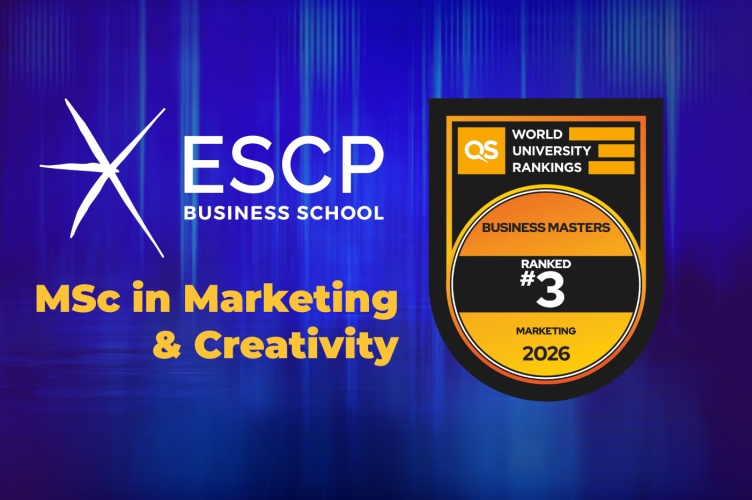
Breaking into the global top 3, ESCP’s MSc in Marketing & Creativity shapes creative, analytical, and tech-driven leaders
ESCP Business School’s MSc in Marketing & Creativity (MMK) has risen to 3rd place worldwide and 1st in the UK in the latest QS Business Masters Rankings for Marketing, entering the top 3 podium for the first time. The 2026 ranking evaluated 164 programmes across 33 countries, drawing on insights from more than 35,000 employers and 40,000 academics worldwide.
Hands-On, Creative Learning
Delivered across ESCP’s London and Paris campuses, the MSc in Marketing & Creativity is one of the top marketing Master’s programmes in the UK and France. It combines creativity with analytical and strategic marketing skills, preparing graduates to navigate an increasingly complex and fast-changing industry that demands marketing leaders who combine purpose, creativity, and data-driven insight.
A key differentiator is the programme’s hands-on 'Not By The Book' learning model, where students work on live consultancy projects, engage with industry leaders through creative seminars, and contribute to social impact initiatives. With its distinctive emphasis on Creativity Marketing, the programme equips students with a rare skillset that combines critical insight with hands-on experience, preparing them to thrive across diverse and innovative marketing functions and industries.
This recognition of our programme’s success confirms ESCP's bold vision for an innovative course that continuously redefines marketing in a context of digital and technological transformation. Each cohort benefits from the most up-to-date curriculum as well as hands-on workshops and projects with industry leaders. What makes us most proud, however, is the strong endorsement from employers worldwide, as it demonstrates the real impact our graduates are having in the business world.
 Marie Taillard
UK Dean (interim) of ESCP Business School London Campus
Career Impact and Global Reach
In addition to its overall 3rd place, the MSc in Marketing & Creativity achieved 1st worldwide in Value for Money, 4th in Diversity, and 5th in Employability. These results highlight the programme’s strong return on investment, its international and inclusive student body, and the high demand for graduates in the global job market.
Career outcomes further reinforce this success. Graduates of the MMK Class of 2024 reported an average salary increase of 49% after graduation, with 39% moving to a new country to advance their careers. Alumni have gone on to roles at leading organisations such as L’Oréal, Chanel, Landor, the Michelin Guide, Danone, and Truth Consulting, demonstrating the programme’s reach across industries from luxury and FMCG to creative consultancy and digital innovation.
We are delighted that the MSc in Marketing & Creativity has been ranked 3rd globally in the QS Masters in Marketing Rankings, a recognition that attests not only to the excellence of our students and faculty, but also to our strong industry partnerships and vibrant alumni network. In an era defined by AI, it is creative skills that set leaders apart, and no other programme combines this focus with the unique cultural and professional opportunities of London and Paris, two of the world’s most vibrant creative capitals. This recognition affirms the distinctive multicultural and inclusive experience we offer, and the importance of creativity at the heart of marketing’s future.
 Chloe Preece
Academic Director of the MSc in Marketing & Creativity
Marketing Skills for Tomorrow
This recognition reflects a global shift in marketing, where businesses must understand evolving consumer behaviours while leveraging AI, automation, and digital platforms. As a result, the demand for marketers who can blend creative problem-solving with data-informed decision-making and a clear understanding of tech opportunities has never been greater, underlining the relevance and impact of ESCP’s MSc in Marketing & Creativity in preparing graduates for the challenges of a rapidly evolving global job market.
The MMK gave me the tools to think both strategically and creatively in a global context, which has been incredibly valuable in my career. I'm now working in international marketing for the Michelin Guide, and I truly don’t think I would have had this opportunity without the programme. The mix of real-world projects with luxury industry partners, the global exposure from studying in both London and Paris alongside an international cohort, and the unique, creativity-driven classes helped me see marketing through a completely new lens.
 Alice Jornalo
International Associate Marketing Manager at the MICHELIN Guide and MMK Class of 2024 alumna
Relevant links
Learn more about the MSc in Marketing & Creativity and explore how our community defines Creativity Marketing by following #creativitymktg on LinkedIn.
Wondering if this is the right programme for you? Take our 4-minute quiz to find out.
Campuses
New interview series highlights what internationalism means for today’s higher education leaders through personal stories and global insights from ESCP’s leadership.
How does ESCP’s unique international governance translate into impact for students, faculty, and partners across our programmes and campuses? Starting Points is a new interview series featuring four members of ESCP’s senior leadership. Each episode blends strategic insight with a personal lens, sharing the “starting points” that shaped their paths and revealing how international leadership drives the School’s mission to educate accountable, bold and creative business leaders who are prepared to make a positive and sustainable impact on society.
The series brings to life the ambitions of ESCP’s Bold & United 2026–2030 Strategy, grounded in the School’s humanistic values of Inclusion, Diversity, Excellence and Merit (IDEM). It reveals how these principles fuel a vision of management education that is bold in its innovation, united in its diversity, and uncompromising in its commitment to shaping interdisciplinary, culturally intelligent leaders.
Episode Guide & Launch Dates
Mark your calendars: one new episode will be released each week.
| Episode | Description | Watch the video |
|---|---|---|
| Episode 1 | Prof. Léon Laulusa ESCP’s Executive President & Dean discusses ESCP’s international image and reputation. |
|
| Episode 2 | Prof. Francesco Rattalino ESCP’s Executive Vice President and Dean for Academic Affairs and Student Experience discusses ESCP’s international student experience. |
|
| Episode 3 | Prof. Véronique Tran ESCP’s Executive Vice President in charge of Executive Education and Corporate Relations addresses issues related to multiculturalism in Executive Education. |
|
| Episode 4 | Prof. Pramuan Bunkanwanicha ESCP’s Dean of Faculty addresses the importance of having a team of professors who are open to the world and its challenges. |
Stay tuned to discover the global perspective that underpins ESCP’s identity
Each episode explores a facet of ESCP’s governance and the human stories behind it, examining how values, choices, and lived experiences inform the decisions that move the School forward. From personal journeys and global insights to bold visions for education, this series delves into what drives them—and how international governance is shaping the future of ESCP.
Subscribe to ESCP’s YouTube Channel to watch each episode as it launches.
Campuses

Why complex language – not just clarity – can sway funding decisions
“Keep it simple” is the advice most entrepreneurs hear before stepping into an investor pitch. But new research by ESCP Business School’s Dr Lorenz Graf-Vlachy, in collaboration with researchers from the University of Passau and the Technical University of Munich shows a different reality.
The study published in Entrepreneurship Theory and Practice, shows that investors don’t just listen to what entrepreneurs say — they read language as a signal of how entrepreneurs think. And when founders demonstrate the ability to grapple with complexity, investors are more inclined to open their wallets.
Analysing 547 startup pitches delivered at TechCrunch Disrupt competitions and running a randomised experiment with 240 professionals, the researchers identified three clear patterns:
- Language pays. Entrepreneurs who used more cognitively complex language — words showing contrast (“but,” “however”), qualification (“might,” “often”), or comparison (“higher,” “smaller”) — tended to raise more funding. In fact, a one standard deviation increase in such language use was linked to 7.25% more investment — on average about $125,000 above the mean funding of $1.73 million. When faced with uncertainty, investors rely on mental shortcuts about what a “competent entrepreneur” should sound like. Complex language fits that prototype, signalling an ability to weigh alternatives, recognise trade-offs, and navigate ambiguity. As one investor put it: “I want to hear that they’ve thought it through. When an entrepreneur speaks in black and white, they seem unaware of the market and competition.”
- Elite education adds weight. The impact of cognitively complex language was stronger when the founder held a degree from an elite university, which increased investors’ confidence that they were seeing genuine capability rather than empty talk.
- Complexity has limits. More isn’t always better. At very high levels, investors may start to view it as hesitation or indecision — a reminder that entrepreneurship requires not only critical thinking but also the ability to act.
As one seasoned investor interviewed for the study put it: “I want to hear that they’ve thought it through. When an entrepreneur speaks in black and white, they seem unaware of the market and competition.”
The pattern is visible in practice. The founders of fintech unicorn N26 gave a pitch rich in cognitively complex language — and went on to raise more than $10 million within a year.
“Language is one of the key signals investors analyse when making high-stakes choices. What they are really looking for are entrepreneurs who can navigate ambiguity, weigh trade-offs, and still move forward decisively.”
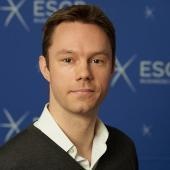 Dr Lorenz Graf-Vlachy
Senior Research Fellow at ESCP and co-author of the study
Why it matters
The findings challenge long-standing assumptions in entrepreneurship training. For founders, they suggest that clarity matters — but oversimplifying can send the wrong signal. For investors, the study reveals how subtle biases in reading language can shape who gets funded, often amplifying the advantage of those with elite credentials.
The full article, How Entrepreneurs’ Use of Cognitively Complex Language Affects Investor Funding, is available here.
Campuses
From barriers to breakthroughs: how African women entrepreneurs are shaping the digital economy
Collaborative research from ESCP Business School, Gordon Institute of Business Science and UNCTAD highlights challenges and opportunities for women in the digital economy
African women entrepreneurs are playing an increasingly important role in shaping the continent’s digital and trade future. They are creating jobs, opening new markets, and driving innovation, but they continue to face persistent barriers in financing, digital infrastructure, and access to international markets.
Collaborative research between ESCP Business School, GIBS - Gordon Institute of Business Science, and UNCTAD’s eTrade for Women initiative has led to a new report, Breaking down barriers for women digital entrepreneurs: Insights from Africa, which seeks to understand and address these challenges.
Shaped by research by Prof. Alisa Sydow (ESCP), Prof. Marianne Matthee (GIBS) and based on insights from UNCTAD’s eTrade for Women network, the report draws on surveys of 94 digital entrepreneurs across various regions and 33 in-depth interviews with women founders in 13 countries in Sub-Saharan Africa.
Key insights from the research
The study highlights both systemic obstacles and the creative resilience shaping women-led digital businesses across the continent. Key findings include:
- Family responsibilities constrain growth. 60% of women in Sub-Saharan Africa said family responsibilities significantly limit their business capacity.
- Financing remains the steepest barrier. 89% rely on personal savings, with only 5% accessing external investor or grant funding.
- Infrastructure gaps limit digital adoption. While women entrepreneurs embrace digital tools, only 19% describe their businesses as fully digital, with unreliable connectivity, costs, and lack of talent remaining primary barriers.
- Exports are common but limited in scope. 64% of women-led firms export, with 75% selling to just 2–4 countries, and often reactively rather than strategically.
African women entrepreneurs are not only shaping the digital economy but also redefining trade across borders. This research shows both the systemic challenges they face and the extraordinary creativity with which they navigate them. Supporting their ventures is a critical step towards inclusive and sustainable growth.
Associate Professor of Entrepreneurship at ESCP
What stood out most is the resilience of women entrepreneurs in the face of structural barriers. Their businesses are outward-looking, innovative, and job-creating. If given adequate access to financing and infrastructure, their impact could be transformative.
Professor of economics at GIBS
From insight to action
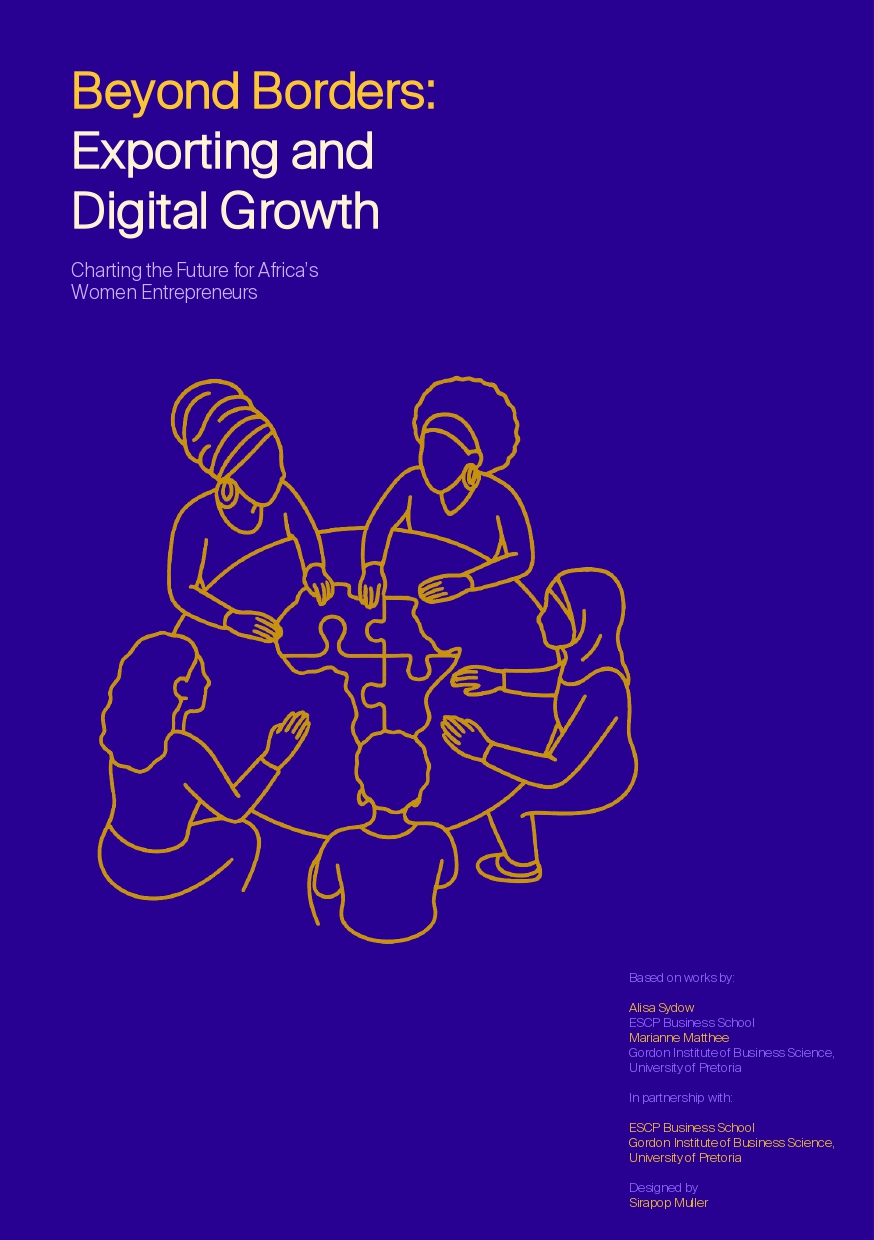
The report's findings have been distilled into an accessible companion brochure, Beyond Borders: Exporting and Digital Growth – Charting the Future for Africa’s Women Entrepreneurs, offering practical insights and actionable guidance, including strategies for export readiness, digital adoption, and trust-building across borders.
These findings are already shaping dialogue among entrepreneurs, investors, and policymakers. On September 6, 2025, in Nairobi, Kenya, ESCP, GIBS, and UNCTAD convened women founders and ecosystem leaders at an event to share research insights and discuss strategies to improve support for women-led digital enterprises in Africa. This initiative reflects ESCP’s commitment to advancing inclusive entrepreneurship in emerging markets.
The digital economy is transforming global trade. For women in the Global South, participation in this shift is not only about individual empowerment but also about systemic inclusion. Supporting their ventures means strengthening communities, boosting resilience, and unlocking growth far beyond borders. As one entrepreneur from Tanzania put it: “We’re innovators, job creators, and leaders.”
About the authors
Dr. Alisa Sydow is an Associate Professor of Entrepreneurship at ESCP Business School (London) and founder of Nampelka, a platform supporting African entrepreneurs. Her research explores entrepreneurship in Africa, with a focus on tech-driven development and female empowerment, and has been published in top journals such as Entrepreneurship Theory and Practice.
Prof. Marianne Matthee is a Professor of Economics at the Gordon Institute of Business Science (GIBS), University of Pretoria, with nearly two decades of expertise in economic development, international trade policy, and gender dynamics. Her research explores the intersection of trade, economic opportunity, and gender, with a focus on female entrepreneurial exporters and trade-related gender inequality.
UNCTAD promotes inclusive and sustainable trade and development worldwide. Its eTrade for Women initiative supports women digital entrepreneurs across the Global South by addressing systemic barriers and amplifying women’s voices in shaping the digital economy.
Relevant link
Campuses

ESCP achieves top positions across Europe and 7th worldwide in MiM ranking
Since 2010, ESCP’s Master in Management programme has ranked among the top 10 programmes worldwide in the annual Financial Times Master in Management ranking.
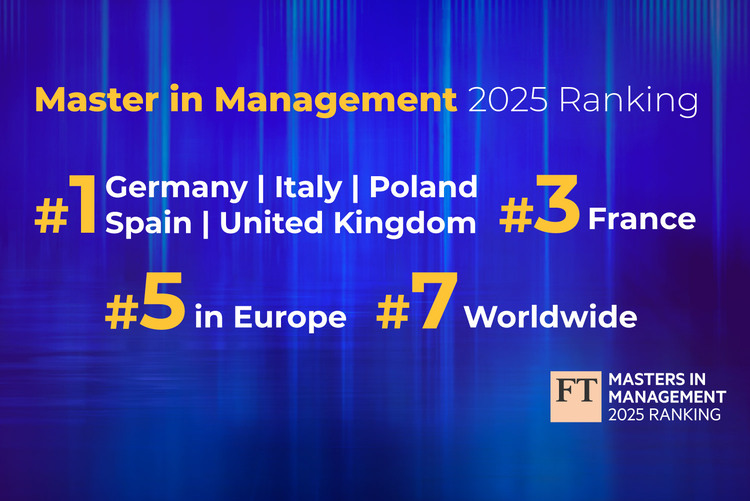
In the Financial Times annual ranking of the top 100 Master in Management programmes, ESCP Business School comes in 1st across the United Kingdom, Germany, Spain, Italy and Poland, 3rd in France, 5th in Europe, and 7th worldwide.
Each year the Financial Times ranks the top 100 Master in Management programmes in the world based on several criteria, including international course experience, career services, alumni network, and ESG teaching.
A truly international Master in Management
ESCP’s Master in Management (MIM) stands out for its international outlook. The programme ranks 5th globally for international course experience and features both the most diverse student cohort (98% international students) and faculty (93% international faculty, 46% female faculty) among the world’s top 10 business schools.
Delivered over two years and across two to six European countries, ESCP’s MIM shapes accountable, bold and creative leaders at the intersection of business, technology, and global affairs.
With over 70 specialisations, 45 dual degree partnerships, and 6 European campuses, this programme offers unparalleled opportunities for global exposure and personalisation.
Every year, over 1,200 students graduate from ESCP’s MIM programme, representing the largest cohort among the FT MIM top 100. With an overall satisfaction rate of 8.95, ESCP’s world-class faculty and staff are deeply committed to every student’s academic fulfillment and personal growth.
Innovation and AI at the core of learning
At the core of ESCP’s strategic vision and pedagogical model is a dedication to innovation that fosters ethical, human-centred leadership, grounded in critical and systemic thinking. All ESCP students, including first-year and second-year Master in Management students, are beginning this new academic year as integral players in ESCP’s AI transformation.
Our 12,000+ students, faculty and staff have access to the most cutting-edge AI models via OpenAI’s ChatGPT Edu. Beyond using AI, they have the opportunity to shape and build it themselves — empowered by open science and open-source AI through Hugging Face platform’s Academia Hub. To ensure responsible use, every student follows a course on “GenAI in business and in my studies” from day one.
Shaping future leaders for global careers
Each year, ESCP’s Master in Management equips over a thousand future leaders and entrepreneurs with strategic vision and operational excellence — empowering them to succeed and make a positive impact across global sectors such as consulting, finance, technology, industry, luxury, and fashion. According to the 2025 FT ranking, 100% of the most recent ESCP MIM class found employment within three months of completing the programme.
Since 2010, ESCP’s Master in Management programme has consistently ranked in the world’s top 10 programmes. This sustained excellence reflects not only our pride but also our collective determination to shape the future of management education — with the bold and shared ambition of becoming the first European University of Management by 2030.
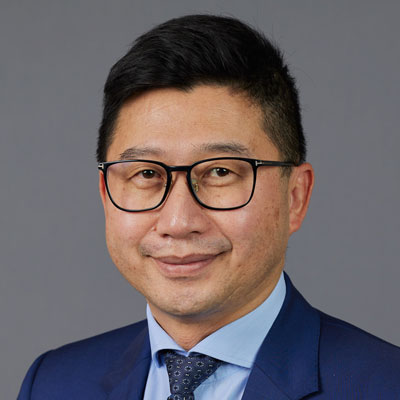 Prof. Léon Laulusa
Executive President and Dean of ESCP Business School
The programme also performs strongly on sustainability metrics, ranking 8th worldwide for ESG and net zero teaching. ESCP integrates ESG principles within the core business courses while also providing dedicated specialisations in sustainability, including sustainable finance and social entrepreneurship.
Thanks to the dedication of our faculty and staff, and the hard work of our students, every ESCP graduate leaves the School equipped with the skills and mindset to collaborate with and lead international, multicultural teams. Congratulations to our alumni, students, faculty and staff, whose collective efforts have made these outstanding results possible year after year.
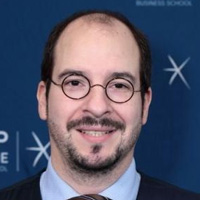 Prof. Yannick Meiller
Associate Dean of the Master in Management programme at ESCP Business School
Relevant link
Campuses