
Inside the Master in Management Class of 2024 Graduation Ceremony
On 20th June 2025, ESCP Business School celebrated the Master in Management (MiM) Class of 2024 graduation ceremony at the iconic Palais des Congrès de Paris. With close to 3,000 guests in attendance, the ceremony celebrated the new addition of 1,425 MiM Class of 2024 graduates, representing 56 nationalities.
From Berlin to London, Madrid to Paris, Turin to the global stage, this diverse cohort has lived the ESCP journey in full. As they walked the stage carrying their diplomas, you could see their studies had left a lasting impression and instilled them with values of leadership, impact and openness.
The ceremony was a great opportunity to recognise our students, everything they have accomplished and everything they are yet to do. And in many cases, the diploma they received carried more than one degree
Multiple Degrees and Diplomas
The ESCP Master in Management is one of the few programmes in the world that allows students to graduate with up to five national degrees, thanks to our integrated, multi-campus curriculum and recognition by national authorities in each of our campus countries.
All degrees can be obtained within the ESCP system, and include:
- German Master of Science (delivered by ESCP Business School)
- UK European MSc in Management (newly delivered by ESCP Business School)
- Spanish Máster en Dirección de Empresas
- French Master in Management – Diplôme Grande École (delivered by ESCP Business School)
- Italian Laurea Magistrale
- Polish Master of Science
In the Class of 2024, 38% of graduates received two degrees, and 14% received three degrees, showcasing the truly pan-European nature of the programme and the academic ambition of our students
“Graduating with three national degrees from one programme is a major advantage,” said one graduate. “It shows future employers that you’re not only academically capable, but also flexible and ready to work across borders.”
Employers around the world increasingly value this type of qualification. A dual or triple degree signals interdisciplinary strength, adaptability, and a readiness to take on complex challenges. For students, it opens up multiple job markets and offers a more tailored approach to local recruiters, enhancing their employability prospects.
The New UK ESCP Degree
Among this year’s cohort, 25 students received the first-ever UK Master’s degrees delivered directly by ESCP Business School, following the School’s new degree-awarding powers in the United Kingdom. These graduates made the transition from the previous version of the UK degree, which was delivered in partnership with City, University of London.
I pursued an additional degree, specifically a UK degree, because I am considering living in the United Kingdom and building my career there. I believe that holding a national qualification will significantly strengthen my chances of securing a position in the UK job market. It not only demonstrates my commitment to working in that environment but also helps me better understand the local academic and professional standards.
 Alexander Schmactenberg
Graduate Student
Since September 2024, a total of 327 MiM students have chosen to apply for the ESCP-awarded UK degree, further strengthening their academic profile and demonstrating their confidence in the School’s evolving global recognition.
Ceremony Reflections
The ceremony itself was deeply emotional, a rare opportunity to pause and reflect on an intense and transformative journey.
Besides seeing all of my friends from the different campuses and countries, I really enjoyed the speeches, especially the one by Patrice Louvet. It really highlighted the opportunities that lie ahead as well as what we have already achieved so far. In addition to this, I enjoyed the great mood everybody was in, and the festivity of finishing my master's degree.
Alexander SchmactenbergGraduate Student
For faculty and staff, the moment was equally meaningful.
“This cohort stands out for its resilience and maturity,” said Professor Yannick Meiller, Academic Director of the MiM. “They entered the programme with ambition, and are leaving with the experience, knowledge, and mindset to lead with purpose. We couldn’t be more proud.”
Looking Ahead
As the Class of 2024 closes one chapter and begins another, we are reminded that this programme is about transformation. It is a launchpad for curious minds and committed hearts who will go on to lead across industries and borders.
To our new graduates: wherever your journey takes you, you carry the spirit of ESCP with you. And we couldn’t be prouder.
Campuses

From circular construction to AI-driven healthcare, discover the student and alumni ventures honoured with the Innovation Prize 2025.
The Innovation Prize 2025 has officially crowned its winners, marking the fifth edition of this European competition that celebrates early-stage ventures with big potential. Co-organised by the AGORA Student Union and the ESCP Foundation, in collaboration with the Blue Factory ESCP and BPCE Group-ESCP Chair: “Mutual and Cooperative Banking for the Benefit of the Economy”, this year’s competition highlights prototype-phase student- and alumni-led projects making an impact in sustainability, education, music, and health.
This year’s edition drew 57 project submissions from current ESCP students and alumni (within three years of graduation). A jury of innovation experts, leaders, and Foundation donors selected three prize winners, alongside a first-ever special mention. Members of the jury included:
- Jean-Stéphane Arcis, ESCP Foundation
- Christophe Bianco, ESCP Foundation
- Cyril Rocke, ESCP Foundation
- Maëva Tordo, The Blue Factory
- Cristina Peicuti, BPCE Chair
- Livia Zimermann de Araujo Durigan, The Blue Factory
- Ohana Duboscq, AGORA Student Union
The jury was impressed by the originality, quality, and impact potential of the projects submitted by all teams. Their collective insight and support reinforce the School’s mission to foster entrepreneurial thinking across disciplines.
All four teams will receive six months of tailored support from the Blue Factory to accelerate their path from prototype to powerful venture.
Meet the Winners
ESCP Foundation Innovation Prize (€8,000 + coaching support)
ReWorth | Founders: Esther Heyse & Oskar Leibnitz
ReWorth transforms construction waste into lightweight, circular, energy-efficient building blocks—designed for developers and architects who want to build differently. The project impressed the jury with its practical application of circular economy principles in the construction sector.
“Winning this award means a lot to us—not just financially, but as recognition for the belief, work, and countless hours we’ve already invested in ReWorth. As a hardware start-up, with longer development cycles and tougher funding conditions than many software ventures, visibility and credibility like this are especially valuable. The idea for our start-up was born during my MSEI Master’s at ESCP, where I gained the practical tools and entrepreneurial spirit I now use every day. It grew through collaboration with inspiring peers, an international team, and a shared drive to turn waste into value. This award helps us gain trust, build partnerships, and opens doors as we prepare for our next funding round and the transition from student project to incorporated company. The prize money enables us to bring our prototype to fairs and clients, while the Blue Factory mentorship comes at exactly the right time to guide our next steps. We’re truly thankful—especially to the ESCP Blue Factory and the jury—for believing in us from the beginning.”
— Esther Heyse & Oskar Leibnitz, co-founders of ReWorth
BPCE Innovation Prize (€4,000 + coaching support)
L’ATELIER DU LIVRE (ADL) | Founder: Arthur Piot
L’Atelier du Livre offers a gamified in-store experience where children build their own personalised books, crafting storylines in real time with a dedicated machine.
“Winning this prize is a tremendous honour and a true recognition of our vision: putting children back at the heart of the reading experience. It also provides valuable visibility to help accelerate our growth. In the short term, we're preparing our back-to-school tour across several stores in Paris. We're also finalising a new version of our machine — faster and more intuitive. In the medium term, our goal is to complete the final version of the machine and lay the groundwork for a fundraising round. A heartfelt thank you to the BPCE Chair for this award, which comes at a pivotal moment in our journey.”
— Arthur Piot, founder of Atelier du Livre
ESCP Foundation Innovation Prize (€4,000 + coaching support)
AGALMA CORP | Founders: Léon Windorfer & Philip Hurzeler
Agalma Corp is designing the Agalmaphone, a poetic, tactile music device that plays albums encoded into sculpted figurines—bridging digital convenience with emotional and aesthetic depth.
“Winning the ESCP prize is a key milestone, as the endorsement of a leading institution shows that there is real trust in our ambitious project to design the new physical format for music and media. Beyond giving our team a welcome motivation and morale boost, the prize will allow us to gain visibility, access vast support and networking opportunities, and crucially, increase investor and stakeholder confidence. We will use this momentum wisely to build the best version of our product: a media player designed to bridge the gap between digital convenience and the emotional richness of beautiful objects. Our next steps are to use the funds and network to build a working prototype, and contact all the key stakeholders for our project, including labels, artists, producers, manufacturers, and investors.”
— Léon Windorfer & Philip Hurzeler, co-founders of Agalma Corp
Special Mention BPCE Jury’s Honorary Prize
ROSETTA OMICS | Founders: Wahid Awad & Kevin Adam
Rosetta Omics is transforming cancer care through AI and multiomics data, aiming to unlock personalised medicine while reducing healthcare costs. Their work earned a special mention—a new category introduced this year to spotlight standout innovation.
A Thriving Community of Innovators and Mentors
The Innovation Prize reflects the collaborative strength of ESCP’s entrepreneurial ecosystem. Sincere thanks go to the ESCP Foundation, particularly Jean-Stéphane Arcis, Christophe Bianco, Cyril Rocke, and Brynhild Dumas, for their continued support and engagement.
A special thank you also goes to the organising team: Julia Maigné, Manuella Ndoung, Maëva Tordo, Livia Zimermann, Simone Marino, Daniela Pavlova, and Harry McDonough from the Blue Factory, Ohana Duboscq from the Agora and Samantha Sadoun from the ESCP Foundation, who played a central role in delivering the prize and will help guide each selected venture over the coming months.
The winners will share their journeys on stage at the ESCP Entrepreneurship Festival in November 2025—the School’s annual celebration of entrepreneurial talent, vision, and impact.
Relevant links
Campuses

EMDIEL Participants Dive into the
Heart of innovation
What happens when entrepreneurial minds from ESCP’s Executive Master in Digital Innovation and Entrepreneurial Leadership (EMDIEL) land in the world’s most iconic tech hub?
One unforgettable week in San Francisco packed with startup visits, VC insights, innovation labs, and firsthand exposure to the culture that built the world’s biggest tech giants.
Get an inside look at how Silicon Valley reshaped their mindset, ambitions, and approach to digital leadership.
In this behind-the-scenes Q & A, our Executive Master in Digital Innovation and Entrepreneurial Leadership (EMDIEL) participants share their biggest takeaways from the power of bold thinking to the importance of failing fast and scaling smart.
ESCP: What business models or strategies shared by companies like Microsoft or OpenAI could be applied in your own organisation or ventures?
Marc Mataix-Sanjuan: At Microsoft, I had one of the shortest yet most insightful conversations of the entire trip. My EMDIEL project explores how to adapt the "Garage" concept to industrial SMEs, so I asked Jacob, the lab manager, what formal training he’d received for the role. His response? “None.”
Seeing my surprise, he clarified: “I had complete freedom in how to organise it - the training, the setup, everything. They just gave me extremely clear objectives and KPIs.”
That moment stuck with me. In many corporations, we obsess over the how process, methodology, governance and forget the why. It was refreshing to see that in an organisation of over 220,000 people, there’s still room for creativity not only in what you do, but how you do it.
ESCP: Which discussion or company visit during the EMDIEL Silicon Valley module left the biggest impression on you, and why?
Anabella Bolsenkoetter: The fireside chat with Cyril Guiraud was, without question, the highlight of our module for me. As a musician-turned-entrepreneur, Cyril brought an extraordinary blend of creativity and grit to the conversation, urging us to shift our focus from racing side-by-side against peers to forging our own “vertical path” of deep expertise and purpose. He challenged us to filter out the constant chatter of what he calls “noise” and tune into the real “signals” that spark breakthrough ideas, drawing on his experiences in both music and startups to illustrate how true innovation happens when you zero in on what truly matters.
Rather than abstract theory, he shared practical tactics for refining feedback loops, iterating swiftly, and scaling the solutions that work. By the end of the session, I had a fresh mental model for cutting through distractions, following the signals that align with my strengths, and charting a course that feels uniquely mine.
ESCP: What lessons from Silicon Valley's ecosystem can be applied to fostering innovation and AI adoption in your region or industry?
Mei Siang Cheong: One of the most striking lessons from Silicon Valley is the power of a mature startup ecosystem, where multiple generations of founders actively mentor newcomers and open doors through strong networks.
This kind of ecosystem maturity fosters not just innovation, but also a culture of generosity and shared learning. There’s also a pervasive entrepreneurial spirit. People aren’t just working in startups, they’re investing in each other, launching side projects, and treating risk as part of daily life. Innovation in Silicon Valley is highly visible and normalized, from self-driving cars on the streets to AI messaging in everyday advertising (eg, billboards on the highway), which makes the future feel tangible and energizing.
In contrast, many parts of Europe still struggle with fragmented ecosystems, risk-averse mindsets, and regulatory constraints. Crucially, Silicon Valley benefits from an extraordinary depth of wealth and capital, allowing bold ideas to find funding quickly and scale rapidly. While Europe is on its own path, its ecosystems can naturally evolve in a similar direction as more founders gain experience and networks deepen but there’s also an opportunity to accelerate this by addressing market fragmentation and strengthening capital markets infrastructure across the continent.
ESCP: After your interactions with founders and insights from various VCs, what patterns did you see emerging in how startups are leveraging AI for competitive advantage?
Marc Mataix-Sanjuan: I saw two distinct applications of AI, and it's important to differentiate between them.
First, AI as a productivity tool. Many startups use it to speed up MVP development, automate outreach, or write code. It’s all about moving faster and gaining efficiency.
What really stood out, though, was how they used the time they saved: for more human connection. In-person meetings, deeper user conversations, team workshops. In an AI-driven world, that genuinely surprised me. The best founders weren’t replacing interaction — they were creating space for it. We tend to forget how important that is, and how intentional we need to be about what we do with the time AI frees up.
Second, AI as a core technology. The most effective founders were crystal clear about the problem they were solving and used AI only when it was essential. Take Ozcan from CAREX AI. His mission is to measure blood pressure accurately using just a smartphone. AI wasn’t a tactic, it was a necessity, making sense of vast amounts of data for something as delicate as health.
On the other hand, startups like Gomery, a ticketing app succeeded without embedding AI at the core. They focused on solving the real problem. But they didn’t dismiss AI; they remained curious, open to revisiting it if and when it made real sense.
The pattern was clear: don’t lead with AI. Lead with the problem and let the technology follow.
ESCP: What will you take back to Europe?
Alexia Kindemba: I will take back the energy. There’s something undeniably contagious about Silicon Valley’s spirit. It celebrates boldness, rewards risk-takers, and redefines failure as learning. It creates space for ambition. That energy is something we can bring home not by imitating, but by adapting.
More importantly, I return with a renewed sense of urgency to shape a compelling European narrative. Europe doesn’t lack capacity, it lacks cohesion. A shared vision. A story that says: This is why we build. The Valley offers one: think big, act fast, change the world. And it works because it inspires. We don’t need to be the next California. We can be something else: a force for responsible, human-centered innovation. A place where dignity and democracy shape our digital future.
I’m coming back with ideas, questions, and a deep conviction: Europe has what it takes to lead in the age of AI. But it must believe in itself enough to move, enough to speak, and enough to build.
ESCP: Has this module influenced your views on the skills needed to lead in a world increasingly influenced by AI, and if so, how?
Marc Mataix-Sanjuan: Yes I bought a book on the Socratic Method at City Lights. (San Francisco’s most philosophical souvenir, clearly.)
Now, more seriously: AI has fundamentally shifted what matters in business education. Before, it was all about execution and speed. But those are no longer true competitive advantages — AI gives you that by default. What becomes critical now is how we think. The ability to question, to frame problems well, and to think critically is becoming the real differentiator. In that sense, philosophy is back — not as an academic exercise, but as a strategic necessity.
A perfect example is the Art Thinking workshop we started this Master with. Tools that help us define the right problem are becoming the new gold standard. AI can help solve problems faster but if we’ve framed the wrong one, it just accelerates the disaster.
Take a concrete case: do we want an AI agent that resolves customer issues at lightning speed? Or would it be smarter to have fewer issues in the first place, by holding a well-designed human-led workshop to fix the root cause?
Campuses

ESCP students share their recommendations on what to read this summer
Summer: a season of reflection, escape, and recalibration. Whether you’re travelling between cities, commuting to an internship, or finally lounging on the beach after a long semester, there’s a certain magic in cracking open a good book.
To help you choose your next literary companion, we asked ESCP students to share the books that shaped their thinking—stories that helped them understand the world, themselves, or the power of bold ideas.
The result is a summer reading list as diverse, thoughtful, and original as the ESCP community itself. Each title reflects one of the three defining qualities that drive our community: accountability, boldness, and creativity.
Happy reading!
Accountable
Books that emphasise responsibility toward oneself, others, society, or the world.
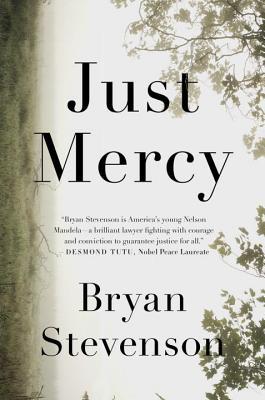
Just Mercy – Bryan Stevenson
A memoir following Stevenson’s legal work with the Equal Justice Initiative, focusing on the wrongful conviction of Walter McMillian, a Black man sentenced to death. Stevenson exposes systemic racism, unfair trials, and the emotional toll of pursuing justice.
This was the first book to ever make me cry. It’s a heartbreaking, eye-opening story of how the justice system unfairly targets the poor and people of colour—and one lawyer’s fight to make it right.
BSc 2025

L’Homme qui rit (The Man Who Laughs) – Victor Hugo
Set in the 1690s, it centres on Gwynplaine, a noble child whose face is mutilated into a permanent grin and forced into street performances. Through his story, Hugo critiques cruelty, hypocrisy, and social inequality.
It made me reflect on how debate is reduced to performance. Hugo’s storytelling is incisive, mocking, and brilliant—plus, there's a friendly wolf.
MiM 2026
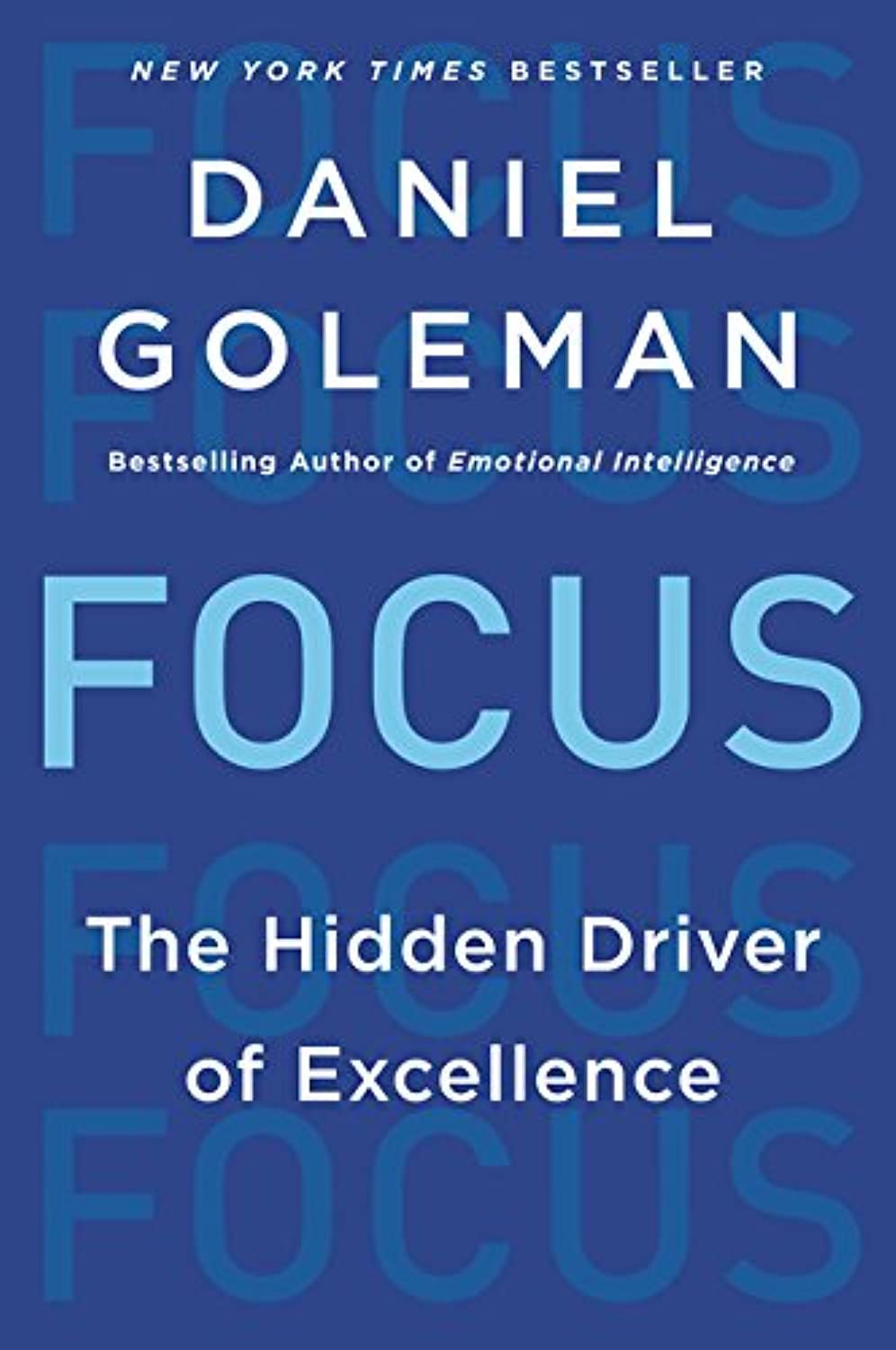
Focus: The Hidden Driver of Excellence – Daniel Goleman
A science-backed exploration of attention, presence, and how to train our focus in a distracted world. Goleman identifies three types of attention—personal, social, and systemic—and shows how mastering focus enhances performance, relationships, and well-being. He combines neuroscience with practical advice for managing attention in our distracted world.
This book doesn’t have the solution, but it’s surely a place to start gaining your focus—and your life—back.
MSc in Marketing and Digital Media 2026
Bold
Books that highlight courage, risk-taking, or transformation.
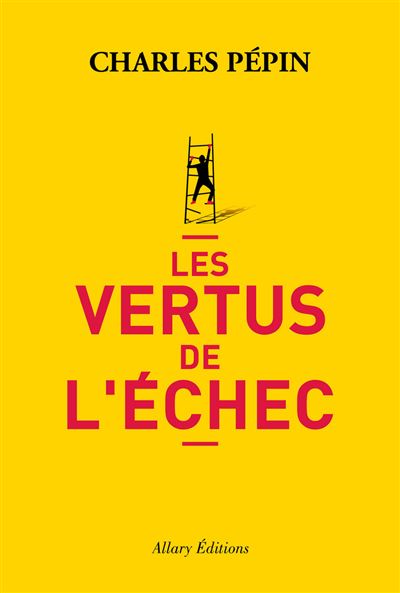
Les vertus de l’échec – Charles Pépin
A refreshing reframing of failure as the foundation of growth, courage, and wisdom. Pépin rethinks failure, drawing on philosophy and real-world examples—from Seneca to Steve Jobs—to argue that setbacks build resilience, insight, and genuine self-confidence.
It gave me the confidence to take risks and see challenges as opportunities rather than threats.
BSc 2027
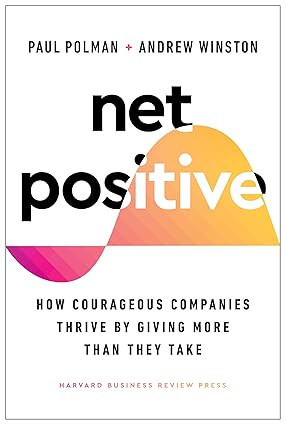
NET POSITIVE: How Courageous Companies Thrive by Giving More Than They Take – Paul Polman & Andrew Winston
A blueprint for values-driven leadership, showing how bold corporate responsibility leads to long-term success. Polman and Winston argue that businesses should return more to society and the environment than they consume. Drawing on case studies, they show how this approach supports sustainable profit and purpose-led leadership.
This is a blueprint for how companies can drive real change—leading with purpose, not just profit.
MSc in International Sustainability Management 2026

1984 – George Orwell
An enduring and chilling classic about surveillance, propaganda, and the suppression of truth. Winston Smith’s rebellion highlights the courage and danger of seeking truth in oppressive societies.
Orwell’s warning about power, truth, and surveillance remains chillingly relevant in today’s world.
MBA 2025
Creative
Books that inspire imagination, introspection, and original thought.
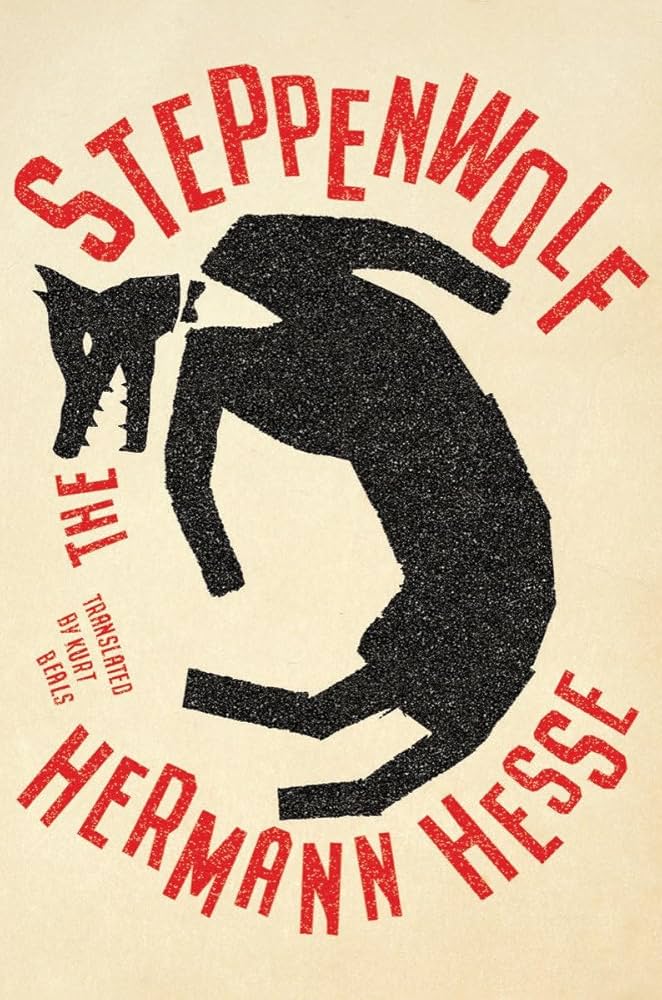
Steppenwolf – Hermann Hesse
A poetic, introspective journey into identity, contradiction, and the many selves within. Harry Haller is torn between his human and wolf-like urges. On entering a surreal “Magic Theatre”, he confronts fragmented identities, exploring his inner world through psychological and symbolic encounters.
It helped me accept contradictions within myself and reminded me that even in loneliness, we’re not alone.
BSc 2026

Charlotte – David Foenkinos
A haunting and artful tribute to a silenced artist that explores memory, creation, and trauma. Charlotte is a lyrical biographical novel about Charlotte Salomon, a Jewish artist who created a graphic autobiography while hiding during the Nazi occupation in France, before being deported to Auschwitz.
It gave voice to a silenced artist. Poetic and emotionally overwhelming in the most beautiful way.
MiM 2026
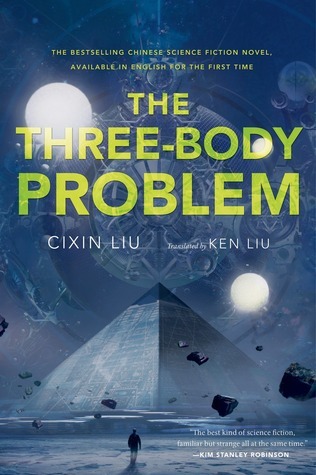
The Three-Body Problem (Trilogy) – Cixin Liu
This science-fiction trilogy spans from China’s Cultural Revolution to cosmic futures. It is a masterfully imaginative sci-fi epic that blends hard science with philosophy, geopolitics, and wonder.
Imagine a world where physics is dead. Gripping, complex, and mind-expanding—it challenges how you see reality.
MiM 2025
Acknowledgments
We extend our gratitude to the editorial board for their help in curating our final selection of books:
- Kamran Razmdoost, Dean of ESCP Business School, London Campus
- Marianne Conde Salazar, Brand and Communications Director
- David Kurzmann, Bachelor in Management student
- Ohana Duboscq, President of the Board of Directors, AGORA ESCP Student Union
- Karla Watson, ESCP Content Strategist
Special thanks to all the students who shared their summer reading recommendations and to ESCP student David Kurzmann for originating the idea and supporting the development of this project.
Campuses
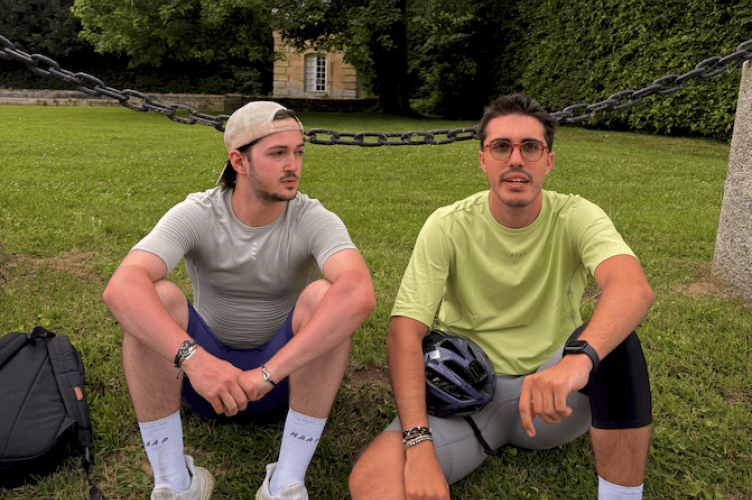
The 1,600-kilometre challenge raised funds for Mécénat Chirurgie Cardiaque and connected ESCP’s campuses through purpose and perseverance
After several days on the road and over 1,600 kilometres travelled, Solal Chetrit and Gabriel Salawi, two ESCP students in the Bachelor programme, arrived at the ESCP Madrid campus on June 21 to complete a remarkable challenge. Their goal was to raise €24,000 for Mécénat Chirurgie Cardiaque, a French NGO that funds life-saving heart surgeries for children who cannot access care in their home countries.
They reached their destination ahead of schedule and exceeded their target. It was a triumphant end to a journey that began at the ESCP Paris Campus as part of their initiative 2 Bikes 2 Hearts, a cross-border cycling effort to raise awareness and fund two life-saving surgeries for children in need.
For Salawi, the project held deep personal meaning, having undergone heart surgery as a child. “I was once a cardiac child. I had a great surgery in great conditions, so I wanted to give back.” For Chetrit, the cause also resonated through family connections to the cause. “We were both very moved by what they do and very motivated to support them.
A physically demanding but emotionally rewarding experience
“The biking part for us was totally new,” said Chetrit. Despite having no prior experience with cycling, the two students rose to the challenge, training for several months. With the support of a sponsor, they received their bikes just one month before departure and began cycling regularly to prepare for the trip.
The first day of their journey proved the most difficult. High winds, rain, and even hail made the stretch out of Paris both the longest and most exhausting. “It was difficult to manage,” recalled Chetrit. “But the good thing was that the days after were okay.”
Their spirits were also lifted by the support they received along the way—offers of water, food, and encouragement that often arrived when most needed. “We couldn’t have done it if we didn’t have the help of the people along the way,” said Salawi.
One moment stood out in particular: “In Biarritz, we met a woman selling crêpes to support a charity. We told her what we were doing, and she decided to donate some money to our cause. We didn’t expect that at all.”

From inspiration to action
Chetrit and Salawi note that the project was inspired by previous ESCP student initiatives that supported medical and social causes. “We were very touched by a few initiatives of ESCP students,” said Salawi. “So we thought we would do a challenge for ourselves.” The idea was born on campus in Madrid, and the pair committed to cycling from Paris to Madrid to support a cause that mattered to them, while symbolically connecting two of ESCP’s European campuses.
Their project was promoted under the banner @2bikes2hearts on Instagram, where they shared updates, photos, and milestones throughout the journey. The campaign gained traction, helping them raise more than 75% of their target before even reaching Spain.
After completing the final stretch into Madrid, the two students reflected on the journey and everything it had taken to reach that moment. “To be honest, it was very emotional,” said Salawi. “We’ve had this project in mind for a few years. Seeing the campus again and realising it was the end of something we’d worked on for nine months… It was also the same day we reached our goal, so it was a very emotional day.”
Beyond the finish line
With their original goal met, Chetrit and Salawi have now raised a total of €36,000—enough to fund a third surgery through Mécénat Chirurgie Cardiaque. The experience has also brought personal growth and realisations. “For me, I learned the notion of challenge and how important and good it is to challenge ourselves,” said Chetrit.
2 Bikes 2 Hearts is a powerful example of how ESCP students are turning values into action through initiative, resilience, and social commitment.
Donations remain open. Learn more and support 2 Bikes 2 Hearts here.
Campuses
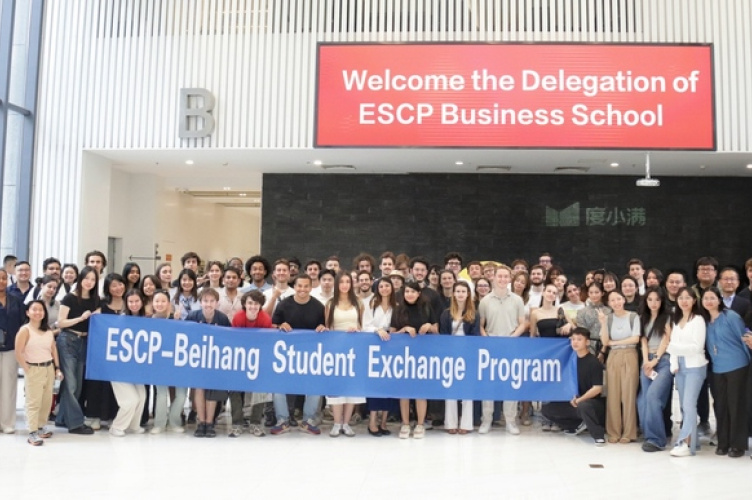
AI, analytics and cultural insight converged in the 2025 ESCP–Beihang Student Exchange Programme
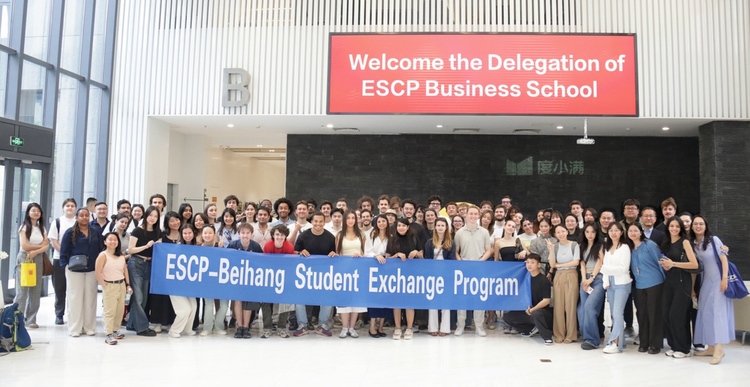
In May 2025, 88 students from ESCP’s Master in Big Data and Business Analytics (MBD) programme travelled to Beijing for a week-long academic and cultural exchange hosted by Beihang University’s School of Economics and Management (SEM).
Representing 25 nationalities across Europe, Asia, the Americas and beyond, ESCP students embarked on an intensive itinerary of academic lectures, site visits, and cultural excursions all designed to expand their understanding of AI, data science, and the future of business in a fast-evolving global context.
Welcoming the Future: A Ceremony Marking Shared Purpose
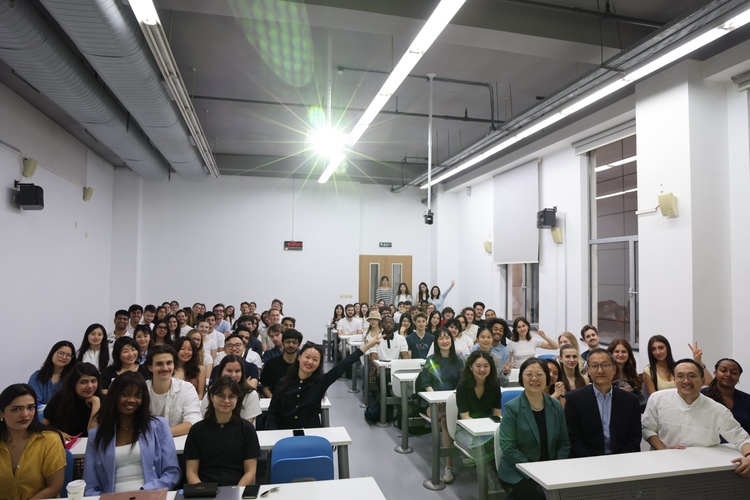
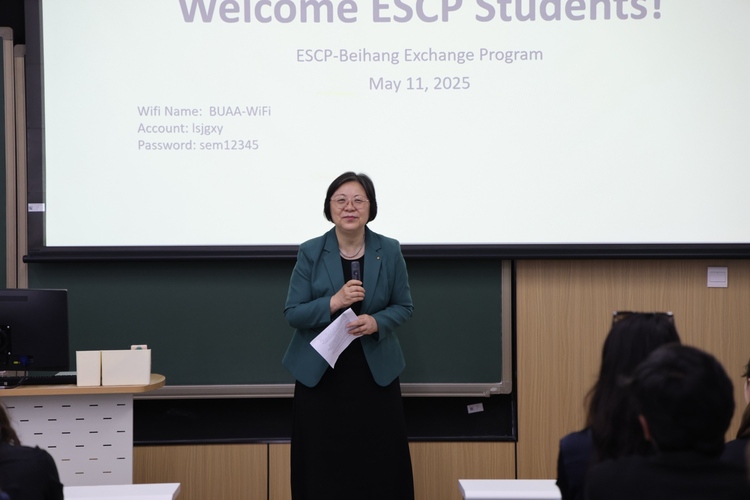
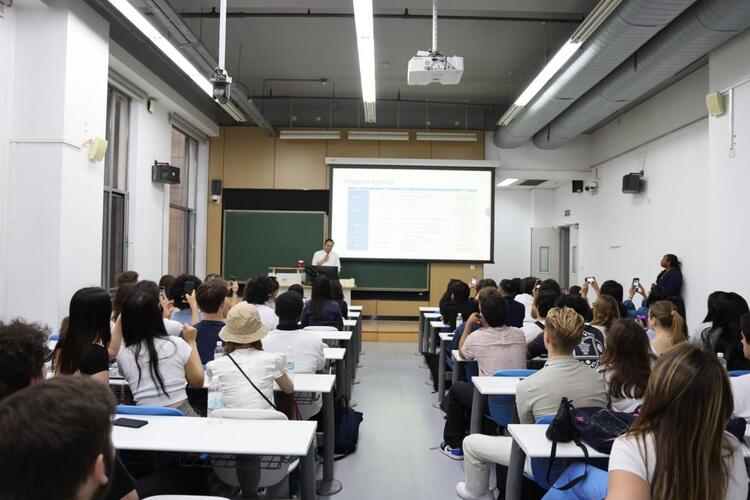
The programme officially kicked off on May 12 with an opening ceremony held at Beihang University’s New Main Building. The event was attended by SEM Dean Professor Ying Fan, Professor Guannan Liu, ESCP Professor Wei Zhou, MBD Programme Manager Hasna Mahad, and the exchange students.
Professor Fan warmly welcomed the ESCP delegation and underscored the increasing significance of international collaboration in the age of artificial intelligence and big data. She highlighted the programme’s eight-year legacy in promoting Sino–French educational and cultural exchange, while equipping students with essential skills in data analytics, machine learning, and large language models (LLMs) to address global challenges.
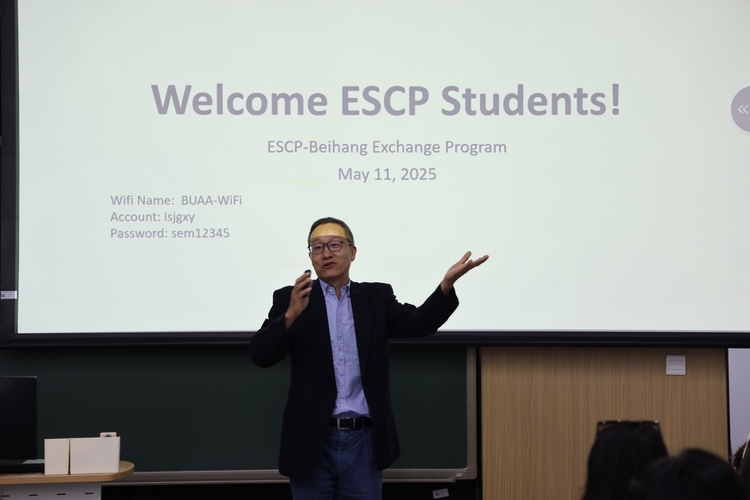
Professor Zhou expressed his appreciation for the warm hospitality and seamless organisation of the event, noting that the synergy between ESCP’s business acumen and Beihang’s engineering expertise is united by a shared commitment to excellence in AI and data science.
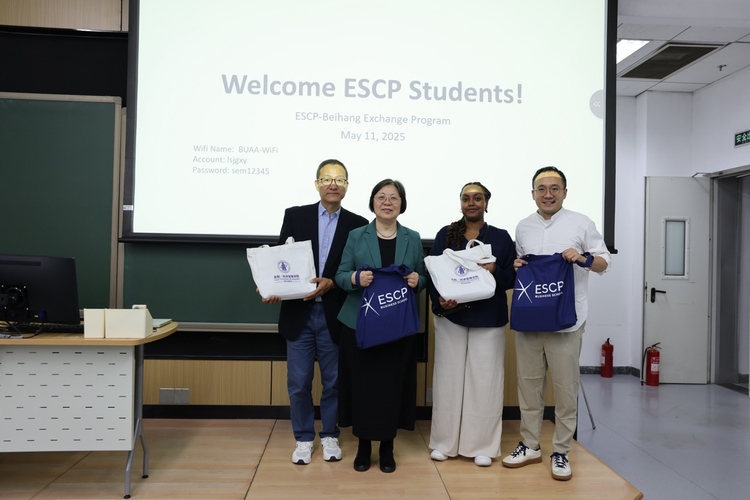
Professor Guannan Liu, Director of the exchange programme at Beihang, introduced the academic schedule and encouraged students to design AI agents powered by large language models (LLMs), with the goal of advancing business management or driving innovation for start-ups.
Inside China's Fintech Ecosystem: Du Xiaoman Financial Visit
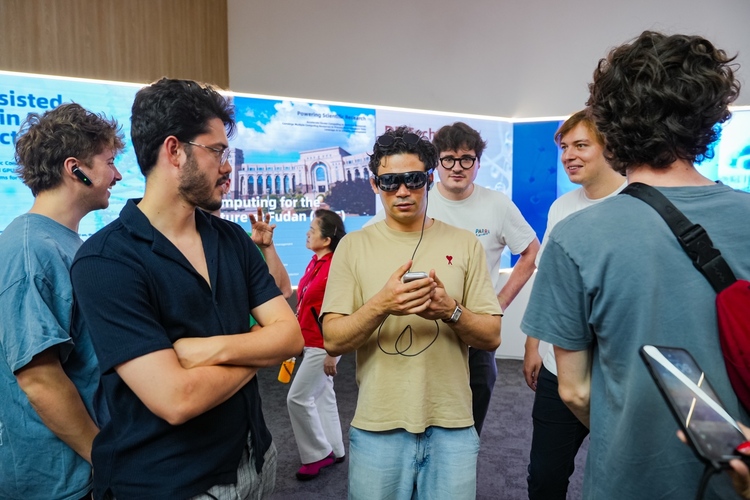
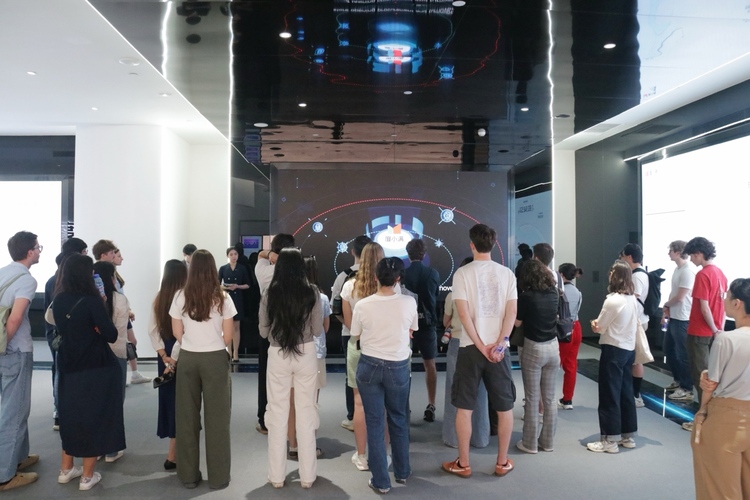
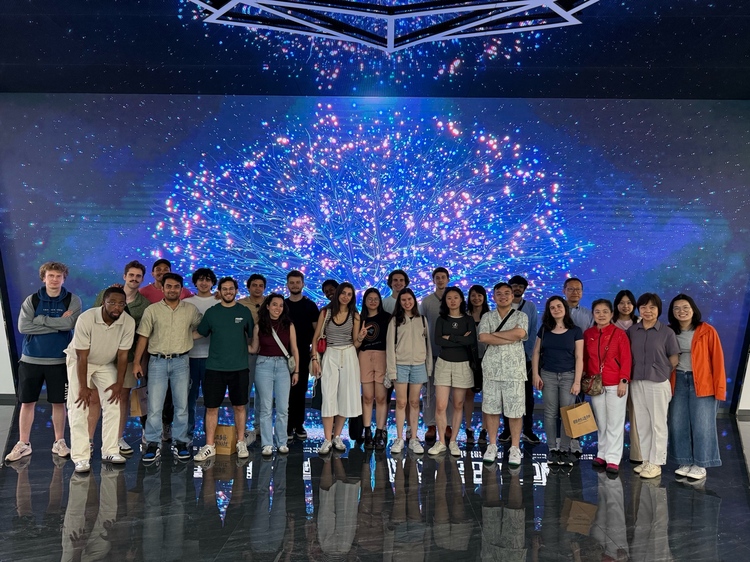
On the afternoon of May 12, students visited Du Xiaoman Financial, a leading fintech company in China and a subsidiary of Baidu. During the visit, they explored cutting-edge technologies, including facial recognition systems and intelligent voice robots, and observed real-time credit services delivered through an AI-powered smart display. This immersive experience provided valuable insights into Du Xiaoman’s innovative practices and ecosystem development in the fintech sector, highlighting the vast potential of AI and data intelligence in shaping the future of modern finance.
Academic Deep Dives: From Neural Networks to Business Intelligence
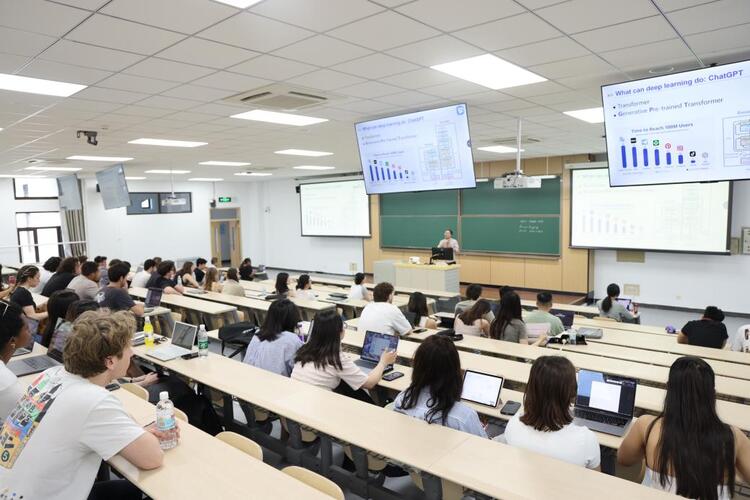
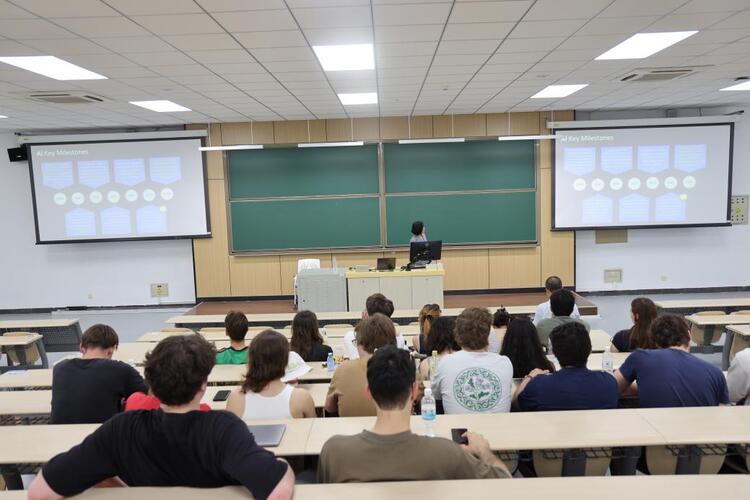
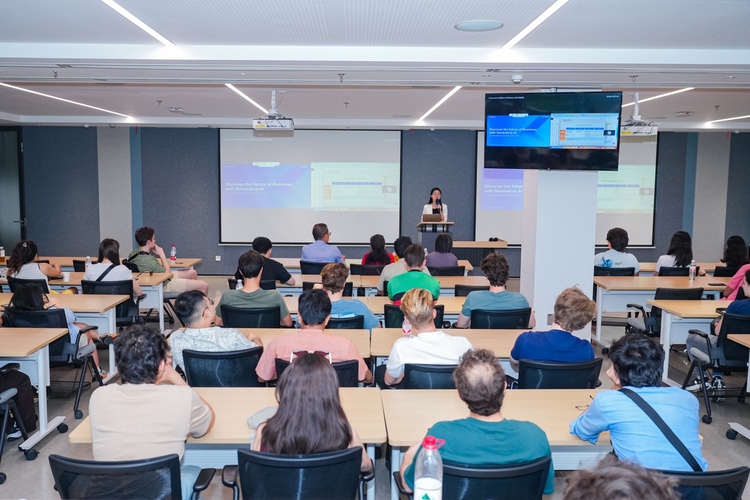
On May 13, Professor Liu delivered a morning lecture titled "An Introduction to Deep Learning." The session covered the fundamental structure of deep learning and concluded with real-world application cases that demonstrated the practical impact of these technologies.
In the afternoon, Ms Shumei Lv, Business Development Manager for SAP’s Global Cloud Platform for Mobile Services, presented a series of case studies showcasing SAP’s use of AI in business intelligence. She provided an overview of SAP’s strengths in data engineering, machine learning, and artificial intelligence, and demonstrated how SAP’s generative AI agent Joule has been successfully integrated into finance, customer service, and sales operations.
On to Hangzhou: China’s Innovation Hub
On May 15, students visited the Alibaba Cloud Campus and Future Sci-Tech City in Hangzhou, two of China’s leading innovation hubs. These visits offered a deeper understanding of how AI and big data are transforming a wide range of sectors, including the economy, technology, education, healthcare, and cultural tourism.
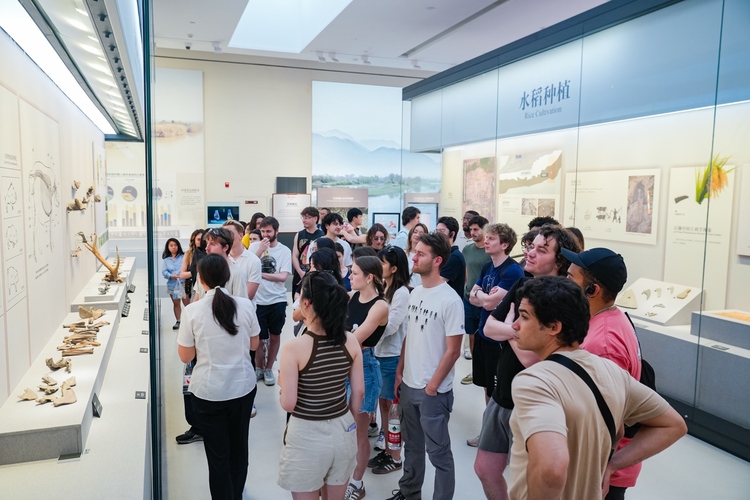
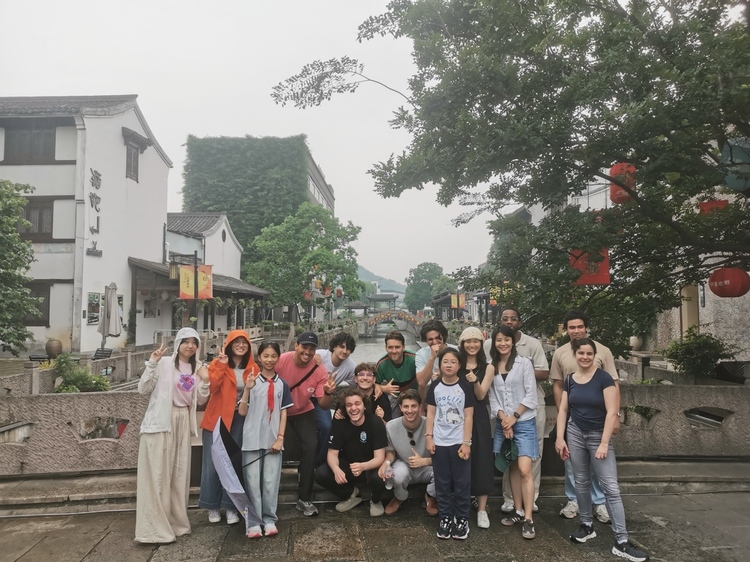
In addition to academic activities, students also had the opportunity to visit the Liangzhu Archaeological Site and the ancient town of Pingyao. These cultural excursions offered a glimpse into China’s rich historical heritage, allowing participants to deepen their understanding of traditional Chinese civilisation while experiencing its vibrant cultural landscapes first-hand.
Showcasing Innovation: AI Final Projects with Global Relevance
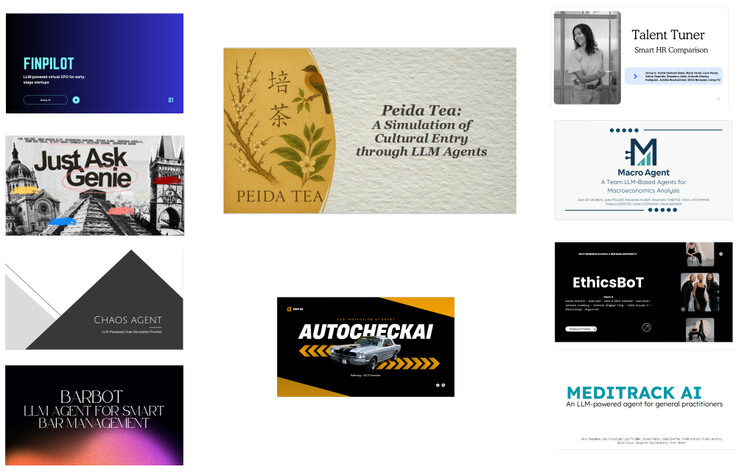
On May 16, students showcased their final group projects, unveiling ten AI-powered intelligent agents. These included a travel agent, a Chinese tea export support agent, an HR agent, and a crisis response simulation agent, among others.
The winning project, Peida Tea, stood out for its cultural richness and technical innovation. The team developed a dual-agent simulation system, driven by large language models (LLMs), comprising a generative consumer agent and a brand response agent. Together, these agents simulate the daily life, emotions, and consumer behaviours of the Marais community in Paris. Through ongoing interactions, the system adapts branding strategies in real time, allowing tea culture to gradually and subtly integrate into Parisian life through shared aesthetics and emotional resonance. The project not only promotes the international presence of Chinese tea but also fosters a refined and enduring cultural bridge between China and France.
Together, ESCP and Beihang are equipping the next generation of global leaders with the knowledge, skills, and vision needed to shape a smarter, data-driven future.
The Experience in Photos
Relevant links
Campuses
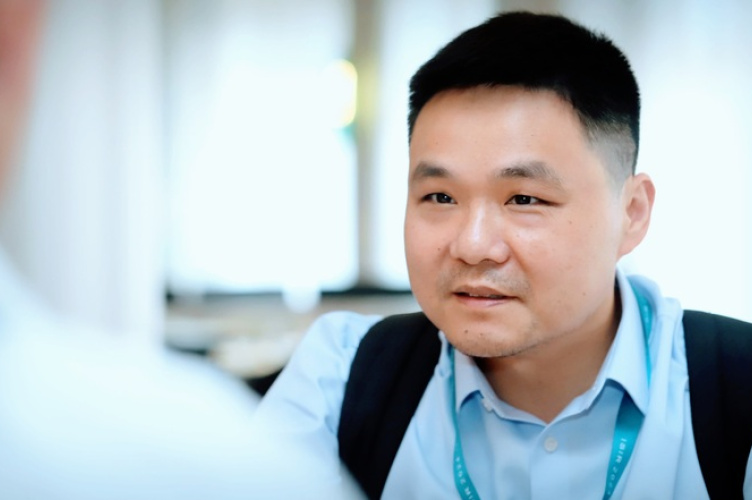
Each morning, Professor Chuanwen Dong commutes to his office at ESCP using Berlin’s public transport system — half an hour on the bus, ten minutes on the metro. It’s a journey that mirrors the logic of his work: looking for a solution that balances efficiency, sustainability and interconnection, even if it takes a little longer.
I trained myself to use that time well, I read, I think, I try to make sense of things in my mind while my body is moving. That way, taking the bus becomes the win-win solution. Greener, and more productive.
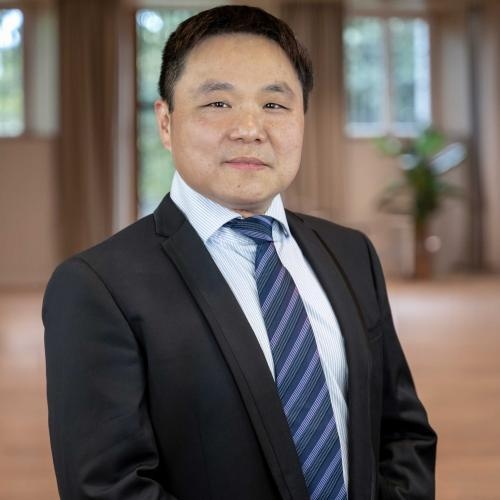 Chuanwen Dong
Professor of Information & Operations Management
It’s a small choice, and also not so small. In conversation, Chuanwen speaks of trade-offs, not sacrifices. Riding the bus is, for him, an environmentally clean and economically sensible solution — one that reflects his broader philosophy: use what exists well, don’t rush towards novelty for its own sake, and look for the configuration — the system design — that quietly maximises value across dimensions. Cleaner, yes. But also mentally productive. A win-win solution, as he would say.
This is how Professor Dong thinks: in overlapping logics. His research spans sustainable supply chain design, corporate social responsibility, and AI adoption in large organisations — fields that don’t, at first glance, seem tightly bound. But in his work, and even more so in his thinking, they are.
He doesn’t make bold theoretical claims or speak in branding language. Instead, what emerges is a kind of conceptual humility — an engineer’s belief in rigour, and a sociological sense of systems as living things, full of tensions and externalities and irrational actors. His models may be mathematical, but his sensibility is ecological.
Designing towards the win-win
Dong’s academic journey began with a question posed by a company: how to reduce carbon emissions in logistics without incurring excessive costs? At the time, he was working at Procter & Gamble. He didn’t yet know that this question would mark the beginning of a new chapter in his life - from industry to academic, but the question stuck.
What emerged was a synchronised supply chain model that integrated emissions, cost, inventory, and production. It treated logistics not as a series of isolated decisions, but as one dynamic and holistic system — one that could be steered, gently, towards better outcomes.
“Many people try to optimise the problem itself, however, the solution also depends on the scope. When you zoom out, the answer changes. This is the system thinking.”
His doctoral work laid the groundwork for what would become his most recent article: a study on how small contractual shifts in the supply chain — especially between suppliers and downstream buyers — can nudge each other towards greener transport choices without compromising profitability. The model builds on his earlier thinking but moves into harder terrain: the challenge of decarbonising an entire supply chain, not just any single isolated operation within.
“It’s much easier to reduce emissions inside your own facilities,” he explains. “But once you try to change behaviour across your supply chain — upstream or downstream — that’s much harder.”
For Chuanwen, this is where many companies reach their limits — not because the intention isn’t there, but because the structure isn’t aligned to support it. His work suggests that better coordination, clearer incentives, and smarter contracts can begin to shift those boundaries.
“You don’t have to be an extreme cost-saver or an extreme decarboniser,” he says. “If you can get both, that’s the star solution.”
It’s here that Professor Dong’s thinking reveals its layered complexity. He builds like an engineer, searching for the optimal structure; he analyses like an economist, tracing incentives and constraints; and he sees like a sociologist, attuned to how behaviour, power, and systems shape each other. In another context, you could say he reasons like a policymaker — someone trained to look for solutions that work across institutions, not just inside one of them.
“There are more win-win zones than we think,” he says. “But we won’t find them if we only look at one part of the chain.”
The logic of platforms — and its limits
If AI is about internal transformation, platform economics, for Professor Dong, is about external consequences — and the moral lag that occurs when systems scale faster than their capacity for accountability.
In one of his most cited studies on platform economics, Chuanwen focuses on how two-sided platforms — like Uber, Airbnb, or Amazon — operate under very different business incentives than traditional firms. Their core objective is to grow the user base on both sides of the market, and early success depends on maximising scale.
“At the beginning, platforms just want to attract people,” Professor Dong explains. “They don’t necessarily care who joins, as long as the numbers go up.”
This growth-first approach can enable problematic actors — unvetted drivers, counterfeit sellers, exploitative intermediaries — but the priority is reach. As platforms mature and become household names, reputational risk begins to matter more.
Yet even that, Chuanwen suggests, may not be enough. “Once a platform becomes dominant, even scandals don’t hurt them the way they used to.”
In other words, the market’s own feedback mechanisms — such as user choice, media pressure, social outrage — begin to lose their disciplining effect when a platform reaches monopoly status. “The market can’t regulate itself once a monopoly is in place. That’s when governments have to step in. Not just with laws, but with actual enforcement.”
A systems thinker in motion
Despite the scale of the challenges he works on — climate breakdown, digital concentration, organisational inertia — Chuanwen remains, in his own words, “more optimistic.” Not because the problems are easy, but because structural change is possible. Not fast, and not flashy — but possible.
He points to the consumer goods industry as one area where alignment is already taking shape. Firms like Procter & Gamble, he notes, have begun integrating emissions goals not just into reporting, but into product design and supply chain planning. It's happening not out of pure altruism, but because it makes sense — economically, logistically, reputationally. “They can show a carbon-neutral shampoo,” he says, “and people respond. It’s real, and it works.”
At the same time, he adds, there’s still work to do. “If you track emissions across the full supply chain — from raw material extraction to consumer use — then we’re not there yet. But the industry is working hard on that and making solid progress.”
You don’t need to change everything all at once, but if you shift the structure a little, in the right place, something better starts to take shape.
And that, perhaps, is the thread that ties his work together: a belief that better systems don’t have to be invented from scratch. They can be built from within — through smarter contracts, better coordination, deeper awareness of the way decisions ripple across structures.
He still takes the bus each morning. Still reads, listens, thinks. Still looking, patiently, for the logic underneath things — and for the place where it might quietly bend towards something more sustainable, more intelligent, and more human.
Campuses
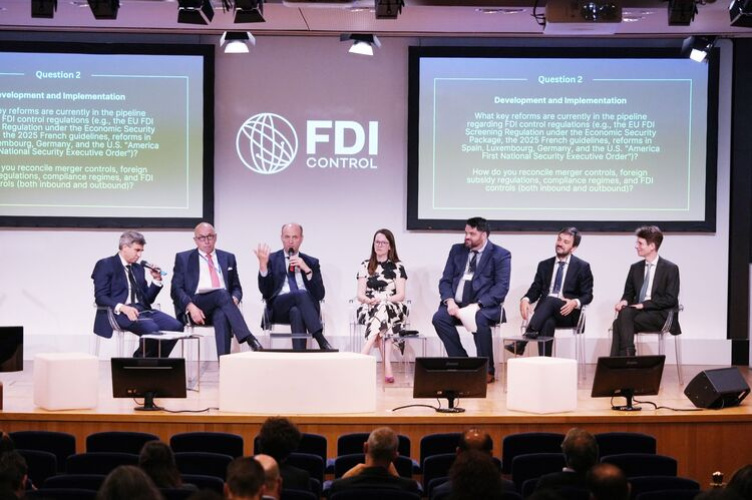
Over 300 global stakeholders convened in Paris to address foreign direct investment screening and economic security.
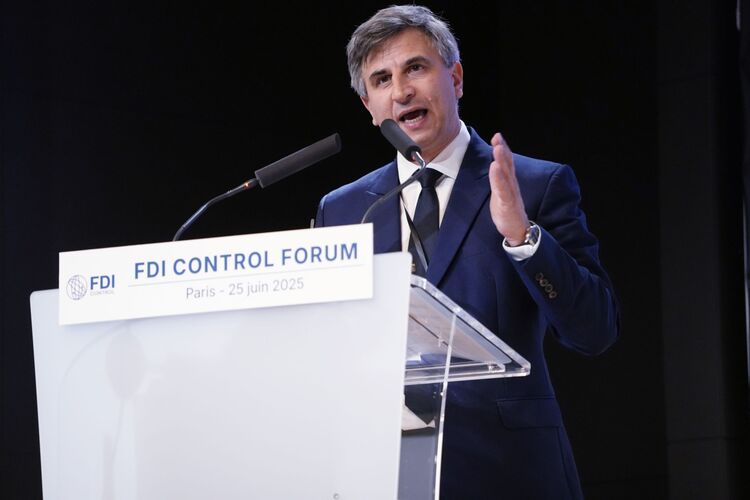
On June 25, 2025, over 300 senior officials, regulators, and industry leaders convened at MEDEF Headquarters in Paris for the third edition of the FDI Control Forum, examining the latest trends, challenges, and innovations in foreign investment control.
Co-founded by ESCP Professor David Chekroun and Marina Guérassimova, Chief Editor of Fusions & Acquisitions, the Forum has become Europe’s leading platform shaping the future of economic sovereignty and foreign investment governance. Operating under the Chatham House Rule, this year’s edition continued its mission to foster confidential, high-impact dialogue among public and private actors across borders.
The FDI Control Forum 2025 brought together over 70 leading experts and regulators to examine the evolving landscape of foreign investment screening across France, Spain, Luxembourg, the EU, and the United States. Discussions focused on multi-jurisdictional challenges, strategic sectors such as Energy, AI, Healthcare, and Defense, the role of sovereign wealth funds and private equity, and the complex intersections between FDI control on the one hand, and restructuring, investment arbitration, and corporate governance on the other.
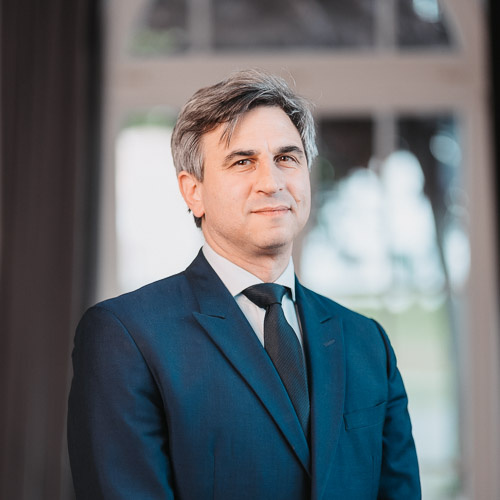 David Chekroun
Professor of international business law at ESCP Business School and co-founder of FDI Control
Cross-sector insights from global stakeholders
Participants from France, Germany, Spain, Luxembourg, other European member States, the United Kingdom, the United States and North America, as well as countries from the Middle East & North Africa and Asia gathered to debate emerging global trends, including:
- Security vs. Attractiveness: Reconciling national security with open markets
- Impact of FDI Controls on Cross-Border M&A Transactions
- Strategic Investment in Energy, AI & Tech, Healthcare & Data, Defense
- New FDI-Control Ecosystem: Fostering dialogue between public and private stakeholders—corporates, sovereign wealth funds, private equity firms, regulators, policymakers, lawyers, bankers, auditors, consultants, senior civil servants, MPs, public officials, and academics
Key highlights included
- High-level speakers from the French Treasury, European Commission, German Ministry for Economic Affairs, Spanish Secretariat for Trade, Luxembourg Ministry of the Economy, and the U.S. Department of Defense.
- Twelve workshops covering sensitive sectors, including energy, AI and tech, healthcare and data, private equity, sovereign wealth funds, and corporate governance.
- Closed-door sessions under Chatham House Rule with GCs, regulators, and think tanks
- The official launch of the FDI Control Association - ACIÉ- a new initiative to formalise ongoing cooperation and research in FDI screening and economic security.
By bringing regulators to the same table as corporates, sovereign wealth funds, private-equity firms, lawyers, advisors, and academics, the 2025 FDI Control Forum proved that genuine public-private dialogue on investment screening is not only possible but essential to shaping the future of foreign direct investment and cross border M&A.
Chief Editor of Fusions & Acquisitions Magazine and co-founder of FDI Control
Acknowledgements and partners
ESCP and the FDI Control Forum thank MEDEF for hosting this important event and extend their sincere gratitude to the sponsors, whose support went far beyond financial contributions. They embraced the vision, supported the research, and played an active role in shaping the agenda of this dynamic and evolving field.
Corporate sponsors: Brunswick Group · Clifford Chance · FGS Global · France Invest · Freshfields · FTI Consulting · Jeantet - avocats · Latham & Watkins · Linklaters · Simmons & Simmons · Skadden, Arps, Slate, Meagher & Flom LLP and Affiliates · White & Case LLP
Academic and journal sponsors: Fusions & Acquisitions, Éditions Dealflow-Data · Queen Mary University of London (CCLS) · Université Paris 1 Panthéon-Sorbonne· BIICL (British Institute of International and Comparative Law), RDAI / IBLJ - International Business Law Journal, Cercle Lefebvre Dalloz, Cercle K2, ARE, IPEM.
Campuses
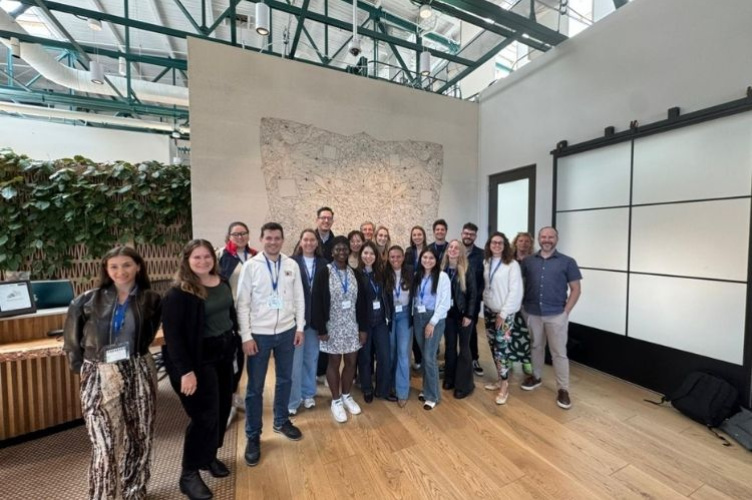
Our EMDIEL cohort recently travelled to San Francisco
for the fourth module of the programme
Alex Shaman, a participant in the 2025 EMDIEL class shared his impressions of this deep dive into Silicon Valley’s defining ecosystem. Here’s what he has to say about his experience.
Perhaps the most fitting place to kickstart real innovation. The week in San Francisco was incredibly intense.
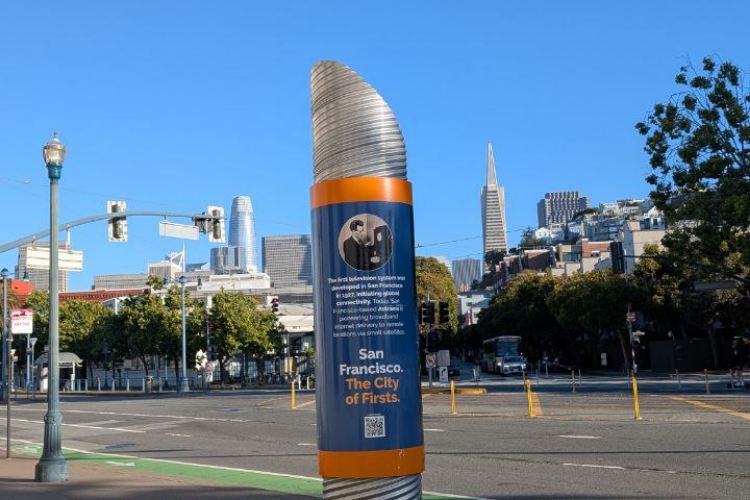
The Bay Area truly embodies innovation and digital transformation. And it’s already happening: driverless taxis (Waymo and the soon-to-launch Zoox), robotic baristas in coffee shops, full openness to AI, and much more. Big budgets, constant momentum, and above all the fearless spirit of local entrepreneurs make the Bay Area a true island in an ocean of conservatism.

As part of the ESCP group, we visited Berkeley and Stanford, OpenAI and Microsoft. Separately, I had a number of meetings with Thomson Reuters, Microsoft AI, CBC Bank, and Palo Alto Networks. While it’s still too early to draw final conclusions, some insights are already clear.
A Culture of Fearless Experimentation
People here are not afraid of innovation. Even those who are skeptical or cautious are willing to take a risk and try a mindset that completely aligns with my own.
Speed and Precision at Every Level
At the mid-level, everything moves incredibly fast even a single minute is valued. Sometimes this borders on rudeness. Yet at the top level, decisions are clearly made in quiet, backchannel conversations often over dinner in Michelin-starred restaurants, accompanied by discussions about the future, cognitive psychology, and behavioral science in the context of Big Data and AI. In these moments, no one is in a rush.
Corporate Willingness to Shift Paradigms
Major corporations are actively exploring paradigm shifts. Very soon, we’ll see a new web architecture where websites are no longer the primary entry point. At the same time, these companies are open to innovative approaches in cybersecurity. It’s particularly striking that ideas previously ignored or dismissed by European firms including local branches of global companies sparked genuine interest from decision-makers at the headquarters of major U.S. corporations. For instance, the “Contrast” concept in cybersecurity drew mockery from some European players, yet was taken seriously by U.S. firms and their central offices.
Realistic Pre-seed Funding for Real Work
Here, $2 million for pre-seed, pre-profit MVPs is entirely within reach. As we know, it’s nearly impossible to build a competent team for under $1 million these days. That’s a crucial point: there’s a real appreciation here for the value of engineers, designers, and others who are ready to devote part of their lives to a startup and work with the quality they’d bring to their own ventures. Few countries can rival the U.S. in terms of venture capital. In most parts of the world, companies and funds struggle to approve even $100,000 which barely covers the annual salary of two good developers. And in 2025, you simply can’t build anything high-quality with such a small budget. That kind of money can only be lost gracefully.
No Nationalism, No Prejudice Just Openness
Perhaps one of the most refreshing aspects of the Bay Area is the complete absence of nationalism or prejudice toward any nationality. Sorry to say it, but compared to places like the Netherlands or France where you constantly have to think about hiding your place of birth (often in vain) this environment is a breath of fresh air. Here, it simply doesn’t matter where you come from. What matters is what you build, what you know, and how you think. That’s how it should be.
Clusters That Transcend Politics
Taken together, all of this makes one thing clear: the United States doesn’t need to “become great again” it never truly lost that status. And it certainly has nothing to do with Trump. Clusters like Boston and San Francisco exist beyond nations, beyond conflicts, beyond politics. Science moves forward here not because of slogans, but because of culture, freedom, and long-term thinking. And that is truly inspiring.
Are there problems in this city?
Of course there are and even more across the country. But these problems feel temporary. The sense of momentum, the vibe of a great future, is truly in the air and it’s incredibly energizing. Why have all cutting-edge Western projects always been and will continue to be based here? The vibe matters, yes. But in the end, this is about money. And when you look at the fundamentals, every alternative location for launching a new project starts to look… well, questionable at best.
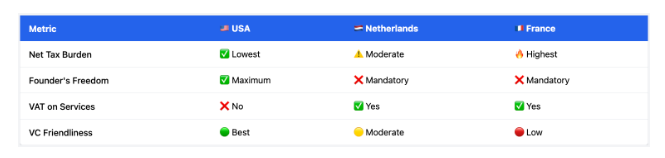
So let’s keep it simple and look at one chart it speaks for itself:
If your startup generates $1 million in revenue tomorrow with a 35% margin, then…In the US you’ll be highly profitable and wealthy. In the Netherlands – you’ll earn less than a supermarket cashier. In France you’ll end up in debt! That says it all.
Notes & Assumptions:
-
VAT in EU is due for SaaS/API services delivered to individuals or businesses in Europe unless invoiced B2B with valid VAT ID. Input VAT on eligible expenses (assumed 50% of non-payroll expenses) reduces VAT payable.
-
France and Netherlands enforce mandatory founder salary, subject to full payroll taxation, which is not subject to VAT.
-
USA (Delaware + CA) allows founders to defer salary, reducing mandatory costs.
-
Corporate income tax is charged on taxable profit (Net Revenue - Expenses). Estimates assume 65% expenses of gross revenue.
-
Does not include benefits like R&D credits, grants, or incentives, which could lower the burden, especially in NL/FR.
-
Negative net profit in France indicates a loss due to high mandatory costs and taxes.
-
VAT payable: €119,583 (Netherlands) and €117,667 (France) after input VAT offset, but this does not affect net profit directly as it is collected from revenue.

Campuses
New Documentary Mini-Series Explores the Real Impact of AI in Education through ESCP’s AI Champions
How is artificial intelligence transforming business education — reshaping the way we learn, teach, and work? A massive transformation is underway at ESCP Business School. Through pioneering AI initiatives, the School is exploring how AI enhances programmes, empowers leadership, and supports human-centred innovation across its six campuses.
Bold & United: The Faces of AI at ESCP is a four-part documentary mini-series that reveals the human stories behind this transformation. It focuses on the people at ESCP using generative AI to simplify complex tasks, create new opportunities for learning, and embed digital fluency into the heart of its business education curriculum.
Composed of four short episodes, the series features four voices from the ESCP community whose projects exemplify how AI is actively reshaping various dimensions of business education:
- Jiao Liu, Master in Management student (Digital Transformation track), who moved from AI-illiterate to AI-confident and is now helping peers harness AI to enhance their academic work.
- Professor Vitor Lima, who created The Future of Gotham, an AI-powered, GPT-based business simulation designed to sharpen students’ critical and strategic thinking.
- Professor Sandrine Macé, researcher and faculty member using ChatGPT Edu to help students better interpret data and explore statistical models in their dissertation work.
- Emily Olyarchuk, Head of Brand Strategy, Influence & Reputation, leveraging generative AI to scale strategic content creation and enhance ESCP’s digital presence with precision and ethics.
The documentary offers an inside look at some of the projects developed as part of ESCP’s AI 1000 Champions initiative — a network of professors, staff, and students who explored responsible, real-world uses of generative AI as part of ESCP’s strategic collaboration with OpenAI. Supported by the ESCP Foundation, the AI 1000 initiative is part of the School’s strategic transformation.
Watch the Teaser
Discover some of the people and projects behind ESCP’s AI transformation.
Episode Guide & Launch Dates
Mark your calendar: one new episode will drop each week across July 2025.
| Episode | Release Date | Watch the video |
|---|---|---|
| Episode 1 | July 4, 2025 | |
| Episode 2 | July 11, 2025 | |
| Episode 3 | July 18, 2025 | |
| Episode 4 | July 25, 2025 |
Stay Tuned to Discover the Future of AI in Business Education
Each episode of Bold & United: The Faces of AI at ESCP offers a window into how AI is reshaping the future of learning, research, and work at ESCP. From classroom simulations to strategic communications, the series also reflects ESCP’s broader philosophy that artificial intelligence in education must serve both academic excellence and human purpose.
The episodes will air on YouTube. Subscribe to see each episode as it launches!
Relevant links
Frequently Asked Questions (FAQs)
Through the AI 1000 Champions initiative, ESCP has enabled students, professors, researchers, and staff across six campuses to explore the responsible, real-world use of AI. Projects include GPT-powered classroom simulations, AI-supported dissertation coaching, workflow automation, and digital content strategy. ESCP recently expanded access to ChatGPT Edu to the entire community.
AI enhances data-driven thinking, boosts strategic agility, and prepares students for the technologies shaping modern business. It accelerates feedback cycles, strengthens research capacity, and cultivates essential digital, analytical, and leadership skills.
Responsible use is central to ESCP’s AI strategy. Faculty and staff are trained in ethical AI practices. Every project is evaluated for impact, equity, and alignment with academic values, ensuring that AI supports human decision-making rather than undermining it.
Yes. AI is integrated into academic programmes at ESCP. Students also engage with AI through research, innovation labs, and cross-disciplinary workshops.
Campuses