

By tradition, European cities start to sparkle with decorations and colourful lights in anticipation of Christmas and New Year celebrations from the beginning of December. ESCP Business School students have a long break from classes and exams during this period. Therefore, they can take the opportunity to experience the festive and magical atmosphere that spreads throughout ESCP campus cities.
We asked our Chinese students, who will be spending their holidays away from home this year, to tell us about their plans. An MBA student on the Turin Campus, Chun-Jui Cheng says, "First of all I’m going to Finland. I’ll visit Helsinki then spend Christmas in Rovaniemi, known as Santa’s Village. After Christmas, I’m going to Norway to take the famous "Norway In a Nutshell' trip, that you can travel by train, bus and boat to visit splendid fjords and natural landscapes, from Oslo to Bergen. Maybe I will arrange a trip around Italy after New Year’s, just go to some big cities like Venice and Florence".
European traditions are different from those belonging to Asian culture. Among the most appreciated by our students are the traditional Christmas markets. Yichun Li, a Bachelor in Management student on the Paris campus, says: "I never went to a Christmas market when I was in China, but every city in Europe has its own Christmas market. I really enjoy visiting these markets because there are so many stalls selling decorations and typical food, and the atmosphere is magical!"
But what memories will the students bring with them from this experience in Europe? Runze Hun, an MBA student on the Berlin campus, was impressed by the ice skating rinks in the city centres: "In Europe people like to go ice-skating at Christmas time, from the beginning of December they put up an outdoor skating rink in city centres and people go there all winter long. It is one of the things young people like to do at Christmas".
Cecelia Chun, an MBA in International Management student in London, told us which Christmas celebration she will be attending in the UK: "I will invite a Chinese student to go to the London Carols together, let her experience the authentic Christmas vibe there as well. Christmas is all about spending time with family and friends, my family is not here, so friends are very important especially when we are abroad".
Every European country has different traditional dishes in the holiday season. Runze Hun tried mulled wine (also called Vin Brulé or Vin Chaud), a hot drink made from red wine, fruit and spices, which can be found in bars or at Christmas market stalls: "It is very warming in winter. It is actually very easy to prepare, so you can buy the ingredients and make it at home".
The period of the Christmas holidays means above all time spent with family, friends and loved ones. The ESCP students interviewed this year will spend their holidays away from home, but Cecelia Chun tells us what she will do to reduce the great distance: "Video call, and I will share with them my vlog of the London Carols concert as well. I like to vlog and think it is a great way to share my life with family and friends. I will probably also try to livestream the concert to them if there is no time difference, we have a family group livestream function in China, and it is an amazing way to share a live experience".
Spending Christmas away from home can be challenging, but it looks like our students have found a great way to cope with that.
We wish them and the ESCP community a wonderful holiday season, full of adventures and new experiences.
Related stories

News 14/12/2021
Alumni News
From passion to action: Giacomo Vercelli's story in the F&B world
We chatted with a very passionate young talent who's going places in the F&B world. We interviewed Giacomo Vercelli, an alumnus of the Master in International Food and Beverage Management about his ESCP experience and how what he learned helped him achieve his goals.
Berlin
Paris
Turin
News 31/08/2021
Student Societies
Expand your professional network with JET ESCP
The oldest society on the Turin Campus, now also active in Berlin, London, and Madrid, is JET ESCP. This Junior Enterprise spreads the pragmatic ESCP methodology thanks to consultancy services, workshops, webinars and events.
Berlin
London
Madrid
Paris
Turin

News 13/04/2021
Bachelor Students' Blog
During the BSc, I discovered how profits and sustainable practices can come hand in hand
“Climate change is something that affects all business decisions and operations. My personal mission will be to help businesses understand that profits and sustainable practices can come hand in hand.” [Eloise Dean - Bachelor in Management]
Berlin
London
Paris
Turin

News 10/03/2021
Alumni Success Story
Staiy – ESCP alumni are shaping the future of Sustainable FashionTech
During their last year of the ESCP Bachelor in Management, that brought them to study in London, Turin, and Berlin, four young Italian entrepreneurs rode this trend by founding the first sustainable fashion marketplace that merges aesthetics, sustainability, and AI-technology: Staiy. The startup was born in 2019 in Berlin from an idea that came to Ludovico Durante, Chiara Latini, Adrian Leue and Alessandro Nora, who wanted to create something tangible regarding responsibility in the fashion system, in terms of ethics and innovation.
Turin
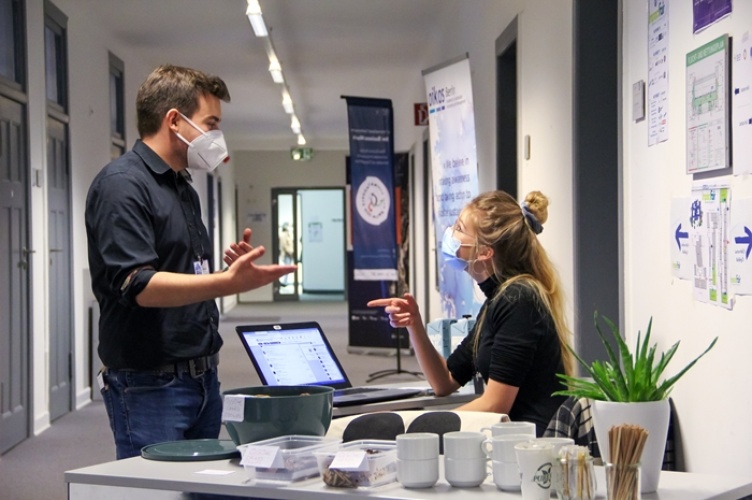
At the end of 2021, ESCP Business School Berlin held the Oikos X ESCP ImpactFair, a forum consisting of various events focused on sustainability and potential career paths within the field. The fair was jointly organised by the ESCP Berlin Career Development office and oikos Berlin, a student association dedicated to raising awareness about sustainability within business, academia, and society. A total of 278 students participated in this day of engaging and interactive exchange with ESCP staff, alumni and corporate partners.
The Impact Fair took place on campus with strict health protocols over a day and half, kicking off with the panel “Code Red”, a discussion on the key role of collaboration between businesses and the scientific community, educational institutions, and civil society in the shift towards a true sustainability transition. Panelists from the UN Environment Programme, Greater Good Leadership, the Ecologic Institute, and ESCP discussed why stakeholders from all areas are needed in the challenge, and how to more precisely work together.
Enabling ESCP students to imagine what a career in sustainability could be like was a key objective of the Impact Fair. “Sustainability becomes more concrete in this sense, that it’s a real option to pursue,” said Dr. Michaela Wieandt, Head of Career Office at ESCP Berlin Campus. “An event specifically on impact and sustainability is able to connect students to not only people from that area, but to job opportunities and a new horizon as well.”
Student organisers of the event also felt motivated to highlight sustainability and empower fellow students to consider it as a compelling career path. “The time to act is now, and it's up to us to lead this systemic change in the face of the climate crisis. The Oikos Berlin team is proud to have co-organised an incredible event for the students, by the students — driven by the vision of bringing impactful careers in sustainability,” said Khushboo Mallik, President of oikos Berlin.
On the second day, students were able to attend five different workshops. Attendees heard from an alumna and a startup founder who discussed their professional trajectories and more in the “Building your Career in Sustainability” workshop, while students proposed solutions to real-life business issues and received feedback in the “Sustainable Entrepreneurship Challenge”. The other workshops explored topics such as the circular economy, the future of mobility, and the food value chain.
A career fair simultaneously took place across campus, giving students the chance to speak with representatives about their companies’ work in sustainability and related job openings. Organisations from start-ups to corporations and in various industries were in attendance.
Julius Friedländer, the COO and Germany managing director of Cooler Future, an app for values-based impact investing, shared the reason they were at the Impact Career Fair. “We’re an early-stage start-up, and growing, so we’re interested in presenting Cooler Future as a product but primarily looking for motivated interns and full-time employees to join us.”
In addition to it being a school-wide organisational priority, sustainability is a key academic area of ESCP’s Berlin Campus, meaning that the topic plays a significant role in research and teaching as well as daily operations and activities.
Campuses
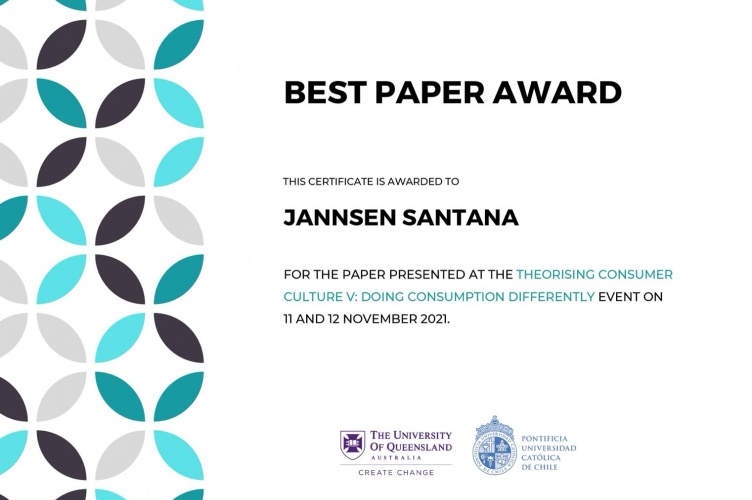
PhD student Jannsen Santana received a best paper award for his research aiming to understand unsustainable consumption rituals in collective experiences, and potentially re-design them towards more sustainable alternatives.
Jannsen Santana, who is currently doing a thesis under the supervision of professor Olivier Badot as well as a postdoctoral researcher at emlyon business school’s Lifestyle Research Center, was rewarded for his paper entitled Head in the clouds, and waste all-around: unsustainable consumer rituals in collective spiritual experiences, which he presented at the Theorising Consumer Culture V: Doing Consumption Differently joint event between The University of Queensland Business School and Pontificia Universidad Católica de Chile, and starts with this observation: “The environmental impact of spiritual experiences has been noticed, for instance, in the spiritual offerings that contribute to the pollution of the River Ganges in India or in the incredible amount of 100 million plastic water bottles dumped by in Mecca’s main pilgrimage.”
This research symposium was the fifth in the annual Theorising Consumer Culture series, and its aim was to encourage participants to develop new approaches to understanding consumption in developing/emergent economies. “We shared great ideas on how to do consumption differently,” Jannsen Santana adds. “I’m so honored and grateful for all the feedback and exchange we had.”
Campuses
![© Odupa [copyright]](/sites/default/files/styles/event_news_une/public/2021-12/odupa-yoghurt-1200x750.jpg)
Campuses
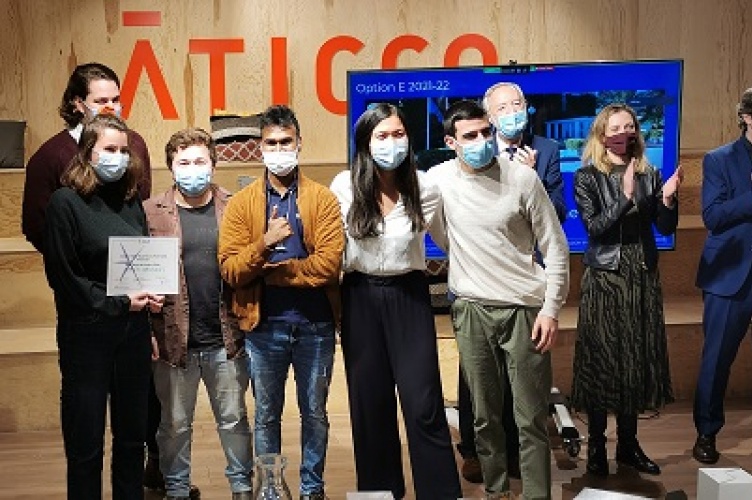
Last Friday was a very exciting day for all our Option E students as it was the day to present their final pitch and as well as the closing of a semester full of amazing challenges, insightfulness and learning.
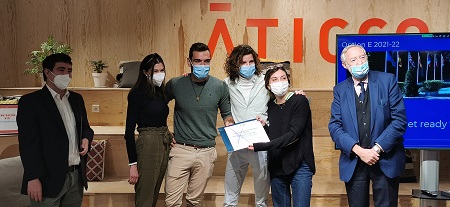
Demo Day 2021, the final step of the programme in Madrid, took place at the Aticco coworking. In the first phase, the seven teams from the Madrid campus pitched their business projects to a jury made up of ESCP professors and collaborators: Sophie Vurpillot, Laura Morillo, Daniela Pavlova, Fernando Moroy, Alberto León and Alberto Martínez. This event is composed of two phases, a national one, where teams from each campus compete to have the best business idea and win a place to go to phase two: the federal competition.
In the national phase, the winners were the teams Grow Greener (in the Ready to Invest category) and Impack Delivery (in the Best Pitch category). The Ther'Happy team obtained a special mention for their great work (see attached photos of the 2 winning teams).
Grow Greener provides a platform that makes installing green walls in offices easy and impactful - from conception to footprint evolution. Their mission is to make the office, where people spend most of their time, a more sustainable, healthy, and happy environment and with the vision to become the #1 platform for urban transformation in Europe.
In the federal final, winning teams from the Paris, Berlin and Madrid campuses had a chance to make their final pitch to an international jury. Representing Spain in the Jury we had Fernando Moro, President of the Madrid Keiretsu chapter and Eugenio Gómez-Acebo, Investor and Business Angel.
The GrowGreener team obtained the third place in the federal final and won a travel certificate to visit any of the ESCP campuses and the chance to further develop their idea in ESCP's incubator, the Blue Factory.
The winning team, a pet services booking platform, PawFect, developed on the Berlin campus did an amazing job and had a well rounded business plan. The second position went to Trainsfy, an initiative from the Paris campus, consisting of an energy recovery system at the entrances to the train stations.
It's always sad to see our students go after a semester of energy and learning, but it makes us feel so proud to see how they grow and it never ceases to amaze us that they are able to turn a seed of an idea into a complex and well-rounded business project.
To all our Option E students, good luck and continue making a difference. It was a pleasure to share this experience with you!
Campuses
Passion empowers people to make their dreams come true, guide them in their personal and professional growth and give them the energy to excel at their jobs. The story of how the career of a very passionate person begins can set an example for many students.
Therefore, we chatted with a very passionate young talent who's going places in the F&B world.
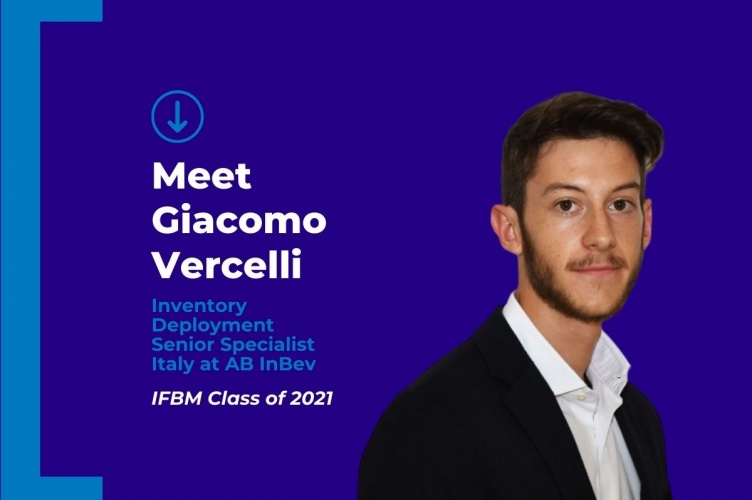
We interviewed Giacomo Vercelli, an alumnus of the Master in International Food and Beverage Management, currently based in Prague, about his ESCP experience and how what he learned helped him achieve his goals.
During his years at ESCP, he stood out as a truly enthusiastic and engaged IFBM student and active member of About Food, a student society founded in 2019 to help students better understand the potential and importance of the F&B sector.
Giacomo told us about the strategic challenges that F&B firms are facing as a result of the COVID-19 crisis, and gave us some insights on his Fast-Track Leadership Trainee Programme at AB InBev and a few pieces of advice for those who want to embrace a career in the F&B industry.
What made you decide to embrace a study path and a career in the Food and Beverage industry?
I believe that we, as Italians, have an innate passion for food and beverage. During my childhood, my grandfather used to take me into his homemade wine cellar to show me the bottling process and told me the stories behind every bottle he owned. I can still clearly remember the joy in his eyes while he was telling me these stories and it is the reason I decided to build my career in this specific industry. The opportunity to tell the stories, as my grandfather did, and grow professionally from this was my starting point. When I was 17 years old, I started to look for universities specialised in management in the F&B industry and I moved to Parma to study food management. During my bachelor, I became even more passionate about this sector so I decided to do a course to become a wine sommelier, too. With these two achievements, I was sure that I was going in the right direction and so I scaled up and moved to a more international environment by joining ESCP Business School.
During my studies I had the opportunity to work for amazing companies such as Grappe Francoli, Lindt, Lavazza and Mars and meet inspiring people who helped, supported and taught me all the things I had learned at that point. The good thing is that I am still in contact with many of them and get to have a chat or ask for some advice.
What were the highlights of your MSc in IFBM experience? What key skills did you develop during your ESCP studies?
The IFBM Master, and ESCP in general, happened in the best moment possible for me. These two years changed my life completely and allowed me to grow both professionally and personally. I believe that there are three things that influenced me particularly.
First of all, the practical approach to learning, that closely accompanies the theoretical, that the school offers. Every year there is a consultancy project for which students must solve a business problem in a company. This is a great way to learn how to apply theory to practise, understand all the business issues and how to build a plan and manage people. Moreover, during the year, the school offers many visits to F&B companies during which students can really see what happens in a company and enrich their experience.
The second thing regards the people. ESCP has a strong network of top talents with an international background. This can lead students to build and leverage these connections, learn from the best and make long-standing friendships.
Lastly, the master helped me to develop a set of soft skills that have become quite important for my future. During these two years, I was able to develop adaptability and flexibility in undertaking new challenges and living in different countries. Furthermore, I developed leadership and team-building skills.
You were an active member and project manager at About Food student society. How did this experience enrich you?
About Food Society was a good opportunity to learn change management and personal reinvention. The society was founded to create events that would merge the F&B industry and business. However, after a couple of months, we had to reinvent ourselves because of the pandemic. I was in charge of managing the change with the support of Matteo Faccioli, Gilberto Bosso, Lorenzo Macciocchi, Edoardo Piubelli, Mattia Dililla and others to increase our social presence. We launched the format called “Into the minds of managers” by interviewing entrepreneurs and managers from the F&B sector. To mention a few, I had the pleasure to speak to Matteo Lunelli (CEO Cantine Ferrari), Giada Zang (Mulan Group), Domingo Iudice (Founder of Pescaria), Marco Mottolese (Founder of Foorban) and many others. I believe this experience helped me, first of all, to increase my creativity and way of thinking. Secondly, it was nice to learn more about how social media works and lastly, I discovered how difficult it is to keep people engaged and passionate about a project.
Your Master thesis investigated the strategy changes in the Italian food and beverage landscape caused by COVID-19. Can you tell us what you have discovered?
Unfortunately, COVID-19 was and still is part of our life. So, I decided to learn how the crisis impacted the strategies of the F&B Italian firms. To fully understand the situation, I knew that reading the literature and articles was not enough. I decided to go deeper and interviewed managers from the industry to get specific and accurate insights. This was probably the most difficult part, but I am grateful to all the people who spent time to help me with this. There are 4 interesting points I would like to share with you about my thesis:
- The COVID-19 was an accelerator of digitalisation. It brought to light all the positive aspects of digital tools but also the negative ones, particularly those linked to data security. Moreover, the crisis boosted the omnichannel strategy of companies creating a 360-degree experience for consumers, that will remain and grow after the crisis.
- Communication is an important aspect which companies should take into consideration for a restart. The crisis has emphasized the fact that firms should focus their efforts on issues such as sustainability, transparency, security, gratification, good for others and good quality-price ratio. This is the only way to keep consumers and increase their loyalty towards a brand.
- The value of “Made in Italy” is something untouchable. Some people thought that the current crisis, particularly strong in Italy, could affect the power of this brand. On the contrary, there was an opposite trend, especially in Italian consumers who decided to support local companies. This outcome should tell us that we must take advantage of the power of our products and the power of “Made in Italy”
- When a crisis occurs, especially if it is considered a black swan, it is better to use strategies based on personal experience, trial and error and flexibility rather than apply previous models. This is not because the models are not valid but, in most cases, they are not the perfect models for that situation.
You are in the Fast-Track Leadership Trainee Programme at AB InBev. Can you tell us more about this graduate programme and your career rotation experience? What challenges did you face in the projects you worked on?
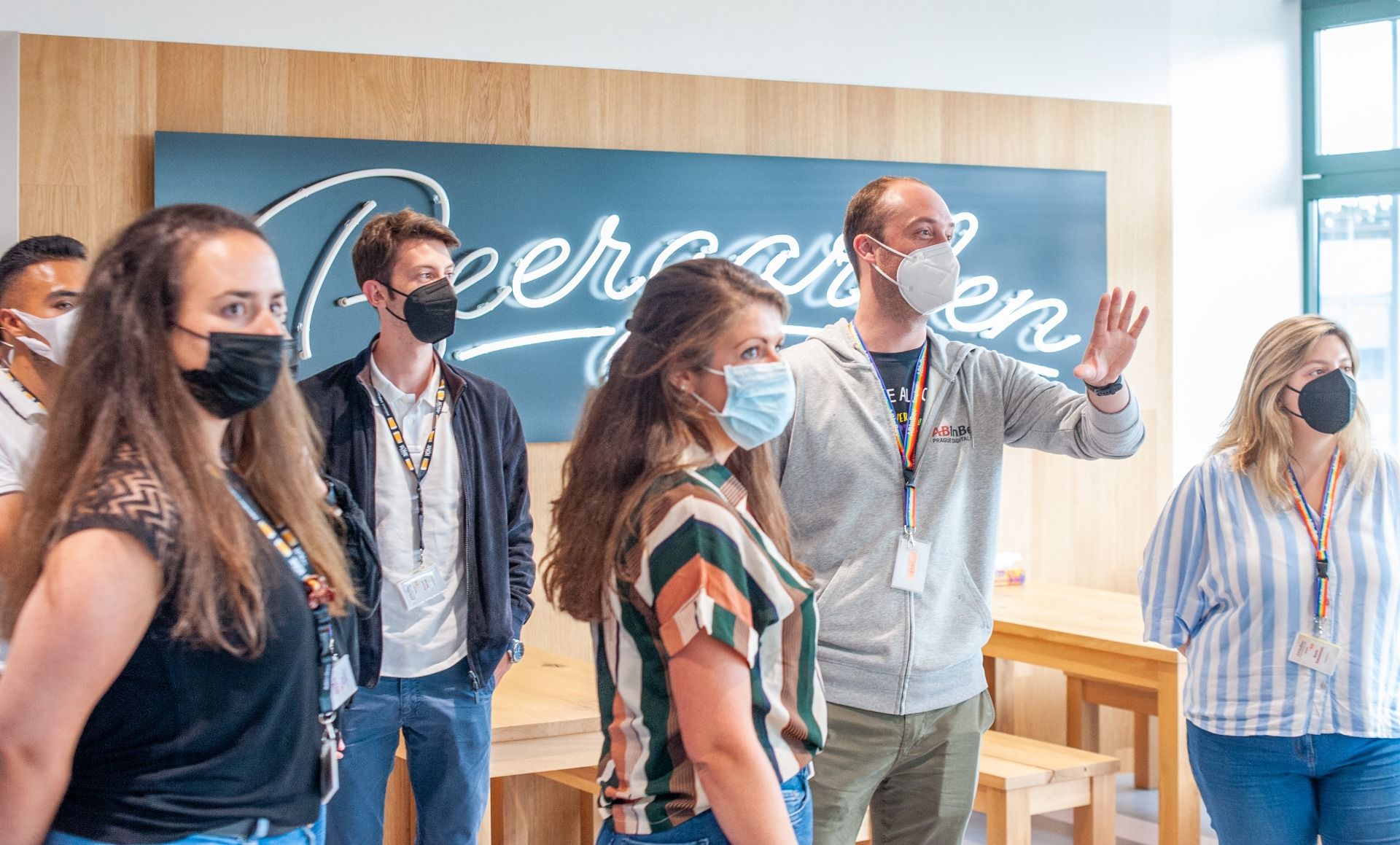
Being part of the largest brewery company worldwide is already something great but, being part of this programme is very gratifying. The programme, as the name suggests, is a fast track to scale the company and become a future leader. The programme consists of two six-month rotations with two big projects in addition to my usual tasks. I am currently working in logistics as inventory deployment senior specialist for the Italian market but I am based in Prague. I am managing orders, stock levels and the replenishment of some of our brands (Birra del Borgo, Tennent’s and Perfect Draft portfolio). I am also working on a project with other two trainees and the analytics team. The final goal is to build a machine learning model to predict the production of HLs for the following week in all our European breweries. This can have a huge impact in terms of reducing the cost of logistics and service level to our customers by giving correct insights to our sales team about the correct quantity released. This shows how, at AB InBev, we love to go the extra-mile and undertake big challenges. The most difficult part for me will be to work on data analysis and learn how to build a house (clear, useful and meaningful data) from Lego cubes (huge amount of unclassified data). At the end of the one-year programme, I will become a team leader and manage processes and people at a very young age.
What are your suggestions to the current and future students of the Master in IFBM?
When you join an environment such as ESCP, you are starting something that is going to change your life. At the beginning it is normal to be scared of the new approach, new people and new habits. Based on my experience I can give some advice to current and future students. Firstly, do not stop at what you learn in class but try to go the extra mile, develop and build on your passions because this will make the difference in the long term. Secondly, ESCP offers a strong network that you should leverage as much as you can. The network is an important turning point for your career both on a professional and on a personal level. Many students I met at ESCP became my close friends and I know that if I travel around Europe, I will always have someone to see. Thirdly, you as students should try to practise all the theoretical things you learn at school, as much as you can. This will help you in your first work experience because you already know what it means to bring results, deal with stakeholders and with people in your team.
Lastly, don’t be scared to dream big, follow your passions and tell your story – you must be interesting and interested. I have recently launched a mentorship programme for students in which I will guide them from a school to a business environment, leveraging their strengths and giving them a long-term view.
Where do you see yourself looking forward?
This year has been quite intense with my thesis, internship, start of the graduate programme and living in two European capitals, Berlin before and Prague now. The pandemic we are experiencing is also not helping but I am quite confident about the near future. I am proud of what I have achieved in 2021 but I see every year as a new starting point to get better every day.
I have already set some goals for 2022, both professional and personal. I will learn as much as I can in the graduate programme to be ready in August to become a team leader. I will keep working on personal branding by leveraging my connections, my Linkedin page and telling my story through interviews like this one. Moreover, I have planned to run the Prague marathon in May and help students grow and find an internship thanks to my mentorship programme.
If I have to look a bit further, I see myself in 3-5 years on another continent (US, Asia or Africa) in a managerial role in some top F&B realities and then coming back to Europe, probably Paris or Milan, for a position in top management, most likely in Marketing.
Related stories
News 09/04/2021
Ranking
ESCP ranks 1st worldwide in Eduniversal Ranking of the Best Masters in Food and Beverage Management
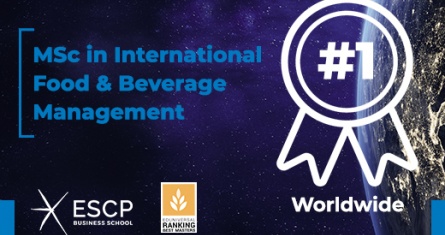
The ESCP Master in International Food and Beverage Management programme has been ranked 1st worldwide. Eduniversal has published its new 2021 ranking of the Best Masters & MBSs in 51 specializations.
Paris
Turin

News 12/05/2020
Student Societies
Encounter the flavours of the F&B industry with the new About Food society
One of the key academic areas of the ESCP Turin Campus is Food and Beverage Management. The About Food Society was created by students to give extra opportunities to better understand this vibrant sector.
News 29/11/2021
Alumni News
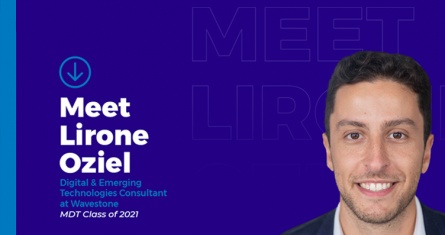
Meet the Alumni: Lirone Oziel, MSc in Digital Transformation Management & Leadership
Lirone shares his ESCP experience with us and how it helped him land a job that he really loves.
London

News 23/06/2020
Turin News
MIM Alumnus Pietro Luigi Ghigo has key role in Italy’s F&B expansion in Asia
In recent years, Italian companies have embarked upon a process of international development aimed at tapping into new markets, especially in Asia, and many Food and Beverage firms are in the forefront of that expansion. One of the Alumni of ESCP Business School has played a key role in that growth: Pietro Luigi Ghigo, Master in Management Alumnus, Class of 2009, and Asia Regional Sales Manager at Lavazza.
Turin

News 05/05/2020
Turin News
MIM Alumnus Romolo Ganzerli recognized in the Italian #forbesunder30
Forbes Italia has released its annual “100 Under 30” list. We are delighted to see among these young disruptors ESCP Alumnus Romolo Ganzerli, cofounder of MammaPack, in the Retail category. He has been selected as one of the young leaders who are on the fast track for rethinking our relationship with e-commerce.
Turin

News 24/03/2020
Turin News
Matteo Frescobaldi is among the Italian #forbesunder30, ESCP alumnus and 30th generation of a family firm with 700 years of history
Matteo, Master in European Business alumnus, class of 2012, is the youngest member of the thirtieth generation of Marchesi de Frescobaldi, a family firm with seven hundred years of history.
Turin

News 13/03/2020
Turin News
Two ESCP Alumni have given life to their first dream street food startup: Uagliò
A few months ago, two ESCP Alumni, Carla Ferrari and Gennaro Generoso, opened Uagliò, a new concept for a Neapolitan pizzeria, where customers can sit and watch the pizzas being made with only the best ingredients.
Turin
![© Epizentrum, CC BY-SA 3.0, via Wikimedia Commons [copyright]](/sites/default/files/styles/event_news_une/public/2021-12/Frankfurt_EZB.Nordwest-2.20141228-678x381.jpg)
Campuses
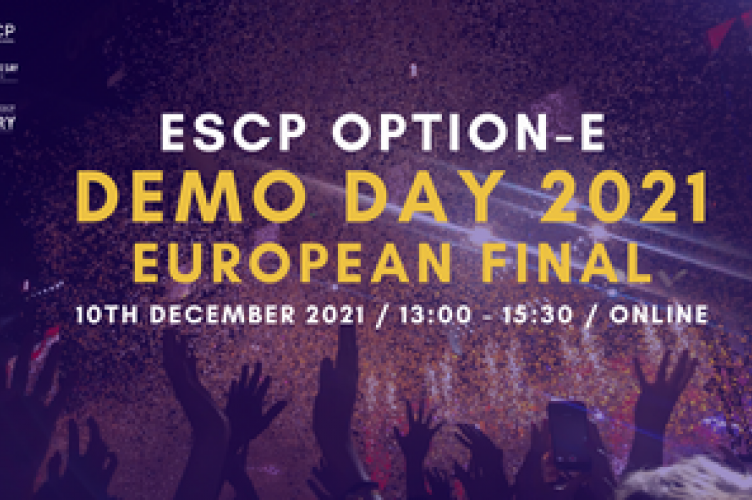
⭐️ Meet the best 7 startup teams from ESCP Option E Program from Berlin, Madrid and Paris during the European Final pitching competition.
About this event
➡️ On December 10th, ESCP Blue Factory Incubator (a part of the Jean-Baptiste Say Institute for Entrepreneurship ) will present you the best 7 startup teams from ESCP Option E Program from Berlin, Madrid and Paris during the European Final pitching competition.
Join us to:
⭐️ Meet the best students' startup teams from Option E cohorts in Berlin, Madrid and Paris.
⭐️ Watch live seven pitches and experience the discussion with professional jury members.
⭐️ Connect with ESCP European network of students, entrepreneurs and professionals.
➡️ What startups can you expect?
? Please visit the website to have the first impression of all the Option E teams.
https://www.entrepreneurship-festival.com/option-e-demo-day
➡️ Agenda:
⏰ 13:00 - 13:15: Welcome and official introduction
⏰ 13:15 - 13:30: Team 1 (5 mins pitch and 10 mins discussion)
⏰ 13:30 - 13:45: Team 2 (5 mins pitch and 10 mins discussion)
⏰ 13:45 - 14:00: Team 3 (5 mins pitch and 10 mins discussion)
⏰ 14:00 - 14:15: Team 4 (5 mins pitch and 10 mins discussion)
⏰ 14:15 - 14:30: Team 5 (5 mins pitch and 10 mins discussion)
⏰ 14:30 - 14:45: Team 6 (5 mins pitch and 10 mins discussion)
⏰ 14:45 - 15:00: Team 7 (5 mins pitch and 10 mins discussion)
⏰ 15:00 - 15:15: Break (jury meeting)
? 15:15 - 15:30: Winners announcement and final words
➡️ About the Jean-Baptiste Say Institute for Entrepreneurship and ESCP Blue Factory
The Jean-Baptiste Say Institute for Entrepreneurship relies on a unique European network that was developed in 2007 by the Entrepreneurship Chair of ESCP Business School and has today more than 50 researchers and teachers. Our goal is to train entrepreneurs and leaders around the world in entrepreneurship and, to prepare tomorrow’s managers for profound changes in the world of work. Its main focus areas are: teaching, research and incubation.
Blue Factory is an ESCP university incubator fostering entrepreneurship and creativity. It supports European entrepreneurs and start-ups at ESCP Business School and beyond with incubation. The incubator is unique because of its European architecture in Berlin, London, Madrid, Paris and Turin. It connects hundreds of mentors, coaches, experts and investors.
⭐️Join us on December 10th, at 1:00 PM (CET) ⭐️
Location
Organiser: Jean-Baptiste Say Institute
Online - Worldwide
MapDate
Start date: 10/12/2021
Start time: 1:00 PM
End time: 3:30 PM

Join us for the first webinar in our new series Let’s Talk Tech.
This webinar will feature guest speaker, Gabriel Scali, who is an expert in artificial intelligence and cognitive computing. Gabriel will be providing a short introduction on AI and the need for a radical shift, and reflecting on what progress we can expect in the near future.
The Let's Talk Tech webinar series is to showcase how technology is changing the world and to start important conversations related to digital transformation. It will be hosted by the Academic Director of the MSc in Digital Transformation Management & Leadership, Aurelie Cnop.
Register your place here: https://bit.ly/3dzAOfS
Location
Organiser: ESCP London Campus
Online - Worldwide
MapDate
Start date: 14/12/2021
Start time: 1:00 PM
End time: 2:30 PM
Online
MBA in International Management - Info Session
Tuesday 18 January - 4-5 p.m. (CET)
Join us on Tuesday 18 January at 4 p.m. (CET) for the Information Session held by Grace Coello, Admission Coordinator at the Madrid campus, and learn more about ESCP Business School's MBA in International Management.
ESCP's MBA in International Management is a 10-month, full-time programme allowing you to study in two European countries of your choice - Berlin, London, Madrid, Paris, Turin and Warsaw.
With Cartier as Class Sponsor, 2 Company Consultancy Projects, 4 Electives (to choose from a portfolio of 24 courses) and international Career events throughout the year, this is the perfect start-point to initiate a successful career change in business.
Registration
Register now for a chance to learn about ESCP’s MBA programme and admissions process with our recruitment team. Your questions will be answered live.
More info: mbamadrid@escp.eu
Location
Organiser: ESCP Business School - MBA
Online - Worldwide
MapDate
Start date: 18/01/2022
Start time: 4:00 PM
End time: 5:00 PM