

The planet is experiencing unprecedented climate change.
In the last twenty years, digitalisation has positively impacted the global environment. However, the digital revolution still has its price: because of emissions, consumption, and waste, its environmental footprint is less and less ecological.
It is crucial to recognise the problem and take action to create awareness in people and companies for sustainable digital development.
The Internet alone consumes 10% of the world's electricity and pollutes six times more than ten years ago.
The carbon footprint of our digital devices and the systems that support them represent approximately 3.7% of global greenhouse gas emissions. And it is expected to double by 2025.
We must act now to reduce our Digital Carbon Footprint!
THE CHALLENGE
On November 9, 2021, the ESCP Turin Campus Career Service & Corporate Relations team brought together 17 companies and challenged our students with a Green Hackathon focused on the Digital Carbon Footprint. More than 150 ESCP students, divided into 31 groups and supported by 37 mentors, competed to design innovative sustainable ideas to reduce the Digital Carbon Footprint of a company by 50% in one year.
ESCP students had only six hours to prepare a 15-second video describing their ideas and a one-page report detailing the practical requirements to transform the concept into reality. The results were judged by a jury composed of Alessandro Lanteri, Paolo Salza, Brooke Hopkins, Martina Spriano and Christophe Debuysscher.
THE FINALIST PROJECTS
The jury, as well as the mentors, were impressed by the quality and value of the projects proposed by the 31 ESCP student teams. Three of them were selected to pitch their projects during the final leg of the event:
- Greentopia, made up of Fabio Belfiore, Giovanni Francia, Florindo Sarpi, Sidney Togu, Matteo Trulli, presented a proposal to limit the storage of useless data on the cloud by implementing an expiration date system on the data with the aim to drastically limit energy consumption.
- Rose, made up of Michele Currado and Louise de Blommaert, designed a monthly competition for the most eco-friendly employee, based on the assessment of the efficient use of energy versus productivity. In order to help the company reduce its digital carbon footprint, the team has sought to increase the employees' awareness of the topic, making them play an active role in this value shift.
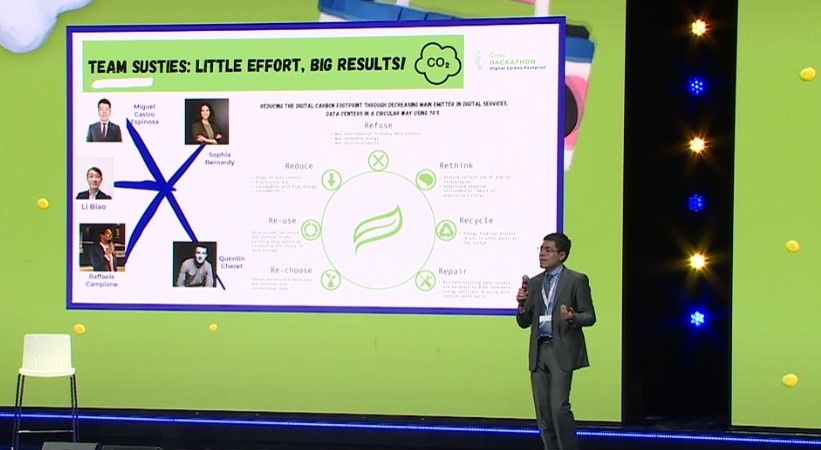
- Susties, made up of Sophia Bernardy, Li Biao, Raffaele Campione, Quentin Cheret, Miguel Ulises Castro Espinosa, proposed a project to make data servers’ accounts as circular as possible. To do so, they decided to follow the framework of the 7 Rs of Sustainability: Rethink, refuse, reduce, re-choose, reuse, repair, recycle. For example, one of the suggestions for the R of recycling was to recycle the heat generated by data centres.
The latter was voted the winner of the "ESCP Green Hackathon | Digital Carbon Footprint".
THE PRIZE
The winning team Susties had the opportunity to present its project at the "ZED - Zero Emission Digital" conference, part of the IAB Forum 2021, organised by IAB Italia, on November 16.
Assistant Professor Alisa Sydow, game master of the Hackathon, and Miguel Ulises Castro Espinosa, ESCP MBA in International Management student and representative of Susties, participated in Milan's event.
The winning team also will have an exclusive lunch with a VIP from Davines and get to visit its innovative and sustainable plant.
SPECIAL THANKS
The second edition of the ESCP Green Hackathon was amazing, thanks to the efforts of all the people who made it possible. Special thanks to the game master, Assistant Professor Alisa Sydow, and Prof Francesco Rattalino, who kicked off the event, the jury members, the mentors and Turin Campus Career Service & Corporate Relations team.
Special thanks go to the seven inspirational speakers: Elena Chisena, Mauro Bombacigno, Francesco Mondora, Heiner von Brachel, Helena Babelon, Fabio Cancarè, Alberto Riccabone, to our technical partners Plesh and IAB Italia, and to the 17 companies who participated in the Hackathon: AlixPartners, Avio Aero - a GE Aviation Business, The Adecco Group, Boston Consulting Group (BCG), BNP Paribas, CACEIS, Davines, Eaton, Edison SpA, Electrolux, Facile.it, Free2Move eSolutions, PROMETEON TYRE GROUP, Reply, TeamSystem, U.G.A. Nutraceuticals Srl, UniCredit.
Congratulations to all the participants on your great work, and thank you for helping raise awareness about the Digital Carbon Footprint.
Campuses
Related stories

Event 08/06/2021
Online Event
ESCP Green Hackathon | Digital Carbon Footprint
Worried about our digital carbon footprint? Join us in a unique event: the ESCP Green Hackathon | Digital Carbon Footprint on November 9th. Now it is time to think about how companies can reduce their digital carbon footprint!
Turin

News 23/04/2021
Turin News
ESCP Green Hackathon: shaping a more Sustainable Future
AlixPartners has challenged ESCP students with a Green Hackathon. They were invited to contribute their ideas on how to create an ecological, sustainable and green future.
Turin

News 06/04/2021
Turin News
Art Thinking: imagine the improbable
The ESCP Turin Campus Option-E cohort of students from the Master in Management kickstarted the semester with a disruptive workshop: the Improbable seminar, a 3-day training course based on the Art Thinking method. This flexible method, designed by Sylvain Bureau, Scientific Director of the Jean-Baptiste Say Institute and ESCP Professor, makes it possible to create the improbable with certainty.
Turin
![© royyimzy - AdobeStock [copyright]](/sites/default/files/styles/event_news_une/public/2022-01/Pronobis_foreign-ownership_0.jpg)
The free flow of capital across the globe finances an increasing number of EU firms, and with geographically distant ownership come issues of control. So to improve management monitoring, foreign owners tend to resort to auditing, and in the process, shape the governance of the companies they invest in. In research picked up by The European, Prof. Paul Pronobis and his co-author studied audit fees to shed light on these mechanisms.
From wealthy Chinese purchasing french vineyards to the GAFAs implanting data centres in Ireland or US hedge funds taking stakes in the Deutsche Boerse, examples of foreign investments in Europe abound. Indeed, the European Union (EU) is the top global destination of foreign investment. To give an order of magnitude, according to the European Commission foreign direct investment stocks held by third-country investors in the EU amounted to €7,138 billion at the end of 2019. Due primarily to the liberalization of many capital markets, foreign ownership has thus become an increasingly important source of financing for EU companies. This has direct implications for the audit market, specifically, for audit fees, as a new research paper in The European Accounting Review reveals. This in turn offers insights into the mechanisms that lead to changes in corporate governance across the world. The link between foreign ownership and auditing may not be instantly obvious, but it is explained by the agency problems that come with foreign ownership.
Auditing to improve control of assets
According to agency theory, potential opportunistic behavior by a firm’s management is a main concern of the firm’s owners. “Here, an external auditor serves as an appropriate instrument to mitigate such information asymmetries and the corresponding agency problems,” write the authors, professors Paul Pronobis (ESCP Business School) and Jonas Schaeuble (Hochschule Magdeburg-Stendal). “Although the threat of opportunistic behaviour by the management and the related need for effective control of it by the owner is innate to all firms, both aspects are likely more pronounced in foreign-owned firms,” they explain. While the geographical (and cultural) distance between say, the Silicon Valley and the suburbs of Dublin, is not comparable to that between London and 19th-century trading outposts along the Congo River for example, it does represent a disadvantage for foreign owners: “They are unprivileged in terms of information gathering and management monitoring” compared to their domestic peers, as the researchers specify. So it can be expected that they will be particularly reliant on auditing in order to increase the reliability of the firm’s financial numbers.
High-quality auditing more likely with foreign ownership
The two researchers explored the relationship between foreign ownership and auditing through empirical tests based on an international sample of more than 1,700 listed firms and corresponding financial, audit and ownership information from twelve Western European countries between 2005 and 2016. They indeed found that foreign ownership was significantly positively associated with audit fees. Why examine fees? The objective of foreign owners is to reduce the (heightened) information asymmetry through higher audit quality. The auditor needs to understand the business, have relevant work experience (e.g., be authorities in their field/industry), have international presence, among other things, hence will command higher audit fees.
Premium auditing as an investor protection mechanism
In their paper, Pronobis and Schaeuble also predict – and confirm – a greater willingness of foreign owners to pay higher audit fees for the statutory audit if the foreign owner is located in a country with a high quality of governance and investor protection. (This they measured with data taken from the Worldwide Governance Indicators (WGI) project.) The origin of the foreign owners does play an important role with respect to the demand for audit services, as foreign owners from countries with strong investor protection internalize and promote the importance of auditing as an effective control mechanism from their ‘home-country’. As foreign investors need to protect their home-country investors, they encourage the firms that they invest in to implement the same corporate governance practices that they themselves are subject to in their home country. In other terms, auditor selection and thus audit pricing are a mechanism through which foreign investors shape the firm’s governance.
In addition, the researchers found that auditor selection is a mechanism through which foreign investors shape financial reporting comparability. “As large audit firms use a highly-standardized audit model to ensure audit quality, foreign investors try to induce their target firms to switch to BIG4 auditors (KPMG, PwC, Deloitte, and Ernst & Young). These highly-standardized auditing models ensure audit quality through extensive auditing procedures and generally increase the cost of an audit,” they explain.
Concentrated ownership behind increased demand for audit services
The authors' third finding concerns the reinforcing effect of higher levels of foreign ownership. When the percentage of ownership held by the foreign investor increases, and thus becomes more highly concentrated, the ability of the foreign investor to influence corporate governance decisions, such as the firm’s demand for audit services, increases. Accordingly, they found that the price of an audit increases with the percentage of foreign ownership.
In conclusion, these results shed light on the underlying mechanisms through which foreign ownership influences investee firms’ governance, particularly audit contracting decisions. While previous studies had documented that international portfolio investment encouraged effective monitoring practices around the world, this new study extends these findings by showing that those practices also require more extensive auditing procedures. It also establishes the quality of governance and investor protection of the foreign investor’s home country as an important factor to affect the design and effectiveness of the firm’s implemented governance system. These findings also suggest that corporate governance practices, in terms of auditing, travel around the world through foreign owners’ cross-border portfolio of investments.
Campuses
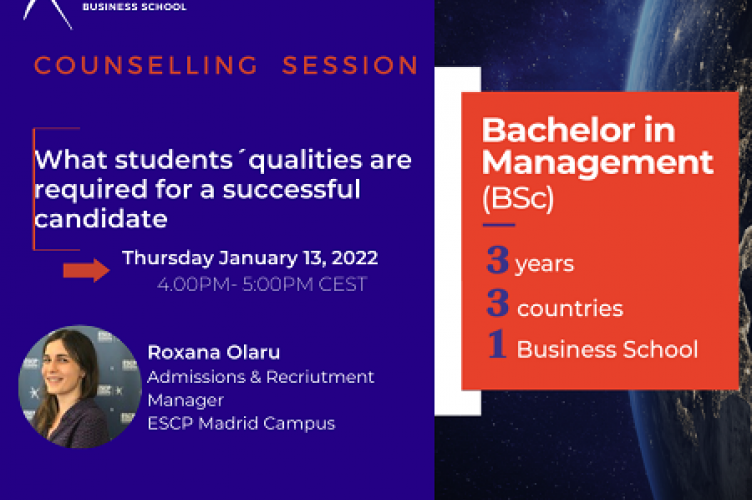
We often talk about "how to write a successful application letter" or "which questions to prepare for an interview", still almost every prospect worries on how to stand out from the rest and be a successful candidate.
In our upcoming webinar, we will emphasis on the students ‘qualities required to be a top candidate.
If you are planning on applying, don't miss the opportunity to use this session as a preparation. Meet our recruiter Roxana Olaru (Madrid) online and ask her all of your questions.
More info: bachelormadrid@escp.eu - www.escp.eu/bachelor
Participants

Roxana Olaru
Admissions & Recruitment Manager
Location
Organiser: ESCP Madrid Campus
Online- Madrid time - Worldwide
MapDate
Start date: 13/01/2022
Start time: 4:00 PM
End time: 5:00 PM
In January 2022, the Italian Parliament and regional representatives will be called to vote for the President of the Republic.
On January 17th at 5:45 pm, the ESCP Turin campus will host a conference to debate the most relevant political aspects and cultural insights.
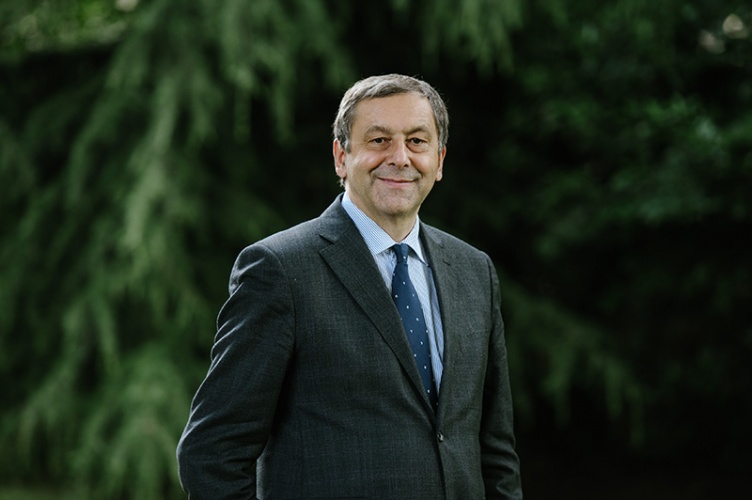
The main speaker will be Prof. Francesco Profumo, Chairman of the Italian campus of ESCP and former Minister of Education, University and Research, from November 2011 to April 2013.
The event will be moderated by Associate Professor Chiara Succi.
ESCP students have the opportunity to better understand the Italian social, economic and political context in which they live.
For safety reasons, the event will be broadcast in live streaming on Zoom.
Participants

Francesco Profumo
ESCP Turin Campus Chairman

Chiara Succi
Associate Professor of Organizational Behavior
Location
Organiser: ESCP Turin Campus
Online - Worldwide
MapDate
Start date: 17/01/2022
Start time: 5:45 PM
End time: 7:00 PM
Related stories

Event 26/11/2021
Turin Event
Online Open Day - Turin Campus 2022 [ITA]
Vuoi conoscere l'offerta formativa di ESCP Business School? Il 19 Febbraio partecipa all'Open Day del campus di Torino.
Turin

News 14/12/2021
Alumni News
From passion to action: Giacomo Vercelli's story in the F&B world
We chatted with a very passionate young talent who's going places in the F&B world. We interviewed Giacomo Vercelli, an alumnus of the Master in International Food and Beverage Management about his ESCP experience and how what he learned helped him achieve his goals.
Berlin
Paris
Turin
News 20/07/2021
Success Story
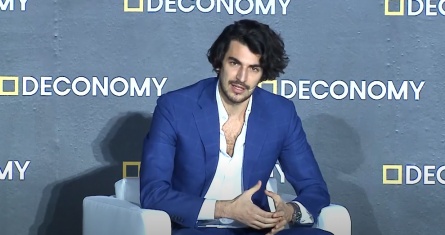
Cryptocurrency is here to stay. A chat with MIM Alumnus Ulisse Dell'Orto, Italian #ForbesUnder30
We are proud to see an ESCP talent among the young disruptors recognized by Forbes Italia in its annual "100 Under 30" list once again: Ulisse Dell'Orto, Master in Management Alumnus, blockchain enthusiast & crypto investor, and, foremost, Managing Director APAC at Chainalysis, the world's leading provider of Anti-Money Laundering software for virtual currencies.
Turin

Online
MBA in International Management - Info Session - Focus CCP
Monday 14 February - 1-2 p.m. (CET)
You are interested in ESCP's 10-month MBA in International Management programme and would like to know more about the Company Consultancy Projects? Join us on Monday 14 February 2022 for an interactive one-hour webinar.
You will learn about:
- the MBA in International Management at a glance
- the 2 Company Consultancy Projects over 2 countries
- the career opportunities available after the CCP
- the admission process
You will be able to ask your questions live to Professor Amaury De Buchet, affiliate teacher at ESCP Business School, and Ashish Patwardhan, current MBA Student & Ambassador.
Registration
The MBA team at ESCP is looking forward to welcoming you to this insightful online info session.
Should you have any questions in the meantime, please email: mbaparis@escp.eu
Location
Organiser: ESCP Business School - MBA
Online - Worldwide
MapDate
Start date: 14/02/2022
Start time: 1:00 PM
End time: 2:00 PM
![© Faurecia [copyright]](/sites/default/files/styles/event_news_une/public/2022-01/Faurecia_cockpit.jpg)
ESCP Prof. Martin Kupp shed light on the digital transformation road map of this global automotive component manufacturer with MIT’s Joe Peppard.
Once upon a time, not so long ago actually, Faurecia only supplied automobile manufacturers with parts. Recently, it made a new deal making it the seventh largest automotive supplier globally, with an highly-advanced technology portfolio addressing all industry megatrends. This creates a company with some 150,000 employees and annual sales of about 23 billion euros - forecast by Faurecia to exceed their very ambitious growth targets: 30 billion in revenue by 2025 (from roughly 18 billion in 2018), representing a Compound annual growth rate of above 8% vs. 2020!
How did Faurecia get there?
In the case they published with The Case Centre, ESCP Business School professor Martin Kupp and the Massachusetts Institute of Technology’s Joe Peppard explain how this modern component manufacturer has evolved from a supplier of hardware to an electronics supplier, and is ultimately embarked on a journey to become a software supplier.
A key driver of Faurecia’s projected growth have been the so-called “New Value Spaces.” At roughly 7 billion euros, and therefore contributing about half of the expected growth, these have primarily been driven by opportunities provided by digital technologies, particularly those concerned with increased connectivity, intelligence capability, and the digitization of customer experiences.
Want to know more about case studies and the case method? Martin Kupp, who is also a Case Centre workshop tutor and Executive Committee member, shares his views.
Campuses
![© OLIVIER DOULIERY/AFP via Getty Images [copyright]](/sites/default/files/styles/event_news_une/public/2022-01/Troege_US%20corporate%20debt.jpg)
Campuses

The MSc in Digital Transformation Management & Leadership online information session is a great opportunity for you to learn more about the programme and discover how it may help achieve your career objectives.
Register your place now to discover:
- The programme curriculum and the key skills, competencies and knowledge you will obtain
- The relevance of the programme's curriculum to the future job market and why you should consider joining this master
- The projects you will be working on
- What to expect on the admissions day and useful tips for your online application
- Information on fees and scholarships
Your questions are answered live by the Recruitment team and a current student ambassador!
This event takes place on Monday, 10th January at 1pm GMT (2pm CET). Register your place
Location
Organiser: ESCP London Campus
Online - Worldwide
MapDate
Start date: 10/01/2022
Start time: 1:00 PM
End time: 2:00 PM
The MSc in Energy Management online information session is a great opportunity for you to learn more about the programme and discover how it may help achieve your career objectives.
Register your place now to discover:
- The unique curriculum and why it is particularly relevant to the current and, most importantly, future energy-related job markets
- Projects students are working on throughout their three terms in London & Paris
- The employment opportunities upon graduation
- What to expect on the admissions day and useful tips for your online application
- Information on fees and scholarships
Your questions are answered live by the recruitment team and Programme Director!
This event takes place on Wednesday 12th January at 1pm GMT (2pm CET).
Register your place
Location
Organiser: ESCP London Campus
Online - Worldwide
MapDate
Start date: 12/01/2022
Start time: 1:00 PM
End time: 2:00 PM

Join us on Thursday, January 20th, 2022 at 17:00 via zoom for our Coffee & Conversation with our Alumna, Marisa Engler, Key Account Manager at Google, to have an informal talk about her learning experience at ESCP Business School and after finishing her studies in the MSc in Marketing and Digital Media.
This will be a great opportunity for you to meet our alumna, ask her questions directly about the programme and the career opportunities after her studies here. This is the best way to decide if this programme is the right for you and learn first-hand what it means to live the ESCP experience!
Don’t miss out! Register now!
Participants

Marisa Engler
ESCP Alumna & Key Account Manager at Google

Johanna Arias
Admissions & Recruitment Manager
Location
Organiser: ESCP Madrid Campus
Online- Madrid time - Worldwide
MapDate
Start date: 20/01/2022
Start time: 5:00 PM
End time: 6:00 PM