When ethical responsibility is translated into tools, metrics and legal safeguards, what changes in organisations?
Professor Wafa Ben Khaled studies how organisations define responsibility. More specifically, she looks at what happens when ethical principles are translated into tools, metrics and compliance systems.
In February 2026, she received the Journal of Business Ethics’ R. Edward Freeman “Philosophy in Practice” Best Paper Award for her article “Ethical Tools and the Legalization of Ethical Responsibility in Organizations” co-written with Mattia Anesa (open access through March 2026). The paper builds on her doctoral work and examines how companies design and implement ethics programmes.
For Ben Khaled, the award is meaningful because research presented in the article draws on work she began years ago. Seeing it recognised now, she says, feels like “closing a long chapter”.
However, simultaneously, it reasserts the underlying commitment of her entire research career that seeks to answer the question: what changes when ethics is managed through compliance?
When ethics becomes a system
As she explains to me, most large and medium-size organisations nowadays rely on codes of conduct, reporting mechanisms, training sessions and audit processes to demonstrate their ethical commitments. These tools are often presented as evidence of social responsibility but the real question is what these tools actually do in practice.
In her Journal of Business Ethics article, she shows how ethics programmes can gradually shift towards a legal logic. Responsibility becomes framed in terms of risk management and liability. The key question is no longer simply “Is this right?” but “Are we legally covered?”
This does not mean that such ethical tools are irrelevant. As the paper demonstrates, they often create an architecture of responsibility, codes, hotlines, training modules, audits, which is crucial for upholding norms. But when these tools are designed primarily around legal risk, the central question becomes one of compliance rather than principle. In her words, the danger is that ethics turns into a matter of “being covered”, narrowing moral reflection to procedural correctness.
Unboxing corporate legal violence
Another strand of her research explores what she calls “corporate legal violence”. Instead of focusing on individual wrongdoing, she looks at how organisational structures can produce harm while remaining legally defensible.
Across these studies, her focus is on power. Legal and organisational frameworks do not just set boundaries; they decide who carries the consequences. “There are always those who have power and those who have not.” Ethics, in this sense, is inseparable from that imbalance.
Asked what draws her to difficult topics such as discrimination, harassment or structural inequality, Ben Khaled’s answer may seem surprising
Once you start seeing how power operates in organisations, it becomes impossible to look away
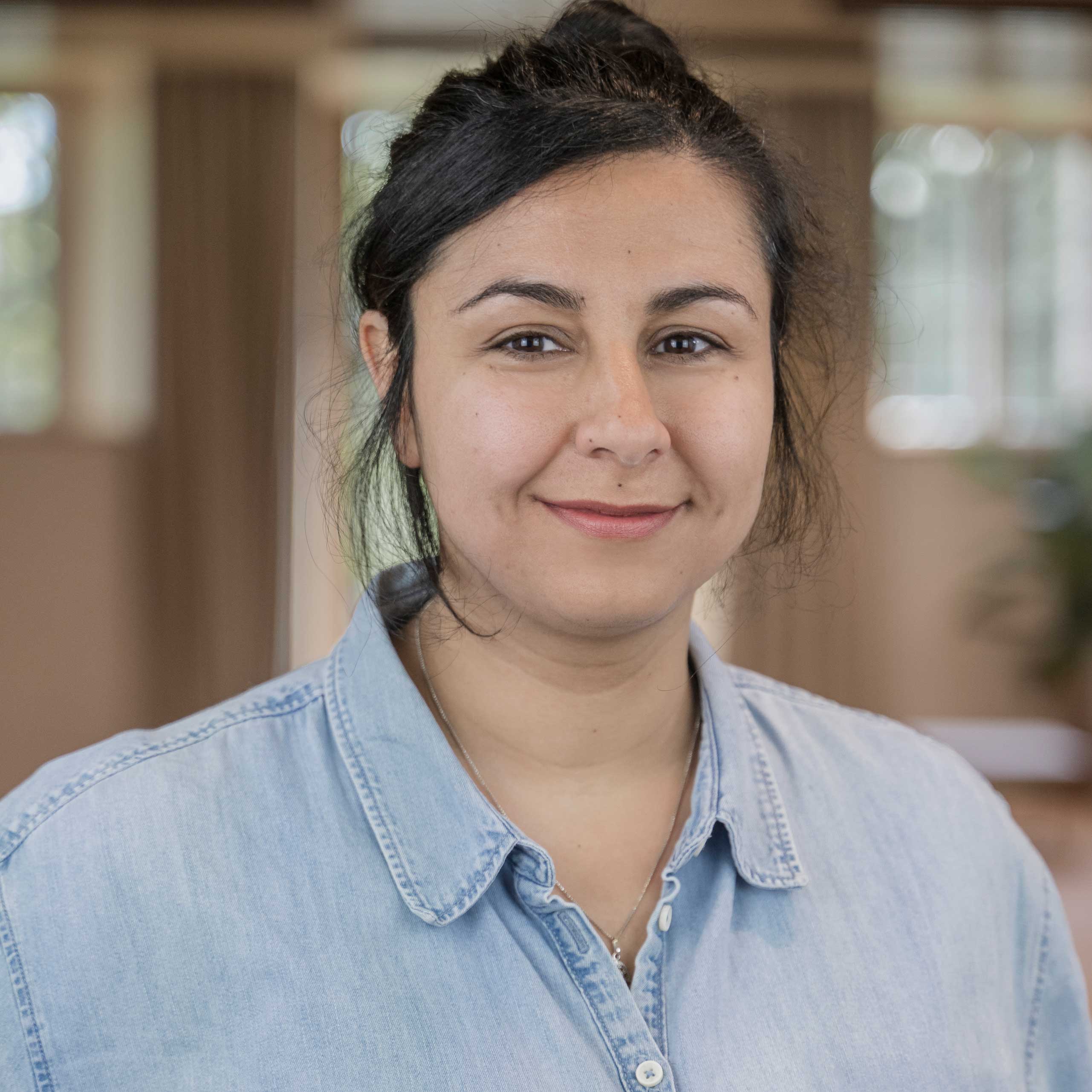 Wafa Ben Khaled
Associate Professor of Business Ethics and Management Control at ESCP
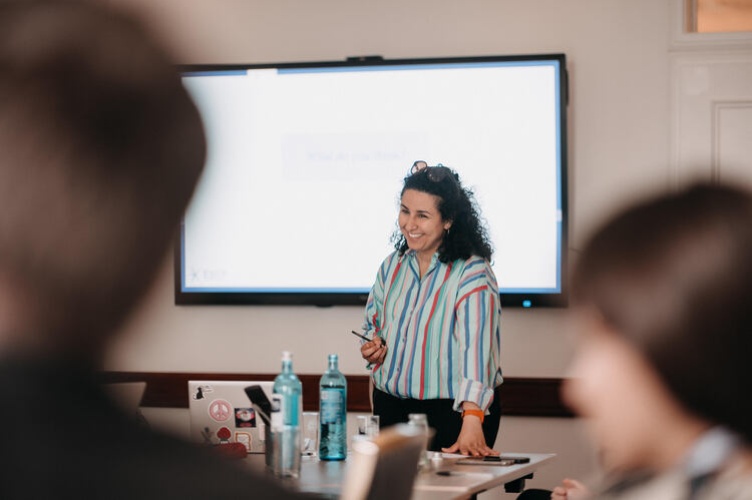
 Professor Wafa Ben Khaled presents her research on corporate legal violence at the 85th Academy of Management Annual Meeting (AOM 2025), Bella Center, Copenhagen.
She describes the moment when everyday situations begin to appear differently. You notice who is listened to and who is dismissed. You see how legitimacy is attached to certain profiles and denied to others. You recognise how institutional structures can normalise unequal treatment.
This way of seeing did not emerge overnight. She credits encounters with other critical and feminist critical scholars with sharpening her understanding of power and gender in everyday academic and organisational life. Their work, and their willingness to challenge conventional research formats, encouraged her to question not only what organisations do, but how knowledge itself is produced.
This awareness shapes how she reads corporate initiatives, from diversity metrics to ethics programmes. The question, she says, is always the same: is this about real change, or about virtue signalling?
Her work does not aim to denounce for the sake of it. It aims to understand how systems function so that responsibility is not reduced to a checkbox, but allowed to function meaningfully.
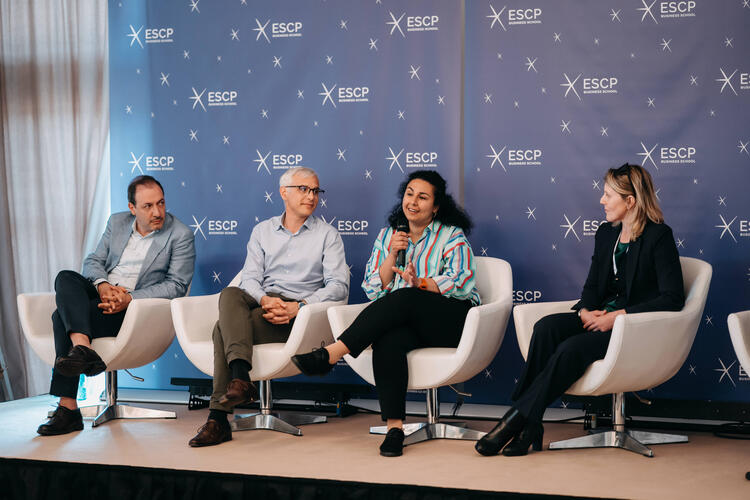 Professor Wafa Ben Khaled speaks during the panel discussion “From Ideas to Action: AI, Sustainability, DEI and Beyond” at the ESCP Full Faculty Reunion 2025 in Potsdam, alongside Professor Kamran Razmdoost, Professor Louis-David Benyayer and Professor Alberta Di Giuli.
 Ethics, in this sense, is political. Its evolution depends as much on public contestation as much as it does on policy.
Advice to early-career scholars
For young scholars, particularly those researching power and inequality, her advice is practical.
Find a community. Academia can be demanding, and working on sensitive topics can be isolating. Having colleagues who are intellectually rigorous but personally supportive makes a difference.
Wafa Ben KhaledAssociate Professor of Business Ethics and Management Control at ESCP
She also emphasises patience. “Recognition takes time. Research trajectories are rarely linear. The important thing is to remain clear about why the questions you ask matter.”
At its core, her work returns to a simple but uncomfortable point. Legal conformity does not automatically equal ethical responsibility. When ethics becomes compliance, the focus moves from judgement to protection. The question is no longer what is just, but what is defensible. Her research asks what that move obscures, and whose experiences become easier to overlook.
Related News

R. Edward Freeman Journal of Business Ethics Philosophy in Practice Best Paper Award
Campuses
Ethical Leadership: Principles, Impact, and Best Practices
When Jim Sinegal co-founded Costco in 1983, he did something Wall Street hated: he paid warehouse workers significantly more than competitors and offered health benefits to part-timers. Competitors assumed his "generosity" would collapse under market pressure. Decades later, Costco became the United States' third-largest retailer.
This is ethical leadership: doing what's right when everyone thinks you're wrong. Today, ethical leadership isn't optional — it's essential. For early-career professionals, understanding ethical leadership means building the skills that define effective 21st-century leadership.
In this article, you'll discover what ethical leadership really means, why it matters more than ever in today's business world, and how you can start developing these skills early in your career.
What is ethical leadership?
At its core, ethical leadership means making choices that align with clearly defined values — transparency, fairness, accountability, integrity, and respect — even when those choices come with short-term costs. Ethical leaders don't just follow legal requirements; they hold themselves to higher ethical standards that reflect what's right, not just what's permissible.
Research in business ethics identifies several defining characteristics, and qualitative studies of multinational corporations suggest that ethical tools often become reduced to legal compliance rather than broader moral responsibility.
Ethical leaders serve as role models for ethical conduct. They make fair and balanced decisions. They communicate openly about ethical expectations. And crucially, they hold themselves and others accountable when those standards aren't met.
Ethical leadership differs from simply “being a good person” in authority. It requires strategic direction under uncertainty while ensuring reliable processes guide execution — a balance often highlighted in discussions of the difference between leadership and management.
Why ethical leadership matters today
The business landscape has fundamentally shifted. Transparency is no longer optional. Information travels instantly. Employees share workplace experiences on platforms like Glassdoor and LinkedIn. Customers mobilise boycotts through social media. Investors demand ESG accountability. In this environment, ethical leadership is a competitive advantage.
Trust and credibility
Trust is the foundation of all effective leadership. Leaders who prioritise purpose and human impact build organisations where trust becomes a driver of long-term performance.
When leaders demonstrate integrity through their actions, they build credibility that translates into organisational performance. A Watson Wyatt study found that organisations with high trust levels outperform low-trust organisations by 286% in total return to shareholders.
Sustainable performance
The myth that ethics and profitability are opposed has been contradicted by research. Companies led by ethical leaders consistently demonstrate stronger long-term performance than those prioritising short-term gains at any cost.
Why? Ethical leadership reduces costly risks like litigation, regulatory fines, and reputational damage. It improves employee retention, reducing recruitment and training costs while preserving institutional knowledge.
Tracking companies with strong ethical cultures shows they generate higher returns than those with weak ethical foundations. The reason is simple: ethical leadership creates sustainable business models rather than extracting value until collapse.
Risk and reputation management
In an interconnected world, ethical failures spread quickly and damage can be irreversible. A single unethical decision — cooking the books, ignoring harassment complaints, misrepresenting product capabilities — can destroy decades of brand equity.
Ethical leaders mitigate these risks; they understand that reputation is built slowly through consistent behaviour but can be destroyed instantly through lapses.
Ethical leadership in practice: A real-world example
Patagonia has built a billion-dollar business while prioritising environmental responsibility over maximum profitability. When the company discovered that its cotton sourcing relied on harmful pesticides, it switched entirely to organic cotton despite significant cost increases. When rapid growth threatened its environmental commitments, founder Yvon Chouinard deliberately slowed expansion rather than compromise his principles.
The ultimate expression of this approach came in September 2022, when Chouinard transferred ownership of the company to a trust and nonprofit organisation to combat climate change. Rather than selling Patagonia or passing it to his children — options that would have made him billions — he structured the transfer so that all future profits would fund environmental protection in perpetuity.
This decision reflected the essence of ethical leadership: long-term thinking over short-term gain, stakeholder service over personal enrichment, and alignment between values and actions. Patagonia’s success shows that ethical leadership is not only morally sound but a viable path to building an enduring, profitable enterprise that creates value for all stakeholders.

Core principles of ethical leadership
While ethical leadership can take different forms across contexts and cultures, certain core principles consistently define this approach.
Respect
Ethical leaders treat every individual with dignity, regardless of their position, background, or viewpoints. Respect extends beyond politeness. It involves recognising the inherent worth of stakeholders—not just as resources to be managed, but as people with legitimate interests and concerns.
Accountability
Accountability is perhaps the most visible principle of ethical leadership. Ethical leaders take responsibility for their decisions and their consequences — both positive and negative. They don't deflect blame when things go wrong. They don't take credit for others' work when things go right. This principle also means holding others accountable to the same ethical standards.
Integrity and honesty
Integrity means consistency between values and actions. Ethical leaders don't compartmentalise, claiming to value transparency while hiding information, or preaching work-life balance while expecting 80-hour weeks. Ethical leaders tell the truth, even when it's difficult.
Fairness and justice
Fairness requires ethical leaders to make decisions based on merit and objective criteria rather than favouritism, bias, or self-interest.
Salesforce's approach to pay equity demonstrates this principle in action. The company conducted regular audits to identify unexplained pay gaps, then proactively adjusted compensation to ensure fairness.
Service orientation
Ethical leaders view their role as service rather than dominance. They ask, "How can I help my team succeed?" rather than "How can my team help me succeed?"
Community and purpose
Ethical leaders connect their organisation's work to a broader purpose and community impact. This reflects broader academic perspectives on purpose-driven leadership, which argue that organisational strategy must be anchored in meaning and societal relevance.
Can ethical leadership be learned?
While some people may have natural inclinations towards fairness or empathy, ethical leadership is fundamentally a set of learnable skills rather than an innate trait. Recent research in responsible management also calls for a deeper understanding of the cognitive and emotional foundations of ethical decision-making among managers.
The key is intentional development: actively working to understand your values, seeking feedback on how your decisions affect others, and building the courage to choose integrity over convenience. Like any leadership skill, ethical leadership strengthens with deliberate practice.
Early-career professionals who commit to this development now establish habits and decision-making frameworks that will serve them throughout their careers, making ethical choices feel less like difficult dilemmas and more like natural responses grounded in clear principles.
Long-term value creation and stakeholder confidence
Ethical leadership contributes to sustainable business performance by building the trust that underpins long-term value creation. When leaders demonstrate integrity, accountability, and fairness, they create environments where employees feel secure taking risks, sharing ideas, and contributing beyond minimum requirements. This psychological safety drives the innovation and adaptability organisations need to thrive in changing markets.
Ethical leadership reduces the risks of misconduct, including litigation, regulatory fines, crisis costs, and long-term reputational damage. More importantly, it builds stakeholder confidence beyond immediate transactions. Customers become loyal advocates, investors adopt longer-term perspectives, talented professionals choose to stay, and partners collaborate more openly, knowing they will be treated fairly.
In summary: Building a foundation for long-term leadership success through ethical leadership
Ethical leadership has evolved from a desirable quality to a fundamental requirement for sustainable business success. In an era of unprecedented transparency, leaders can no longer separate ethics from strategy.
The good news is that ethical leadership is learnable. It requires self-awareness, structured ethical decision-making, transparency, accountability, and the courage to prioritise long-term trust over short-term convenience.
Ethical leadership is not about perfection, but about continuous improvement, honest reflection, and consistently choosing what is right over what is easy.
Ethics at the core of ESCP programmes
Understanding ethical leadership is only the first step. Developing ethical decision-making skills requires practice in situations where values meet pressure and the right answer is unclear.
At ESCP Business School, ethics is not confined to standalone modules — it is integrated throughout the curriculum. Students encounter ethical dilemmas in strategy courses, finance simulations, marketing case studies and innovation projects, reflecting how these challenges emerge in professional life.
Several programmes explicitly combine ethical leadership with technical and strategic expertise:
- The Executive Master in Digital Innovation and Entrepreneurial Leadership addresses the ethical implications of digital transformation, including data privacy, algorithmic bias and automation. Participants learn to innovate while maintaining clear ethical guardrails.
- The MSc in Digital Transformation Management & Leadership explores the social and ethical dimensions of AI and emerging technologies. Students critically assess issues of fairness, transparency and accountability in AI-driven decision-making.
- In the luxury sector, where reputation and consumer trust are central, the Executive Master in Luxury Transformation & Leadership emphasises responsible leadership through ethical supply chains and sustainable business models.
By combining academic rigour with practical application, ESCP prepares students to lead with competence and integrity, making ethical decision-making a foundation for sustainable success.
FAQ
Ethical leadership is when leaders demonstrate and promote ethical behaviour through their decisions and actions. It goes beyond legal compliance — ethical leaders hold themselves to higher standards of integrity, fairness, and accountability, making values-driven choices even when they carry short-term costs.
The five core principles are:
- Integrity — aligning actions with stated values
- Accountability — taking responsibility for decisions and consequences
- Fairness — making merit-based decisions while addressing inequities
- Respect — treating all individuals with dignity
- Service — prioritising stakeholder well-being over personal gain.
Ethical leaders address conflict directly with transparency and fairness. They listen to all perspectives, apply consistent principles rather than favouring powerful voices, and communicate openly about trade-offs. They hold themselves accountable when their actions contribute to conflict.
Yvon Chouinard, Patagonia's founder, transferred ownership of his $3 billion company to a climate-focused trust in 2022 rather than selling it or passing it to heirs. This reflected decades of consistent choices—switching to organic cotton despite costs, slowing growth to protect environmental commitments, and publicly addressing supply chain problems.
Relevant link
Campuses
A look back on ESCP’s immersive seminar at the European Parliament
In a world shaped by heightened geopolitical tensions, technological competition, and shifting alliances, what economic strategies can secure a truly independent Europe?
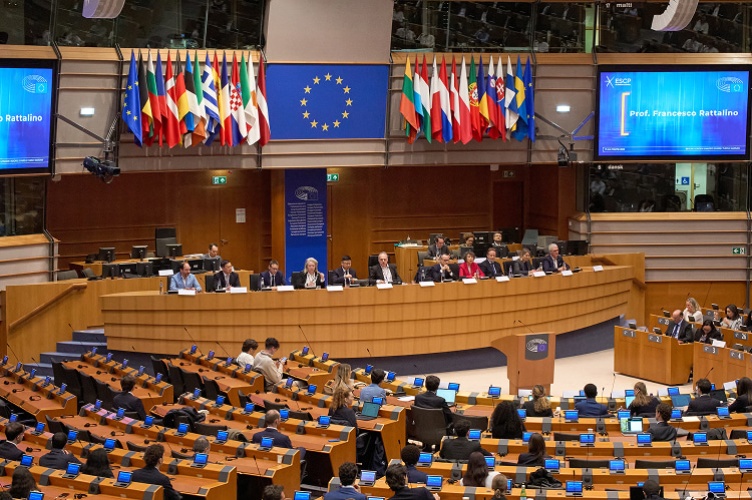
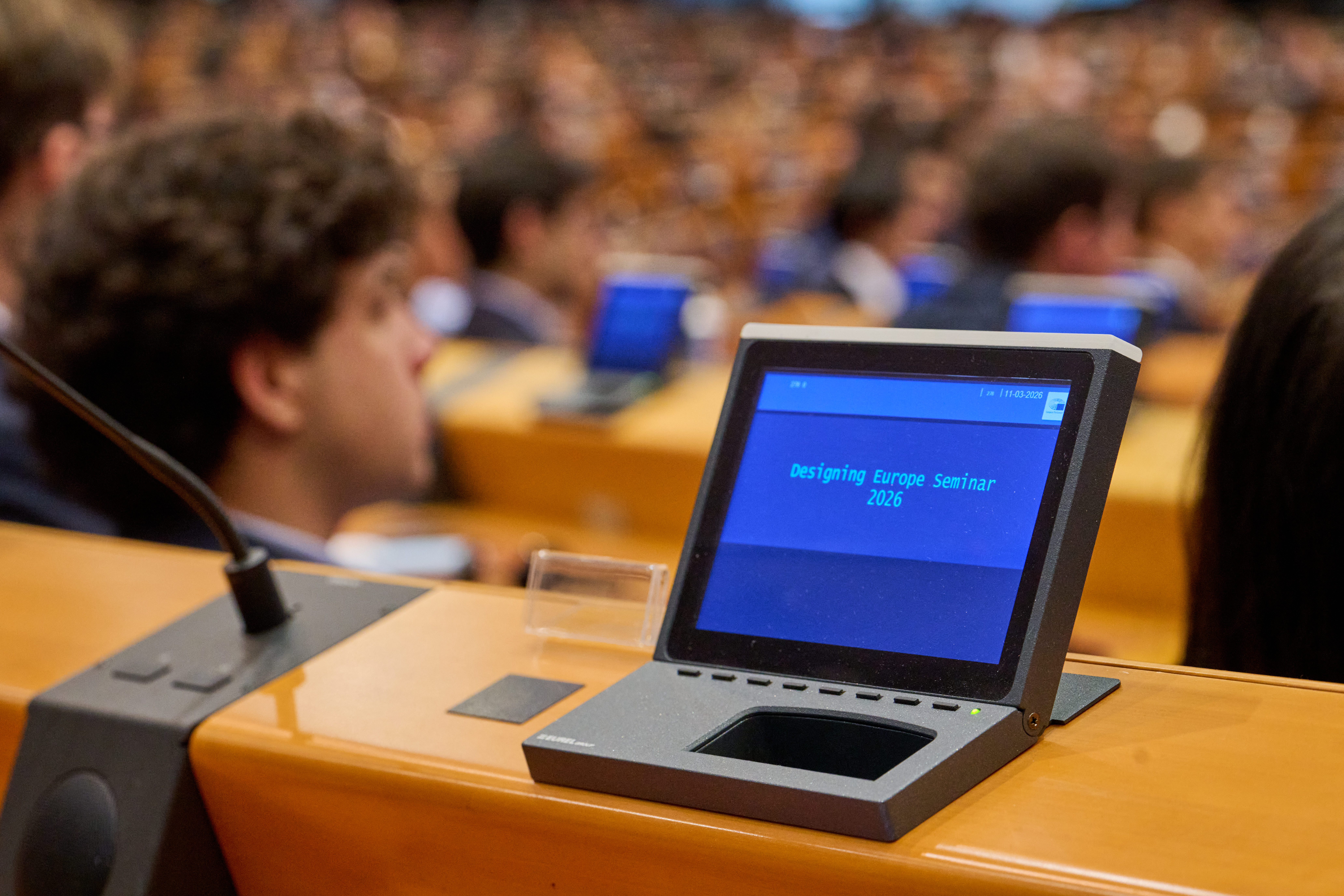
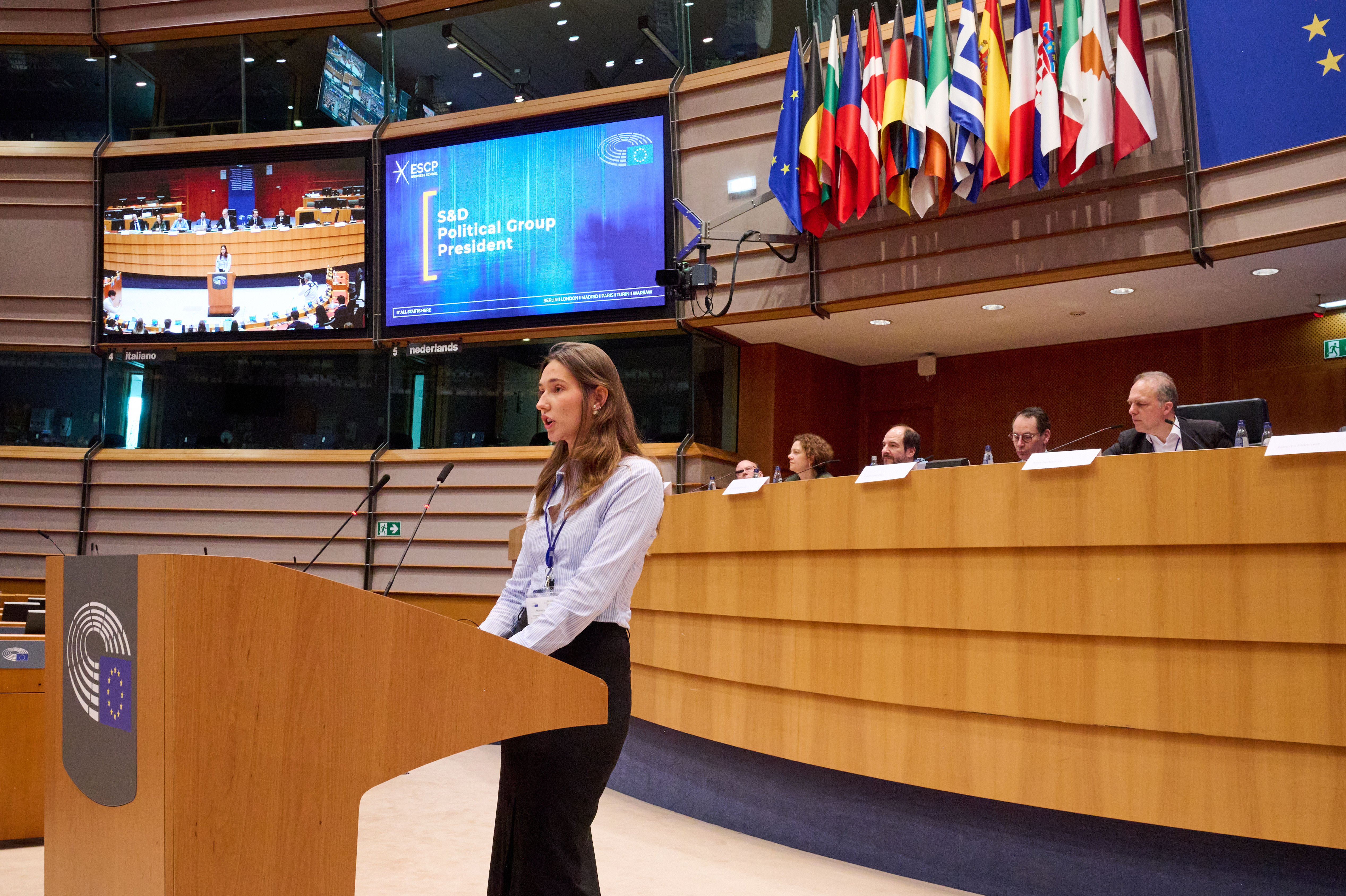
For 1,350+ ESCP Master in Management students, that question was central during Designing Europe 2026, the School’s flagship EU policy simulation which was held on 10-11 March at the European Parliament in Brussels.
Bringing together students from ESCP’s five European campuses — Berlin, London, Madrid, Paris, and Turin — the two-day seminar offered a rare opportunity to step inside the machinery of European policymaking.
Through negotiations, committee debates, and a plenary vote in the Parliament’s Hemicycle, students explored this year’s theme: “Europe’s Independence Moment: What Economic Strategies?,” a reflection of the major economic and geopolitical challenges currently facing the European Union.
From the classroom to the Hemicycle
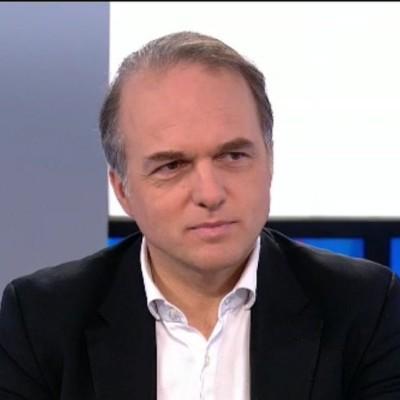
An immersive learning experience, Designing Europe introduces ESCP students to the functioning of EU institutions through a hands-on simulation of the legislative process. It is the culmination of a “learning by doing process” that Master in Management students began earlier this year shared Yves Bertoncini, Affiliate Professor at ESCP and pedagogical coordinator of the seminar.
Participants assume the roles of Members of the European Parliament, political groups, parliamentary committees, and stakeholder organisations. Working in delegations, they draft policy positions, negotiate amendments, and defend proposals in debates that mirror real parliamentary procedures.
The seminar opened with delegation workshops, where students worked with coaches and experts to develop draft resolutions on Europe’s economic strategy. Discussions focused on questions at the heart of today’s European agenda: how to strengthen industrial competitiveness, safeguard technological leadership, and balance economic security with sustainable development.
As in real European policymaking, compromise was central. Delegations representing different political priorities were required to negotiate, build alliances, and reconcile competing interests.
On day two in the Hemicycle, students representing business organisations, NGOs, and institutional actors presented their perspectives before political groups introduced draft resolutions and committees proposed amendments. The session unfolded through structured debates, negotiations, and votes, culminating in the adoption of a final resolution reflecting the students’ deliberations.
Today, you are not only simulating Europe, you are practicing responsibility.
 Yves Bertoncini
Affiliate Professor at ESCP and pedagogical coordinator of the seminar
Connecting business education and European policymaking
For ESCP, the Designing Europe seminar reflects the School’s longstanding commitment to European engagement, and the ever-growing importance of political literacy for future business leaders.
Future managers and entrepreneurs operate within an environment shaped by EU policies, regulation, and geopolitics. Understanding how those decisions are negotiated is therefore a critical leadership skill.
Francesco Rattalino, Executive Vice-President for Academic Affairs and Student Experience, framed the lesson in more human terms: “Politics is a profoundly human skill. What truly matters is learning how to disagree constructively and eventually reach consensus.”
That idea is becoming increasingly important to ESCP’s own vision of leadership in education. As the School looks ahead to the launch of the ESCP School of Governance by 2030, initiatives like Designing Europe point to a broader conviction: that future leaders will need to understand power as well as markets, institutions as well as strategy.
A European identity made tangible
The seminar also highlights ESCP’s uniquely European identity. With campuses across the continent and a diverse international student body, the School offers a learning environment that mirrors the collaborative spirit of the European project itself.
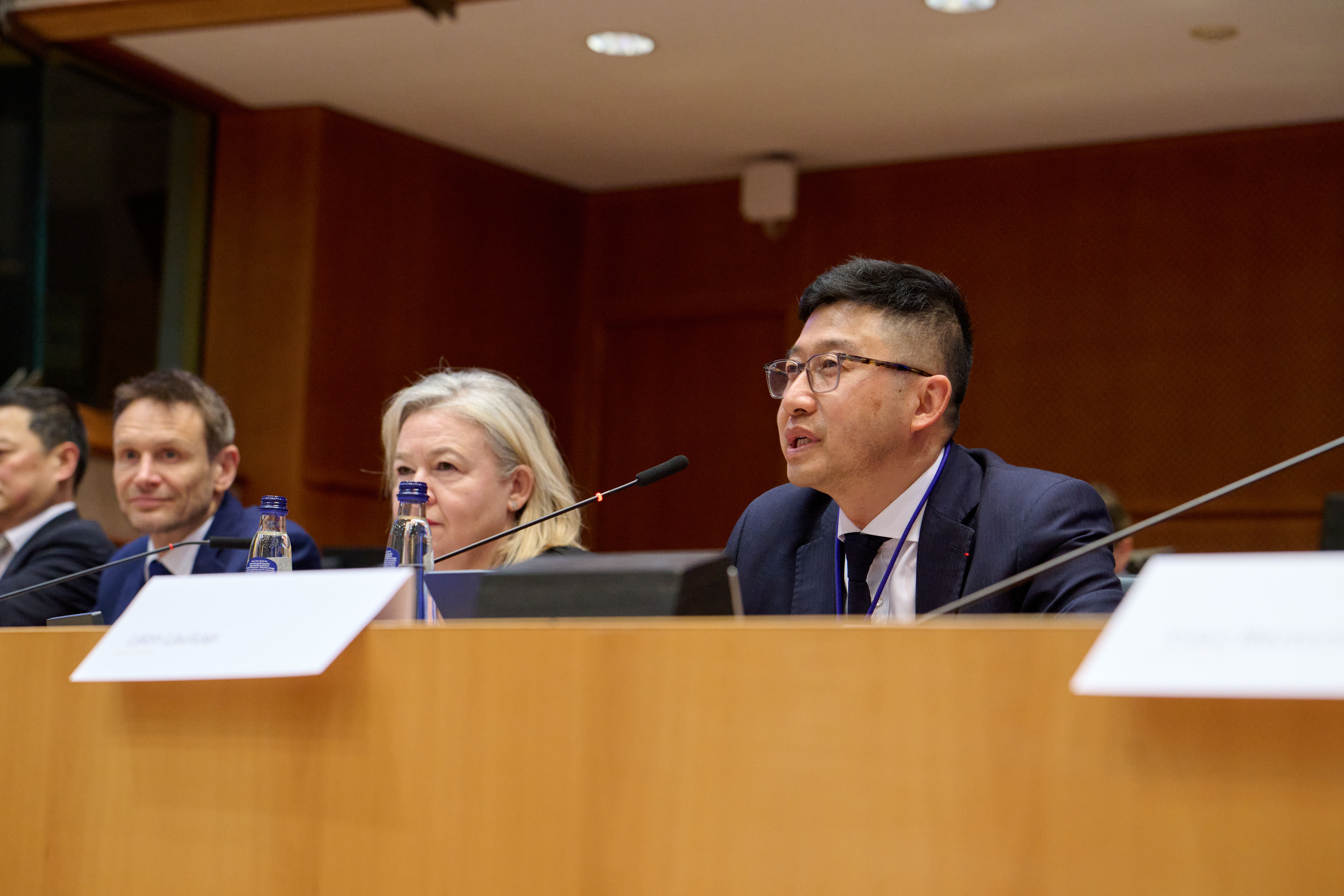
“At ESCP, Europe is our DNA,” said Dean Léon Laulusa, Executive President and Dean of ESCP. Opening the session, he highlighted the significance of the setting and the School’s European identity. “Look around you. This is Europe. This is what it means to be united in diversity — built on humanistic values such as tolerance, open-mindedness, and progress.”
For students, Designing Europe is a rare opportunity to enter the halls of European power in a way few others ever will, and to do so alongside peers from across the continent. Dean Laulusa underscored the singular nature of the moment. “Let me emphasise how exceptional this moment is. Very few institutions are granted access to this hemicycle every year. This is a testament to ESCP’s deep-rooted European identity.”
Preparing tomorrow’s leaders for Europe’s next chapter
At a time when Europe is redefining its economic strategy and global role, initiatives like Designing Europe play a vital role in preparing students to engage with these debates.
Beyond policy discussions, the experience encourages participants to develop negotiation skills, critical thinking, and cross-cultural understanding in a context that reflects the realities of European cooperation.
Designing Europe transforms theoretical knowledge into lived experience. Participants learn not only how European decisions are made, but why compromise, dialogue, and negotiation are central to the European project.
In the end, the seminar invites students to reflect on their own responsibility in shaping the future of the continent and how to become the kind of leaders who can successfully navigate the complexity ahead.
As Dean Laulusa put it:
The best leaders are not those who win debates. The best leaders are those who build consensus, drive progress, and create impact.
Campuses
Inside the Master in Impact Entrepreneurship
Turn your values into ventures that change the system
The world is shifting fast. Climate pressure, supply chain disruption, social inequality, tech acceleration - the challenges don’t stop. For the next generation of entrepreneurs, it's an opportunity to step up and lead. ESCP's Master in Impact Entrepreneurship is designed for ambitious graduates who want to do exactly that: not just adapt to change, but drive it.
Led by Academic Director Prof. Dr. Florian Lüdeke-Freund, Professor for Corporate Sustainability at the Berlin Campus, the programme is designed for future founders and changemakers ready to build ventures that create real impact. Below and in the featured video, he shares what makes this degree a launchpad for purpose-driven careers.
What Is Impact Entrepreneurship?
Impact entrepreneurship sits at the intersection of business, sustainability, and innovation. It goes beyond corporate responsibility or green marketing — it’s about building ventures that actively reshape the systems around them for the better.
Prof. Florian Lüdeke-Freund puts it plainly: "Entrepreneurs must not only be able to adapt to changing circumstances. We expect graduates to also become drivers of change, and of course drivers of positive change."
That means creating products and services that help consumers make more sustainable choices, supporting suppliers to integrate social responsibility into their operations, and building businesses that contribute meaningfully to sustainable development. The programme brings together three interconnected approaches to entrepreneurship: sustainability entrepreneurship, social entrepreneurship, and tech entrepreneurship.
Values-led innovation at the core
One of the programme's most distinctive features is its focus on values-based innovation. Before students learn how to build a business model, they examine what they actually stand for.
As Prof. Lüdeke-Freund explains, "The interesting question is, what kind of innovator, what kind of entrepreneur can I become based on my values? What kind of trajectory does this create for myself?"
For many students, these sessions mark a turning point — the realisation that sustainability isn't just about measurable outcomes, but about connecting your work to what you genuinely care about. The moment that connection happens, students don't just become better entrepreneurs. They become more purposeful ones.
Your two-year journey, mapped out
The Master in Impact Entrepreneurship is a two-year, full-time programme with three trimesters per year. Year 1 builds the foundations: strategic management, impact measurement, entrepreneurial finance, and intercultural leadership. Running alongside all of this is the year-long Impact Venture Development Project, which begins from day one. Working in teams, students move through ethnographic research, business modelling, and financial planning, culminating in a major business pitch (Prof. Lüdeke-Freund in the video discusses how students are coached by an actor on stage presence). The year closes with a study trip; the current cohort is heading to Norway.
Year 2 deepens expertise. Students choose electives, complete a Company Consultancy Project working on real challenges with real businesses, write a Master's thesis, and conclude with either an internship or their own independent business development project.
Berlin: Europe's entrepreneurship capital
With cohorts composed of 12- 15 different nationalities, cultural diversity heavily shapes the learning experience. Past cohorts have included students from India, Italy, France, China, the United States, Finland, and more.
This international mix is intentional and fully integrated into the curriculum. Through dedicated modules in intercultural management and targeted coaching sessions, students develop the skills to navigate and benefit from the real challenges and opportunities of working in multinational teams.
ESCP’s DNA: Learning across cultures
Location matters. Berlin offers one of Europe’s most dynamic startup ecosystems, especially in sustainability and tech-driven innovation. As Prof. Lüdeke-Freund puts it: "If you're really into innovation and entrepreneurship, Berlin, like Paris or London, is really an important place."
Studies show that 60% of student founders who begin their journey in Berlin stay to build their ventures here. The city’s energy, diversity and openness create the perfect environment to test ideas and scale impact. On campus, that spirit continues, with offerings like the Blue Factory, ESCP’s in-house incubator for students and alumni.
Watch the video above to hear directly from Prof. Dr. Lüdeke-Freund and a current student, and find out whether Berlin is where your entrepreneurial story begins.
Campuses
Masterclass
Cross-cultural Differences Between China and Europe
Experience a Global MiM class first hand
Join us for this insightful ESCP-CEIBS Global MiM Masterclass presented by the programme's Co-Director, Majid GHORBANI, of China Europe International Business School (CEIBS).
Professor Ghorbani will present a masterclass on the topic of cross-cultural differences between China and Europe, a subject at the heart of the new Dual Degree programme created in this partnership between ESCP and CEIBS business schools.
This masterclass will be exclusively available LIVE for attendees, and will not be recorded.
The session will be followed by a Q&A for the lecture as well as for the new Global MiM programme.
Location
Organiser: ESCP Business School
Online - Webinar
MapDate
Start date: 30/03/2026
Start time: 1:00 PM
End time: 3:00 PM
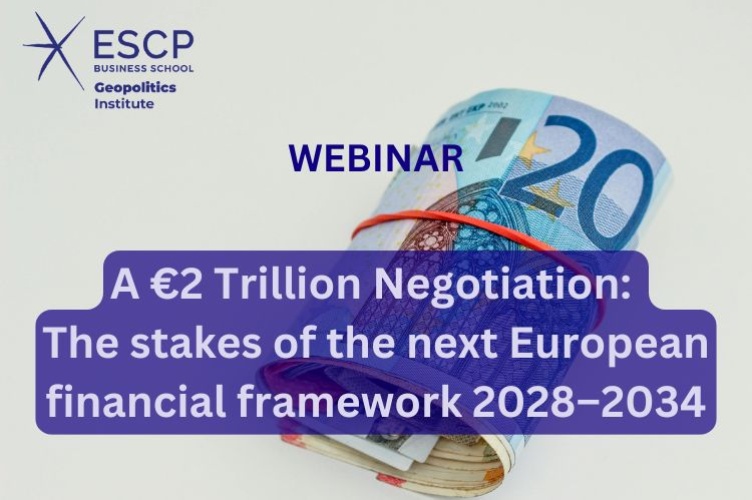
A €2 Trillion Negotiation: The Stakes of the Next European Financial Framework 2028–2034
Introduction
Negotiations on the next Multiannual Financial Framework (2028–2034), potentially reaching €2 trillion, are underway among EU Member States and with the European Parliament, following proposals presented by the European Commission in July 2025. These talks involve major political decisions: setting strategic priorities, defining the collective level of ambition, and shaping common policies, solidarity mechanisms, and instruments of action.
How much should be allocated? What should be spent? How will it be financed? Are new own resources on the table?
This negotiation comes at a time of rapid geopolitical fragmentation. In this context, the EU budget has become a political test: will Member States manage to agree on bold, shared priorities that reflect a common strategic vision? Or will the outcome be minimal compromises, reflecting ongoing disagreements over foreign policy, strategic autonomy, the climate transition, funding, or industrial priorities?
Is Europe ready to make deliberate political choices — and does it have the institutional and financial capacity to do so?
Maxime Lefebvre and Vanessa Strauss-Kahn, co-directors of the Geopolitics Institute at ESCP, will host:
- Nicolas-Jean Brehon, economist, Budget Advisor at the Robert Schuman Foundation and Honorary Advisor to the French Senate
- Jérome Creel, Professor of European Economics and Macroeconomics at ESCP
Together, they will provide a nuanced analysis connecting macroeconomic constraints, institutional dynamics, and geopolitical challenges.
Webinar will be held in French. Registration is mandatory.
Regesieration form
Location
Organiser: ESCP Business School
Online - France
MapDate
Start date: 18/03/2026
Start time: 6:00 PM
End time: 8:00 PM
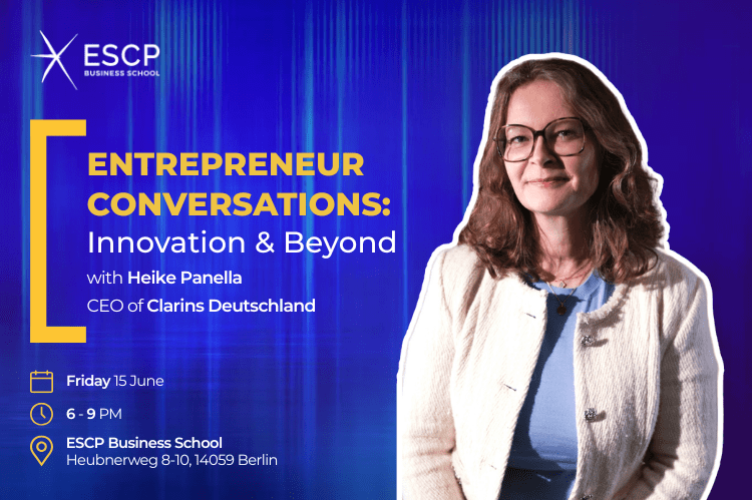
Entrepreneur Conversations
Authentic insights from Heike Panella, CEO Clarins Deutschland
Join us at the ESCP Berlin Campus for an inspiring evening featuring Heike Panella, CEO Clarins Deutschland
As part of our Entrepreneur Conversations series, we bring distinguished C-level leaders to share their entrepreneurial journeys, career paths, key challenges, and the exciting opportunities they have encountered while leading transformation across companies, industries, and cultures.
What to Expect
The evening will include:
- A 40-minute moderated conversation exploring leadership, innovation, and transformation
- A 20-minute interactive Q&A session with the audience
- Informal networking opportunities following the discussion
This event is open to everyone interested in Entrepreneurship, Leadership, and Innovation from ESCP students to senior managers and executives seeking inspiration for their next professional chapter.
Location
Organiser: ESCP Business School
Berlin - Germany
MapDate
Start date: 15/06/2026
Start time: 6:00 PM
End time: 9:00 PM
Inside the Sales 4.0 | MSc in International Sales Management
A conversation with Academic Director on why the programme is built for the future
What does it actually take to build a career at the cutting edge of business? The answer for ambitious graduates lies at the intersection of three forces reshaping commerce: the art of sales, the power of digital technology, and the complexity of global trade.
ESCP's MSc in International Sales Management was designed with that reality in mind. Led by Academic Director Prof. Dr. Christian Pescher at the Berlin Campus, this programme for those who are ready to turn that advantage to drive growth and success at any type of company or organisation.
Is sales just a part of marketing?
There’s often confusion about the difference between marketing and sales. Prof. Pescher explains it simply: “Sales is a function of marketing. You can’t really separate the two.”
Marketing includes branding, lead generation, and product configuration, among other things. Sales focuses on turning those opportunities into revenue. And that’s where impact becomes visible. “Sales management is how you basically finance an entire company. If the sales people do a good job, then money flows in and essentially, you have the ability to grow the company.”
In other words: sales drives growth. It keeps businesses moving forward, and is the key to success.
This master’s builds a strong foundation in both marketing and sales. You examine how strategic concepts translate into real client interactions, complex negotiations, and long-term business relationships. With this broader perspective, you’re equipped to step into roles where you can contribute strategically and create measurable value.
AI, digital sales & the human advantage
AI is changing almost every profession — so it's a fair question to ask whether sales will be affected. Prof. Pescher is confident. “Sales is one of the functions that will not be replaced by AI. It will be complemented by AI.”
Students of this programme will learn how to harness intelligent tools for meeting preparation, pipeline management, and customer insights, but in business, trust remains critical. “In the end, and particularly in B2B, the personal component will remain important,” he explains. Human dimensions of trust, persuasion, and relationship-building remain at the core of selling.
Career paths: more than just sales
Does specialising in sales management mean you’re locked into one career path? Not at all.
“It absolutely does not,” says Prof. Pescher. The skills developed — negotiation, managing relationships, audience insights, cross-cultural communication, and an expanding AI literacy component — translate across industries and functions.
Graduates go on to roles in key account management, consulting, entrepreneurship, and strategic business development. Some launch their own ventures; others join global corporations or boutique firms. The programme's alumni are as varied as the industries they enter.
Learning by doing, with real companies
Theory without practice only goes so far. The Sales 4.0 programme builds industry connections across nearly every curriculum module: guest lectures from executives and practitioners, group consulting projects with real companies tackling live business challenges, and a mandatory internship before graduation.
"The relationship with the companies is stronger than in most other schools," says Prof. Pescher. Theory gives students frameworks; practice teaches them how to adapt those frameworks to the unique demands of specific industries, markets, and clients. Together, they produce graduates who are ready from day one.
If you’re looking for more than a broad business degree — if you want a focused, future-oriented profile with global perspective and real commercial impact — The Sales 4.0 Master at ESCP offers a path designed to give you that edge.
Campuses
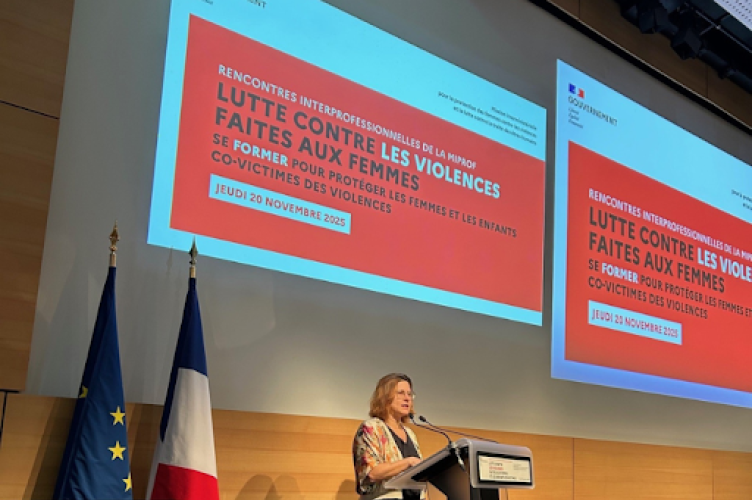
Episode 5
From the series “Standing together: ESCP community united against gender-based and sexual violence
Farid Medjoub (ESCP 20) asked Roxana Marcineanu (ESCP 05) to share her vision about gender-based and sexual violence
Roxana Marcineanu is a former French Olympic swimmer, the former French Minister of Sports, and Secretary General of the MIPROF (Interministerial Mission for the Protection of Women against Violence and the Fight against Human Trafficking). Farid Medjoub is Delegate for Women’s Rights and Gender Equality, Hauts de Seine French Interior Ministry, Member of the steering committee of the French University Sports Federation and of the steering committee of the Paris league of university sport, and Olympic Torchbearer for the Paris 2024 games.
Farid: Despite increased political mobilisation, gender-based and sexual violence remains widespread. In your view, what is still hindering the effectiveness of public action today?
Roxana: Let us begin by recalling that gender-based and sexual violence (GBSV) is consubstantial with patriarchal societies in which men have long exercised domination over women and children. Violence remains a central tool of coercion used to maintain this domination.
Feminist struggles have led to greater awareness and significant progress in just a few decades. When we consider that in the 1980s it was still possible to openly express pedocriminal attractions on television, and that it took until 2025 to establish that a woman is not consenting to a sexual act unless she consciously expresses her agreement and desire at every moment — and even until 2026 for the notion of “conjugal duty” to be definitively removed from our courts — we can appreciate how far we have come in recent years.
Victims’ voices are being freed: they feel more legitimate in reporting violence suffered in childhood, within relationships, in families, or in professional settings. This collective dynamic helps shift the shame onto perpetrators and break the silence.
Two main challenges remain: first, deploying all necessary resources to ensure comprehensive support for victims in their psychological and physical recovery, as well as in their legal and social proceedings; and second, prevention — by providing large-scale training for professionals in detection, reporting, and prevention, while informing citizens and educating children, particularly through relationship and sexuality education programmes in schools.
Farid: What is your role today as head of MIPROF (Interministerial Mission for the Protection of Women against Violence and the Fight against Human Trafficking), and what are your priorities in combating GBSV?
Roxana: MIPROF, created in 2013 by Najat Vallaud-Belkacem, is an interministerial mission placed under the authority of the Minister for Equality, Ms. Bergé. It has three main missions.
The first is to oversee the National Observatory on Violence Against Women. The Observatory analyses data from public statistics, government administrations, and specialised associations to report on the scale, manifestations, and mechanisms of gender-based and sexual violence. These publications aim to inform public decision-makers and civil society, since one cannot effectively combat a reality that is not precisely measured.
The second mission is to create and disseminate training tools for professionals in healthcare, security, social work, justice, youth work, sports, and child protection. The objective is to foster a shared culture of protection, develop the right reflexes, and promote protective professional practices.
Finally, MIPROF coordinates public policy to combat all forms of exploitation and human trafficking: sexual exploitation, forced criminal activities, labour exploitation, organ trafficking, and soon other purposes such as forced or early marriage.
Farid: As a high-level athlete, Olympic champion, and former Minister of Sports, you led reforms addressing violence in sports. Do you believe the sports world has truly changed its practices?
Roxana: When I took office as Minister of Sports in 2018, the existence of a culture of silence in sports was evident, although the full scale of violence was not yet measured. Risk factors were numerous: the presence of children, facilitated access to bodies, relationships of authority, and a culture that valorises pain.
Structural work was undertaken: strengthening the mandates of technical advisors, background checks on volunteers, increased reporting, training, and protection obligations for federations, and the creation of the “Signal-Sports” unit to process reports and enable rapid administrative investigations to remove perpetrators.
The momentum has continued, and protecting the integrity of athletes is now recognised as a core responsibility of the State. However, work on regulatory levers and the operational framework to make training mandatory had not been sufficiently developed. It was in this context that the training tool “Lilia” was created, now a key resource for training the sports ecosystem. While not everything is resolved, the sports world has moved ahead of other sectors.
Farid: If you had to identify one decisive lever to activate immediately to reduce GBSV, what would it be?
Roxana: We will succeed through coordinated, sustained action and strong political and societal commitment. But in my current role, I can affirm that training is an absolutely essential lever. When people have the right lens to detect violence, and the necessary training to feel legitimate in asking about it, listening to disclosures, and activating the appropriate mechanisms to protect victims and report perpetrators, it changes everything.
Of course, it is also crucial to provide a judicial and/or disciplinary response to reported or identified acts of violence. Combating impunity requires sanctions that are proportionate but effectively enforced.
Farid: What specific role can higher education and business schools play in transforming professional and managerial cultures regarding GBSV?
Roxana: Gender-based and sexual violence forms a continuum: it ranges from sexist insults to femicide and runs through all stages of socialisation — family, school, sport, public space, and the professional sphere. It also fits within an ideological continuum, where toxic masculinism intersects with other forms of hatred.
Work is being carried out in student environments to measure situations of violence and raise awareness of appropriate behaviour, particularly during social events. Education programmes on emotional, relational, and sexual life contribute to a coherent learning pathway centred on consent, respect for identities, and attentiveness to signs of distress.
In higher education — particularly in business schools — fully integrating these principles as core values would be highly relevant. Embedding them into curricula, making them a subject in their own right, and analysing their implications across disciplines would be innovative and forward-thinking. Real equality and gender parity are assets. Respectful relationships are a prerequisite for thinking, creating, producing, and performing better. This issue must go beyond CSR initiatives or one-off events and become a central component of education, both in substance and in practice.
Farid: In your view, how important is it to involve men and young boys in promoting equality and preventing violence?
Roxana: It is essential. It is important to recall one thing: the fight against gender-based and sexual violence is not a fight against men, even though nearly 100% of those convicted are men. It is a fight for gender equality, for respect for others, and for the protection of the most vulnerable — starting with our children and persons with disabilities.
Patriarchy has confined women and certain vulnerable groups within a system of domination that is obviously very comfortable for those who benefit from it — far beyond the perpetrators themselves. Yet some men are beginning to understand that a society shaped by toxic virility codes is also a prison for them. Things are changing. And precisely because progress is being made, masculinist movements and their reactionary ideologies are mobilising strongly to push back. All the more reason to remain vigilant, tolerate nothing, and continue training and educating from an early age about equality, consent culture, and respect for others.
Farid: Thank you Roxana. Indeed equality between women and men will truly progress only if men also feel concerned by it. It is not a “women’s issue”; it is a societal issue.
When men become involved, perceptions begin to change. Equality stops being a demand voiced by some women and becomes a shared and self-evident principle. It also sends a strong message to young boys: respect, fairness, and the rejection of violence should be part of what is considered normal.
Getting involved does not mean speaking on behalf of women. It means recognizing that equality is progress for everyone. A fairer society, where everyone can find their place without stereotypes or domination, is a balanced and stronger society.
Personally, I try to live by a simple principle each day: recognising people for what they contribute, supporting fairness, and never remaining indifferent to inequality.
Equality truly moves forward when it becomes everyone’s responsibility. And men have a full and important place in that movement.
Campuses
Related stories
News 20/11/2025
Interview
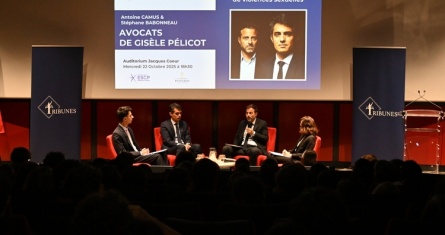
#1 Violence Against Women: Acting Where Pain Falls Silent
A conversation between Ghada Hatem (ESCP 11), founder of La Maison des Femmes in Saint-Denis (2016), and Louise Blin (Bachelor 2025 alumna and MSc in International Business & Diplomacy student)
News 10/12/2025
Interview
#2 How Tribunes, an ESCP student association, creates a space for students to learn, question, and commit to change
A conversation between Aurélie Dumond, Inclusion & Diversity Officer at ESCP and Ariane Bailet and Antonin Rousseau, ESCP students and members of the student society Tribunes.

News 22/01/2026
Interview
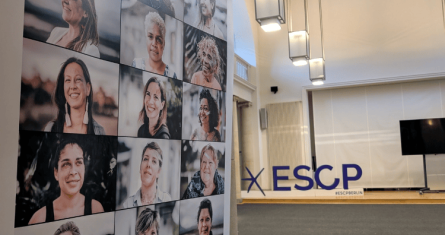
#3 The role of publishing in addressing gender-based and sexual violence
An interview where ESCP faculty member Isabelle Beyneix and alumna Marie-Pierre Gracedieu discuss publishing’s role in addressing gender-based violence, following the release of Mazan: An Anthropology of a Rape Trial—part of ESCP’s Standing Together series.
News 16/02/2026
Interview
#4 Art in action: sharing ESCP staff competencies and creativity in addressing gender-based and sexual violence
Sandrine Kiefer, Head of Internal Communications at ESCP, and Sabrina Saase, Health & Well-Being Manager at ESCP’s Berlin Campus, share their activism.
Building Confidence, Shaping Leadership, Opening Doors
Are you looking for your first job?
Can you clearly articulate your value and communicate it with confidence?
What kind of leader do you want to become?
Who is opening doors for you as you build your career?
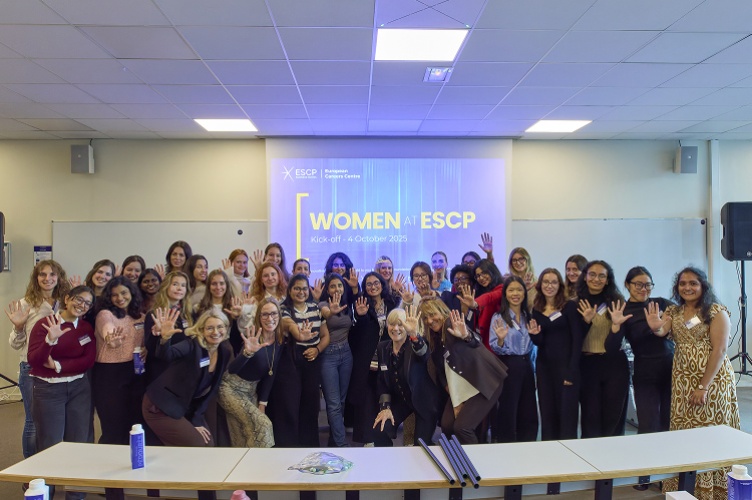
Following the success of our first edition, we are delighted to launch the second edition of Women@ESCP, an exclusive one-day seminar designed to strengthen female students’ employability and support their transition into the workforce.
This immersive and interactive programme will help you clarify your professional positioning, build confidence in how you present yourself, and develop a more strategic approach to expanding your network and accessing opportunities.
The seminar will be led by Sophie Vurpillot, Scientific Director of Women@ESCP, and co-organised with Isabelle Sthemer, ESCP alumna and networking expert, combining academic insight with real-world expertise for a truly impactful experience.
This initiative is led by the ESCP Careers Centre, in collaboration with the Alumni Association and the ESCP Foundation.
What to expect
- Interactive sessions on leadership and career strategy
- Practical tools to strengthen your voice and visibility
- Inspiring exchanges with ESCP alumnae and role models
- A convivial networking cocktail
Registration is now closed. Stay tuned for the Women@ESCP Fall 2026 Edition (starting October 2026). The programme is expanding across Europe, with an exclusive one-day seminar on each of ESCP’s five campuses. Registrations will open in July 2026.
Take the next step in shaping your leadership journey and expanding your professional network.
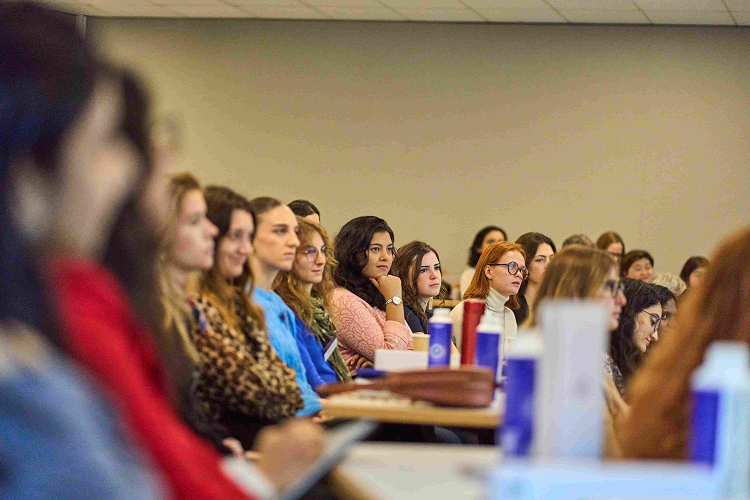
Agathe Dewitte, Master in Management (MiM) student, shares her experience.
If you would like to support initiatives like Women@ESCP, you can make a donation to the ESCP Foundation here.
Location
Organiser: ESCP Careers Centre, ESCP's Alumni Association, and the ESCP Foundation
Paris Montparnasse campus, 3 Rue Armand Moisant, 75015 Paris, Espace Moisant - France
MapDate
Start date: 28/03/2026
Start time: 8:30 AM
End time: 7:30 PM