
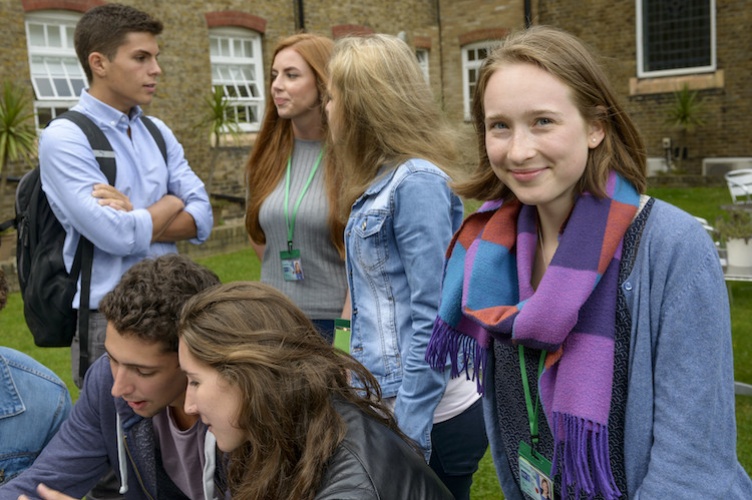
Interested in the Bachelor in Management at ESCP? Still wondering whether the programme is the right choice for you? You have the chance to meet our BSc student ambassadors online!
What you can expect from this session:
- Ask our 3rd year students everything that you have in mind about the BSc programme.
- Current BSc students, Anna, Magali and Yara, will share their ESCP journey with you, along with some tips about accommodation, student societies, student life and more.
Please register beforehand!
We are looking forward to seeing you there!
Location
Organiser: Berlin Campus
Online - Worldwide
MapDate
Start date: 24/07/2020
Start time: 5:00 PM
End time: 6:00 PM
At ESCP Business School we continue to work and take maximum care to implement all of the safety and hygiene protocols at our Madrid Campus to guarantee you a safe return to classes in September, adapted to this “new normality” and always maintaining the quality level that characterizes us.
We are thoroughly following all the safety, hygiene and public health protocols established by the different European, national and local authorities. As of today, we do not foresee major mobility limitations at the level of European students. Those from other continents may have to start classes in an online environment under our new AMBL methodology (Adaptive Model Blended Learning), and then continue on Campus once the initial restriction has been lifted. We are already increasing the distance by significantly reducing the capacity of the classes and we are extraordinarily reinforcing all aspects related to the cleaning and disinfection of spaces.
At the Madrid campus we have created, in record time, one of the most innovative pedagogical digitization models on the market in order to meet the current needs arising from COVID-19 and we are carrying out an intense process of re-adaptation of our educational model through a revolutionary methodology: our already mentioned “Adaptive Model Blended Learning”.
With our AMBL (Adaptive Model Blended Learning) methodology, we use technology as a means to reach you, our students, in a much more effective way. We want to make you live a different user experience. And all this regardless of the degree of confinement that COVID dictates. For us, the key is to create a storyline that keeps you “hooked” at all times, with a very strong interaction from the teacher and the Program Managers team, encouraging the use of collaborative tools that make you feel that you are part of a group and you are not alone. Currently, technology is practically a commodity, available to everyone, the differential is how it is used to motivate the student and keep him or her actively coordinated in the program they are studying. Therein lays the key.
Thanks to AMBL we are able to go from a pure face-to-face environment to a digital (online) environment or a hybrid model as a mixed solution between the two, in a few hours.
Regardless of whether classes begin in person or remotely, we can guarantee an international experience because our foundation is very solid and is based on 3 pillars:
- Internationalization and multiculturalism of the students in class. Depending on the programme, we can have between 10 and 25 different nationalities per class, reaching more than 60 nationalities in some programmes.
- Internationalization and multiculturalism of our faculty & teaching staff. We have 1000 teachers of 90 different nationalities in our own campus network.
- Internationalization and multiculturalism based on student mobility. All programmes require that our students study in at least 2 campuses in our network.
The main objective of our teaching model and our social mission is to always keep you at the center of all our activity. It is precisely this focus on the student that has led us in recent years to grow quantitatively in Spain by 400% and present a very positive financial situation to continue growing; and qualitatively, by contributing to educational innovation and better positioning of the school in the Rankings and international accreditations.
Campuses

Before the black swan event of Covid-19, most companies measured their progress with an attitude that gravitated towards “the more the better”.
Looking back in history, all black swan events move the roots of institutions and force them to seek solutions from within; this crisis is no different, accelerating the shift towards “do better with less” as companies are left with no choice but to find a minimalistic approach.
During the Great Depression of the 1930s, people weren’t able to afford mayonnaise. This led to a decline in Kraft Foods Company sales and their development of emulsifying technology to create the famous Kraft’s Miracle Whip, a fluffy mayo-like spread. This new product was cheaper and healthier. Consumers could afford it during the crisis and the brand even made profit. Fast-forward to the financial crisis in 2008, which lowered incomes and created a subprime crisis where people were forced to share assets in the form of shared rooms or pooled cabs. This not only increased the popularity of Uber and Airbnb, but also created a social shift among people towards sharing assets in spite of owning them. These methods of delivering more value at lower costs to more people is the foundation of ‘Frugal Innovation’.
Frugal innovation emphasises accessible, affordable and quality solutions. It takes design thinking at a product/service level and system thinking at a macro-level. It brings out the disruptive ways of product development by leveraging modern technologies to deliver at lower costs. Though this innovation is bulletproof, the implementation always stood as a question mark for companies as it involved simplifying organisational structures by eliminating bureaucracy, empowering employees, and cultivating a flexible mindset in the workforce. But the post-Covid-19 crisis will change this picture.
Here are the top five frugal trends that will have a big impact on the survival of companies during this crisis:
1.Work from Home (WFH)
This has always been a topic of debate for organisations, but with the current situation every industry has a chance to check their productivity with remote working. A lot of industries have responded positively towards it: Mark Zuckerberg took this opportunity to request 50% of Facebook employees work from home over the next five to ten years. This would help Facebook limit offices to 25% capacity. Besides saving on infrastructure this would also help companies to increase transparency through documentation, to improve performance measures by evaluating the quality of work, and to move out of their local market employee dynamics and salary expectations. For the employees, it will save their commute time and costs. This flexible work culture would also give the employees freedom to work at hours they prefer.
According to Infosys management, working from home also helps building social capital. They would like to leverage this crisis by building an administrative structure that digitally works together while being apart. Another IT company joining Infosys’s spirit is TCS, which plans on only 25% of its employees working from its facilities by 2025. This shift has left co-working places thinking about their relevance post-crisis. Berlin-based company Coworkies launched the first ‘Hack Coworking Hackathon’ in London to explore the future of coworking spaces and develop ideas to sustain their business. Afterall, embracing the WFH experience with a proven rate of productivity and no footprint is giving companies a window to jump into this new normal and make a pass on crowded corporate settings.
2. Re-commerce
With the economic challenges the world is facing right now there is going to be a huge change in customer purchase behaviour. We are in a price-sensitive market, but the silver lining is that the aspiration of consumers is the same. They want the same products but have to compromise because of their sentiments on savings. At the same time there is a production slowdown for companies as everything is in standstill. Before Covid-19, research suggested that 51% of consumers will spend more on second-hand items in the next five years and 15% of luxury-market sales already come from the second-hand market due to social shift among customers regarding sustainability. This market will now grow more rapidly due to the gap between supply and demand as well as the affordability factor among audiences, and re-commerce companies will take advantage of this opportunity. Other companies are likely to leverage and introduce a circular supply chain in their industries to end the traditional cycle of take, make, and throw away, which is an economic dead-end. This traditional cycle always comes with the struggle of raw materials cost, volatility and pollution. The future lies in saving resources and building a more sustainable brand with the social shift to a mindful shopping attitude.
3. Co-creation
The life-cycle of a product these days is far smaller than before. The common question that companies have is “can we give another kick at the can?” resulting in extensive redesign and improvement of the same service and product. Sometimes the new versions work, but when they don’t big companies like Blackberry and Nokia lose their market share over a period of time.
Customer loyalty is not guaranteed in this forever evolving market. 58% of businesses are shifting towards co-created projects to drive successful innovations with less investment on R&D, at the same time creating more touchpoints in the customer’s journey. With the changing times in this crisis, co-creation will not only help the company to understand consumers better for their next move but also give a chance for a shift from brand-driven to fan-driven companies. This will result in making customers more loyal to the brand and more active in its future. Examples like digital native beauty brand Glossier helps us understand the importance of using cult following for co-creating innovations that are by the people and for the people. The old way to interact with customers might give us satisfactory ratings, but co-creating gives birth to an immortal brand that can survive future crises.
4. Digital Native Vertical Brands (DNVB)
The world lives digitally on phones; your life is in your hands and so are digital-native vertical brands. These brands are born on the internet but, unlike e-commerce, control their own distribution. With the upcoming recession, people will be more willing to buy products from local brands to improve the country’s economy. Local companies will take this opportunity to make themselves available digitally. DNVB are the only brands that grow at Amazon speed and are cheaper for the customers as companies don’t have high intermediary costs: an example such as Casper launched in 2014 and is already valued at $1bn. Contrary to any e-commerce, DNVB invests on a zero-sum market from the beginning and hence brings in a better margin. Warby Parker launched as a DNVB, but with the increase of demand and customer base they expanded to retail commerce and now has 115 stores.
DNVB is expected to grow enormously, empowering small companies with great ideas to make a physical space in the life of customers via digital. With fewer capital investments due to the economic crisis, companies would find it easier to dive in and be part of DNVB, the future model of unified commerce.
5. Blockchain Technology
Blockchain technology has been lying in the back office till now and hasn’t been used to its full potential. This crisis is a redefining moment for blockchain revolution. With the World Economic Forum releasing a Blockchain deployment toolkit, organisations can accelerate their economic rebound in the wake of Covid-19.
The toolkit would help maximise the benefits and minimise the risks of technology. Blockchain provides a public independent digital record – a Distributed Ledger Technology (DLT) – that helps big companies like Mastercard and Amazon as well as small farmers interact with the same data without the risk of any alteration, thus equally availing the benefit of data to everyone. The cost of implementation is also flexible as blockchain is a feature-dependent technology. IBM Blockchain Ecosystem is one of the first to bring in blockchain technology as an initiative to change the world of businesses and to tap and share data of unserved markets. Through this initiative the company has partnered with 500+ clients to scale new sustainable business models and solutions. In the near future more companies will be partnered over blockchain, making co-creation easier, safer, smarter, transparent and more profitable to supply chains with added benefits of no legal processes and paperwork.
All the above innovations are highly likely to become necessary to stay relevant and successful in this falling economy. They focus on future dominance of frugal models that bring in the much-needed bottom-up changes within an institution. It paves a way to bring in solutions with less resources, more sustainability, higher quality and larger impacts. Most importantly it creates a safe space for open innovations where ideas from any corner of the world can compete in the wider confluence of globalisation without huge capital investments.
Though we are fighting the global health crisis in solidarity, we can recover better together by building partnerships and choosing frugal solutions, coming out stronger, more integrated and better able for challenges in the future.
References:
- History of Kraft Foods Company.
- Harvard Business School article- What frugal innovators do
- ET Now news
- Artur Lapinsch Blog
- Quartz Article
- The Gateway to Retail 4.0- NRF 2020 by Bearing Point at ESCP Business School
Portia is an MSc in Marketing & Creativity student. Feeling inspired by her blog? To follow in her footsteps, check out ESCP's Creative Marketing programmes:
Campuses
![© Financial Times [copyright]](/sites/default/files/styles/event_news_une/public/2020-07/FT_Festing_0.jpg)
Campuses
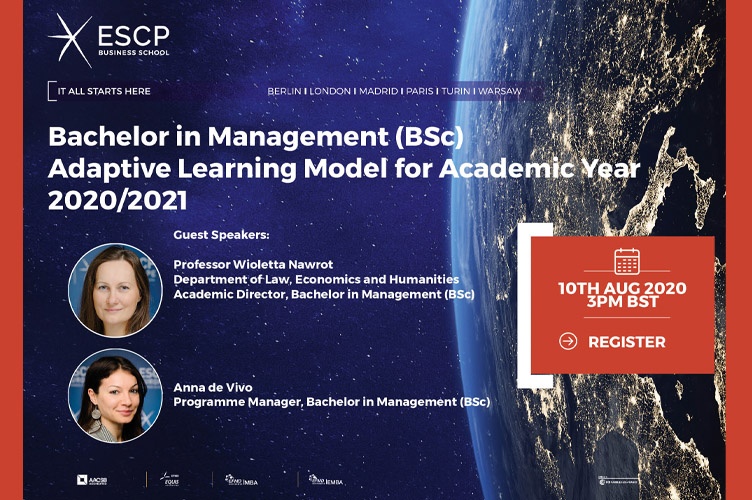
Everyone at ESCP Business School is working hand-in-hand to prepare for the safe return of students on campus for the start of the 2020-2021 academic year, and with over 7,000 students its biggest intake yet!
We strongly believe that the future of our School lies in a phygital approach to the best learning experience, which combines digitalisation and on-site activities. In line with its global Brand and Size strategy, ESCP is massively investing in digital equipment across its six European campuses, while remaining a place of physical exchanges, networking, face-to-face interactions and bonding.
In this Webinar, Anna De Vivo, Programme Manager of the Bachelor in Management (BSc), will present ESCP London Campus' new blended teaching method, our Academic Year Calendar 2020/21, and happily answer your questions LIVE at the end of the session.
Prof. Wioletta Nawrot, London Campus Academic Director of the Bachelor in Management (BSc) Programme and Assistant Professor in the Law, Economics and Humanities Department, will also be present to introduce this special online event.
Participants

Anna De Vivo
Programme Manager - Bachelor in Management (BSc)

Prof. Wioletta Nawrot
Academic Director - Bachelor in Management (BSc)
Location
Organiser: ESCP London Campus
Online - Worldwide
MapDate
Start date: 10/08/2020
Start time: 3:00 PM
End time: 4:00 PM

Campuses
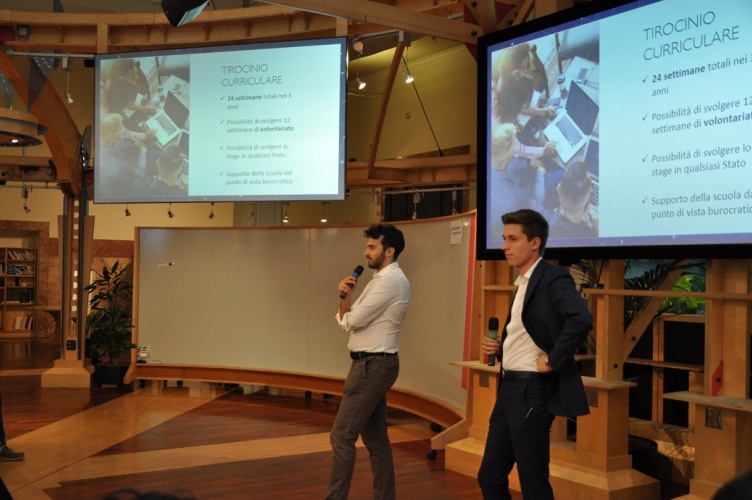
On Tuesday, July 28, at 5.30 pm, we are glad to invite BSc incoming students and their families to the event dedicated exclusively to them.
We understand how challenging and important it is for parents to support their children in this life-changing experience. Therefore, we have organised this event to share with students' families useful information in order to manage this transition at its best.
The event will be held online and will be introduced by a welcome speech by ESCP Turin Campus Dean, Prof Francesco Rattalino.
Throughout the meeting, you will have the chance to:
- Discuss our programme, our new adaptive pedagogical model and engage with student ambassadors;
- Learn about our dedicated Career Service;
- Speak to our Accommodation Service officer;
- Ask any questions you might have about documentation for registration, financing your studies or applying for visas.
The meeting will be held in Italian.
We look forward to meeting you!
Location
Organiser: ESCP Turin Campus
Online - Worldwide
MapDate
Start date: 28/07/2020
Start time: 5:30 PM
End time: 7:00 PM
Related stories

News 14/12/2023
Le Parisien / Challenges / Figaro Rankings
ESCP’s Bachelor in Management (BSc) ranks 1st in France
In the ranking by le Parisien / Challenges ESCP is ranked first out of 13 criteria, including international, selectivity and professional insertion
Berlin
London
Madrid
Paris
Turin
Warsaw

News 17/03/2020
Turin News
Bachelor students become real business consultants
172 ESCP Bachelor in Management students worked side by side with 23 companies selected by Réseau Entreprendre Piemonte. The fourth Collective Projects confirms the success of this innovative programme.
Turin
In these challenging times of confusion and uncertainty, be aware of the dynamics of the market and be able to anticipate the future trends is crucial to success.
The companies who are capable of turning crisis into opportunities will lead the change in this fast-changing world.
Food and Beverage is a fascinating and vibrant sector, particularly committed to combining tradition and excellence with innovation and a cutting-edge marketing approach.
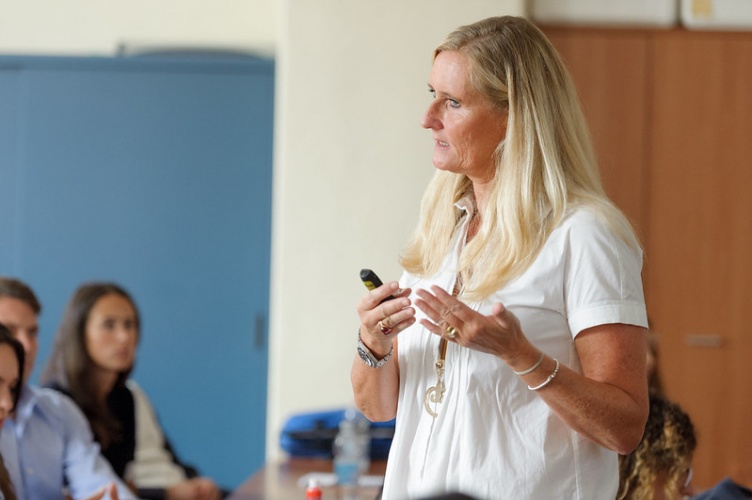
Understanding this is decisive to succeed in the industry. This is why Affiliate Professor Regina Brix, Academic Co-Director of the Master in International Food & Beverage Management and Marketing & Strategy Expert, hosted the online Masterclass "New Trends in the Food and Beverage Sector". She invited Michelle Vandamme, Project Lead Global R&D at Barry Callebaut Group and IFBM Alumna (Class of 2017), to discuss the newest marketing tendencies and gave some impactful insights about significant trends and changes due to Covid-19 and sustainability issues.
Prof Brix talked about the evolution of marketing in the last 30 years, which went from selling to making the world a better place: from a Product-centric Marketing to a Consumer-oriented Marketing while in recent time is emerging a Value-driven Marketing that has a totally different approach.
Special attention was devoted to sustainability issues, given that packaging and food waste are creating a strong concern for the consumers.
Prof Brix observed as Covid-19 crisis is giving us many challenges but at the same time a chance for change. Among the several opportunities, we can highlight: going digital with the exponential growth of e-commerce; companies need to be even closer to the consumer, implementing safety, trust and support; gaining back trust in global brands and much more.
Michelle pointed out the importance in her path of professional growth of the MSc in IFBM, especially of the company project and the many testimonials and confrontations with top managers of the sector to better understand what is going on in the market.
After the presentation, there was a meaningful discussion between the speakers and the audience during the Q&A session. The speakers had the chance to dive deeper into the topics that were more interesting for the participants.
The online masterclass gathered together about 200 people, from prospective students and students to alumni and managers. The webinar was a great opportunity to get a taste of ESCP teaching methodology and to discover more about the MSc in International Food & Beverage Management.
Campuses
Related stories
News 31/03/2020
Turin News
Company Consultancy Project a resounding success in the F&B sector
The Master in International Food & Beverage Management provides its students with an interesting challenge thanks to the Company Consultancy Project: a research study that deals with a real business problem proposed by leading companies of the F&B sector.
Turin

Event 07/07/2020
Online Event
MSc IFBM - Discover ESCP Turin Campus: Student life, Career Service and Job Opportunities
The Turin Campus invites the incoming MSc in International Food & Beverage Management students at this Online Info Session. On the 27th of July 2020, from 5.00 p.m, meet Turin Campus' Student Affairs and Career Service officers!
Turin

News 23/06/2020
Turin News
MIM Alumnus Pietro Luigi Ghigo has key role in Italy’s F&B expansion in Asia
In recent years, Italian companies have embarked upon a process of international development aimed at tapping into new markets, especially in Asia, and many Food and Beverage firms are in the forefront of that expansion. One of the Alumni of ESCP Business School has played a key role in that growth: Pietro Luigi Ghigo, Master in Management Alumnus, Class of 2009, and Asia Regional Sales Manager at Lavazza.
Turin

News 24/03/2020
Turin News
Matteo Frescobaldi is among the Italian #forbesunder30, ESCP alumnus and 30th generation of a family firm with 700 years of history
Matteo, Master in European Business alumnus, class of 2012, is the youngest member of the thirtieth generation of Marchesi de Frescobaldi, a family firm with seven hundred years of history.
Turin

News 05/05/2020
Turin News
MIM Alumnus Romolo Ganzerli recognized in the Italian #forbesunder30
Forbes Italia has released its annual “100 Under 30” list. We are delighted to see among these young disruptors ESCP Alumnus Romolo Ganzerli, cofounder of MammaPack, in the Retail category. He has been selected as one of the young leaders who are on the fast track for rethinking our relationship with e-commerce.
Turin

News 13/03/2020
Turin News
Two ESCP Alumni have given life to their first dream street food startup: Uagliò
A few months ago, two ESCP Alumni, Carla Ferrari and Gennaro Generoso, opened Uagliò, a new concept for a Neapolitan pizzeria, where customers can sit and watch the pizzas being made with only the best ingredients.
Turin
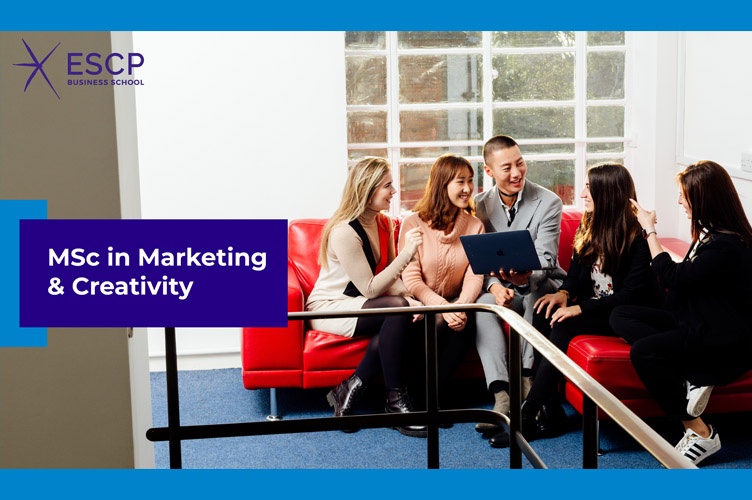
The MSc in Marketing & Creativity online information session is a great opportunity for you to learn more about the programme and discover how it may help achieve your career objectives.
Register your place now to discover:
- The unique curriculum and why it is particularly relevant to the current and, most importantly, future marketing job markets
- Projects students are working on throughout their four terms in London & Paris
- The key skills and competences you will obtain during this master
- The employment opportunities upon graduation
- What to expect on the admissions day and useful tips for your online application
- Information on fees and scholarships
Your questions are answered live by the Programme Co-Directors and the recruitment team!
This event takes place on Tuesday 21st July at 5pm (BST). Register your place
Participants

Prof. Kamran Razmdoost
Academic Director

Prof. Daniela Lup
Academic Director

Viktorija Nikitina
Marketing & Recruitment Manager
Location
Organiser: ESCP London Campus
Online - Worldwide
MapDate
Start date: 21/07/2020
Start time: 5:00 PM
End time: 6:00 PM