
What is the impact of the COVID-19 crisis (if any) on companies’ financial statements? Should it be recorded on the Financial Statements of 2019 (that are going to be prepared and approved in the first half of 2020) or only in the 2020? What is the impact on the evaluation of a company’s assets, liabilities, inventories, etc.?
Financial statements are regularly and periodically disclosed by companies to provide financial information useful to existing and potential investors, lenders and other creditors in making decisions relating to providing resources to the company itself (for example, investing buying its stocks). Moreover, financial statements should provide a “true and fair” view of the company’s financial position, cash flows and financial performance. Financial statements are prepared following accounting rules and standards.
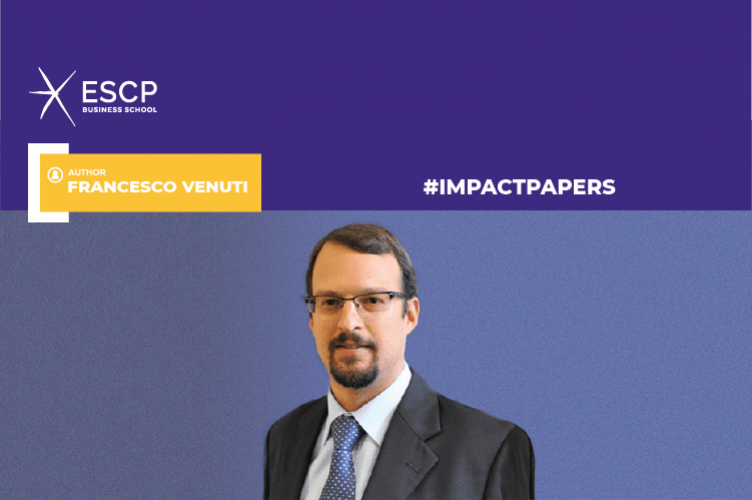
Assistant Professor Francesco Venuti, and his co-authors Associate Professor Gladie Man Ching Lui and Associate Professor Paul Pronobis, in the paper “Accounting implications of the COVID-19 outbreak”, provides an overview of the major challenges CFOs face in the light of the current COVID-19 crisis when preparing their financial statements. In particular, CFOs need to consider the magnitude of disruption caused by the outbreak to their business operations and adequately disclose the information about those assets and liabilities that are subject to significant estimation uncertainty. Furthermore, the question arises whether the outbreak represents an event before or after the end of the recent reporting period (Financial Year 2019) which needs to be discussed in the (current) financial statements of 2019. Also, CFOs need to revisit the accounting for fair value estimates, expected credit losses (ECLs), impairments, and other assets. Finally, the CFOs should carefully assess whether these events or conditions may compromise the company’s ability to continue as a going concern (i.e. to continue its business activity).
This paper is part of the first series of impact papers produced by the school’s faculty on “Managing a Post-Covid19 Era”.
The ESCP Impact Papers are meant to help business and society following this unprecedented pandemic and are aimed at providing insights into management knowledge that is applicable to not only practising managers, but also other stakeholders, namely the European community, students and society.
If you would like to find out more, please click here to our latest impact paper discussing the topic above in more depth.
Campuses
Related stories
News 02/06/2020
PUBLICATION
First impact papers meant to help business and society following this unprecedented pandemic
Pramuan Bunkanwanicha, Régis Coeurderoy and Sonia Ben Slimane introduce the very first series of impact papers produced by the school’s faculty on “Managing a Post-Covid19 Era”.
Berlin
London
Madrid
Paris
Turin
News 28/07/2020
Impact Paper
Two sides of the same coin: Why entrepreneurs can transform the crisis into business opportunities to create more impactful and long-lasting ventures
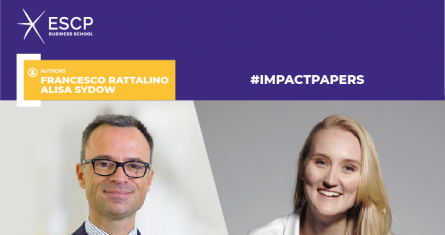
Professor Francesco Rattalino and Assistant Professor Alysa Sydow, authors of “Two-sides of the same coin: why entrepreneurs can transform the crisis into business opportunities to create more impactful and longlasting ventures”, explain why entrepreneurs can transform the COVID-19 crisis into business opportunities for long-lasting ventures.
Turin
News 20/08/2020
Impact Paper
Freedom & vulnerability: How people develop new skills in an unexpected work environment
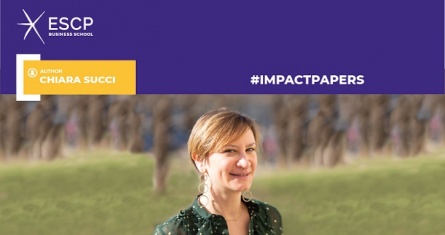
Associate Professor Chiara Succi, in the paper “Freedom & vulnerability: How people develop new skills in an unexpected work environment”, in particular focuses on the set of soft skills developed by people to face the many challenges on a personal, social and methodological level.
Turin

Co-written by Bianca Bosatra & Dana Bennani
The COVID-19 outbreak has drastically affected the fashion and beauty industries on a global scale: both have shown declining growth rates. Among the many factors that have negatively impacted these sectors are the closing of numerous production units and stores, travel restrictions, and the furlough of up to 80% of the workforce.
Consumers are mainly concerned about safety and hygiene; in a recent survey conducted by First Insight, 65% of women said they would not feel safe trying on clothes in fitting rooms during the pandemic. It has also brought the issue of sustainability in fashion and cosmetics to the forefront. Kate Heiny, Director Sustainability at Zalando SE, revealed that, “Nine out of ten Generation Z consumers believe companies have a responsibility to address environmental and social issues”. This will force companies to change their businesses to adapt to the new normal.
The global emergency has also triggered disruptive innovations and enabled them to move rapidly from marginal application to mainstream adoption. Under pressure to find innovative and quick solutions for their customers’ often unprecedented needs, businesses have had no choice but to put into practice creative ideas that blend digital technology and the human touch. As stores and activities reopen, the challenge is to decisively address concerns through seamless and integrated omnichannel strategies. By rethinking customer journeys and exploring their new jobs-to-be-done, they can optimise customer experience and maximise acquisition, conversion and retention.
As part of their team assignment for the Omnichannel Management module, ESCP Business School students from the MSc in Marketing & Creativity and MSc in Marketing & Digital Media analysed how innovative omnichannel strategies can help companies support customers through their new-normal decision journeys.
Double-Down on Safety
The pandemic has drastically transformed the way products are sold. The closing of physical stores as well as concerns about physical contact, safety and hygiene disrupted product testing and in-person consultations. Social distancing is likely to remain the norm. Therefore, the role of a store itself is shifting towards an upgraded shop window with fewer physical interactions. According to an article by McKinsey, “The priority for many customers today is to get in and out of a store as quickly and safely as possible.” In many countries, governments have imposed hygiene rules as businesses reopen, but companies can also take matters into their own hands. By adding new touchpoints, retailers can win over customer fears without altering the overall service quality.
Different options can be considered to reduce both the frequency of store visits and the time spent in store. “Click-and-collect” – ordering online and picking up in-store was already a thing before the pandemic, but some companies have pushed it even further by adding e-reservations for a private consultation to ensure the right fit, and allowing customers to touch and feel the product in a way that makes customers feel safe and protected. It also helps by limiting the numbers in-store and the potential for the spread of the virus. This system also makes the shopping experience feel more exclusive: fewer items are displayed, thereby guaranteeing a higher hygiene level, while staff engage through increased in-store interaction. Exploring the entire customer journey, payment should also feel safe, providing wider payment options – including cashless transaction systems and machines – to limit physical interaction and allaying consumer fears.
The Importance of Digitalisation and Personalisation
A study made by Accenture reported that 91% of consumers are more likely to shop with brands who recognise, remember and provide relevant offers and recommendations, while 83% of consumers are willing to share their data to enable a personalised experience. However, traditional shopping pre-COVID-19 doesn’t sound as attractive as before. According to McKinsey, the trends that had begun before the pandemic will likely accelerate with direct-to-consumer e-commerce, such as brand websites, shoppable social-media platforms, and marketplaces. As a consequence, the digital shopping experience is brought to the fore. The use of advanced technologies is most likely to be adopted by a majority if it sustains a personalised experience.
The learning process of AI helps interpret data gathered about customer shopping habits to make the right recommendations on when they’ll be shopping through a brand’s app or website. The use of this data can also have a significant impact in-store and support the solutions already mentioned, aiming to reduce the number of items showcased or support new features such as e-reservation. The installation of AR mirrors can be an interesting alternative to physical try-on. It’s already a trending topic in the beauty industry with different brands implementing this tech. By crossing customer data about shopping habits and actual beauty analysis, we can easily imagine a virtual store to experience products in a completely personalised experience. For instance, Lancôme Perfect Match is using VR to allow customers to try on products virtually as a simple photo is enough to have their skin and facial characteristics analysed.
The creation of these virtual spaces is also a way to reallocate the workforce usually in store, to keep doing their job, but this time online. These practices can be expected to be democratised to the fashion industry, too. The avatar digital representation of customers is already a reality, while digital fashion collections are entering the market. How long before customers can try on items virtually through the digital version of themselves?
Digitalisation helps to maintain high safety measures and promise a more accurate and faster result, both on- and offline. In addition to gathering important customer data, the solutions implemented tend to reinforce the exclusive feeling of consumers who experience personalisation.
Shopping Experience Requires Human Interaction
If the question of customer experience has been addressed, there is also the need to engage them at a similar level prior to the pandemic. The sanitary crisis has forced a drastic redefinition of social interactions with our peers, but also among our experience as customers. Shelley Washburn, president of GS Marketing, a leading automotive marketing firm, said that: “Companies must strike a tricky balance between automation and human interactions. When people are frustrated, they will want to talk to human beings — not a chatbot or an automated answering system […] To build sustained customer advocacy, your digital solutions must deepen — not replace — the human element.” Besides, according to Motista research, customers who have an emotional relationship with a company have a 306% higher lifetime than customers who don’t. Therefore, the business solution lies in the incorporation of the human touch in the “new” customer journey, minimising frustration through safe and direct interactions.
During the crisis, many companies have repositioned themselves to remain relevant and started to create virtual spaces for their customers to engage both with each other and the brand. Opening the room for group discussions moderated by employees, individual consultancy sessions to talk about styling, or even having make-up tutorial sessions has become part of the brand experience. Training employees to the basics of virtual inclusion and support helps emphasise the feeling of belonging to a community and will potentially reassure consumers in their purchase decisions. The path remains the same: they enter a safe space, get the information they need from a qualified employee, and finalise their visit with a purchase; it’s simply transcribed online.
The entire supply chain has been impacted by the pandemic, including shipping services. To the same extent, having less employees in store can be an opportunity for others to, for instance, deliver orders in fewer hours, even personally.
Today, personalisation equals taking care of the customer. Technology might simplify the access to personalisation, but if it’s not fully integrated to a brand experience, it might feel extremely generic and lose its added value. Companies have a great opportunity to differentiate themselves from competition by integrating their human savoir faire to their customer’s digital path.
Push for Strategic Decisions
There are common features that the pandemic has brought to consumer behaviours: people tend to have a limited social life since human contact is reduced. Spending more time at home means consumer desire to purchase new clothes and beauty products has been negatively affected. This poses the question of how companies can keep sales growth. The solution still lies in the reconsideration of the “new normal” consumer decision journey.
Since many customers are forced to spend double their usual time at home, they are more prone to improve their interior design rather than to purchase fashion they cannot wear. To compensate for the social limitations of consumers, companies have the option to push their sub-brands and complementary products, as was the case for Gucci or Zara Home.
Similarly, as mentioned earlier, consumer concerns already existing before the crisis mayhave been strengthened and their jobs-to-be-done have evolved; taking advantage of the slow down in production to focus on reshaping the business formula can also be a strong advantage to strengthen relationships in the long run. More than offering tailored experiences, it might be the perfect time to explore opportunities to diversify and develop new activities.
The COVID-19 crisis undoubtedly created change that has affected the whole value chain. It has also opened the doors for companies to try out new things – internally and externally – with both customers and suppliers. Constituting the root for a deep change, it has been disruptive for innovation, with companies exploring the opportunities to use technology advances through services by introducing these to consumers who, pre-COVID, might have been the last to adopt them. Digitalisation and personalisation trends are normalising, which creates the obligation for businesses to implement strategic decisions. While doing so, companies will have to reach new sustainability standards, as the crisis reshaped the expectations of consumers – as well as investors.
References
- https://hbr.org/2020/06/what-will-the-retail-experience-of-the-future-look-like
- https://www.businessoffashion.com/articles/intelligence/the-state-of-fashion-2020-coronavirus-update-bof-mckinsey-report-release-download
- https://www.inc.com/rhett-power/how-to-create-authentic-human-interactions-in-an-automated-world.html
- https://www.cosmeticsdesign.com/Article/2020/03/18/19-ways-the-beauty-industry-is-responding-to-CoronaVirus
- https://www.savills.fr/blog/article/298614/commercial-property/how-worldwide-travel-restrictions-are-set-to-impact-the-global-luxury-retail-market.aspx
- https://www.intheblack.com/articles/2020/05/25/disruption-innovation-and-covid19
- https://www.globenewswire.com/news-release/2020/04/15/2016351/0/en/Impact-of-COVID-19-on-the-Global-Cosmetic-Industry.html
- https://www.mckinsey.com/industries/consumer-packaged-goods/our-insights/how-covid-19-is-changing-the-world-of-beauty#
- https://www.prnewswire.com/news-releases/new-report-shows-covid-19-puts-sustainable-fashion-at-crossroads-301049937.html
- https://customerthink.com/what-are-the-new-fashion-trends-started-after-coronavirus/
- https://yourstory.com/2020/07/covid-19-business-impact-transition-strategy?utm_pageloadtype=scroll
Bianca Bosatra and Dana Bennani are MSc in Marketing & Creativity students. To follow in their footsteps, check out ESCP Business School's Marketing & Creativity programmes:
Campuses
By Valerie Alia
As a person who is constantly eager to evolve, some of my greatest passions are my job and professional life.
I started by completing my Bachelor in Graphic Design. I kept myself busy by going in and out of different internships and, post-graduation, found a full-time job. Despite working in that field for about four years, I always felt like something was missing. It was time to make one of those “big decisions” in life and operate a change in jobs, mindset, and lifestyle. I was born and raised in Lebanon and, even though it was scary, I felt like it was time for me to leave; to step out of my comfort zone to be able to excel where I belong.
As a designer, I was constantly in contact with the marketing departments of the companies in which I worked. Being a creative is great: you get to express yourself. However, I realised that my voice wasn’t heard the way I wanted it to be. Executing someone else’s vision was not as fun as being able to build the whole story. This is why I decided to get into the marketing world. But how would a person with no marketing experience get a job in that area? Getting a Master degree seemed like a good solution. I came across the ESCP Business School MSc in Marketing & Creativity, and it ticked a lot of boxes. Here are the three main reasons I decided to enrol:
The Courses
The list of topics and modules is extremely diverse, covering all the essentials of the modern marketing world. From finance to creative branding, the programme has it all. Coming from a creative background, I needed this to catch-up with the basics, and I acquired the necessary knowledge; but since the programme focuses on creativity marketing, it also completely breaks down the traditional approach. This is where my experience made it easier for me to think in a non-corporate way. As a person who has not been in contact with numbers for over five years, having modules like finance and statistics hasn’t been a piece of cake. Numbers are not my passion! However, now I can say that I understand their role and importance in a business. Surprisingly, I also found that you can be creative in interpreting numbers, too. After linking my purely creative background and my new skills, my mind might still be functioning as a designer but the ideas come from a marketer’s perspective.
The Diversity
Our class consists of 62 students from 30 nationalities and many different professional and ethnic backgrounds. I find it interesting when people highlight different points based on their train of thought, life experience and expertise. On a daily basis we are divided into small groups to complete our assignments and, just as in a professional context, you don’t get to choose who you’ll be dealing with – you just have to make it work. This really enlightened me and made my thought processes change for the better. We may face a few misunderstandings and conflicts sometimes, but this is all part of the process and some great ideas can also come out of these disagreements.
As a person from the Middle East, I kind of lived with a few taboos. I was able to learn about different cultures and beliefs that allowed me to have a different point of view, not only in marketing but also in my life. I also had the opportunity to positively challenge the preconceptions of my peers about my culture.
Connecting Marketing and Creative Design
The saying “it takes two to tango” works perfectly here. Marketing is considered the “brains” behind campaigns, with designers implementing the vision. Without one another, the project or service provided would not be 100% conveyed the way it is supposed to. Design is my thing and, as I’m evolving I am now aware of what it takes to be on the other side. Having a Master degree in Marketing is raising my credibility to target more strategic roles. I aim to become the person handing over a brief to a creative team, and my background will help me to leverage their work as I know what designers are capable of doing. I finally will have the legitimacy to suggest the little twist to make a real difference.
I am clearly at a turning point in my life, both professional and private. I operated the changes I needed to leverage my credibility as a designer and become a creative marketer. I am now confident enough to know that I can work on a campaign from scratch to the final delivery. I am halfway through the MSc in Marketing & Creativity programme and I can see myself in five years working in an advertising firm, or with a well-known company as a brand manager. I’m also going through an intense human adventure: my classmates are peers I consider family. We have actually become closer despite the physical distance the COVID-19 pandemic has forced upon us. We are at different ends of the world, but still manage to have video calls, laugh together, or just check up on each other to make sure all is well. Obviously the programme’s academic credibility is real, but it also creates a warm ambiance for anyone who has the chance to enrol as a student, and I was lucky enough to be part of this experience.
Valerie Alia is an MSc in Marketing & Creativity student. Feeling inspired by her story? To follow in her footsteps, check out ESCP Business School's Marketing & Creativity programmes:
Campuses
The spread of the Coronavirus epidemic, aside from huge human and financial losses, has given a strong acceleration towards the adoption of Smart Working globally.
The sudden and forced transition to this model, without any prior preparation, made its potential and its limits emerge in this emergency.
ESCP Business School detected the need for Human Resources managers to meet other professionals to share thoughts and ideas, to discuss best practices and critical aspects, in order to find possible points of improvement.
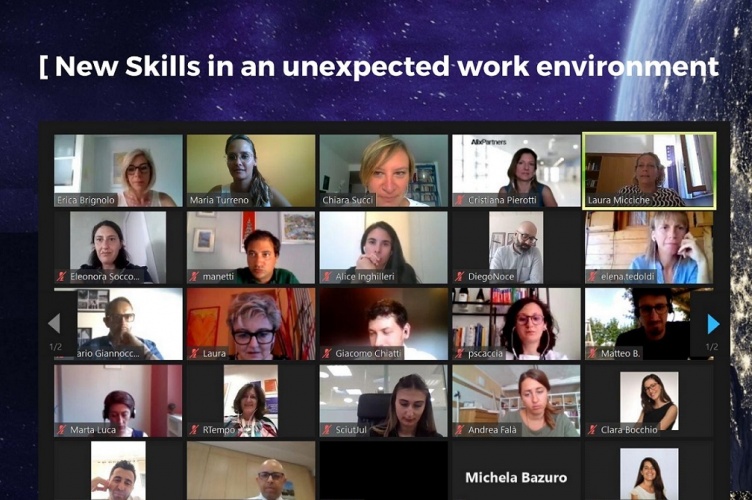
Chiara Succi, Professor of Organisational Behaviour, with the ESCP Turin Campus Corporate Relations team, organised a virtual round table bringing together more than 20 HR Managers from the ESCP corporate network, to discuss relevant “hot” topics in these challenging times.
The event, moderated by Prof Succi, aimed to share experiences and lessons learned in the COVID-19 era and start a fruitful discussion between HR managers to understand the main implications.
This emergency represents an opportunity to observe how people react to disruptive events. Out of their comfort zone and in this unprecedented situation, employees and managers developed many new soft skills, while they were facing challenges on a professional, personal and social level.
Many organisations sent a survey to their employees to understand how they feel about working from home and how they expect the organisation of their work will change in the future.
The participants identified the key elements that will characterize the "new normal", as such work flexibility, agile teams and a learning culture.
The feedback from the group gave everyone a great picture of the current situation, offering a few suggestions on what to do to reshape the organisation and implement best practices as we head into a brand-new era for human resources management.
Campuses
Related stories

News 20/04/2020
Turin News
Leading Change: people management in times of crisis
In these challenging times, how should companies, entrepreneurs and people orient themselves to manage processes and teams better? Professor Francesco Rattalino, ESCP Turin Campus Dean, answered this crucial question in the exchange he had with Alessio Cini, Partner at Soges Executive Search, in a webinar about People Management with a specific focus on emergencies.
Turin
News 03/06/2020
Turin News
ESCP brings on a paradigm shift in Executive Education with the innovative online programme “Drive Change Through Crisis”
In life as in business, everything starts with choices and ESCP has chosen to be stronger than the pandemic by offering a pioneering series of masterclasses on innovation and change during the crisis.
Turin

News 27/03/2020
Turin News
ESCP launches the Diversity and Inclusion project
ESCP launches the new Diversity and Inclusion project, which will strengthen the core values of the Business School. It is an important initiative by the ESCP Turin Campus, which will involve the entire staff. Administrators, Affiliate and Full Faculty Professors will go back to school to develop Diversity Management skills.
Turin
In this webinar, we will take you through the application process step by step, from registering on our website to receiving an offer letter, including:
- Application Portal: a walkthrough of your online application, step by step
- Supporting Documents: what documents do you need to upload?
- What should your personal statement look like?
- Top Tips for your Interview
We will go through the list of documents you need to provide and give you some tips for your CV and personal statement.
As always, you can ask your questions and we'll answer them live!
Location
Organiser: Berlin Campus
Online - Worldwide
MapDate
Start date: 30/07/2020
Start time: 5:00 PM
End time: 6:00 PM
![© Jane Snyder - Pixabay [copyright]](/sites/default/files/styles/event_news_une/public/2020-08/virtual-meeting.jpg)
Campuses
Entrepreneurs play a critical role in our market economies and are typically described as the powerhouse of a national economy, activating and facilitating economic activity. We know that entrepreneurs can initiate economic development by breaking up its current status through innovations. More recent studies describe entrepreneurs also as microinstitutional agents that promote institutional bottom-up change, such as the support of market functioning and the facilitation of market access.
Therefore, entrepreneurs are a critical determinant of the level of success, growth, and prosperity in economies. Effects that become even more important in a moment of crisis, a crisis that we are currently all facing due to the COVID-19 pandemic.
Professor Francesco Rattalino and Assistant Professor Alysa Sydow, authors of “Two-sides of the same coin: why entrepreneurs can transform the crisis into business opportunities to create more impactful and longlasting ventures”, explain why entrepreneurs can transform the COVID-19 crisis into business opportunities for long-lasting ventures. They describe three must-haves of an entrepreneurial mindset, namely:
1) prosocial and balance a plurality of values,
2) be a founder of a business that you would like your grandchildren to see,
3) show empathy with the people in your network to navigate through stormy times,
that help us to tackle the fundamental structural faults of our economic system.
This paper is part of the first series of impact papers produced by the school’s faculty on “Managing a Post-Covid19 Era”.
The ESCP Impact Papers are meant to help business and society following this unprecedented pandemic and aimed at providing insights into management knowledge that is applicable to not only practising managers, but also other stakeholders, namely the European community, students and society.
If you would like to find out more, please click here to our latest impact paper discussing the topic above in more depth.
Campuses
Related stories
News 02/06/2020
PUBLICATION
First impact papers meant to help business and society following this unprecedented pandemic
Pramuan Bunkanwanicha, Régis Coeurderoy and Sonia Ben Slimane introduce the very first series of impact papers produced by the school’s faculty on “Managing a Post-Covid19 Era”.
Berlin
London
Madrid
Paris
Turin
News 06/08/2020
Impact Paper
Accounting Implications of the COVID-19 Outbreak for CFOs
Assistant Professor Francesco Venuti, and his co-authors Associate Professor Gladie Man Ching Lui and Associate Professor Paul Pronobis, in the paper “Accounting implications of the COVID-19 outbreak”, provides an overview of the major challenges CFOs face in the light of the current COVID-19 crisis when preparing their financial statements.
Turin
News 20/08/2020
Impact Paper
Freedom & vulnerability: How people develop new skills in an unexpected work environment
Associate Professor Chiara Succi, in the paper “Freedom & vulnerability: How people develop new skills in an unexpected work environment”, in particular focuses on the set of soft skills developed by people to face the many challenges on a personal, social and methodological level.
Turin
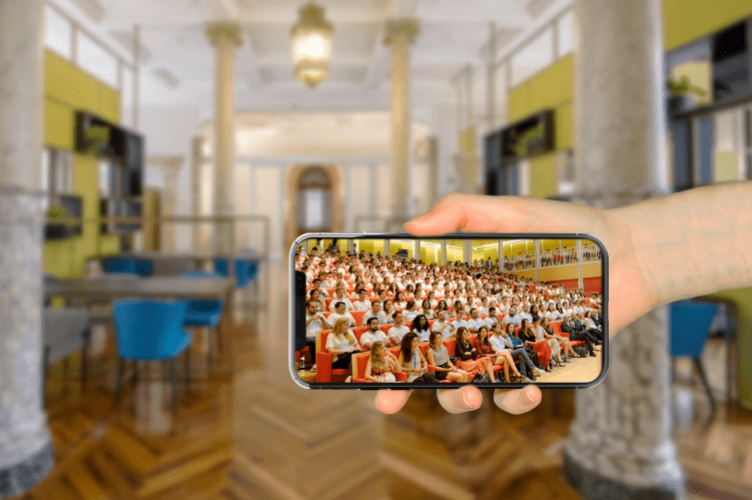
ESCP invites you to participate in the Opening Ceremony of the new Academic Year on Friday, September 18.
ESCP Turin Campus will celebrate the kick-off of 2020-2021 AY with its first phygital event.
Due to the coronavirus pandemic, the Opening Ceremony 2020 goes virtual for ESCP students, who can participate in the event from the safety of their homes, while the ceremony itself will be held at Copernico Torino Garibaldi.
In life as in business, everything starts with choices. And it is by making such choices that we give meaning to business by defending our point of view on the future and our management style.
In welcoming new students, the President of the Italian campus Prof. Francesco Profumo and the Dean Prof. Francesco Rattalino will discuss the theme "The Choice" with important personalities from the business world.
The new Academic Year will be opened by a welcome message by Prof. Léon Laulusa, Directeur général adjoint, Executive Vice-President, Dean for Academic and International Affairs, and four outstanding and motivational speeches by:
Bachelor in Management - BIM Patron
- Marco Bulgheroni - Senior Vice President Global Product Category Food Preparation - Electrolux
Master in Management - MIM Patron
- Mauro Giacobbe - President and CEO - Facile.it
MSc in International Food & Beverage Management - IFBM Patron
- Matteo Lunelli - CEO and President – Ferrari Trento
MBA in International Management - MBA Patron
The Opening Ceremony will livestream on YouTube on Friday, September 18, at 4.30 pm (CET).
Join our YouTube Livestream
Participants

Marco Bulgheroni
Senior Vice President Global Product Category Food Preparation - Electrolux

Mauro Giacobbe
President and CEO - Facile.it

Matteo Lunelli
CEO and President – Ferrari Trento

Donatella Pinto
Head of HR Comau and Global Chief Learning Officer FCA Group

Francesco Profumo
President ESCP Turin Campus

Francesco Rattalino
Dean ESCP Turin Campus

Léon Laulusa
Directeur général adjoint, Executive Vice-President, Dean for Academic and International Affairs
Location
Organiser: ESCP Turin Campus
Online - Wordlwide
MapDate
Start date: 18/09/2020
Start time: 4:30 PM
End time: 6:30 PM
Related stories
News 14/07/2020
Turin News
New Trends in the F&B Sector due to Covid-19 and sustainability issues
Affiliate Professor Regina Brix, Academic Co-Director of the Master in International Food & Beverage Management and Marketing & Strategy Expert, hosted the online Masterclass "New Trends in the Food and Beverage Sector". She invited Michelle Vandamme, Project Lead Global R&D at Barry Callebaut Group and IFBM Alumna (Class of 2017), to discuss the newest marketing tendencies and gave some impactful insights about significant trends and changes due to Covid-19 and sustainability issues.
Turin

News 14/04/2020
Turin News
A new and exciting corporate partnership with Facile.it
To honour ESCP Turin Campus’ latest corporate partnership, we interviewed Mauro Giacobbe, CEO of Facile.it, Italy's leading price comparison company for insurance, financial services, utilities and internet providers.
Turin

News 14/12/2023
Le Parisien / Challenges / Figaro Rankings
ESCP’s Bachelor in Management (BSc) ranks 1st in France
In the ranking by le Parisien / Challenges ESCP is ranked first out of 13 criteria, including international, selectivity and professional insertion
Berlin
London
Madrid
Paris
Turin
Warsaw

News 26/07/2019
Ranking
ESCP ranks 2nd worldwide in Eduniversal Ranking of the Best Masters in Food and Beverage Management
For its first participation in this ranking, the ESCP Master in International Food and Beverage Management programme has been ranked 1st in Europe.
Paris
Turin

News 28/10/2019
Ranking
ESCP ‘s Master in Management programme ranks number 5 worldwide
The ESCP Master in Management delivers a unique student experience through a pan-European multi-campus management programme. Located in six European cities - Paris, London, Madrid, Berlin, Turin and Warsaw, ESCP is also ranked number one in Germany, Spain, Italy and Poland.
Berlin
London
Madrid
Paris
Turin
Warsaw

Campuses
![© Getty [copyright]](/sites/default/files/styles/event_news_une/public/2020-08/Venuti_Covid.jpg)
Campuses