
Campuses
ESCP is proud to announce the release of the Look’Around 2020, helmed by Professors Aurélien Acquier and Valentina Carbone, the co-Research Directors of the ESCP-Deloitte Chair in Circular Economy.
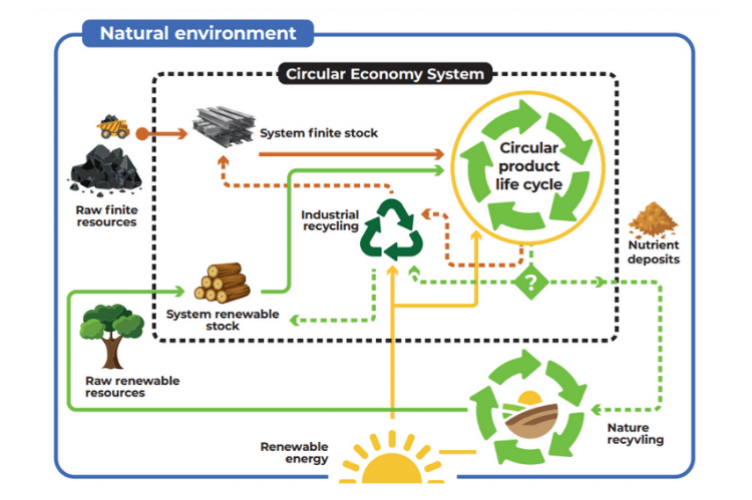
The Look’Around is a compilation of 12 articles written by ESCP professors and doctoral students over the past 18 months on topics related to the circular economy, an economic system based on eliminating waste and reusing resources. In demonstration of the strong collaboration between academia and industry, each article was complemented by the rich insights and practical experiences of Deloitte consultants.
The articles touch upon different themes within circular economy and take varied approaches in their discussions and analyses. They are organised around three themes. The first two articles lay down the founding principles of the circular economy, while exploring the plurality of associated business models.
A set of targeted case studies follows, focusing on companies and ecosystems that are using the circular economy. Finally, the latest articles question several cross-cutting challenges of the circular transition. What role is there for technologies? What forms of regulation are needed? What role is there for management training institutions and how can we reinvent our educational models in the light of the major ecological challenges? What type of institutional changes would they be likely to accelerate the transition to the circular economy, following the Covid crisis?
Download the Look’Around here. Happy reading!
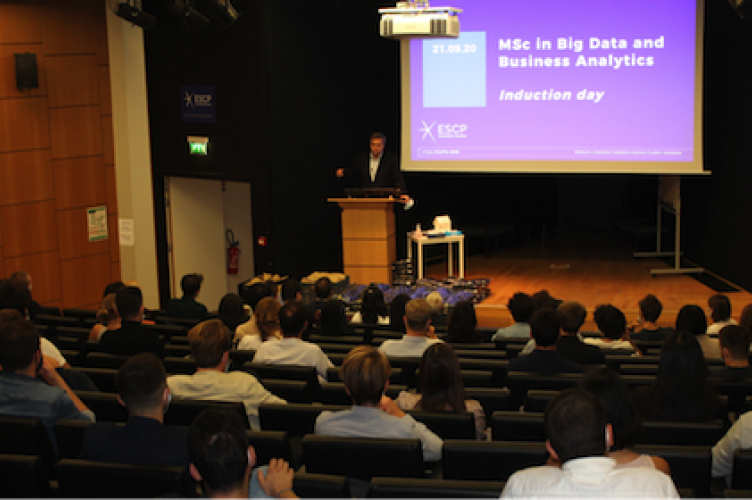
A great start for the 2021 cohort of the MSc Big Data and Business Analytics!
On Monday 21st September the 88 students met with EY's Vanessa Jolivalt (Alumna 2005, Partner) and Franck Chevalier (EMEIA Data & Analytics Managing Partner - Financial Sector), who are supporting their Class.
In line with the objective to constantly conquer new talents to prepare for the future, EY already partnered with the Jean-Baptiste Say Institute, extending its collaboration and concluding an agreement with ESCP Business School - under the aegis of its Foundation - to support the MSc Big Data programme.
For Professor Wei-Zhou, scientific director of the programme with Louis-David Benyayer, Affiliated Professor, co-scientific director of the programme, “at ESCP, we believe it is essential to build bridges between companies and the academic world. When students meet companies it is always an enriching experience. This collaboration shows once again how generous companies are in offering field experience."
The one-year programme is a degree with an international track in two countries (Paris - Berlin) with a truly trans-national and international spirit. During the programme students will have the opportunity to strengthen their skills through courses covering Business Intelligence, Data Science, Data Modeling, Business Process, Managerial Decision Making and various Analytics areas. The programme covers both traditional enterprise scale business intelligent systems and the state-of-all big data deep learning and predictive mechanisms. The courses are divided in 3 main groups (Business Analytics, Data Science and Business Applications) with lectures, seminars, tutorials, case studies, workshops, projects, computer-based activities, group work...
The idea of data creating business value is not new. However, the effective use of data is now becoming the basis of competition. To become more competitive and more efficient, companies need to look at the broader set of related risks, incorporate more data sources, use better tools to allow them to move to real-time or near-real-time analysis and increase data volumes. We suggest that organizations need to consider the following key questions when assessing their readiness to truly start benefiting from big data. Many questions arise, related to governance, management, privacy, usage, security...
For sure, students will make the most of the experience offered by EY, who for many years have helped countless global organizations to successfully deploy the right people, processes and technologies around data issues and solutions.
“We are particularly pleased to sponsor the 4th generation of international students from up to 25 different countries. This unique 18-month master, ranked 4th worldwide in the QS World University Rankings, develops future managers ready to help business data-driven transformation we need”, say Vanessa Jolivalt and Franck Chevalier.
Created in 2017, this programme already trained over 90 students. One of them is Alexis Barnier (Class of 2018), now a Strategy Consultant at Advention Business Partners, who explains “this programme is perfect for future managers with a strong appetite for disruptive technologies and data-driven strategies. What I probably like the most is the diversity of the students and the variety of ideas they have. If you want to challenge yourself in a global environment while becoming a data specialist, then this is the right master’s programme for you.”
Welcoming speech, EY speakers integrated to the program, co-designing of research projects... By involving EY, this programme will create an extra value for students, EY and ESCP.

Thesis Defense
Cross-national Transfer and Implementation of Human Resource Management Practices in Multinational Companies:
A Multilevel Analysis
Alissa Hankache, PhD candidate in the PhD programme ESCP, publicly defended her PhD thesis in Management Sciences.
2 October 2020
ESCP Business School Campus République
Abstract
The cross-national transfer and implementation of HRM practices in MNCs is a strategic phenomenon since it has a direct influence on MNCs’ competitiveness and their performance while providing them with sustainable competitive advantages. Despite the business importance of this phenomenon and after three decades of research, the literature is still fragmented and incomplete especially when it comes to studying the transfer and implementation on several levels.
This doctoral thesis aims at proposing a multilevel perspective while covering different levels of analysis on the transfer and implementation of HRM practices in MNCs in order to understand how and to what extent HRM practices are cross-nationally transferred and implemented in MNCs. Data are collected through qualitative methods (interviews and retrospective introspection of my real-life work experience).
Individual level is examined by using the micro-political approach to detect how power used by HQ’s and subsidiaries’ key players can impact the transfer.
Macro level is analysed by adopting the neo-institutional perspective to explore the impact of institutional isomorphic mechanisms on the embeddedness of personnel selection in the local country context in Lebanon.
Organizational level is examined by using the institutional logics to investigate the reasons behind and the way subsidiaries of Western MNCs, in Lebanon, respond to competing market and community logics when it comes to personnel selection practices.
The results confirm that a multilevel perspective enables to unveil the complexity of transfer and implementation of HRM practices and contribute to building a holistic and multilevel framework on a complex phenomenon of high importance.
Jury
Supervisor:
- Ms Maral Muratbekova Touron
Professor, ESCP Business School
Referees:
- Ms Dana Minbaeva,
Professor, Copenhagen Business School - Mr Pawan Budhwar,
Professor, Aston University
Suffragant:
- Mr François Grima,
Professeur des Universités, Université Paris-Est Créteil
Campuses
Campuses

Campuses
![© Vladyslav Musiienko [copyright]](/sites/default/files/styles/event_news_une/public/2020-09/vlady-696x464.jpg)
Campuses
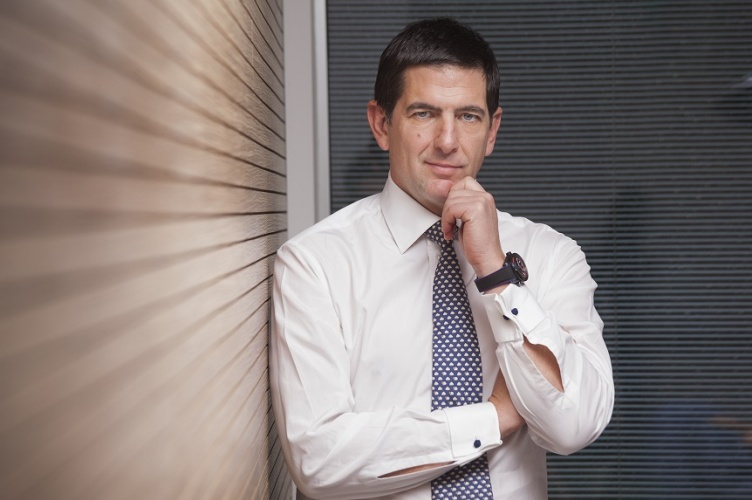
ESCP Turin Campus continues to grow its corporate network thanks to a new and exciting partnership established with TeamSystem, a European leader in Management/ERP software and training services.
To honour the Turin Campus’ latest corporate partnership, we invited one of our students to interview Federico Leproux, CEO of TeamSystem. The CEO was interviewed by Laura Jimenez Daneri, MBA in International Management student.
With over forty years of experience in the Management Software market, TeamSystem is a constantly growing group. In 2019 it reported a net income of 418 million Euros with a client portfolio of over 1,4 million customers.
Laura Jimenez Daneri: TeamSystem has experienced an impressive growth over the last few years. How do you expect the current health situation will influence the growth of the company? Which clients, who were not so keen on it before, may start being interested in digitalisation?
Federico Leproux: We are doing very well, although we cannot deny – just like every other company – an impact related to the pandemic. We nevertheless closed 2019 at 418 million euros, +17.5% compared to the previous year. We have already completed three acquisitions this year and we will continue to look around. We have over 1.4 million customers who have chosen TeamSystem to digitalise their processes. We have no intention of giving up on the investment plan. We believe that digital finance and e-commerce are the two sectors that will show the sharpest acceleration and in which we will move for further investments if we should need to do so. We are getting ever readier for the future that will become even more digital. Processes in the cloud, e-commerce, Industry 4.0, cybersecurity, will become extremely important in the coming months.
LJD: Since automatisation is a scary concept for many people, what would you say to help them get prepared for it? What do you think will remain as the added value of human resources in any company?
FL: The so-called 'fourth industrial revolution' has just begun, but technological innovation is continuing at unprecedented growth rates. In 3-4 years, I am sure that the world will change completely and evolve from what we see today, which is already very different from just a few years ago. In such a rapidly changing scenario, the partnership between “man” and “machine”, the way in which they will be able to fill each other's gaps, the way they will be able to integrate their respective "skills", is going to have a significant impact on business development.
To support this integration of skills between man and machine, however, I believe it is necessary to carefully manage several predominant aspects. One of them, perhaps the most important, is training. We must - as a Country System – necessarily create a link between future industry scenarios and training. We must - with the help of Institutions - raise awareness among young people to undertake studies in STEM disciplines.
LJD: What are the main challenges that you foresee for our generation? What do you think are the most important skills to develop to get prepared?
FL: We must invest in our young people to create the skills that are essential in the new digital scenario. We need to manage the transition. We need great focus at a national level on a re-skilling plan, designed for today's workers, that addresses the significant gap in technological skills that currently exists in the workforce. In order to become stable, in fact, growth needs to leverage innovation, but this cannot ignore the reduction of the skill gap and therefore the development of new skills.
LJD: What is it about ESCP Business School that caught your attention?
FL: People in TeamSystem are our Competitive Advantage. We are fully engaged in seeking talent because we think that this is the only way to keep growing and make our growth sustainable through the years. We approached ESCP because we know that it can supply the talents we need and offers its partners a wide range of initiatives in order to create profitable synergies between companies and university.
The other aspect that caught our attention is that ESCP puts together students and universities with different backgrounds. We are a very "glocal" company, our growth has occurred, among other things, through acquisitions and we are a melting pot of many different souls who have been able to coexist and lead our organisation to achieve some amazing goals.
All these aspects are very important for a company like us that is working to be the most important digitization partner for Italian companies.
LJD: If you had the chance to attend one of the programmes proposed by the school, which one would you choose and why?
FL: I think that there are many interesting programmes with amazing reviews like the Master in Management or some very interesting in-depth specialised masters such as Big Data & Digital Transformation, Entrepreneurship & Innovation, Business Performance Management and also International Food & Beverage Management.
LJD: What would you recommend as a "good practice" for ESCP students to succeed in their professional lives?
FL: You have to understand what your interests and talents are and work on them… it will help you keep passionate about your career growth. This is a changing world, you shouldn’t be afraid of change, you really need to be part of it. This also could mean that what you know today could be useless tomorrow... If you stay curious you will always be ready for what’s next and your professional life will always be current and ready for new opportunities.
One of the key characteristics of ESCP Turin Campus is its strong ties with the business community. The campus boasts 18 corporate partners and robust relationships with several national and international companies.
Find out more about our Corporate Partners.
Campuses
Related stories

News 14/04/2020
Turin News
A new and exciting corporate partnership with Facile.it
To honour ESCP Turin Campus’ latest corporate partnership, we interviewed Mauro Giacobbe, CEO of Facile.it, Italy's leading price comparison company for insurance, financial services, utilities and internet providers.
Turin
News 21/09/2020
Turin Event
Top managers opened the new Academic Year at Turin Campus with a phygital event
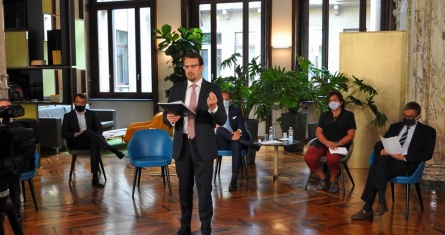
Last Friday, 18th September, the opening of the new Academic Year in Turin took place. Four top managers, who share ESCP's principles and mission, welcomed the new students virtually.
Turin

News 23/06/2020
Turin News
MIM Alumnus Pietro Luigi Ghigo has key role in Italy’s F&B expansion in Asia
In recent years, Italian companies have embarked upon a process of international development aimed at tapping into new markets, especially in Asia, and many Food and Beverage firms are in the forefront of that expansion. One of the Alumni of ESCP Business School has played a key role in that growth: Pietro Luigi Ghigo, Master in Management Alumnus, Class of 2009, and Asia Regional Sales Manager at Lavazza.
Turin

News 24/03/2020
Turin News
Matteo Frescobaldi is among the Italian #forbesunder30, ESCP alumnus and 30th generation of a family firm with 700 years of history
Matteo, Master in European Business alumnus, class of 2012, is the youngest member of the thirtieth generation of Marchesi de Frescobaldi, a family firm with seven hundred years of history.
Turin

News 05/05/2020
Turin News
MIM Alumnus Romolo Ganzerli recognized in the Italian #forbesunder30
Forbes Italia has released its annual “100 Under 30” list. We are delighted to see among these young disruptors ESCP Alumnus Romolo Ganzerli, cofounder of MammaPack, in the Retail category. He has been selected as one of the young leaders who are on the fast track for rethinking our relationship with e-commerce.
Turin