

Campuses
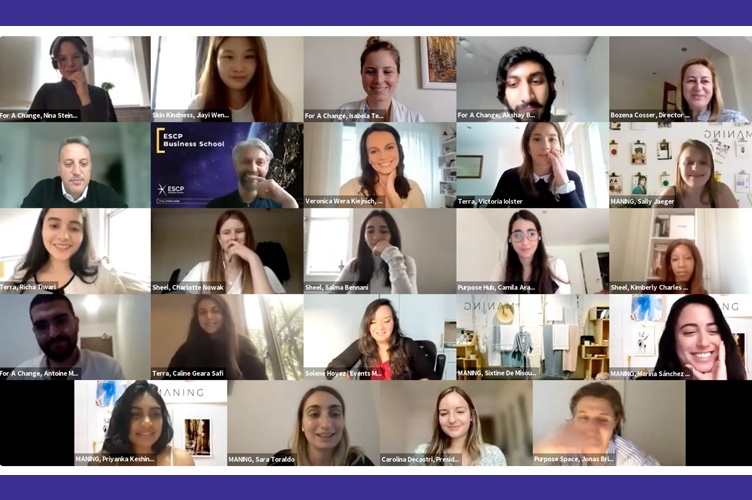
ESCP Business School’s London Campus hosted its annual summer edition of the JB Say Entrepreneurship Festival on 26th May 2021.
The Summer Edition is run exclusively by the London Campus as part of the MSc in Marketing & Creativity (ranked 5th by QS World University Rankings) and MSc in Marketing & Digital Media programmes.
Led by Prof. Davide Sola and Prof. Christian Linder, the vision of this event is to unite students, alumni, entrepreneurs, investors and potential customers to exchange ideas and learn from each other.
The 2021 Summer Edition
Open to all, this year’s festival saw more than 132 attendees during the fully-virtual event. Guests joined from France, Spain, United Kingdom, Germany, Mexico, Mauritius, Côte d'Ivoire, Poland, United States, Brazil, Netherlands, Venezuela, India, Lebanon and Hong Kong SAR.
Nine innovative teams showed how entrepreneurial thinking and problem solving could be applied to the current market, building customer-centric and sustainable value propositions.
The event started with the teams showcasing their ventures at a virtual simulation trade fair. Customers, investors and other guests were then able to discuss projects one-to-one at virtual stands, and the first prototypes (MVP - Minimum Viable Product) of each business were tested. With around 50% of new ventures failing due to lack of validating the initial key dimensions of the project, the students were working through this vital step to ensure the success of their projects. During the competition, all nine ventures presented their pitches to a panel of entrepreneurs and executives.
The Keynote Speaker
Prior to announcing the winners a keynote speech was given by Pierre Battu, Founder at Selavi Global and ESCP Alumnus (1999). After graduating from ESCP, Pierre discovered the world of entrepreneurship while working for an industrial paper company in New York City. Pierre created his first company with a business partner he met there; they acted as trading agents for French Textile producers, selling over three million French products to US clients in the first year. However, so-called “French-Bashing” in the wake of the 9/11 terror attacks and the lack of French political backing for the invasion of Iraq by the US government created extreme instability on this market. Many French suppliers were forced out in an already declining market.
At that time, Pierre realised there was an opportunity to re-enforce the social links in the growing French Community living in the tri-state area. Thus, what was meant to become an international “social” brand and an engagement platform for affluent Millennials was born. The business quickly extended globally, and Selavi, an activation agency in charge of “Selling” the aggregated demography to premium brands, was created to monetise this platform further. With offices in New York City, Los Angeles, Hong Kong and Jakarta, Selavi’s expertise focuses on content creation, education, experiential marketing and amplification strategies.
The winners of the Entrepreneurship Festival 2021 (Summer Edition)
Overall winner: MSc in Marketing & Digital Media – ‘MANING’
Sixtine De Misouard
Sally Jaeger
Priyanka Rambujoo
Marina Sanchez Gomez
Sara Tolardo
MSc in Marketing & Creativity – ‘For A Change’
Akshay Bhatia
Lea Bou Fadel
Antoine Malakhia
Nina Steinlechner
Isabela Tenório
MSc in Marketing & Digital Media - ‘SelfOut’
Floriane Blanc
Mateo Burdairon
Domitille Chignon
Kelly Fakhry
Emma Finkelstein
Testimonials from the Festival panellists
Carolina Decastri shared: “Extremely thrilled to have been part of the jury panellists in this summer’s ESCP Entrepreneurship Festival! It has been a wonderful learning and growth opportunity. Absolutely amazed by all the great ideas and concepts presented by the students - loved the enthusiasm and discussions!”
Veronica Wera Kiejnich added: “What a great event! Congratulations ESCP! I learned a lot myself - always on the lookout for opportunities to grow.”
Campuses
![© Adobe Stock - ipopba [copyright]](/sites/default/files/styles/event_news_une/public/2021-06/ipopba-AdobeStock_234602257.jpg)
Campuses
Are you starting your academic journey at ESCP London Campus?
If so, we are hosting a special webinar for our admitted students who have successfully enrolled onto the following postgraduate programmes:
- MBA in International Management
- Master in Management
- MSc in Digital Transformation Management & Leadership
- MSc in Energy Management
You will have the opportunity to learn about the different types of visas you will need to come to the UK and ask our Visa Officer, Vishav Kaur, any questions or concerns you may have.
Agenda:
- Introductions
- Overview of Student Visa
- Overview of Short Term Study Visa
- What is a CAS Letter
- What supporting documents you will need
- Q&A
To book your place, click here: https://bit.ly/3xB9iXo
Location
Organiser: ESCP London Campus
Online - Worldwide
MapDate
Start date: 30/06/2021
Start time: 5:00 PM
End time: 6:00 PM
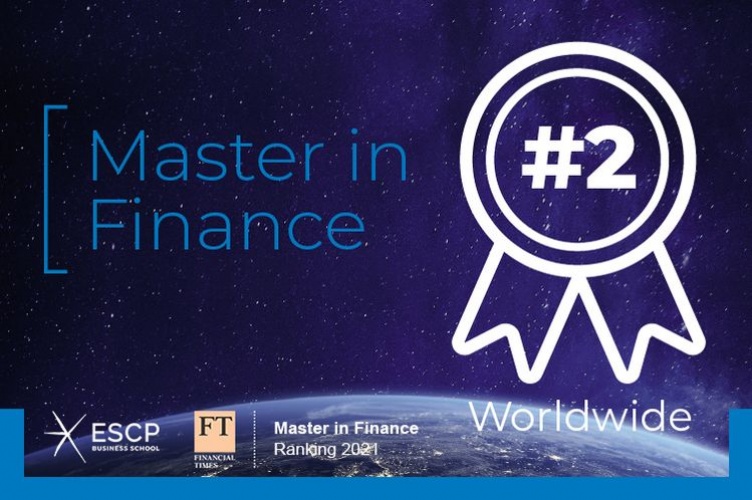
ESCP Business School Master in Finance ranks 2nd worldwide in Financial Times rankings
The ESCP Business School Master in Finance anchors its 2nd position in the Financial Times annual global rankings.
Taught in French and English at both ESCP Paris and London campuses, the programme is number 1 in the UK. This reaffirms its position as the best finance course in London.
 Professor Frank Bournois, Executive Director & Dean, says “As a flagship of the ESCP unique model, the Master in Finance programme trains students from different countries and backgrounds: engineers, doctors, pharmacists, lawyers, social and political studies… With many nationalities represented, they constitute a multicultural promotion which enriches exchanges and group work.”
- The programme ranks 1st worldwide for its international experience and its career service.
- The masters also achieved an impressive 97% in its 'aims achieved’.
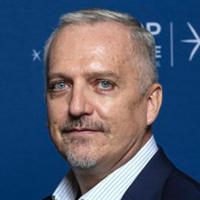 Professor Philippe Thomas, Academic Director of the Master in Finance adds “Our goal is to train experts capable of evolving rapidly to the needs and challenges of a globalized world. By associating academic expertise with the best professional practices, thanks in part to strong partnerships with top financial institutions, we set our students up for success in Investment Banking, both in Financial Markets and Corporate Finance fields.”
Contact(s)

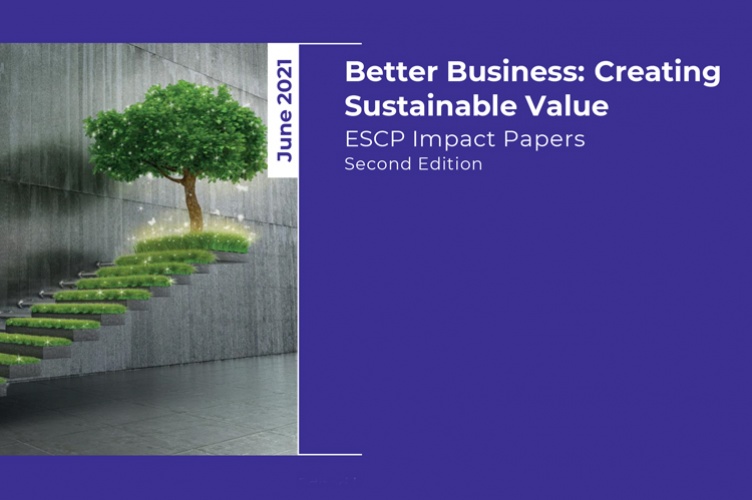
After the success of its first impact papers series, ESCP Business School has published a new one: “Better Business: Creating Sustainable Value”.
After the initial success of the “Managing a Post-Covid19 Era” series, ESCP Business School is proud to publish a second edition of “impact papers” aimed at providing insights into management knowledge that is applicable to not only practicing managers, but also other stakeholders, namely the European community, students and society. Following the same principle of the first edition, this collection of impact papers aligns with the B.E.S.T. research impact framework (Business, European, Societal, and Teaching).
“The ESCP academic community has played a significant role in advancing academic knowledge on how businesses engage with social and environmental issues, as shown in the recent ranking of the SDG-related research publications made public by the Financial Times (4th in Europe). In gathering papers for this second edition, we sought to further anchor this position by encouraging contributions which reflect on the challenges and opportunities of the transition of ‘business for good’ from a peripheral social corporate responsibility or sustainability function, to an integral part of business purpose,” explains the Associate Dean for Research and Chairs as well as the Editor-in-Chief of the impact papers, Pramuan Bunkanwanicha.
The 54 papers gathered for this second edition of the ESCP Impact Papers series reflect on social and environmental actions as an integral part of core business values and processes rather than being undertaken within siloed functions. Specifically, they discuss the latest advancements of knowledge around sustainability-related issues including business philosophy and business value, corporate activism, role of technology, new business models and sustainable value chains, people, their wellbeing and their prosocial behaviour, as well as pedagogy and the role of business schools in educating future responsible leaders.
There is a great wealth of contributions, both in content and angles of approach. This variety reflects as much the diversity of expertise and knowledge of ESCP’s faculty, as the diversity of their concerns in the face of the new normal in the post-Covid era. Through this collective effort, the school hopes to stimulate creative ideas and innovative perspectives, inspiring its many stakeholders to make responsible choices.
Are business schools finally walking the talk of responsible management education? For ESCP Business School, this second series of impact papers certainly represents an important step forward.
You can download the white paper here.
![© Adobe Stock - peshkov [copyright]](/sites/default/files/styles/event_news_une/public/2021-06/AdobeStock_258774440.jpg)
Campuses
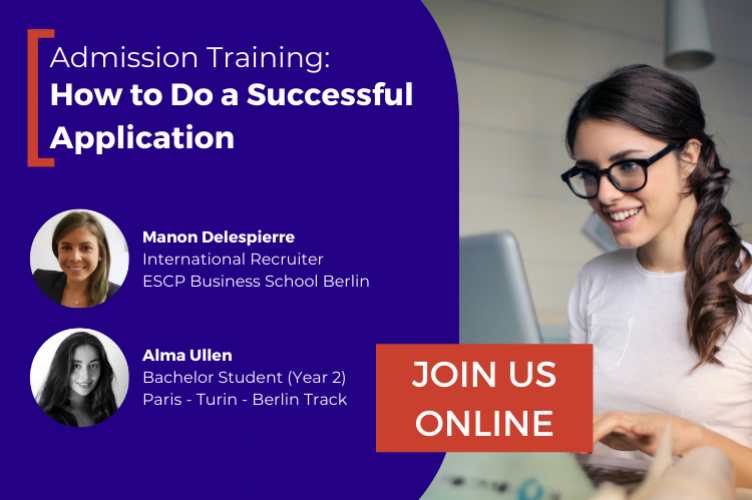
Interested in applying for our Bachelor programme? Need some tips on how to move forward? Our upcoming online Admission Training Session will surely help you on your path to applying.
Join our recruiter, Manon Delespierre and Bachelor student, Alma Ullen (Year 2) online and they will help you understand the various steps needed to complete the online application in the best possible way, as well as give you concrete advice on preparing for the interview. Join us and start your ESCP journey!
When: 30 June 2021 at 4.30pm (CEST)
Where: Online
>> Register here to join us!
We look forward to seeing you there!
Location
Organiser: Berlin Campus
Online - Worldwide
MapDate
Start date: 30/06/2021
Start time: 4:30 PM
End time: 5:30 PM
Making a difference with the International Consultancy Project
A cornerstone of the Executive MBA, the International Consultancy Project is a marathon within a marathon that, despite the challenging moments, is one of the most rewarding parts of the programme.
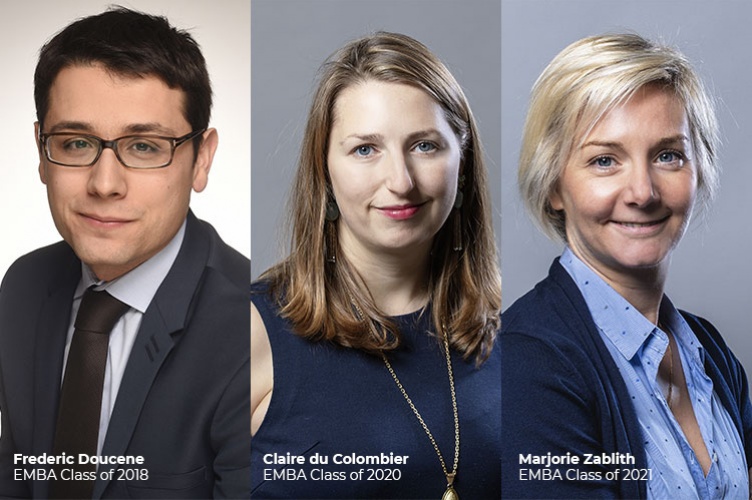
What do digital pathology, an innovation platform for intrapreneurship, and the scaling up of sustainable cooking have in common? All three served as the subject of the Executive MBA’s International Consultancy Project or ICP, a vital component of the programme’s in-depth curriculum. During this milestone project, participants tackle complex problems, but as with many business challenges, the ICP starts with a simple question: “how can we make this endeavour better?” After all, the ultimate motivation of a person who chooses to embark on the ESCP EMBA journey is how they can improve their lives and the lives of others through business. To gain an inside look at the ICP, we spoke with Marjorie Zablith (Class of 2021), Frederic Doucene (Class of 2018) and Claire du Colombier (Class of 2020) about their experiences.
A MARATHON WITHIN A MARATHON
One could argue that the ICP is the culmination of the EMBA programme. With a team of around five participants, the goal is to address a real-world business issue by applying the skills and expertise acquired throughout the EMBA and deliver actionable recommendations to a sponsoring client or prepare a sound business plan for an entrepreneurial idea. The project spans an entire year and runs parallel to the core courses, electives, international seminars, conferences, and other programme events. The ICP is a marathon within a marathon that, despite challenging moments, is one of the most rewarding parts of the EMBA. As Frederic Doucene said, “it is a transformational experience because it is an experience of collaboration over a long period of time, on a project that matters to you, with people from different horizons, cultures and languages. This is the true value of the ICP.”
ENTREPRENEURSHIP AND THE ICP
Frederic Doucene’s ICP became part of the Executive MBA process. Indeed, funnl. was the platform used by the academic and coordinating team to manage the ICPs from start to finish, particularly helpful during the pandemic when live pitches were not possible. First presented by Kate Tratten to the 2018 cohort, the idea of a tool to help startups improve their success rate evolved into a SaaS that promotes, facilitates and guides innovation within existing companies and institutions. Along with Kate Tratten and Frederic Doucene, Adrian Fuerea is one of the three original EMBA members that co-founded the company. For Doucene, this project represented a fundamental shift in his professional life from a traditional career in finance to his first experience with entrepreneurship. He continues to help the programme administration with the evolution of the platform.
AN OPPORTUNITY FOR CHANGE WITHIN YOUR COMPANY
The variety of projects pitched within a single cohort reflects the diversity of each class and their professional experiences. While the ICP can help discover unexpected career paths, it can also be a vehicle to take ownership of a new position within a participant’s company. Three months into her EMBA, Marjorie Zablith started a new position at Leica Biosystems as EMEA Marketing Director. She took advantage of the ICP to onboard faster and more efficiently within her new company by proposing and leading a project that addressed marketing and strategic hurdles in the use of digital pathology for cancer tissue diagnostic. “What we were finding out was actually following current conversations with my manager, [the project sponsor], and current strategic initiatives within Leica Biosystems,” said Marjorie Zablith. Her manager participated in the final jury and was exceedingly positive with her feedback.
For Claire du Colombier, who was already firmly established in her company Engie, the stakes were different when it came to the Clean Cooking project she brought to the EMBA. The ICP was the opportunity to work across departments on an innovation project that aligned with her values personally: increased access to sustainable energy and the importance of promoting energy transition especially given the challenges we face as a global society. Beyond the significance of working on a project with both business and societal ambitions, a highlight of the experience for Claire du Colombier was the synergy she experienced with her EMBA team, a dynamic she now strives to replicate as a manager. She shares the following advice with future participants of the EMBA: “Choose a subject that truly motivates you because you’re in it for the long haul. Make sure that the interests of all stakeholders–the client, ESCP, and the EMBA team–intersect and align. Promote your project to other members of the ESCP cohort because when you communicate, you exist.”