
![© clay.banks/Unsplash [copyright]](/sites/default/files/styles/event_news_une/public/2021-07/clays-bnks_heatmap_unsplash-1440x900.jpg)
Campuses
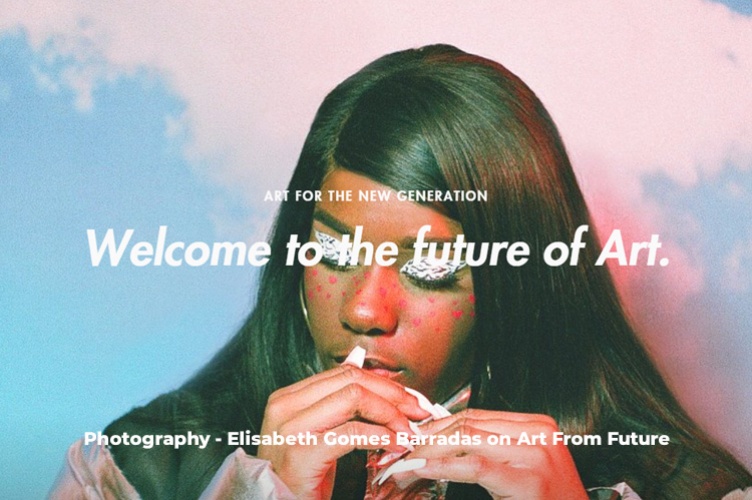
From artist to entrepreneur:
she seized the opportunity the art world was missing
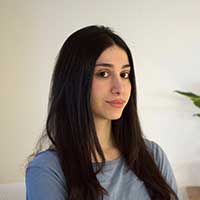
Meet Jessica Soueidi, ESCP alumna (19) and founder of Art From Future, the first growth platform helping young visual artists develop their careers by connecting them with a newly engaged audience online.
In 2015, you graduated with a Master’s of Fine Arts in painting. Why did you choose to then pursue a double master’s degree programme from a business school?
Exactly.
In 2015, I obtained a Master’s of Fine Arts with a specialisation in painting from the Haute Ecole des Arts du Rhin in Strasbourg (former l’Ecole Supérieure des Arts Décoratifs de Strasbourg). Soon after, I was invited to take part in several exhibitions and renowned artist residency programmes internationally, including at The Swatch Art Peace Hotel in Shanghai and the Vagabond Club in Singapore.
During my experience, I noticed that it’s extremely hard for young visual artists to make a living from their art - even with an outstanding CV! The traditional art industry values artists that get gallery representation. Selling art directly to customers that aren’t considered to be “collectors” is denigrated. As a result, only a fraction of art students will be able to make a living from their art.
Having earned a Master’s of Fine Arts and written a thesis like for any other degree, it was unacceptable to me that artists would have to struggle this way.
I started talking to people my age (Millennials and Gen Z) about their relationship with the art world. I was struck by their answers. None of them were interested in going to art galleries or museums. Worse, they didn’t know any living artists. That’s when I got the idea to create my own company to connect young artists with the new generation.
In order to do so, I needed to get the basics of business and learn more about the art and culture industries. I decided to apply to ESCP’s Specialised Master’s in Management of Cultural and Artistic Activities for several reasons. I was attracted by the school’s expertise and rich international network as well as the fact that one quarter of the programme took place in Venice, one of the richest cultural cities in the world. I also felt encouraged by the teachers even before starting the program. During the entrance exam, the teachers were very interested in my startup idea and told me that they’d help me develop the business plan during the academic year of 2018-2019.
Earlier this year, in the midst of a global pandemic, you launched Art From Future. Why now?
In November 2019, I passed my final exam at ESCP, and one month later, I moved to Helsinki. I worked as a freelance art /content marketing consultant for Taiko, the largest online art marketplace in Finland for eight months. When the global pandemic hit, I noticed that online art sales were significantly increasing and the art market was finally adapting to the digital transformation. I’m a strong believer that timing can play an important role in the success of a startup. In September, I quit my job at Taiko, and I participated in Kiuas, the leading startup accelerator in Finland.
In a month, I was able to develop my Minimum Viable Product with the help of Kiuas’s top coaches and mentors. While many art professionals saw the global pandemic as a threat to their businesses, I saw it as an opportunity to use digital tools to reach Millennials and Gen Z.
Art From Future was officially created in late January 2021, and the beta version was launched to the public in March. A few days later, Art from Future made its first art sale.
What is Art From Future’s mission? Can you give us a concrete example of how you’ve worked with an artist to promote their work?
Art From Future is the first growth platform helping young visual artists develop their careers by connecting them with a newly engaged audience online. We select the most motivated and talented early-stage artists, and we empower them to develop their identities online and connect with their community. Our mission is to make art accessible to a growing audience, Millennials and Gen Z, and to help up-and-coming visual artists finally live off their works. Our services include personal brand and audience development strategies, content creation services and paid, targeted promotions.
To give you an example, when artists join Art From Future, it’s really important to understand the message behind their art and their goal for the next five years. We first create a profile on our platform and we start promoting their works on Instagram, Facebook and TikTok. In order to do so, we collaborate with influencers, publish interviews and create content that is relevant to new audiences. Many young artists don’t have a lot of experience using social media, and that’s okay. Recently, we started auditing their Instagram accounts to help them increase their digital presence. We’re also working on a series of tutorials specifically for our artists so they can learn how to grow and connect with their community.
How did your past experiences and studies at ESCP prepare you to launch Art From Future?
I have quite an atypical background. I’m a visual artist, but I also received an education to become a manager in the cultural and arts sector. Thanks to my experience as a visual artist, I have the empathy and the capacity to truly understand artists' needs. For example, in art school, I developed my critical thinking and my ability to spot promising talents. I also exhibited and curated several shows in cultural centres, art galleries and artist residencies.
Studying at ESCP gave me all the necessary tools and skills to create my company. It was an intensive year where I learnt about many different topics such as art economics, project management, art law, digital innovation and so on. We also had accounting courses, which are fundamental to the creation of a startup. For my master’s thesis, I developed my business plan for Art From Future. The project was well received by my professors and I graduated with an A.
Studying at ESCP was definitely important for the launch of Art From Future because it developed my business mindset. In art school, they don’t teach you about business, and you don’t talk about money.
Art without business can’t really work.
You’re both an entrepreneur and an artist. Do you find there are similarities between the two?
Artists are entrepreneurs but they don’t necessarily know it because they’re not trained for it. When artists graduate from art school, they’re on their own. Usually galleries take care of all the promotion and marketing for their artists. The truth is that only a small fraction of artists get gallery representation.
The rest have to make portfolios to apply to different art contests and prices, find and organise group exhibitions, and work at the same time in order to pay for their art supplies. It can be very frustrating for artists because the end goal isn’t so clear. Whereas being an entrepreneur means having a clear idea and setting different achievable goals. The mindset is very different.
What advice would you give to other entrepreneurs looking to enter the world of arts and culture?
Go for it! Just do it your own way. Forget what you’ve learnt, don’t be afraid of breaking the rules.

For ESCP’s media, The Choice, Jessica shared her take on why the art sector needs to reach Millennials & Gen Z customers and how to do it.
Campuses
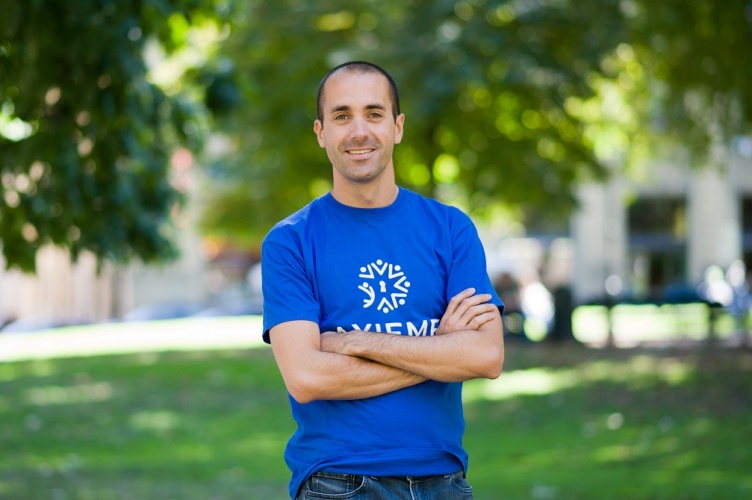
On the occasion of the first edition of Insurtech Day, Forbes Italy has published a special issue dedicated to Italy's top 100 Insurtech leaders: among them Edoardo Monaco, co-founder and CEO of Axieme Group, as well as ESCP guest lecturer and Alumnus (Master in Management, class of 2009).
After completing international professional experiences in consulting, investment banking and marketing for consumer goods, Edoardo decided to specialise in the insurance sector and launched the first Social Insurance in Italy in 2016. Axieme Group is bringing digital transformation to the Italian insurance industry.
You and your company were recognised as those who are on the fast track for revolutionising the industry. How did the idea to found an InsurTech start-up come about?
In my career path, I have been lucky enough to work in various sectors: consulting, investment banking and FMCG. When I landed in the insurance sector almost by chance, in 2013, I immediately noticed the difference in business agility compared to other industries. It's a very traditional, capital-intensive and old-fashioned industry.
I have always had a hyperactive personality and while I was working in a small Insurance Brokerage firm, my curiosity pushed me – at night or weekends – to investigate on the internet or in literature the reason why this powerful sector still operated in such an old-fashioned way. I started by simply searching Google with the keyword “insurance” combined with “innovation” (in English, as I was sure that in the US or abroad something was already happening).
I came across the term “InsurTech” for the first time in 2015 (it doesn't seem so ago but it's actually ages in terms of innovation evolution) and fell in love with what other start-ups were doing around the globe, in particular with what was called “peer-to-peer insurance” or “social insurance”.
I invited a couple of friends (Matteo and Marco) to have a dinner and in front of a pizza I presented my idea to them: to introduce these new business models that were already present in other countries to Italy.
And here we are!
What is Axieme's vision?
We want to radically change the way insurance is distributed, managed and perceived by policyholders thanks to a digital, ethical and data-driven approach.
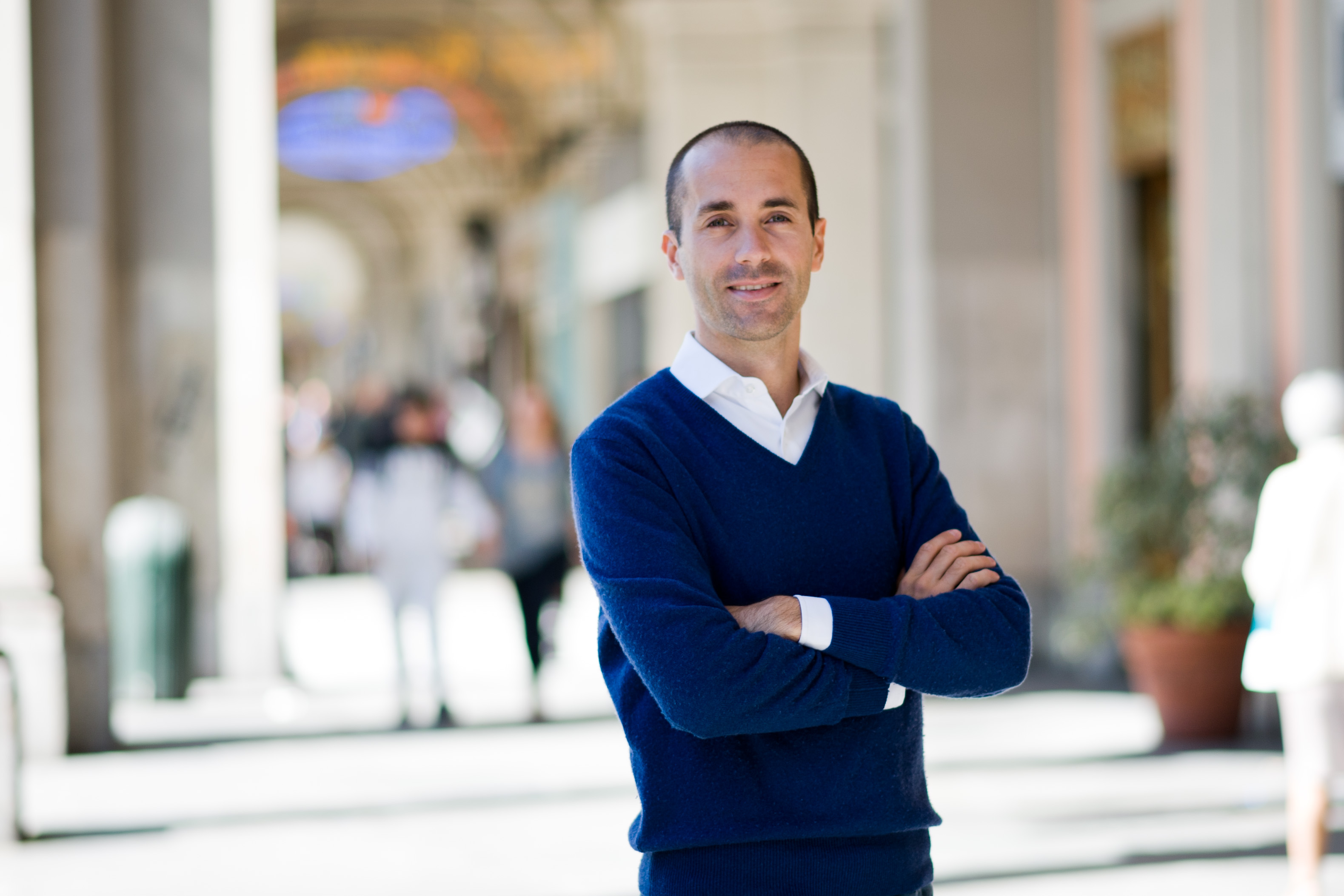
Axieme wants to reshape the insurance Italian market by introducing 'social insurance'. Can you explain more about it?
The start-up is in fact the first - and currently only - insurtech in Italy that implements a business model that rewards virtuous policyholders with a refund (called "Giveback"). We provide policyholders with a Giveback at the expiration of their policy based on simple logic "fewer claims = greater Giveback ".
This business model, already present worldwide and promoted by other start-ups in other countries, is called social insurance because it gives clients the opportunity to have a social impact:
- as a member of the community: with mutuality logic the amount of the Giveback depends on personal behaviour combined with that of other similar policyholders (who have the same coverage and belong to the same cluster);
- for donations: instead of redeeming his or her Giveback, the policyholder can choose to donate it to a non-profit organisation, the amount will then be doubled by Axieme.
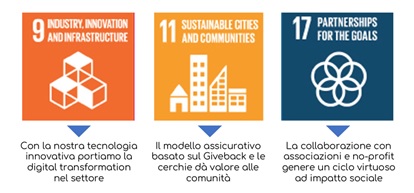
The Social Insurance business model is fully compliant with some of the 2030 Sustainable Development Goals identified by the United Nations. Axieme has always set its growth process by trying to create a positive impact on people, society and the territory and by aligning its business strategies with the principles of sustainability identified at an international level.
How are your insurance solutions different from traditional insurance?
We actually provide the same level of security and coverage of other “classic” policies. Indeed, the strength and solidity of the guarantees is exactly the same, in the end our products are backed by traditional top-tier insurance companies. The main difference when choosing Axieme is instead on two fronts:
- Fully-digital user experience: our clients can quote, purchase, pay and sign insurance policies completely paperless and remotely. Very few companies can implement (for real) a fully-digital end-to-end process. We enhance user experience and delight customers in need of a digital and seamless experience.
- The Giveback: we are the only player that provides convenience through a refund on the policy premium paid. With other companies, if you don’t file any claim you just don’t get any satisfaction nor a reward.
The insurance sector is undergoing an important digital transformation. What are the key issues for the digitalization of the industry?
The challenges at stake are indeed many. I don’t want to bore you with the typical dynamics of the Industry, so I will try to summarize them briefly:
- ability to recognize talents capable of understanding digital challenges, motivating them and giving them space within the firm and the organization chart;
- knowing how to reconcile “legacy” issues with the potential given by new technologies
- investing in innovation, not only in financial terms (in which we must accelerate as Italy is far behind other European countries) but also and most of all, in terms of mindset: innovation is first of all a state of mind.
For those interested in investigating these issues further, difficult to summarize here, I am pleased to share with you the forthcoming publication of a book which I co-edited: “Insurtech 2030, il futuro è già qui”, E. Monaco, M. Michaud (Edizioni La Rosa, 2021).
What's next for Axieme?
The road is still long and we have many activities to implement ahead, such as the expansion of our product catalog, the introduction of new features available on the platform and new non-profit organizations to which our customers will be able to donate the Giveback.
From a corporate point of view, we are negotiating with investors and VCs interested in investing, and we might evaluate M&A operations in the short term: the market is very active and our aim is also to repay the trust of our investors with an exit strategy.
What are the technologies that will drive the future of insurance or the game-changers for the industry?
There’s a hype in the use of terms like “blockchain”, “artificial intelligence”, “machine learning” etc. But in my opinion, the real game-changer will be a smart implementation of APIs (Application Programming Interface) across the industry.
To make it clearer and pragmatic: think about what happened in the banking industry with the PDS2 directive. You can now download apps that aggregate account balances from your different bank accounts, merge wallets, arrange a bank transfer from an allowed third party etc.
None of this is possible – at the moment – in the insurance industry. Insurance companies’ software work on a “silos approach”: data-bases cannot communicate and this results in a painful journey for the customer each time he/she has to deal with his or her policy contracts.
Another example is the lack of “data bureau” in the industry. Insurance companies do not have access to “scoring” or “rating” of policyholders. Except for Car Insurance (and only Third Party Liability) there is no common data-base accessible by companies on claims filed by policyholders. This means that if Mr. White files a claim on his Home Policy with company A, then company B doesn’t know, and he can easily switch between companies benefitting from this information asymmetry. In the financial industry, instead, banks have all the information on clients. If you ask for a loan, the bank will immediately access “credit bureau services” (such as CRIF or EXPERIAN) to check you track-record.
Again, another example of how data-access and data-share will be THE challenge of the industry in the future. In Axieme we are already working on this.
How did what you learned at ESCP help you to achieve your goals?
Dedication, teamwork and a lot of commitment. These are the values that I learned at ESCP and that I will always carry with me.
The sacrifices made during the years of study at ESCP as well as professional experiences, even though hard and demanding, have taught me the desire to excel and the importance of being ambitious (in the most noble and pure meaning of the term) and resilient.
Do you have any tips for young entrepreneurs out there aiming to make an impact with their tech start-ups?
I don't know whether to call it a tip, but as banal and rhetorical as it may seem, I want to say something that is the simple truth: always work ethically with dedication and professionalism.
Beside technology, algorithms, artificial intelligence and any other abstruse or very technical word you can think of, remember that companies are made of people. Relationships are made of people. Business is made of people.
Time is a gentleman and these qualities, that are not always obvious, can make the difference on the market and will reward your hard work (and your start-up).
Campuses
Related stories

News 07/06/2021
Success Story
MIM student Riccardo Angioli recognised in the Italian #ForbesUnder30 at only 22
Forbes Italy Top 100 Under 30 2021 ranked an ESCP Master in Management student as one of the young leaders doing great things in the Venture Capital sector: Riccardo Angioli. He is the youngest talent in his category, nominated when he hadn't yet celebrated his 23rd birthday. In 2019, Riccardo co-founded, with Roberto Sfoglietta, Starting Finance Deal, a company that connects start-ups looking for funds, with investors.
Madrid
Paris
Turin
News 17/05/2021
Turin News
ESCP Alumnus Federico Dalpozzo in the Italian #ForbesUnder30
We were delighted to see among the young disruptors recognised by Forbes Italia in its annual “100 Under 30” list, an ESCP Alumnus: Federico Dalpozzo. He has been selected as one of the young talents who are leading the way in the Marketing and Advertising sector.
Turin

News 24/03/2020
Turin News
Matteo Frescobaldi is among the Italian #forbesunder30, ESCP alumnus and 30th generation of a family firm with 700 years of history
Matteo, Master in European Business alumnus, class of 2012, is the youngest member of the thirtieth generation of Marchesi de Frescobaldi, a family firm with seven hundred years of history.
Turin

News 05/05/2020
Turin News
MIM Alumnus Romolo Ganzerli recognized in the Italian #forbesunder30
Forbes Italia has released its annual “100 Under 30” list. We are delighted to see among these young disruptors ESCP Alumnus Romolo Ganzerli, cofounder of MammaPack, in the Retail category. He has been selected as one of the young leaders who are on the fast track for rethinking our relationship with e-commerce.
Turin
News 09/03/2021
Alumni Success Story
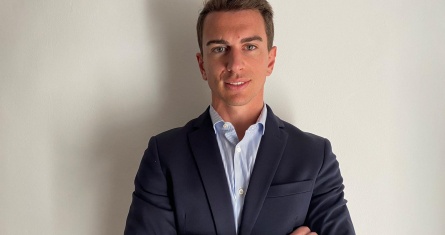
“Inch by inch”: the story of Edoardo Persenda - from student at ESCP to Vice President of AlixPartners
Having joined AlixPartners in 2017 as an intern, when studying for his ESCP Master in Management, Edoardo Persenda has already been promoted to Vice President. Check out what Edoardo has to say about his professional experience and the key to his skyrocketing career growth path.
Turin

News 23/06/2020
Turin News
MIM Alumnus Pietro Luigi Ghigo has key role in Italy’s F&B expansion in Asia
In recent years, Italian companies have embarked upon a process of international development aimed at tapping into new markets, especially in Asia, and many Food and Beverage firms are in the forefront of that expansion. One of the Alumni of ESCP Business School has played a key role in that growth: Pietro Luigi Ghigo, Master in Management Alumnus, Class of 2009, and Asia Regional Sales Manager at Lavazza.
Turin
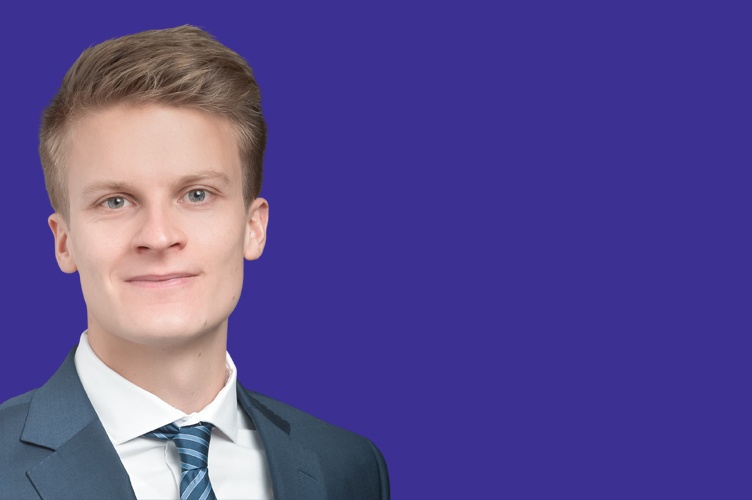
We can tell you as much as possible about studying at ESCP Business School and the professional opportunities available post-graduation, but it's always better to hear it direct from one of our successful Alumni!
Aloïs Thieffenat, MSc in Digital Transformation Management & Leadership Alumnus and Associate at KPMG, will help you discover more about Digital Technologies. You will learn about the trends in and challenges of digitalisation, internal technology development, and market readiness.
Your questions on both the industry and MSc will be answered live by the recruitment team and our special guest and alumnus, Aloïs!
To attend this event, register your place here: https://bit.ly/2Ttf6E9
Location
Organiser: ESCP London Campus
Online - Worldwide
MapDate
Start date: 07/07/2021
Start time: 3:00 PM
End time: 4:00 PM
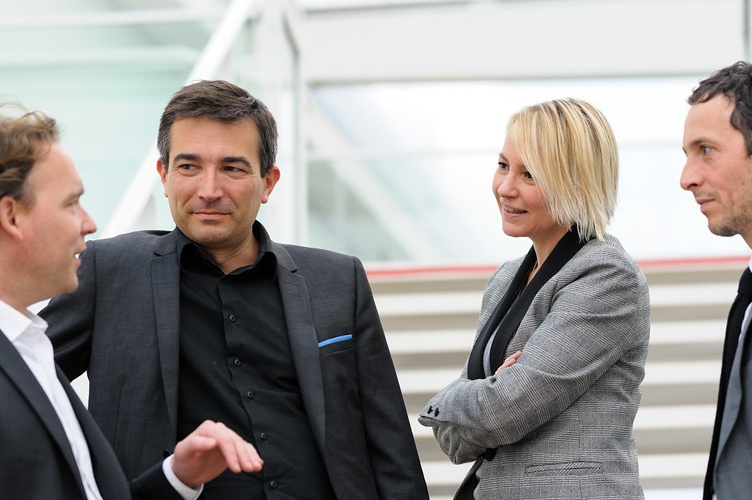
Executive Education’s mission at ESCP is to enable senior executives, and high-potential managers
Professor Frederic Frery and Professor Francesco Venuti are appointed respectively the new Director of the Global Executive PhD and the EMBA Associate Dean from September 1st for a three year mandate.
Executive Education’s mission at ESCP is to enable senior executives, and high-potential managers, to step back and put into perspective their professional careers, to enhance their leadership skills and to act as reflective practitioners, in order to be the architects of a socially responsible world.
“In Professors Fréry and Venuti we have two outstanding individuals able to give strong academic leadership to our two flagship senior executive degree programmes. We welcome them on board and approach the next academic year with great excitement.” says Simon Mercado, ESCP's new Executive Vice President for Business & External Relations.
Frederic Frery
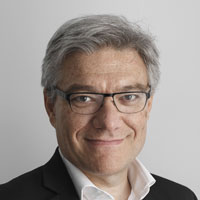
Frédéric Fréry is a Professor in the Management Department of ESCP, Paris campus.
He graduated from ESCP with a M.Sc. in Management, received a M.Sc. in Management of Technology from École Centrale Paris and earned his Doctorate and post-doctoral authorization to supervise research (HDR) from the University Paris I Panthéon Sorbonne.
He was scientific director of the Executive MBA from 2010 to 2015 and of the Full-Time MBA from 2001 to 2005. He also supervises the corporate program "Strategic Management" and has been the holder of the ESCP /KPMG Chair "governance, strategy, risks and Performance" from 2007 to 2015.
He is a honorary professor at École Centrale Paris.
He has been a Visiting Scholar at Stanford University and a Visiting Professor at the University of Texas at Austin.
He received the ESCP 2009 Teaching Excellence Award.
His research and teachings focus on strategy, organization and management of innovation. He is one of the authors of the most widely-used strategy manual in the French-speaking world ("Stratégique").
“I am very happy to develop this unique and innovative programme after launching in 2020 that can transform you into a global thought leader. Fundamental research questions arise from the understanding of the reasons why firms and management exist, and that they could become.” says Pr. Frery
Figures and Key Facts regarding the Global Executive PhD
Coincides with the necessities of life-long learning. Based on the belief that to find high-impact solutions to the complex challenges facing humanity.
Same academic rigor as a full-time Ph.D. but a programme that fits top-level executives’ agendas. The first cohort is composed of 25 seasoned executives from 20 different countries.
Participants are 43 years old, have 18 years of professional experience, earn 200k€/ year.
Francesco Venuti
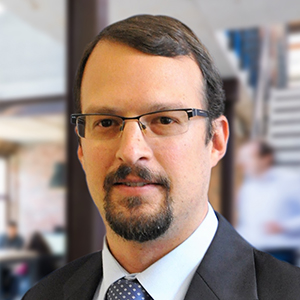
Francesco Venuti is a permanent faculty Assistant Professor of Accounting in the Financial Reporting and Audit (FRA) Department, in the Turin Campus.
He is also the Academic Director of the MSc in International Food & Beverage Management (IFBM) and Local Academic Director of the Executive MBA and GMP for the Turin Campus.
He teaches in a wide range of programs: from Bachelor to Master students as well as to Executives, in open enrollment and custom programs. He teaches in courses on financial accounting and reporting, in insurance accounting, and general management.
Francesco Venuti is a cum laude graduate in Economics at the University of Torino. He earned his Ph.D. in "Business and Management" at the University of Turin with a thesis on the bottled water industry.
He participated in the Global Colloquium for Participant-Centred Learning in Summer 2019 and the Case Writing Workshop in January 2020 at Harvard Business School in Cambridge/Boston (US).
Before joining ESCP, he had been a lecturer at the University of Torino, at the Politecnico di Torino, at the SAA (Scuola di Amministrazione Aziendale), and at the Free University of Bolzano-Bozen.
His major fields of research include financial accounting and reporting (with a specific focus on Insurance companies), nonfinancial disclosure, food&beverage, and behavioural accounting. He is member of the Accounting for Banking and Insurance Research Lab (ABIREL) at the University of Turin.
"I am very honoured and happy to work for this outstanding program, which is currently undergoing a significant renewal and redesign, to make it constantly updated, more flexible, customizable, and better fitting the needs of our continuously evolving and demanding world. The ESCP Executive MBA is a truly transformational journey for each of our participants, who could acquire an extraordinary toolbox of hard and soft skills to turn difficulties into opportunities, in a responsible and sustainable way. We train and challenge our executive participants to have a significant positive impact on the world throughout the choices that they make every day in their personal life and in business” adds Prof. Venuti
Figures and Key Facts regarding the ESCP Executive MBA
An Executive MBA ranked 7th worldwide by the Financial Times
- for career progression worldwide with graduates expecting a 78% increase in their salary after completion.
- for Aims achieved worldwide
- for international course Experience worldwide
Flexibility and customisation with a large choice options, course locations, lengths and intakes
Diversity and richness of profiles: more than 30 nationalities, various industries and backgrounds
Balance between academic excellence and hands-on approach
International Faculty, with a wide range of backgrounds, experiences, fields, and research interests
Contact(s)


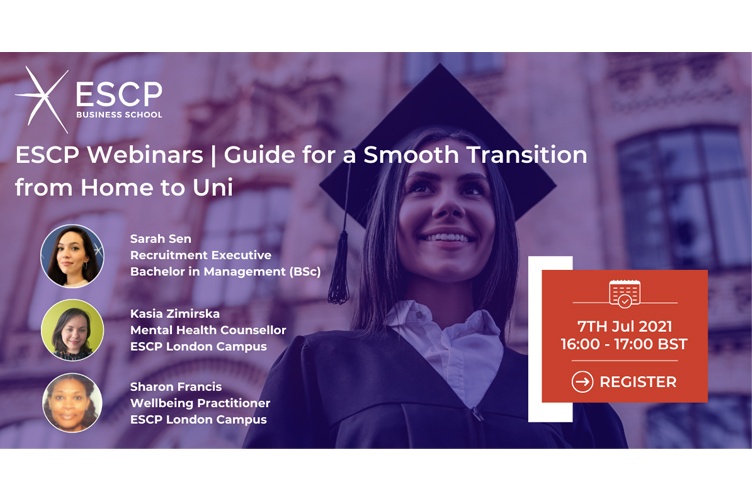
It's finally happening. You are about to make the big jump from high school to university!
In addition to that, you will be moving to a new city, country or maybe even continent.
Let me guess, you are feeling excited, scared, euphoric, a bit sad, worried, happy, stressed...
Such a transition comes with a lot of mixed feelings, and it is completely normal!
Your London Campus counselling team have prepared a few tips to help you in this important step of your life.
Come meet us online! We are here to answer your questions LIVE!
Speakers:
- Sharon Francis - Wellbeing Practitioner
- Kasia Zimirska - Mental Health Counsellor
This event is open to Bachelor in Management (BSc) students only. A link to join will be sent via email.
Location
Organiser: ESCP London Campus
Online - Worldwide
MapDate
Start date: 07/07/2021
Start time: 4:00 PM
End time: 5:00 PM

In January 2021, ESCP and OnePoint launched a new elective course entitled "Design Fiction for Sustainable Futures" as part of the Circular Economy Chair.
This 30-hour elective course allowed 40 MIM students to work with renowned futurists and designers to explore the future of oceans in the context of sustainability-oriented design projects.
Prof. Aurélien Acquier, Scientific co-Director of the Circular Economy Chair and Associate Dean for Sustainability explains: “ESCP Business School has adopted an ambitious sustainability strategy, in particular through its educational missions, scaling-up sustainability ambitions within the ESCP curriculum. This course is perfectly aligned, supporting the sustainable transition of the school and building awareness among its students.”
What is design fiction?
Among different prospective oriented approaches, Design fiction is increasingly used by organizations to apprehend, model and test their possible futures. By imagining the world's evolutions in 15 or 20 years and materializing them into fiction related artefacts (videos, newspapers, short novels…).
Prof. Valentina Carbone, Scientific co-Director of the Circular Economy Chair is delighted to have this new course extending our portfolio in sustainability: “A great enhancement to students' skills! Prospective design is emerging as a key methodological discipline in the field of strategy, renewing current approaches to risk management and innovation. This is why developing prospective design capabilities can represent a real strategic asset for companies to shift towards sustainable business models.”
“Design fiction for sustainable futures helps understanding the current and future environmental challenges, the Design Fiction approach helps understanding and shaping multiple possible futures in order to design tomorrow’s products, services and business models in a constantly changing world”, pointed out Martin Lauquin, co-founder of the collective “Making tomorrow” and Creative Strategist at Onepoint.
A course on the future of oceans
The global climate crisis is a constant reminder that our planet is a closed, limited system, and that we are currently living far beyond its boundaries. What would our world look like if we actually respected and lived within our planetary boundaries? How would we
organise our homes, communities, cities, and nations? To what extent can companies and brands trigger positive action and inspire changes in lifestyle, consumption and ways of working to promote the ecological transition around the world? How can we consume smarter and protect our most precious resource? Water is the source of life. Yet, this inestimable treasure is being polluted by the way we consume.
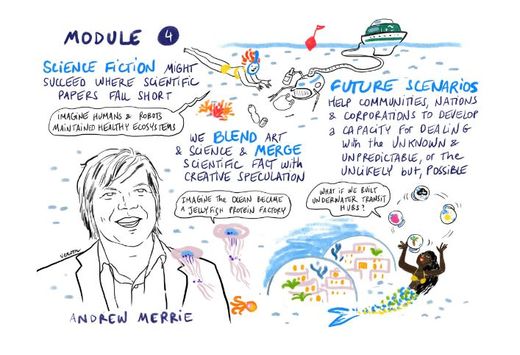
The first edition of this program is aimed at designing future scenarios related to uncertain outcome: biodiversity, marine science and technology, the possible collapse of ice sheets, the formation of deep-sea dead zones as a result of onshore pollution, etc.
Crafting new imaginaries for sustainability
As part of this program, students have the opportunity to work in contact with futurists and designers in order to explore, experiment and create desirable futures, in the context of future-oriented design projects.
The course was developed by Professors Aurélien Acquier, Valentina Carbone and Martin Lauquin.
They also wrote an Impact Paper “Crafting new imaginaries for sustainability? What design fiction can bring to sustainability education”, one of the 54 contributions to the just released “Better Business: Creating Sustainable Value” e-book.
To address sustainability challenges through the Design Fiction perspective, ten lecturers and experts were involved to provide students with an ability to engage with diverse temporalities and perceptions at different scales (individual, organisational and societal); to research, understand and synthesise insights from diverse disciplines; to be critical about unquestioned assumptions; to detect key ethical and cultural dimensions of our era and society; to be constructive by using various media to convey and stimulate longer-term visions of the future, and to be able to raise questions for today models and behaviour.
The lecturers were very helpful with providing students with insightful inputs about:
Linking design fiction to sustainability: the importance of new imaginaries to coconstruct the transition towards a sustainable future
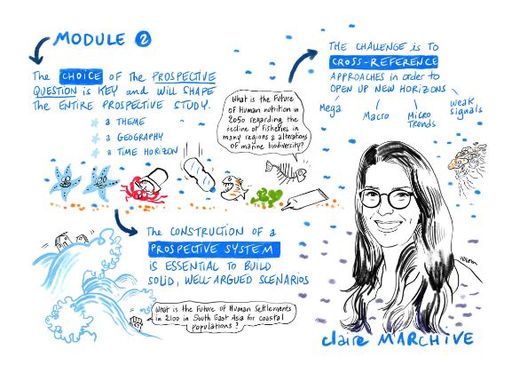
Framing the prospective question
Confronting with experts and choosing the most structuring themes for the future
Formulating challenges
Defining scenarios and possible worlds
Generating solutions in response to challenges
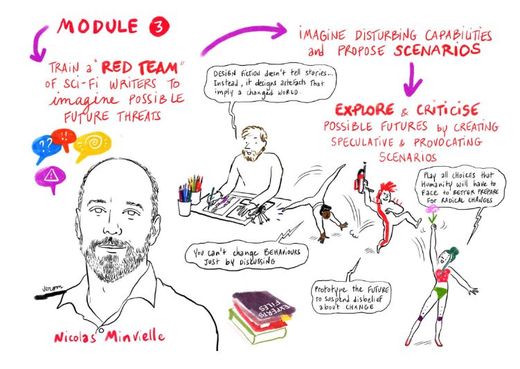
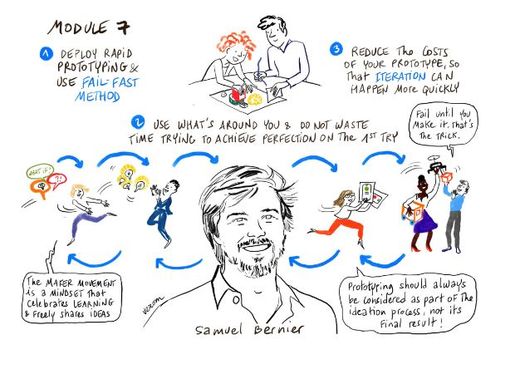
Prototyping to stage the answers to the challenges of our possible futures, to project them in a semi-realistic framework, in order to trigger action for future and favor debates on the present
Pitching prototype
On March 30, during the 9th and final module, students got the opportunity to meet François GAILL, Emeritus Director of research in CNRS, in charge of the scientific board of the Ocean & Climate plateform to discuss “Oceans 2100”. The 5 students’ groups were asked to present their work to a Jury gathering:
- Onepoint
- Systemiq.earth
- Think Tank about the future of oceans
- Finistère 360
- HOALI
- Les ECHOS
As an example, Design fiction “Nova Atlantida” explores new horizons in the world of the underwater living. Sea-levels rose to unlivable heights and forced air breathers and land creatures to change their ways of life forever. Scientists and industrials joined forces and created a world that would allow the human species to prosper, rather than drown. This Alliance went to extreme lengths to reverse climate change and restore a habitable planet that had not been seen since before the age of industrialization.
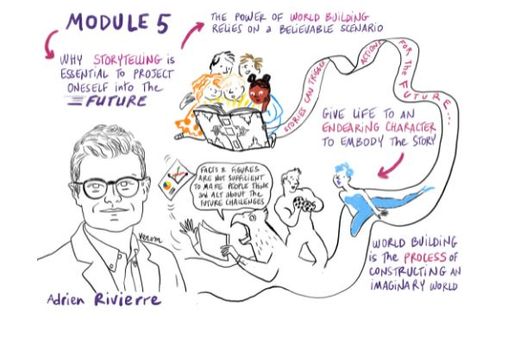
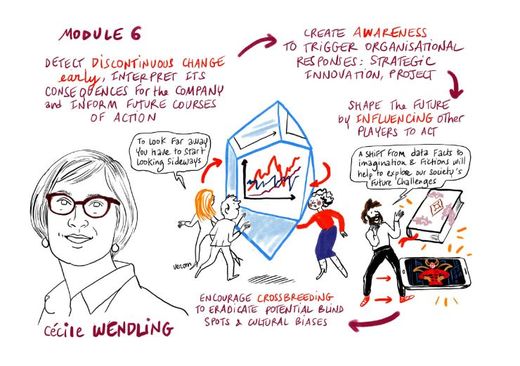
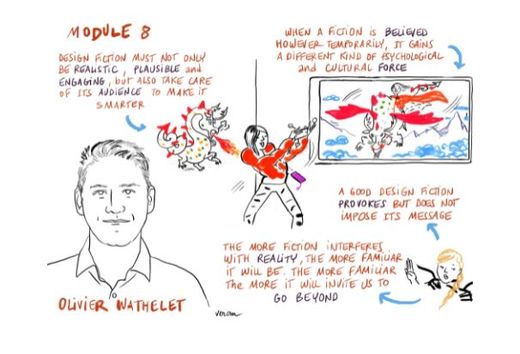
Warm thanks to Martin LAUQUIN – Creative Strategist, Expert on Design Fiction and strategic thinking, Claire MARCHIVE – associate specialized in Foresight methodologies, Nicolas MINVIELLE– Professor of design and strategy at Audencia Business School since 2008. He is working closely with scientific and military experts to imagine the threats of tomorrow as part of the RED TEAM, Andrew MERRIE – Researcher at the Stockholm Resilience Centre. Coordinator of Radical Ocean Futures, Adrien RIVIERRE – Recognised expert in public speaking and storytelling, Dr. Cécile WENDLING – Group Head of Foresight at AXA, Samuel BERNIER – Designer and expert in manufacturing techniques, Olivier WATHELET – Expert in anthropology and design fiction…


Campuses
![© Adobe Stock - Tierney [copyright]](/sites/default/files/styles/event_news_une/public/2021-07/Tierney-AdobeStock_436257614.jpg)
Campuses
![© EFMD [copyright]](/sites/default/files/styles/event_news_une/public/2021-07/hands-4086851_1920-1024x683.jpg)
Campuses