
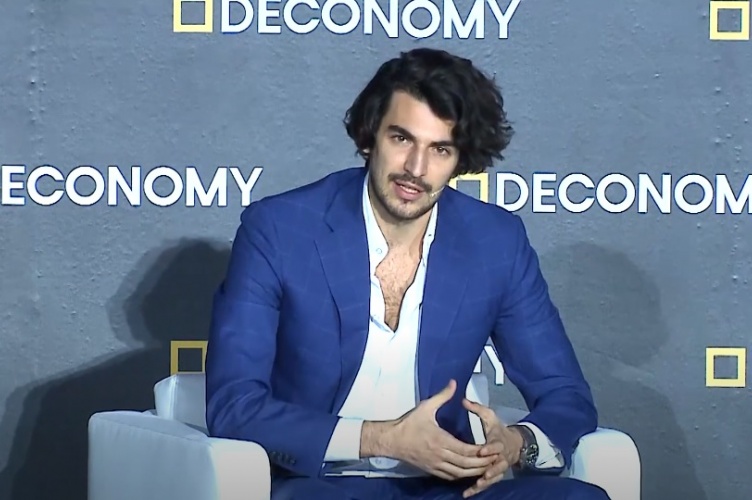
We are proud to see an ESCP talent among the young disruptors recognized by Forbes Italia in its annual "100 Under 30" list once again: Ulisse Dell'Orto, Master in Management Alumnus, blockchain enthusiast & crypto investor, and, foremost, Managing Director APAC at Chainalysis, the world's leading provider of Anti-Money Laundering software for virtual currencies.
We had a chat with Ulisse about his career and outstanding accomplishments, diving into blockchain, cryptocurrencies, and much more.
Forbes Italy has recognised you as one of the most talented young leaders who are changing the face of finance, listed among the 100 under 30 2021. Bravo! It’s a fantastic result! What’s it like to be a Forbes honouree?
Being a part of this unique group of individuals is an honour. It motivates me to continue this journey and is a reminder that we can achieve anything we want as long as we are willing to put in the hard work.
You are Managing Director for the Asia-Pacific region at Chainalysis Inc., the world's leading compliance and investigation software solution for money-laundering prevention. How do you become an Anti Money Laundering (AML) expert and leader?
Five years ago, I would never have imagined being in this position. My passion for blockchain led me to attend one of the world's first blockchain universities in the world in 2017, and subsequently join this fantastic company. Since then, I have been constantly exposed to financial institutions, cryptocurrency businesses and law enforcement agencies, which has provided me with a unique understanding of this nascent industry. Today I spend a great deal of my time educating key stakeholders in the industry about money laundering prevention.
You are the founder of Blockchain Bible, a community of blockchain entrepreneurs, mentors, and investors. What kind of mindset do you need for a successful career in blockchain?
The blockchain and cryptocurrency space moves rapidly. Anyone who is interested in joining this industry will certainly not be bored but will need to show a lot of resilience. Anything can happen in six months. Due to the fact that the technology is still in its infancy, one year feels like ten.
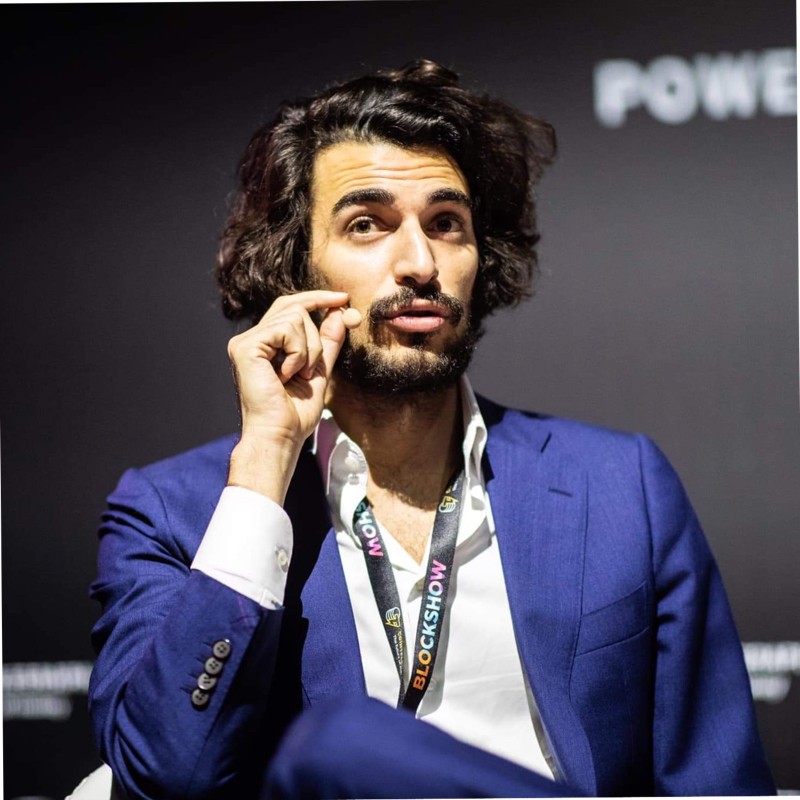
In what way did what you learned at ESCP help you achieve your goals?
ESCP exposed me to an international environment from day one. This is the best preparation for real-life interactions. Living in three countries in two years has made me more resilient and pushed me to leave my comfort zone.
How can Money Laundering be prevented? How can cryptocurrency businesses comply with the new global AML standards?
Cryptocurrency has a reputation for being anonymous and untraceable, but it actually operates on public, transparent blockchains. We’ve found that once lawmakers, regulators, and law enforcement agencies understand this, they realise that crypto can actually help - not harm - their mission to weed out illicit activity. Cryptocurrency businesses should have a Know Your Customer (KYC) program as well as real-time transaction monitoring to align with global AML standards, detect suspicious activity, and provide reporting to regulators.
Over the last few months, the impressively rapid rise of cryptocurrencies has pushed traditional financial institutions to launch digital currency products. Did the sudden bitcoin collapse in May and June affect this trend? Did it hurt the overall credibility of the crypto market?
Cryptocurrency is volatile and investors should expect that volatility to continue. Still, cryptocurrency was one of the best performing asset classes throughout the covid crisis and financial institutions are experiencing unprecedented demand from their customers. We are noticing a rapid raise in investments coming from financial institutions rather than retail investors. This will continue to make the space more legitimate and limit volatility over time.
What future do you foresee for cryptocurrency?
Rollout of global regulations that will help legitimize the industry, increased adoption by more traditional financial institutions, and cryptocurrency businesses using blockchain data to better understand their customers and gain a competitive edge.
Do you have any tips for Crypto Investors?
First, I would like to clarify that this is not investment advice. I believe that it depends on the type of investors we are talking about. Cryptocurrencies remain highly volatile assets. Firstly, I would suggest learning about the industry and the different protocols operating today. Bitcoin and Ethereum are the two largest public blockchains in the space at the moment. Bitcoin should be considered as digital gold/store of value, whereas Ethereum is a medium for innovation that enables the creation of many innovative projects (Defi, NFTs). Investors should also take a close look at stable coins as a more stable store of value and global commerce. Last, but not least, meme coins such as Doge or Shiba could be considered by investors with a high-risk tolerance considering that these are risky investments. I would generally recommend adopting a long-term approach (5 years+) - cryptocurrency is here to stay.

Campuses
Related stories

News 07/06/2021
Success Story
MIM student Riccardo Angioli recognised in the Italian #ForbesUnder30 at only 22
Forbes Italy Top 100 Under 30 2021 ranked an ESCP Master in Management student as one of the young leaders doing great things in the Venture Capital sector: Riccardo Angioli. He is the youngest talent in his category, nominated when he hadn't yet celebrated his 23rd birthday. In 2019, Riccardo co-founded, with Roberto Sfoglietta, Starting Finance Deal, a company that connects start-ups looking for funds, with investors.
Madrid
Paris
Turin

News 17/05/2021
Turin News
ESCP Alumnus Federico Dalpozzo in the Italian #ForbesUnder30
We were delighted to see among the young disruptors recognised by Forbes Italia in its annual “100 Under 30” list, an ESCP Alumnus: Federico Dalpozzo. He has been selected as one of the young talents who are leading the way in the Marketing and Advertising sector.
Turin

News 24/03/2020
Turin News
Matteo Frescobaldi is among the Italian #forbesunder30, ESCP alumnus and 30th generation of a family firm with 700 years of history
Matteo, Master in European Business alumnus, class of 2012, is the youngest member of the thirtieth generation of Marchesi de Frescobaldi, a family firm with seven hundred years of history.
Turin

News 05/05/2020
Turin News
MIM Alumnus Romolo Ganzerli recognized in the Italian #forbesunder30
Forbes Italia has released its annual “100 Under 30” list. We are delighted to see among these young disruptors ESCP Alumnus Romolo Ganzerli, cofounder of MammaPack, in the Retail category. He has been selected as one of the young leaders who are on the fast track for rethinking our relationship with e-commerce.
Turin
News 06/07/2021
Success Story
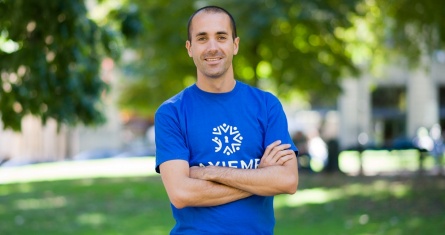
ESCP Alumnus Edoardo Monaco among the "100 Leaders Insurtech" by Forbes Italy
On the occasion of the first edition of Insurtech Day, Forbes Italy has published a special issue dedicated to Italy's top 100 Insurtech leaders: among them Edoardo Monaco, co-founder and CEO of Axieme Group, as well as ESCP guest lecturer and Alumnus (Master in Management, class of 2009).
Turin

Campuses

Have you ever thought about the digital carbon footprint of your daily online activity?
Each action we perform online has an environmental impact: every time we send an email, use the Internet or social media, a small amount of carbon is emitted.
With over 4.66 billion active internet users worldwide, around 60 per cent of the global population, the digital behaviour of each of us can make the difference.
In the last two decades, digitalisation has had a positive impact on the environment. Still, the Internet does not come out of nothing, and even the adoption of digital has its price.
Digital Carbon Footprint figures:
- digital technologies are responsible for 4% of greenhouse gas emissions (GHG), and its energy consumption is increasing by 9% a year.
- the internet emits 1.6 billion annual tons of greenhouse gas emissions.
- the communications industry will represent 20% of all the world’s electricity consumption by 2025
- more than 50 million tons of e-waste were produced in 2019 alone, a number that's expected to rise by 8% each year.
These numbers show how every single click is energy-hungry and has an impact that we don't see, but that, indeed, we shouldn't ignore anymore.
The awareness of this issue is rising, but there is still a lot of work to do. It is urgent to make a change by using a responsible digital approach, both individually and within organisations.
New generations are more aware of this problem and are keen to take action. Future managers will play a key role in driving environmental innovations and improvements in sustainability performance in the companies they will work with.
ESCP Green Hackathon on the Digital Carbon Footprint
From the beginning of 2021, the Master in Management Impact Entrepreneurship students developed sustainable business ideas presented during the final event, the "Choose to act! Pitch your project for change", in April. The winning team was Cloudwise, made up of Pietro Carabelli, Francesco Cundari, Giada Gatti, Caterina Nassi and Romain Van Gaver. Their project aims to reduce businesses’ digital carbon footprint and focuses on increasing awareness of the emissions created by digital communication.
Inspired by their idea, ESCP Turin Campus decided to centre the second edition of the ESCP Green Hackathon on the Digital Carbon Footprint, involving several companies in the project.
"The digital carbon footprint that we create with every email and each message on WhatsApp is really a problem that is not being seen enough. With this Hackathon, we can contribute as a business school to launch new trends and grow new ideas that can truly create a positive and sustainable impact. I see our responsibility in this", said Alisa Sydow, Assistant Professor of Entrepreneurship & Innovation at the ESCP Turin Campus and host of the ESCP Green Hackathon | Digital Carbon Footprint that will take place on the 9th of November.
We have chosen to challenge ESCP students with an exciting new hackathon focused on this increasingly concerning topic for many decision makers. Our students' perspectives and ideas can be valuable for companies, and we would like to understand how to make them achievable in the business world.
It's time to act.
So, now it is time to act, to think about how to incorporate sustainable practices in business IT strategy.
Technology firms have taken significant steps in cleaning their clouds, leading the way in adopting sustainable IT contributions. Still, each company can do its part in reducing its digital carbon footprint.
Implementing an ICT green strategy will lower the organisation's environmental impact and reduce costs as well.
It is time for companies to become aware of their digital impact and deal with this issue. It is time to start reducing digital emissions and increase companies' transparency and reputation.
While sustainability has become a priority globally, the digital carbon footprint seems to have been neglected by many decision-makers. The constant increase in digitalisation makes our digital world's carbon cost more and more relevant and impactful on our environment. This critical issue deserves serious attention and needs an acceleration on the transition to sustainable IT to shape a greener future.

Campuses
Related stories

Event 08/06/2021
Online Event
ESCP Green Hackathon | Digital Carbon Footprint
Worried about our digital carbon footprint? Join us in a unique event: the ESCP Green Hackathon | Digital Carbon Footprint on November 9th. Now it is time to think about how companies can reduce their digital carbon footprint!
Turin

News 23/04/2021
Turin News
ESCP Green Hackathon: shaping a more Sustainable Future
AlixPartners has challenged ESCP students with a Green Hackathon. They were invited to contribute their ideas on how to create an ecological, sustainable and green future.
Turin

News 27/04/2021
Turin News
The next generation of Impact Entrepreneurs Choose to act!
From sustainability to digital, from health to education and IT, the projects presented by ESCP students during the “Choose to act! Pitch your project for change” investigated the varied issues facing our future lives.
Turin
An unprecedented partnership between Maison Cartier and two leading Business Schools
There is no one-size-fits-all approach to manage an academicChair. Fair to say, ESCP and HEC Paris made a bold decision to take on this stimulating challenge which offers both schools the opportunity to build a new tripartite and agile model around this great partnership and to pool from their respective resources to prove that 1+1 = 3.
The Cartier – ESCP – HEC Paris Turning Points Chair came to life in January 2021.
ESCP and HEC Paris have always questioned their responsibility to build the future and the role of education as a lever for societal transformation.
What is at stake? Students expect from their schools both an awareness of societal issues and a strong determination to act beyond the classroom. For several years now, ESCP and HEC Paris course offering has been enriched with mandatory courses integrating essential topics related to sustainability and ecological transition.
Sustainable development, new relationships to consumption, behaviour of generation Z, new ways of working... These are some of the many Turning Points the world is facing. It is thus essential to create spaces for reflection on these challenges, which is exactly the role of a Chair.
Time to celebrate!
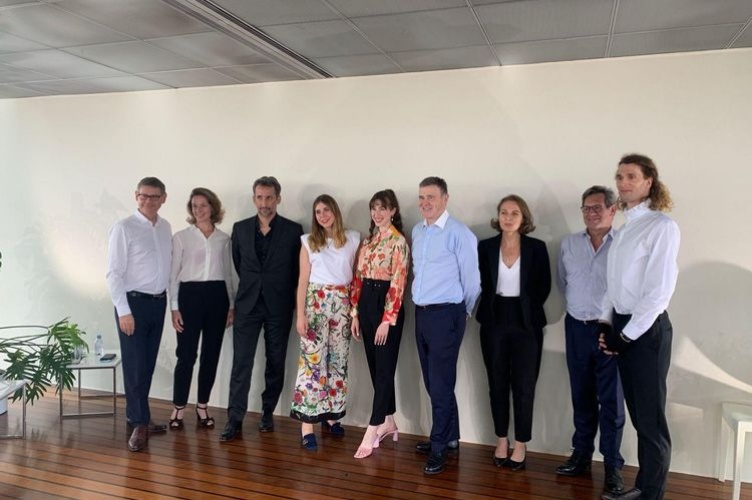
On Friday 9, Cyrille Vigneron (President and CEO, Cartier International), Prof. Frank Bournois (Executive President and Dean, ESCP), Prof. Eloïc Peyrache (Dean and General Director, HEC Paris),Prof. Anne Laure Sellier (HEC Paris) and Ben Voyer (ESCP), Chair holders, celebrated the first 6 months of the existence of the chair during a “Inspiration in Action” event.
Gathering about 50 guests from Cartier, HEC Paris and ESCP at the Fondation Cartier pour l’Art Contemporain, this event showcased the first inspirations stemming from the Chair’s activities.
Cyrille Vigneron (ESCP Alumnus 82), launched the event by saying “There is a gap to be filled between business and academic research. That’s why we saw the need to bring academic rigor to our observation of the world around us. There is a succession of signals coming from society we cannot ignore: we have to think about those turning points and act”.
During an open-discussion “In conversation with,” Cyrille Vigneron and Professors Anne Laure Sellier and Ben Voyer discussed why Cartier had been interested in a setting up a Research Chair tackling philosophical questions, and why a Chair centred around today’s and tomorrow’s turning points was key.
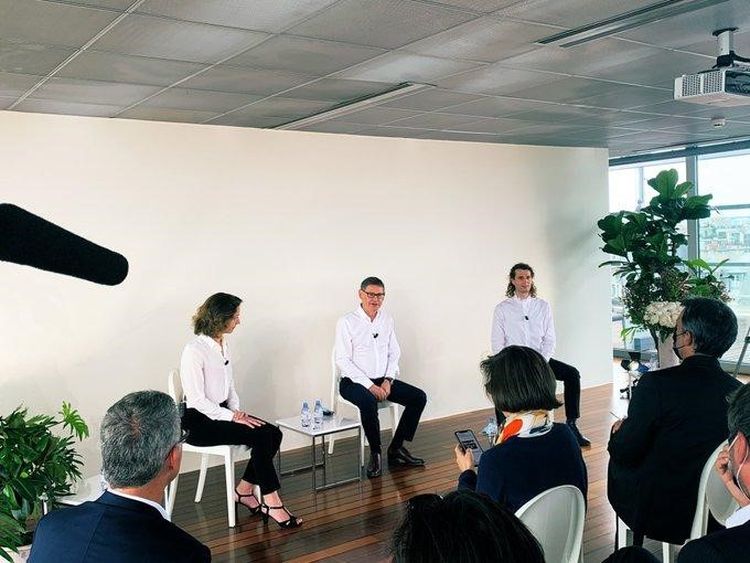
“We have taken a research-oriented approach because we are convinced that academic research can have a positive impact on business practices and society. As Professors, our job is not only to teach knowledge, but to make students see the world differently and think critically. The pandemic has forced us to stop, pause and think. We had to ask bigger questions that take time to answer. We’ve turned this Covid period into a source of inspiration.
We want our Chair to be a playground to explore core issues such as new forms of consumption, de-consumption, sustainability, gender… What makes this Chair unique is its ambition to foster transversal thinking and to confront the reality of today’s world - something that not all coporations are ready to do."
Prof. Frank Bournois and Eloïc Peyrache praised Cyrille Vigneron for giving ESCP and HEC Paris this outstanding opportunity to collaborate.
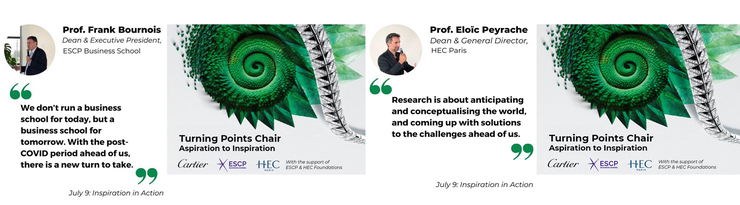
The ambition of the Chair is to share a research culture and to inspire Maison Cartier to face the current and future challenges of the business world and its societal issues. It is a great project that will not only benefit from research conducted by two professors from both Schools, but also a whole community of students and Alumni.
The GenZ Observatory is a prime example of how both schools’ students can contribute to the Chair’s activities. The Observatory is an initiative from the Turning Points Chair to study emerging generational and cultural changes. Each month, students are challenged to become trend spotters and opinion seeker on a given topics. The Observatory has already explored a wide range of topics such as work and workplaces, activism, interpersonal relationships or sustainability.
Sylvie Rood and Martina Bersani, both ESCP students, are content curators for the Observatory. They shared food for thought and inspirational learnings from their work so far.

“Professionally, GenZ employees want to do things that they are inspired by and that create impact. They want to be value creators. They also crave for mental health and life balance while being ready to take on multi-experiences and multi-challenges”.
Research results and insights shared today will inspire and prepare both students and managers for upcoming challenges. Keep connected with the Turning Points Chair!
Campuses


Invisible Calculations: How to leverage neuroscience and behavioural economics in accounting and decision-making
The power of applying behavioural economics research to solving real-life problems has proven its worth for society, politics, and finance since the late 1970s. In this Executive MBA webinar, Professor Francesco Venuti explains how you can leverage the latest research to generate positive outcomes in accounting and decision-making.
If someone were to ask you to describe your feelings about financial accounting, “passion” and “intrigue” might not be the first words that come to mind. However, when taught by Professor Francesco Venuti, even the most artistic souls could be convinced that the subject is fascinating and inspiring. In his webinar "Invisible Calculations: How to leverage neuroscience and behavioural economics in accounting and decision-making", Professor Venuti gives us a glimpse into how behavioural science and neuroscience research could empower decision-makers.
Why Behavioural Accounting Matters
Since the late 1970s, the power of applying behavioural economics research to solving real-life problems has proven its worth for society, politics, and finance. As the field evolves, so do its applications. Behavioural accounting, for example, takes what is one of the oldest recorded human activities and uses the insights of behavioural science to better understand, explain, predict and correct for the consequences of human behaviour in accounting.
Professor Venuti reminds us that the most basic definition of accounting is “to count” and argues that at its heart, the reason we are compelled “to count” is to make sound decisions. The process behind how we make decisions–input, processing and output–is important, but the way we frame and present this information, i.e. the context, might be just as, if not more important. Take, for example, an optical illusion that tricks the viewer into thinking two squares on a Rubik's cube are different when they are, in fact, the same colour. Once the illusion is revealed, we become empirically aware of this sameness, yet we continue to see the two squares as different colours. In this case, the difficulty in correcting cognitive bias reveals the fact that we see with our brain, not with our eyes.
An Essential Skill For Managers
Similar to the Rubiks cube illusion, how we process financial information will depend on context or framing and have real-world implications. A person presented with an investment product framed within a volatile market will have a very different risk profile from a person presented with the same product when the potential returns are presented optimistically. As this scenario shows, neutral decisions are a near impossibility because the information shared will never be devoid of context nor free from the influence of prior decisions.
Sound decision-making tactics are essential for leaders, yet neuroscientific studies have exposed innumerable examples–herding, anchoring, and self-herding–of how our brains can betray rational decision-making. Certain models, such as simulation models, can help in attenuating certain behaviours; however, knowledge of their existence remains one of the more effective methods/tactics to correct for. Awareness of these potential pitfalls has become an essential skill for managers and executives to acquire to counter negative outcomes that come from hidden cognitive bias, which is why the Executive MBA at ESCP Business School has integrated elective courses that teach the latest research and, most importantly, how to use this research to one's advantage.
Executive MBA Elective Courses
For a full list of Executive MBA Elective Courses, including "Behavioural and experimental economics for business and managers" and "Behavioural corporate finance and investors psychology", download the Brochure.
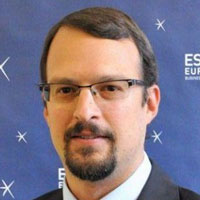
Francesco Venuti
Associate Dean, EMBA and GMP
ESCP Business School
Professor Francesco Venuti is the newly appointed Associate Dean of the Executive MBA and General Management Programmes. As a professor of accounting, his major fields of research include financial accounting and reporting (with a specific focus on Insurance companies), nonfinancial disclosure, food & beverage and behavioural accounting. He is a member of the Accounting for Banking and Insurance Research Lab (ABIREL) at the University of Turin. Professor Venuti is the 2021 recipient of ESCP’s Teaching Award.
Last week, a draft report from the United Nation's Intergovernmental Panel on Climate Change (IPCC) was leaked by the Agence France-Presse. Though certain elements of the report may evolve between now and the scheduled release in February 2022, one message rings clear:
"Current levels of adaptation will be inadequate to respond to future climate risks." The consequences of inaction threaten the lives of humans and the earth's many organisms. Not in 100 years. In the coming decades.
Change is needed at all levels of society, from the private to the public spheres. And technology is seen more than ever as an indispensable tool to make this happen.
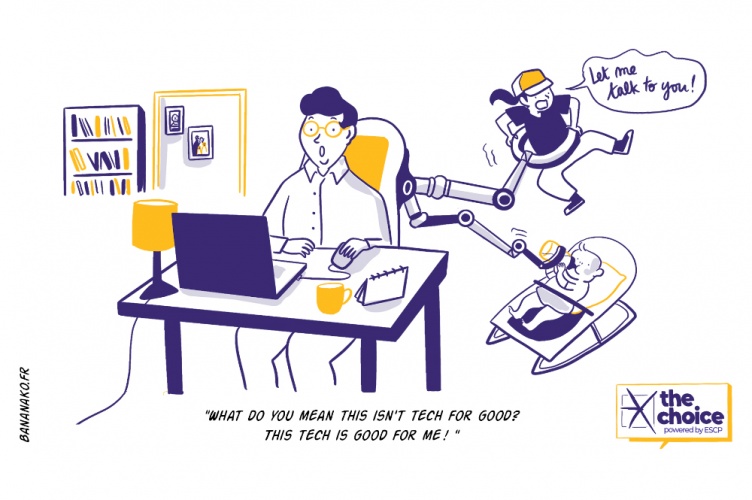
This month on The Choice, the ESCP community reflected on technology as a solution to society's most pressing challenges. In other words, Tech For Good.
1. Article of the Month
TechForGood: what can we really do with technology to achieve good?
We take a closer look at the TechForGood movement with ESCP professors Aurélien Acquier & Terence Tse.
We live in a time where technology and social issues have never been more closely linked. So, how should tech entrepreneurs and innovators be approaching this relationship to create meaningful change? We take a closer look at the TechForGood movement with two ESCP professors Aurélien Acquier & Terence Tse.
Read More2. More Top Stories
3. Show me the Data

4. Podcast of the Month

5. In case you missed it
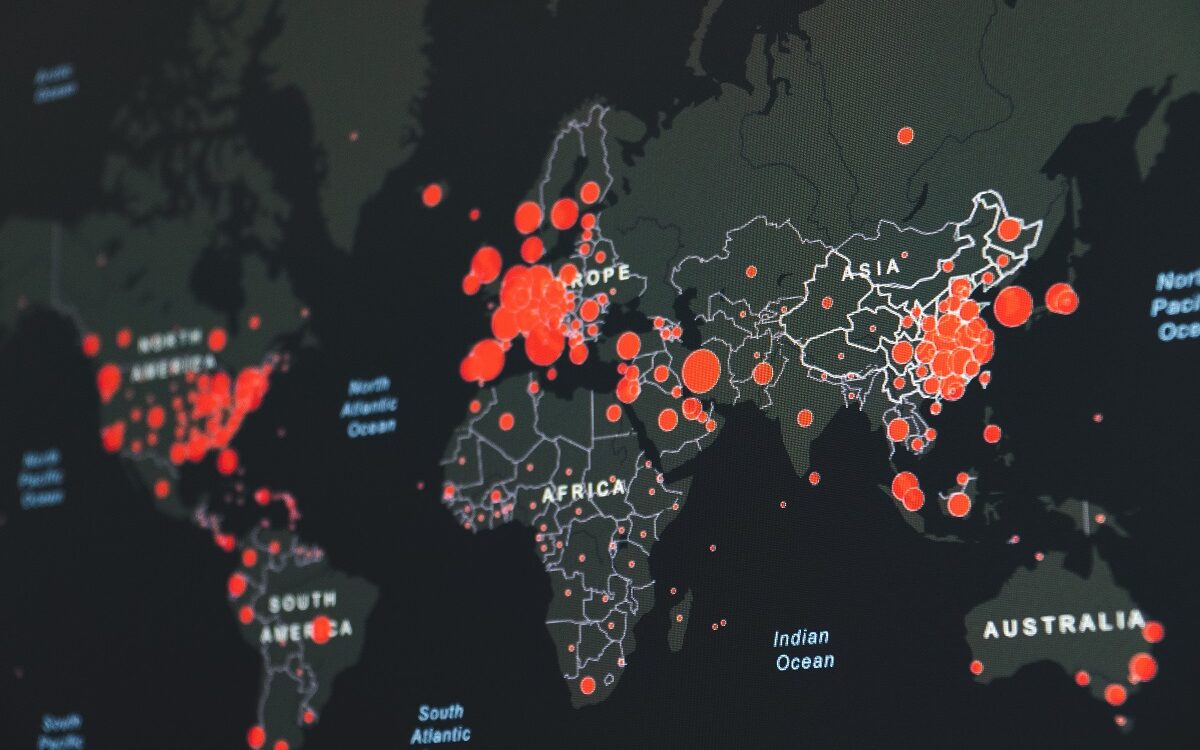
“People tell me: your charts help me understand the situation”.
Interview with Elias Orphelin, a 22-year-old student who took to Twitter to help France better understand the pandemic

The smartness of cities lies in its citizens
Prof. Ben Voyer looks at the role of citizens, who often took the back seat to technology in smart city projects, and how the pandemic may have helped change this.
A SPAC dream come true?
This new investment vehicle has the wind in its sails despite the economic situation, as illustrated by what recently happened with WeWork or the songs devoted to it by a rap artist/investor.
AI for good: The case of using the technology for ESG
AI could provide more accurate and timelier ESG-related data,and help improve the various ESG indices and enable investors to make more informed investment decisions in companies that are truly ESG-compliant.


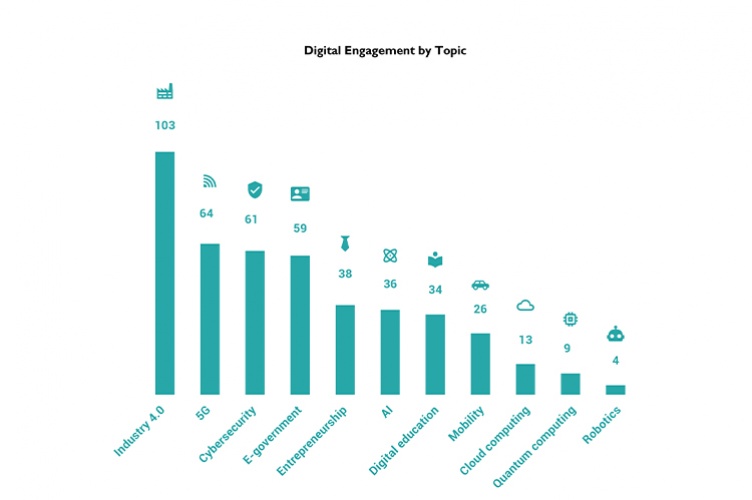
That is one of the main results of the Digital Engagement Report 2021, an in-depth analysis of all 27 European nations’ digital priorities published by ESCP’s European Center for Digital Competitiveness.
The year 2020 was characterised by the Covid-19 crisis, but the digital priorities of European heads of state and governments shifted only slightly in reaction to it. Compared to the 2019 analysis carried out by the European Center for Digital Competitiveness by ESCP Business School, topics around e-government and digital education, which were crucial for solving the crisis, received very little additional attention. Most emphasis was placed on digital infrastructure topics such as industry 4.0 and 5G. At the same time, future technologies like quantum computing and robotics were largely disregarded by most European leaders. “Europe’s future wealth will be determined by its competitiveness in the technologies of the future. When it comes to chip technologies, for example, we already see today what significant negative effects a lack of such capabilities can have. We finally need large-scale investments in digital future technologies such as quantum computing and robotics,” comments European Center for Digital Competitiveness Founder & Director, professor Philip Meissner.
Leaders also largely neglected entrepreneurship and digital education
In the last year, industry 4.0 and 5G had the most digital engagements (103 and 64, respectively) – a trend reflected in digital engagements by the leaders of Europe’s two biggest economies: Angela Merkel had the most digital engagements with regards to 5G, while Emmanuel Macron put industry 4.0 in the spotlight.
Future digital technologies, conversely, were largely disregarded. Across all European states, quantum computing had nine engagements, while robotics had four, amounting to merely two and one per cent of all engagements, respectively. “The last year has shown that digital future technologies are key factors in solving our most pressing problems, such as dealing with pandemics, preserving our digital sovereignty and tackling climate change,” adds European Center for Digital Competitiveness Founding Supporter Christian Poensgen. However, crucial areas in this regard, such as entrepreneurship (38 engagements) and digital education (34 engagements), remain a low priority for European heads of state and government.
Campuses
The 2021 Full Faculty Meeting took place on 28 and 29 June, with professors working studiously before a few were rewarded for their outstanding efforts during this unusual academic year.
“After this difficult and intense year, the Full Faculty Meeting was designed as a nice way for faculty members to interact with each other, meet new colleagues and build a common future before a well-deserved summer break,” explains Faculty Dean Valérie Moatti. Online research workshops were followed by an exchange led by Associate Dean for Learning Innovation José Ramon Cobo on learning innovation experiences: best practices, challenges and success factors. On the second day, Associate Dean for Sustainability Aurélien Acquier gave an update on sustainability at ESCP before a dedicated workshop, the plenary session and the awards ceremony at La Recyclerie.
“ESCP faculty awards are given every year following a thorough process by the European Faculty Advisory Committee (EFAC), who selects one nominee per campus for each category. The selection of the final award recipient is debated among EFAC members who arbitrate based on objective facts and figures,” sums up Prof. Valérie Moatti. “2021 recipients fully deserve their awards and we are proud to have very talented professors in all fields at ESCP.”
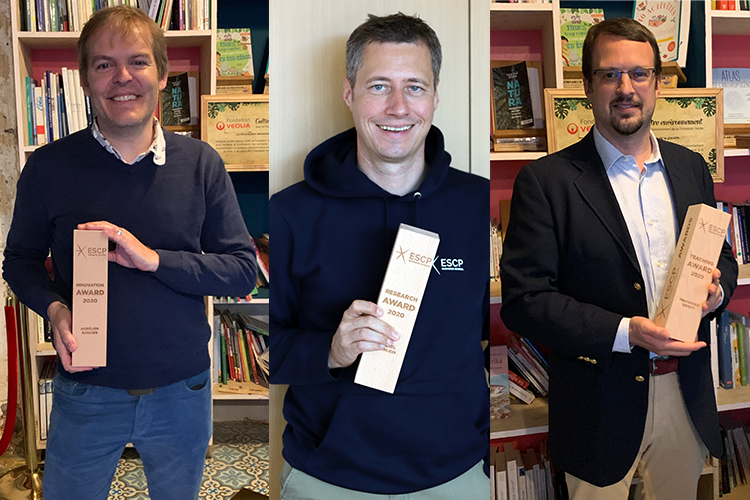
Professor Francesco Venuti received the ESCP award for teaching. “He got excellent feedback from the students and also had a strong visibility related to his teaching practice and innovation in 2019/20 - two articles in Harvard Business Publishing about online teaching and discussing sensitive topics like Covid-19 in class -, and thus a teaching impact much beyond ESCP’s walls,” comments Prof. Valérie Moatti.
Profs. Aurélien Acquier and Ann-Charlotte Teglborg received the Innovation Award for their Designing Tomorrow - Business & Sustainability seminar: “They completely reshuffled the opening seminar of the pre-master towards sustainability and how to include sustainability in future leaders’ management practices and mindset,” adds Valérie Moatti.
Professor Michael Haenlein received the Best Researcher Award. “His research outcomes are outstanding, he is widely recognised as one of the key worldwide experts in his field and on the top marketing journals’ editorial boards,” comments Associate Dean for Research Pramuan Bunkanwanicha.