

From faculty research and professional support to student-led initiatives, ESCP is working to strengthen mental health awareness across its community.
Academic ambition, career uncertainty, new relationships and the challenge of finding one's place. Student life brings opportunities for growth, but also pressures that can affect mental health in ways that are not always visible.
At ESCP, supporting student mental health and wellbeing is part of a broader educational responsibility. That responsibility is reflected in initiatives spanning faculty research, student experience, professional services and student-led activities.
Together, they show how mental health is becoming part of a wider conversation about inclusion, belonging and the kind of working environments graduates may one day help shape.
Supporting Mental Health Week at ESCP
18–22 January 2027
Organised by ESCP's Student Experience Wellbeing Teams, Mental Health Week will bring together activities designed to strengthen awareness, encourage conversations and help students support themselves and others:
- Mental and physical wellbeing through movement.
- Awareness of mental health and wellbeing.
- Peer support and mental health first aid training.
- Thinking and reflecting: round-table discussions with ESCP libraries.
All funds raised through the ESCP Foundation's Giving Tuesday campaign (running until December 1) will support Mental Health Week, helping expand its programme and reach more students.
Understanding the silent pressures students face
In summer 2026, ESCP's Invisible Identities Project, part of the Institute for Leadership and Inclusive Management, surveyed 576 students about invisible identities and their implications for the transition into professional life.
While students were generally satisfied and resilient, many described masking, concealing mental health difficulties or neurodivergent traits to avoid stigma. Nearly four in ten said they would not disclose an invisible identity at any stage of the hiring process.
For Professor Géraldine Galindo and postdoctoral researcher Vedika Lal who lead the project, the findings point to practical measures business schools can take to help students feel comfortable navigating.
“Business schools can increase conversations around and encourage support groups for students with various invisible identities [...] run career sessions on if and when to disclose, and help students check employers’ inclusion practices.”
Making it easier to ask for help
Across its European campuses, ESCP offers access to counselling, psychological support and wellbeing activities. However, making services available is only part of the challenge. Students also need to know when they might need support.
Benjamin Ensall, Health and Wellbeing Practitioner at ESCP’s London Campus, regularly encounters students navigating academic pressure, family expectations and uncertainty about their future careers.
He encourages students to reflect on how these pressures affect their everyday lives by asking themselves a simple question: “Am I fully coping, or am I not, and is it hindering my quality of life?”
For Ensall, it is important to communicate that recognising difficulties is not a sign of weakness. It is a first step towards understanding when additional support may be helpful.
He also believes educators have a role to play. By speaking openly about their own setbacks, they can help normalise the challenges that come with learning and career development. These conversations remind students that experiencing difficulties does not make them less capable.
Bringing mental health into the conversation
Alongside professional services, students are taking an active role in making mental health awareness part of campus life.
Fay Ootes, an ESCP alumna and former Head of ESCP’s student union AGORA, first developed a Wellbeing Week initiative at secondary school. She later brought it to ESCP and helped expand it across the School's European campuses.
“What the experience showed me is that students want to talk about mental health, but they need an easy, low-pressure way in. Many don’t know where to start, or worry about asking for help,” she recalls.
In February 2026, AGORA coordinated an Intercampus Wellbeing Week under the theme one school, one community, bringing students together through activities addressing physical, mental and social wellbeing.
By creating informal spaces for students to meet and share experiences, the initiative helped bring wellbeing into everyday campus life. Students can also access peer support through services such as Nightline at ESCP Paris Campus, which offers free, anonymous and confidential listening by fellow students.
Foster Ng, current Head of AGORA, sees continuing this work as a priority. “Students face the need to become more resilient whilst also dealing with more uncertainty,” he shares. “In a world where the pace of change is accelerating, AGORA is here to support students through the pressures that they face.”
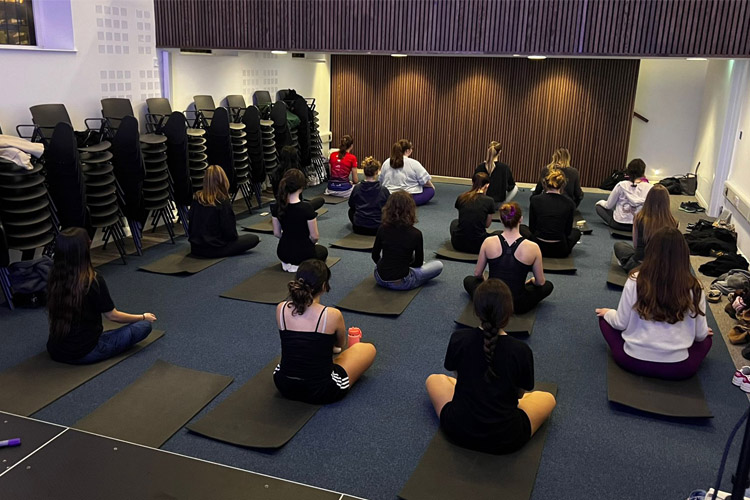 Students at intercampus well-being week 2026
Building a culture of care
At ESCP, students arrive from different countries and educational backgrounds, bringing different expectations about mental health, counselling and the relationship between students and staff.
For Professor Cécile Kharoubi-Rakotomalala, Senior Executive Vice-President for Inclusion, Diversity, Student Experience and Extension School, and Dean of ESCP Paris Campus, supporting mental health begins with recognising students’ different experiences and needs.
“At ESCP, mental health and inclusion are inseparable from the wider student experience,” she says. “Students around the world are facing mental health challenges that we, as business school leaders, may not always see or fully understand.”
Supporting young people, she adds, requires institutional leaders to remain “humble and attentive”, recognising that students' experiences and ways of seeking help may differ from their own.
Across ESCP, this means creating different opportunities for students to engage with mental health and well-being. Initiatives like the ESCP Foundation-supported Mind the Mind seminar and well-being activities that address counselling, mentorship and mental health awareness complement campus workshops on subjects such as stress management, nutrition, culture shock and the relationship between technology and mental health.
Together, these initiatives create opportunities for students to connect, share experiences and learn about available support.
Beyond campus: Wellbeing in the workplace
For business schools, the stakes extend beyond academic achievement.
As students enter professional life, they will encounter questions about workload, performance, inclusion and the wellbeing of colleagues. Some will eventually make decisions that determine how organisations respond to these challenges.
The relationship between well-being at responsible management is also a focus of research at ESCP. The WISE (Well-being for Individuals, Society & Enterprises) Research Centre, co-directed by Professors Almudena Cañibano and Charlotte Gaston-Breton, investigates individual and collective well-being in organisations and society through research on inclusion and care, mental and social health, and sustainable and technological well-being.
For future leaders, these questions begin well before entering the workplace. The way students learn to recognise their own needs, seek support and respond to others can influence the workplace cultures they will later help create.
As Professor Kharoubi explains, creating a supportive environment means ensuring that students feel “seen, respected and comfortable seeking help when needed”. “This goes beyond providing services,” she adds. “It is about fostering a culture of care, belonging and openness, where asking for support is recognised as a strength and where every student can thrive.”
Resources by Campus
Counselling and connection
Counselling and wellbeing
Psychological support
Healthcare and peer listening
Medical and counselling services
International SOS
Related Links
Campuses