
![© LSE Business Review [copyright]](/sites/default/files/styles/event_news_une/public/2020-12/Tse_AI_LSE.jpg)
Campuses
Re-live Berlin Andreas Kaplan's perfomance at the TEDxESCPBerlin 2020 conference.
In his talk, the Berlin campus's Dean provides the audience with an introduction on how can we re-think our future, what are the challenges we are facing and will have to face but also the opportunity and the power we have to shape our future! Professor Kaplan’s research focuses on analyzing and decrypting the digital world, in particular the areas of social media and artificial intelligence.
With several seminal articles and approximately 30,000 citations on Google Scholar, professor Kaplan has been counted among the worldwide top 50 business and management authors according to John Wiley & Sons. Furthermore, a Stanford study recently recognized Kaplan as one of the world’s top-cited and impactful scientists. Professor Kaplan has teaching experience in top-tier schools and universities such as Harvard, Sciences Po Paris, and Tsinghua University.
This talk was given at a TEDx event using the TED conference format but independently organized by a local community. Learn more at https://www.ted.com/tedx.
Campuses
Introducing The Choice
The new media powered by ESCP
In November 2020, ESCP launched The Choice, the new media dedicated to business leaders. Our ambition is to highlight the ESCP community's expertise on the business issues that matter and position the ESCP brand as a thought leader.
How was The Choice born?
In 2019, on the occasion of the school’s 200-year anniversary, we worked on the new ESCP brand platform.
Alumni from different backgrounds, all of whom shared a track record of excellence in different fields of communication, an unwavering commitment, and strong ambitions for their school, contributed their insight and experience to the process.
From the very beginning, we adhered to The Choice concept devised by TBWA, a global advertising agency. More than a simple corporate ad campaign, we were looking for a concept that would position ESCP and have real meaning for the school, at all levels.
What exactly are ESCP's strong choices?
The theme of the choice is of unparalleled richness because it characterises everything that qualifies a business leader. Learning how to make choices - individually or for one's company - is the condition for a successful career, because it mobilises all the skills we teach at ESCP.
You must first analyse and understand your environment, know your own assets, determine your value system, and be able to implement the decisions you make. This approach is valid for strategic and technological choices, as well as for moral, environmental, and ethical issues.
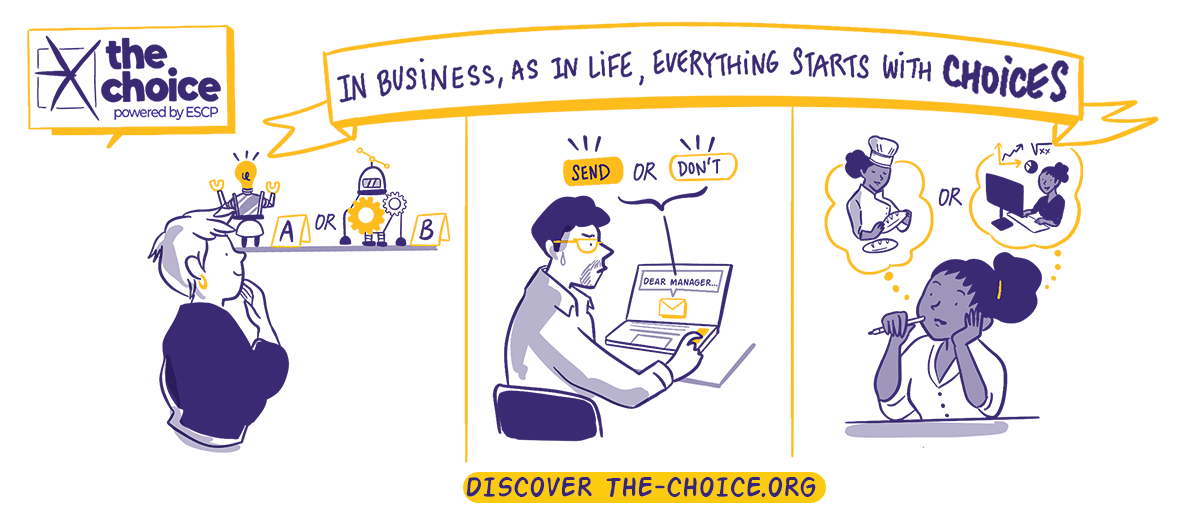
The younger generations we welcome at ESCP encourage us to embrace this holistic approach. For the new generations what counts is being successful AND having an impact on the world. As their ambition has increased tenfold, so have their expectations and desire for excellence.
Beyond teaching, this concept engages the whole school in its daily activities: How and why do students choose ESCP? What strategy does the school's management implement to rise to the top - knowing that there is no strategy without strong choices? What commitments does the school make to face the challenges of the 21st century?
There is a trap we did not want to fall into: building our singularity on current trends.
The trendy subjects of the last few decades: international development, then digital transformation, today sustainable development, are challenges that a leading school such as ours cannot choose not to deal with, but we will never stand out thanks to them! Everyone talks about them, for good reasons (because they are key issues for the world to come) or bad (because they are fashionable). We will differentiate ourselves by the lens with which we approach them.
And this lens is…?
Europe! ESCP is now firmly anchored in the world's top 20 business schools, and ranked even higher for several flagship programmes such as our MIM, EMBA or MS Finance...
ESCP is accredited by the best entities, at the national (in our campus countries) and international level. In this very exclusive club of business schools with a global reach, how can you stand out from the crowd? By unique roots that empower your singular vision of the world.
Until a few years ago, business leaders were global minded because the world was presented as flat. Today, the world is once again polarised around two powers. No more global world order! Even the GAFAMs collide with this wall, an alloy of cultures and geopolitical power relations! Europe must therefore be something different, besides a consumer market. Despite the ups and downs of Europe as an institution, Europe remains an economic power. It has many assets in terms of entrepreneurship and creativity; it trains engineers, financiers, entrepreneurs, in short, top-level leaders. Europe can be an economic force if it wants to; it has the talent and its humanist values are in tune with the needs of our times.
ESCP has a role to play. No school is truly global; there is no such thing. Any leading university or grande école contributes de facto to the soft power of its country or region. Harvard, Wharton, and Stanford convey a North American vision of the world. Chinese C9 schools promote a Chinese approach to business. Europe lacks a soft power.
ESCP is a European school and it is the only one. It is a strong choice that we have been making for 40 years now.
How does ESCP want to play this role?
Our mission, displayed everywhere on our campuses, is to educate and inspire the international business leaders of tomorrow, guided by our European values.
This means that beyond our central mission of research and teaching, provided to more than 7,000 students per year, beyond the services and unique experience that we offer them, we also have a role to play in disseminating knowledge and know-how to enlighten social, economic, political and institutional decision-makers...
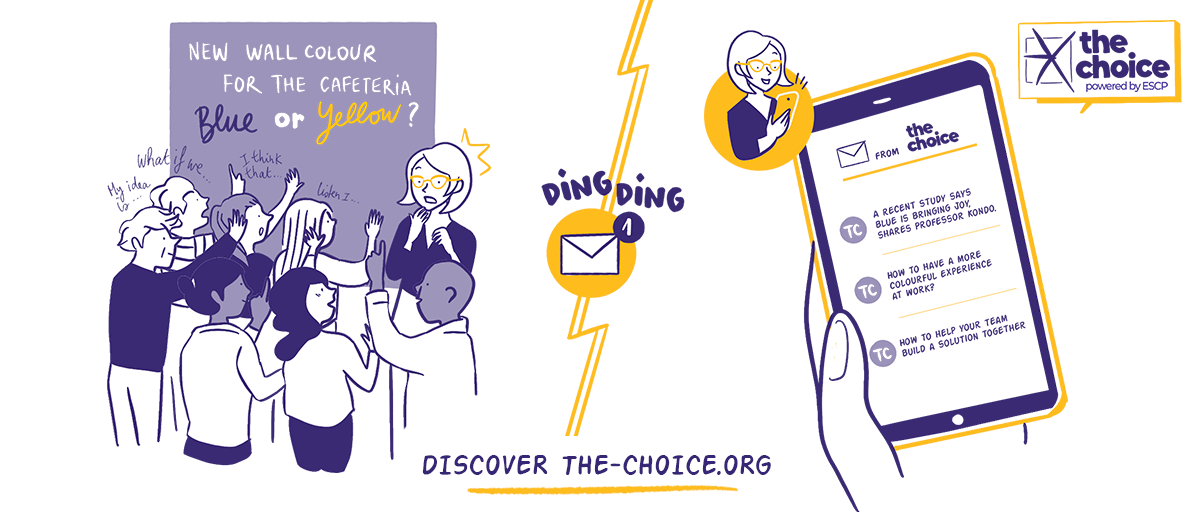
Our mission, which is to educate but also to inspire, is illustrated by The Choice, a medium that addresses major contemporary issues, at the decision-making level. It disseminates our professors’ research, our Alumni’s worldwide and cross-disciplinary expertise and experience, and our students’ commitments and achievements. We deal with topics related to business, management, entrepreneurship, career choices, but also more societal, geopolitical, environmental and technological issues.
What is the difference with a company blog?
The Choice is not a promotional blog!
It is not ESCP and its programmes that we are promoting. It is not a personal promotion media either, but a real media of analysis, of foresight, which should interest and engage targets - even if they are not planning to join ESCP!
The positioning of a brand such as ours does not depend on self-centred messages but on the ability to share its vision, values and content freely
This is the whole point of communication in the 21st century, which has changed since the advertising approach of the last century! Your contact with the Harvard brand is more likely to be through the Harvard Business Review than through their advertising campaigns or goodies. The media will be linked to the site but housed at a different address: the-choice.org. The Choice, powered by ESCP.
In concrete terms, what will be featured on The Choice?
The Choice is a team project, led by a colleague who was specifically hired for this task.
We work with the communications, chairs, and research valorisation teams, and with all campuses. Each month we tackle a subject with an ad hoc editor (professor, alumni, etc.). From January on, we will also be working with an agency founded by an alumnus.
In terms of content formats, we have many ideas, as we are targeting an audience of decision-makers who want to learn and discover new ideas by making the most of their rare downtime. So we do not only have articles and interviews but also infographics, book and press reviews, and key statistics that are selected and commented on by professors. We are also exploring podcasts as they allow for a more in-depth study of certain subjects while remaining an “on-the-go” format that can be enjoyed while commuting, walking the dog or around the home.
We are working on promoting The Choice through the school’s communication channels and partnerships with media. We also hope to count on the ESCP community to support us by promoting The Choice among coworkers, friends and across social media. If you’d like to contribute to the media, you are welcome to contact the editorial team at contact@the-choice.org.

Contact(s)

On 19th November 2020, ESCP Business School hosted its annual Entrepreneurship Festival. The event, which gathers numerous students, professors, alumni and external guests, was previously organised at five of the School’s European campuses as a local initiative. This time around, in a truly entrepreneurial spirit, ESCP adapted to the challenges of the Covid-19 era and offered a new formula, connecting simultaneous events by the whole ESCP community online and allowing anyone in the world to join.
The Festival was organised thanks to co-creative efforts by the School, current Option-E students from the Master in Management programme (ranked 6th worldwide by the Financial Times), the ESCP Blue Factory and the Jean-Baptiste Say Institute.
23 teams of Option E students from the Berlin (6), Madrid (6) and Paris (11) campuses presented and tested their prototypes and received valuable feedback from the community during 53 short sessions. Students were asked to reach out to investors, external guests, potential customers and early adopters to test their ideas, prototypes and MVPs. This would serve to further improve their concepts, which would be presented as final pitches during the Demo Day on 11th December. The main subjects included health and wellbeing, sustainability, gender equality, circular economy, smart cities and organisations, education, food and financial inclusion.
At the London Campus, where the Festival hosts both Summer and Winter editions, the event was organised by Prof. Davide Sola and revolved around the theme of ‘Developing New Opportunities in the New Normal’. During the Winter Edition, there were seven start-up teams - Go Guru, WHOUT, Stop scrolling, DARU Cocktail Cubes, Bike Around, ScanMe, SmartSole – all comprised of international students. The teams commenced by showcasing their ventures at a virtual simulation trade fair, where customers, investors and other guests were able to discuss projects one-to-one and the students could test the first prototypes (MVP) of each business. Later, the teams pitched them to a panel of entrepreneurs and executives.
The Summer Edition of the Entrepreneurship Festival is run exclusively by the London Campus as part of the MBA in International Management, MSc in Marketing & Creativity and MSc in Marketing & Digital Media programmes.
This year, it took place on 26th May and saw more than 600 attendees during the all-virtual event. 76 students from 31 nationalities worked remotely from more than 20 locations across the world. 15 innovative teams showed how entrepreneurial thinking and problem solving could be applied to the "new normal" that will emerge from the pandemic, building customer-centric and sustainable value propositions.
The Alumni Start-Up Award
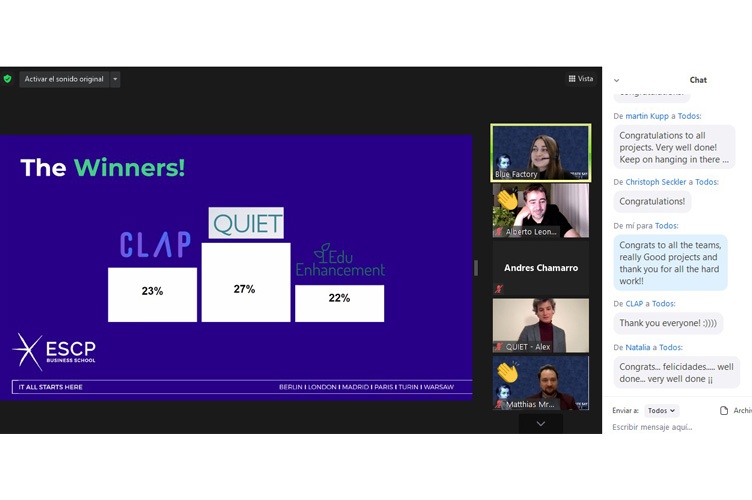
As part of the Festival, the Alumni Start Up Awards were organised with Blue Factory Start. Dedicated to student and alumni entrepreneurs who are launching projects, the START programme offers workshops, co-development and a workspace each semester to make concrete progress. During the event, the five best start-up companies of this year's START (nutriHUNT, Quiet, S.W.A.G., Clap and Edu Enhancement) pitched their business ideas to the audience, who later voted on which would win the prize worth €5,000.
After the Awards, the participants were able to meet some of the competing teams for a less formal chat, offer feedback on their pitches, or even become their mentor or investor in their business ideas. The meeting offered more senior alumni an opportunity to reengage with the School, give back to their community and meet with former classmates.
Keynote Speech by Guido Meardi
The Festival’s final act was an inspiring speech by Guido Meardi, CEO and Co-founder of V-Nova, placed 24th in the 'Tech Top 100 Entrepreneurs 2020’ in the UK by The Telegraph. V-Nova is one of the most promising high-tech start-ups in data compression and Artificial Intelligence in the UK and the world. Guido is a keen innovator, entrepreneur and investor, with relevant business-building experience and half a dozen exits. He masterfully presented the key challenges that an entrepreneur faces, in particular in ventures that require significant upfront investment. He also candidly shared the good, bad and the ugly of moving from a career in consulting (a former Partner at McKinsey & Company) to a career as an entrepreneur.
The webinar with Guido Meardi is available to watch here.
The Winners of the 9th ESCP Entrepreneurship Festival
Alumni Start-up Award
Quiet
The London Campus Winter Edition
Overall Winner Prize: STOP SCROLLING
Elias Orphelin, Sahil Rawat and Hugo Fuentes
Panellists Winner: WHOUT
Riccardo Castelli, Lauren Fatalot and Joannes Forun
Virtual Stands Winner: DARU COCKTAIL CUBE
Aditya Menon, Shashank Kumar and Yuzhe Zhao
The ESCP London Campus Summer Edition
Overall Winner Prize: HOBBIZ
Loomba Kanika, Mariela Mortola Viteri, Neila Rebrab, Ciara Scannel and Giulio Tucci
MMK PRIZE: KIDSPACE
Isabella Andre Espinoza, Ana Pamela Aridjis Munoz, Chiedozie Onwuzulike, Aasit Thakkar and Leonie Wahl
MDM PRIZE: SOCIALIZE FROM HOME (SFH)
Diane Beeharry, Swayam Doshi, Emma Leucci, Aditya Mirani and Anouk Peynsaert
MBA PRIZE: BARTEZ
Hamza Bennani, Wajih Daou, Shakuntala Malakapalli, Jaya Oswal and Deepak Yadav
Testimonials
Davide Sola, Jean-Baptiste Say Institute Professor of Strategy and Entrepreneurship at ESCP London Campus, shared: “2020 has been a very difficult year for the world as a whole. We believe that the only way out of this hardship is through innovation and entrepreneurship. This is exactly what the students of the Creative Entrepreneurship course showcased at the JB SAY Entrepreneurship Festival. The panel was enthusiastic about the quality and depth of the work by the student teams, and they all agreed that these students have learned valuable skills which will help them in their careers, regardless of whether they become entrepreneurs.”
Martin Kupp, Jean-Baptiste Say Institute Professor for Entrepreneurship and Strategy at ESCP Paris Campus, commented: “The Entrepreneurship Festival 2020 was the biggest and most European festival that we’ve had so far. The COVID-19 crisis forced us to deliver the festival online, but we were able to turn this into an advantage and conducted a truly European entrepreneurship festival. The students tested their projects with potential customers (which the students had invited themselves) in parallel tracks for two hours. Students received valuable feedback from their potential customers, while testing the most critical hypothesis of their business models.”
Did you know that for the last few years, sustainable associations have been flourishing on ESCP campuses?
Some of them are more oriented to corporate changes and business strategies, others are more focused on innovation and SMEs, but all have a common goal: spreading awareness and positive change for the world of tomorrow.
The beginning of the academic year has been marked by several great initiatives and projects, such as the close collaboration between all the sustainable students’ associations of the school, namely oikos International (present on Berlin campus), NOISE ESCP Business School (Paris campus), Lighthouse ESCP (Madrid campus) and GEA Sustainability ESCP (Turin and London). Every month, representatives of each association gather on an online meeting with all of the sustainability contacts for the school and share some insights and ideas about future projects and possible collaborations.
We really look forward to implementing even more projects and events together with all the other green association in ESCP Business School, and even if we all managed to pursue our activities and meeting in spite of the pandemic, we cannot wait to build even more projects in person.
Special thanks to GEA’s Alix Clément for writing this article.
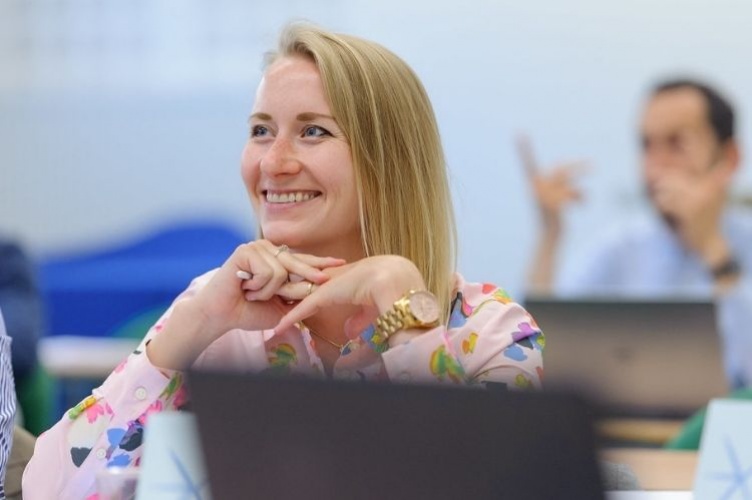
You're invited to join our MBA Masterclass on "How leaders can create an inclusive work environment", led by Prof. Dr. Kerstin Alfes, ESCP Berlin's Academic Director of the MBA in International Management, Alison Masse, Programme Manager and MBA alumni Pietro Gagliano and Manas Shukla.
Diversity in teams can lead to higher levels of creativity and innovation and improve team effectiveness; however, differences in values, personalities and experience can also challenge workplace relationships.
This masterclass will highlight how differences in perceptions can lead to biases. It will also aim to enhance global leaders’ ability to create inclusive workplaces.
You can expect:
- A talk about the inclusive work environment by Prof. Dr. Kerstin Alfes, ESCP Berlin's Academic Director of the MBA in International Management
- An overview of the MBA in International Management programme, including details of updates to the curriculum from Programme Manager, Alison Masse
- To hear from MBA Alumnus Pietro Gagliano on "Why I decided to attend an MBA programme and why with ESCP Business School" and Alumnus Manas Shukla on "My MBA journey"
- A Q&A session where you can ask your questions LIVE.
We look forward to seeing you there!
Participants

Prof. Dr. Kerstin Alfes
MBA Academic Director | Berlin Campus

Alison Masse
Programme Manager

Pietro Gagliano
MBA Alumnus

Manas Shukla
MBA Alumnus
Location
Organiser: Berlin Campus
Online - Worldwide
MapDate
Start date: 13/01/2021
Start time: 6:30 PM
End time: 7:30 PM

20th November is the most important day of the year for UNICEF, marking the anniversary of the adoption of the Convention on the Rights of the Child by the United Nations. UNICEF, the United Nations International Children's Emergency Fund, was founded in 1946 to help children recover from the damage caused by World War II.
Getting Involved and Fundraising for UNICEF UK
The UNICEF ESCP London society was relaunched in October 2020 at ESCP Business School's London Campus, and is ready now more than ever to take a stand for children’s rights. The Society Board comprises four members: Onkar Kharadkar (Secretary), Riccardo Maldarelli (Treasurer), Shubham Aggarwal (Public Relations), and Anna Lelorieux as Chair. The team is growing fast and they aspire to further expand to other ESCP campuses across Europe. They are now recruiting for four Committees: Awareness, Media, Events and Sponsors.
When joining the society, members make the choice to become spokespersons raising awareness and funds for the most vulnerable children in the world. Their commitment is far reaching, creating awareness and encouraging others to stand for a great cause while participating in meaningful activities.
World Children's Day is one of the major events that puts a spotlight on the global efforts made by UNICEF. But the work continues every other day of the year, too, and the UNICEF ESCP London society needs everyday ambassadors and promoters of child wellbeing and donations to make that long-lasting change for those most vulnerable.
Every 12 seconds, a child somewhere in the world dies because of causes related to malnutrition. UNICEF provides 80% of the world’s supply of life-saving food for malnourished children, but there is still much to do.
The main focus of UNICEF ESCP London this coming year is on Nepal, where 31% of under-18s live in poverty; team members plan to visit the country in January 2022. Considering the disastrous situation, donations can play a crucial role in keeping children safe from danger. Money raised by the team goes directly to UNICEF UK. From a life-saving vaccine to school books in a rural village classroom, the money donated could protect a child from dangers like disease and abuse, and help them grow up safe and healthy. On average over the last five years, for every pound spent by Unicef UK only 1p was spent on governance of the charity.
£5.50 could feed a child with severe malnutrition for a week. £10 could buy books, pens and pencils to support the education of a child for a year. If you cannot feed a hundred children, then start with just one.
You can support the cause by making a donation here or by joining the society’s events listed on Facebook and Instagram.
For the 31st anniversary of the adoption of the Convention on the Rights of the Child, UNICEF gives us the opportunity to reimagine a world where every child has the opportunity to speak up and be heard. It is always the poorest and the most vulnerable people who suffer the most from a crisis. This year, COVID-19 has affected millions of lives. The impact of this pandemic on vulnerable children has been immediate and, if unaddressed, could last a lifetime. Among many different development goals, UNICEF has five main priorities: Children’s Education, Nutrition, Health, Safety and Equality.
“Every child has the right to an education. Children should be encouraged to go to school to the highest level possible. Children’s education should help them fully develop their personalities, talents and abilities. It should teach them to understand their own rights, and to respect other people’s rights, cultures and differences.” Art.28 & 29, Convention on the Rights of the Child.
The pandemic has caused an unparalleled disruption to education globally. More than 1.5 billion students were affected by never-before-seen school closures. As of today, many governments have resorted to national lockdowns to fight against the second wave of this deadly virus. Although many European countries decided to keep schools and universities open, a large majority of the world’s student population from under-developed and economically disadvantaged countries (463 million students) have been unable to benefit from remote learning, reinforcing deep inequalities in access to school. Education is under threat, today more than ever. At this make-or-break point, we must ensure children can go back to school safely to continue their education and include better measures for distance learning if possible.
“Children have the right to food, clothing and a safe place to live so they can develop in the best possible way. The government should help families and children who cannot afford this.” Art.27, Convention on the Rights of the Child
For every child and young person, food is not only the most essential aspect of life but a right that they are born with. The very foundation of “healthy bodies and healthy minds make futures” requires a child to be at least adequately fed. UNICEF works hard, but still too many children are missing out on the nutrition they need. A failure in their development is a cost to their future - and a cost to humanity.
In 2020, the idea that one in three children are undernourished and that two in three children are not getting the diets they need in early childhood to grow and develop to their full potential is alarming. “Why are healthy diets more expensive than unhealthy ones?” is a question that continues to be a significant hurdle. Providing access to nutrition throughout childhood from conception to adolescence is a critical part of UNICEF’s work and it always will be. Governments need to be alarmed and need to invest in nutrition policies, programmes and interventions. In addition to that, private sector innovations are more than necessary to ensure children and families have access to nutritious, safe, affordable and sustainable food and diets.
“Governments must protect children from violence, abuse and being neglected by anyone who looks after them.” Art.19, Conventions on the Rights of the Child.
Children should not experience any form of violence. Too many children live in dangerous areas, or in countries with armed conflicts. In Syria, for example, an estimated 4.7 million children need humanitarian assistance. They didn’t choose it, they can’t escape it, and they continue to pay the heaviest price even after nine years of conflict.
Physical violence is not the only threat to children’s protection. In the digital era, millions of children face racial discrimination and bullying, putting their mental health at risk with stress and anxiety. In areas around the world where conflict, violence, and massive physical devastation are daily threats, children are pushed into situations of self-harm, sickness and even suicide. Due to COVID-19, we more than ever, grow in an inter-connected world. Social media should neither be a place of fear, nor a place for bullying and harassment. Children have their rights and violence has no place in their lives.
“Children have the right to the best health care possible, clean water to drink, healthy food and a clean and safe environment to live in. All adults and children should have information about how to stay safe and healthy.” Art.24, Convention on the Rights of the Child
Children are the most vulnerable part of the population when an emergency strikes. Even though they are not the most at risk from COVID-19 itself, millions of children’s lives have been affected as a result of the pandemic and continue to be at risk. Schools have been shut down, and many children lost the opportunity to learn because of reduced access to computers and quality teaching.
At ESCP Business School, we students are at the helm of premium digital education, and we are lucky and privileged enough to pay for it. But for millions of children that is not the case. In many countries, children have also lost sources of daily nutrition, water and sanitation. Their last hope? UNICEF. The Organisation has set Sustainable Development Goals in order to help these children in need. Among the seventeen global goals for 2030, “maternal, newborn and child survival”, “strengthening health systems”, and “health in emergencies and humanitarian settings” are priorities, to name but a few.
Do you know that pneumonia can be prevented with vaccines and easily treated with low-cost antibiotics? How is it possible that 800,000 children were left to die from the disease last year? We do have solutions, but governments have to stand out in unity to employ them.
On World Children’s Day, we called on governments to adopt this Six-Point Plan to Protect Children:
1. Ensure all children learn, including closing the digital divide.
2. Guarantee access to health and nutrition services and make vaccines affordable and available to every child.
3. Support and protect the mental health of children and young people, and bring an end to abuse, gender-based violence, and neglect in childhood.
4. Increase access to clean water, sanitation and hygiene, and address environmental degradation and climate change.
5. Reverse the rise in child poverty and ensure an inclusive recovery for all.
6. Redouble efforts to protect and support children and their families living through conflict, disaster and displacement.
Contrary to what many people think, UNICEF is not funded by the United Nations but entirely by individuals, corporations and government contributions. We at UNICEF ESCP London also hope to contribute to make a difference. You can join our events and contribute to the capacity you are able. No donation - however small - is ever wasted. Young people around the world are shouting for world leaders to hear, to listen and to act.
Together, we can be the loudspeakers that turn our voices into real change, into policies, programmes, laws and investments that keep children safe. Our generation is the most connected and the most outspoken and open-minded the world has ever seen. We have the power to innovate, to create and to achieve lasting change for ourselves and for our world. With quality learning and the right skills, we can do anything! Because children’s rights matter, because they must be protected, because children are the future of humanity, and because the children of the world are asking us to stand with UNICEF.
On World Children’s Day, we informed, we raised awareness, and we spoke out to make our world a better, healthier, safer, stronger place for all.
What will you do?
You can support the UNICEF ESCP Society’s fundraising initiative by making a donation here.
Find out more:
- Get in touch: unicefescp.london@gmail.com
Campuses
![© Adobe Stock - Christianchan [copyright]](/sites/default/files/styles/event_news_une/public/2020-12/cartoon-robot-sitting-job-interview-1440x900.jpg)
Campuses