

Learn more about impact entrepreneurship in the Global South
ESCP is partner of the GLX Accelerator program in Colombo, Sri Lanka.
Actually ESCP faculty has developed the program for the GIZ, the German association for international development and collaboration, offering coaching to the startups as well as classes on topics like entrepreneurial strategy, business model generation, lean startup, business experiments, OKR’s, digital marketing and more.
The culmination of an intense few months is finally here, bringing you Demo day 2020!
This programme was developed by the Executive Education Team of the Berlin Campus together with the German association for international development and collaboration (GIZ) involving Faculty from Paris and Berlin (Martin Kupp, Peter Borchers, Sebastian Fittko and Jan Ehlers).
Save the date and tune in to our upcoming Demo Day to celebrate the efforts, hustle and the sheer grit of our inspiring goodlife entrepreneurs as they graduate the GLX Accelerator programme.
Join us to hear how our latest batch of startups are changing the landscape with innovation and ethics, while contributing to the social and economic prosperity of the country as they pitch their businesses to potential investors and partners.
Register now by clicking the link!
Location
Organiser: ESCP & GLX Accelerator program
Colombo - Sri Lanka
MapDate
Start date: 02/12/2020
Start time: 2:00 PM
End time: 3:30 PM
Campuses
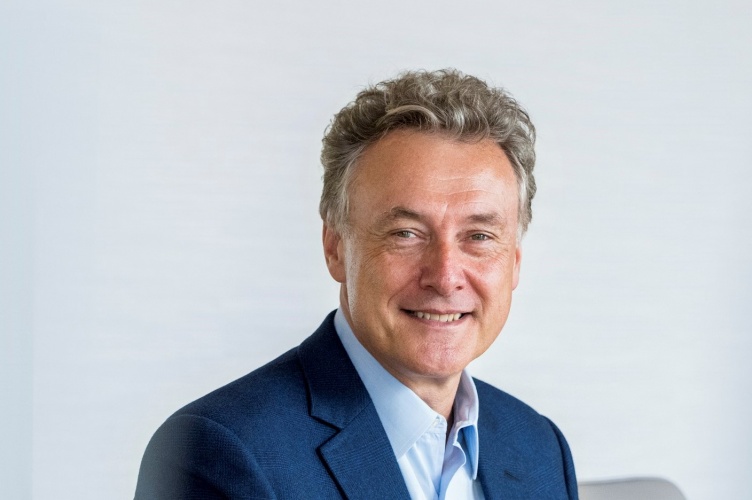
In these challenging times and in the midst of an unprecedented global crisis, to be able to effectively address complex and crucial challenges is a key factor in leading the change. In this context, the ESCP Turin Campus is delighted to establish a new strategic corporate partnership with AlixPartners that will bring exciting new opportunities for ESCP students’ careers.
For nearly forty years, AlixPartners has helped businesses around the world respond quickly and decisively to their most critical challenges.
To honour this partnership, we invited Federico Cesare, Master in Management student, to interview Simon Freakley, CEO of the global consulting firm AlixPartners.
Federico Cesare: AlixPartners is well-known for its turnaround and restructuring services but in fact you do a lot of work outside that sector. How has that heritage fuelled the firm’s growth?
Simon Freakley: Yes, the firm was founded 40 years ago as a turnaround and restructuring firm and, in the years since, we have grown to serve clients in areas such as performance improvement, organisational transformation, economic consulting, and internal investigations. Today, our turnaround and restructuring practice still accounts for approximately 20-30% of the firm’s work with clients in a typical year.
As a firm, we focus on what we call ‘when it really matters’ moments – those times when the decision at hand is really defining the client’s future. That could be a sudden shift in their industry – as we are seeing in many areas due to the massive disruption caused by the pandemic – or it could be a time-sensitive deal, a merger or acquisition, or any sort of critical, consequential decision. In these moments, we take an action-oriented approach to partner with our clients not just in building the strategy but all the way through to implementation. That kind of bias to urgent action in moments of disruption, the ability to move quickly from analysis to implementation, is rooted in our restructuring DNA, really differentiates us from other consulting firms, and has helped to fuel our continued growth outside of restructuring.
FC: AlixPartners has been recognised as a “Best Firm to Work For” by Consulting magazine: what does this recognition mean to you and how important is it to work in a place in which employees are happy and satisfied?
SF: I am very proud of and grateful for the recognition. Being people-centric is a key principal for us. Recognition as a Best Firm to Work For is an indicator that we are on the right path in this journey. It affirms that our people recognise our efforts in this area and motivates us to continue. And we believe it is a virtuous cycle. By attracting, developing, and retaining the best people, we can deliver the best results for our clients. Our clients recognise this, and it is one of reasons they rely on us in the most challenging times.
And by building an inclusive culture in which everyone can bring their whole selves to work and where we can celebrate our differences, we can attract and retain the top talent in the industry and provide them with an environment in which they can be themselves and reach their potential.
FC: Covid-19 has accelerated Digital Transformation in different sectors: what impact is this situation going to have on your activities? How will it affect your business?
SF: Obviously COVID-19 has been the mother of all disruptions for businesses around the world. It is by far the largest disruption in what we see as continuous cycles of disruption that businesses have been forced to confront. Long before the pandemic, we have seen in our work with clients around the world that the issues were not necessarily the regular business issues powered by economic cycles, but that in fact these challenges were being driven by cycles of disruption. And we observed that these cycles are accelerating and intensifying, across industries and geographies.
And then we were hit with Covid-19, which is of course the greatest disruption that’s happened in our lifetimes. Like all crises, Covid-19 too will pass. But disruption is here to stay. Businesses and their leaders will be defined by their ability to master the waves of disruption that are becoming more intense and more frequent. How a business fares in the face of disruption is partly down to the external environment — which is beyond management’s control — and the speed of response and quality of their leadership—which are absolutely within its control. This is a time when the decisions we make really matter – whether we’re talking about a business or industry that has been devastated by the disruption of the pandemic or whether it’s a business or industry that is seeing a new path of opportunity as a result of it. In either case AlixPartners as a firm is uniquely suited to help assess the situation and then move quickly and with purpose to address it.
Our firm was built to help clients in “when it really matters” situations and we have done just that in this turbulent period of intense disruption. It is in our DNA to deal with the most difficult and urgent issues – and we have applied that approach both internally in supporting our people during Covid-19, and externally in supporting our clients. Our culture is built on being Values Based, Client Focused and People Centric. These principles have served us especially well in these unprecedented times and we expect this to continue.
I am also very proud of our response to the pandemic, and every single person in the firm has dug deep to adapt and respond, going above and beyond to ensure our continued success. We have learned to collaborate efficiently without getting on an airplane, and colleagues have made the time to reach out to each other to check in and stay connected. With the support of the firm and colleagues, our people have risen to the challenges, which is very rewarding. Communication has been critical. While we do not have all the answers, we have made it a top priority to be open and provide opportunities to share our views on the evolving situation and address the questions that are on our people’s minds.
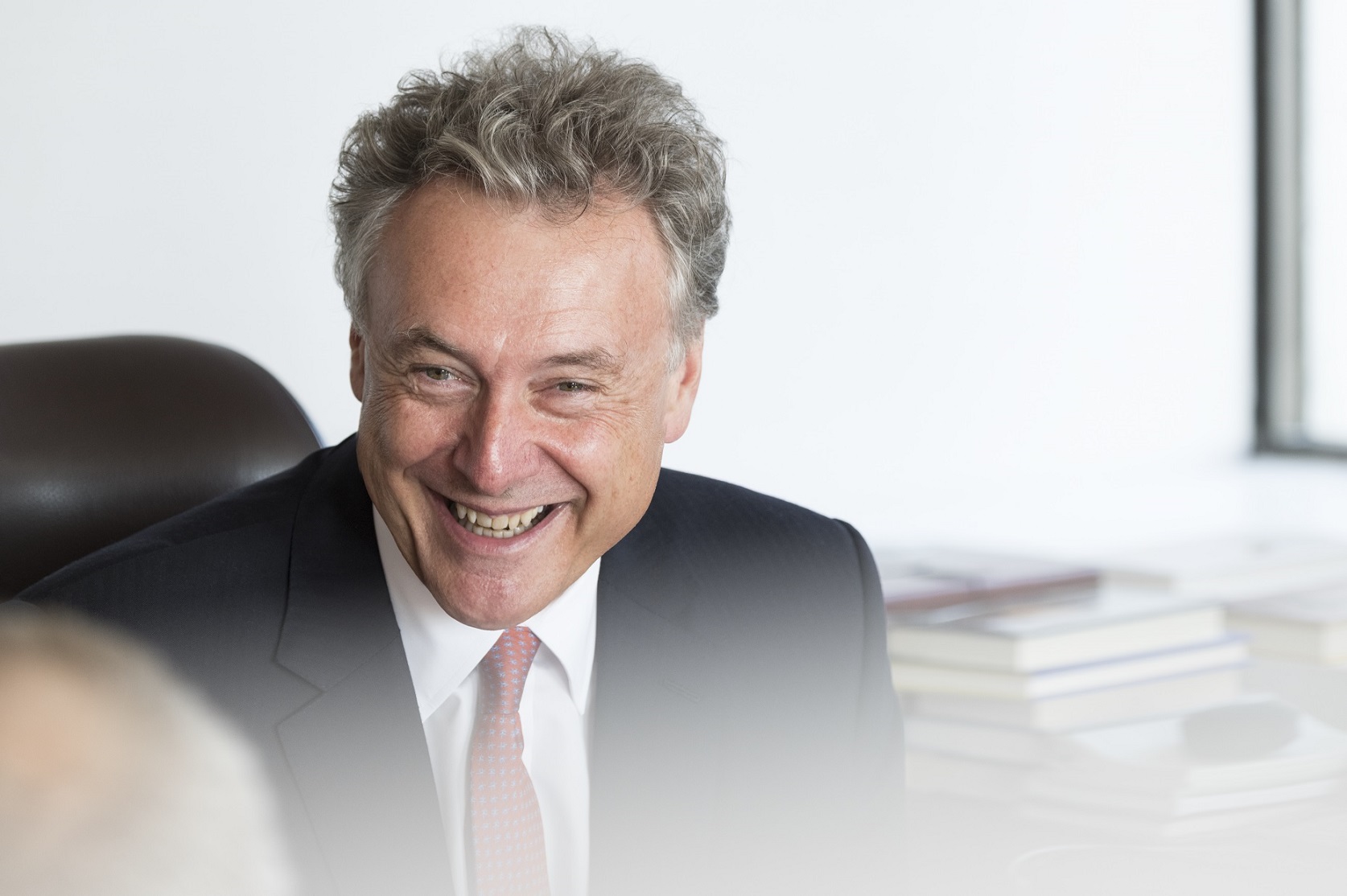
FC: What factors led AlixPartners to choose ESCP Business School as its Partner?
SF: The structure and content of ESCP’s curriculum ensures its graduates are ready to enter the workforce immediately following graduation and aligns closely with AlixPartners’ core values. The internship requirement gives all students on-the-job experience and often exposure to senior leaders, which equips them with a sense of professionalism. And access to the school’s multiple campuses throughout Europe equips students with a cross-cultural understanding and experience which serves them well throughout their careers. This ability to work and communicate effectively across countries and cultures is a skill that is in high demand, especially in global consulting firm. And finally, the school’s heavy focus on teamwork and networking gives its students a solid grounding in teamwork, communication, and personal respect.
FC: What skills are essential for success in the consulting sector?
SF: Of course every consulting firm recruits to its own parameters but I can tell you what we look for at AlixPartners, and what our clients value, is the combination of intellect, pragmatism and adaptability which means our people don’t just advise but they actually get things done shoulder to shoulder with the leaders of the organizations we work with.
FC: What values and behaviours do you feel are important to be a successful CEO?
SF: I believe that it’s essential for leaders to be authentic, communicative, inclusive, and pragmatic. As a CEO, I think it’s very important to lead with your values and let those values guide your decision making. This has always been important, and now more so than ever. CEOs have to navigate disruptive times by leading with an exceptionally clear sense of purpose and serve as a standard bearer for an organization’s values. If the CEO truly believes and exhibits the values and the purpose that he or she is espousing, if they’re authentic, inclusive, and transparent, only then they will be able to instill those same qualities in the rest of the organization and drive real change.
And then you’ve got to communicate those values, clearly and repeatedly across all levels of the organization. I often say part of the job of chief executive is to be your own chief communications officer as well – for both internal and external audiences. CEOs must be able to first define their vision and their values and then communicate them so that everyone in the organization understands not just what they’re doing as an organization but why they’re doing it.
Inclusivity is an absolute requirement. It’s the right thing to do and it’s the right business decision – we all know that a diversity of thought brings better outcomes. Building a culture in which everyone can bring their whole selves to work and where we can celebrate our differences lets people feel more engaged and be more productive, and it also enables the organization to attract and retain the top talent it needs to truly succeed.
And, finally, today’s CEO must be laser-focused on execution. It is always better to have a good strategy executed well than an excellent strategy executed poorly. Especially in these disruptive times. CEOs, as leaders of organizations, need to be laser-focused on making sure the strategy they have in place is being executed well and also that it remains relevant. In such disruptive times as we are living through today, leaders must be adaptive and continuously reassess and adapt their strategies and to meet the changing environment.
One of the key characteristics of ESCP Turin Campus is its strong ties with the business community. The campus boasts 18 corporate partners and robust relationships with several national and international companies.
Find out more about our Corporate Partners.
Campuses
Related stories

News 29/09/2020
Turin News
Meet the CEO: MBA student talks to Federico Leproux, TeamSystem CEO
ESCP Turin Campus continues to grow its corporate network thanks to a new and exciting partnership established with TeamSystem, a European leader in Management/ERP software and training services. We invited one of our students to interview Federico Leproux, CEO of TeamSystem. The CEO was interviewed by Laura Jimenez Daneri, MBA in International Management student.
Turin

News 24/11/2020
Success Story
Interview with Michele Giammarrusti. ESCP student and Thrive CEO, a brand new social impact-driven consulting company
In September, ESCP Master in Management student Michele Giammarrusti was appointed CEO of Thrive, a not-for-profit social impact-driven consulting company. Alisa Sydow, Assistant Professor of Entrepreneurship & Innovation and Jean-Baptiste Say Institute member, interviewed Michele to find out more about what Thrive does and about his entrepreneurial experience.
Turin

News 14/04/2020
Turin News
A new and exciting corporate partnership with Facile.it
To honour ESCP Turin Campus’ latest corporate partnership, we interviewed Mauro Giacobbe, CEO of Facile.it, Italy's leading price comparison company for insurance, financial services, utilities and internet providers.
Turin
![© Unsplash/Dillon Shook [copyright]](/sites/default/files/styles/event_news_une/public/2020-11/shoes-on-table-dillon-shook_tldr-1321x826.jpg)
Campuses
Campuses
![© Adobe Stock - Christianchan [copyright]](/sites/default/files/styles/event_news_une/public/2020-11/Festing_gender.jpg)
New study shows that quota has induced more female representation for executive boards, but that relying on voluntary commitment has not proven to be effective! These findings have already proved useful to the German government.
Professor Marion Festing and the Berlin campus’s Chair of Human Resource Management provided scientific support to the German Federal Ministry for Family Affairs, Senior Citizens, Women and Youth (BMfSFJ) for the evaluation of the law on the equal participation of women and men in management positions in the private sector and public service (FüPoG). They prepared the evaluation report (in German) with companies Kienbaum and Flick Gocke Schaumburg.
“The results of the present evaluation can be well placed in the findings of international comparative studies on the importance of quotas: in countries with a legally established quota, a higher proportion of women in management positions can be observed than in countries that rely on voluntary commitment!,” commented Prof. Festing. “Therefore, we recommended an extension of binding elements in the law.”
In the same week during which the Federal Government's statement on the effectiveness of the so-called Law on Executive Positions was presented to the cabinet, the working group appointed by the coalition committee agreed on key points of the Second Law on Executive Positions. For the first time, these provide binding guidelines for more women on executive boards.
The report also includes examples of companies that attach great importance to the issues of diversity and equality and that actually have higher proportions of women in management positions thanks to a number of innovative measures (see the best practice recommendations).
Campuses
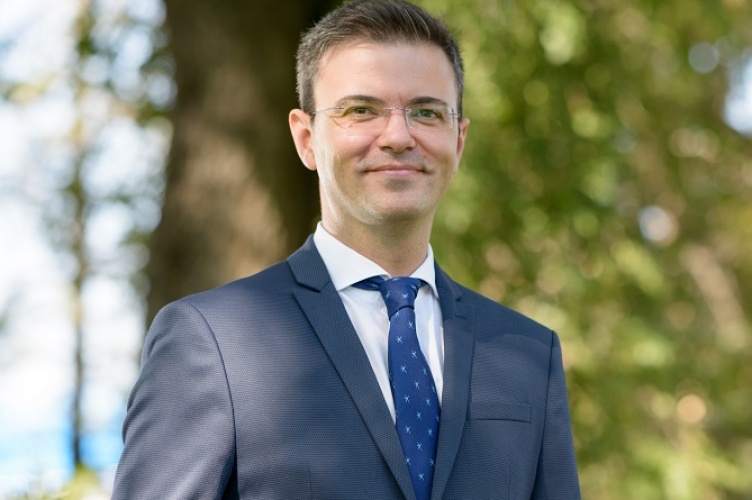
José Ramón Cobo achieves a global position in the pan-European business school to develop competitive advantage in business education.
The Spanish professor at ESCP Business School, José Ramón Cobo, has been promoted globally in the organization to the position of Associate Dean for Learning Innovation.
Cobo will go on to direct the area of Digital Transformation and Learning Experiences of the Business School, with a presence in six European cities: Berlin, London, Madrid, Paris, Turin and Warsaw.
The oldest business school in the world reinforces its digital expertise. José Ramón Cobo will be responsible for all content related to innovation in learning, pedagogical aspects and digital innovation.
ESCP Business School is already championing online training with its innovative pedagogical methodology ‘Adaptative Model Blended Learning’ AMBL. Thanks to this methodology, the school has been able to move from a face-to-face environment to a hybrid learning model, maintaining excellence in business training.
Taking advantage of its powerful experience in the mixed models of blended learning, the school has created this methodology that allows it to deliver 100% interactive and participatory learning experiences both through synchronous and asynchronous sessions, or even a mixture of both according to the moment and the situation in which we find ourselves. With this new learning model, students are guaranteed to receive the excellence training that characterizes ESCP Business School. In addition, the ‘Adaptative Model Blended Learning’ at ESCP Business School provides students with a stimulating, inclusive, flexible and personalized learning experience, always maintaining the highest standards of academic quality.
With this appointment, ESCP Business School stays at the forefront, continuing to innovate in times where digital has become mandatory and is here to stay.
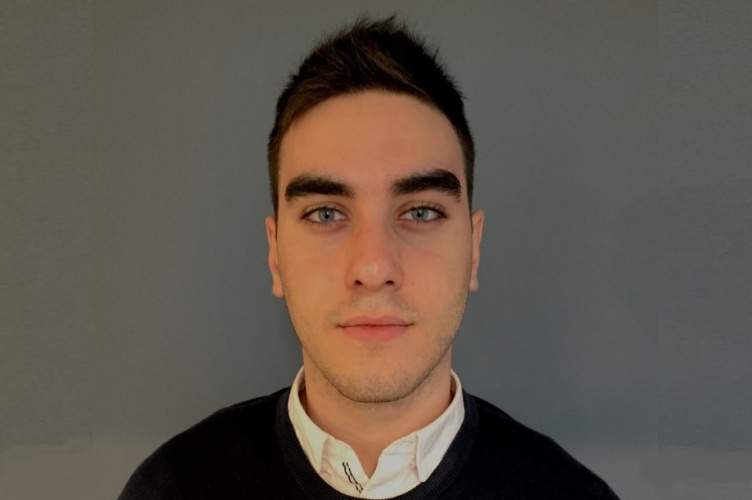
Many small and medium-sized businesses are struggling with the economic and social effects of the Pandemic. A few months ago, a group of talented Italian students and graduates from top-tier European business schools, joined forces to launch a not-for-profit social impact-driven consulting company: Thrive.
It was launched in Italy during the pandemic to help start-ups and SME's navigate the COVID and post-COVID times.
Thrive matches talented students and graduates from the most important business schools with local companies to support them in facing general business challenges with consulting pro-bono projects. The organisation has experienced exponential growth in less than six months of activity, and is currently operating at full speed in Italy, Germany, Austria, and Switzerland.
In September, ESCP Master in Management student Michele Giammarrusti was appointed CEO. After a few months working for the organisation as Head of Business Development, Michele is now in charge of the Italian branch, while collaborating with the other international divisions to ensure quality and effectiveness in shared operations.
Alisa Sydow, Assistant Professor of Entrepreneurship & Innovation and Jean-Baptiste Say Institute member, interviewed Michele to find out more about what Thrive does and about his entrepreneurial experience. ESCP has a long heritage of entrepreneurship and entrepreneurship-related education, offering its students many opportunities to develop an entrepreneurial mindset, share their views on the future of entrepreneurship and experience their own start-up initiatives, such as the MIM specialisation Option E. So, here’s Prof Sydow’s interview with him about the present and the future of Thrive.
Alisa Sydow: Please tell us more about Thrive. How does it work? How did you come up with your idea for "Thrive"?
Michele Giammarrusti: Thrive was born in June 2020 in the middle of the lockdown, from the need created by the economic consequences of this well-known pandemic of SMEs, startups and students entering the job market for their very first time. We are students from ESCP and other important Business and STEM Schools in Europe who want to empower students like us to create an impact and (re)initiate growth for our clients. We also aim to create important opportunities for our stakeholders and to ensure lasting connections and a win-win solution for all parties involved. Our core business is to deliver excellent projects to our clients in the field of Business Strategy, Digital and Finance with three key elements: Short term, our projects have a fixed duration of between 2 and 4 weeks; Virtual, to match companies and students located everywhere, disrupting the general concept of “on-site” consulting; Diverse, our teams are made up of students and are staffed by taking into account the five major drivers of diversity: Gender, Background, University, Seniority, Experience. Also, we pride ourselves on a broad and diversified client portfolio, delivering projects in more than 10 sectors such as Fashion, Food & Beverage, Fintech and Artificial Intelligence, just to name a few.
We came up with the idea in May: I was working from my room in Milan and ready to start my new ESCP journey, somebody else was completing an MBA around Europe, while others were in London beginning a new adventure in Strategy Consulting and Fintech. We collectively had the idea to take action and create an opportunity from the threat of Covid-19 for students and companies that were struggling at the time.
After spending the entire Summer building this initiative, we successfully transitioned the piloting phase, and are currently launching our 40th project, staffing more than 200 people on our teams and reaching the goal of more than 600 students from all over the world registered on our platform. We also expanded our Managing team, which now counts more than 30 people working in 7 different Business Units.

Alisa Sydow: What do you like the most and hate the most about being an entrepreneur?
Michele Giammarrusti: I believe that the idea of being an entrepreneur has been very much romanticised over the years. In my personal opinion, being an entrepreneur is very demanding yet incredibly rewarding. Building a company from scratch requires a great amount of time, effort, and, above all, passion.
It’s not always perfect: most of the time you love it, occasionally you hate it, but ultimately if you’re in it for the right reasons and committed to making an impact, then the hard work is all worth it in the end.
That is because there is a lot to love about being an entrepreneur. It is rewarding, both personally and professionally. Also, there is nothing better than seeing a group of management students, engineers, lawyers, event planners and designers getting along, sharing a common goal.
But there are also many things to dislike, such as the ups and downs and the continuous exposure to new issues and problems to deal with. It can be a roller-coaster journey but at the end it’s something to be proud of, being a group of students that wants to leave a mark on society and simply help both companies and students get over a difficult patch.
Alisa Sydow: What are currently the biggest challenges for Thrive?
Michele Giammarrusti: Well, let’s say that Thrive shares all the dynamics of a proper and healthy start-up. In particular, this means that the growth rate of all the relevant “business” indicators (namely, the registered students and the available projects) has been very fast.
Therefore, the core functions of Thrive itself – such as the Business Development or Project Management units – are required to evolve at the same fast pace, in order to ensure proper performance and service profiles for our students and clients. This is, in our opinion, our biggest challenge as it can really prove quite difficult to handle at times.
It’s even harder since different units may need to scale up at different times, thus creating or moving “bottlenecks” elsewhere within the organisation, while bringing to light which other units will need an upgrade later on. For instance, by enlarging the team in charge of creating more projects, which is something we have done in these last few months, has made it necessary to do the same for the team responsible for reaching more students, in something that is basically a very fast domino effect.
Ultimately, it is a challenge that can be managed effectively, mainly requiring a close control of the overall indicators and a good degree of reactivity within Thrive itself. It’s also something that makes us proud, since it demonstrates the fast pace of our initiative and the great opportunities we are preparing for our members in the upcoming months!
Alisa Sydow: What are the next big steps for Thrive?
Michele Giammarrusti: As I said, Thrive is finally quite well-established in its core operations. That is an important result if we consider that we have been around for only about five months, and it leaves us quite “free” at the moment to carefully plan the next phase’s strategies and goals.
We are working very hard to improve and broaden our services, both quantitatively (e.g. the number of projects available) and qualitatively. However, as founders and current managers, we now understand what planning strategically really means. Thrive still possesses a relevant amount of flexibility to leverage and harness its incredible potential, but this definitely requires us to establish a consistent and solid vision and act consequently.
In particular, we are now taking care to establish strong bonds and partnerships with various players within our environment, ranging from firms to other associations and junior initiatives. On one hand, we already have some ideas on a few partners that really interest us, on the other we have been receiving very generous and compelling offers from other entities that see in Thrive a potential ally to grow together.
Deciding which opportunities to seize and how is quite an effort, I must say, but we have recently finalised our proprietary partnership framework, a tool for internal use that will help us greatly to do just that. So our next big steps will probably involve strategic collaborations with our incoming partners and all the valuable outcomes that we will create with them. As always you can keep up to date with us by following our social pages. Let’s Thrive together!
Campuses
Related stories
![© AccuHealth [copyright]](/sites/default/files/styles/home_listing/public/2020-11/357_InlineA_ACU_HD.jpg.rendition.3840.2560.jpg "© AccuHealth [copyright]")
News 03/11/2020
TEACHING
ESCP and Cottino Social Impact Campus launch impact entrepreneurship programme
The oldest business school in the world partnered with the first centre in Europe exclusively dedicated to impact education in order to present a new path to train the next generation of impact entrepreneurship experts.
Turin

News 23/06/2020
Turin News
MIM Alumnus Pietro Luigi Ghigo has key role in Italy’s F&B expansion in Asia
In recent years, Italian companies have embarked upon a process of international development aimed at tapping into new markets, especially in Asia, and many Food and Beverage firms are in the forefront of that expansion. One of the Alumni of ESCP Business School has played a key role in that growth: Pietro Luigi Ghigo, Master in Management Alumnus, Class of 2009, and Asia Regional Sales Manager at Lavazza.
Turin

News 05/05/2020
Turin News
MIM Alumnus Romolo Ganzerli recognized in the Italian #forbesunder30
Forbes Italia has released its annual “100 Under 30” list. We are delighted to see among these young disruptors ESCP Alumnus Romolo Ganzerli, cofounder of MammaPack, in the Retail category. He has been selected as one of the young leaders who are on the fast track for rethinking our relationship with e-commerce.
Turin