
![© Adobe Stock [copyright]](/sites/default/files/styles/event_news_une/public/2020-12/Delbard_TC.jpg)
Campuses
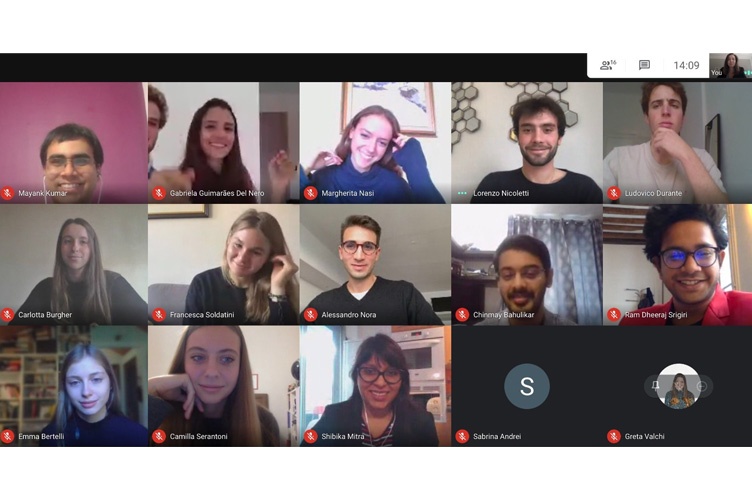
Between 7th and 14th November 2020, GEA Sustainability ESCP, a cross-campus student society of ESCP Business School dedicated to sustainability, hosted their first virtual business game of the 2020/21 academic year, called ‘Staiy in the Game’.
The event was organised in collaboration with Staiy, a sustainable, innovative start-up of a fashion marketplace merging aesthetics, sustainability and AI-technology in a single place.
‘Staiy in the Game’ offered the unique opportunity to get in contact with professionals in the sustainable fashion sector and give a concrete form to some forward-thinking business ideas.
During the first round on 7th November, teams of ESCP students from across all campuses gathered to hear the introduction to the challenge. Elisa Actis, the President of GEA, and Lorenzo Nicoletti, Madrid Campus Head of GEA, introduced Alessandro Nora, one of Staiy’s co-founders, who presented the start-up, their achievements, and also the topics of the business games. Participants were asked to develop a solution for Staiy to make the packaging and delivery system more sustainable.
On 14th November, participants had the opportunity to present their projects to two of Staiy’s co-founders, Alessandro Nora and Ludovico Durante. They were very impressed by the work of the students and selected two teams, one for the packaging and the other for the delivery logistics. The winning team for a sustainable packaging solution was made of: Gabriela Del Nero, Lucien Douchet, Marin Bascher, and Romain Van Gaver (Master in Management students). For delivery logistics strategy, the winners were: Emma Bertelli, Carlotta Burgher, Camilla Serantoni, Margherita Nasi, and Francesca Soldatini (Pre-Master Year students at the Turin campus).
Staiy's four co-founders (Adrian Leue, Alessandro Nora, Ludovico Durante and Chiara Latini) are ESCP alumni, graduates of the Bachelor in Management (BSc) programme (Class of 2019).
- Read an interview with GEA Sustainability ESCP
- Get in touch: gea.escp@gmail.com
Campuses
![© Adobe Stock - sdecoret [copyright]](/sites/default/files/styles/event_news_une/public/2020-11/Reinventinf-work-projects.jpg)
Seven research projects under way
The Reinventing Work chair was created in December 2019, in partnership with BNP Paribas. Several ambitious research projects have already been launched, studying the impact of flexibility, telepresence, digitalization or artificial intelligence on management and HR practices. The Covid-19 pandemic has led us to approach these topics differently, with a specific focus on hybrid management.
Research projects are conducted in different contexts - national, international, in-house at BNP Paribas - and can be extended to other companies. By bringing together academics and professionals, the chair facilitates renewed theoretical and practical views of these key topics.
“This partnership allows us to benefit from exceptional research fields and high-level research teams. It really fosters creativity and innovation,” says Frederic Thoral, Human Resources Director at BNP Paribas Personal Finance. For the past year, all BNP Paribas Personal Finance managers have changed their management mode into an hybrid one, and a reflection on new managerial as well as our new ways of working models, will be launched for 2021. Ultimately, “this partnership helps us to speed up our company’s transformation through research,” he adds.
The chair’s scientific director, professor Emmanuelle Léon, is as enthusiastic about these projects now as she was when the chair was launched, in December 2019: “What we have been experiencing in 2020 underlines the importance of better understanding the transformation of our work experience,” she explains. “To reflect on the evolution of skills in the face of the development of flexibility, agility, digitalisation, to rethink the work-life balance, analyse the role of algorithms in HR processes... The subjects are fascinating and I am delighted at the prospects offered by this chair to explore them in depth.”
Find out more about the research projects in these videos:
Reshaping the work experience
Measuring the paradox of flexible working
Telepresence robots and face time
Human resources and digitalization
Artificial intelligence and recruitment
Managing new work relationships
Personal organization at work
Campuses
![© Adobe Stock [copyright]](/sites/default/files/styles/event_news_une/public/2020-12/acceleration-concept-1400x875.jpg)
Campuses

Spring 2021 will mark an important milestone for ESCP’s transition, with the creation of several new fundamental courses and electives in the Master in Management, focused on sustainability. Each course will, in their own way, support the sustainable transition of the school and build awareness among its students.
A new fundamental course on Business & Sustainability in the age of Anthropocene (16h)
For the first time in its history, the Master in Management will have a fundamental course on sustainability. In addition to the Designing Tomorrow seminar in the Premaster and existing specializations across campuses, this fundamental course will guarantee that 100% of MiM students share a common and precise understanding of the grand challenges of sustainability (global warming, biodiversity, resource scarcity, social challenges and North / South debates, etc.) and their impact on societies and businesses, as well as their impact on students’ future careers.
3 New 30h sustainability Electives in Paris on Energy, Design Fiction and Marketing
“Energy: Geopolitics, Climate & Business” elective
While energy plays a vital role in modern civilization and economic systems, the energy sector is facing unprecedented issues related to climate change and the need to decarbonize energy and challenges related to access and availability. These issues involve major shifts that are likely to reshape profoundly all businesses, sectors and individual ways of living. While fundamental, these questions are largely neglected within classic business curricula.
This course is built in partnership with Carbone 4, a consulting firm specializing in the energy transition.
Contact coordinating Professor: aacquier@escp.eu
“Design fiction for sustainable futures”
“Prospective design” is an approach that helps to understand and shaping multiple possible futures in order to design tomorrow's products, services and business models in a constantly changing world. Among different prospective oriented approaches, Design fiction is increasingly used by organizations to apprehend, model and test their possible futures. By imagining the world's evolutions in 15 or 20 years and materializing them into fiction related artefacts (videos, newspapers, short novels…).
In this 30- hour elective, students will work in contact with futurists and designers. This will allow each participant to imagine what could happen tomorrow in order to generate debates today that will lead to better decision-making for a sustainable future. The course will be delivered in partnership with a company already engaged in a prospective approach to shape future sustainable business models.
This course is built in partnership with OnePoint and Making Tomorrow
Contact with coordinating Professors: vcarbone@escp.eu, aacquier@escp.eu
“Marketing Transition to Sustainability”
In the last decades, economic development worldwide has been accompanied by intensive use of natural resources and fossil energy, the generation of huge pollution and waste, and the dangerous rise of social inequalities. Within this context, marketing represents a key factor of success to this convergence. As a boundary role function, especially relevant in transition periods, it has the ability to influence consumer demand and purchasing habits towards more sustainable choices, while being accountable to consumers in voicing their expectations and constraints.
The objectives of this elective are to identify and understand consumer attitudes and behaviours in favour or against sustainable offerings; address the need to enlarge sustainable offerings from niche LOHAS segment (Lifestyle of Health and Sustainability) / few organization to mass markets / majority of organizations and brands, and grow a “win-win / and-and” instead of the conventional “win-lose / or-or” mindset required for managers to become a positive change agent through ethical reasoning in marketing management
Contact with coordinating Professors: jschmitt@escp.eu
A MOOC for future entrepreneurs in Circular Economy (15 hours)
Last but not least, a new MOOC co-designed with the Circular Economy Chair has been converted into an elective for MiM Students. The idea behind this course is to teach entrepreneurship through the lens of circular economy. The participants will learn that it can also act as a lever for innovation and create economic value, through two pillars: Waste prevention and if need be, recycling. This course will also introduce many other aspects of the circular economy: Institutional definitions challenges where the circular economy can be of help, opportunities and perspectives, offered from an economic and entrepreneurship point of view. Through interviews of well-renowned start-ups entrepreneurs in the field (Phenix, Clean Cup, Gobilab, Agence MU, Back Market, Murfy, Hesus, Etnisi) and experts (Phenix, ESCP, ADEME, Circul’R), the participants will discover cutting-edge business models and circular economy entrepreneurship experience.
This 15 hour elective is in French.

The GEA Sustainability ESCP team organised the successful business game "Staiy in the Game" offering ESCP students the chance to get in contact with professionals in the sustainable fashion sector and give a tangible form to their business ideas.
The student society, that gathers young adults who are concerned about our planet, committed to giving their contribution towards a more sustainable future, created the business game in collaboration with Staiy, the marketplace merging aesthetics, sustainability and AI-technology in one place with a clear mission: to accelerate the transition towards sustainable fashion. This is an ESCP born start-up, launched less than two years ago by a group of talented and visionary ESCP BSc students.
The event consisted of a Business Game involving teams of students from all the ESCP network, who dedicated their knowledge and passion for sustainability to design sustainable packaging and delivery strategy for Staiy.
Participants had the opportunity to face and solve real-life issues encountered by Staiy. The Business Game revolved around the problem of how to create a sustainable packaging and delivery system. Through their research and presentations, the teams gained valuable insights into the industry, competitors, suppliers, logistics systems, among many other aspects. Working with a genuine company on a concrete challenge provided them with added value, as they were able to experience first-hand what goes on behind the scenes at revolutionary companies like Staiy and interact directly with industry professionals.
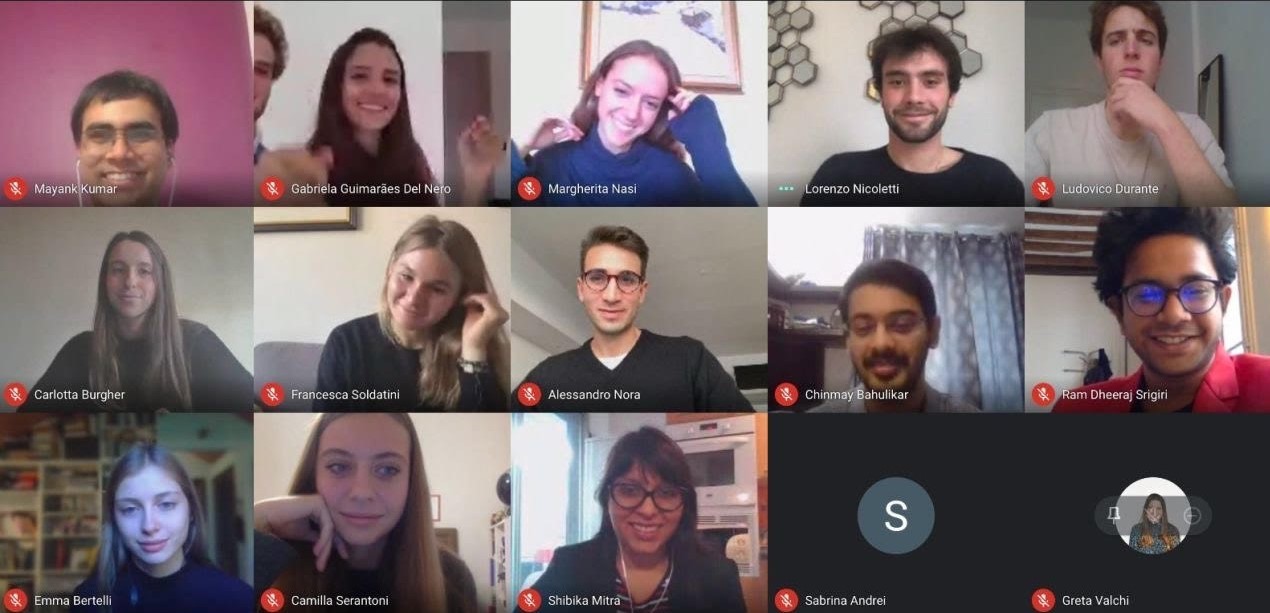
The event was organized in two rounds. In the first one, the groups were challenged with the issues offered by the game while on the second date of the Business Game, the teams had the opportunity to present their solutions in front of a jury, namely two of the co-founders of the company, Alessandro Nora and Ludovico Durante.
It was a great opportunity for participants to persuade and convince the jury that their idea was the best from different perspectives, time-wise, money-wise, and the most feasible to implement.
The jury and GEA team were very impressed by the great ideas that were proposed and the passion and creativity shown by all participants.
Finally, two teams were chosen, one for their packaging strategy and the other for delivery logistics.
For a more sustainable packaging solution: Gabriela Del Nero, Lucien Douchet, Marin Bascher, Romain Van Gaver.
For the delivery logistics strategy: Emma Bertelli, Carlotta Burgher, Camilla Serantoni, Margherita Nasi, Francesca Soldatini.
From now on the selected teams will have the unique opportunity to collaborate with Staiy and implement their ideas, not only increasing their skills but also having a positive impact on the environment and the development of a sustainable business!
We cannot wait to see the new events GEA’s team is working on to contribute to making ESCP campuses and the world, a greener place.
Campuses
Related stories
News 11/06/2020
Student Societies
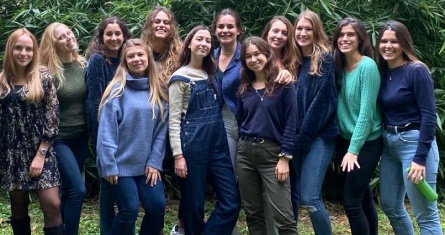
Leading the way to a sustainable world: GEA Society ESCP
A group of motivated ESCP students felt the need to bring their green-oriented principles, attitudes and motivations at the centre of the activities of a new society: GEA Society ESCP. Founded in Turin Campus, this is one of the newest student associations created by young adults concerned for our planet, committed to giving their contribution towards a more sustainable future.
News 02/12/2020
Sustainable societies
Sustainable students’ societies at ESCP: Coming together to support the school in its transition…
The beginning of the academic year has been marked by several great initiatives and projects, such as the close collaboration between all the sustainable students’ associations of the school
Berlin
London
Madrid
Paris
Turin
Warsaw

News 12/05/2020
Student Societies
Encounter the flavours of the F&B industry with the new About Food society
One of the key academic areas of the ESCP Turin Campus is Food and Beverage Management. The About Food Society was created by students to give extra opportunities to better understand this vibrant sector.
![© Domoscio [copyright]](/sites/default/files/styles/event_news_une/public/2020-12/Domoscio2.jpg)
As part of the school’s “phygital” transformation plan, ESCP Business School started collaborating with EdTech start-up Domoscio to implement an adaptive learning approach.
In 2019, ESCP Business School launched its phygital transformation plan, called “So'SCHOOL” and made up of some forty projects. All of them aim to transform students’ learning experience by offering new, bold and innovative digital services. A number of these projects are currently driven by ESCP's digital & learning innovation team in a structure dedicated to experimentation: the Phygital Factory. It is within this framework that Domoscio and ESCP have launched a partnership for adaptive learning. “As every teacher knows, no student is alike. Each of them has his/her own characteristics, peculiarities, abilities and weaknesses, and broad-based learning approaches could be ineffective to embrace this complexity over the long term. Adaptive learning is an educational system based on technology and data analysis, allowing teachers to track each students' performance and adjust methods/programs to their needs”, commented newly-appointed Associate Dean of Learning Innovation, professor José Ramón Cobo, who is moving forward in rethinking student pathways and experiences with the school's Chief Digital Officer, Anthony Hié.
An enhanced and individualized student experience, even for distance learning
According to the latter, “adaptive learning consists in using the benefits of Artificial Intelligence (AI) & big data to create the best possible online learning experience for students.” With blended (physical & digital) and modular teaching activities, the challenge is to provide students with a tailor-made experience throughout their time at the school. Thanks to Domoscio’s adaptive learning solution, the students’ learning data is processed using AI to determine their profile and pedagogical needs (known as learning analytics), and to build the most relevant learning path for them.
Two elements are essential for this:
1. The implementation of a continuous assessment strategy: among the types of data used by adaptive learning, assessment data is essential to measure students’ progress towards their learning objectives and estimate the skills gap. This data comes from positioning tests, online quizzes, grades, project-based learning assessments...
2. The implementation of a recommendation engine: once the students’ levels have been positioned in relation to their learning objectives, adaptive learning can provide recommendations of pedagogical activities suited to their needs, and build a logical, optimal and blended path.
The interest of adaptive learning also lies in implementing a predictive approach: by grouping students in homogeneous groups, measuring and comparing their progress as well as matching specific content with defined profiles.
Implications for business and management education
Nowadays, students have a diverse educational and knowledge background when attending a class. It comes naturally to think that progression in higher education institutions should not only consider students' age and time spent in class, but should be more focused on proficiency. In addition to giving students the right amount of time to maximize their efficiency and engagement, there are other significant implications in putting adaptive learning into practice. Think about how useful it would be for teachers to get real-time analytics about their class' performance, emerging struggles and successful exercises. Thanks to automated data analysis, they could promptly intervene on critical issues and adjust their methods to solve them.
Here are some of ESCP’s opportunities with adaptive learning: Identify competency gaps; custom-design training by providing focused attention to every individual student; adjust to different learning styles; update when information changes.
A first pilot for executive education
Initiated in June 2020, the collaboration between ESCP and Domoscio first led to an audit of the existing tools, data and content in the ESCP course catalogue. ESCP Business School then decided to implement a pilot project starting in the spring of 2021 for executive education programs. As part of the pilot, the Domoscio Hub portal will be integrated into the learning system and will allow to index a set of learning materials hosted on the different platforms used: Blackboard, FUN or Coursera, for example.
The system implemented for this pilot will allow ESCP and Domoscio to validate the learning experience, involve teachers in these new methods and confirm adaptive learning’s impact. First results are expected in the summer of 2021.
Campuses
![© Unsplash/Sergio Souza [copyright]](/sites/default/files/styles/event_news_une/public/2020-12/Bergman_TC.jpg)
Campuses