
Campuses
![© Beyond Business [copyright]](/sites/default/files/styles/event_news_une/public/2021-03/Sydow_podcast_0.jpg)
Campuses
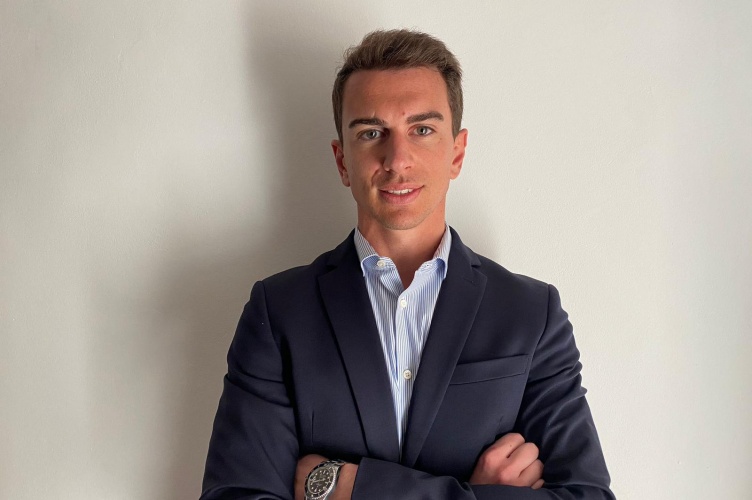
Having joined AlixPartners in 2017 as an intern, when studying for his ESCP Master in Management, Edoardo Persenda has already been promoted to Vice President.
AlixPartners is an American consulting firm with offices throughout the Americas, Europe, Middle East, and Asia.
In 2020 the company was recognised as “Best Firm to Work For”. By building an inclusive culture, it attracts and retains the top talent in the industry and provides them with an environment in which they can be themselves and reach their potential. Last year, AlixPartners became ESCP Turin Campus Corporate Partner, but it has recruited our talents for many years. In Italy alone, seven ESCP students have done an internship in the firm, and all of them have continued to work in the company and have had a rapid career advancement.
Check out what Edoardo has to say about his professional experience and the key to his skyrocketing career growth path.
You joined AlixPartners as an intern when you were still studying for your Master in Management at ESCP. What characteristics of AlixPartners attracted you the most when you applied?
When I first met AlixPartners, I did not know much about the firm, but I was immediately surprised by the people I was dealing with. The seriousness and the highly structured selection process made me realise the level of the firm right away. Both in the first interview with HR and in the four subsequent technical interviews with business consultants, I really perceived the competence and human qualities of the people. The main feature of AlixPartners that was crucial in my decision to work with them was the incredible opportunity for exposure both to customer C-level positions and internally to the Senior Director or the Managing Director, unlike many of their competitors.
AlixPartners' small-team approach gives recent graduates an immediate opportunity to work with senior-level colleagues and participate in matters that address the most pressing business challenges. Can you tell us about your first months in the company and what kind of responsibilities you had in the beginning?
In my first month in AlixPartners I immediately understood what the company means by their motto “When it really matters”. On my second day as an intern, I was included in a performance improvement engagement in the automotive industry and joined a team of two senior managers at the client’s premises in Reggio Emilia. From the very first day, after having been called on board by the team manager, I was operationally involved in the project, dealing with various analyses and cost reduction initiatives in the SG&A stream. In my first three months at Alix I had the opportunity to co-lead some specific cost reduction initiatives and to participate in some steering committees.
You started your internship at AlixPartners in 2017, and a few months ago you were promoted to Vice President. In less than four years, you had a remarkable career progression. What do you think is the key factor in such rapid professional growth?
In my opinion, the qualities needed to grow quickly within a consultancy company are professionalism, reliability, proactivity and willingness to learn. Technical skills are built with experience but the qualities I mentioned must be present from day one. In many consultancy projects, there are so many tasks to be done that even a junior resource is important, and the team needs to know that they can fully rely on his or her professionalism and reliability. I also have to thank AlixPartners and my colleagues who provided me with all the resources and support I needed to achieve this goal.
During these years, you developed competences in business strategy and performance improvement, especially in the telecommunications, automotive and consumer goods industries. Can you tell us more about your experience as a consultant?
During my 4 years of experience in AlixPartners as a consultant, I worked on different projects in the area of Telecommunications, Consumer Goods&Retail and Automotive, and developed competences in business strategy and performance improvement. I developed experience in identifying cost reduction opportunities, assessing and re-designing organisations, and conducting carve-out, M&A deals, and post-merger integration. I have often worked for private equity firms on both EBITDA improvement, post-merger integration, and company restructuring.

How have your responsibilities changed with your promotion?
With the promotion, my operational tasks have not changed but now I have more responsibility both in terms of delivery and as a point of contact for the customer. In my current position, I could be the person in charge of some project streams or even some small projects. Moreover, in the new role, I have to manage not only my own work but also the activities of more junior resources ensuring quality output and compliance with deadlines.
You recently led a project supporting the client in the divestment of a 100% owned company operating in field maintenance. What challenges did you face in this project?
In the last project, I co-lead the divestment of a company owned by one of the largest international players in the telco industry worldwide. In the past, I already carried out other deals in the same industry, but this project presented two great challenges: the management of several international stakeholders and the difficulty in understanding the operational and contractual model of the target company. Stakeholders involved in the deal were the selling company, both with an international corporate team and with a local Italian team, the buyer and his legal advisors, both with an international and an Italian team.
You hold a Master in Management with a major in finance. Looking back at your academic path, which course did you find most useful to your current profession?
Looking back, I think that overall the Master in Management programme, both in terms of the courses but also in terms of the structure and organisation, is really a perfect mix to prepare for consultancy. An added value is the pragmatic mindset used in the courses and the incredible opportunity to do several internships. If I have to name some specific courses I would say Corporate Finance and Business Strategy.
Do you have any tips for young talents out there aiming to start their career as consultants?
I hope that some good points have emerged from this interview. In my opinion, the key factors to succeed in the consultancy industry, apart from a strong basis in technical and analytical skills, are professionalism, an aptitude for hard work and continuous learning, a desire to explore unfamiliar topics, and the ability to establish trusting relationships with both colleagues and clients.
My last bit of advice for students is: “Don't be in a hurry to reach the top right away, if you don't succeed don't give up and keep on going one step at a time to get there.”

Campuses
Related stories

News 23/06/2020
Turin News
MIM Alumnus Pietro Luigi Ghigo has key role in Italy’s F&B expansion in Asia
In recent years, Italian companies have embarked upon a process of international development aimed at tapping into new markets, especially in Asia, and many Food and Beverage firms are in the forefront of that expansion. One of the Alumni of ESCP Business School has played a key role in that growth: Pietro Luigi Ghigo, Master in Management Alumnus, Class of 2009, and Asia Regional Sales Manager at Lavazza.
Turin

News 05/05/2020
Turin News
MIM Alumnus Romolo Ganzerli recognized in the Italian #forbesunder30
Forbes Italia has released its annual “100 Under 30” list. We are delighted to see among these young disruptors ESCP Alumnus Romolo Ganzerli, cofounder of MammaPack, in the Retail category. He has been selected as one of the young leaders who are on the fast track for rethinking our relationship with e-commerce.
Turin

News 24/03/2020
Turin News
Matteo Frescobaldi is among the Italian #forbesunder30, ESCP alumnus and 30th generation of a family firm with 700 years of history
Matteo, Master in European Business alumnus, class of 2012, is the youngest member of the thirtieth generation of Marchesi de Frescobaldi, a family firm with seven hundred years of history.
Turin

News 24/11/2020
Success Story
Interview with Michele Giammarrusti. ESCP student and Thrive CEO, a brand new social impact-driven consulting company
In September, ESCP Master in Management student Michele Giammarrusti was appointed CEO of Thrive, a not-for-profit social impact-driven consulting company. Alisa Sydow, Assistant Professor of Entrepreneurship & Innovation and Jean-Baptiste Say Institute member, interviewed Michele to find out more about what Thrive does and about his entrepreneurial experience.
Turin

In the past years, many industries in a wide range of sectors have tried to move towards a more sustainable approach. Among them, the fashion industry, in particular, has tried to switch and adapt to the use of more sustainable products, eco-friendly processes, and recyclable materials. However, we can’t deny that there is still room for improvement.
In fact, a recent study carried out by the Intergovernmental Panel on Climate Change (IPCC) and described in this article by The Guardian, has shown that the fashion industry produces 10% of global carbon dioxide emission and consumes around 1.5 trillion liters of water annually.
A group of six ESCP students understands the impact the next generation of designers can have in this sustainable transition of the fashion industry. For this reason, they have created SPF Runway, a fashion competition that aims to raise awareness and inspire young designers to share their talent and opinions on the industry's future.
SPF Runway will give fashion students the opportunity to compete in teams by creating an outfit based on the theme of climate change. A jury of experts in the field of fashion design, sustainability, and marketing will then evaluate the outfits. During the final event, students will have to present their ideas on how it can impact this transition.
The aim of this challenging experience is to create the perfect platform for upcoming designer’s aspirations for a more sustainable and eco-friendly fashion world. In this challenge, they will also be able to collaborate with famous brands such as Casadei.
The winning team will have their outfit exposed in the prestigious Studio Zeta Showroom on the Champs-Élysées during the next Paris Fashion Week.
The application process is closing in one week - 13th of March - and then, successful applicants will have 4 weeks to work on their outfit which will be evaluated by the jury. Eventually, the results will be presented during the final event which will take place, in a form of webinar, the 30th of April.
You can read more on their SPF official website, or on their Instagram page.
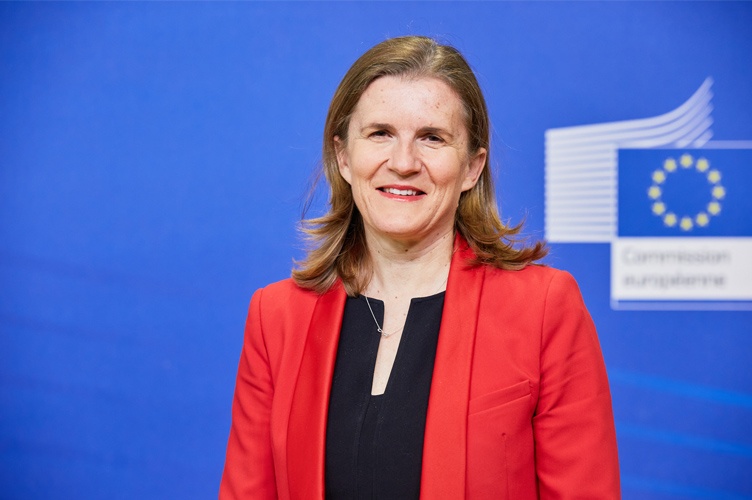
The ESCP London Campus CheerUp! Society is pleased to announce their next event, a Conference on Europe's Beating Cancer Plan.
Their guest speaker, Isabelle Fabre-Perignon, Deputy Head of the Cabinet of European Commissioner, Didier Reynders, will talk about the the first Europe Beating Cancer Plan. Based on four pillars and containing 10 main initiatives, Ms Fabre-Perignon will explain how this Action Plan was established.
The event will last one hour:
- 30-minute presentation, followed by
- 30-minutes Q&A session
If you are interested in knowing more about this action plan, join us in this exciting online event.
Location
Organiser: CheerUp! ESCP London Campus
Online - Worldwide
MapDate
Start date: 11/03/2021
Start time: 6:30 PM
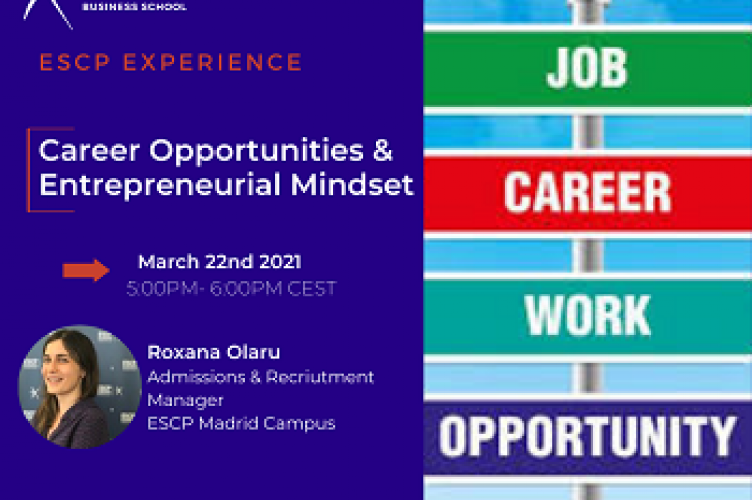
Join us to learn more about the Career Opportunities the ESCP Bachelor in Management (BSc) can open up for you and get a glimpse of the entrepreneurial mindset that characterices ESCP students.
Participants

Roxana Olaru
Admissions & Recruitment Manager
Location
Organiser: ESCP Madrid Campus
Online- Madrid time - Worldwide
MapDate
Start date: 22/03/2021
Start time: 5:00 PM
End time: 6:00 PM
![© theHRDIRECTOR [copyright]](/sites/default/files/styles/event_news_une/public/2021-03/office-1209640_1920-38641a0a.jpg)
Campuses
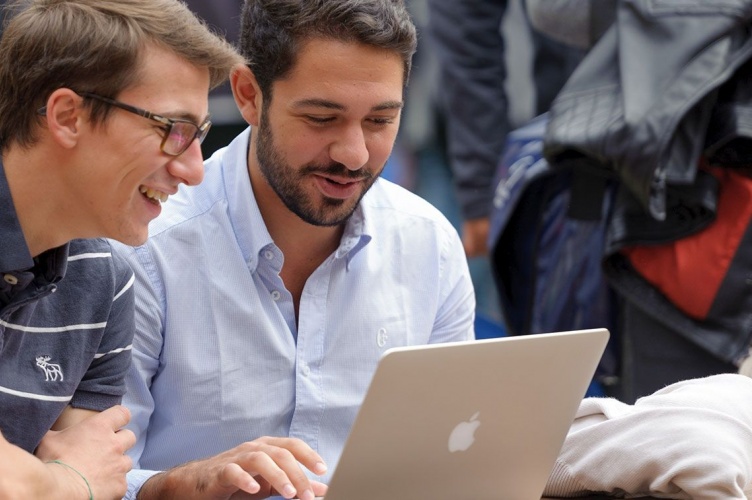
The food and beverage industry is looking for outstanding international profiles with the ability to combine managerial skills and F&B know-how.
Connect online to the free Webinar to discover the MSc in International Food and Beverage Management programme, find out admission modalities, ask your questions and get all the information you need from ESCP Business School recruiters
The Master International Food and Beverage Management is a 15-month specialised master programme designed for an outstanding managerial career in the food and beverage industry as a crucial resource for an international F&B company.
The webinar will be conducted in English by the Programme Manager, who will answer the questions about the programme and the professional outlets and skills required by the job market.
Location
Organiser: ESCP Turin Campus
Online - Worldwide
MapDate
Start date: 15/04/2021
Start time: 5:00 PM
End time: 6:00 PM
Related stories

Event 18/03/2020
Turin Event
MSc in F&B Management | Admission Training Session Online
The Admission Training Session is an opportunity to get prepared for the ESCP admission tests.
Turin

News 26/07/2019
Ranking
ESCP ranks 2nd worldwide in Eduniversal Ranking of the Best Masters in Food and Beverage Management
For its first participation in this ranking, the ESCP Master in International Food and Beverage Management programme has been ranked 1st in Europe.
Paris
Turin

News 12/05/2020
Student Societies
Encounter the flavours of the F&B industry with the new About Food society
One of the key academic areas of the ESCP Turin Campus is Food and Beverage Management. The About Food Society was created by students to give extra opportunities to better understand this vibrant sector.
News 24/03/2020
Turin News
Matteo Frescobaldi is among the Italian #forbesunder30, ESCP alumnus and 30th generation of a family firm with 700 years of history
Matteo, Master in European Business alumnus, class of 2012, is the youngest member of the thirtieth generation of Marchesi de Frescobaldi, a family firm with seven hundred years of history.
Turin
News 05/05/2020
Turin News
MIM Alumnus Romolo Ganzerli recognized in the Italian #forbesunder30
Forbes Italia has released its annual “100 Under 30” list. We are delighted to see among these young disruptors ESCP Alumnus Romolo Ganzerli, cofounder of MammaPack, in the Retail category. He has been selected as one of the young leaders who are on the fast track for rethinking our relationship with e-commerce.
Turin
News 23/06/2020
Turin News
MIM Alumnus Pietro Luigi Ghigo has key role in Italy’s F&B expansion in Asia
In recent years, Italian companies have embarked upon a process of international development aimed at tapping into new markets, especially in Asia, and many Food and Beverage firms are in the forefront of that expansion. One of the Alumni of ESCP Business School has played a key role in that growth: Pietro Luigi Ghigo, Master in Management Alumnus, Class of 2009, and Asia Regional Sales Manager at Lavazza.
Turin
The Rector of the Berlin campus and newly-appointed Dean of the Paris campus calls his book “a call for action for the university of the 21st century, most likely having to fight to stay relevant and not give in to its possible progressive, steady dismantling.”
Higher education’s digital transformation has the same reputation as the sector itself: rigid and reluctant to change. The unprecedented worldwide health crisis of Covid-19 has radically changed this rigidity, with thousands of universities and business schools compelled to go 100 percent digital, often overnight. Threatened by EdTech (educational technology) start-ups, big tech corporations increasingly interested in higher education, as well as venture capitalists attracted by the sector's potential high profit margins, universities need to change their way of doing business to permanently stay in business. “To a certain degree, this book marks my ten-year anniversary in leadership positions in higher education. So it is based on my experience as Dean of ESCP Business School in Berlin, now in Paris, but also on what I learned before as the school’s Dean for Academic Affairs or its Brand and Communications Director,” professor Andreas Kaplan explains. “Over the last decade, I here and there have written a couple of articles on higher education's transformation and digitalization. This topic has somehow become one of my more pronounced publication areas over the years and in this book, I just wanted to bring it all together. All the more so since the current Covid-19 crisis and pandemic definitely accelerates and accentuates the sector's transformative powers.”
Based on his experience, a couple of real-world case studies (e.g., Aalto Business School, Georgia Tech, ESCP Business School) and several interviews the author led with experts within the sector, Higher Education at the Crossroads of Disruption: The University of the 21st Century (to be released on 6 April) looks at the various areas of higher education that will likely undergo radical changes. Teaching and learning approaches will increasingly move into the digital sphere; progress in AI (artificial intelligence) as well as (big) data availability, will alter the way academia works. This book further examines how teaching formats will vary, and how course content and curricula will evolve. Higher education will most likely focus on skills development, with a stronger emphasis on multi- and interdisciplinary study content, and a steady turn toward society's well-being and sustainability.
As the book’s title indicates, the question of potential disruption is asked. “A significant claim is that universities can vigorously protect themselves from potential disruption if they focus on community and relationship building,” professor Kaplan adds. “To a certain degree, academic content can be commodified, especially in times of digitalization. However, relationships are much harder to replace. Therefore, if you ask me, the stronger the relationships between a university and its various stakeholders, that is alumni, students, professors, staff, external partners, and beyond, the more protected a university is against future disruptive developments…”
Campuses

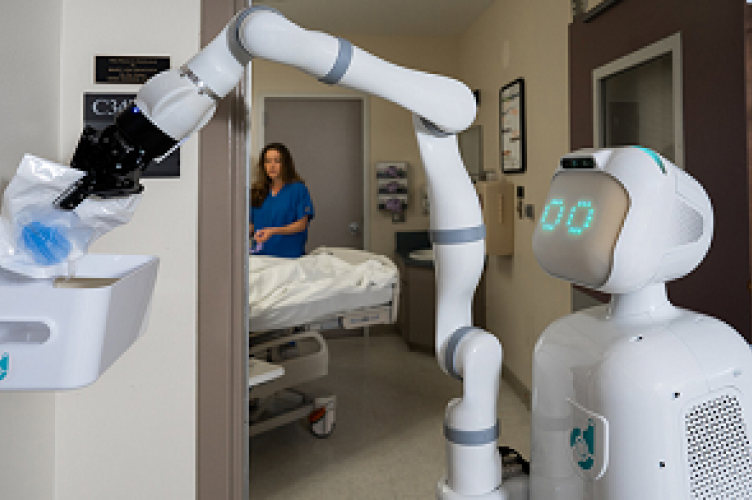
The Spotlight Study shows that although German business and top political leaders are convinced that autonomous machines are of great importance for the future of Germany’s economy, they fear that Europe is significantly lagging behind the United States and China in this key technology.
Autonomous machines will profoundly change the economy and society – as well as military applications – in the coming years and decades. They are fundamentally different from special devices exploited by Industry 4.0, as they are also used outside of factories and perform everyday tasks, such as transporting goods and people. “Autonomous machines also have crucial economic importance, as they create opportunities for Germany and Europe. Unlike many consumer markets, such as online retail, search engines or social networks, this enormous growth market is still in its infancy and yet to be distributed fully, so there is consequently still great potential for Germany and Europe to take a leading role in this key future technology,” comments European Center for Digital Competitiveness co-founder and co-director, professor Philip Meissner.
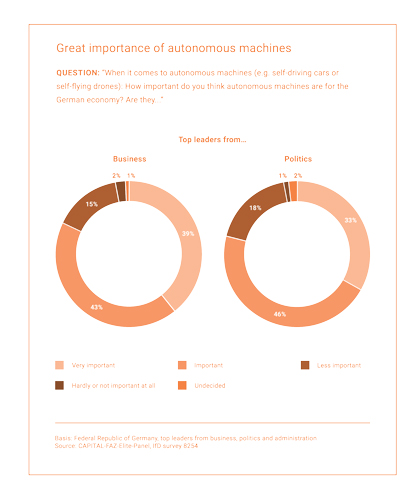
Top business and political leaders in Germany recognise the relevance of this key technology, with 82 percent of business representatives convinced that autonomous machines are of great importance for the future of the German economy and 79 percent of politicians sharing a similar view.
At the same time, however, the vast majority are convinced that it is not Europe but the United States and China that are leading in autonomous machines: only 12 percent of top executives or politicians consider Europe a leader in the field of driverless cars, and even fewer - 3 per cent of business leaders and 5 percent of political leaders - think the same for self-controlling drones. This are some of the results of the Spotlight Study carried out by the European Center for Digital Competitiveness based on the Berlin campus, and the Allensbach Institute.
Main results:
➢ Business and political leaders attach great importance to autonomous machines
➢ However, Europe is significantly lagging behind the United States and China in terms of development
- Europe is falling behind the United States in the field of driverless cars
- China is the technological leader regarding autonomous drones
➢ Leaders consider more investment necessary, especially in the German army (Bundeswehr)
➢ Production and data sovereignty should be preserved
Germany and Europe need strategic autonomy in key technologies
“Germany and Europe are in danger of losing out on autonomous machines, similar to other digital areas,” concludes Prof. Philip Meissner. “The urgency is extremely high in this regard because the market for autonomous machines is developing very dynamically; nonetheless, there is still no public discussion of the field in Germany, let alone a clear positioning or strategies on how to respond to these technological developments.”
“Europe needs clear strategic political support for autonomous machines, as they represent enormous potential as a key technology of the future. As a critical infrastructure for preserving digital sovereignty, the German state should additionally protect autonomous machines from sabotage and espionage. Open source solutions and open standards for the field of autonomous machines should also receive more attention at the German and European level, as they do in the United States,” adds fellow European Center for Digital Competitiveness co-founder and co-director Christian Poensgen.
Campuses