

In this master class, we will learn how currency exchange rates are determined by market forces, including factors such as inflation, households' income and interest rates. We will also discuss the pros and cons of a set of countries adopting a single currency, such as the euro in the Eurozone.
Participants

Prof. Dr. Jaime P. Luque
Associate Professor
Location
Organiser: Bachelor in Management (BSc) - Madrid Campus
Online- Madrid time - Worldwide
MapDate
Start date: 25/05/2021
Start time: 4:00 PM
End time: 5:00 PM

In this webinar, Dr Petros Chamakiotis explains how knowledge from the existing virtual team literature can be used to guide leaders of traditional, physically collocated teams that had to transition into virtual team e-leaders due to COVID-19.
Participants

Prof. Dr. Petros Chamakiotis
Associate Professor of Management
Location
Organiser: ESCP Madrid Campus
Online- Madrid time - Worldwide
MapDate
Start date: 19/05/2021
Start time: 5:00 PM
End time: 6:00 PM

AlixPartners has challenged ESCP students with a Green Hackathon. They were invited to contribute their ideas on how to create an ecological, sustainable and green future. The student teams had just a few hours to propose an innovative project tackling green and environmental issues.
AlixPartners has worked with clients around the world for nearly forty years, helping businesses respond to challenges when everything is on the line – from urgent performance improvement to complex restructuring, from risk mitigation to accelerated transformation.
“What has always inspired me about our firm is how our people go straight to the heart of the problem or opportunity. Our social responsibility is the sum total of our contribution to society: all the ways we take decisions within our own business, how we work with each other, and with our clients against a common set of values. Our local market teams educate each other about ways we can reduce our carbon footprint both at work and at home”, said Cindy Godwin, Head of Social Responsibility at AlixPartners.
The challenge set for the Green Hackathon was to create an innovative project based on a more sustainable future.
ESCP students had three hours to prepare a 15-second video explaining their ideas and a PDF page detailing the practical requirements to transform concept into reality. The results were judged by a jury consisting of Cindy Godwin, Marieke Otto, Brooke Hopkins, Caterina Campagna Weiss, Alberto Cola, Alfredo Naldi, Alisa Sydow and Francesco Rattalino.
The jury was impressed by the quality and value of the projects proposed by the 16 ESCP student teams and decided to award prizes to two of them: GEA, made up of Elisa Actis, Chiara Galimberti, Eugenio Molinatti, Valentina Molino and Daphné Reggiani, and Recycled Dudes, whose members were Costanza Bergamo, Claudio De Rubertis, Vittoria Fastelli and Joshua Wilks.
GEA presented AlixGreenTransition, a contest for start-ups. The idea was that B-series start-ups globally operating in specific sectors can apply on the AlixPartners website to be supported by the firm and guided through a sustainable transformation and to establish a competitive advantage. The purpose was to set a successful sustainable transition to inspire future clients to opt for a socially impactful business model.
The Green Network Project, by the Recycled Dudes, wanted to create a ‘green employee experience’ by proposing a Carbon Footprint Tracking mobile application for office and organisational use. Designed for the workforce at large, it provides a holistic measure of crucial sustainability indicators at the firm - CO2 emissions, plastic waste produced, energy use, food and water waste - focusing on transport and resource utilisation. Depending on the industry in which client companies operate and set targets aligned with ESG investment and UN SDG criteria, the app would tailor goals and standards.
The winning teams have been awarded an Inspirational Mentorship Session with high-performance professionals from AlixPartners that will inspire ESCP students with their experience and tips on how to set and achieve professional goals.
“I’m proud to work for a firm that focuses on innovation around sustainability. We must have innovation to find the right formula for a sustainable future. We can all make easy changes and should, but contributing to innovation is necessary to solve the complex problems we have yet to even know about”, declared Brooke Hopkins, Managing Director at AlixPartners US.
“AlixPartners specializes in ‘When It Really Matters’ situations and urgent, high-impact cases. From a global perspective, shaping a sustainable future is as critical as it gets, and it is great to work for a firm that was literally built for these kind of circumstances”, said Marieke Otto, Vice President at AlixPartners Germany.
The first ESCP Green Hackathon, in partnership with AlixPartners, was organised by the Student Experience Service and the Career Service of Turin Campus.
Special thanks to all the participants, and congrats to the two winning teams for your achievement and innovative ideas.
Campuses
Related stories
Event 17/03/2021
Online Event
ESCP Green Hackathon
Join us in an unprecedented event: the ESCP Green Hackathon | AlixPartners Call to Action on March 30th, 2-6 pm (CEST). Don’t miss the chance to empower your professional network! Test your skills, project and design an innovative sustainable idea, and present it to the AlixPartners’ jury!
Turin

News 06/04/2021
Turin News
Art Thinking: imagine the improbable
The ESCP Turin Campus Option-E cohort of students from the Master in Management kickstarted the semester with a disruptive workshop: the Improbable seminar, a 3-day training course based on the Art Thinking method. This flexible method, designed by Sylvain Bureau, Scientific Director of the Jean-Baptiste Say Institute and ESCP Professor, makes it possible to create the improbable with certainty.
Turin
![© Adobe Stock - Ivelin Radkov [copyright]](/sites/default/files/styles/home_listing/public/2020-09/Circular-economy-dilemna.jpg "© Adobe Stock - Ivelin Radkov [copyright]")
News 21/09/2020
OPINION
Between Green Growth and Degrowth: navigating the Circular Economy dilemma in a business school
The circular economy concept tends to polarise supporters of green growth and those of degrowth. As business school professors, Aurélien Acquier and Valentina Carbone navigate between these extreme positions to offer a third way.
Paris
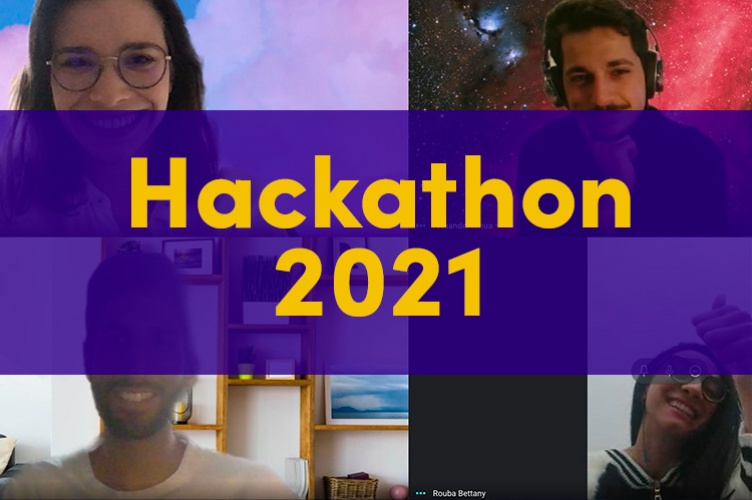
MSc Big Data and Business Analytics Hackathon 2021
From the 15th to 19th of March
Michelin, Criteo and ESCP organised a Hackathon on the theme of IoT and connected society with emerging GDPR regulation
For the fourth edition of the MSc in Big Data and Business Analytics’ annual Hackathon, students worked on four real-life cases with Michelin and Criteo. Students were challenged to find novel business models and analytical solutions with emerging IoT technologies in the connected society that was facing new GDPR regulations. Twenty-one teams had four days to leverage their technical and business skills to come up with creative solutions to the cases. The fifth day of the Hackathon was reserved for pitching the ideas to a jury!
Four Real-Life Cases
Michelin: Tyre Mining Maintenance
Tire maintenance is crucial in the mining industry, and productivity relies on tires that carry extremely heavy loads, over rough terrain, every day. As part go this project, students had to create a new business for Michelin Consulting & Services, combining existing data (and new data sources) and providing new and relevant KPI’s for tire maintenance management.
The winning team’s solution is a mobile-based application that provides the maintenance manager with all relevant information regarding a tire’s maintenance on one centralised platform. The key feature of the application is the tire’s health monitor, an indicator of the remaining useful life of a tire, which the team developed using machine learning. In addition, the students leveraged the data at hand by providing meaningful insights through dashboards and KPIs integrated within the application.
Michelin: Track Connect
Michelin Track Connect (MTC) is an application that helps circuit drivers achieve their optimal driving performance. The goal of this project was for students to answer three key questions: In what ways can MTC be monetised? What should the growth strategy for MTC be? How can MTC monetise its data assets?
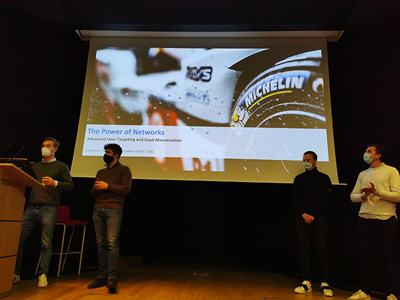
The winning team proposed three ideas. The first is to develop a dangerous driving risk alert, which could detect crashes and dangerous driving behaviour in real-time. The second idea is to sell insurance packages for race-day events through the MTC app by partnering with insurance partners. The third proposal involves providing insurance companies with data from MTC users to help them increase the accuracy of their risk assessment models.
Michelin: Truckfly
The Truckfly application supports truckers throughout their journey. Amongst other features, it provides truckers with up-to-date information on where to refuel, eat and rest along their route. For this case, students had to think of ways to grow/pivot Truckfly’s business and generate stable revenues.
The winning team delivered a Competitive Analytics Dashboard where business owners and business managers can gain a competitive advantage given the exclusivity and granularity of Truckfly’s data assets. This Competitive Analytics Dashboard offers real-time data analytics about the industry and regional competitors, the trucker customer segments, and also, the main characteristics a business should have to maintain attractiveness and visibility in the market. All of this is possible by implementing statistical and machine learning algorithms, such as clustering, random forests, forecasting and market basket analysis.
Criteo: Contextual targeting
There is increasing pressure to limit the online tracking of users. Thus, the advertising ecosystem is shifting towards contextual targeting. As part of this Criteo case, students were challenged to design a contextual targeting product to connect advertisers to publishers and reach users (using limited user data).
The winning team used keyword matching to categorise and assign advertisers with relevant publishers. It also drew data from multiple other sources, like Google Trends, to enhance the matching process.
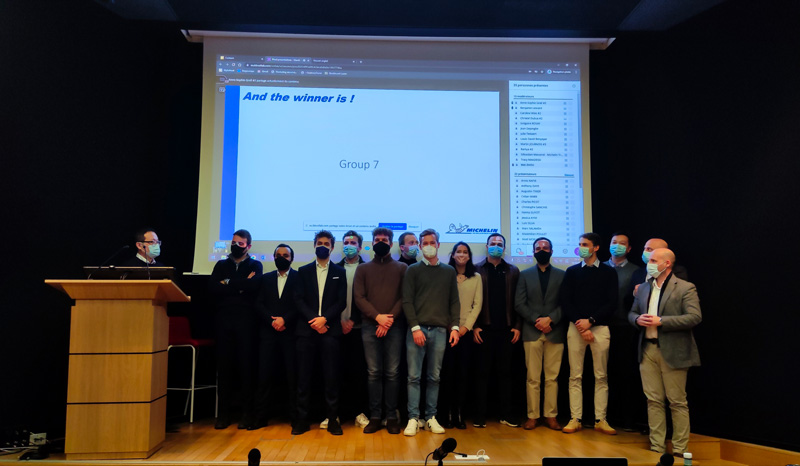
The jury, made up of ESCP professors, Michelin representatives, tech partners and Spinfi members, awarded a prize for each of the three subject areas.
Michelin Cases: Winning Teams
- 1st Prize Michelin and 1st Prize Truckfly: Noelia Venet, Francisco Javier Leiton Jimenez, Liwa Aboumrad, Zoe Le
- 1st Prize Tyre Mining Maintenance: Luis Vasconcelos, Xavier Campagne, Tony Achkar, Anthony Daye
- 1st Prize Track Connect: Mouaad Benelhirche, Ugo Carotti, Edoardo Maschio, Edoardo Tarallo
- 1st Prize Academic winner: Simon Probst, Alexander Lund, Leonardo Nespolon, Nicolaus Norden
Criteo Cases: Winning Teams
- 1st Prize: Fanrui Lian, Annie Chien, Alex Melennec, Yun Zhang
- 2nd Prize: Marie-Isabelle Schönborn, Chiara Höppner, Florian Drummen, Youssef Braham
- 3rd Prize: Cassandre Sillere, Edoardo Brizi, Guillermo Rubio Lopez, Yiyu Chen
Jury Members
Michelin
- Benjamin Levrard
- Sebastien Masseret
- Gregoire Rosay
- Caroline Wies
- Martin Journois
- Yohan Benque
- Ramya Gajula
- Jean Dejonghe
Criteo
- Laurent Molter
- Camille Lehujeur
Spinfi
- Stephane Alix
ESCP Business School
- Prof. Howard Zhong
- Prof. Louis-David Benyayer
- Prof. Wei Zhou
Students Testimonials
Campuses
![© Unsplash/Anh Nguyen [copyright]](/sites/default/files/styles/event_news_une/public/2021-04/Graf-Vlachy_LSE.jpg)
Campuses
![© Adobe Stock - worawut [copyright]](/sites/default/files/styles/event_news_une/public/2021-04/worawut-adobestock-family-business-1600x1000_0.jpg)
Campuses
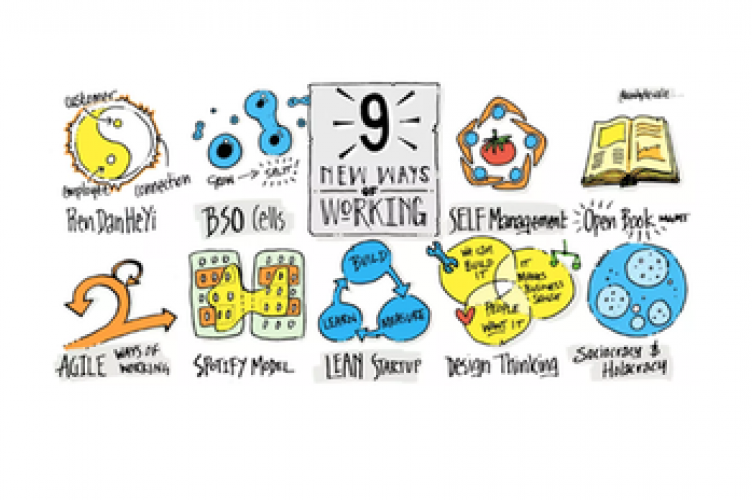
8 groups of MiM students involved to crack 8 key topics in the headlines
8 hot topics
- Defining a new value proposition for the office
- Leading a co-rpo-working space
- Leading a different workforce (free-lancers, slashers, platform workers…)
- Leading in a hybrid environment (teleworkers & non-teleworkers in the same team)
- Leading virtual teams
- HR decision-making via artificial intelligence
- Integrating newcomers in a remote environment
- Developing/maintaining social bonding remotely
This challenge is the final step of a 30-hour course delivered by Professor Emmanuelle Léon, Scientific Director of the Reinventing Work Chair.
“The Reinventing Work chair is an ecosystem where managers, professors and students work together in order to better understand the changes at hand in the organizations. This course has been designed in partnership with the different members of the jury, some of whom shared their experiences and knowledge with the students during class. It is through these continuous interactions between research and real-life challenges that we will be able to move forward. Designing a video, writing an executive summary and confronting their points of views with the jury’s have raised the students’ awareness of today’s real life challenges”, she explains.
To assess the students’ achievements, a panel of experts were Jury members. We warmly thank Géraldine Conti, Head of HR for International Retail Banking, BNP Paribas ; Olivier Cros, Head of Workplace Strategy, CBRE France ; Ulysse Dorioz, Director of the transformation, Conseil Régional d’Ile-de-France ; Maud Lesieur, Upskilling programme Leader, BivwAk! ; Claire Maldera, Head of HR for Wealth Management, BNP Paribas ; Frédéric Thoral, Head of HR for Personal Finance, BNP Paribas ; Dominique Turcq, President, Boostzone Institute ; Arnaud Weiss, Co-founder and CEO, @Axel.
Each group took the “e-floor” for 10 minutes to present a 3-min video pitching their recommendation and to answer questions from Jury members.
Two groups have been awarded:
“Leading virtual teams”
Congratulations to Elèonore Andries, Wilhelm Bingsmark, Davide Castellano, Yu-Ning Lee and Swetha Sindhu Nair
Learn more about their findings
Remote work and virtual teams are on the rise, and the current pandemic has only accelerated their advent. For companies to be able to adapt to such ways of working, they need to learn and comprehend how to leverage such experiences, and team leaders need to understand how to successfully manage a team of people who are not physically together. We investigated how virtual teams should be built and which leadership practices that managers should adapt in order to guarantee the success of a virtual team. What exactly is a virtual team? A virtual team is a group of people working together towards a common goal, but it does so from different geographical regions. From a managerial perspective, leading a virtual team means to harmonize and manage communication amongst colleagues spread across the world, and to ensure the success of the team’s operations. Through trust, clarity and vision (Forbes, 2015), virtual team members are able to work together as one in order to achieve common goals. However, there are additional factors which play significant roles in the accomplishment of a virtual team’s objectives, such as people’s personality traits, behaviors, and preferences. It is worth mentioning that leading a virtual team and virtually leading a team are two different things which must not be confused. We based our work on literature analysis on the topic and on interviews conducted with three different people from diverse environments, namely the business and academia. To ensure the reliability and validity of our research, we used a standardized interview guide regarding the possible challenges and benefits of virtual teams to all of our interviewees. Our first interviewee was Dr. Paul Caussat, Professor at ESCP Business School, whose experience from almost a year of virtual teaching provided him with valuable insights on how best to deal with virtual teams in an educational context. Secondly, we reached out to an Amazon’s employee. Her insights on how to lead virtual teams were interesting that she has had a longstanding experience of remote work, even before the pandemic. Lastly, we had the opportunity to interview Ms. Barbara Chen, the President of AGORA, a platform made by and dedicated to ESCP students, representing more than 6,000 of them over all six campuses, which allowed us to gain a managerial perspective in the school ecosystem. We can see that though our interviewees valued different aspects and factors in the success of leading virtual teams, most of the insights we gained from them highly coincide with our research findings collected. The success of a virtual team relies not merely on the leadership role, but also key traits, such as diversity a team shall possess, along with co-created norms to which all the team members shall respect.
Source: Executive summary of the students group
“Integrating newcomers in a remote environment”
Congratulations to Fiona Deodato, Viktoria Leroux, Ribal Moujaes, Marvin Ulbrich and Julie Zimmermann
Learn more about their findings
Integration refers to a sense of healthy fit between employees and employers, to maximize the overall performance of the company to reach a specific goal and to help with building sustainable interpersonal relationships. It is important to point out that integration is about adaptation, and humans are capable of adapting to any environment, but of course this ability to adapt varies depending on the quality of support provided.
Effective integration within a workplace relies on two aspects, which are usually complementary (Arshavskiy, 2019):
An informal aspect -This aspect is usually done to emotionally engage the new hire, and transmit a sense of culture. It is usually acquired through more user friendly mechanisms.
A formal aspect -The onboarding process, which is done to formally integrate and introduce the new hire into the company, giving them full access to the company’s tools and resources.
Effectively transmitting a company’s culture is the first step and vital to integrate new employees well. An important aspect is that culture is a unique asset of a company that cannot be copied, and helps employees get a sense of belonging and identity.
Newcomers place more and more emphasis on being aligned with the organization’s values and beliefs, and it is important to ensure such alignment as soon as the contract has been signed. This will help with creating an overall team cohesion, maximizing employee engagement and retention, and with the overall performance of the company.
Furthermore, onboarding is vital to increase employer branding but also to give candidates an overall idea of the companies’ culture and work environment. Indeed, as highlighted by Amy Hirsh Robinson, principal of the consulting firm The Interchange Group, onboarding is “the perfect time to tell stories about the organization's history, values, people and big-picture vision for the future".
Onboarding was a critical factor in a successful workforce integration strategy even before the Corona crisis. Now,rapid digitization of the integration of new hires has been made inevitable by the pandemic. Our research draws a first conclusion from the implementation of integration processes in the virtual environment, putting the established formal and informal onboarding process to the test through a qualitative approach.
Our research indicates that the best practices of the invoked onboarding process continue to hold in large part. Interestingly, the "warm first day" and the "welcoming days" merge into one best practice, which may be due to the absence of building tours and hardware setup that are common during the on-site introduction. A key component that can be seen across all interviews and aspects of our study is the importance of clear and frequent communication, whether formal or informal, to be able to create transparency and a personal relationship.
Without sufficient communication, it is also not possible to transmit company values and corporate culture to the newcomers, which is essential for a smooth onboarding and long lasting integration.
Source: Executive summary of the students group
Campuses

Just as education is the key to unlocking a person’s future, sustainability is the key to unlocking everyone's future.
ESCP Business School sees sustainable development as a fundamental element in the transformation of our societies and economies, and therefore encourages young people to take the lead - with the right preparation - by rewarding their passion.
In fact, through the Bachelor in Management (BSc), the program’s Madrid campus admitted candidates have the chance to win one of the three ESCP Green Scholarships. A grant specifically designed to support their talent and desire to be part of the change.
The idea behind the Green Scholarship is to gauge candidates’ entrepreneurial spirit and encourage them to search for creative solutions to the main issues brought by climate change and environmental conservation. The candidates who present the best projects are then eligible for prizes covering 50%, 30%, and 20% of the first year's tuition fees.
“We are faced with the need to intervene in a system rooted in a space-time that cries out for help,” affirms Alejandro Ruiz, Academic Director of the Bachelor in Management (BSc) at the Madrid Campus and cocreator of the contest. “Rainwater harvesting methods, eco-shops, and meals with a reduced plastic load are just a selection of the winning proposals that demonstrate the renewed mentality required to achieve a sustainable future.”
A future-oriented mentality that is fully attuned to our candidates' vision of the world of tomorrow.
“Interviewing a sample of 100 students, I was able to calculate an average use of 1,000 pieces of paper per student per year. In the long term, these figures were not sustainable at all". Samy Rabii, a BSc candidate from Morocco, started from this premise to design one of last year’s winning proposals.
“To solve this problem, I outline a viable strategy to incentivize recycling and reinforce positive behavior through prizes and promotions that users can acquire through a software application I developed.”
Since 2019, ESCP Madrid campus, offers the BSc Green Scholarship competition and opens to all its admitted candidates from Madrid campus, the chance to show their best versions of unlocking a great future.
More information: bachelormadrid@escp.eu
Campuses
![© Unsplash/Macau Photo Agency [copyright]](/sites/default/files/styles/event_news_une/public/2021-04/macau-photo-agency-CADsAEnFMjg-unsplash.jpg)
Campuses