
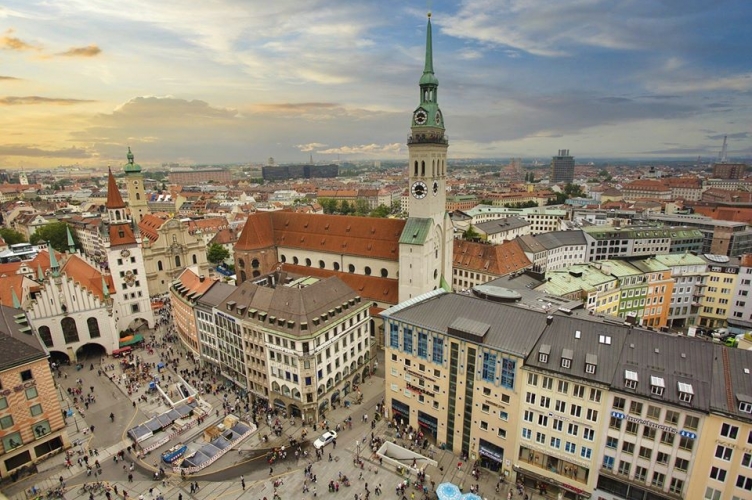
Join us in Munich at the Holiday Inn City Center on Friday, February 7th, 2020 and get an insight into our Bachelor in Management (BSc), a unique undergraduate programme to prepare you for a future in international business.
On this day you are given two amazing opportunities:
1. Book a session for a personal CV-Check and Counselling Session with Charlotte Hillig, Head of Undergraduate Studies and Denise Tarbuch, Recruitment Coordinator. They can give you advice regarding your studies, as well as check your CV and answer all your questions. To sign up send an email to bacherberlin@escpeurope.eu
2. Take part in our Community Event starting at 6pm and meet not only our team but also our students and alumni whom you can ask anything and who are happy to give you some insights into the Bachelor in Management at ESCP. To participate simply fill out this registration form: https://forms.gle/1QSVjU6FKVNbrRGg8
The agenda for that day:
2.00 pm - 6.00 pm: Personal Counselling and CV-Check Sessions
6.00 pm - 7.00 pm: Community Event - Meet us, our students and alumni
We are looking forward to meeting you, your friends and family in Munich!
For more info, visit our Website: https://escp.eu/programmes/bachelor
If you have any questions, please contact the Bachelor in Management Team Berlin: bachelorberlin@escpeurope.eu.
Location
Organiser: Berlin Campus
Munich - Germany
MapDate
Start date: 07/02/2020
Start time: 2:00 PM
End time: 7:00 PM
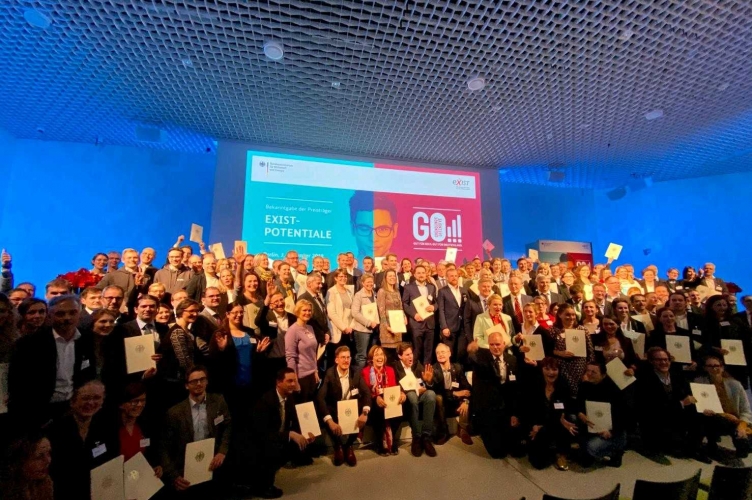
ESCP Business School Berlin, received the award of the BMWi-Program "EXIST – Potentiale” for their start-up funding concept ESCP B.E.S.T (Building European Start-Ups). Prof. Dr. Matthias Mrozewski, assistant professor for entrepreneurship at ESCP Berlin, represented the Jean-Baptiste Say Institute during the award ceremony.
“EXIST Potentiale” is a Germany-wide funding measure by the BMWi (Federal Ministry for Economc Affairs and Energy) for universities. The aim of the measure is to implement a start-up culture in universities and to create the necessary framework to support innovative and high-growth science start-ups. In total, 220 applications were submitted by different universities all around Germany, including private and public institutions. Expert juries evaluated the submitted project proposals and selected the best concepts in three categories for Start-up funding from the Economic Affairs Ministry.
Campuses
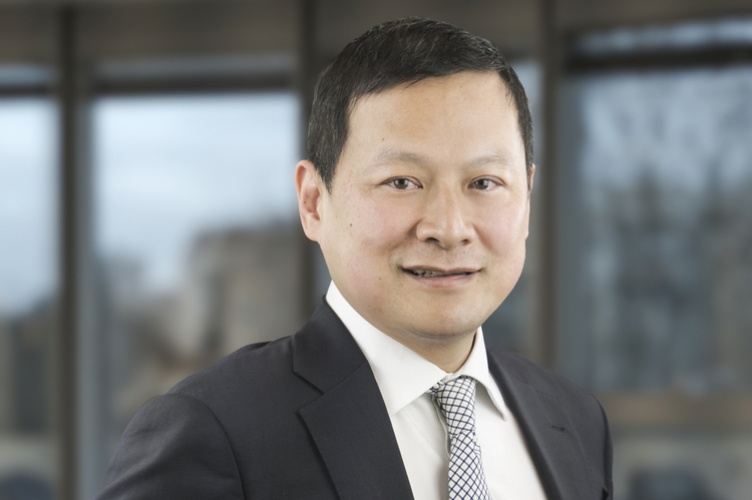
Pramuan Bunkanwanicha, Dean of Faculty, on hiring, research and teaching in a changing academic environment
Business school professors are under pressure – to teach students how to use artificial intelligence, make their research applicable outside academia and keep their knowledge up to date.
They are not just producing knowledge, but bringing it into the classroom and preparing students to use it in practice. At ESCP Business School, it is Pramuan Bunkanwanicha’s job to ensure faculty can do both. As Dean of Faculty, he oversees hiring and development, shaping a faculty capable of meeting those demands without compromising research standards.
Hiring for strategic expertise
Strategic hiring is a central part of Bunkanwanicha’s approach. “The idea is to maintain academic excellence and an international profile,” Bunkanwanicha says. “But at the same time, we need new expertise.”
ESCP plans to grow its faculty to around 300 members by 2030, recruiting 15 to 20 academics each year. The focus is not just on numbers, but on areas that are strategic priorities for the School.
ESCP plans to launch two new institutions by 2030 as part of its Bold & United strategy: ESCP School of Technology in 2027 and ESCP School of Governance in 2029. “We need expertise in technological transformation, AI and environmental transformation,” he says.
There is also a push to change the composition of the faculty. Women currently account for about 43 per cent. “We would love to achieve 50 per cent,” he adds.
Supporting ESCP’s multi-campus growth
The school has grown in recent years, with rising student numbers and expansion across its European campuses. That has created more immediate pressures for professors.
“The increase of students in European campuses means we need to recruit in a very tangible way,” he says, pointing to growth in Madrid and Turin.
At the same time, ESCP’s international model remains central to how it teaches. “I think ESCP has the most international faculty compared to other institutions,” Bunkanwanicha says. Faculty across campuses bring different perspectives into the classroom, shaping how students understand business in a European context.
Research in action
For Bunkanwanicha, research remains a core part of academic work – but not in isolation. “Our faculty does a very high level of research,” he says. “But not just for publication.”
He points to the school’s “Impact Papers”, which aim to translate academic work into a more accessible format. “It allows people to read research in a more accessible language,” he says. “Our faculty contributes a lot to this.”
Through the LIGhTS research institutes , ESCP connects research with business and policy, fostering interdisciplinary work across areas such as leadership, innovation, geopolitics, technology and sustainability—ensuring academic insights translate into real-world impact.
The expectation is that research should move beyond journals and into practice. It needs to be understood and used outside academia to inform how businesses and organisations operate.
Teaching in the age of AI
That shift towards applied knowledge is also visible in teaching at ESCP. “The biggest challenge as a professor is to upskill and reskill,” Bunkanwanicha says. Faculty are expected to keep pace with changes in their field while also adapting how they teach.
In practice, that means responding to tools such as AI and rethinking how those tools are used in the classroom. Students, he notes, are already using AI in their daily work. The role of the professor is to guide that use. “How can they use it in effective and ethical ways?” he says. “To become responsible leaders.”
ESCP has responded by training almost all of its faculty in AI. “We have trained almost 100 per cent,” he says. “More than 50 per cent are AI champions.”
The school has also increased investment in faculty development more broadly. “We have regular training,” he says, including programmes developed with OpenAI. Some professors are also sent to institutions such as Harvard Business School.
The aim is to ensure that faculty are not only strong researchers but also effective teachers.
Leading faculty in a changing academic world
For younger academics, Bunkanwanicha’s advice reflects the same pressures. “Be humble, but at the same time ambitious,” he says. He stresses the need to keep learning. “We need to be ready to learn and unlearn when necessary,” he adds. “Our knowledge can change very quickly.”
In a field where expectations are shifting, he suggests, adaptability matters as much as expertise. “We need dynamic faculty,” he says.
We need to be ready to learn and unlearn when necessary. Our knowledge can change very quickly.
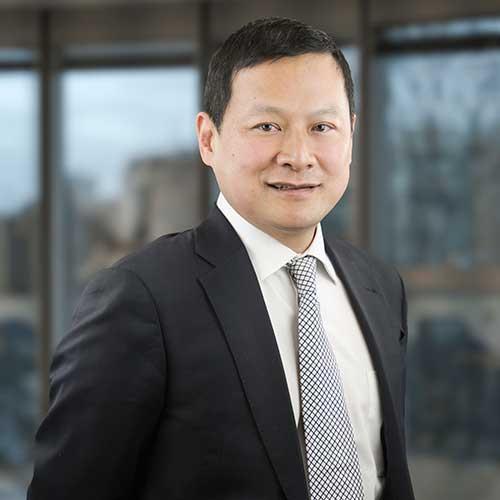 Pramuan Bunkanwanicha
Dean of Faculty
Relevant link
Campuses

How founding teams align scientific ambition, engineering constraints, and commercial imperatives
ESCP’s Deeptech Entrepreneurship Research Briefings continue with a second issue focusing on a core challenge at the heart of Deeptech ventures: how founding teams align scientific ambition, engineering constraints, and commercial imperatives within a single organisation.
Drawing on qualitative interviews with founders and senior team members across four startups in artificial intelligence, biotechnology, MedTech, and industrial sensing, this Research Briefing examines how teams coordinate under conditions of high uncertainty, long development cycles, and capital intensity.
The findings show that Deeptech startups operate at the intersection of three distinct domains, science, engineering, and business, each with its own language, timelines, and success criteria. Misalignment between these domains is not an exception but a structural challenge, often leading to delays, internal tension, and strategic drift.
Early team structures are typically built on trust, emerging from prior academic or professional relationships. While this facilitates initial collaboration and fundraising, roles tend to evolve informally, often resulting in blurred responsibilities and increasing coordination costs as the company grows.
A recurring pattern across cases is the centralisation of business responsibilities in a single individual, combined with the emergence of hybrid roles. Scientists frequently expand into commercial functions, reducing friction between domains but also creating significant cognitive and emotional load. These boundary-spanning roles become critical to the venture’s progress.
One of the strongest insights from the study is the importance of shared language as a coordination mechanism. Rather than relying solely on formal structures, teams develop ongoing alignment practices, such as regular exchanges, cross-functional meetings, and common frameworks such as Technology Readiness Levels (TRLs). They help bridge disciplinary gaps and synchronise expectations internally and with investors.
Across all interviews, trust emerges as a foundation. Teams rely on expert judgement without full mutual understanding, making transparency, communication, and clear priorities essential to maintaining coordination under pressure.
Finally, recruitment practices reveal that adaptability and cultural fit consistently outweigh pure technical expertise. Deeptech teams prioritise individuals who can operate across boundaries, tolerate uncertainty, and contribute to collective progress over extended timelines.
This second issue highlights that Deeptech success is not only a matter of technological excellence, but of organisational design. The most effective teams function as translation systems that actively align science, engineering, and business through hybrid leadership, shared frameworks, and trust-based coordination.
Related stories

Shared Language, Hybrid Roles, and Organizational Alignment in Deeptech Ventures
Campuses
Experts from ESCP’s Sustainability Advisory Council discuss the role of business education in driving systemic change.
Sustainability is no longer a commitment institutions can simply declare. It is something they must be able to demonstrate, measure, and — crucially — have challenged. With the launch of its Sustainability Advisory Council, ESCP took a clear step in that direction: opening its strategy to external scrutiny.
Bringing together 13 international experts from fields ranging from climate science and finance to activism and public policy, the Council is designed to play a role in questioning and strengthening ESCP’s sustainability approach and holding the School accountable.
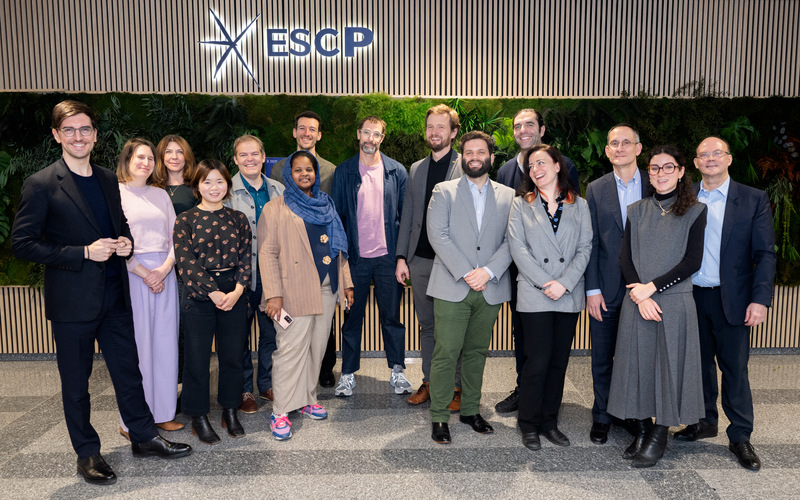
In December 2025, ESCP Business School welcomed several members of the Council to the Paris campus for their first in-person meeting. Over two days, the Council engaged with ESCP’s sustainability strategy, reviewing its approach, challenging its assumptions, and sharing perspectives.
Rethinking the role of business schools
"I think the key imperative is to give everybody who goes through the business school the tools and knowledge, and scientific awareness," shares Alison Taylor, Professor at NYU Stern School of Business.
At the heart of the Council’s discussions is a fundamental idea: business schools are not neutral actors in the sustainability transition. They shape the leaders, organisations, and systems that drive economic activity.
“Knowing that most of the emissions are coming from companies… there’s a big role [for the school],” says Nisreen Elsaim, Former Chair of the UN Secretary-General’s Youth Advisory Group on Climate Change.
This perspective reframes the role of institutions like ESCP. Beyond teaching sustainability, they are responsible for embedding it into how future leaders think, decide, and act.
From awareness to agency
One of the strongest messages emerging from the Council is that sustainability education must go beyond knowledge.
For Hans Stegeman, Chief Economist at Triodos Bank, the priority is agency. “Business schools have a very important role in combating climate change because people need to understand what their own agency is,” he explains. “That’s what we need to learn at a business school because these are the future leaders who need to change the system.”
This implies a shift in how sustainability is taught. Not as a standalone subject, but as a lens applied across disciplines—from finance to strategy to operations. “It is always about the system and how you can change the system,” adds Stegeman. “If you can learn that in the best possible way at a business school, we are prepared for the future.”
It also requires equipping students to operate across multiple levels of change. As Daniel Nowack, Head of Social Innovation at the World Economic Forum, shares: “We need to act on three levels: the system, the organisation, and the personal level.” Addressing sustainability means understanding how these levels interact and where decisions create impact.
For ESCP, where 100% of students already receive sustainability training, this means deepening the approach: ensuring graduates are not only informed, but capable of navigating complexity and making responsible decisions in practice.
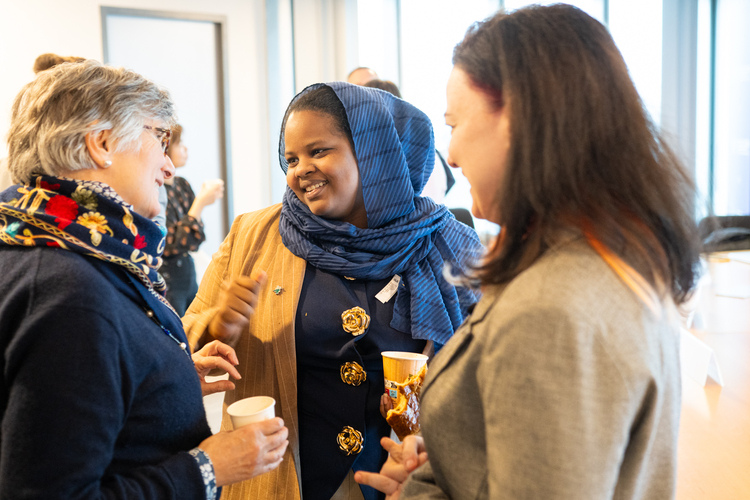
 Welcoming members of ESCP's Sustainability Advisory Council
 Sustainability as a leadership capability
The Council also reinforces a clear message about the future of leadership. Sustainability is no longer a niche expertise: it is a core competency.
“The leaders of tomorrow will have to fight climate change and reduce the risk related to climate change,” says Emmanuel Normant, Vice President Sustainable Development at Saint-Gobain. “But also more and more, they will need to know how to adapt to the consequences of climate change.” Leadership, in this context, is as much about resilience and adaptation as it is about mitigation.
At the same time, the expectation is not that every student becomes a technical expert. Taylor highlights a more pragmatic goal. “Every business student needs to have confidence with the topic—to know what they don’t know, and where to find the facts.”
This pragmatic approach reflects the realities of modern leadership: navigating uncertainty, making informed decisions, and balancing competing priorities.
Business schools have a very important role in combating climate change because people need to understand what their own agency is. That’s what we need to learn at a business school because these are the future leaders who need to change the system.
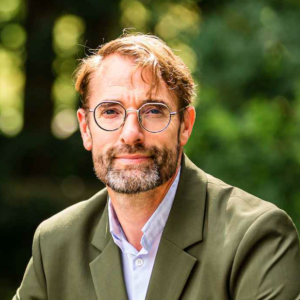 Hans Stegeman
Chief Economist at Triodos Bank
A new model for sustainability in business education
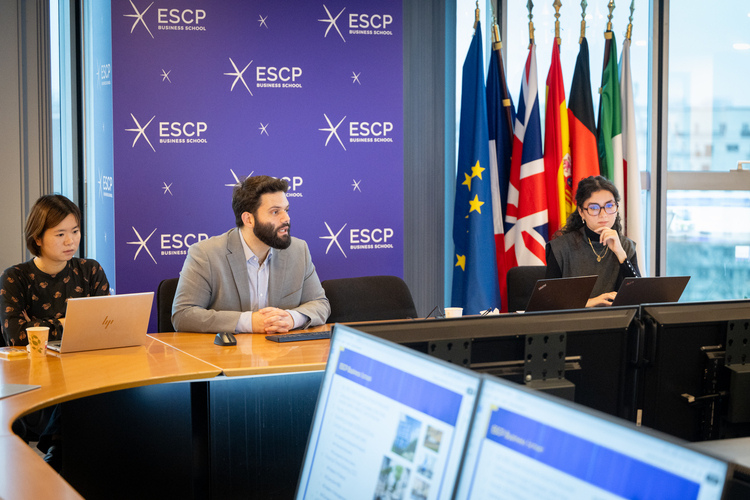 ESCP’s Associate Dean of Sustainability Gorgi Krlev addresses the Council
 The Sustainability Advisory Council signals a move towards a more open, collaborative model of business education—one that recognises that the challenges of sustainability cannot be addressed from within a single discipline or institution.
The Council’s first in-person meeting in Paris marked the beginning of this collaborative work and laid the foundation for a shared roadmap, identifying priorities and areas for action that will shape ESCP’s sustainability strategy in the years ahead.
The ambition is clear: to ensure that sustainability is not an add-on, but a core principle guiding how business is taught, understood, and practised. And to do so with the level of openness and accountability that today’s challenges require.
Relevant link
Campuses
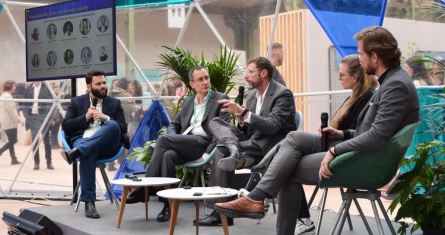
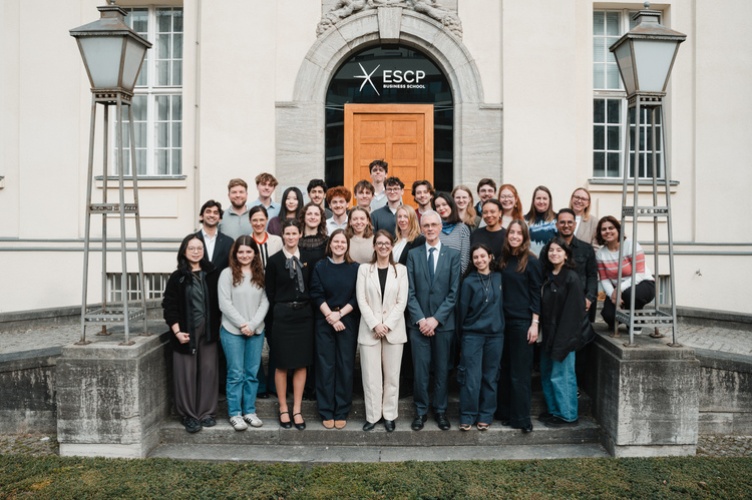
French Minister for Gender Equality and Fight against Discrimination: Aurore Bergé at ESCP Berlin
Advancing Gender Equality in an “Age of Storms”
On 24 March 2026, ESCP Business School’s Berlin campus welcomed Aurore Bergé, French Minister for Gender Equality and Fight against Discrimination, for a high-level discussion on the future of gender equality, human rights and international cooperation.
Bringing together policymakers, researchers and students, the event created a platform for dialogue on one of today’s most pressing societal challenges, and reaffirmed ESCP’s role in fostering cross-border debate on critical global issues.
A global challenge: Equality in times of uncertainty
Gender equality remains a fundamental issue affecting rights, opportunities and economic participation. As highlighted in the opening remarks, achieving equality requires both decisive political action and continuous societal dialogue across borders and cultures.
In her keynote, Minister Bergé described the current context as an “age of storms” for human rights. She pointed to increasing geopolitical tensions and diverging national approaches as key challenges, particularly regarding women’s and LGBTQ+ rights.
A central message: progress is not guaranteed. Equality must be actively defended and continuously reinforced.
Feminist diplomacy and new international alliances
Against this backdrop, Bergé outlined France’s approach to strengthening international cooperation through what she described as feminist diplomacy - positioning gender equality as a core dimension of foreign policy. With shifting global dynamics, including reduced engagement from traditional partners, France is focusing on building new coalitions across Europe, Africa and Latin America. These partnerships aim to advance human rights and support countries implementing progressive legislation.
At European level, she emphasised the importance of strong Franco-German cooperation to maintain a clear and unified voice on equality and democratic values.
A growing generational divide
One of the key concerns raised during the discussion was the emerging generational gap in perceptions of equality.
While past decades were marked by steady progress, recent developments suggest a more complex reality. According to Bergé, new ideologies and shifting attitudes - particularly among younger generations - risk slowing or even reversing progress.
Her conclusion was clear: Equality is not a given, but an ongoing effort that requires engagement, awareness and resilience.
Policy measures: Why quotas still matter
The role of quotas sparked particular interest during the student Q&A.
While acknowledging that quotas are not an ideal long-term solution, Bergé argued they remain necessary in the current context to ensure representation - especially in leadership positions and in sectors such as finance, STEM and technology.
Without such measures, she warned, progress could quickly stall or reverse.
At the same time, she stressed the importance of combining structural tools with broader efforts, such as education, awareness-building and addressing unconscious biases.
ESCP in action: Research, education and institutional change
The event also showcased how ESCP is addressing gender equality across research, teaching and institutional policy.
Women in Finance: Research and impact
The Chair of Women in Finance presented ongoing research into the lived experiences of women in a traditionally male-dominated industry. One key insight is the “visibility–invisibility challenge”: women often feel overlooked in discussions while at the same time standing out as minorities in leadership environments. This dynamic requires them to navigate carefully between gaining visibility for their contributions and avoiding increased scrutiny or stereotyping. The findings underline the importance of strengthening women’s agency to better manage this balance.
A structured Gender Equality Plan
ESCP also shared its institutional Gender Equality Plan, developed in line with eligibility requirements for European Union funding under the Horizon Europe Programme . The plan focuses on:
- equitable recruitment and career progression
- gender balance in in leadership and decision making
- integration of gender perspectives in teaching and research
- prevention of discrimination and gender-based violence including sexual harassment
Importantly, the plan is designed as an evolving framework, supported by continuous monitoring and evaluation rather than a one-off initiative.
Key takeaways
- Gender equality remains a central economic and societal challenge
- Progress is not linear and requires continuous effort
- International cooperation is shifting, requiring new alliances
- Quotas remain a necessary tool in the current context
- Education, research and institutional commitment are critical drivers of change
A platform for dialogue and future action
The event concluded with an engaged discussion between students and the Minister, reflecting a shared understanding that achieving equality requires both structural measures and collective responsibility.
By hosting this exchange, ESCP Berlin once again provided a space where academic insight, policy perspectives and student voices come together - contributing to informed debate and tangible progress on equality and inclusion.
Relevant link
Campuses
ESCP Deeptech Showcase 2026: founders, investors, researchers and students meet around frontier innovation.
From Lab to Market | ESCP Deeptech Entrepreneurship Showcase 2026
Join us for an evening bringing together founders, investors, researchers, students and innovation leaders around deeptech, entrepreneurship and frontier research. A chance to discover selected projects, meet ambitious ventures and connect with the broader ecosystem shaping the future of science-driven innovation.
This event is organised in collaboration with ESCP Innovation and Entrepreneurship Transformation Institute (Say Institute), ESCP's Blue Factory and the Deeptech Entrepreneurship programme.
What to Expect
Over the past three months, 44 ESCP students have worked in sprint-based teams alongside 10 deeptech startups operating across fields such as TechBio, synthetic biology, SpaceTech, quantum, green industry, advanced materials and frontier innovation. Together, they have explored real business challenges, market applications and strategic pathways at the intersection of science, entrepreneurship and execution.
This final showcase goes beyond a traditional student event and reflects the joint efforts of ESCP’s academic and entrepreneurial ecosystem, including the Blue Factory. It is a curated evening for the deeptech ecosystem, offering a close look at how ESCP approaches deeptech education through live projects, demanding execution and direct collaboration with founders and innovation stakeholders.
Agenda
- 16:45 Registration and welcome
- 17:00 Opening remarks
- 17:30 Project presentations
- 19:00 Cocktail reception
- 20:00 Close
The evening will open with remarks by Professor Cédric DENIS-RÉMIS, future Dean of ESCP’s School of Technology, followed by an introduction from Martin KUPP and Vincent GALAND, Deeptech Professors on ESCP’s deeptech pedagogy and the ambition behind the course. We will also present initiatives supported by the Blue Factory, directed by Maëva TORDO.
The programme will then feature a selection of projects drawn from this year’s startup collaborations, with a short introduction by each startup followed by student presentations.
Thank you to our partners:
This year’s course has benefited from the involvement of startups and partners, including WhiteLab Genomics, Biomemory, Coros Space, Quandela, TheSpaceBuilder, EverDye, Reed Materials, PhaPIM, EVA, CentraleSupélec, Crédit Mutuel Innovation, Université Paris Cité and Campus Fund.
Location
Organiser: ESCP Business School
Paris - France
MapDate
Start date: 31/03/2026
Start time: 4:45 PM
End time: 8:00 PM
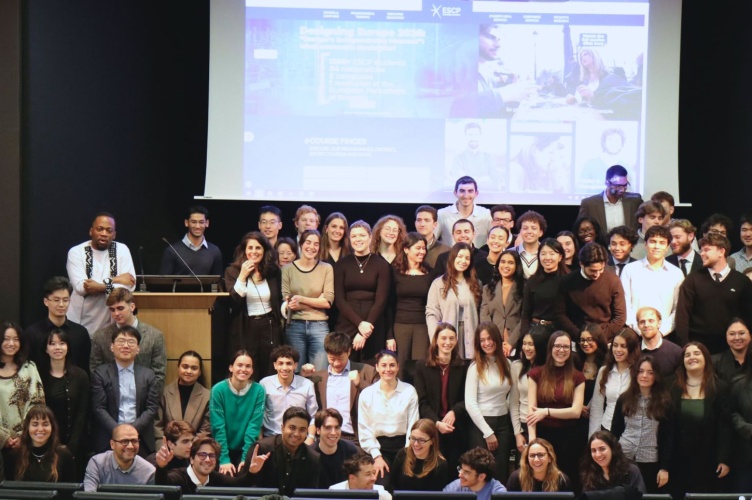
ESCP students solve challenges from leading companies in the annual hackathon
From 9-13 March, students in the MSc in Business Analytics & AI programme worked on five company challenges before presenting their solutions to a jury of professors and corporate partners.
The MSc in Business Analytics & AI Hackathon 2026 brought together students, professors and partner companies for a week of hands-on problem-solving centred on real business challenges. This year’s edition was organised in partnership with five partner companies: Catalina Marketing France, Celonis, Criteo, Ekimetrics and Schneider Electric.
Over the course of a few days, students tackled demanding briefs, worked with large datasets and transformed technical findings into strategic recommendations. Just as importantly, they did so in an environment that encouraged teamwork, adaptability and bold thinking.
Rising to the challenge
Working under tight deadlines, participants explored topics ranging from marketing performance to carbon footprint modelling. Together, these challenges gave students the opportunity to apply their skills to questions spanning marketing, operations, automation and sustainability.
The result was a week marked by creativity, resilience and strong analytical thinking. At the end of the week, several teams were recognised for the quality of their work, the relevance of their recommendations and the strength of their final presentations.
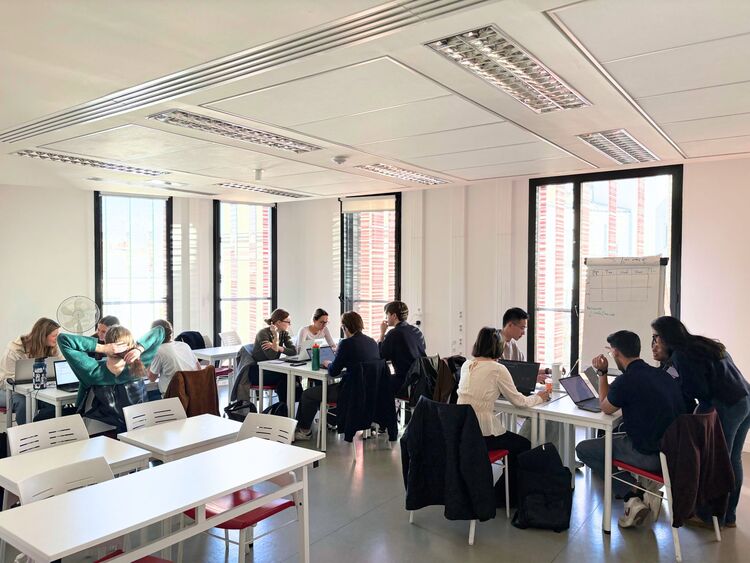 Students hard at work during this year’s challenge.
 Celebrating this year’s winners
Catalina Marketing France
Improving order management processes and delivery performance
Group 5: Mya Mekouar, Aurélien Saffar, Lamiae El Omari Alaoui, Yuhua Xu
Group 17: Nour Gharbi, Tanya Hochet, Rutuja Dusane, Jack Purcaro
Celonis
Improving order management processes and delivery performance
Group 3: Anna Snodgrass, Diarra Samb, Palak Sharma, Peiyao Li
Criteo
Product information extraction from images
Group 16: Jacopo Ippolito, Pier Giorgio Scalia, Karim Karaki, Victor Bomberna
Ekimetrics
Marketing Mix Modelling: data science in the real world
Group 18: Roberta Ferrero, Lorenza Artusi, Pietro De Cesare, Ludovico Zanotti
Schneider Electric
Deep dive into Industrial Automation BU carbon footprint historical data and 2030 trajectory
Group 10: Elmeri Pilkama, Vishwajeet Parmar, Yoann Marques, Myriam Goupy
Group 20: Andrew Chi, Ken George, Joel George Pramod, Yutong Yang
Special awards
Two additional prizes were awarded during the final day. The Best Pitch of the Day went to Group 13: Flore Perrette, Margaux Dedenis, Liming Zhuang, Emiliano Bertozzi. And the audience favourite, chosen by the students, was Group 18.
Jury Members
Faculty: Prof. Lynn Farah, Prof. Sandrine Macé, Prof. Mostafa Rezaei, Prof. Alara Tascioglou, Prof. Yacine Rekik (invited guest)
Catalina: Johan Sportes, Lucie Le Roy
Criteo: Jeremie Mary, Mickaël Le Tri
Celonis: Luna Jospeph, Jonathan Abend, Victor Jean Lintermans, Pierre-Victor Chaumier
Ekimetrics: Sara Mourtada, Hannah Revcolevischi, Elisa Roussel, Jenny Raharimanana
Schneider Electric: Nicolas Ortiou, Maria BETANCOURT, Paul Henry FALLOURD, Luc BOURLAND, Mireille Ayrault
Voices from the hackathon
A week of challenge, collaboration and impact
The hackathon reflects the practical dimension of the programme. Beyond technical analysis, students were required to prioritise, collaborate and communicate clearly. That combination of rigour and real-world relevance is what makes the week a key moment in the academic year.
Congratulations to all participating students, and thank you to the partner companies, jury members, professors and organisers who made the 2026 edition possible.
Relevant link
Campuses
Related stories
News 21/10/2025
Big Data & Business Analytics
MSc Big Data & Business Analytics Hackathon 2025
From February 17-21, ESCP students in the MSc in Big Data and Business Analytics programme transformed complex challenges into innovative solutions in the 2025 hackathon.
Paris
News 04/04/2024
Big Data and Business Analytics
Hackathon 2024
Catalina, Écologie Logistique, Ekimetrics, Numberly and Square Management- Square Research Center challenged the students of the MSc Big Data and Business Analytics
Paris
News 20/03/2023
Big Data and Business Analytics
Hackathon 2023
Criteo, Ekimetrics and Square Management, in partnership with ESCP, challenged the students of the MSc Big Data and Business Analytics for an intensive one-week hackathon!
Paris
News 21/04/2022
Big Data and Business Analytics
Hackathon 2022
Criteo and Square, in partnership with ESCP, challenged the students of the MSc Big Data and Business Analytics for an intensive one week hackathon!
Paris
News 20/04/2021
Big Data and Business Analytics
Hackathon 2021
Michelin, Criteo and ESCP organised a Hackathon on the theme of IoT and connected society with emerging GDPR regulation
Paris
News 10/04/2020
Big Data and Business Analytics
Hackathon 2020
Escp’s Msc in Big Data and Business Analytics Organised Its Annual Hackathon for the Third Year Running!
Paris
A look back on the ESCP Intercampus Games 2026
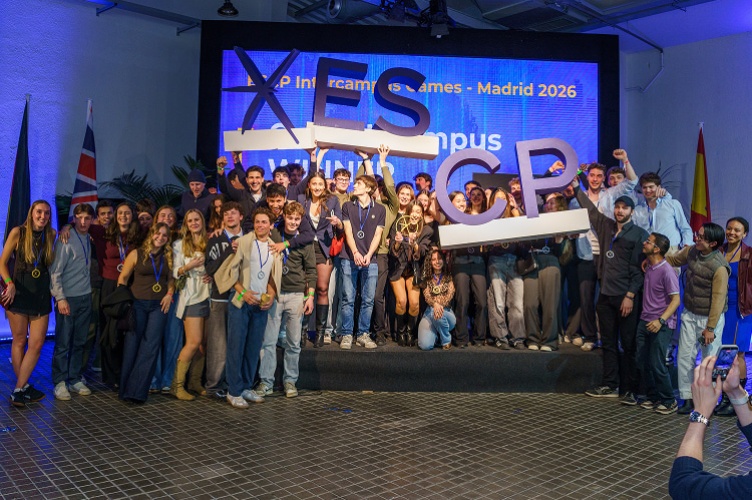
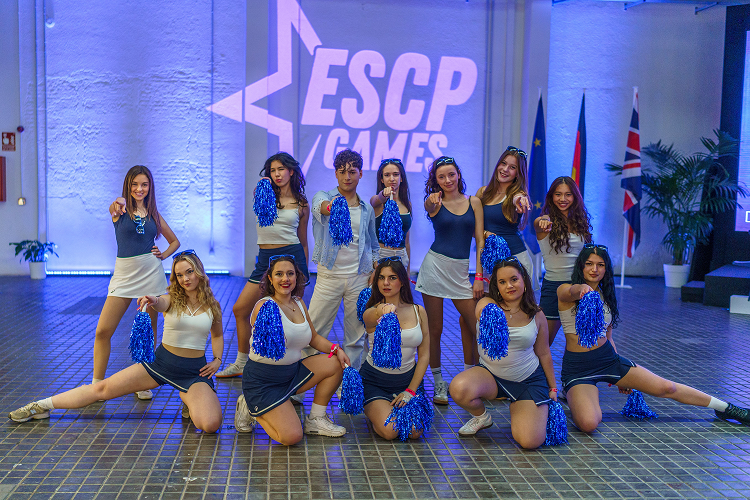
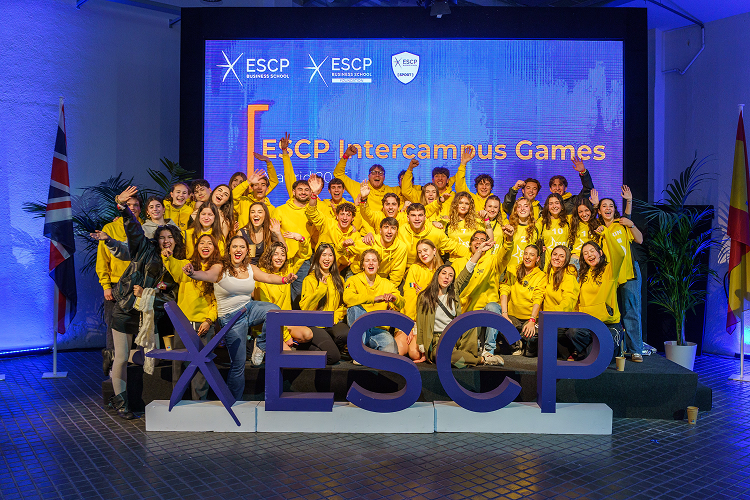
From 7-8 March 2026, more than 350 students from across ESCP Business School’s European campuses gathered in Madrid for the second edition of the Intercampus Games, a celebration of sport, community and friendly competition.
Following the success of the inaugural edition in Paris in 2025, the ESCP Games once again brought together students from across Europe to compete, connect and celebrate their shared identity as part of the ESCP community.
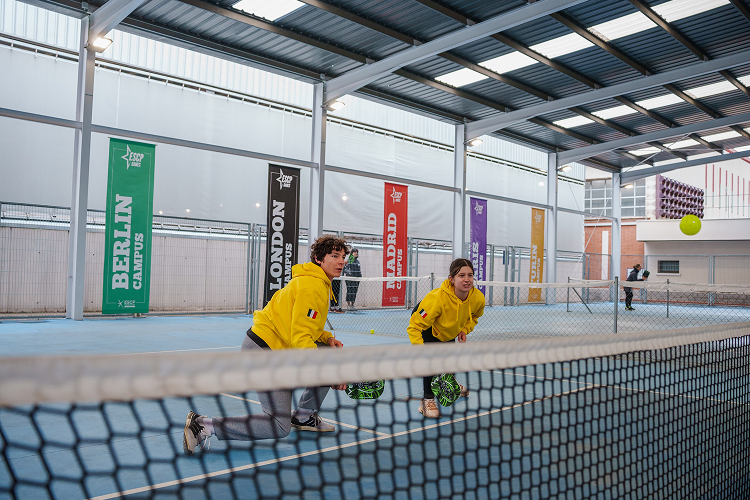
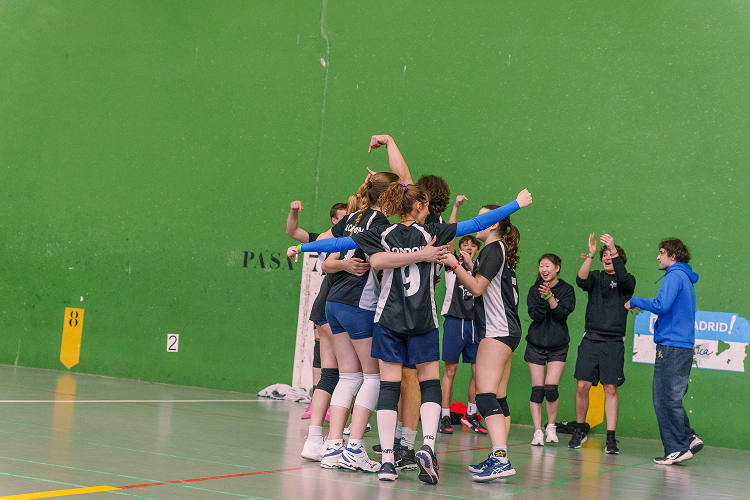
Throughout the day, participants competed in football, basketball, volleyball, padel and pickleball, representing their campuses with determination and pride. For the first time this year, the event also included an ESCP Alumni Padel Tournament, welcoming alumni from the Madrid community and further strengthening the ties between generations of ESCP students.
While the Berlin Campus ultimately lifted the final trophy, the real victory of the weekend was the spirit of unity and enthusiasm shared by everyone involved.
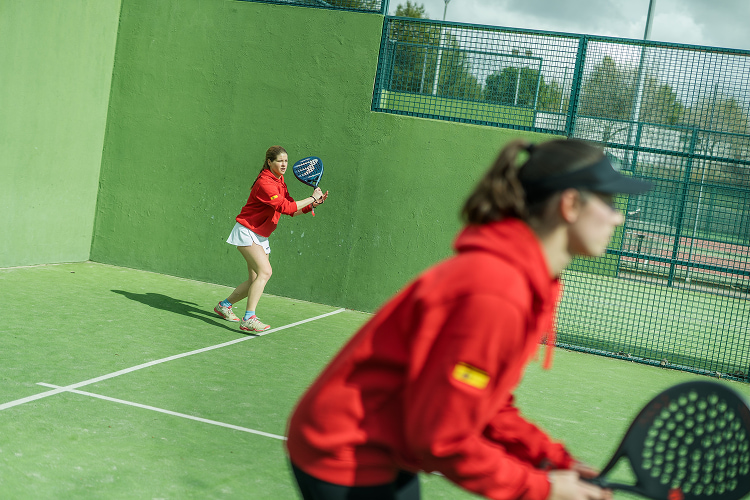
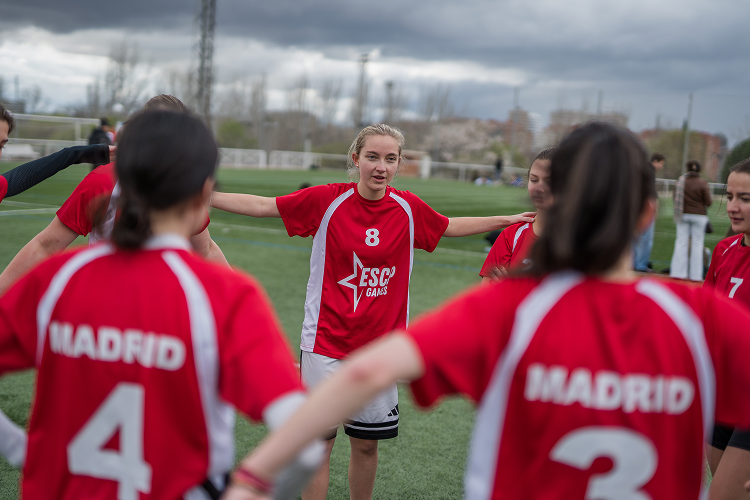
Strengthening the ESCP Community Through Sport
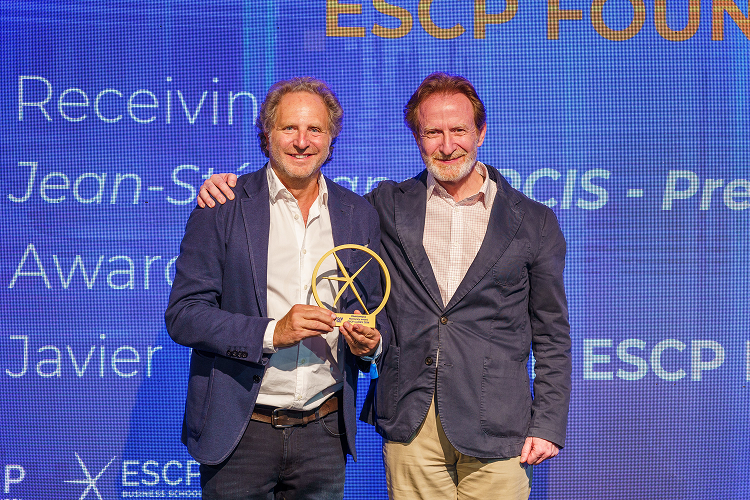
For Javier Tafur, Dean of the ESCP Madrid Campus, hosting the Games was a powerful reminder that education extends far beyond the classroom.
He described the event as a reflection of ESCP’s core values of being “Bold and United.”
On the field, students demonstrated determination, resilience and teamwork, pushing their limits while representing their campuses with pride. At the same time, they embraced both victory and defeat with humility and respect.
“Sport challenges individuals not only physically, but mentally and emotionally,” he noted. “It teaches discipline, solidarity and humility — qualities that are just as essential in leadership as they are in competition.”
The Games also illustrated the strength that comes from ESCP’s diversity. Students from different campuses, cultures and backgrounds came together to compete, support one another and celebrate as a single community.
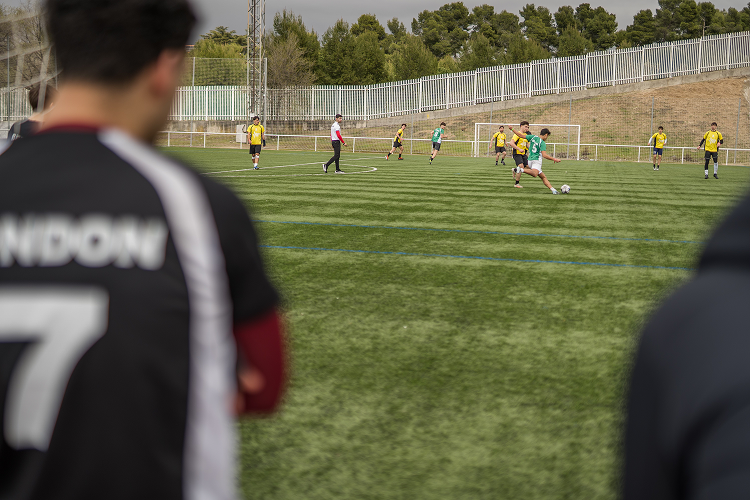
Sport, Community and Shared Values
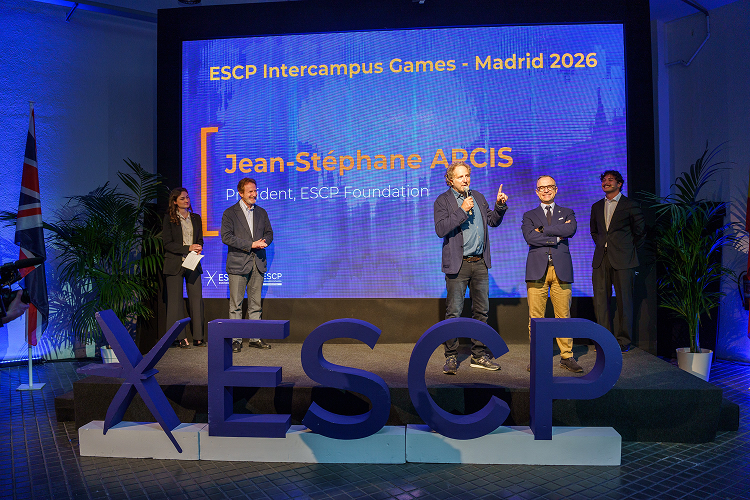
Supported by the ESCP Foundation, the Games form part of the Together for Sport initiative, which aims to place sport at the heart of the ESCP experience while promoting well-being, connection and support for student athletes.
This year’s edition also carried a strong message of inclusion and equality. As part of ESCP’s commitment to creating safer and more respectful communities, the event highlighted the ongoing fight against gender-based violence.
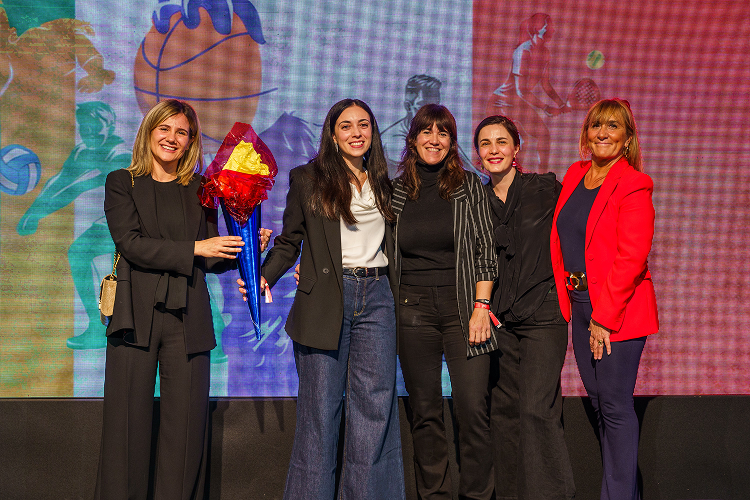
Notably, the Madrid Games were also organised by an all-female team, from strategic coordination to on-the-ground execution, led by the Student Experience, events and communications teams.
Their work demonstrated how sport can be both a source of inspiration and a platform for positive change, reinforcing the values of respect, fairness and integrity that extend far beyond the playing field.
As the ESCP community continues to grow, events like the Intercampus Games serve as powerful reminders of what brings its students together: shared ambition, cultural diversity and a strong sense of belonging.
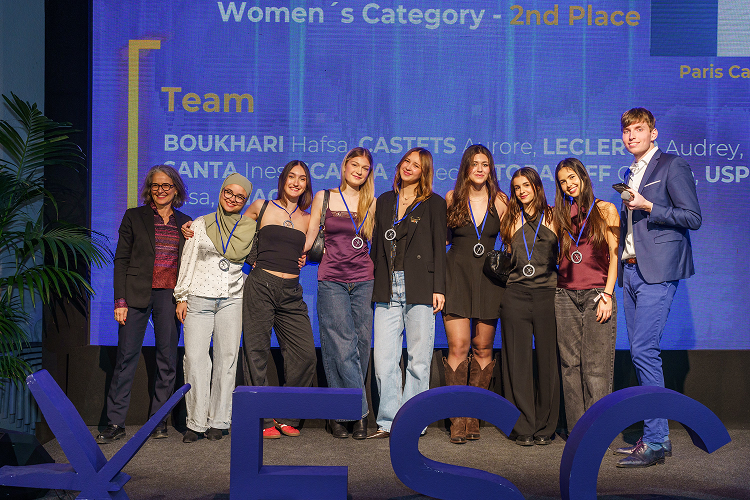
Bringing the event to life
Behind the scenes, a dedicated team worked for months to bring the event to life.
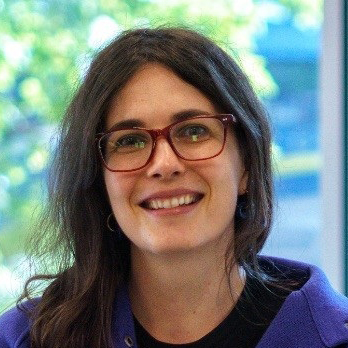
- Roxana Olaru, who led communications and student logistics.
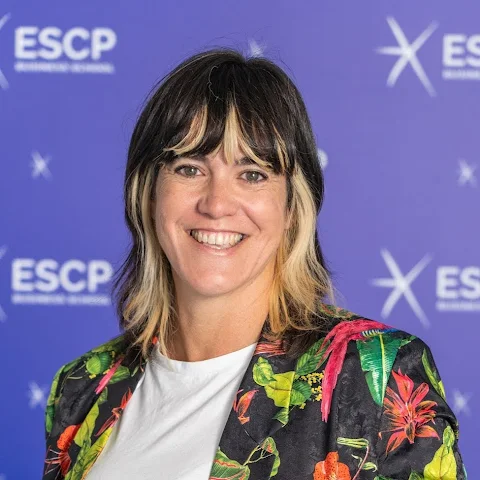
- Edurne Garde, Head of Student Experience at the Madrid Campus and the main organiser of the event.
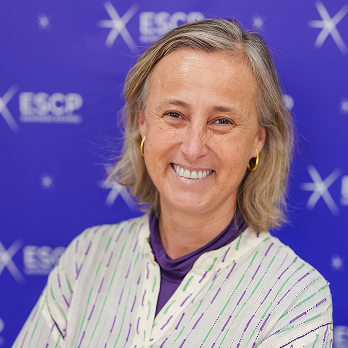
- Almudena Escudero, responsible for coordinating suppliers and managing the venues.
- Olga Alonso Pelegrin, who supported the Madrid Student Experience team throughout the organisation process.
The highlight? Watching months of coordination come together: every sports bag delivered on time, a powerful opening ceremony, and students executing it all with dedication and passion.
 Roxana Olaru
These games have brought together effort, friendship, and competitiveness in a safe environment of understanding and inclusion. Sport within a community reflects the very best values of society.
 Edurne Garde
 The most rewarding moment of the ESCP Games for me was during the trophy ceremony. It was inspiring to see how, regardless of nationality, each participant proudly supported and represented their campus. At the same time, there was a shared sense of unity, with everyone feeling proud to belong to ESCP.
 Almudena Escudero
 The Intercampus Games create a unique sense of unity ("Bold and United") and belonging across campuses. They go beyond competition by fostering intercultural exchange, school spirit, and lifelong connections between students from different countries — something that no other single event at ESCP manages to bring together in such a dynamic and meaningful way
 Olga Alonso Pelegrin
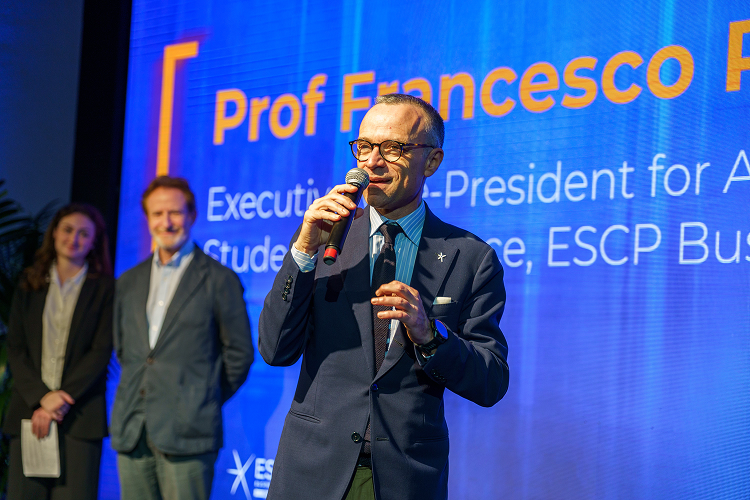
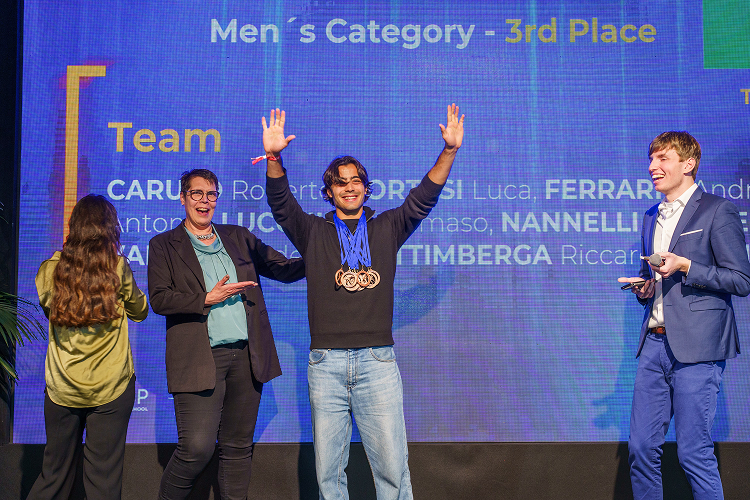
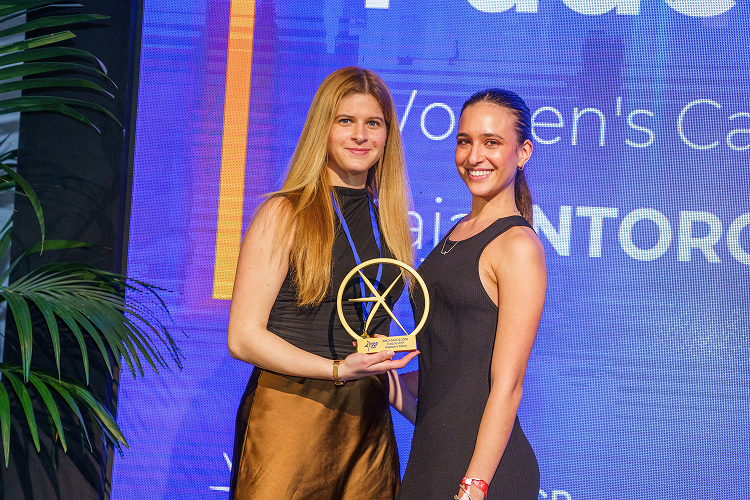
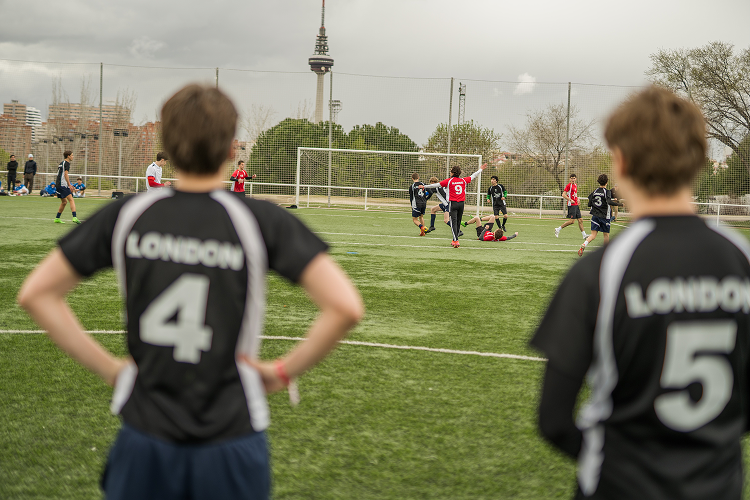
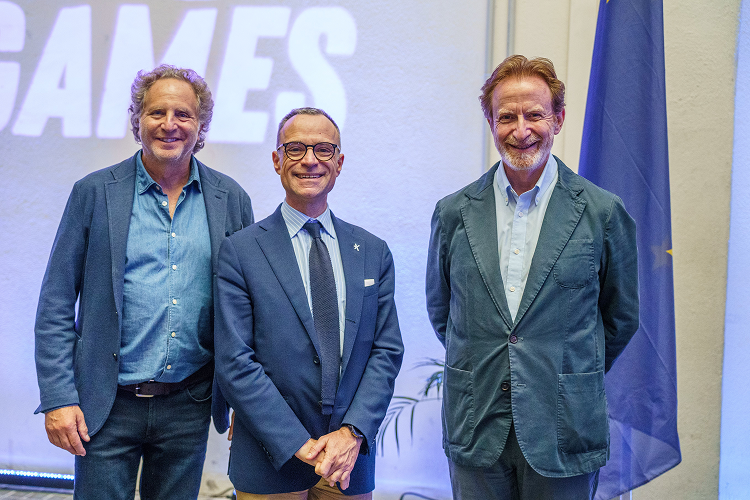
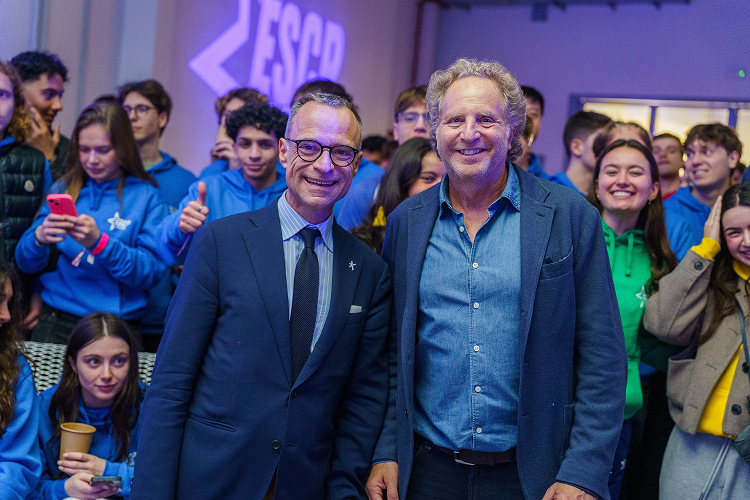
 Moments from the ESCP Games 2026



Relevant links
Campuses
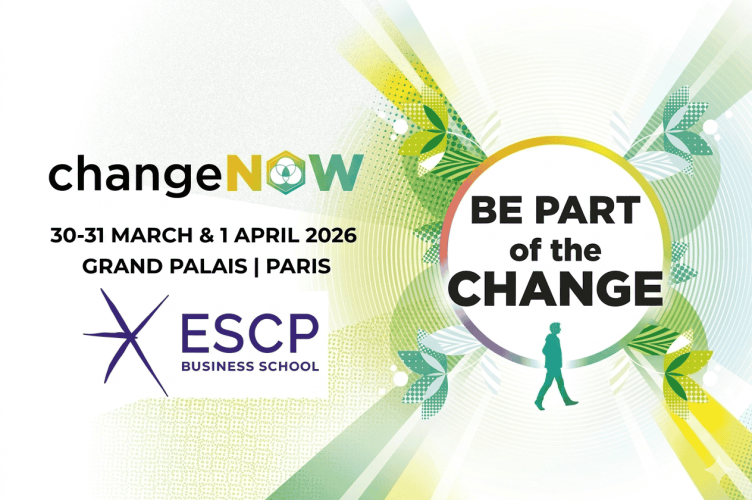
Be Part of the Change: ESCP x ChangeNOW 2026
30 March - 1 April 2026
ESCP is once again an academic partner of ChangeNOW, the world’s largest event dedicated to solutions for the planet.
Bringing together 40,000 attendees, 10,000 companies, and participants from 140 countries, the event will take place at the Grand Palais in the historic heart of Paris from 30 March to 1 April.
Throughout the three days, ESCP will be present across multiple moments of the programme — from conferences and workshops to networking opportunities designed to foster dialogue between academia, business, and changemakers.
This year, ESCP is going even further with a custom student experience and a new high-impact event designed to empower the next generation of sustainability leaders.
What to Expect?
Conference & Workshop – Resilience Without Borders: The Geopolitics of Interdependence and Impact on our Biosphere
31 March | 12:15 PM – 4:00 PM
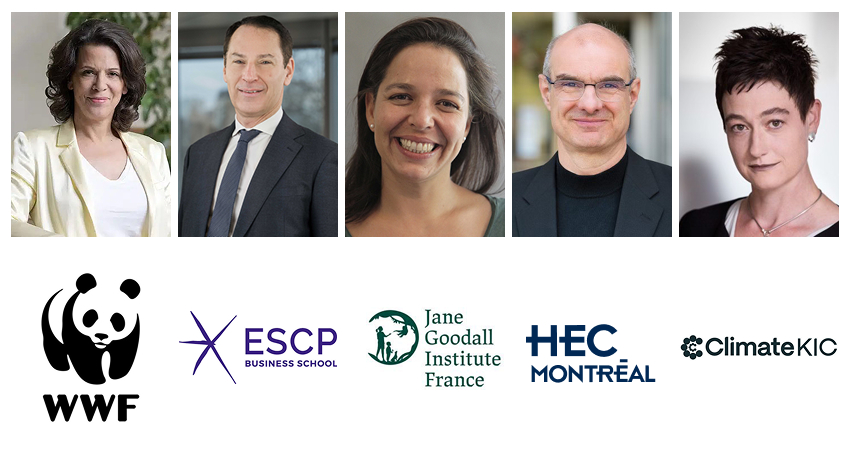
Bringing together academics, policymakers, business leaders, and changemakers, ESCP invites participants to rethink resilience — not as national self-sufficiency, but as a shared global project rooted in cooperation, systems thinking, and long-term stewardship.
The discussion will explore how interdependence between nations, institutions, and ecosystems shapes our collective ability to respond to global challenges, with a particular focus on the role of higher education and younger generations.
Speakers
- Alexandra Palt, President of WWF France, former EVP Sustainability at L'Oréal
- Maxime Lefebvre, Co-Director of the ESCP Geopolitics Institute
- Galitt Kenan, Director of Jane Goodall Institute France
- Kirsten Dunlop, CEO of Climate KIC
- Federico Pasin, General Director at HEC Montreal
Following the roundtable, participants will join an interactive workshop session, where students and professionals will collaborate in smaller groups to explore pressing sustainability challenges across different industries.
The insights generated during the discussions will contribute to a white paper published after the event.
Custom ESCP Student Experience
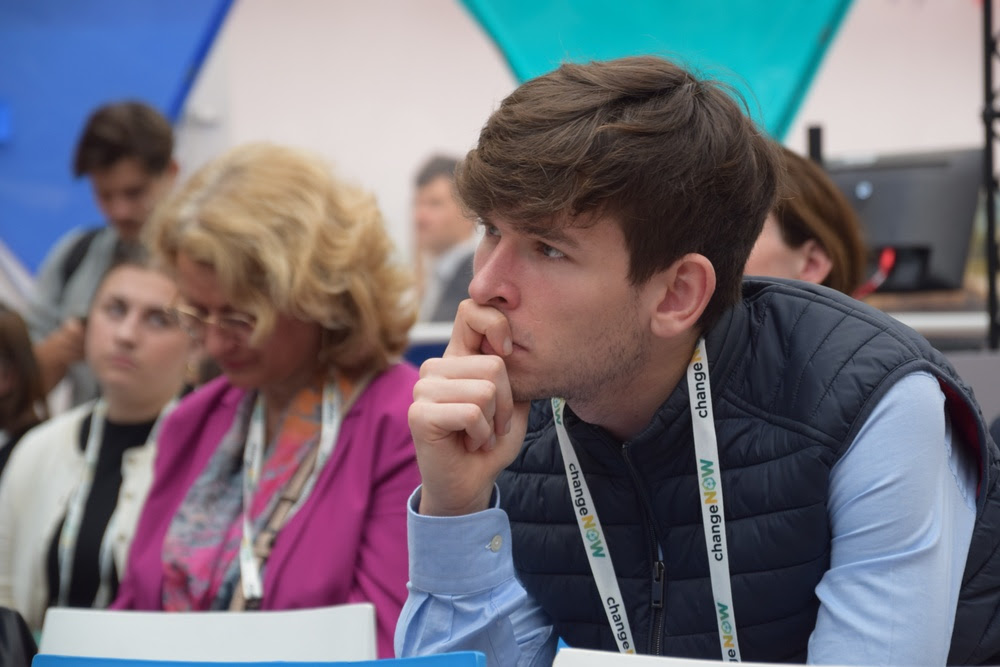
This year, ESCP introduces an exclusive student pathway, offering new opportunities for engagement, learning, and networking.
Curated Meet-Ups
Over the three days, ESCP will organise small-group meet-ups connecting students with leading experts in sustainability, innovation, and impact.
These sessions are designed to create more personal exchanges and deeper discussions with professionals shaping the future of responsible business and global transformation.
Blue Factory & ESCP Extension Booths
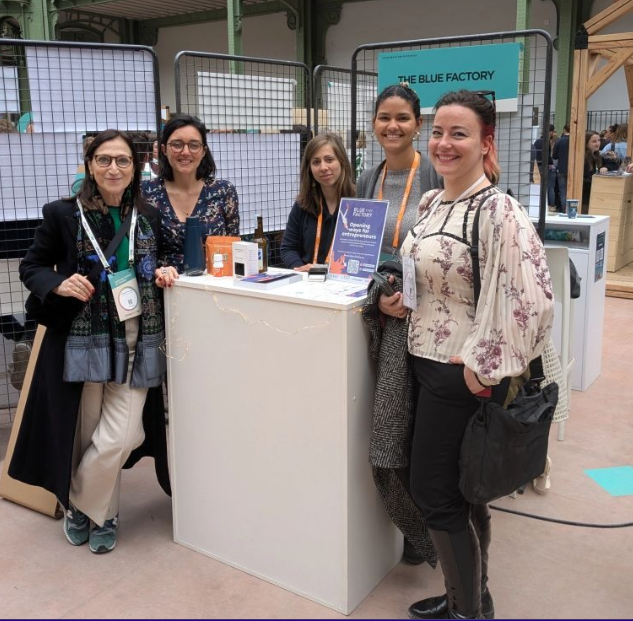
ESCP will be present throughout the event with two dedicated booths.
Blue Factory Booth
For the full three days, entrepreneurs from Blue Factory ESCP will showcase their innovations and sustainability-driven ventures.
Following the very positive feedback from last year’s participants, ESCP aims to continue supporting its entrepreneurial community through this unique platform.
ESCP Extension Booth
The ESCP Business School Extension School will also be present at the Job Fair on 1 April, presenting its latest programmes and learning opportunities.
Many more surprises to come…
Learn More About ESCP’s Sustainability Commitment
Discover how ESCP Business School integrates sustainability into its teaching, research, and initiatives.
Location
Organiser: ESCP
Paris - France
MapDate
Start date: 30/03/2026
Start time: 9:00 AM
End date: 01/04/2026
End time: 6:00 PM