

Is global business at a breaking point?
Key takeaways
- Geopolitical uncertainty is forcing businesses to rethink long-term strategies, supply chains and international operations.
- Political instability is also shaping students' decisions about where to build their careers.
- ESCP explores these challenges through its teaching, research and international community, connecting academic perspectives with business experience.
As geopolitical tensions, shifting trade policies and economic uncertainty reshape international business, understanding the relationship between geopolitics and business has become increasingly important. Drawing on ESCP’s academic expertise and international community, four voices consider the challenges facing global business and how leaders can respond.
Conflict, economic turbulence and political upheaval have all taken their toll on global business, which has even caused some to wonder if the era of globalisation has ended. At the same time, AI is driving growth in many sectors, global export momentum is surging, and some economies are thriving. It’s a complex situation.
At ESCP, understanding this complexity is an important part of both research and teaching. Through initiatives such as the ESCP Geopolitics Institute and programmes including the MSc in International Business & Diplomacy, the School examines how political developments influence business strategy and prepares students to navigate complex international environments.
But is global business itself under threat? To explore this question, we brought together four members of the ESCP community, spanning academia, business and the student experience, to share their perspectives.
Navigating geopolitical uncertainty
Pierre Peyretou is an ESCP graduate and Associate Professor of Energy, Business, Climate, and Geopolitics at ESCP. He emphasised the importance of considering multiple sources of instability when developing business strategy.
“I often compare managing a company to navigating a boat at sea,” he explained. “In order to reach your destination, you need to respond to the wind, waves and the current, all at the same time. These are all destabilising factors that must be addressed together.
“The problem is that many companies don’t do this,” he continued. “They are too focused on the very short-term horizon only – meaning they don’t always look at the bigger picture or take the time to implement a more robust, long-term strategy to transform the structuring drivers of their business, supply chain and markets.
“In an unstable world, not taking this action is what really puts businesses at risk.”
Associate Professor of Energy, Business, Climate, and Geopolitics at ESCP

Peyretou's observations reflect questions explored in ESCP's research on geopolitical risk, which examines how companies can better assess geopolitical developments and incorporate them into strategic decision-making.
Rethinking globalisation?
Geopolitical uncertainty is also influencing how the next generation of business leaders approaches international careers.
Justine Dukmedjian, a current Master in Management (MiM) student and President of the ESCP International Politics Society, shares how developments in international politics are affecting her own career plans: “If you had asked me a year ago, I would have said I could pursue work anywhere I wanted. Now geography feels much less certain. I want to work in the Middle East, but today I factor in questions that I would not have asked before: what region is stable enough? Could I be forced out because of an imminent war?”
Dukmedjian also questioned whether the world needs to reconsider the balance between globalisation and local interests.
“I think we went too far, too quickly, into globalisation. We forgot that individual communities exist for a reason. Maybe there is a richness in that that we tried to erase. Perhaps we need a system that is a little more local and less contingent on global events. We went too far on one side, and now we are going too far on the other with so much protectionism and tariffs. If there is a middle ground, we need to find it.”
Her perspective illustrates how geopolitics is becoming a consideration for students preparing for international careers, alongside the business and economic factors that have traditionally shaped their choices.
Building resilience in global supply chains
Laure Petiteau, an ESCP MiM alumna and Senior Finance Leader in Supply Chain, Procurement & FMCG, brought a practitioner’s perspective to the discussion.
For her, geopolitical disruption is a reminder of the need for businesses to strengthen their supply chains and prepare for future uncertainty.
“The global business model must keep evolving.”
ESCP Master in Management alumna
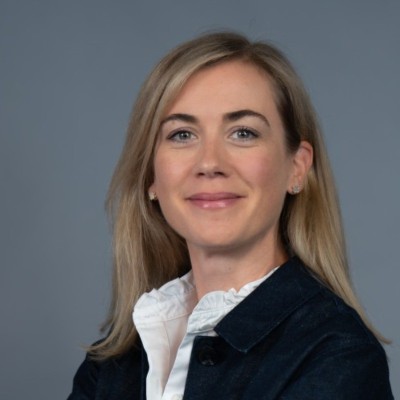
“Companies that use every shock to better understand their dependencies, strengthen their data and build more resilient, responsible and adaptable supply chains will be better equipped for what comes next – and they will be a powerful source of innovation, helping to develop and scale solutions to global challenges that will benefit everyone.”
Sovereignty and global interdependence
Bastian Dufilhol, Executive Director, ESCP in Dubai, shared his perspective on the situation in the UAE, which seems to have shown strong resilience capabilities and has continued to invest in technology and its long-term vision even during this critical period.
He explained: “I think it [the UAE] is drawing two lessons from the crisis: first, that organisational resilience must be strengthened; and second, that sovereignty has become a national priority.
“But sovereignty does not mean isolation. I think the UAE is re-establishing local and regional links while also diversifying its global alliances. In that sense, instability may push it to think both more locally and more globally at the same time. That, to me, is the real challenge for global business today: finding the strategic point between sovereignty and interdependence.”
The question of strategic autonomy is also a focus of ESCP’s research. Dufilhol is co-ordinating a forthcoming report on the subject through the ESCP Geopolitics Institute, alongside Professor Maxime Lefebvre, examining the challenges of sovereignty in an increasingly interconnected world.
Featured Voices
Pierre Peyretou
Associate Professor of Energy, Business, Climate, and Geopolitics at ESCP
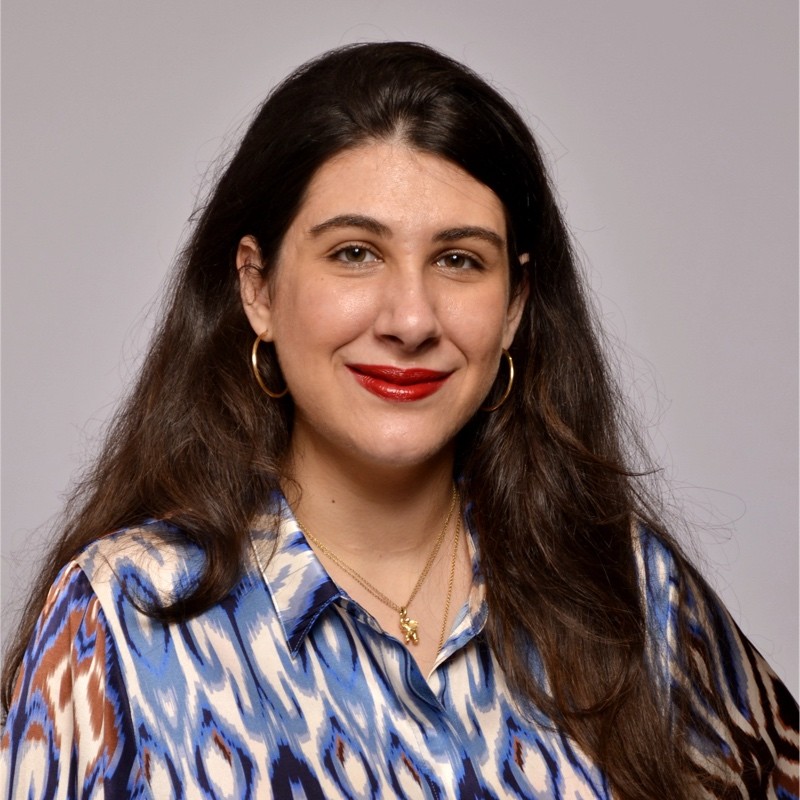
Justine Dukmedjian
ESCP Master in Management student
Laure Petiteau
ESCP Master in Management alumna

Bastian Dufilhol
ESCP Affiliate Professor and Executive Director, ESCP in Dubai

Institute
ESCP Geopolitics Institute
The ESCP Geopolitics Institute critically examines the dynamics between geoeconomics, economics and business.
This article draws from “The Big Question: In an unstable world, is global business under threat?”
Read the full article on The Choice by ESCP
The Choice is ESCP’s thought leadership platform for leaders, entrepreneurs and decision-makers who want to understand what’s changing in business — and what to do about it.
Campuses