

Discover what sustainable supply chain management means, why it matters, and how leading companies are putting it into practice.
Why do sustainable supply chains matter?
Pick up a smartphone, and you are holding the end product of a global network.
Sustainable supply chain management means looking beyond what a business sells to understand the economic, environmental, and social impacts of how products are manufactured and delivered.
From reducing waste and emissions to securing critical materials and building more resilient supplier networks, sustainability is increasingly integral to how businesses manage costs, risks, and long-term performance. This guide outlines the essentials.
What is sustainable supply chain management?
Sustainable supply chain management means considering the environmental, social and economic impacts of decisions involved in sourcing materials, producing goods and delivering them to customers. It aims to reduce negative effects while maintaining efficient, resilient and commercially viable supply chains.
Consider our smartphone. Minerals must be extracted and processed, components manufactured, the device assembled and packaged, and the finished product transported, potentially across several countries. Each stage brings its own suppliers, resources, workers, costs and risks.
Traditionally, businesses have managed supply chains around priorities such as cost, quality, reliability and speed. Sustainable supply chain management asks us to consider the wider consequences of decisions made throughout that network.
Meeting stakeholder and regulatory expectations
A sustainable supply chain must still function as a supply chain. Products need to reach customers at the right time, with the right quality and at a viable cost. Sustainability does not replace those commercial priorities. It changes how businesses pursue them.
And the smart ones are acting now. Research by the environmental disclosure organisation CDP found that failing to address climate-related risks in supply chains could cost companies almost three times as much as taking action to mitigate them.
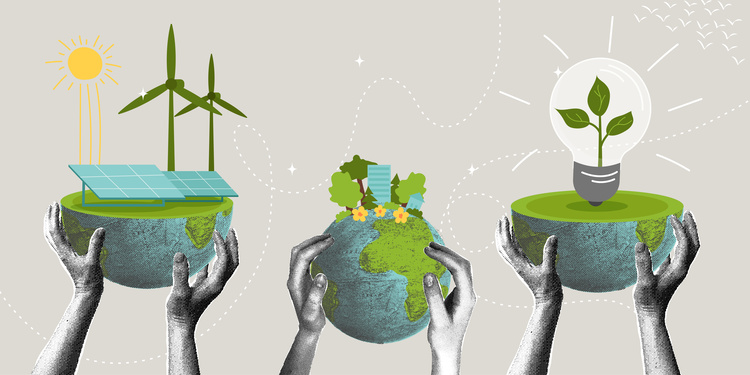
Core principles of sustainable supply chains
Sustainability is a daunting task – it’s more than just ticking boxes; it requires systemic transformation – yet one of the biggest challenges is surprisingly simple: you cannot manage what you cannot see.
A company may understand its own factories, warehouses and transport in detail, but modern supply chains can involve thousands of other businesses. A direct supplier may rely on its own suppliers, who in turn depend on others for components and raw materials.
The deeper you delve, the harder the basic questions become. Where did the material originate? How much carbon was emitted during its production? What conditions are people working in? Could a drought, flood, geopolitical crisis, or supplier failure disrupt its availability?
This matters because much of a company’s environmental impact may occur outside its own operations. In 2023, companies reporting to CDP said their supply-chain emissions were, on average, 26 times higher than emissions from their own operations.
There’s also a dark side to multistakeholder initiatives for sustainable supply chains.
Sustainable supply chain examples
What does a sustainable supply chain look like in practice? There is no single model. However, these three examples illustrate how sustainability can affect very different parts of the supply chain.
Walmart: efficiency and sustainability
For a retailer operating at Walmart’s scale, even small improvements in the movement of goods can have significant consequences.
Walmart uses AI-powered technology to optimise driving routes, pack trailers more efficiently, and reduce unnecessary journeys. Since implementation, the company says it has eliminated 30 million unnecessary miles and avoided 94 million pounds of CO2 emissions.
The business lesson is simple: sustainability and efficiency do not always pull in opposite directions. A fuller truck or a shorter route can mean less fuel, fewer emissions, and lower costs. Better forecasting can reduce excess inventory while helping to keep products available to customers.
Renault: the circular supply chain
Traditional supply chains tend to move in one direction: raw materials become products, products reach customers, and eventually those products become waste.
Renault’s Refactory in Flins, France, explores a different model. The former vehicle manufacturing site now repairs and refurbishes used vehicles, remanufactures components, gives batteries a second life, and recovers materials from end-of-life cars. In 2024 alone, its remanufacturing operation gave 350,000 automotive parts a new life.
This is the idea behind a circular supply chain. Rather than continually extracting new resources, businesses find ways to keep products, components and materials in use for longer.
Schneider Electric: changing a supply chain you don’t control
Schneider Electric's Zero Carbon Project worked with more than 1,000 suppliers responsible for 70% of carbon emissions across its upstream supply chain. It provided training, tools and technical support to help suppliers measure emissions and identify ways to reduce them. By the end of 2025, Schneider reported a 53% reduction in operational carbon emissions among participating suppliers.
This illustrates one of the central management challenges in sustainable supply chains. Meeting targets across hundreds or thousands of independent companies requires collaboration, expertise and robust supplier relationships.
The future of sustainable supply chains
Sustainability is increasingly part of the everyday decisions businesses make about procurement, operations, logistics and risk management.
Using fewer resources can reduce costs. Greater visibility can reveal vulnerabilities before they escalate into disruptions. Responsible sourcing can help businesses manage regulatory and reputational risks, while stronger supplier relationships can improve supply continuity.
Circular models can even turn products and materials once considered waste into resources that retain economic value.
This makes sustainable supply chain management an increasingly multidisciplinary field. Future supply chain leaders need to understand operations and logistics, as well as data, technology, sustainability, risk and supplier relationships. An engineer, data scientist or sustainability specialist may therefore bring skills that are equally relevant to those of someone with a traditional business background.
Looking beyond the finished product
The next time you pick up a smartphone, open a parcel or walk into a supermarket, remember that the finished product tells only part of the story. Behind it lies a chain of business decisions: where materials come from, who produces them, how resources are used, how far products travel, and what happens when they are no longer needed.
Sustainable supply chain management means taking a longer-term view of those decisions. It considers their impact on people and the planet, as well as on costs, resilience and the business's future performance.
After all, the most sustainable supply chain still needs to supply.
Learn Sustainable Supply Chain Management at ESCP
At ESCP, we know the time has come to deliver new ways of thinking and operating to preserve our planet, and companies are feeling the pressure. Sustainability has become a strategic imperative, reshaping markets, regulations, and consumer expectations.
Business is changing. Businesses are seeking passionate, knowledgeable experts to help fulfil their obligations to society and the environment while driving impact and growth.
Our transformational programmes are the stepping stones you need to bridge the gap between your untapped potential and the world-class, sustainability-focused leader within you.
Strategic leadership, sustainable transformation
ESCP Business School’s programmes, such as our Bachelor in Management, Master in Management and Executive MBA, immerse students in real-world business challenges across international markets. They emphasise close collaboration with industry partners to ensure strong alignment between theoretical solutions and practical insights relevant to today’s complex global industrial ecosystem.
Courses that help you make a difference
Through hands-on projects, case studies, and interactive courses, you’ll build practical strategic skills. Programmes such as the Certificate in Strategic Leadership for Sustainable Transformation equip you with strategies to help you become your organisation’s sustainability transformation leader.
We live in a world where supply chains are critical. ESCP can provide you with the insights and confidence to make sustainability a competitive advantage.
Frequently Asked Questions
Sustainable supply chain management means considering the environmental, social and economic impacts of decisions involved in sourcing materials, producing goods and delivering them to customers. It aims to reduce negative impacts while maintaining supply chains that remain efficient, resilient and commercially viable.
It can help businesses reduce waste and emissions, manage costs, identify supply risks, respond to regulation, and strengthen relationships with suppliers. It also helps organisations understand environmental and social impacts that may arise beyond their operations.
Businesses can start by measuring emissions and collaborating with suppliers to address them. Strategies include switching to lower-carbon energy and materials, improving transport efficiency, reducing waste, designing more circular products, and helping suppliers improve their environmental performance.
Supply chain sustainability is the goal of managing a supply chain’s environmental, social and economic impacts responsibly. Sustainable supply chain management is the process by which businesses achieve that goal through decisions on sourcing, production, logistics, suppliers, resources and risk.
Sustainable supply chain management draws on skills from several disciplines, including operations and logistics, data analysis, sustainability, risk management, technology, and supplier relationship management. Communication and problem-solving are equally important, as improving a supply chain usually requires collaboration across many organisations.
Campuses