Chair International Marketing
Chair ofInternational Marketing
 Marketing is facing major challenges in times of the climate crisis. Growth and consumption generally contribute significantly to the climate crisis, and marketing in turn promotes growth and consumption, at least according to traditional understanding. The traditional role of marketing is also being criticized in the context of ethical and political debates surrounding surveillance capitalism, which involves the imperative to collect data for the purpose of exploiting and modifying consumer needs. It is therefore urgently necessary to fundamentally rethink the role of marketing. We would like to take part in this important debate: Our teaching and research projects should increasingly contribute to an understanding of marketing that is geared towards sustainability goals. On the one hand, we examine the consumer side and answer questions such as the reasons that make such a transition to more sustainable behavior so difficult. On the other hand, we look at measures that companies can use to encourage consumers to adopt more sustainable behavior. Interestingly, price-related decisions in particular can play a role here. We regularly integrate our research findings into our courses so that students can engage with them critically. Our main goal is to provide students and thus the decision-makers of tomorrow with sustainable and sustainability-oriented inspiration.
- Prof. Dr. Robert Wilken
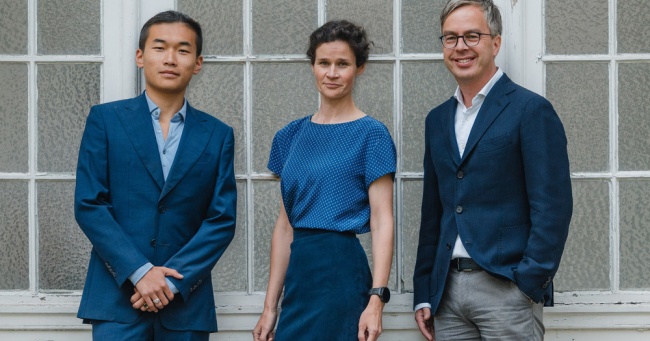
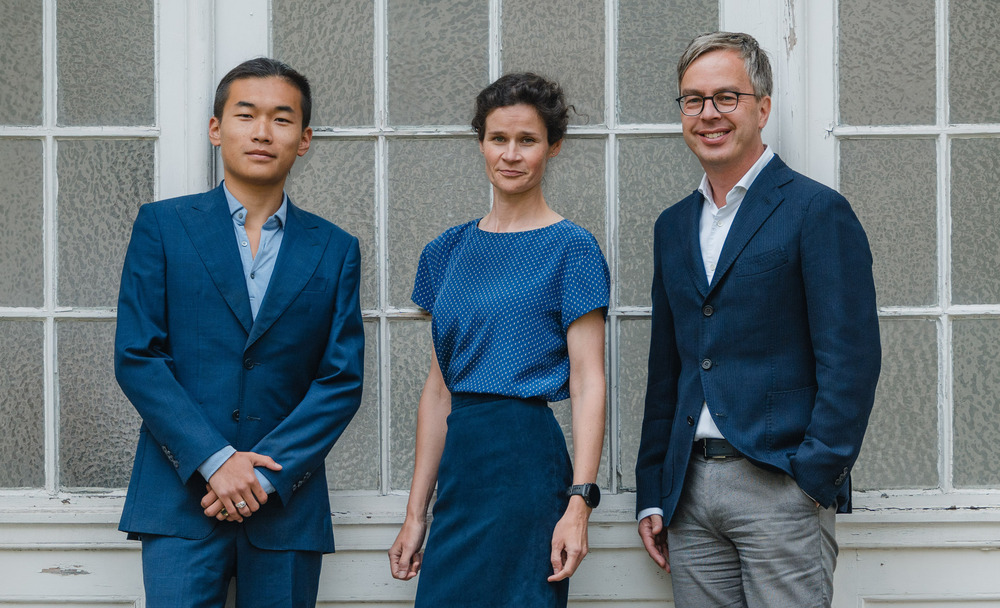
The team
Teaching
We offer the following courses:
Bachelor in
Management (BSc)
- Human Behaviour (elective)
- International Management (elective)
- The Art of Selling (elective)
Master in
Management
- Data-driven Marketing (core course)
- Pricing (part of specialization "Selling to Customers")
SALES 4.0
MSc in International Sales Management
- Pricing (core course)
- Selling and Negotiations (core course)
Research
Research approach
According to Backhaus, we define marketing as the “management of comparative competitive advantages”. In our research projects, we look at both the company’s and the consumer’s perspectives. We analyse marketing-related problems in a manner that is theoretically sound and allows for empirical investigation. Recent research projects have adopted a behavioural perspective, emphasizing psychological foundations to understand human actions (e.g., consumers’ responses to marketing stimuli; sales people in business negotiations). Issues relating to the transition to sustainability are increasingly taking center stage.
Most of our projects seek to empirically test hypotheses and are hence quantitative in nature. Our goal is to provide companies with decision support that is scientifically substantiated, and to significantly contribute to the field of marketing research.
Research topics
Sustainable Consumption
Consumers often still find it difficult to make sustainable purchasing decisions. We are investigating potential reasons for this. We are also interested in understanding how and on the basis of which measures companies motivate consumers to adopt more sustainable purchasing behavior. Ultimately, the aim is to ensure that positive attitudes towards sustainable products are also reflected in such (purchasing) decisions.
Pricing
Excessively high prices often deter consumers from buying products or services, even if they correspond to their values. This is particularly the case when a consumer has to choose between a sustainable and a conventional product. Interestingly, price-related tactics can lead consumers to accept a higher price. Our recent research projects are interested precisely in this benefit communication through price-setting.
Business negotiations
On business markets, a negotiation is the most prominent way to handle transactions. We analyse contextual factors (in particular, those that relate to intercultural settings) and strategies that create favorable negotiation outcomes and hence offer support for improving sales productivity.
Quantitative methods
This research topic is about improving extant (mathematical, statistical) instruments to analyse marketing-related decision problems. We are particularly interested in contributing to willingness-to-pay (WTP) elicitation. Another field relates to the application of Data Envelopment Analysis (DEA) to industrial services.
Publications
Find an overview
Journal Article
2021
Country Image at Risk: Spillover Effects of Product-Harm Crises and the Role of Trust
JOURNAL OF GLOBAL MARKETING, 2021, vol. 34 (2), pp. 73-89
Journal Article
2021
Did the Volkswagen Emissions Scandal Harm the “Made in Germany” Image? A Cross-Cultural, Cross-Products, Cross-Time Study
CORPORATE REPUTATION REVIEW, 2021, vol. 24, pp. 179-190
ESCP Impact Papers
2021
How supermarkets can contribute to sustainable development through pricing
2021, ESCP Impact Papers
Journal Article
2020
Improving pricing scope through consumers’ construal level –evidence based on consumers’ willingness-to-pay ranges
DIE UNTERNEHMUNG - SWISS JOURNAL OF BUSINESS RESEARCH AND PRACTICE, 2020, vol. 74(4), pp. 365 - 383
Journal Article
2020
The effect of credit card versus mobile payment on convenience and consumers’ willingness to pay
JOURNAL OF RETAILING AND CONSUMER SERVICES, 2020, vol. Vol. 52
Journal Article
2019
How Multinational Banks in India Gain Legitimacy: Organisational Practices and Resources Required for Implementation
MANAGEMENT INTERNATIONAL REVIEW, 2019, vol. 59(4), pp. 561-591
Journal Article
2019
The Effectiveness of Promotional Cues for Organic Products in the German Retail Market
SUSTAINABILITY, 2019, vol. 11, 6986, pp. 15
Journal Article
2019
Using Consumer Empowerment to Increase the Effectiveness of Price Discounts
MARKETING ZFP - JOURNAL OF RESEARCH AND MANAGEMENT, 2019, vol. 41(2), pp. 48-63
Journal Article
2018
A multilevel approach to the process of concession-making in price negotiations
DIE UNTERNEHMUNG - SWISS JOURNAL OF BUSINESS RESEARCH AND PRACTICE, 2018, vol. 72(1), pp. 37-50
Conference Proceedings
2018
Multicampus teaching of a multicultural student body: Exploring the ‘One size fits all’ learning experience
in Le management international: Atlas-AFMI 10 ans déjà, ATLAS-AFMI, 2018, Paris, France
Team and contact

Kejiang Chen