
![© Pexels - Pixabay [copyright]](/sites/default/files/styles/event_news_une/public/2020-09/Lu%CC%88decke_award1.jpg)
In the article which won the 2019 Best Paper Award of the IEEE TEMS (Technology & Engineering Management Society), professor Florian Lüdeke-Freund and his co-authors provide a better understanding of the interplay and complementarity of internationally distributed “technology/manufacturing push” and “demand pull” policies within the context of environmental technologies. Their findings could help in the adoption of these technologies, which is important to governments as it is linked to the public good (i.e., climate change mitigation).
The global reduction of greenhouse gases requires the adoption of energy conservation as well as sustainable generation, involving global changes such as virtually eliminating fossil fuels. Because they are linked to the public good, environmental innovations like renewable energy (RE) technologies are thus important to governments. But there are barriers to their development and implementation, and academics have been debating the relative importance and timing of the relative contributions of two types of policies, broadly categorized as “technology push” and “demand pull.” “Particularly, the diffusion of environmental innovations requires a “regulatory push/pull”, with technology push policies aiming at facilitating R&D and related financing, and demand pull policies to increase adoption,” write the head of ESCP Business School’s Chair for Corporate Sustainability and Master in Sustainability Entrepreneurship and Innovation, the head of Johannes Kepler University Linz's Institute for Integrated Quality Design, - Erik. G. Hansen -, Xiaohong Iris Quan (San Jose State University) and Joel West (Keck Graduate Institute) in their paper.
They explain that while technology push and demand pull policy analysis has often emphasized a specific national context, researchers have increasingly acknowledged that technology innovation occurs across national borders or even in a global division of labour. Hence, recent studies look at interactions between different countries and their technology policies but even when they show the effect of domestic RE policies on foreign innovation, they do not analyse interactions between policies of different nations. Other studies provide more fine-grained policy analyses within a broader (technology) innovation systems perspective with a dedicated look at how international policies influence each other. These studies also take into account the specific role of manufacturing in technology adoption, including policies that focus on promoting manufacturing, which the authors term “manufacturing push.”
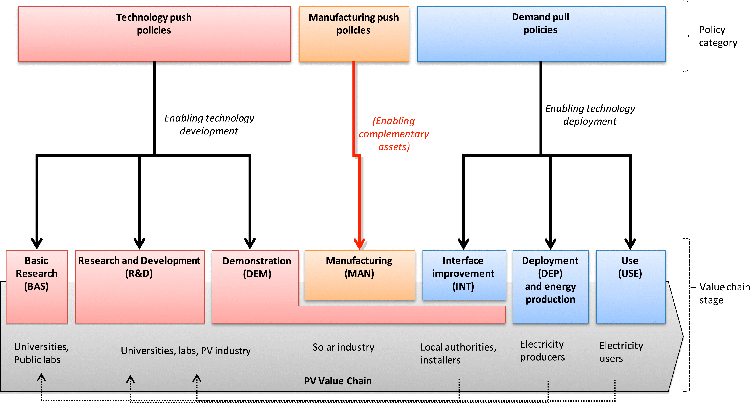
This is why Lüdeke-Freund and his co-authors carried out a qualitative longitudinal analysis based on secondary data covering 40 years (1974–2013) of policies regarding one RE - solar photovoltaic (PV) - for three major economies – the USA, Germany and China -, which culminated in the publication of their research in a prestigious review as well as a Best Paper Award. “We started our research on solar policies in 2010 and finished the paper in 2017 – it was quite a journey. That the product of our team effort finally made it into a leading engineering journal, and received this award, surprised us all quite a bit,” Lüdeke-Freund explains.
They identified four phases of international policy interactions: in Phase 1 (1974-1990), the USA launched technology push policies; in Phase 2 (1991-2003), Germany pioneered demand pull policies; in Phase 3 (2004-2008), China responded to international market incentive programs with a scaling up of manufacturing; and in Phase 4 (2008-2013), Germany reduced whereas China increased demand policies.
Their contribution to research on environmental technology innovation is threefold:
- Their results extend the technology push/demand pull dichotomy by highlighting the importance of manufacturing push for scaling up manufacturing. Technology push, manufacturing push, and demand pull policies address different parts of the PV value chain.
- They also show how these three policy categories can interact and how complementary international policy specialization and their interdependencies can enable the global diffusion of environmental technology.
- Finally, they consider the trade-offs in climate change policy between global environmental welfare success (adoption of PV or RE, respectively) and national economic failure (if demand incentives in one country create jobs in another).
Campuses
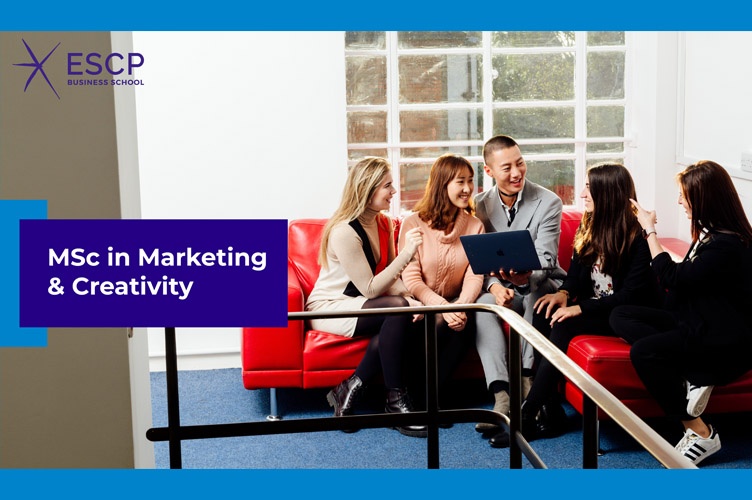
The MSc in Marketing & Creativity online information session is a great opportunity for you to learn more about the programme and discover how it may help achieve your career objectives.
Register your place now to discover:
- The unique curriculum and why it is particularly relevant to the current and, most importantly, future marketing job markets
- Projects students are working on throughout their four terms in London & Paris
- The key skills and competences you will obtain during this master
- The employment opportunities upon graduation
- What to expect on the admissions day and useful tips for your online application
- Information on fees and scholarships
Your questions are answered live by the Programme Director and the recruitment team!
This event takes place on Wednesday 7th October at 4.30pm (BST). Register your place
Participants

Prof. Daniela Lup
Academic Director

Viktorija Nikitina
Marketing & Recruitment Manager

Alberto Fanelli
Recruitment Executive
Location
Organiser: ESCP London Campus
Online - Worldwide
MapDate
Start date: 07/10/2020
Start time: 4:30 PM
End time: 5:30 PM
Professor Marion Festing talked about recent developments and experiences from digital teaching innovations like ESCP’s serious game about intercultural management.
“Context is often what characterizes particularities of IHRM (international human resources management). For a long time, cultural context was equated with national cultural values investigated in prominent intercultural studies conducted by Hofstede or GLOBE. This led to an intense research program and an oversimplification of the topic in teaching,” explains Professor Marion Festing. “More recent intercultural research addressing cultural value archetypes, norms, schemata, the situated dynamic framework, cultural mosaic or polyculturalism provides a more differentiated view on culture. This webinar will discuss teaching innovations that integrate latest thinking on understanding and teaching about culture and diversity.”
One illustrative example she used is Moving Tomorrow, a serious game developed at ESCP Business School based on insights from experiential learning theory. It includes key concepts relevant to the cultural context in IHRM in a story telling design, where students have to take decisions that impact on how the story pans out. The overall goal of the game is that the learners value diversity, understand the implications for human interactions and IHRM, and act in a more inclusive way. The experiential game has been included in a blended design using roleplays, case studies, group discussions etc. in various countries.
Prof. Festing's webinar is part of the IHRM Webinar Series that replaced the IHRM 2020 Conference, which was supposed to be organized by and take place at ESCP Business School in June.
She was interviewed on 14 September by Professor Maral Muratbekova, who was also the IHRM 2020 Conference’s Chair.
Campuses
![© LSE Business Review [copyright]](/sites/default/files/styles/event_news_une/public/2020-09/covid-uncertainty.jpg)
Campuses

Last Friday, 18th September, the opening of the new Academic Year in Turin took place. Four top managers, who share ESCP's principles and mission, welcomed the new students virtually.
The Opening Ceremony was streamed with a new "phygital" format: students attended the event in total safety from home, and enjoyed the guests' speech on ESCP's YouTube channel. Prof. Léon Laulusa, Directeur général adjoint, Executive Vice-President and Dean for Academic and International Affairs, with the President of the Turin Campus Prof. Francesco Profumo and the Dean Prof. Francesco Rattalino, introduced the theme of the event, "The Choice": understood in its different declinations, from professional to personal, the "choice" is the thread that tied the speeches of the patrons, who were called on to give their contribution on four key topics for the Business School - Entrepreneurship, Digital Transformation, Intercultural Management and Sustainability.
The close collaboration with important international and innovative companies, who believe and invest in the new generations, is, in fact, one of the pluses of the Business School that invited Marco Bulgheroni, Electrolux Senior Vice President Global Product Category Food Preparation, patron of the Bachelor in Management; Mauro Giacobbe, Facile.it President and CEO, patron of the Master in Management; Matteo Lunelli, Ferrari Trento President and CEO, patron of the Master in International Food & Beverage Management; and Donatella Pinto, Comau Head of Human Resources and FCA Group Head of Global Learning, patron of the MBA in International Management.
The event was moderated by Francesco Venuti, Academic Director of the Master in International Food and Beverage Management and of the Executive MBA at ESCP Turin Campus.
Despite the COVID-19, 2020 is proving to be another record year for ESCP Turin Campus. In recent years, the policy of internationalisation of the Business School and the growth of the educational offer have led to a significant increase in enrolment. Actions aimed at making the Campus more and more international, innovative and competitive have exponentially increased its attractiveness: since 2015 the number of ESCP students in Turin has more than quadrupled from 134 to 655, this year divided into 533 students physically present in the classroom and 122 enrolled in the online MIM track.
Young talents who come from America, Asia and Africa, as well as from all over Europe, to continue their studies at the Italian headquarters of the Business School: in the Academic Year 2020-2021, in fact, there will be 43 different nationalities represented in class. The general percentage of internationality is 56% and reaches its peak in the online MIM track class with 95% of foreign students.
The ESCP Academic Year starts with a new setup and lessons delivered in a blended formula, which integrates physical presence and e-learning to cope with the new reality dictated by the COVID-19 emergency. To ensure social distancing measures, the International Business School has in fact introduced a hybrid teaching approach.
Good luck to all our students on your journey at ESCP Business School!
If you missed the live event, you can catch up on YouTube.
Campuses
![© Adobe Stock - Ivelin Radkov [copyright]](/sites/default/files/styles/event_news_une/public/2020-09/Circular-economy-dilemna.jpg)
The circular economy concept tends to polarise supporters of green growth and those of degrowth. As business school professors, Aurélien Acquier and Valentina Carbone navigate between these extreme positions to offer a third way.
Our planet’s natural resources and climate are under enormous pressure that must be quickly reduced: according to the 2019 Circularity Gap Report, more than 90% of the raw materials that we use are not reinjected into the economy.
For this reason, the circular economy concept has generated a great deal of enthusiasm from public bodies, professional associations, non-governmental organisations and private companies over the last few years. It is also gaining ground in the US, albeit more slowly.
Given the scale of the environmental challenge facing our societies, gambling on the circular economy is based on the necessity of rethinking economic systems through three mechanisms: by drawing inspiration from nature (a concept known as biomimicry), optimizing resource use, and reducing impacts along the whole lifecycle of products and services. By investing in the circular economy, companies are moving towards more sustainable business models without, however, writing off the market economy. In practice, this is done by reducing energy and environmental footprints, designing out pollution and waste, or extending product lifetimes.
The sirens of green growth
The circular economy is currently driving the formation of two polarized positions that are hard to reconcile. The current hype around the circular economy in the business world falls within the scope of the “green growth” paradigm, at the risk of moving into a very instrumental use of the concept.
This approach glorifies the entrepreneur as the driver of innovation and disruption, in contrast to the bureaucratic rigidity imposed by excessive regulations. It relies on technological progress and market innovation to provide the most efficient responses to current issues. From a regulatory viewpoint, such an approach encourages the invisible hand of the market and limits the state to a role of supporting the emergence of high-tech sectors with a green promise. This involves preventing any restrictive regulatory intervention, such as a taxation. Finally, in established companies, the circular economy is conditioned by the search for economic profitability or strategic value.
Despite its managerial interest, this approach has numerous limits: there are numerous signs that market prices do not adequately reflect the actual costs of environmental damage, or risks of scarcity of non-renewable resources. And when a technological breakthrough may offer solutions to some environmental problems, it is often at the cost of creating new ones.
Advocates of degrowth
At the other extreme, those favouring degrowth tend to consider that capitalism is “by its very nature” incompatible with respect for the environment. Faced with the risk of environmental and social collapse, this approach highlights the huge gap between environmental urgency on the one hand, and regulatory inertia and the tyranny of “business as usual” on the other.
While the world’s leading climate scientists and the UN Intergovernmental Panel on Climate Change have warned there are only a dozen years for global warming to be kept within controllable limits (an increase of less than 2°C as compared to the preindustrial era), the responses put forward by companies and politicians seem very wide of the mark and absolutely unequal to the issues.
From this point of view, the very concept of the circular economy constitutes a myth or an oxymoron. The future appears gloomy, since the collapse of the ecosystems that support our societies seems difficult to avoid given the inertia of our social, economic and political systems.
In this respect, the solution lies in going beyond the firm, the capitalist model and the consumer society, via degrowth and a return to more local, non-market models, as well as in a more profound redefinition of what constitutes progress and the public good.
Faced with this polarisation of approaches, how can we teach the circular economy in a management school? Should we adopt the managerialist stance and orientate students towards a conciliatory vision that reconciles ecology and market economy? How much emphasis should be given to approaches that are staunchly critical of business and technology?
Business schools have a key role to play in this change
As professors in a European business school (ESCP Europe), we have developed teaching about the circular economy over the last four years. Our educational approach is to span both approaches in order for our students to become aware of the complexity of the issues and the role of companies, regulations and technologies. By doing so, we reintroduce debate and bring together the role of politics and the dynamics of innovation.
Our approach has three distinctive features. First, each edition of the course is built around a particular sector – for example the food industry and food waste in 2019. Beyond the classic relationship between professors and students, we bring a private actor into the course (an established company like H&M or a start-up like Phenix) as well as an institutional actor (government agencies like the French Environment Protection Agency, the ADEME, or other environmental organisations), in order to obtain these different actors’ views on a given subject.
We then adopt a multidisciplinary approach, bringing together different fields of management – strategy, operations, marketing, finance – but also including debates at a more philosophical level: the relationship to progress, the relationship between nature and culture, the social role of technology. By using inputs from these different disciplines, we help the students to make sense of the differences in viewpoints, the contradictions and the complexity of these issues.
Finally, we seek to combine this reflexive approach with one that is orientated towards innovation and action. In order to achieve this, our course partners set our students innovation-related problems. Over a period of ten weeks, students analyse the different facets of a given problem, question an entrepreneur’s strategic or operational choices, conduct international comparisons relating to a circular economy issue, or question the regulatory approach adopted by a state or a local authority. In addition to this analysis, students propose solutions to address the limits of linear, unsustainable models.
This educational innovation is backed up by the ESCP-Deloitte Circular Economy chair. Given the collective and multidisciplinary nature of Circular Economy issues, this initiative is also a call to open business schools up beyond their classic disciplines and skills: beyond management, addressing circular economy requires inputs from engineering, economics, political science, agronomy, etc. Such multidisciplinarity is paramount to collectively change our linear, short-term systems towards more sustainability.
Campuses
The Turin Campus Opening Ceremony is now in live streaming: click here to join in.
Campuses
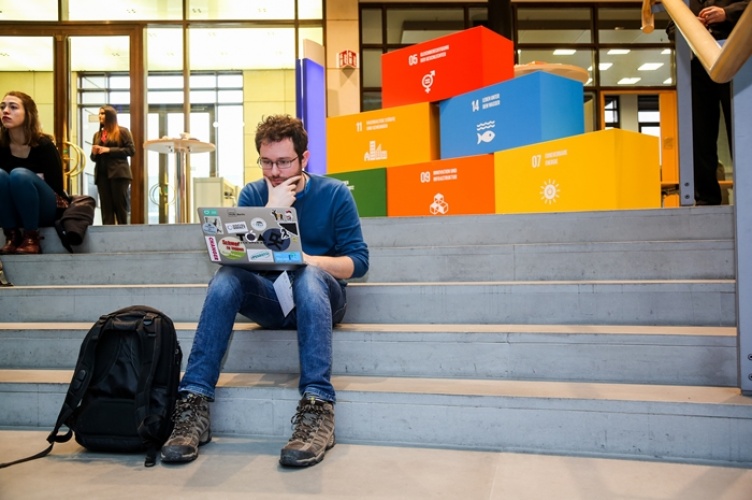
ESCP Business School in Berlin and the United Nations Environment Programme sign a partnership agreement incorporating sustainable living concepts into business school curricula.
The ESCP Business School in Berlin and the United Nations Environment Programme (UNEP) are announcing a strategic partnership to integrate sustainable living approaches into business school curricula to create the new business models – and the leaders – that are needed as the world builds back better.
The United Nations Environment Programme, the world’s leading environmental agenda-setter, and ESCP Business School in Berlin joined forces to develop and promote a ‘people-lens’ to sustainability to harness the power of people to live better and lighter. The partnership will translate concepts like circularity and sustainable consumption into business models that provide more viable, attractive sustainable living choices for people. In 2020-2021 teaching modules, business ideas co-created alongside students, and interactive events (e.g. challenges and campaigns) will be piloted.
At the heart of the collaboration is UNEP’s Sustainable Lifestyles framework, which encourages evidence-based everyday individual choices and actions contributing to the UN Sustainable Development Goals (SDGs). The partnership focuses on the Master (MSc) in Sustainability Entrepreneurship and Innovation programme which prepares students to solve global social and environmental problems with a business school education and an entrepreneurial mindset.
“To partner with the United Nations Environment Programme is a great honour and incredible opportunity for our students getting access to the latest insights and activities to promote more sustainable lifestyles and living on a global level,” said Prof. Dr. Andreas Kaplan, Rector of ESCP Business School in Berlin.
“In a world stretched thin for resources and under the threat of climate change and biodiversity loss, our future depends on how we manage nature as part of how we build back better,” commented Steven Stone, Chief of Resource and Markets Branch, Economy Division at UNEP. “Working with tomorrow’s entrepreneurs is critical to co-create the new business models that can address the needs of everyone to live healthier and more responsibly. The partnership will contribute to boost efforts and solutions for reaching the Sustainable Development Goals.”
ESCP Business School in Berlin with UNEP technical support will finalize an advanced educational module for delivery in the upcoming academic year, and students in their first year of the Sustainability Entrepreneurship and Innovation programme will be trained to build and present new business ideas, plans and models that directly contribute to realising the SDGs. Topics addressed in this practice-oriented curriculum segment include sustainable concepts in the living domains of food, mobility, housing, and finance sectors.
The partnership connects the respective strengths of these two international organisations. ESCP Business School is a multicampus business school with a European spirit and an international outlook focused on reorienting today’s students towards a more responsible and sustainable world of business. UNEP is recognised as the authoritative champion for the global environment, acting in many ways to improve people’s quality of life without endangering that of future generations.
Acting jointly will allow both ESCP Business School in Berlin and UNEP to further their larger shared goals of achieving the SDGs.
Campuses
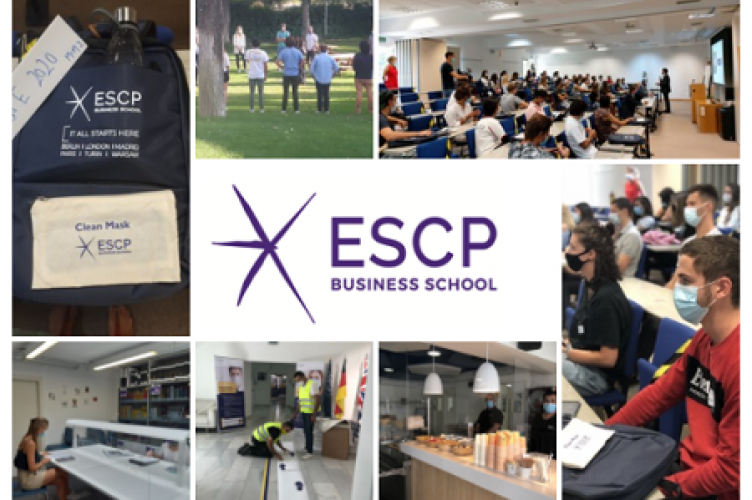
On monday 31 august 2020, the escp madrid campus officially opened its doors to students in compliance with the madrid community health and education authorities COVID-19 legislation and developed an extensive escp madrid campus COVID-19 protocol in order to guarantee the safety and health of students, staff and professors and a COVID-secure environment.
The Madrid campus made a huge effort to welcome the 2020 A.Y. students with open arms and tried to make them feel as welcome and safe as possible. New signage was installed through to campus that reflects al measures to be taking while on campus.
The Induction days for our Bachelor´s, MiM and Option E students where great and we are sure that behind all those masks there were smiles and faces that reflected happiness.
Even though we have to follow all Covid-19 rules and measures strictly, that doesn´t mean that this year is not going to be an incredible year. We are sure we are going to be able to continue smiling, having fun and sharing incredible moments and experiences throughout the year while keeping safe and all our students are going to get the most out of their ESCP Experience and love and live Madrid to the fullest.
Let´s work together to beat the cornavirus!
Here some pictures of the Induction days… Welcome to Madrid!
Campuses