
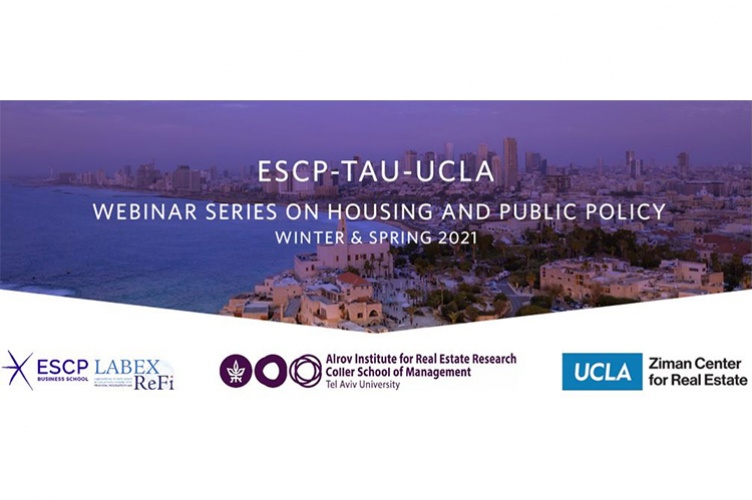
After having co-organized an international conference on housing affordability, Prof. Jaime Luque teamed up again with colleagues from the UCLA Ziman Center for Real Estate and the Alrov Institute for Real Estate Research at Tel Aviv University on a series of research seminars.
“Professor Stuart Gabriel of the UCLA Ziman Center for Real Estate, professor Danny Ben-Shahar of the the Alrov Institute for Real Estate Research at Tel Aviv University and I are very interested in the topic of housing affordability and wanted to contribute to the academic community by organizing a series of meetings with researchers around the world aiming at better understanding the problem of access to affordable housing, and finding solutions,” explains Jaime Luque, who is Associate Professor of Economics at ESCP Business School’s Madrid campus, where he holds the Monaco Real Estate Technology Innovation Chair and serves as Director of the BNP Paribas Real Estate Advanced Program. He is also the Academic Director of the MSc in Real Estate, the MSc in Hospitality and Tourism Management, and the ESCP Institute of Real Estate Finance and Management. “The first ESCP-TAU-UCLA conference took place on the Madrid campus during the summer of 2019, and we had great names on the program. The initial idea was to organize similar conferences in Tel Aviv and Los Angeles in the following summers. However, given the Covid-19 pandemic and the impossibility to organize a physical conference in the summers of 2020 and 2021, we decided to organize a series of webinars in 2021 on similar topics already discussed during the 2019 conference: housing and public policy. Our intention is to resume the physical conferences as soon as possible, with the second ESCP-TAU-UCLA conference taking place in Tel Aviv, possibly during the summer of 2022. The third conference will take place in Los Angeles during the summer of 2023.”
Two of these Zoom-based webinars open to academics only already took place in the winter. The next one will happen on 17 March, and the following one on 22 April with two more scheduled in May and June.
The 2019 ESCP-TAU-UCLA conference.
Campuses

Campuses
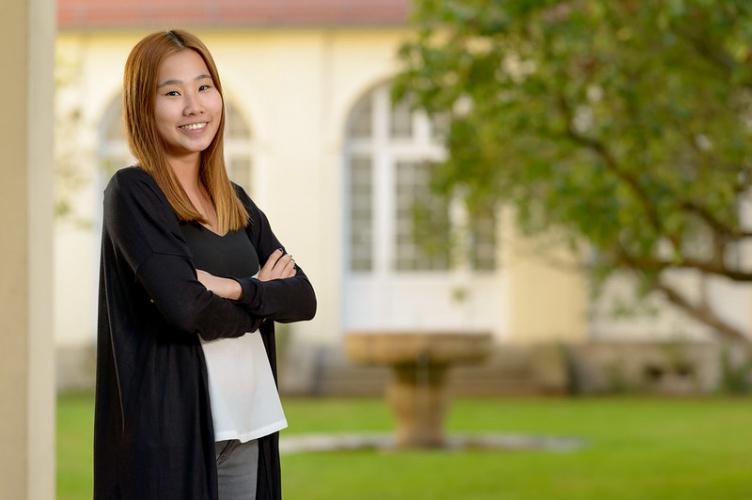
Register and join our online presentation to discover the ESCP Bachelor in Management (BSc): you can interact with our recruiters and ask for more information about admissions, lessons, internships, scholarships and much more.
[Bachelor in Management - Leading in a changing world
Three years in three different countries
The Bachelor in Management (BSc) is a three-year general management programme that embraces an interdisciplinary approach. This will give you the unique opportunity to study management alongside training in languages, liberal arts and personal development.
You will spend your time at a different ESCP campus each year, experiencing living and studying in different countries and cultures without having to compromise on academic excellence.
Location
Organiser: ESCP Turin Campus
Online - Worldwide
MapDate
Start date: 16/04/2021
Start time: 1:00 PM
End time: 1:00 PM


Webinar
Making the Case for Women in Times of Crisis
Monday 8 March 2021 - 01:00 p.m - 2:15 p.m. (CET)
Research from top consulting firms has shown the positive impacts gender diversity has on organisations and their ability to successfully navigate a crisis. Yet, two figures strike our attention: women remain underrepresented in positions of leadership with only 21% of C-suite positions and account for 54% of overall job losses due to the current pandemic-induced economic crisis, often being the first in line to bear negative consequences. Because this issue affects us all, ESCP Executive Education is bringing together a panel of experts to explore what we can do to make a case for women in times of crisis and effect positive change.
Because this issue affects us all, ESCP Executive Education is bringing together a panel of experts to explore what we can do to make a case for women in times of crisis and effect positive change.
Diana Clarke
Professor
ESCP Business School
Diana Clarke is a professor at ESCP Business School with close to 30 years of experience in executive development as an H.R. and Corporate Communications Manager in banking and in the consulting sector. She has lived in 7 countries across 4 continents and has actively participated in establishing Women Leadership programmes for various organisations.
Chiara Corazza
Managing Director
Women’s Forum for the Economy & Society
Chiara Corazza is the Managing Director of the Women’s Forum for the Economy & Society, the world's leading platform to promote women’s voices, impact and vision. Following the G7 2019 under the French Presidency, Chiara Corazza was missioned to provide a national action plan to foster the attractiveness of STEM for girls and women, and delivered the report “Women at the heart of Economy”.

Valentina Ieraci (EMBA 2022)
Chief Operating Officer
Coolshop for BCG Digital Ventures UAE
Valentina Ieraci (EMBA 2022) is the Chief Operating Officer at Coolshop for BCG Digital Ventures UAE, a UX-centred digital solution provider based in Turin, Rotterdam, Chicago and Dubai. Her goal is to increase the number of women in digital companies, where they are currently underrepresented, and also to enhance their technical role in management and core business.
Gérald Karsenti
Chairman
SAP France & SVP
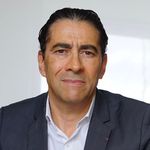
Gérald Karsenti is the chairman of SAP France and leads the group's fifth-largest subsidiary since he joined as Managing Director in April 2018. He brings with him more than 30 years of experience leading international companies in the new technology sector. His latest book "Leaders du Troisième Type” (Leaders of the Third Kind) was awarded the prize for the best book about management written by a manager in 2017.

Lindsey Nefesh-Clarke (EMBA 2009)
Founder & Managing Director
Women's WorldWide Web (W4)
Lindsey Nefesh-Clarke (EMBA 2009) is the founder and managing director of W4, a social enterprise dedicated to protecting the human rights of girls and women, as well as promoting their empowerment around the world. W4’s focus is on Sustainable Development Goal 5b: harnessing technologies. Lindsey Nefesh-Clarke was named a “Women in IT Role Model” by the European Commission and one of the “Inspiring Fifty” women leaders in Europe’s technology sector.
Hosted By

Véronique Tran
Professor and Academic Dean of the Executive MBA
ESCP Business School
Véronique Tran is a professor of Organisational Behaviour at ESCP Business School and the current Academic Dean of the Executive MBA (#7 worldwide, Financial Times 2020 ranking). She is proud to lead this flagship programme and inspire women business leaders to take their careers to the next level. Passionate about women’s empowerment, she also teaches for the online Women in Leadership programme.
Location
Organiser:
Online - Worldwide
MapDate
Start date: 08/03/2021
Start time: 1:00 PM
End time: 2:15 PM
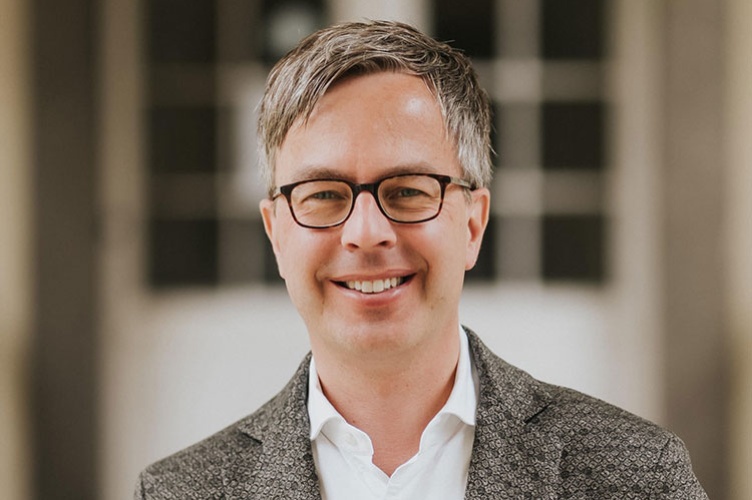
By ESCP Marketing Professor Robert Wilken
With the Covid-19 pandemic, ESCP Business School was forced to switch teaching completely to online formats. Lectures, group work, exercises, presentations by practice partners, and ultimately exams had to be adapted to the new situation of global scope. Is online teaching now automatically less interactive, less participatory, more prone to disruption, perhaps even more boring (for all involved)? Or does the online environment open up a space for new ideas that we have had to try out by necessity in the particular circumstances, but which may remain useful even for times of Covid-19 mastery?
The pandemic, and with it the aforementioned limitations, has now lasted for about a year; a good opportunity, then, to reflect on the involuntary testing period. In doing so, I will not go into technical details, but focus on the big picture that has emerged for me so far.
As a starting point, I will introduce a concept that I have frequently implemented across courses in digital teaching. It was clear to me that the usual 10 times 3 hours of face-to-face teaching per course could not be replicated online, mainly because of the risk of lower attention or faster fatigue. Thus, the central idea was to divide each course into different components:
Firstly, a pure lecture part, which serves to convey content. This part is prepared by the students in the form of slides, articles or videos, and during the lecture I add examples for illustration. Smaller exercises during the lecture break up my monologue and let the students directly check the knowledge in an application-oriented way. There are also one or two quizzes or short surveys per lecture, the results of which are produced and visualized live.
Secondly, asynchronous units, which the students organize themselves in teams, between the lecture dates. Students work together on case studies and projects, applying their knowledge from the lecture in more complex contexts. In doing so, the teams are allowed to choose the object of analysis for the project (e.g., a product, an industry, a company). I also provide feedback to each student team on each step of the project.
And thirdly, interactive small groups with a maximum of 20 participants, in which the students have the floor - they present their solutions to the case studies and project tasks and also assess each other; I remain the moderator of the discussion.
More flexibility and shorter seminar units: Instead of the usual 10 times 3 hours in the classroom, with this concept each student has 6 lectures of 2 hours each, 6 asynchronous units of 2 hours each for the preparation of the case studies and project assignments, and 3 sessions in small groups of 2 hours each for the presentation of the solutions. More extensive than before is certainly the regular contact and individual feedback for the teams on the respective project steps. And as an "encore", a written exam exercise is scheduled.
This teaching concept, even if based on a simple initial consideration, brings several advantages. Firstly, improved preparation on the part of the students and increased attention through compression of the content; in other words, concentration of the students in the lecture part is created through concentration of the content. Secondly, greater student engagement and motivation through greater autonomy (self-organization of asynchronous elements; choice of project topic). Thirdly, greater learning success through regular feedback discussions. The list of plus points could easily be continued. At the same time, one can state: None of this is dependent on an online environment; all components are independent of the format. So the transition forced by the pandemic has revealed opportunities for the reorientation of teaching in general.
However, one thing that remains somewhat problematic from my perspective: the lack of small talk with students on the sidelines of lectures; such conversations are apparently not that small.
Campuses
![© Airbnb [copyright]](/sites/default/files/styles/event_news_une/public/2021-02/Airbnb1.jpg)
Campuses
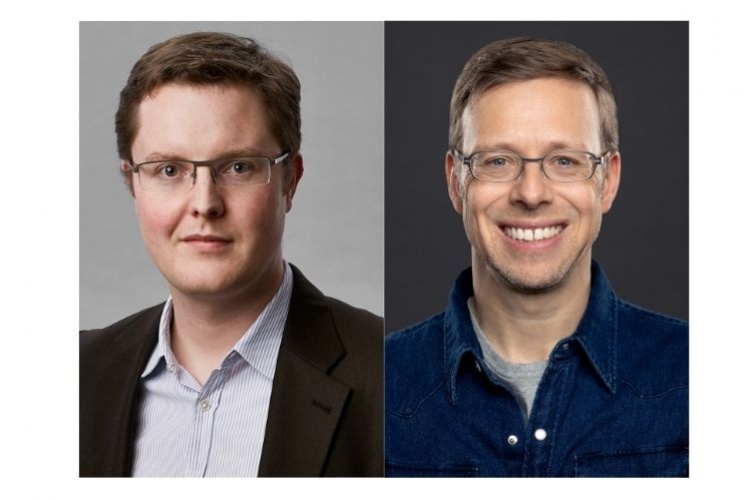
In this interview Prof. Dr. Christoph Seckler and Prof. Peter Borchers, academic directors of ESCP Business School’s innovative entrepreneurial acceleration programme U-SCHOOL answer questions on the topic of entrepreneurship and its increasingly important role in the way we will conduct business in the years to come. Read on to learn why in their opinion it is vital for companies to keep up with the fast-paced changes of today, how they can do this with the help of entrepreneurial skills, innovation and digital transformation, and which tools are most relevant to the current challenges they are faced with.
TRANSFORMATION IS A FREQUENTLY USED BUZZWORD. WHY ARE YOU CREATING A PROGRAMME AROUND IT? WHAT IS THE IMPORTANCE OF DIGITAL TRANSFORMATION IN TODAY’S SCENARIO?
Christoph Seckler: It’s true. Many use the term transformation as a vague buzzword. But at the same time transformation is something very concrete, something that affects all of us in our daily (working) lives. Transformation captures the massive changes that we are currently going through. These changes are driven by technological developments (e.g. AI, biotech, robotics), economic changes (e.g. platform economy, the emergence of new business models), social changes (e.g. increasing awareness of sustainability), and political changes (e.g. shifting world order). Now this transformation means for firms that they can either seize the novel opportunities that these changes open up or it is likely that they will vanish. And we simply believe that seizing the novel opportunities requires good entrepreneurial leaders. This is why we created this unique programme to develop entrepreneurial leaders who make transformation happen.
WHY DO SUCCESSFUL CORPORATES NEED MORE INTRAPRENEURSHIP?
Peter Borchers: Intrapreneurship is about exploring and seizing opportunities within established firms. Also and especially if they go beyond what used to be the norm. Any large corporate needs to continuously adapt to ongoing changes, and intrapreneurship is the engine for that. While innovation may happen top down in some cases, most innovation in corporations happens through the initiative of individuals or small teams which initially drive a project. Either these projects start by seeing things that customers struggle with and then they provide novel solutions, or they start with excellent technologies and find novel applications for these technologies. Either way, these initiatives are crucial for the continuous renewal of established firms. If firms are not fast enough and not flexible anymore in adapting to the changes, they just fail like it has happened to so many firms such as Kodak, Nokia, RIM, or Motorola.
WHY IS PRIORITIZING INNOVATION CURRENTLY MORE IMPORTANT THAN EVER?
Peter Borchers: This is easy to answer. Business opportunities arise at the intersection of what people need and what can be built to address these needs. Currently we see massive changes in both what people need (e.g. sustainable lifestyles) and what can be built (e.g. deep tech). So even business opportunities which have been very stable for many years (e.g. petrol-run cars) are in massive flux at the moment. So either firms stay ahead of the game by constantly innovating or soon their business might disappear.
SHOULD LARGE COMPANIES ESTABLISH ACCELERATORS OR DIGITAL HUBS IN BERLIN?
Peter Borchers: Accelerators or digital hubs can be powerful vehicles, but only when they are in line with the firm's objectives as well as the business environment. For instance, accelerators and incubators can be an effective way to learn about and to even catch some early-stage innovation. They can be useful in supporting existing R&D activities, in opening up novel growth options for the firm, and they can be attractive for recruiting and retaining employees. But the spectrum of available options goes well beyond that. There are several other approaches which can be more suitable for other objectives. For example, if a firm wants to hedge against future disruption e.g. by strategically extending its product and service portfolio, investing in more mature startups can be a good way forward. In this case, a corporate venture capital unit might be better suited. Also, strategic corporate partnerships can be an interesting way to close a missing IP gap while saving investments. So it really all depends on the objectives of the firm.
But certainly, collaborating with startups and, on top, doing this in Berlin is always a good idea. It is just one of the most thriving entrepreneurial ecosystems in the world.
COOPERATION BETWEEN CORPORATIONS AND START-UPS OFTEN RESULT IN A CLASH. HOW CAN THIS BE OVERCOME?
Peter Borchers: Yes that’s true. Collaborations between corporations and start-ups are challenging because they are just such different firms. While corporations essentially perfected executing on established business models, start-ups are in search of novel scalable business opportunities. This requires very different cultures, structures, and processes which, in turn, can create tensions, misunderstandings, and frustrations in co-operations. To create a successful cooperation, we think it is important to acknowledge the distinct strengths that each partner brings to the table. While corporations often possess quite a lot of resources, know how, and clearly defined processes, start-ups excel in innovating quickly, being fully committed to their idea, yet pivoting flexibly when needed. Based on acknowledging these strengths, a second key for success is to set clear goals for the partnership as well as a framework for working together. And this should be done right from the beginning.
HOW WOULD YOU ADVISE SOMEONE LOOKING TO BECOME AN ENTREPRENEURIAL LEADER?
Christoph Seckler: The first advice would be to make a personal choice. We are convinced that entrepreneurial leadership is a choice; it is not a rank. Entrepreneurial leaders take initiative. They do things without being told. They find out what they need to know to tackle a problem. And they keep going when things are getting tough. So it is - first of all - a question of who you want to be as a person. But then, of course, it also helps to master the skills and tools which are useful to sense and seize opportunities, and to have the network to make things happen.
WHAT ELSE DO YOU THINK TODAY’S ENTREPRENEURIAL LEADERS SHOULD FOCUS ON?
Christoph Seckler: While there are many changes in these transformative times, two stand out: digitalization and sustainability. Digitalization is fundamental because it is the first time in history that processes that have traditionally been reserved to human brains are now performed by machines. This is true for processing information, for storing information, and for communicating. Particularly, the developments in the deep tech areas (e.g. AI, block chain, biotech) will create many novel opportunities in the future. So being aware of some of the key developments is very important in our view. The same is true for the developments in the field of sustainability. It is very obvious that we cannot keep on doing business as we have done over the past 130 years. It would just kill our planet. The increasing awareness of sustainability issues will change quite dramatically how we will consume and produce in the upcoming two decades. Again, being aware of some of the major trends (e.g. circular economy) will help to stay ahead of the game.
WHAT ARE ACCORDING TO YOU THE MOST INVALUABLE ENTREPRENEURIAL TOOLS AND SKILLS NEEDED TODAY?
Christoph Seckler: Entrepreneurial leaders sense and seize opportunities and transform their firm. So we think that invaluable tools in doing that are tools to systematically identify novel opportunities, to design impactful business models, to implement them, and finally to know how to lead change successfully. Beyond these tools, we believe that it is crucial for entrepreneurial leaders to sharpen their skill set: skills in leading and building effective teams, in analytical and creative problem solving, in managing stress, communicating effectively, and in developing self-awareness. At U-SCHOOL we help entrepreneurial leaders to master these tools and skills, and inspire them by bringing in world-experts on digitalization and sustainability topics.
This interview was led by Alison Masse, Programme Manager of the U-SCHOOL at ESCP Berlin. If you wish to learn more about this executive education course at ESCP, don't hesitate to reach out at amasse@escp.eu!
Campuses

The MBA in International Management offers a unique opportunity to spend two semesters of study in two cities in Europe, choosing between our six campuses in Berlin, London, Madrid, Paris, Turin and Warsaw.
This programme provides young professionals with business skills and mindset for a successful international career. It covers all the functional areas of management, providing a multicultural, hands-on experience.
On the 15th April at 1pm, join our MBA in International Management programme presentation and interact with the Turin Campus MBA Admission and Programme Specialist, Veronica Polichetti.
You can ask questions on the spot and solve all your questions about application, campus, classroom, work opportunities, scholarships, etc.
Please REGISTER to join the webinar.
Location
Organiser: ESCP Turin Campus
Online - Worldwide
MapDate
Start date: 15/04/2021
Start time: 1:00 PM
End time: 2:00 PM
Related stories

Event 22/02/2021
Online Event
MBA in International Management - Info session
Discover the ESCP MBA in International Management. The programme offers a unique opportunity to spend two semesters of study in two cities in Europe, choosing between our six campuses in Berlin, London, Madrid, Paris, Turin and Warsaw.
Turin

Event 19/01/2021
Online
MBA Info Session
Register and join our online presentation to discover the ESCP MBA in International Management
London
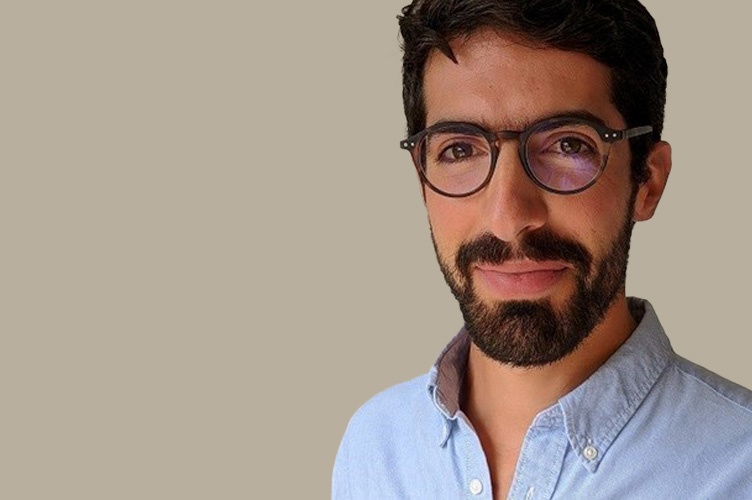
Miguel Gomez, Associate at the Carbon Trust and ESCP Business School’s MSc in Energy Management Alumnus (Class of 2019), reveals how we can link the pathways of environmental sustainability and economic growth.
The COVID-19 pandemic is an enormous challenge to economies and societies around the globe, but it must not thwart international efforts to mitigate climate change. Governments’ efforts are geared towards addressing the health crisis, and providing relief to affected businesses and workers.
Could the post COVID-19 era present an opportunity to closely align public policies with climate goals and reduce the risk of continuing with carbon-intensive infrastructure?
The COVID-19 pandemic has brought numerous challenges to society and the economy. Governments, companies and people have faced the need to adapt to a new normal where value chains are disrupted, basic services are put on hold and health must be at the forefront of all collective efforts. However, the pandemic also comes at a crucial moment where countries are joining forces around a common goal of limiting global warming – an uptick in collaboration which started at 2015’s COP21 in Paris. It, therefore, presents a once-in-a-lifetime opportunity to realise how tangible the impact of human action on the natural environment is. With the world stopping for a long period during 2020, the evidence has shown that greenhouse gas (GHG) emissions have been cut drastically and therefore proven that it is possible to mitigate our negative impact on the climate. Countries can and should align public policies to benefit from existing low-carbon technologies in the different sectors, including energy, transport, manufacturing and others; aiming at progressively reducing the environmental impact to achieve the set climate goals.
How can organisations bring environmental and economic priorities together?
Despite efforts being made by governments under the international climate accords, projections show that complying with current policies would take the average global temperature to over 3ºC above pre-industrial levels, which would bring catastrophic environmental, social and economic effects, such as increased heat waves, flooding, migration, higher mortality and infrastructure damage, to name a few.
Corporations have the chance to step up and lead the transformation. The Paris Agreement acted as a catalyst: companies understood they needed to act to get closer to a world with an average temperature rise of less than 1.5°C by 2050. We are now seeing that the environment is gaining importance in business decisions, with initiatives such as the Carbon Disclosure Project, the Taskforce for Climate-Related Financial Disclosures (TCFD) and the Science-Based Targets Initiative (SBTi) becoming mainstream. The public concern and increased mass demonstrations are clear evidence that stakeholders are now demanding higher transparency and commitments from the private sector, which means companies are now bringing environmental discussions into their board rooms.
What are the opportunities and challenges in bringing about net zero?
Net zero is a long race that starts by understanding the present carbon impact and aligning it with carbon reduction targets set out by global accords, such as limiting global temperature rise to 1.5°C above pre-industrial levels (COP2015). The private sector needs to start thinking about the risks of not aligning with the science: if they are resistant to pressure from consumers and investors, the government will set new regulations that can have substantial effects on the business.
To take advantage of the opportunities to rebuild better and move towards a net-zero future, we need both collaboration and a scientific, fact-based approach. Sustainability is at the heart of all the important decisions that companies make. If we are going to have any chance of meeting our targets, net zero really must underpin everything that businesses, governments and societies do.
In your opinion, how important is sustainability for governments across all continents?
The basic definition of sustainability is meeting the needs of the present without compromising the ability of future generations to meet their needs, i.e. the ability to exist constantly without deteriorating.
Therefore, sustainability must be the most important responsibility of governments that aim at providing their populations with prosperous life conditions. This word encompasses not only environmental sustainability, but, just as importantly, social and economic sustainability. However, with the objective of providing societies with better standards of living, governments have been overexploiting natural resources with the excuse of needing them to increase the degree of development. This is where the world has started to unbalance; the climate has shown that we cannot keep this rhythm of exploitation going if we want to keep the world in which we live as habitable as it is.
Leading economies are starting to align with best practices for a lower-carbon world and annual COP meetings are proof of that. However, there must be a global alignment where developing economies get the support from those countries at the forefront of sustainability which have also polluted their way through the past. Global collaboration is key if we are aiming to integrate sustainability in policies across all continents.
Tell us about your current role and what inspires you at work
As an Associate in the Business Services team at the Carbon Trust, I work with corporations, with a special focus on Latin America, advising them directly and helping them to identify sustainable opportunities at a product, organisational and supply-chain level. I am involved in a wide range of projects, including product and organisational footprinting, assurance and certification services, value-chain analysis, climate-related risks and opportunity analysis under the Taskforce for Climate-Related Financial Disclosures (TCFD), especially in science-based targets (SBT) projects.
Working in a mission-driven organisation, I am inspired by the increasing interest we are seeing from corporations; not only in understanding the impact they have on the environment, but also their willingness to become leaders in the transition to a low-carbon economy. All in all, what inspires me daily is to know that I am contributing to a better future.
Tell us about the early stages of your career and what led you to apply to the MSc in Energy Management (MEM) programme at ESCP Business School
I have always been interested in the energy sector, particularly in the development of renewable energies within developing economies. My first work experience, after finalising my Bachelor degree in Economics, allowed me to take a deep dive into the Colombian electricity market, taking part in a project from the top-ranked think tank, Fedesarrollo, analysing the costs and benefits of integrating non-conventional renewable energies into the national matrix. From that point onwards, I knew I wanted to be involved with the energy industry.
I then moved to work for a Japanese conglomerate, Mitsui, for just over four years, where I had the chance to work not only as the person in charge of business development for renewable energies in Colombia and Panama, but also to explore investment opportunities in the oil and gas sector.
Having a comprehensive view of the energy industry encouraged me to better understand how all these sources and uses of energy are intertwined. Also, having studied and worked with different power generation technologies, diverse transportation methods and their fuels, international hydrocarbon trading, and the mining sector, I was interested in learning more about the fundamental economic and technological concepts of the energy sector with the purpose of contributing to a sustainable development.
The MEM programme at ESCP Business School offered me the chance to get that holistic view and reaffirm my opinion that a balanced energy matrix, dominated by the least contaminating technologies and backed up by the most efficient fossil fuels such as liquefied natural gas, can be the starting point for better scenarios from an environmental, economic and social perspective.
The fact that the programme takes place in both London and Paris was also key to my decision, as I wanted to experience the vibrant life of two of the greatest European capitals.
What were the biggest takeaways from your studies at ESCP?
I entered the MEM with a clear perspective of wanting to work in the renewables sector; also wanting to gain a broader vision of the energy industry, as I consider it fundamental to understanding the balance between all sources of energy. We know, for instance, that fossil fuels will still be around for some decades. I am not a believer in micro-specialisation, but rather in getting a holistic view of things in order to form my opinion. The programme gave me the tools to apply this knowledge to my work and to gain a better understanding of the energy world.
And, most importantly, the programme allowed me to make some very good friends that I know will be around for a long time!
Campuses
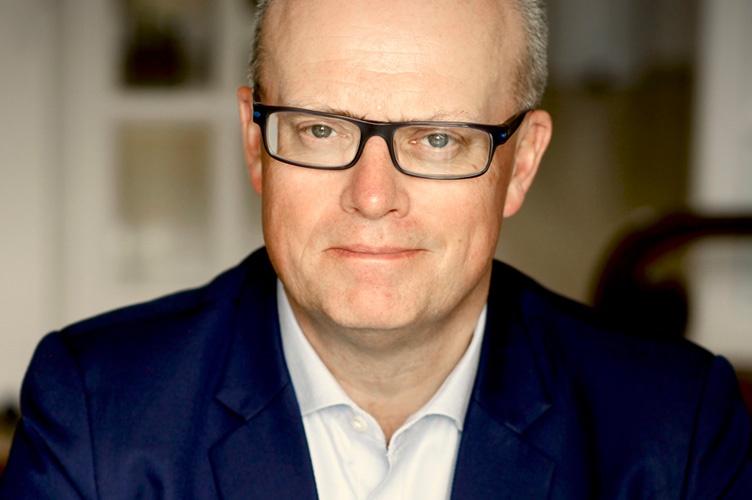
Many people have struggled with their sleep during the pandemic. But this common problem is something you can fix!
We invite you to our online Mindfulness event hosted by Director of Tinderbox and author of "Positive Sleep", Giles Watkins. The talk will cover a holistic approach to resolving sleep issues and how to transform your life.
Along the way, we will see the importance and function of sleep, plus how lack of sleep affects students, and ultimately the benefits that great sleep can bring in all that you do!
To join this free event, book your place here: http://bit.ly/3smiAEj
Please note that this event is open to ESCP Business School students only.
About our Speaker
Giles leads Tinderbox Business Consulting in Bristol, Cardiff, Newport & Taunton, offering a personalised and unique service to Small & Medium sized Enterprises. He works closely with Business Owners and Board Directors to develop bespoke and targeted programmes for success.
An author, speaker, coach and facilitator, Giles wrote 'Positive Sleep' based on his own struggles with insomnia, how he overcame these, why sleep matters and what you can do to sleep better at an individual and organisational level. An accredited Vistage Speaker he now works with individuals and groups, primarily at the C-suite, to gain the positive benefits of improved sleep.
Giles is now applying his 30 years of business knowledge and leadership experience gained primarily in Asia Pacific, Europe and Africa, to enable business decision-makers to make better decisions, achieve balance, deliver superior results and sleep better at night!
Location
Organiser: ESCP London Campus
Online - Worldwide
MapDate
Start date: 02/03/2021
Start time: 6:00 PM