The future of work
Practitioners, academics, think tanks and policy makers are fueling engaging discussions about what the future of work might look like and how different actors can shape it. This talk will immerse participants in this debate, offering practical insights to understand the coming changes and engage with them.
Participants

Almudena Cañibano
Associate Professor of Management
Location
Organiser: Madrid Campus
Online - Worldwide
MapDate
Start date: 19/05/2020
Start time: 5:00 PM
End time: 6:00 PM
Related stories

Event 30/04/2020
Madrid MasterClass
Housing affordability before and after Covid 19
In order to respond to their electorate's demands for affordable housing, many politicians have recently turned to rent control.
Madrid

Event 30/04/2020
Madrid MasterClass
CITY MODELS: What will tomorrow’s city be like? by Prof. Francesca Heathcote
This webinar will review a set of past and present city-models such as, for example, the Garden City, the Modernist City and the Smart City to understand what strategies may or may not be transferable.
Madrid

Housing Affordability
In this webinar, Professor Jaime Luque will discuss the effectiveness of this and other policies aimed at ameliorating the housing affordability crisis. The talk will also include a reference to the potential threats that Covid 19 may pose on the access to affordable housing.
In collaboration with:


Speaker bio
Professor Jaime Luque is Associate Professor of Economics at ESCP Business School (Madrid campus), where he holds the BNP Paribas Professorship in Real Estate and serves as Director of the Monaco Real Estate Technology Innovation Program. He is also the Academic Director of the MSc in Real Estate, the MSc in Hospitality and Tourism Management, and the ESCP Institute of Real Estate Finance and Management. Prior to joining ESCP in July 2018, he was Real Estate faculty at the University of Wisconsin-Madison School of Business. Professor Luque has investigated different issues related to housing affordability, including subprime mortgage lending, Tax Increment Financing (TIF), Low Income Housing Tax Credits (LIHTC), and mixed income communities. His book Affordable Housing Development published by Springer provides insights and practical demonstration of important financial tools often necessary to the financial feasibility of affordable housing projects, including TIF and LIHTC. Professor Luque’s research has been published in journals such as Journal of Economic Theory, Journal of Public Economics, Economic Theory, Real Estate Economics, and Regional Science and Urban Economics. He has also written opinion pieces for the Financial Times, the Huffington Post, Le Monde, El País, El Mundo, Expansion, and La Repubblica, as well as for the Vox.eu, Eurointelligence and The Conversation economics op-ed sites. Professor Luque's teaching specializations include real estate finance, real estate economics, urban economics, and macroeconomics. He has taught in the MBA, MSc and BBA programs. Professor Luque is the recipient of the 2017 Ideas Worth Teaching Award by The Aspen Institute Business and Society Program for his educational innovations to address affordable housing development.
Participants

Jaime Luque
Associate Professor of Economics
Location
Organiser: Madrid Campus
Online - Worldwide
MapDate
Start date: 13/05/2020
Start time: 5:00 PM
End time: 6:00 PM
Related stories

Event 30/04/2020
MasterClass for Bsc postgraduate candidates
"The future of work" by Prof. Almudena Cañibano
In light of key megatrends such as technology, globalization or demographic change, labour markets and jobs across countries and industries will undergo major transformations in the next years and decades.
Madrid
Event 30/04/2020
Madrid MasterClass
CITY MODELS: What will tomorrow’s city be like? by Prof. Francesca Heathcote
This webinar will review a set of past and present city-models such as, for example, the Garden City, the Modernist City and the Smart City to understand what strategies may or may not be transferable.
Madrid
ESCP students have been invited to attend a free webinar by our corporate partners, Splunk.
In their own words:
Splunk is the market leader in real-time monitoring and analysis of machine-generated Big Data. But what do people really mean when they’re talking about “Big Data”, how is machine generated data valuable to organisations and business, and how can you use Splunk today to begin exploring and building in this ever-growing landscape? We’ll answer all this and more in an interactive seminar.
This webinar takes place on 5th May at 2pm (BST).
Please note that attendance is offered to current students at ESCP London Campus only. If you would like to join, please check your emails for the exclusive registration link sent by the London Careers Service.
Location
Organiser: Splunk
Online - Worldwide
MapDate
Start date: 05/05/2020
Start time: 2:00 PM
End time: 3:00 PM
ESCP students have been invited to attend a free webinar by our corporate partners, Splunk.
In their own words:
Would you like to go from Splunk Zero to Splunk Hero in 2½ hours? Your wish has come true!
Hosted by our SE team, our virtual #Splunk4Rookies sessions are a great opportunity for you to discover the value of Splunk hands-on in a matter of hours, courtesy of a virtual meeting room.
What's Involved:
- Create your own Splunk distributed environment
- Collect & index data
- Search & statistics
- Creation of interactive dashboards
Who should attend?
Sessions are designed for people who are new to Splunk and keen to understand how to get started and get introduced to a couple of initial use cases customers often start with.
What you need:
Your laptop with a browser that can access external websites.
This webinar takes place on 1st May at 3:30pm (BST).
Please note that attendance is offered to current students at ESCP London Campus only. If you would like to join, please check your emails for the exclusive registration link sent by the London Careers Service.
Location
Organiser: Splunk
Online - Worldwide
MapDate
Start date: 01/05/2020
Start time: 3:30 PM
End time: 6:00 PM
![© iStock [copyright]](/sites/default/files/styles/event_news_une/public/2020-04/iStock-1212500581-750x430.jpg)
Campuses
Campuses
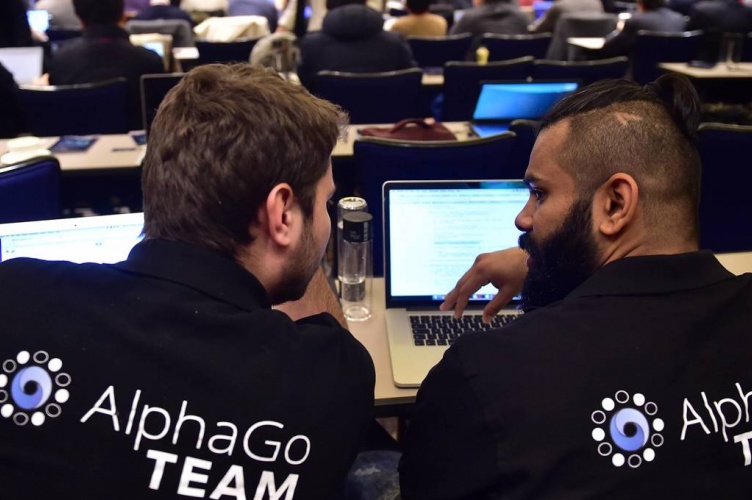
ESCP students have been invited to attend a free webinar by our corporate partners, Splunk.
Host Alex Thumwood will spend this event talking attendees through the realities of working as a technical support engineer.
This webinar takes place on 30th April at 2pm (BST).
Please note that attendance is offered to current students at ESCP London Campus only. If you would like to join, please check your emails for the exclusive registration link sent by the London Careers Service.
Location
Organiser: Splunk
Online - Worldwide
MapDate
Start date: 30/04/2020
Start time: 2:00 PM
End time: 3:00 PM
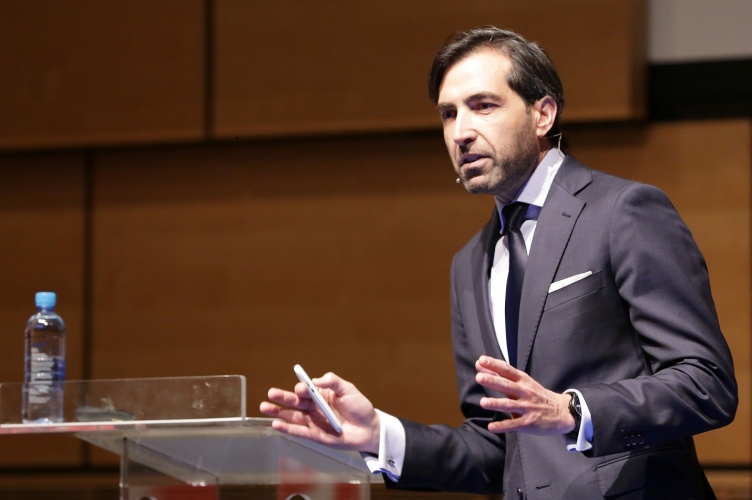
Coronavirus has caused an unprecedented global crisis and considerable confusion and uncertainty. In these challenging times, managers are looking for tools and ideas to turn crisis into opportunity and lead the change. This trend was confirmed by the high number of participants, 1,154 from all over the world, who registered at the webinar "Ordo ab Chao: How to Find Order in a World of Chaos", hosted this week by Nicolas Kfuri, Visiting Professor of Innovation and Strategy at ESCP Business School.
The online masterclass gathered together a variety of people, from students to alumni, from young entrepreneurs to top managers, keen to find out how the world we are living in is changing, moving from a world of control into one of chaos.
Prof. Kfuri said that we have reached a new level of uncertainty, where complexity increases with time, and nothing is constant. We live in liquid modernity that has to deal with pandemic risks, climate change, globalisation and technology. All of them are challenging the sources of order and authority that have guided our society for centuries.
What should be the role of leaders in this context? Which specific skills and tools should a seasoned manager master? There are no unanimous answers to those questions, but there are certain practices that should give managers a solid ground from which to look at and strategize for the future.
Prof. Kfuri gave innovative and brilliant tips, such as mastering time instead of controlling space, moving from headhunter to heart-hunter, going beyond your industry and organization looking for innovation in other fields, mixing culture and philosophy with business and economics in inspiring the change.
In the context of the COVID-19 crisis, ESCP has involved experts and faculty from all its campuses to offer a series of virtual lectures focusing on how businesses and individuals can understand, adapt, change and innovate during this pandemic.
“Ordo ab Chao” was the first webinar in a series of six that create the online executive programme "Drive Change Through Crisis". The masterclasses are hosted by six distinguished ESCP professors and offer the critical skills needed to drive change through times of crisis. Professors will examine the consequences in terms of economics, trends, threats and leadership. They will go through the most radical technological evolutions of our time, discussing the new roles of managers facing these challenges.
Next webinars:
29th April; 18.30-20.30
Build Resilience and Strategy during and after the Crisis – Prof. Mark Esposito
6th May; 18.30-20.30
Thriving in the Instant Economic Crisis – Prof. Terence Tse
13th May; 18.30-20.30
Decision Making in Times of Crisis – Prof. Alessandro Lanteri
20th May; 18.30-20.30
International Financial Markets Post-Crisis: What to do with your Money – Prof. Vittorio De Pedys
27th May; 18.30-20.30
Leading Through A Global Pandemic: How to build resilient and hopeful teams with purpose and humanity? – Prof. Lisa Xiong
Early-bird registration deadline is coming up!
Don’t forget to register by April 26th to benefit from our early bird registration fee.
For info and booking, write to cbocchio@escp.eu
Campuses
Contact(s)
Contact us

Related stories

Event 10/04/2020
Online Masterclass
Towards a new normal: changing consumer behaviour during the COVID-19 pandemic
Join us for a unique online Masterclass taught by Marketing Professor Isabella Maggioni and learn more about changing consumer behaviour during the COVID-19 pandemic.
Turin

News 20/04/2020
Turin News
Leading Change: people management in times of crisis
In these challenging times, how should companies, entrepreneurs and people orient themselves to manage processes and teams better? Professor Francesco Rattalino, ESCP Turin Campus Dean, answered this crucial question in the exchange he had with Alessio Cini, Partner at Soges Executive Search, in a webinar about People Management with a specific focus on emergencies.
Turin
ESCP students have been invited to attend a free webinar by our corporate partners, Splunk.
In their own words:
"Join hosts Matt Davies (Vice President Marketing, AMER and EMEA) and James Hodge (Chief Technical Advisor) as they discuss:
- Transformation of businesses
- Growth mindset
- What jobs will the industry need in the future?"
This webinar takes place on 28th April at 1:30pm (BST).
Please note that attendance is offered to current students at ESCP London Campus only. If you would like to join, please check your emails for the exclusive registration link sent by the London Careers Service.
Location
Organiser: Splunk
Online - Worldwide
MapDate
Start date: 28/04/2020
Start time: 1:30 PM
End time: 2:30 PM
Focus on how he went through the company projects'challenge
The IoT course started in January. It is a 120-hour path which gives students inputs about information mastering, connected economy, strategic implications, business models of connected objects, ethical and legal issues, innovation, technology, patents and design, and digital marketing in the age of IoT.
On Thursday, 9th April, the course ended with a final major step: students presented their recommendations to 4 companies as sponsors (Société Générale Assurances, Schneider Electric Valeo and Kerlink).
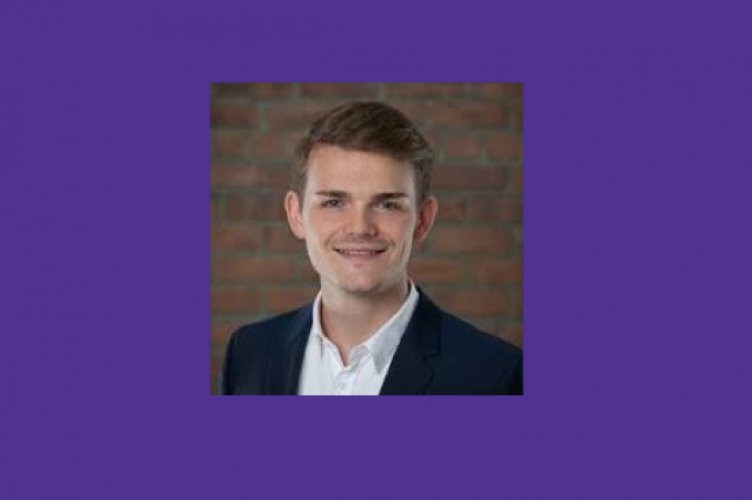
Felix, one the the students, shares his experience of this company project process: new skills, Covid-19 impact on the teamwork, pedagogical role of the project...
ESCP: First, why did you chose to attend the IoT specialisation?
Félix: Personally, I am extremely passionate about technology and Innovation and IoT plays a key role in that. We can witness completely new business models, products or services that are enabled by the internet of things. During my first year of my master study at the Warsaw campus, I already specialized in Innovation management to dive deeply into the innovation sector and have the chance to work with several companies for different project from very different angles. When I’ve read the syllabus, the overall concept of the specialization, and what previous students of the specialization were working on during their time it was a no-brainer to apply. The opportunity to specialize in such an influential “technology” is an incredible chance to increase my already existing knowledge and experience in technology and innovation. The IoT specialization was therefore a fantastic complement in further developing the skill set within innovation and add another layer around the core of “innovation”.Furthermore, the very strongly developed link to practice makes the difference. Working closely with the IoT Chair’s sponsors on diverse and complex projects they are also working on is a fantastic learning for all of us and let us dive into real life challenges.
Lastly, I have a professional background in technology and innovation consulting at Capgemini. I was working for several different clients in diverse industries and individual challenges that had to be solved. Similar as with my academic background, acquiring expertise in the business of IoT is a distinctive value and complement that I can apply back at my company and in a professional context.
ESCP: What did you learn from the project's process in terms of new skills you have developed or enhanced?
Félix: We were a very ambitious team that aimed to work on a challenging yet rewarding project. Since the team was composed of double degree students, we knew each other quite well from the previous semester already. While it definitely helps to know each other in private as well, working on such a project is yet another story. We all had quite some different approaches to tackle the challenge, structure and manage work, which required especially in the kickoff phase of the project some time to be completely on the same page. However, we were motivated by delivering an excellent result not just for the course, but one Valeo can actually benefit from as well. The multicultural team benefitted from very diverse experiences and thus point of views and ideas in all phases of the project.
What especially stands out as a learning is the experience to conduct a whole project in a very compressed and limited time. Starting with the project brief, applying knowledge that has been taught in previous courses such as Design Thinking, to iterative project meetings with the sponsor to develop final recommendations, is a unique experience – especially in an academic environment. We have been working iteratively within the project team, spending long hours together in person and remotely, as well as with the sponsor to gather feedback and work it in to eventually create the final strategy they were us asking for.
This experience, combined with the exceptional situation of Covid-19 to manage a global crisis and ensure to deliver a project that meets and satisfies the “client”/Valeo, is an experience that will help us all to immediately be a valuable team member in the first job after graduation. Working with different cultures, through different time zones, from one point completely remotely, and still deliver a project on point, are skills companies will increasingly search for.
But the learnings exceed the solely business value; we all grow as a person as well that helps us to stay calm and focused in further situations besides business as well.
ESCP: What did you learn from the experience of finalising the project remotely with your teammates and sponsors?
Felix: Working remotely is a challenge and even between digital natives it is a setting that needs to be figured out how to work and collaborate effectively. However, both, the sponsor as well as we, are digitally all well-equipped so that switching from one day to another was a process in ease.
But, to make this model of remote teams more efficient, we definitely need better and more intuitive technological tools on the market to simplify and improve collaboration. At the moment, even though it worked out at the end, we always faced issues with sound or video quality, connection issues and so on.
Another notion is that, to make this model really work in the future, there need to be new models how to manage bigger projects in such a setting. It is difficult to stay efficient, and from an academic point of view to keep students engaged and focused, when the technology is still not 100% reliant and limited in its usability (easy class/group collaboration beyond screen sharing and more in the direction of virtual or augmented collaborative models).
The fact that we started in a “usual” person-to-person scenery, had the first meetings in real life was a big advantage to manifest the framework and avenue of working. Everything was well developed at the point when we were required to move to remote work so that we could switch to the new setting relatively effortlessly. The question how it would have been gone just virtually, without any personal contact before, however, is another story again. I personally believe strongly that our previous groundwork was the enabler to continue and finish the project on distance and even across different countries
ESCP: What is the role of such projects in the pedagogical process?
Félix: Practical projects within an academic environment are an invaluable element that complements the theory that is taught in class and what makes the difference eventually. Due to my previous professional working experience working as a technology and innovation consultant at Capgemini in France I was also able to clearly spot the links and could benefit from both, the content that has been taught at ESCP and the working experience, to then leverage and apply the knowledge to those projects. The projects itself, with the IoT chair sponsors but also further opportunities (such as AB InBev e.g.), have been on an incredible high level that challenged us to go the extra mile and develop projects that turned out to be also valuable for the companies itself.
Valeo, for instance, invested a lot of time and dedication from their side to help the project succeed. From a kick-off design thinking workshop at their Creative Lab to understand the context and dive into their current activities, to continuous meetings in their offices as well as online, put us in a real consulting setting. As I said earlier, it was challenging and required long hours to work on but at the same time, the project was stimulating and very rewarding as well.
To sum it up, I personally believe that those projects, together with the highest level of teaching is what makes ESCP Business School distinctive and attractive for students as well as companies to collaborate with and look for talents.
Campuses