
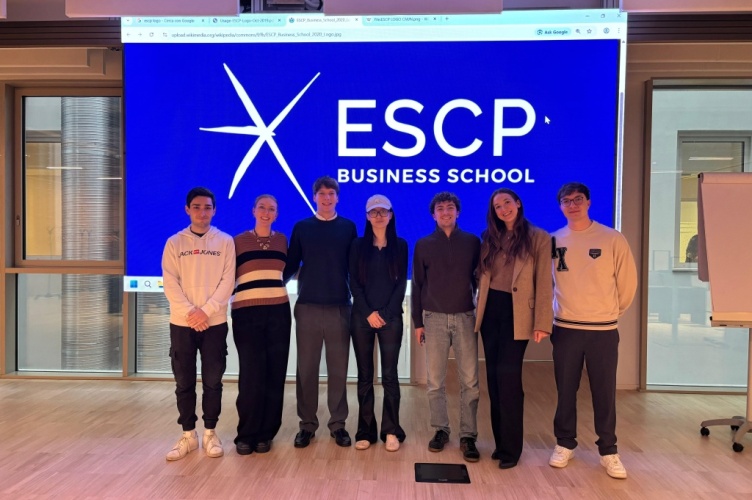
On December 4th, the Women in Finance Chair hosted the 2025 edition of its Employer Branding Case Study Competition, bringing together students from the Berlin, London, Paris and Turin campuses of ESCP Business School. Held online, the competition once again demonstrated the Chair’s commitment to bridging academic learning with real-world employer branding and diversity, equity, and inclusion (DEI) challenges.
This year’s edition mobilized 700 students working in teams, guided by faculty members specializing in human resources, strategy, and diversity management. Each team was tasked with analyzing the employer brand of a company in a specific area of finance specialization, with a strong emphasis on proposing actionable strategies on navigating backlash against DEI initiatives.
After an initial selection phase, the most compelling projects advanced to the final round. The finalists delivered 10-minute presentations followed by Q&A sessions, showcasing rigorous analysis, strategic thinking, and an impressive ability to challenge existing employer branding narratives.
And the Winner Is… The Mazars Team
The Mazars team stood out and was named winner of the 2025 Employer Branding Case Study Competition, earning strong praise from the jury for the depth, coherence, and critical perspective of their work. Their project was particularly recognized for its:
-
Robust and structured analysis of Mazars’ employee value proposition (EVP)
-
Critical examination of the risks and opportunities in facing the DEI backlash
-
Well-developed short, medium, and long-term recommendations, clarifying and strengthening DEI commitments
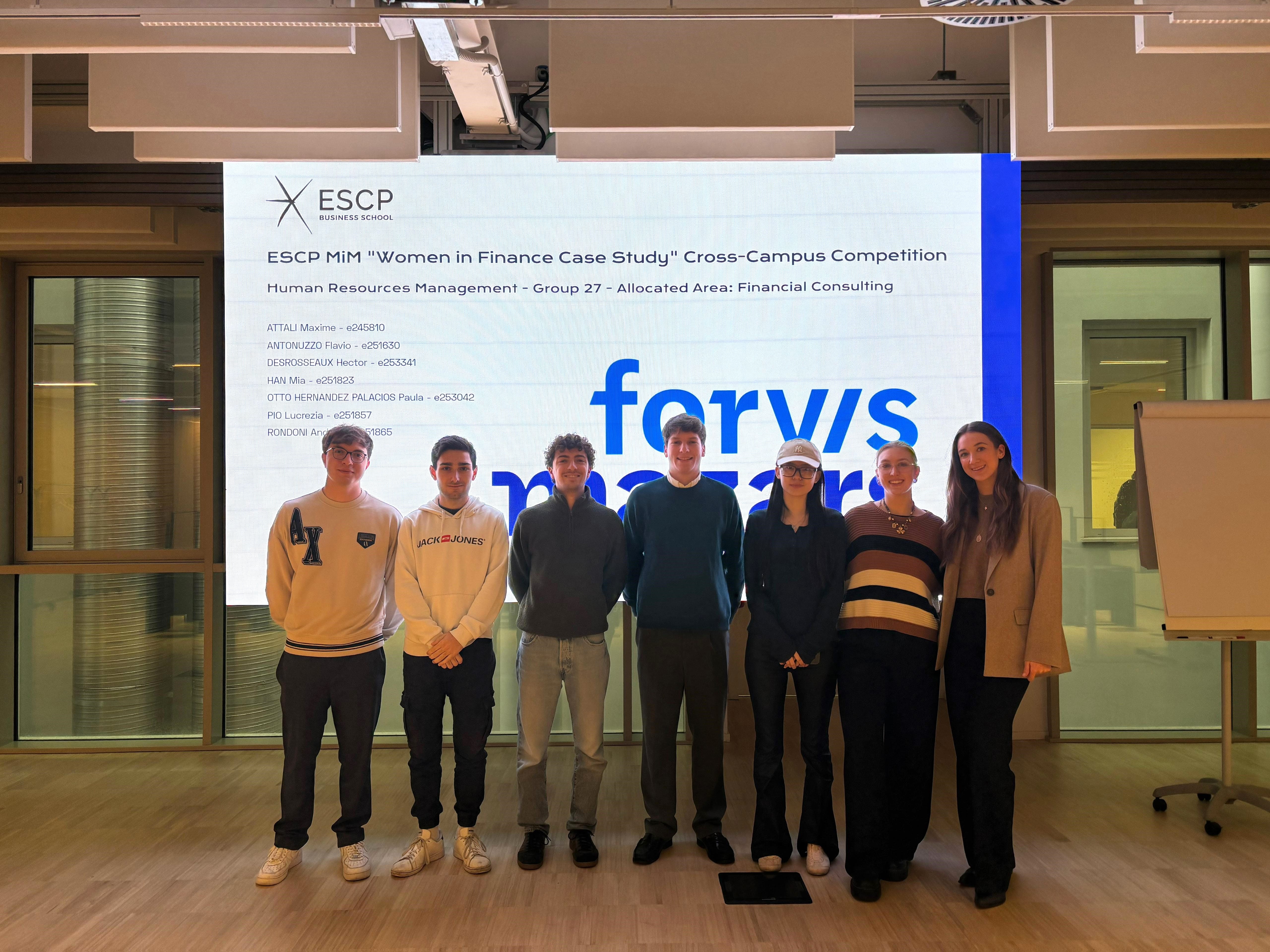
Reflecting on their experience, the team shared:
“Working on the case study pushed us to look beyond surface-level DEI messaging and critically examine the gap between corporate narratives and measurable inclusion outcomes. It was a truly eye-opening experience that deepened our understanding of what authentic employer branding should look like. The whole analysis challenged us to think not only as students but also as future leaders responsible for building equitable workplaces.”
More Details on the Winning Project
Focusing on Forvis Mazars, the winning team conducted an in-depth analysis of the firm’s employer branding strategy using a structured employer branding framework and extensive sustainability and HR data. Their work explored how Mazars positions itself as a human-centred, purpose-driven professional services firm, and whether this positioning is fully supported by consistent and transparent outcomes.
The team highlighted Mazars’ strong foundations, including:
-
A global presence across 100+ countries with a highly integrated partnership model
-
A clear purpose of “building the foundations of a fair and prosperous world”
-
Significant investments in learning and development, with structured training ecosystems and leadership programs
-
Progress in gender representation, particularly at early and mid-career levels
However, the project’s key strength lay in its critical perspective. The team identified potential DEI backlashes, notably:
-
The persistence of gender gaps at senior and partner levels despite positive overall workforce statistics
-
Limited public data on intersectional diversity dimensions such as socio-economic background, disability, or age
-
The risk that strong internal sentiment surveys may mask structural inequalities if not paired with robust, comparable metrics
To address these challenges, the team proposed a multi-horizon action plan:
-
Short term: increasing transparency through global DEI and pay-equity audits and clearer internal reporting
-
Medium term: embedding DEI accountability into leadership KPIs, promotion systems, and talent pipelines
-
Long term: positioning Mazars as an industry benchmark by institutionalizing intersectional inclusion and evidence-based employer branding practices
Their recommendations emphasized that authentic employer branding cannot rely solely on messaging, but must be continuously supported by data, governance, and measurable progress.
Fostering the Next Generation of Responsible Leaders
The Women in Finance Chair is proud to support initiatives such as the Employer Branding Case Study Competition, which empower students to engage critically with real corporate challenges. By combining strategic analysis, ethical reflection, and practical recommendations, this year’s winning Mazars team demonstrated the mindset required of future leaders committed to building inclusive, credible, and sustainable workplaces. Once again, the competition highlighted how employer branding, when approached with rigor and responsibility, can become a powerful lever for long-term change in the finance and consulting industries.
Campuses