
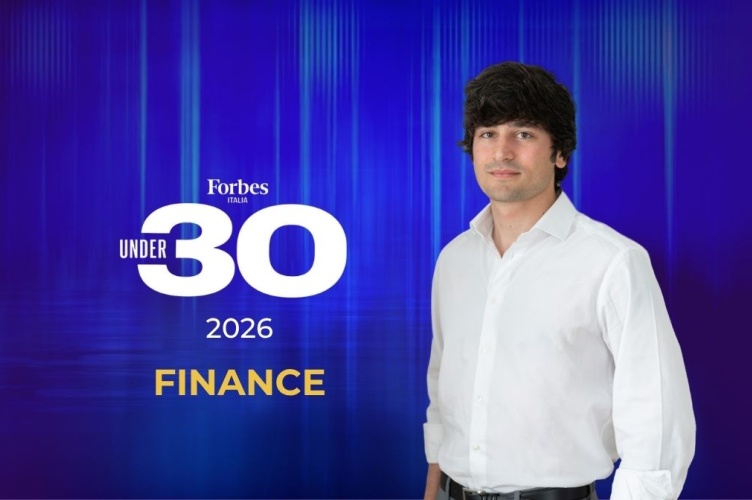
The MIM alumnus, recognised in the Finance category, reflects on his venture capital journey, what it takes to spot exceptional founders, and the international mindset that continues to shape his career.
ESCP Master in Management alumnus Matteo Moscarelli (Class of 2021) has been recognised in the 2026 Forbes Under 30 list in Italy in the Finance category. During his studies, he lived and learned across ESCP's London, Paris, Madrid and Turin campuses, building the international outlook that would later shape his career.
Today, as Principal at United Ventures, he works with some of Europe's most ambitious founders, identifying high-potential startups and supporting them as they grow. We spoke to Matteo about his journey into venture capital, the qualities he looks for in entrepreneurs, and the experiences that continue to influence the way he invests.
Building a career in venture capital
Forbes Italia has recognised you among its 2026 Under 30 talents in the Finance category. Looking at your journey so far, what do you believe has been the key contribution that led to this recognition?
Honestly, I don't think it comes down to a single thing. It's the sum of the choices I've made since I was still a student.
Hard work and going the extra mile matter for anyone who achieves something. In my case, though, there's a specific trait behind it. I'm never satisfied. Every time I reach a goal, I'm already thinking about the next one. That mindset isn't always easy for the people around me and sometimes I can come across as too much. But I'm convinced it's exactly what brought me here and what will keep moving me forward. For me, it's still day zero.
Beyond that, it comes down to doing the VC work well: finding and closing strong deals across my investment cycles at United Ventures and Plug and Play, mostly in deep tech, fintech and AI.
Finally, you can be the most talented person in the world, but if no one knows about you, it doesn't really count. Building a personal brand played its part in this recognition too.
Your career has taken you across different sides of the startup ecosystem, as a founder, investor, mentor and community builder. How have these experiences shaped the way you identify opportunities and support entrepreneurs today?
Having been a founder myself with FunniFin, where I made plenty of mistakes, and then a VC investor, taught me a few things I now apply every day.
First, when I look at an opportunity, I want founders who form hypotheses and test them at the lowest cost possible, and I keep pushing for that after we invest. Second, execution can be all-consuming and founders sometimes get trapped in it, so I help them step back and keep the bigger picture in view. Third, the right introduction at the right moment can be pivotal, so I keep expanding my network to open those doors. Finally, building is a rollercoaster, and I try to be there in the highs and the lows alike.
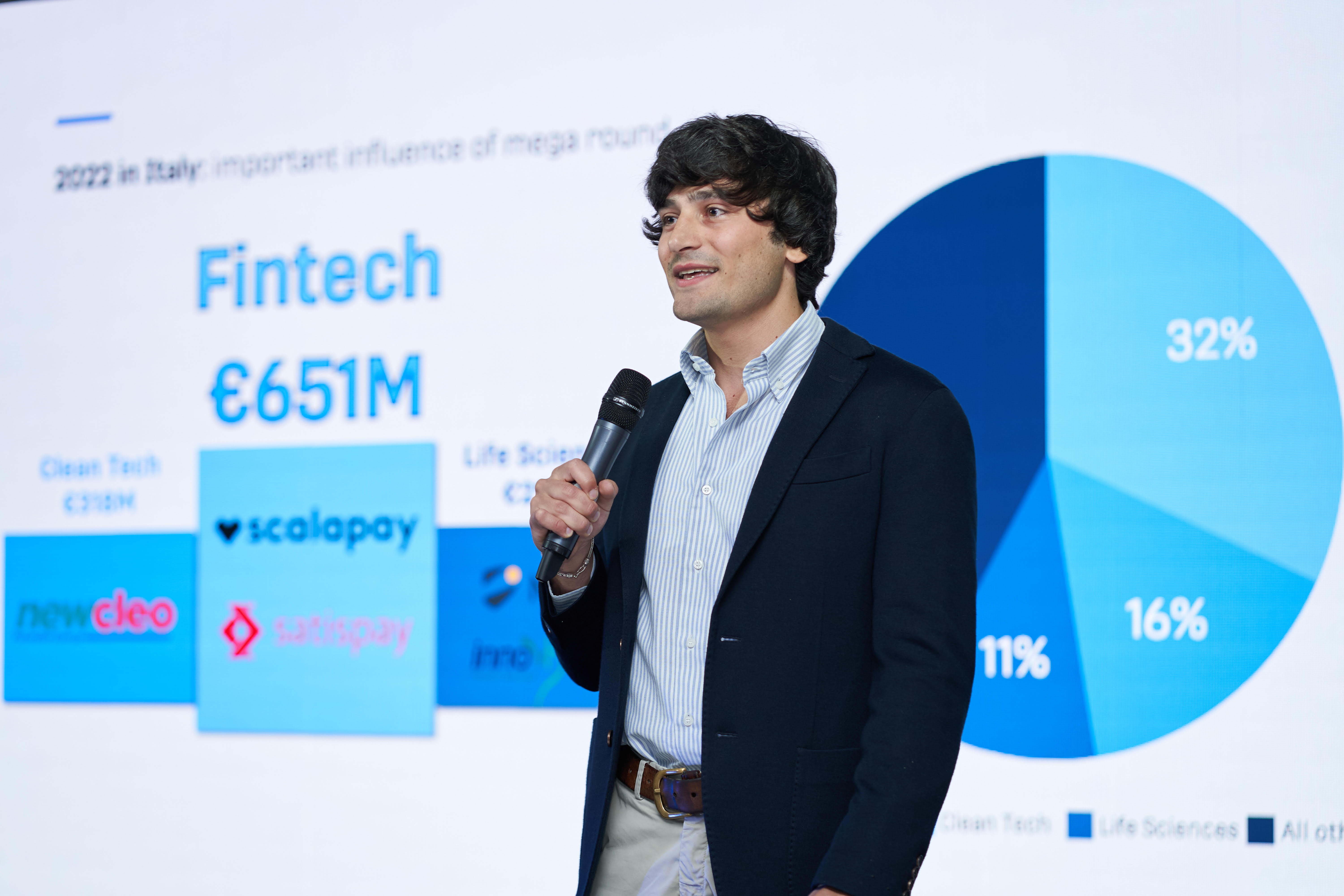
Investing in people before ideas
At United Ventures, you meet founders who are trying to build the next generation of companies. What qualities do you look for when deciding whether a founder, or an idea, has real potential?
VC is a people business, and what you're really looking for are outliers (Gladwell's book is worth a read). There's no playbook for spotting a great entrepreneur: the more founders you meet over the years, the sharper your judgement becomes.
We often say the idea is only 1% of building a company. I agree the first idea counts for little, but the ability to keep generating new ones is crucial, in my view around 20-25% of a huge success. Great companies are usually built by an inventor, who generates the ideas, and an entrepreneur, who turns them into money-making machines, sometimes the same person. Whether it's a team or a solo founder, the ones I back carry both.
You described venture capital as a field that sits at the intersection of technology, finance, psychology and human ambition. What has surprised you most about working in such a people-driven industry?
What surprised me most is that you can read every book out there and still find no clear way to learn this job. In the end you're betting on people and their ambition, and no framework really captures that. Most of the time you have to be contrarian and right at the same time, and no book can teach you that.
That's also why I think applying rigid rules is a mistake. Some investors run on them, but to me that's not how this job works. Take the ones who refuse to back solo founders: with that rule, they would have passed on someone like Jeff Bezos.
Thinking beyond borders
From your vantage point within the European tech ecosystem, which trends or innovations do you believe will have the greatest impact in the years ahead?
A few stand out to me:
- Sovereign AI: Recently the US used export controls to cut foreign access to Anthropic's most advanced models, and that was a wake-up call. Europe needs to invest heavily in its own data centres and compute to run open-source models and keep data on the continent. And when we rely on state-of-the-art closed-source models, encrypting the sensitive data we send them will be essential.
- Robotics and physical AI: Artificial intelligence is moving into the physical world, where the real bottleneck is data: training robots needs real-world interaction data, far scarcer than text. We rarely see robots in daily life yet, but that will change fast: first in factories (where many are already at work), then as everyday assistants.
- Quantum: From simulating molecules to discover new drugs, to drastically cutting data-centre energy use, its impact will be huge.
What ties them together: Europe can build this layer itself or depend on others for it. I'd rather we build it.
Looking back at your time at ESCP, how did the School help shape the person and professional you are today?
More than anything, ESCP gave me an international mindset. Every few months you change the place you call home, meet new people and have to establish yourself in a new country. Doing that across several campuses was an incredible experience, and it still shapes how I work today.
The second thing was a bias for action: studying alone was never enough, so extracurriculars were strongly encouraged. That pushed me to take on real responsibility while still a student, leading around 70 people as president of Build It Up (non-profit startup accelerator). And finally, the importance of network was a mindset our professors instilled in us from day one.
Related stories
News 30/07/2026
Success Story
Forbes Under 30 Italy 2026: Meet ESCP alumnus Francesco Ghiglione
ESCP MBA alumnus Francesco Ghiglione, named in the 2026 Forbes Under 30 list in Italy, shares the story behind FloFleet and his entrepreneurial journey.
Paris
Turin
News 16/05/2025
Success Story
ESCP Alumni Featured in Forbes Under 30 Italy: How FunniFin is Transforming Financial Wellbeing
Two ESCP alumni, Leonardo Capotosto and Lapo Nidiaci, were named in Forbes Italy’s Under 30 list for their fintech startup FunniFin. Discover how their journey from ESCP to Forbes is reshaping financial wellbeing.
Madrid
Paris
Turin
News 16/05/2022
Success Story
A dive into the VC DeepTech ecosystem: a chat with ESCP Alumnus Alberto Cresto, Italian #ForbesUnder30
Among the young talents recognised by Forbes Italy on its annual “100 Under 30” list, we are thrilled to see a MIM Alumnus: Alberto Cresto, Class of 2016. We had a chat with Alberto, recognised as one of the best young Italian talents, who are reshaping the way we live and work by spreading their brilliant ideas all over the world.
Turin