
Episode 5
From the series “Standing together: ESCP community united against gender-based and sexual violence
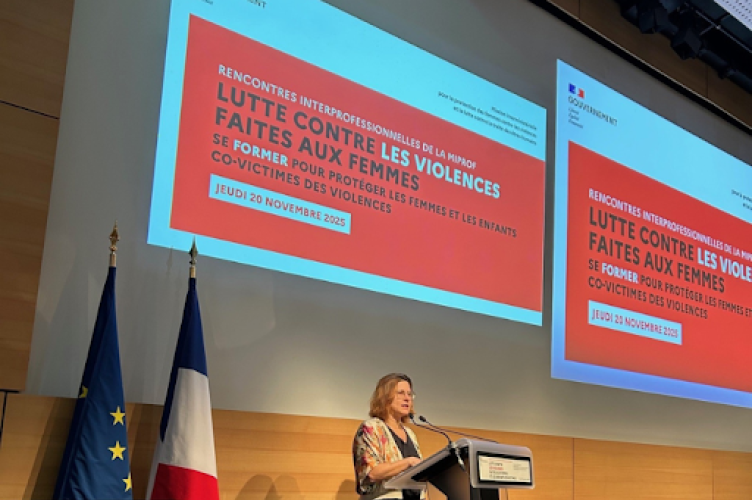
Farid Medjoub (ESCP 20) asked Roxana Marcineanu (ESCP 05) to share her vision about gender-based and sexual violence
Roxana Marcineanu is a former French Olympic swimmer, the former French Minister of Sports, and Secretary General of the MIPROF (Interministerial Mission for the Protection of Women against Violence and the Fight against Human Trafficking). Farid Medjoub is Delegate for Women’s Rights and Gender Equality, Hauts de Seine French Interior Ministry, Member of the steering committee of the French University Sports Federation and of the steering committee of the Paris league of university sport, and Olympic Torchbearer for the Paris 2024 games.
Farid: Despite increased political mobilisation, gender-based and sexual violence remains widespread. In your view, what is still hindering the effectiveness of public action today?
Roxana: Let us begin by recalling that gender-based and sexual violence (GBSV) is consubstantial with patriarchal societies in which men have long exercised domination over women and children. Violence remains a central tool of coercion used to maintain this domination.
Feminist struggles have led to greater awareness and significant progress in just a few decades. When we consider that in the 1980s it was still possible to openly express pedocriminal attractions on television, and that it took until 2025 to establish that a woman is not consenting to a sexual act unless she consciously expresses her agreement and desire at every moment — and even until 2026 for the notion of “conjugal duty” to be definitively removed from our courts — we can appreciate how far we have come in recent years.
Victims’ voices are being freed: they feel more legitimate in reporting violence suffered in childhood, within relationships, in families, or in professional settings. This collective dynamic helps shift the shame onto perpetrators and break the silence.
Two main challenges remain: first, deploying all necessary resources to ensure comprehensive support for victims in their psychological and physical recovery, as well as in their legal and social proceedings; and second, prevention — by providing large-scale training for professionals in detection, reporting, and prevention, while informing citizens and educating children, particularly through relationship and sexuality education programmes in schools.
Farid: What is your role today as head of MIPROF (Interministerial Mission for the Protection of Women against Violence and the Fight against Human Trafficking), and what are your priorities in combating GBSV?
Roxana: MIPROF, created in 2013 by Najat Vallaud-Belkacem, is an interministerial mission placed under the authority of the Minister for Equality, Ms. Bergé. It has three main missions.
The first is to oversee the National Observatory on Violence Against Women. The Observatory analyses data from public statistics, government administrations, and specialised associations to report on the scale, manifestations, and mechanisms of gender-based and sexual violence. These publications aim to inform public decision-makers and civil society, since one cannot effectively combat a reality that is not precisely measured.
The second mission is to create and disseminate training tools for professionals in healthcare, security, social work, justice, youth work, sports, and child protection. The objective is to foster a shared culture of protection, develop the right reflexes, and promote protective professional practices.
Finally, MIPROF coordinates public policy to combat all forms of exploitation and human trafficking: sexual exploitation, forced criminal activities, labour exploitation, organ trafficking, and soon other purposes such as forced or early marriage.
Farid: As a high-level athlete, Olympic champion, and former Minister of Sports, you led reforms addressing violence in sports. Do you believe the sports world has truly changed its practices?
Roxana: When I took office as Minister of Sports in 2018, the existence of a culture of silence in sports was evident, although the full scale of violence was not yet measured. Risk factors were numerous: the presence of children, facilitated access to bodies, relationships of authority, and a culture that valorises pain.
Structural work was undertaken: strengthening the mandates of technical advisors, background checks on volunteers, increased reporting, training, and protection obligations for federations, and the creation of the “Signal-Sports” unit to process reports and enable rapid administrative investigations to remove perpetrators.
The momentum has continued, and protecting the integrity of athletes is now recognised as a core responsibility of the State. However, work on regulatory levers and the operational framework to make training mandatory had not been sufficiently developed. It was in this context that the training tool “Lilia” was created, now a key resource for training the sports ecosystem. While not everything is resolved, the sports world has moved ahead of other sectors.
Farid: If you had to identify one decisive lever to activate immediately to reduce GBSV, what would it be?
Roxana: We will succeed through coordinated, sustained action and strong political and societal commitment. But in my current role, I can affirm that training is an absolutely essential lever. When people have the right lens to detect violence, and the necessary training to feel legitimate in asking about it, listening to disclosures, and activating the appropriate mechanisms to protect victims and report perpetrators, it changes everything.
Of course, it is also crucial to provide a judicial and/or disciplinary response to reported or identified acts of violence. Combating impunity requires sanctions that are proportionate but effectively enforced.
Farid: What specific role can higher education and business schools play in transforming professional and managerial cultures regarding GBSV?
Roxana: Gender-based and sexual violence forms a continuum: it ranges from sexist insults to femicide and runs through all stages of socialisation — family, school, sport, public space, and the professional sphere. It also fits within an ideological continuum, where toxic masculinism intersects with other forms of hatred.
Work is being carried out in student environments to measure situations of violence and raise awareness of appropriate behaviour, particularly during social events. Education programmes on emotional, relational, and sexual life contribute to a coherent learning pathway centred on consent, respect for identities, and attentiveness to signs of distress.
In higher education — particularly in business schools — fully integrating these principles as core values would be highly relevant. Embedding them into curricula, making them a subject in their own right, and analysing their implications across disciplines would be innovative and forward-thinking. Real equality and gender parity are assets. Respectful relationships are a prerequisite for thinking, creating, producing, and performing better. This issue must go beyond CSR initiatives or one-off events and become a central component of education, both in substance and in practice.
Farid: In your view, how important is it to involve men and young boys in promoting equality and preventing violence?
Roxana: It is essential. It is important to recall one thing: the fight against gender-based and sexual violence is not a fight against men, even though nearly 100% of those convicted are men. It is a fight for gender equality, for respect for others, and for the protection of the most vulnerable — starting with our children and persons with disabilities.
Patriarchy has confined women and certain vulnerable groups within a system of domination that is obviously very comfortable for those who benefit from it — far beyond the perpetrators themselves. Yet some men are beginning to understand that a society shaped by toxic virility codes is also a prison for them. Things are changing. And precisely because progress is being made, masculinist movements and their reactionary ideologies are mobilising strongly to push back. All the more reason to remain vigilant, tolerate nothing, and continue training and educating from an early age about equality, consent culture, and respect for others.
Farid: Thank you Roxana. Indeed equality between women and men will truly progress only if men also feel concerned by it. It is not a “women’s issue”; it is a societal issue.
When men become involved, perceptions begin to change. Equality stops being a demand voiced by some women and becomes a shared and self-evident principle. It also sends a strong message to young boys: respect, fairness, and the rejection of violence should be part of what is considered normal.
Getting involved does not mean speaking on behalf of women. It means recognizing that equality is progress for everyone. A fairer society, where everyone can find their place without stereotypes or domination, is a balanced and stronger society.
Personally, I try to live by a simple principle each day: recognising people for what they contribute, supporting fairness, and never remaining indifferent to inequality.
Equality truly moves forward when it becomes everyone’s responsibility. And men have a full and important place in that movement.
Campuses
Related stories
News 20/11/2025
Interview
#1 Violence Against Women: Acting Where Pain Falls Silent
A conversation between Ghada Hatem (ESCP 11), founder of La Maison des Femmes in Saint-Denis (2016), and Louise Blin (Bachelor 2025 alumna and MSc in International Business & Diplomacy student)
News 10/12/2025
Interview
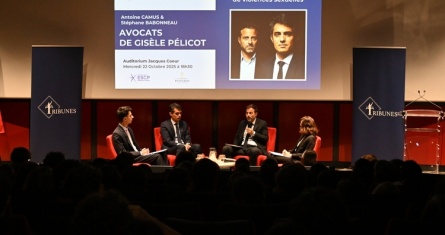
#2 How Tribunes, an ESCP student association, creates a space for students to learn, question, and commit to change
A conversation between Aurélie Dumond, Inclusion & Diversity Officer at ESCP and Ariane Bailet and Antonin Rousseau, ESCP students and members of the student society Tribunes.

News 22/01/2026
Interview
#3 The role of publishing in addressing gender-based and sexual violence
An interview where ESCP faculty member Isabelle Beyneix and alumna Marie-Pierre Gracedieu discuss publishing’s role in addressing gender-based violence, following the release of Mazan: An Anthropology of a Rape Trial—part of ESCP’s Standing Together series.
News 16/02/2026
Interview
#4 Art in action: sharing ESCP staff competencies and creativity in addressing gender-based and sexual violence
Sandrine Kiefer, Head of Internal Communications at ESCP, and Sabrina Saase, Health & Well-Being Manager at ESCP’s Berlin Campus, share their activism.
News 08/06/2026
Interview
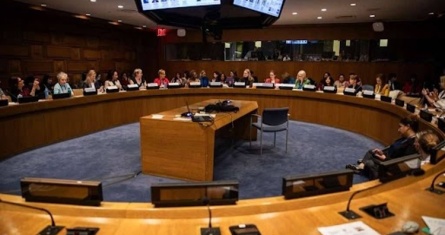
#6 At CSW70 (New York), ESCP Alumnae Championing Gender Equality
In New York last March, during the 70th session of the United Nations Commission on the Status of Women (CSW70), two alumni, joined the French Delegation led by Aurore Bergé, Minister for Equality between Women and Men and the Fight Against Discrimination