
Chair of Entrepreneurship and Innovation / Say Institute
Chair ofEntrepreneurship and Innovation / Say Institute
 Entrepreneurship is a fascinating field that
has yet to decide where it truly belongs. Many fields of research, such as economy, sociology, and
psychology, strived to grasp the underlying phenomenon of ‘the entrepreneur’. The field by itself is
very young, as entrepreneurship only became an independent subdomain in the 1980’s, while in Germany the
first academic chairs appeared even only around 1998. Entrepreneurship nowadays draws more and more
attention, as practitioners provide fascinating success stories, educators develop exciting new
approaches, and researchers are all set for tackling the challenging opportunities ahead.
Entrepreneurship is a fascinating field that
has yet to decide where it truly belongs. Many fields of research, such as economy, sociology, and
psychology, strived to grasp the underlying phenomenon of ‘the entrepreneur’. The field by itself is
very young, as entrepreneurship only became an independent subdomain in the 1980’s, while in Germany the
first academic chairs appeared even only around 1998. Entrepreneurship nowadays draws more and more
attention, as practitioners provide fascinating success stories, educators develop exciting new
approaches, and researchers are all set for tackling the challenging opportunities ahead.
Part of our chair and supported by the cross-campus Say Institute is the Blue Factory, the central contact point for all ESCP students, alumni, and staff members interested in founding their own venture. In addition, we coordinate Berlin InnoBridge.
- Prof. Dr. René Mauer
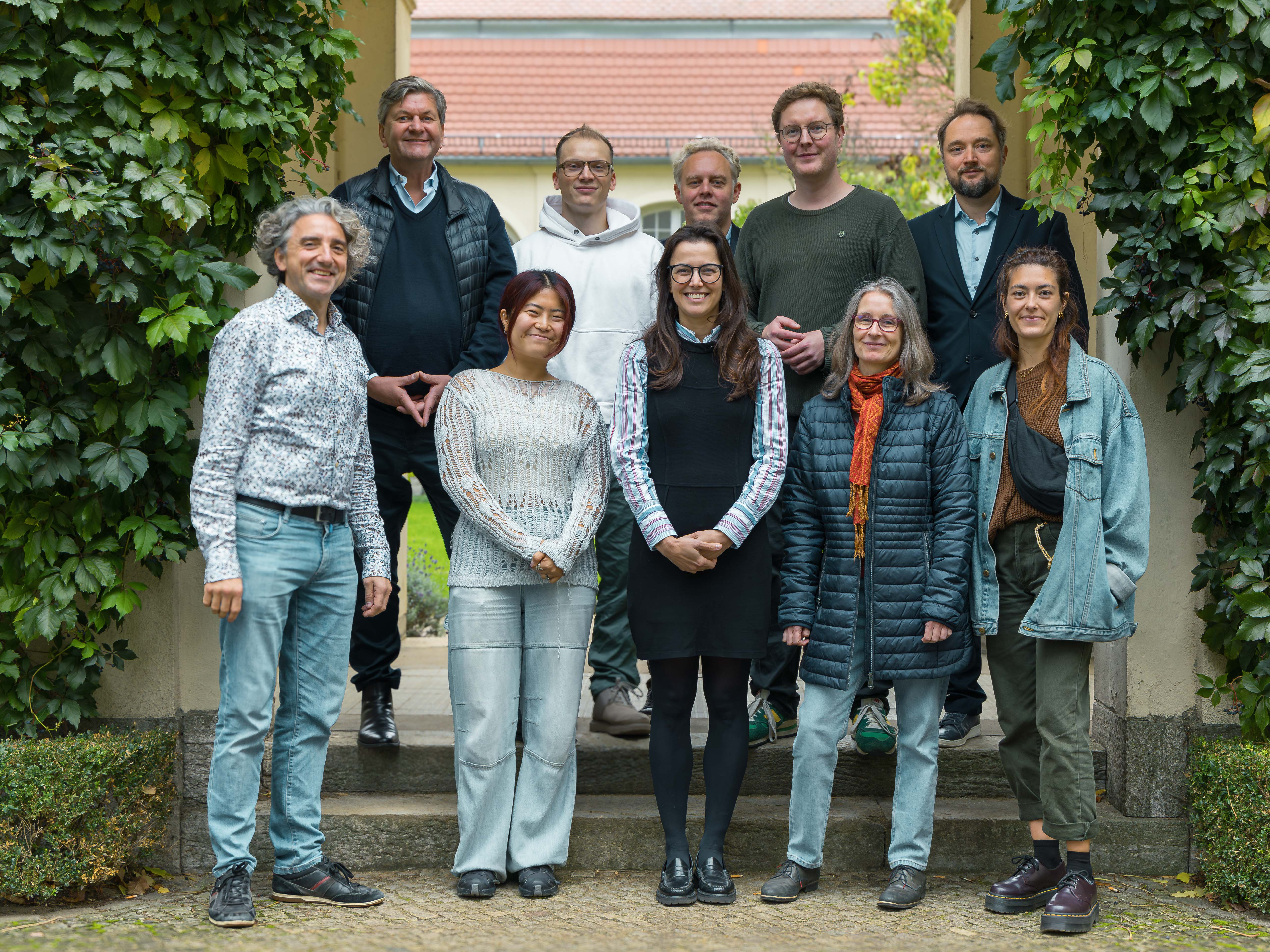
The team
Say Institute
The Say Institute for Entrepreneurship relies on a unique European network which was developed in 2007 by the Entrepreneurship Chair of ESCP and has today more than 50 researchers and teachers. Its goal is to train entrepreneurs and leaders around the world in entrepreneurship and, to prepare tomorrow’s managers for profound changes in the world of work.
WebsiteBlue Factory

The Blue Factory is the central contact point for all ESCP students, alumni, and staff members interested in founding their own venture. In close collaboration with the Chair of Entrepreneurship and Innovation, the Blue Factory offers custom-made training and support for preparation and implementation processes related to setting up a venture.
WebsiteOur Entrepreneurship Theses Topics
Download PDFTeaching
We offer the following courses:
Master in
Management
(Academic lead of the option Berlin)
- Technology Entrepreneurship
- Mindset and Methods (Option E)
- Growth and Internationalization (Option E)
Executive Master in
Digital Innovation and Entrepreneurial Leadership
(Academic lead of the programme)
- Types of and Entry Forms to Innovation & Entrepreneurship
- Validating Business Models in China
- Trends and Challenges in Digital Innovation and Entrepreneurial Leadership
U-SCHOOL
The Entrepreneurial Acceleration Programme
(Academic lead of Programme)
- Entrepreneurial Mindset
- Entrepreneurial Strategy
- Failing Gracefully
Research
Learn and understand entrepreurship
Research approach
In 2000, Shane and Venkataraman defined entrepreneurship as the individual-opportunity-nexus. Accordingly, entrepreneurship emerges when an enterprising individual commits to acting upon an entrepreneurial opportunity. While this definition served as foundation for entrepreneurship to become a sovereign field of research, it is currently critically reflected more than ever before. Our research focuses on empirical and theoretical contributions to current streams of research within the field of entrepreneurship and entrepreneurial innovation. Due to the entrepreneurial phenomenon’s complexity, we draw on a larger set of methodical approaches. In our projects, we furthermore make use of close collaborations with practitioners from start-ups and established organizations alike.
Research topics
Entrepreneurial thinking and action
Cognitive approaches gained increasing popularity within the entrepreneurship literature since the 1990’s. We analyse various kinds of thinking and action (such as effectuation, bricolage, and improvisation), as well as their influencing factors and effects. In close connection we cherish and develop what has been discussed as ecological rationality – the competence to choose for each decision-making situation the adequate toolsets and methods.
Entrepreneurship Education
Although Entrepreneurship scholars have discovered entrepreneurship education as a popular field of research, little research has been done specifically in the area of action-based entrepreneurship education. In different studies, both of qualitative and quantitative nature, we explore the dynamic relationship of emotion and (adult) learning in order to better understand their link to the development of an entrepreneurial mindset.
Levels of entrepreneurial action
Entrepreneurship is discussed on several levels within the literature. This becomes also apparent within our research, which addresses individuals, teams and organizations alike. One current focus in our work is on entrepreneurial cognition in family firm innovation. Family firms innovate differently than non-family firms. The underlying reasons are still regarded as a “black box”. Our family entrepreneurship project addresses this gap and highlights the role of individuals and teams for innovation in family firms.
Special forms of entrepreneurship
Entrepreneurial behaviour is not only applicable to economic issues, but instead addresses a much broader range of fields. Accordingly, our research comprises topics such as social, sustainability, and cultural entrepreneurship.
The movement of social entrepreneurship is seeking sustainable change of society by solving social and environmental issues through creative business innovations. Our social entrepreneurship research projects contribute to the understanding of the phenomenon of social entrepreneurship and explore a broad spectrum of topics from the mindset and cognition of social entrepreneurs to social business incubation models addressing refugee entrepreneurs.
Theoretical foundations of entrepreneurship
For centuries, risk and uncertainty have been considered as determinants of entrepreneurship. At the same time, however, it becomes apparent that the understanding of uncertainty within the entrepreneurial process is still underdeveloped. We therefore participate intensively in the discussion surrounding the theoretical foundation of entrepreneurship research.
Publications
Find an overview
Journal Article
2013
Academic high-profile employees and their intentions of valorizing university research
JOURNAL OF BUSINESS ECONOMICS, 2013, vol. Vol. 83, Issue 4, pp. pp. 357-382 (26 p.)
Journal Article
2013
Grace, gold, or glory ? Exploring incentives for invention disclosure in the university context
JOURNAL OF TECHNOLOGY TRANSFER, 2013, pp. pp. 1-35 (35 p.)
Journal Article
2013
The Entrepreneur's Perception in the Entrepreneur-VCF Relationship: The Impact of Conflict Types on Investor Value
VENTURE CAPITAL, 2013, vol. Vol. 15, Issue 3, pp. S. 173-197 (25 s.)
Journal Article
2012
Corporate Effectuation: Entrepreneurial Action and its Impact on R&D Project Performance
JOURNAL OF BUSINESS VENTURING, 2012, vol. Vol. 27, Issue 2, pp. pp. 167-184 (18 p.)
Journal Article
2012
Effectuation: Unternehmerische Impulse für das Change Management
ZEITSCHRIFT ORGANISATIONSENTWICLUNG ZOE, 2012
Journal Article
2011
Your market, the unknown being : coping with uncertainty as the core of entrepreneurial marketing
JOURNAL OF BUSINESS ECONOMICS, 2011, vol. Vol. 81, Issue 6, pp. pp. 59-82 (23 p.)
Journal Article
2010
Boosting Corporate Entrepreneurship through HRM: Evidence from German SMEs
HUMAN RESOURCE MANAGEMENT, 2010, vol. Vol. 49, Issue 4, pp. pp. 715-741 (27 p.)
Journal Article
2010
Conjuring the entrepreneurial spirit in small and medium-sized enterprises the influence of management on corporate entrepreneurship
INTERNATIONAL JOURNAL OF ENTREPRENEURIAL VENTURING, 2010, vol. Vol. 2, Issue 2, pp. pp. 159-184 (25 p.)
Team and contact