
![© Adobe Stock - Larisa [copyright]](/sites/default/files/styles/event_news_une/public/2021-03/Gender_Avgoustaki.jpg)
Campuses
![© Adobe Stock - Viktoriia [copyright]](/sites/default/files/styles/event_news_une/public/2021-03/Vasudevan_taxis.jpg)
In a working paper published this week and already mentioned by Bloomberg, the Financial Times and The New York Times, Prof. Vasudevan and his co-author assessed rides from New York City banks, showing that their “protected-weekend” policies have induced bankers to work more on other days.
Finance is considered to be one of the most stressful industries to work in. Pressure to deliver consistently compelling results affects the work-life balance of bankers by inducing them to work long hours. A group of junior analysts working at the leading investment bank Goldman Sachs recently raised their concerns about excessive workload, which gained substantial attention from mainstream financial media. This forced a management response promising stricter enforcement of an existing ban on requiring junior bankers to work on Saturdays but also, paradoxically, asking staff to “go the extra mile for our client, even when we feel that we’re reaching our limit.” This is not the first time long working hours in the finance industry make headlines in the media. The tragic demise of Moritz Erhard, a 21-year London City intern who died after working for three days without sleep, brought to light the gruelling working hours in investment banks and garnered media criticism. As a response, during late 2013 and early 2014 and within a few months from this shock, most investment banks established “protected-weekend” policies which aimed at improving the work-life balance of junior bankers by guaranteeing them free time during weekends, in particular on Saturdays. “Whether such policies improve the work and life balance of junior bankers, however, is not clear,” explain recently-appointed faculty member Ellapulli Vasudevan and Hong Kong University of Science & Technology professor Deniz Okat in their working paper.
Still going the extra mile
This is why they decided to study changes in banks’ long-hour culture by evaluating how these policies affected bankers’ working hours, and whether they meet their good intentions by encouraging junior bankers to cut them. In order to do so, they analysed information from 16 million taxi rides from ten large New York City investment banks and their immediate surroundings to residential destinations. They used records of over one billion yellow medallion taxi rides released by the New York City Taxi and Limousine Commission, including the GPS coordinates of the pick-up and drop-off locations and the timestamps for the pick-ups which are available for each ride from January 2009 to June 2016. “The Taxi rides information is a public dataset released by the NY Taxi Commission. It is made available on their website,” adds Ellapulli Vasudevan. “I think the difficult task with the data is to crunch it as it is very large - billions of taxi rides in all - and to design a reasonable research question: since there is too much noise in the data, it requires filtering. I think that's why there are few researchers using the data. Otherwise, it is super interesting data to study the life of New Yorkers.”
The analysis he conducted with his ex PhD colleague from Aalto University School of Business (Finland) shows that when the banks implemented no-Saturday work policies, it induced employees to work late-night hours on weekdays to compensate. These results are stronger during the summer internship weeks, when investment banks employ large numbers of students eager to prove themselves by working hard. Thus, the negative effects of the policy may have had the largest effects on the most vulnerable employees the policies were supposed to protect. This is informative of the nature of bank culture and the extent to which banks can change it by introducing new policies, showing even well-meaning ones can have unintended consequences. Moreover, it speaks of the persistence of the long-hour culture in high-skill professions, in particular in finance. “Our results suggest it is difficult to change bank culture by decree, in particular when the stakes for the junior employees and their bosses are high,” they claim. “Apart from being concerned of their status in the career tournament (a model that treats careers as single-elimination sports competitions, editor's note), their [bosses’] pay likely depends much more on the productivity of their team than that of their subordinates. Even if longer hours generate only a modest productivity increase for the team, the large stakes involved may give bosses a strong incentive to push their subordinates to work harder…”
Campuses
It might seem as if the world has thought of little else but the pandemic over the past year, but that is not the case. Sustainability is still very much top of the agenda for businesses – in fact, the coronavirus crisis has simply thrown its importance into sharper relief.
Campuses
CheerUp London ESCP Society Engages in Europe’s Beating Cancer Action Plan
On Thursday, 11th March 2021, CheerUp London, a cross-campus student society of ESCP Business School, organised a conference with guest speaker, Isabelle Fabre, Head of Cabinet of Commissioner Didier Reynders at the European Commission, to discuss Europe’s Beating Cancer Action Plan.
The moderators were Juliette Perignon and Celeste Mastria, Co-presidents of CheerUp London.
Europe’s Beating Cancer Plan was launched in February 2021 by Ursula von der Leyen, and its impacts are already visible. It has been developed through four key action areas and ten flagship initiatives, which were further explained and discussed during the conference:
The four key action areas:
- Prevention: reduce risk factors such as smoking, alcohol consumption, environmental pollution and use of hazardous substances.
- Early detection: facilitate access to healthcare, and improve the quality and timeliness of diagnostic activities.
- Diagnosis and treatment: ensure better integrated cancer care and address unequal access to quality care and medicines across Member States.
- Improving the quality of life of cancer patients and survivors: rehabilitation, tumour recurrence, metastatic disease, and ways to support social integration and re-integration in the workplace.
The ten flagship initiatives:
- Knowledge Centre on Cancer
- European Cancer Imaging Initiative
- Elimination of cervical cancer and other cancers caused by human papillomaviruses through vaccination
- EU-supported Cancer Screening Scheme
- EU Network linking recognised National Comprehensive Cancer Centres
- Cancer Diagnostic and Treatment for All Initiative
- European Initiative to Understand Cancer (UNCAN.eu)
- Better Life for Cancer Patients Initiative
- Cancer Inequalities Registry
- Helping Children with Cancer Initiative
The plan aims at establishing, by 2025, an EU network accessible to every Member State, to reduce inequalities that exist across countries.
The Better Life for Cancer Patients Initiative will focus on reducing recidivism through personalised plans. Artificial Intelligence is a largely powerful tool in diagnosis because it decreases the probability of false positives and negatives.
The Plan is inclusive, not only because it has different stakeholders and partners but also because it is international: The European Parliament cooperates on this project with the World Health Organisation and the Organisation for Economic Cooperation and Development.
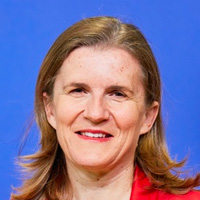 Isabelle Fabre, the guest speaker, shared, “I enjoyed this discussion with ESCP students active in the CheerUp association. Dedicating their time to a charity is remarkable and is a piece of the larger puzzle that the European Commission tries to put in place with the implementation of Europe’s Beating Cancer Plan adopted last month”.
 Alix de Poulpiquet du Halgouët, a participant at the conference, said, "This event was very engaging with a lot of interesting aspects. I have learned more about the role of the European Commission".
 Juliette Perignon, Co-president of CheerUp London, summarised, "The event went smoothly, the participants were engaged and interested. I am happy they learnt something about the cancer plan and I learnt a lot of new things myself".

Campuses
![© Adobe Stock - pict rider [copyright]](/sites/default/files/styles/event_news_une/public/2021-03/FCDD7368-794B-467D-9D54-733F6BFA6EB9_Fotor-scaled-e1612281911891-800x468.jpg)
Campuses

Diversity & Inclusion is a topic most of us have likely read or heard about frequently in recent times. Many organizations and educational institutions publicly promote their efforts to diversify their workforce and to provide equal opportunities for everyone. But how can we ensure that these are not just empty words used for marketing purposes?
A key element to overcoming biases, both conscious and unconscious, is to educate ourselves. That is why we, ESCP Business School in cooperation with Accenture, are thrilled to invite you to our
Virtual Transgender Awareness Training
Wednesday, March 31, 17:00 - 18:30 CET (Berlin time)
March 31 is the International Transgender Day of Visibility
Wednesday, March 31, 17:00 - 18:30 CET (Berlin time)
March 31 is the International Transgender Day of Visibility
In this 90 minute session Accenture Senior Manager and transgender rights advocate, Rica Paras will give light and clarity to concepts and terminology used in and around the trans+ community. This includes defining and distinguishing between the concepts of Sexual Orientation, Gender Identity, and Expression (SOGIE).
This is an interactive session. We look forward to hearing your thoughts and to answering your questions on the topic of transgender.
This event is open to all ESCP students, faculty, staff and community members on all ESCP campuses.
Join us at: https://bit.ly/3qSx5hG
Location
Organiser: ESCP Berlin
Online - Worldwide
MapDate
Start date: 31/03/2021
Start time: 5:00 PM
![© Unsplash/Victoria Heath [copyright]](/sites/default/files/styles/event_news_une/public/2021-03/Paradox-of-flexible-work.jpg)
Campuses

[written by Anna Lelorieux, Chairwoman, UNICEF ESCP Societies]
The UNICEF International Strategic Plan
UNICEF ESCP Initiative 1
UNICEF ESCP Initiative 2
UNICEF ESCP Initiative 3

The UNICEF International Strategic Plan
On 15 February 2021, the UNICEF ESCP team was granted the honour of taking part in the UNICEF International Strategic Plan of 2022-2025.
The UNICEF Strategic Plan is a tool for enhancing UNICEF’s work for children across the globe. It is released every three years by gathering multiple UN partners for each Goal Area.
There are 5 Goal Areas to focus on until 2030, namely:
- Goal Area 1: Every child survives and thrives
- Goal Area 2: Every child learns
- Goal Area 3: Every child is protected from violence and exploitation
- Goal Area 4: Every child lives in a safe and clean environment
- Goal Area 5: Every child has an equitable chance in life
The UNICEF Strategic Plan (SP) is highly essential as it permits the organisation to align its resources with common goals and strategies. The SP also acts as an internal and external vehicle to inform about UNICEF and the lives of children throughout the world. The SP supports Sustainable Development Goals, assists UNICEF and other UN partners in making strategic choices, and strengthens its accountability framework.
Every three years, UNICEF’s direct contributions and result areas are reassessed to achieve the Goal Areas mentioned above. Strategies for Goal Areas are being discussed among UN partners, such as: WHO, World Bank, UNDP, UNESCO and UN-Women.
For the first time in its history, UNICEF asks young ambassadors like us to take a stand and use our voices during the Strategic Plan discussions. UNICEF operates 33 National Committees, which work to increase awareness and raise funds – mainly from the private sector. The National Committees are rich countries that shape UNICEF’s strategies in the 190 countries where the organisation operates.
The unprecedented COVID-19 pandemic has highlighted areas of concern such as: the rising risks of a worldwide economic crisis, climate change and increasing humanitarian needs, gaps, and challenges. The Strategic Plan (SP) meeting focused on two main questions that were to be discussed and answered within two and a half hours.
Question 1
What needs to be done to help children and teenagers, specifically those most marginalised (disabled children and those not enrolled at a school), learn and develop skills they will need in their daily and future lives?
Question 2
What lessons can be learnt from the COVID-19 pandemic?
On 15 February, I, Anna Lelorieux, President of UNICEF ESCP, met with six other young, French ambassadors to discuss the UNICEF Action Plan and initiatives. In preparation for the meeting, I invited the 25 UNICEF ESCP Paris and London team members to list their answers to the two questions mentioned above.
The COVID-19 pandemic was a real eye-opener for millions of young people around the world. Since the start of the pandemic, children have faced a rise in multidimensional poverty by 15%. For the first time in history, children have had to face similar issues: missing school, no access to quality digital learning, isolation and a negative impact on mental health and well-being. The situation is not normal. However, many people in developed countries do not realise how critical the condition is in under-developed countries.
While the biggest issue in many students’ lives may be that all the pubs and ‘party joints’ are closed, in contrast to this, there are millions of children and young adults facing armed conflicts, natural disasters, poverty, and complications caused by COVID-19. Taking a step back and looking outside our borders, we, millennials, are now opening our eyes to the millions of children out there, living in environments that have never been worse.
The world’s national lockdowns raised community issues and triggered an upsurge in solidarity and generosity among people and nations. Generations took heed of what was happening, further bridging the gaps between social and cultural differences within populations. For UNICEF ESCP members, the most critical action plan is to build stronger relationships between different communities, the rich and the poor, and between the privileged and underprivileged.
UNICEF ESCP Initiative 1
“Take advantage of the surge in awareness and make more volunteering programmes from UNICEF available.”
Young people are ready to help and unite in solidarity. We are prepared to go on the ground to give our time and make long-lasting commitments to ensure change as much as possible.
Our team will set this initiative into action during the months of volunteering we have planned in Nepal from January 2022. After we have raised funds for UNICEF UK and UNICEF France and awareness for children around the world, the next step will be implementing our ideas. Children need us, and it is time for our team to be the change we want to see in the world!
One of the most discussed Goal Areas for the SP 2022-2025 is Goal Area 2: “EVERY CHILD LEARNS”. COVID-19 has affected nearly every aspect of children’s lives, but the most dramatic and most consequential affect has been on their education. Childhood education is at risk in every country, everywhere in the world. Today, 168 million children are still missing out on school, which signals a severe COVID-19 education crisis. Children are paying the price in their ability to read, write and do basic maths; in their ability to gain 21st Century digital skills; in their mental health and social development, as they miss out on friendships and daily interactions; and in their safety, as school closures leave them vulnerable to abuse, child marriage and child labour. One hundred and sixty-eight million children cannot go another year without access to in-person schooling. Without urgent action, this could easily carry on for more than two years. This will reverse decades of hard-won progress. There are significant gaps in education by the time many children have reached 15, indicating that some will enter adult life with far fewer skills than their peers. One question that UNICEF is addressing, for its International Strategic Plan 2022-2025, is the following: What drives educational inequality among children?
In rich countries, the largest share of inequalities in a child’s educational progress is linked to family background. These inequalities already exist when children enter preschool and persist throughout a child’s education. Parental occupation, migration background, gender, and differences between schools can impact the efficiency of a child’s education. As a solution to this, we are asking to spare no effort to keep schools open, that authorities put schools first in any local reopening plans and that any openings are done safely to mitigate any associated risks. Children experiencing world emergencies, natural disasters or armed conflicts should have access to education, especially girls, who are at greater risk by comparison.
UNICEF ESCP Initiative 2
“Access to digital learning: build emergency classrooms with access to technology and quality digital learning.”
In preparation for the SP discussions, the UNICEF ESCP members mentioned the problems that arose due to digital learning inequalities. In many under-developed countries, technology is not a primary focus. For example, only 11% of Nepal’s schools are earthquake resistant, therefore access to technology is not a priority. However, children experiencing natural disasters or armed conflicts have the same right to an education as every other child, so solutions must be found.
In Syria, UNICEF has started building emergency classrooms, as it has been experiencing bombings for the last seven years. Emergency classrooms are temporary solutions that permit children to go to school. As part of the SP, these emergency classrooms could also be used as “cyber-hubs” where children can learn how to work with technology.
UNICEF ESCP Initiative 3
“UNICEF learning platform.”
Every child has the right to learn. Children should be capable of reading, writing and communicating well, but not all countries have the resources to provide this education. An idea that came up during the SP discussions is that UNICEF could develop a platform or a manual, tailored to each country, to help children embrace their full potential through learning and development. We see inspiring examples worldwide, ranging from sequenced openings in different parts of a country, to opening schools for different age groups, to new partnerships that deliver education to marginalised children. Furthermore, it is necessary to ensure that schools must be the last to close and the first to reopen in any lockdown situation. It is up to us to work with governments, teachers, and parents to provide every child with education, nutritious food, safety, and a fair chance in life. It is up to us to follow the evidence, which overwhelmingly indicates, that inequalities are more substantial today than ever before. Multiple UN partners are monitoring world health (WHO) and safety (NATO), but none of them monitor education. UNICEF can change this situation.
Anna Lelorieux
Chairwoman
UNICEF ESCP Societies
UNICEF ESCP was incredibly happy to take part in the Strategic Plan 2022-2025. In the coming days, reports from the 33 National Committees will be sent to New York, where the final world report will be drafted for public disclosure in early January 2022. Help UNICEF ESCP advocate for every child: the right to survive and thrive, to learn, to be protected from violence and to have a fair chance in life.
Big problems need big solutions from big players. The UNICEF ESCP societies have taken the opportunity to speak up and not leave things unnoticed.
UNICEF ESCP London is six months old and it has been a long road to frame our society. We have achieved our target of raising £1500 and we have written more than ten articles, reaching hundreds of people, regarding UNICEF’s work. UNICEF ESCP Paris is three months old and is more than ready to reproduce the same pattern. In January 2022, our team will fly to Nepal, one of the least developed countries globally, where we will put the above initiatives into action. Wherever they are, whoever they are and whenever they need us, UNICEF ambassadors will not give up until every child’s rights are protected.
Campuses
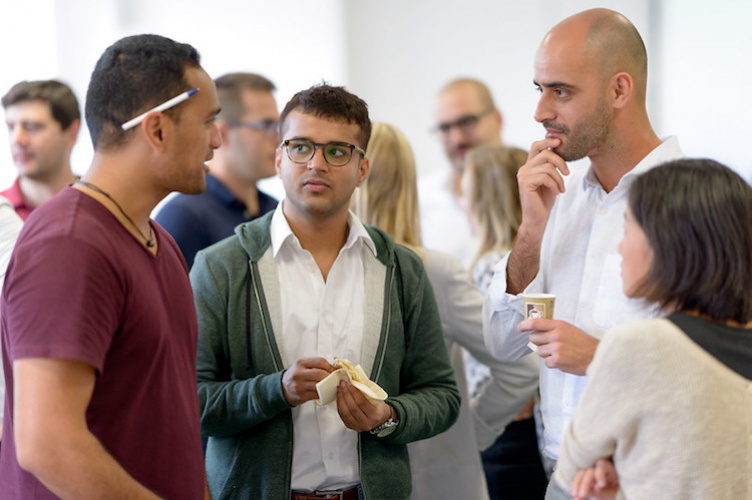
A brand identity is a way to communicate with the world, differentiate yourself from your competition, and create a brand experience that encourages people to engage with you. The knowledge of who you are, what you are good at and what your main character traits are is important for your career and also for the organization’s development.
Join this masterclass "The art of personal branding", led by Prof. Marc Sasserath, to reflect on brand identity and its power in storytelling as a framework and guiding principle for personal development.
Also in this masterclass, our Programme Managers and alumni will give you a short introduction to our two part-time, executive ESCP programmes that are based in Berlin and focus highly on entrepreneurship:
U-SCHOOL and the Executive Master in Digital Innovation & Entrepreneurial Leadership (EMDIEL).
Speaker bio:
Marc Sasserath is Professor for Innovation and Entrepreneurship with a focus on entrepreneurial branding and cultural transformation and is lecturing in Paris and in Berlin. He is also Founder & CEO of Sasserath Munzinger Plus Berlin/Milano, a brand consultancy that works with leading and ambitious brands and Founder & Chairman of SK+ Sasserath Kienbaum Plus, London/San Francisco – a culture of innovation firm.
How to Attend
This masterclass is free and open to the public. To register your place, click here.
Agenda (all times CEST):
- 6:00 pm – U-SCHOOL presentation with Alison Masse, Programme Manager
- 6:15 pm – U-SCHOOL alumni Q&A session
- 6:30 pm – Masterclass "The art of personal branding" and Q&A with Prof. Marc Sasserath
- 7:15 pm – Executive Master in Digital Innovation & Entrepreneurial Leadership presentation with Olga Perfilyeva, Programme Manager
- 7:35 pm – Executive Master in Digital Innovation & Entrepreneurial Leadership alumni Q&A session
Feel free to get in touch with Alison Masse (U-SCHOOL) or Olga Perfilyeva (Executive Master in Digital Innovation & Entrepreneurial Leadership) in case you have any questions about their programmes or the masterclass. We look forward to seeing you there!
Participants

Prof. Marc Sasserath
Founder & CEO, sasserath+

Frank Henrich
Partner at Bearing Point & U-SCHOOL alumnus

Jo Ann Lim
Strategic Partnerships Manager, WhatsApp Business at Facebook & EMDIEL alumna
Location
Organiser: ESCP Berlin Campus
Online - Worldwide
MapDate
Start date: 08/04/2021
Start time: 6:00 PM
End time: 7:45 PM