

A guide for future leaders
Leadership and management are often used interchangeably. In practice, however, they refer to distinct yet complementary skill sets. Understanding the difference between leadership and management is more than a matter of terminology: it can shape careers, improve team performance, and influence how organisations respond to change.
In fast-changing markets, professionals are increasingly expected to manage efficiently while leading with purpose. This article explains the key differences between leadership and management, shows where they overlap, and clarifies why mastering both is essential in today’s organisations.
Leadership vs management: definitions and key concepts
What is management?
Management is the practice of coordinating resources—people, budgets, timelines, and tools—to achieve predefined goals. Managers plan, organise, and control activities to ensure stability, efficiency, and predictability.
In business contexts, managers play a crucial role in keeping organisations running smoothly. They ensure deadlines are met, budgets are respected, and procedures are followed.
Examples of management in action include:
- A project manager breaking down a software launch into tasks, deadlines, and deliverables
- An operations manager implementing quality-control processes to reduce errors
- A sales manager monitoring performance against quarterly targets
What is leadership?
Leadership is less about processes and more about people and purpose. Leaders articulate a vision, inspire commitment, and encourage others to embrace change or pursue ambitious goals.
While managers focus on execution, leaders focus on direction. Leadership is fundamentally about influence rather than authority—about convincing people to follow because they believe in the vision, not simply because it is required.
Examples of leadership include:
- A CEO rallying an organisation behind an expansion into new markets
- A team leader motivating colleagues to embrace digital transformation
- A startup founder inspiring employees and investors with a clear sense of purpose
In short:
Management focuses on organising resources to achieve defined objectives efficiently. Leadership focuses on setting direction, inspiring people, and driving change.
Key differences between leadership and management
Once the definitions are clear, the value lies in understanding how leadership and management differ in practice. John Kotter, a leading scholar of organisational change, summarised the distinction clearly:
Management is about coping with complexity. Leadership, by contrast, is about coping with change.
Vision vs execution
Managers focus on execution: translating objectives into action plans and ensuring they are delivered on time and within scope. Leaders focus on vision: defining long-term direction and motivating people to work toward it.
Example:
In a technology company, a manager ensures that a new app version is released according to the sprint schedule. A leader imagines how the app could reshape user behaviour over the next five years.
Vision without execution risks remaining abstract. Execution without vision risks becoming meaningless routine. Organisations need both.
Strategy vs process
Leadership is primarily concerned with strategy—deciding where the organisation should go, often under uncertainty. Management is concerned with process—designing reliable ways to get there.
For example, leaders may decide to pivot toward more sustainable business models. Managers then determine how to reallocate budgets, retrain staff, and implement reporting mechanisms.
Inspiration vs supervision
Good leaders inspire by appealing to values and shared goals. Managers supervise by assigning tasks, monitoring progress, and evaluating performance.
A manager may say, "
A leader may say, "
Both approaches are necessary. The second gives meaning beyond the task itself.
Change agents vs task coordinators
Leaders often act as agents of change, challenging the status quo and encouraging innovation. Managers act as task coordinators, ensuring continuity and stability.
Without managers, change can become chaotic. Without leaders, stability can turn into stagnation.
Influence vs authority
Another key difference lies in how each role gains commitment. Managers derive authority from their position within an organisation. Leaders derive influence from trust, credibility, and the ability to inspire.
This does not mean managers lack influence or leaders lack authority—but their primary sources of power differ.
Leadership and management in practice
Can a manager be a leader?
Absolutely! Many managers go beyond supervising processes and actively inspire their teams. Research consistently shows that teams perform better when managers demonstrate leadership qualities.
A Gallup study, for example, found that 70% of the variance in team engagement is attributable to managers—highlighting the importance of leading, not just managing.
Leadership without a title
Leadership is not limited to management positions. Employees who mentor colleagues, challenge outdated practices, or mobilise peers around new ideas demonstrate leadership without formal authority.
This form of informal leadership often drives innovation from within organisations. Many successful organisations actively encourage leadership behaviours across all levels, recognising that influence can be just as powerful as authority.
When to prioritise leadership or management
The balance depends on context:
In practice, professionals often switch between both roles throughout the day.
- During periods of stability: management tends to dominate
- During periods of change or crisis: leadership becomes critical
Core responsibilities compared
Leadership and management overlap, but their day-to-day responsibilities are often different. Understanding these differences helps explain why organisations need both.
What do managers typically do?
Managers focus on efficiency and delivery. Their responsibilities usually include:
- Planning and budgeting: setting short-term goals and allocating resources
- Organising and staffing: defining roles, assigning responsibilities, managing workflows
- Controlling and problem-solving: monitoring performance and correcting deviations
Managers tend to focus on the present: meeting deadlines, following procedures, and delivering on commitments.
What are a leader's main responsibilities?
Leaders focus on direction and engagement. Their responsibilities include:
- Setting a vision: defining long-term goals that align with the organisation's mission and values.
- Communicating purpose: rallying team members around that vision and making sure everyone understands why their work matters.
- Motivating and empowering: inspiring employees to exceed expectations, encouraging initiative, and fostering innovation.
- Driving change: challenging the status quo, identifying opportunities for growth, and guiding the organisation through transitions.
A leader might focus less on spreadsheets and more on storytelling: explaining how today's project contributes to tomorrow's success. For example, a product director might not just approve a budget but paint a picture of how a new service will help the company expand into new markets and meet emerging customer needs. Leaders tend to focus on the future: Where are we going? Why does it matter? How can we inspire people to get there?
Shared skills: where leadership and management intersect
Leadership and management are not mutually exclusive. Many effective professionals combine elements of both.
Communication and motivation
Clear communication is essential in both roles. Managers must explain tasks, expectations, and deadlines. Leaders must communicate vision and values in ways that inspire commitment.
Motivation also overlaps. Managers may motivate through feedback, incentives, or conflict resolution. Leaders often motivate by reinforcing purpose and meaning.
Goal orientation and team performance
Both managers and leaders work toward goals. Managers track milestones and KPIs. Leaders focus on alignment with long-term strategic objectives.
Managers coordinate workloads to ensure productivity. Leaders foster a culture that supports collaboration and innovation. Together, they help teams perform sustainably.
Decision-making and problem-solving
Both roles require continuous decision-making. Managers decide how to allocate resources and structure work. Leaders decide when to pivot strategy or respond to disruption.
At their best, both rely on analysis, creativity, and emotional intelligence.
Common misconceptions about leadership and management
Several misconceptions often blur the distinction:
- "Leadership is more important than management." In reality, organisations fail without either.
- "Managers cannot be leaders." Many managers lead effectively by inspiring their teams.
- "Leadership requires a formal title." Leadership can be exercised without authority, through influence and initiative.
Understanding these misconceptions helps individuals develop more balanced skill sets.
Conclusion: embracing the duality
Leadership and management are two sides of the same coin. Professionals rarely operate exclusively as one or the other. Instead, they move between roles—managing to deliver today's results while leading to shape tomorrow's opportunities.
Those who understand and develop both perspectives are better equipped to build resilient teams, make sound decisions, and help organisations thrive in a changing world.
Developing leadership and management skills at ESCP
Understanding the difference between leadership and management is only the first step. Developing both sets of skills requires practice in real-world situations.
At ESCP Business School, students are exposed to complex, multicultural environments where they must both coordinate execution and inspire collective action. Case-based learning, simulations, and group projects help students experience when management discipline is required and when leadership becomes essential.
Several programmes are designed to help professionals develop both leadership and management capabilities in fast-changing industries.
By combining analytical rigour with experiential learning, ESCP prepares students to navigate complexity, manage teams effectively, and lead through change.
- The Executive Master in Digital Innovation and Entrepreneurial Leadership equips participants to lead digital ventures and manage innovation processes across organisations.
- The MSc in Digital Transformation Management & Leadership blends technical knowledge with strategic insight, preparing graduates to drive change in a technology-driven economy.
- For those aiming to reinvent the luxury sector, the Executive Master in Luxury Transformation & Leadership combines management expertise with visionary leadership tailored to the challenges of high-end industries.
FAQ
Can you be both a manager and a leader?
Yes. Many managers also lead by inspiring their teams while coordinating processes.
Why is it important to understand the difference?
Management ensures stability and efficiency, while leadership enables adaptation and innovation.
Which role do business school graduates typically start with?
Graduates often begin in management roles and progressively develop leadership responsibilities.
How does ESCP support leadership development?
ESCP combines academic rigour with hands-on learning to help students develop both management discipline and leadership capability. Programmes like the Executive Master in Digital Innovation and Entrepreneurial Leadership prepare students to lead change while managing complexity.
Relevant link
Campuses

From Fieldwork to Co-Creation:
Advancing the RIU Method Through Learning, Dialogue and Collaboration in 2025
Advancing El Método RIU through fieldwork, dialogue and co-creation
2025 was a year of movement, reflection and methodological evolution for the RIU x ESCP Professorship in Hospitality & CSR. Through fieldwork, collaborative diagnostics and applied research, the Professorship continued to strengthen and refine El Método RIU across different territorial and organizational contexts — from an extensive field work in Zanzibar to an exploratory mission in London, together with an student-led consulting work connecting reporting frameworks and social impact practice.
Zanzibar — From Listening in the Field to Co-Designing the Next Phase
In September 2025, the Professorship carried out a field mission in Zanzibar, engaging with Kukua Project and NED Foundation and with local actors in education, health and community development. The mission focused on listening, dialogue and shared interpretation of how current initiatives resonate with the needs and priorities of nearby communities.
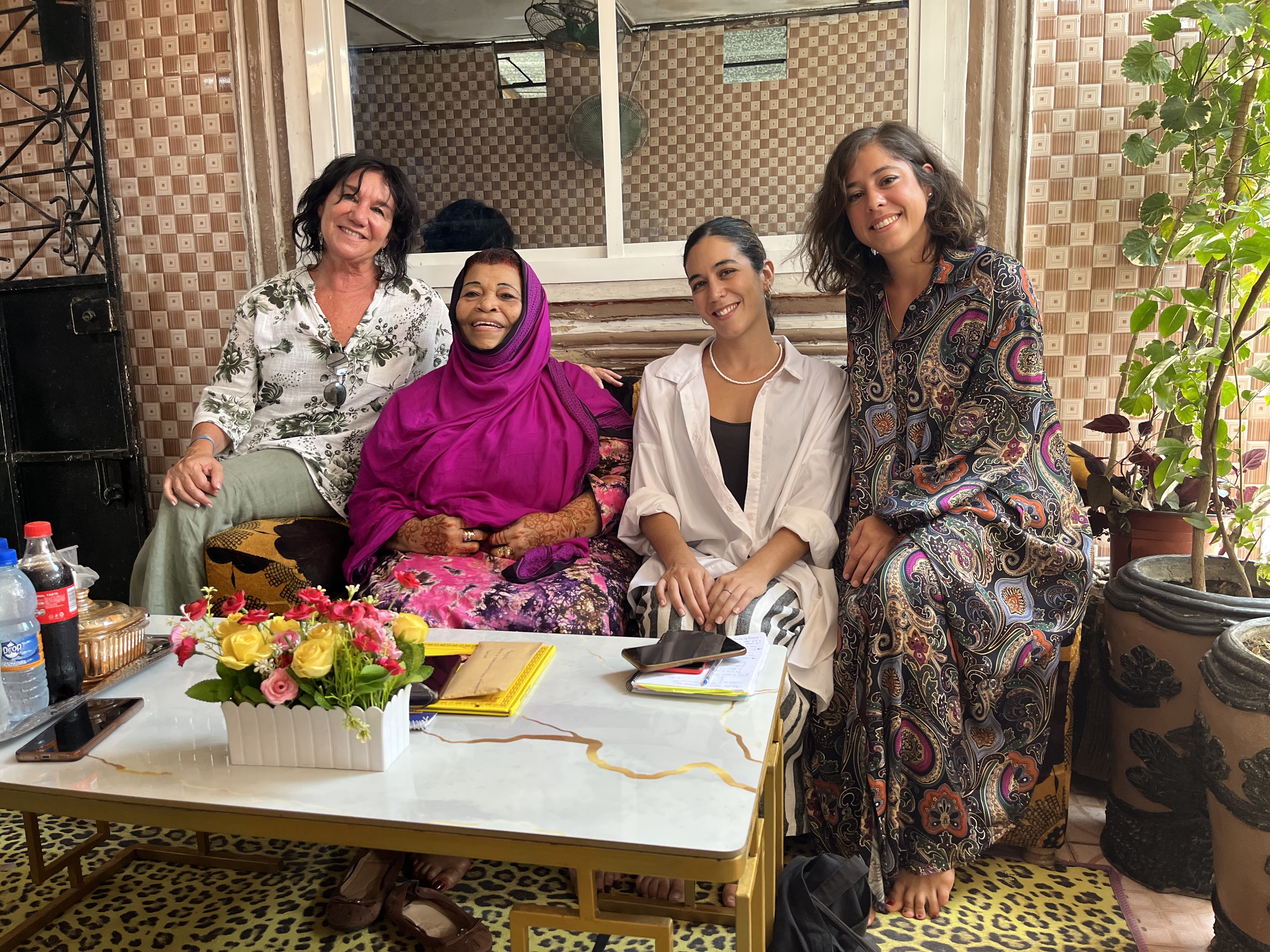
Throughout the final quarter of the year, this work continued through a follow-up process with the same partner organizations, combining on-site and remote sessions. Together, the teams worked on refining tools linked to Phase 3 of El Método RIU and co-formulating the renewal of projects for the 2026–2028 cycle, reinforcing capacities, alignment with company RSC priorities and with local needs, and evidence-informed decision-making strategies.
This transition — from field observation to collaborative re-design — illustrates the core philosophy of the Professorship: social investment in tourism as a process of shared learning, iteration and methodological deepening rather than a static intervention model.

London — Exploring El Método RIU in an Urban Environment
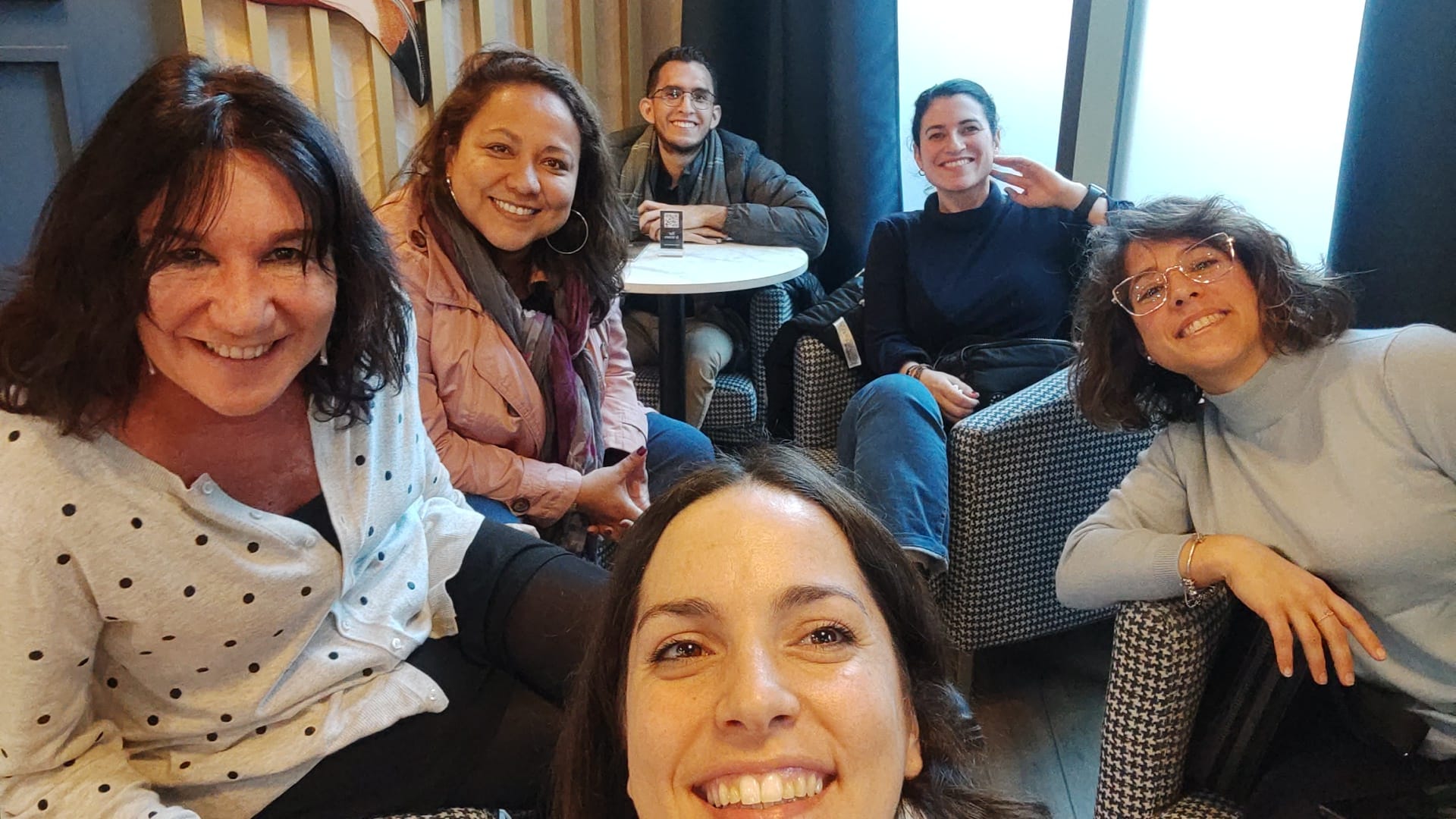
In parallel, 2025 marked an important step in extending the scope of El Método RIU to new contexts. During a mission in London, the Professorship team and RIU CSR territorial responsibles carried out an exploratory diagnostic with local stakeholders working on environmental and child-focused issues.
The visit provided an opportunity to test the adaptability of El Método RIU in an urban setting hotels, opening conceptual and practical questions about how corporate social investment frameworks evolve when applied beyond the traditional sun-and-beach destinations.
ICP Student Consulting — Connecting Reporting, Impact and Practice
The year also included an International Consulting Project (ICP) with students from ESCP’s MSc in Hospitality & Tourism Management, focused on analysing potential indicators for measuring social impact in local communities in dialogue with the CSRD and ESRS frameworks. The project generated actionable reflections for future alignment between reporting structures and impact-oriented CSR practice, reinforcing the Professorship’s role as a learning bridge between academia and the hotel industry.
Indeed, and beyond its analytical results, the ICP also had a direct impact on talent development. One of the students who participated in the project subsequently completed her internship at RIU, continuing — until December 2025 — to work on the professionalisation and systematisation of the RIU Method. This trajectory embodies the core spirit of the Professorship: knowledge that moves from the classroom to the field, and back again, enriching both practice and learning.
Looking Ahead — Quiet Steps Toward the Next Stage
Looking toward the coming period, the Professorship will continue to build on the lessons emerging from Zanzibar, London and the ICP experience. The focus will be on strengthening El Método RIU as a living framework that evolves through practice, reflection and collaboration, exploring ways to:
- further consolidate and refine the methodological backbone of the RIU Method,
- deepen its capacity for learning and exchange across destinations and partners, and
- advance new spaces of applied inquiry and contextual experimentation in a careful and evidence-based manner.
Within this perspective, the Professorship will cautiously open a new chapter in Phuket, Thailand, where El Método RIU will begin a place-sensitive process of exploration, listening, dialogue with local communities and early diagnosis. Rather than expanding mechanically, this step will prioritise listening, relationship-building and early diagnostic reflection, ensuring that any future development remains grounded in evidence, sensitivity and collective understanding.
What remains central is the Professorship’s vocation to co-creation, critical reflection and responsible territorial engagement — advancing a dialogue between hospitality, research and social value creation that continues to evolve through practice.
Campuses
Luca Canonico and Ludovico Frati recognised by Federmanager for excellence, ethics and innovation
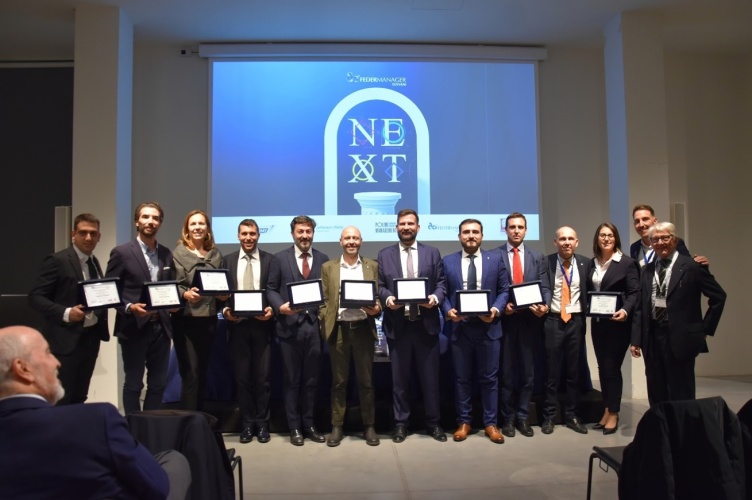
Out of nearly 2,000 candidates across Italy, two Executive graduates from ESCP Business School have been recognised by Federmanager in the 2025 edition of the Premio Giovane Manager.
Luca Canonico and Ludovico Frati were named among the 44 Silver Managers, with Canonico securing a prestigious place in the national top 10 as a Gold Manager. Their recognition highlights ESCP’s commitment to developing ethical, visionary, and innovation-driven leaders.
Shaping the future of management through ethics and transformation
Held at the Pontifical Patristic Institute Augustinianum in Rome, the national final of the Premio Giovane Manager 2025 celebrated emerging leaders who exemplify integrity, innovation and impact. Now in its seventh edition, the award focused on the theme NEXT – New Ethics for Transformation, placing ethical leadership at the heart of digital and organisational change.
“This edition confirms how the new generations of managers are ready to lead change with courage, responsibility and an open mindset towards innovation. The Premio Giovane Manager aims precisely to recognise this: the ability to read the present and prepare for the future by putting ethics and competence at the centre,” stated Paola Vitale, National Coordinator of the Federmanager Young Group.
Among this year’s 44 Silver Managers selected from over 2,000 profiles by Jefferson Wells (ManpowerGroup), both Luca Canonico and Ludovico Frati stood out for their cross-sector achievements and human-centred leadership.
Luca Canonico – Gold & Silver Manager, Italy 2025
After being selected among the 44 Silver Managers, Luca Canonico was further recognised among the top 10 young executives in Italy, receiving the prestigious Gold Manager award during the national final in Rome.
Senior Manager at BorgWarner and a graduate of the ESCP General Management Programme, Canonico impressed the jury with a career rooted in technical expertise and a people-first approach.
“Winning this award as a Top Young Manager is deeply meaningful to me, as it represents not just a result, but a journey shaped by curiosity, responsibility, and constant learning. I have always believed that innovation is not only about new ideas but about having the courage to challenge the status quo and imagine better ways of creating value,” he shared.
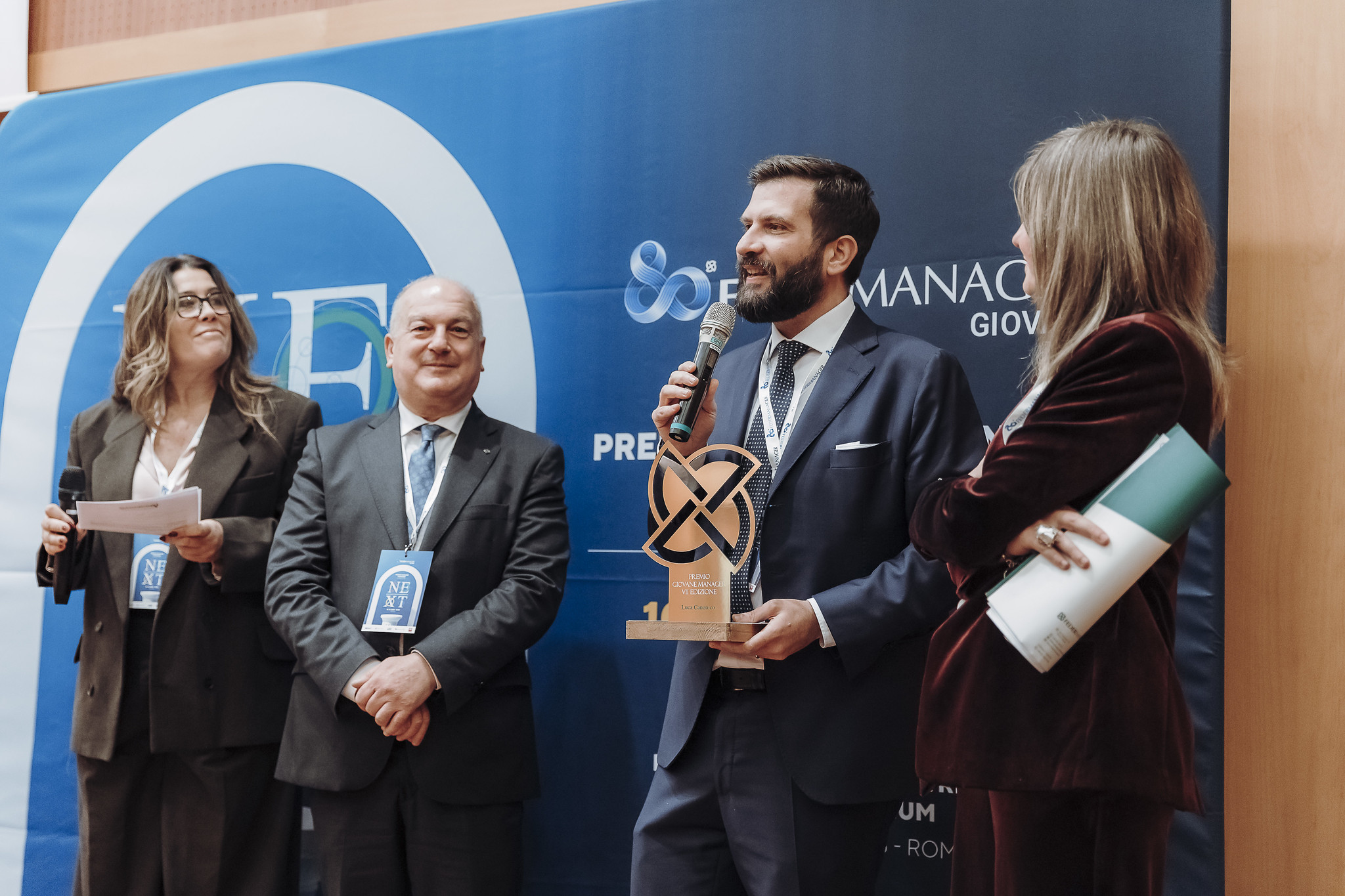
Canonico’s path spans engineering, sales and strategy in the automotive sector, with a strong emphasis on innovation and ethical leadership: “Ethics is a fundamental compass in my decisions, because true leadership means building the future with integrity, respect for people, and a long-term perspective. This recognition strengthens my vision of leadership as a force for positive change, capable of shaping more sustainable, forward-looking, and human-centered organisations.”
“I would like to sincerely thank Federmanager and the Gruppo Giovani Federmanager for this honor and for their commitment to developing managerial talent. I see this award not as a finish line, but as a responsibility—to share my experience, pass on knowledge, and support the growth of the next generations of managers” concludes Canonico.
Ludovico Frati – Silver Manager 2025
An ESCP Executive MBA alumnus, Ludovico Frati was selected among the top 44 under-44 managers in Italy and awarded as a Silver Manager during the North West region semifinal event held in Novara.
Currently serving as Sales & Marketing Director, Digital at BOBST, Ludovico Frati brings 13 years of experience across R&D, business development and digital transformation in the packaging sector. He is passionate about responsible innovation and inclusive leadership:
“Awards like this are not just milestones. They allow us to pause, reflect, and truly appreciate the path we have walked, the challenges we have faced, and the lessons and people who shaped our journey. In a time of accelerated technological and social change, and unpredictable events, I believe more than ever in the need for a new business ethic, one capable of guiding innovation with responsibility, progress with humanity, and transformation with awareness,” Frati reflected after receiving his award.
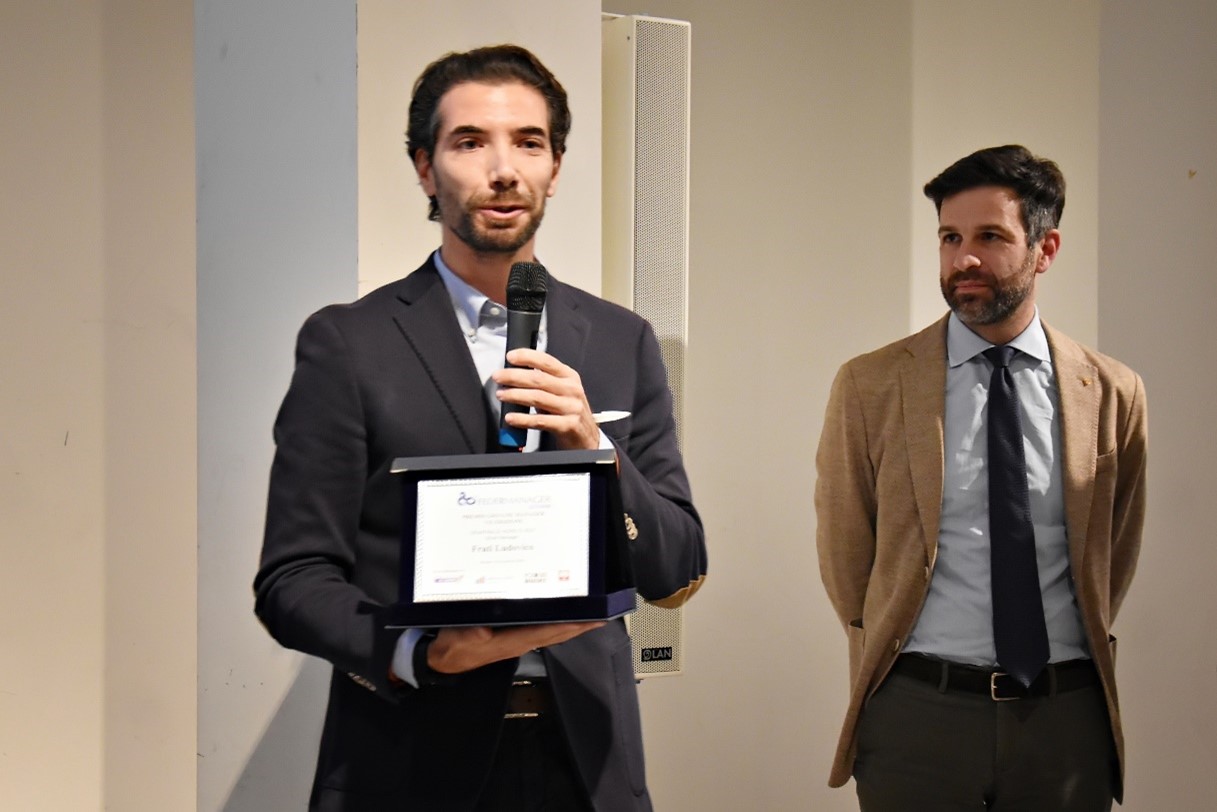
His leadership is marked by a strong commitment to collaboration, team empowerment and sustainability: “True transformation requires not only technical evolution but also ethical intention. Only by aligning growth with dignity and sustainability can we shape a future that genuinely serves people.
My sincere thanks to Federmanager and Gruppo Giovani Federmanager, for this recognition and for the work they do every day to elevate our community of managers and foster meaningful synergies across the ecosystem.”
Recognising leadership potential at ESCP
Both Luca and Ludovico credit ESCP Business School as a key influence in their professional development:
“ESCP has strengthened my managerial mindset,” said Canonico, while Frati expressed his gratitude to the school “for its profound contribution to shaping the person and manager I am today.”
Their journeys embody ESCP’s mission to educate responsible leaders who embrace transformation, value diversity, and drive impact.
About the Premio Giovane Manager
Organised by Federmanager and its Giovani Group in partnership with Jefferson Wells, the Premio Giovane Manager celebrates Italy’s top under-44 managers annually. The rigorous selection process evaluates leadership qualities, innovation projects and ethical vision.
In 2025, the award spotlighted ethical transformation in an era of technological disruption, underscoring the need for managers who can lead with purpose and integrity.
Congratulations to Luca Canonico and Ludovico Frati for exemplifying the power of responsible management and innovation.
Campuses
Related stories
News 16/05/2025
Success Story
ESCP Alumni Featured in Forbes Under 30 Italy: How FunniFin is Transforming Financial Wellbeing
Two ESCP alumni, Leonardo Capotosto and Lapo Nidiaci, were named in Forbes Italy’s Under 30 list for their fintech startup FunniFin. Discover how their journey from ESCP to Forbes is reshaping financial wellbeing.
Madrid
Paris
Turin

News 15/04/2024
Success Story
Revolutionising Social Impact: An Inspiring Conversation with Annamaria Barbaro - ESCP Alumna and Italian #ForbesUnder30
In the vibrant landscape of young innovators and entrepreneurs recognised by Forbes Italy in its prestigious "100 Under 30" list, the ESCP Business School community is filled with pride for our Alumna Annamaria Barbaro. Not only has she been included in this esteemed list, but she has also left a significant impact in the realm of social entrepreneurship.
London
Paris
Turin
News 09/06/2023
Success Story
Revolutionising Clean Tech: An Inspiring Conversation with Fabrizio Custorella - ESCP Alumnus and Italian #ForbesUnder30
Forbes Italia recognised Fabrizio Custorella, co-founder and CFO of ReLearn, as one of Italy's Top 100 Under 30. ESCP MBA in International Management Alumnus Fabrizio Custorella cofounded an innovative startup at the forefront of revolutionising Italy's social impact scene.
Turin
News 23/06/2023
Success Story
Driving Freight Transport into the Future: Meet Simone Quarta, ESCP alumnus and European #ForbesUnder30
Innovative entrepreneurs like Simone Quarta are making waves with their groundbreaking startups in today's rapidly evolving business landscape. Simone, an alumnus of ESCP's MSc in Energy Management programme, is CEO and co-founder of BRIDGE, a pioneering Italian digital freight forwarder that is revolutionising the transportation industry.
Turin
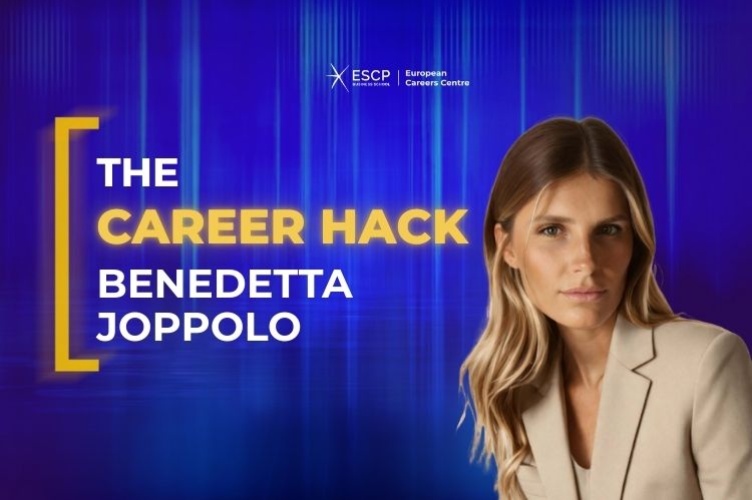
“Purpose gives you resilience. Curiosity keeps you growing” — Benedetta Joppolo, Project Leader at Boston Consulting Group
What does it take to thrive in strategic consulting? Benedetta Joppolo, Project Leader at Boston Consulting Group (BCG) and ESCP alumna, in this interview, part of The Career Hack series — an initiative by the Careers Centre team at ESCP Business School Turin — shares her personal insights from nearly a decade in the field. Drawing on her experience across international teams and high-impact strategy projects, she reflects on the mindset, skills and values that drive long-term success at firms like BCG. From what to expect in your first year as a consultant to how to stay fulfilled in a demanding career path, Benedetta offers clear, honest advice for students aspiring to enter the world of top-tier consulting.
How Purpose and Mindset Drive a Successful Career in Strategic Consulting
What’s the motto that has guided your career path in consulting, and why?
If I had to summarize my journey in one word, it would be commitment. From day one, I’ve believed that true impact in consulting comes from showing up fully — for your clients, your teams, and yourself. Commitment means embracing challenges with energy and curiosity, even when the path isn’t easy. It’s what has driven me through every project and every new context, from my very first case to today.
If you had to describe strategic consulting in just one word, which would you choose, and why?
Transformation. Consulting is about transforming problems into opportunities — for clients, but also for yourself. Every project pushes you to rethink assumptions, learn something new, and adapt at speed. That constant evolution is what makes this profession so unique and fulfilling. I’ve been in BCG for almost 8 years now, and I truly believe that all the challenges and “first times” I have faced since day one have shaped the human and professional I am now.
Essential Skills and Tools to Start Your Strategy Consulting Career
Which skills are absolutely essential to get hired in strategic consulting, and which ones do you mostly develop on the job?
To start, analytical thinking and structured problem-solving are key — they help you bring clarity to complex issues. But once you’re in, you quickly realise that the “human” skills matter just as much: listening, resilience, empathy, and adaptability. You also build deep industry experience along the way. I came from a completely different background — during ESCP I did internships in fashion & luxury and venture capital — and today I work with Industrial Goods teams on vertical projects. Those perspectives are shaped on the job.
What’s one methodology, tool, or approach you believe every future consultant should be familiar with before entering the field?
Having data to support your hypotheses is essential. Facts and evidence ground your thinking and make your recommendations credible. In this, the set of tools we use at BCG — together with the new frontiers opened by GenAI — are an incredible accelerator for analysis. They help us process information faster and more precisely, while keeping our approach deeply human-centric.
Thriving as a Strategy Consultant: Lessons and Advice
Looking back at your client and team experiences, what’s the biggest lesson you’ve learned from working in such a fast-paced and diverse environment?
That diversity of perspective is a superpower — but it requires humility to harness it. Working in different countries, from M&A projects in China just after graduating from ESCP to plant visits in India and the Middle East, taught me that there’s no single way to solve a problem. Listening deeply, adapting fast, and trusting your team’s strengths make all the difference.
Imagine it’s your very first year as a consultant: what are the key “to-dos”, and what are the absolute “don’ts”?
To-dos: Be curious, ask questions, and take ownership early — even of the smallest tasks. Build relationships, because consulting is a team sport.
Don’ts: Don’t be afraid to make mistakes or to admit you don’t know something. The only real mistake is not asking for help. Growth in consulting happens outside your comfort zone.
Work–Life Balance and Long-Term Growth at BCG
Work–life balance is a big topic for students: what does it realistically look like in consulting, and how do you personally manage it?
Consulting can be intense — that’s no secret. But balance isn’t about counting hours; it’s about being intentional with your energy. For me, it’s meant setting boundaries, prioritising what matters, and learning to recharge effectively. BCG’s culture supports that: in recent years, many initiatives have been launched to improve sustainability and well-being, such as Cool Down Days and Flex Time programmes. You’re surrounded by people who genuinely care about long-term balance and fulfilment.
Finally, in your view, what does it truly take to build a long-term and fulfilling career in strategic consulting?
A mix of purpose and curiosity. Purpose gives you the resilience to face challenges; curiosity keeps you growing and reinventing yourself. Over eight years, I’ve learned that consulting is not just about delivering results — it’s about shaping your own path, continuously learning, and finding meaning in the impact you create for others.
Benedetta Joppolo’s insights highlight that success in strategic consulting goes far beyond technical skill. It takes resilience, openness and a passion for growth. Whether you're preparing to join a top consulting firm or advancing your career, her story is a clear reminder that consulting rewards those who stay curious, think strategically, and consistently create value — for their clients, their teams and their own development.
FAQ
What is The Career Hack?
The Career Hack is an original content series by the ESCP Careers Centre in Turin. It showcases career insights and strategies from industry leaders, tailored for ESCP students.
What skills are most important for success in consulting?
Top consulting firms look for analytical thinking, structured problem-solving, and strong interpersonal skills. Curiosity, adaptability and emotional intelligence are also essential for long-term success.
Which programme offers the best preparation for consulting?
Both the Bachelor in Management (BSc) and Master in Management (MiM), as well as ESCP specialised masters, provide rigorous academic grounding and practical experience ideal for a career in consulting.
In what ways is ESCP helping students prepare for tomorrow’s job market?
By focusing on innovation, sustainability and cross-cultural business education, ESCP equips students with future-ready skills. Discover the support offered by the Careers Centre and multi-campus exposure.
Campuses
Related stories
News 20/11/2025
The Career Hack
How to Break into Consulting: Insights from KPMG Talent Attraction
How can students stand out in consulting? ESCP Business School's Career Hack features KPMG's Elisabetta Volta on AI, soft skills and choosing the right workplace.
Turin
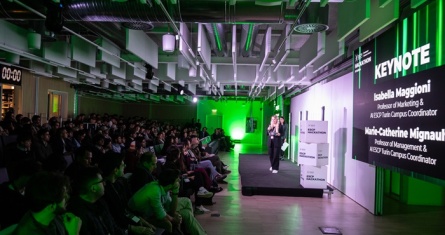
News 17/12/2025
Careers Centre
ESCP Hackathon: AI edition challenges students to reshape customer experience
The ESCP Hackathon in Turin brought students and companies together to design high-impact AI solutions for the customer experience.
Turin
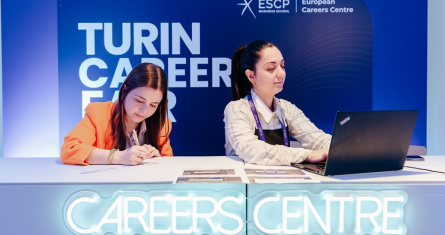
News 23/07/2025
Careers Centre
Linking Talent and Business: 2024–2025 Highlights in Turin
Explore ESCP Business School Careers Centre achievements at the Turin Campus for 2024–2025: mentorship programmes, career fairs, recruiting events, and strong corporate partnerships with 21 companies shaping global business leaders.
Turin

Your voice matters. Help us shape the future of ESCP and Europe
Introduction
We are launching the “Live, Learn & Love in Europe” survey to better understand how YOU, as ESCP students and recent graduates, experience life in Europe: academically, professionally, socially, and personally.
This initiative is the first of its kind led by a business school and reflects the uniquely ESCP experience. ESCP students not only study Europe but live it—across six campuses, multiple cultures and diverse perspectives.
“This survey is more than a questionnaire. It’s a statement. It reflects our belief that business and education must listen to, and learn from, the next generation of European leaders,” said Prof. Leon Laulusa, Executive President & Dean of ESCP Business School.
The initiative bolsters ESCP’s ambition to become the European University of Management by 2030 and reinforces the School’s mission to educate accountable, bold and creative leaders capable of driving human-centred transformations in business and beyond.
Why it matters
Running annually from 2026 to 2030, the survey will provide valuable insights into your daily experiences and aspirations. What does it mean to be a young European today? How do you connect across borders? Where do you see challenges—and opportunities?
Your responses will directly inform:
- Our strategic vision and initiatives
- The evolution of the student experience
- ESCP’s growing role as a European University of Management
The results will be shared each May during Europe Month, offering a springboard for dialogue and action within the ESCP community and beyond.
Who is invited to participate?
The survey is open to:
- All current ESCP students (across all full-time programmes and campuses)
- Graduates from the last three cohorts
Check your inbox!
The survey is open from 20 January to 6 March 2026.
👉 Look for your personal survey link in your ESCP email or Campus Life account.
It only takes a few minutes—and your voice will help shape the future of our School and Europe.
Location
Organiser: ESCP Business School
ESCP email or Campus Life account - France
MapDate
Start date: 28/02/2026
Start time: 12:00 AM
End date: 06/03/2026
End time: 11:59 PM
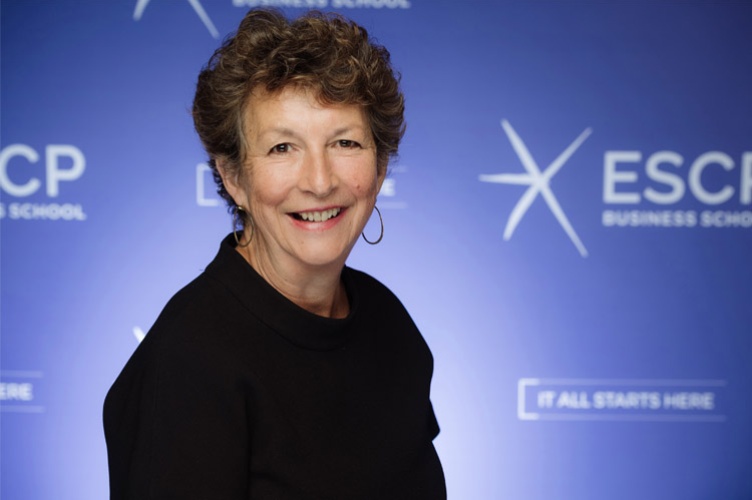
As of 19 December 2025, Professor Marie Taillard has been appointed Dean of the London Campus for a three-year term.
The appointment follows the recommendation of the Selection Committee for the Dean of the London Campus and was subsequently approved by the Board of Trustees and the Board of Directors of ESCP.
As L’Oréal Professor of Creativity Marketing and former UK Head of Faculty, Professor Taillard played an important role in advancing ESCP’s reputation for innovative pedagogy by bridging academia and practice.
Recently shortlisted for THE UK’s Most Innovative Teacher of the Year award, she brings extensive academic leadership, innovative teaching methods, and proactive industry engagement to the role, contributing additional breadth of perspective to the School’s leadership as ESCP embarks on its ambitious 'Bold & United' institution-wide strategy.
I am delighted to see Professor Marie Taillard appointed as Dean of the ESCP London Campus. A recognised expert in creativity and marketing, she played a key role in launching the MSc in Marketing & Creativity, now one of ESCP’s flagship programmes. Her diverse background and long-standing commitment to the School give her a deep understanding of ESCP’s identity and ambitions. Accountable, bold and creative, she embodies the values that will be essential to strengthening the London Campus and shaping ESCP’s future.
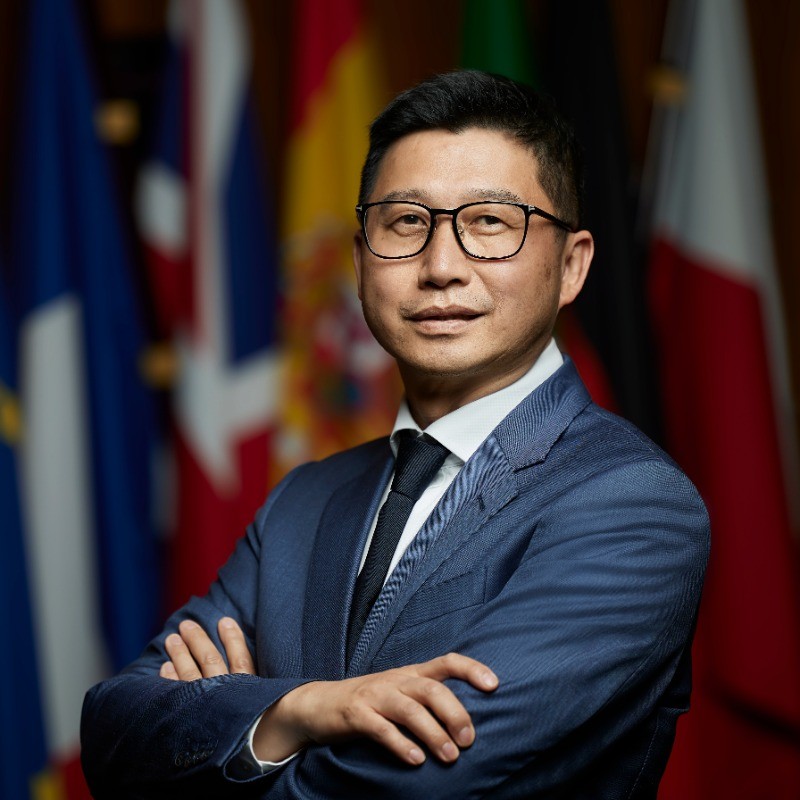 Leon Laulusa
Executive President & Dean of ESCP Business School
It is a pleasure to welcome Professor Marie Taillard as Dean of ESCP London Campus. Marie brings a wealth of academic experience, an international outlook, and a deep understanding of the School, and I have no doubt that she will build on the strong momentum of the London Campus in recent years. On behalf of the Board of Trustees, I wish her every success in her new role and look forward to working closely with her.
 Lord David Gold
Chairman of the Board of Trustees at ESCP Business School London Campus
Professor Taillard holds an MBA from Columbia Business School and a PhD from the University of London. A dual citizen of France and the United States, she brings a strong international profile, with academic and professional experience across Europe, North America and the Asia-Pacific region, including extensive experience in the United Kingdom.
She has held several senior leadership positions since joining ESCP’s permanent faculty in 2007, including UK Associate Dean of Executive Education, London Campus Head of Faculty, and Director of the MSc in Marketing & Creativity, a programme she founded in 2009 and which is currently ranked 3rd worldwide by QS.
In addition to her leadership roles, Professor Taillard’s research focuses on marketing management and consumer behaviour, with particular attention to communication between firms and consumers, and the ways in which consumers contribute to value creation with brands, including through her recent book on consumer creativity. Her work also explores the impact of digital technologies on relationships between stakeholders within organisations, as well as change management and digitalisation.
I am pleased to be taking on the role of Dean of the ESCP London Campus at a time when the School is strengthening its position in the United Kingdom, both as a serious academic contender, but also as a keen contributor to economic growth. Building on what has already been achieved, I aim to further develop our programme portfolio, expand lifelong learning opportunities, and build even stronger connections between our academic work, industry and the local community. Guided by ESCP’s Bold & United strategy, my ambition is to support bold and creative leadership, accelerate human-centred transformation and promote innovative pedagogy, strengthening our impact within the UK academic and business ecosystem.
 Marie Taillard
UK Dean of ESCP Business School London Campus
Campuses

A new episode of the GEWINNE ZUKUNFT podcast featuring ESCP Business School’s Prof. Florian Lüdeke-Freund sheds light on a timely and encouraging message for businesses navigating economic uncertainty and the sustainability transition: investing in sustainability and transforming business models can strengthen competitiveness and resilience rather than undermining them
The episode features Professor Florian Lüdeke-Freund, Professor of Corporate Sustainability at the ESCP Business School Sustainability Institute, and author of a new Bertelsmann Stiftung study, alongside Gabriele Maurer, Vice President Corporate Sustainability at Jungheinrich, recently awarded the German Sustainability Award. Together, they bridge rigorous academic research with hands-on corporate experience.
Evidence-Based Insights for a Decarbonised Economy
In 2024, the first joint study of ESCP’s STAR Center and Bertelsmann Stiftung provided statistical evidence that German companies engage significantly in both business model transformation and sustainability measure (find the 2024 study here, English summary).
The new findings building on additional analyses identify a new strategic triad—competitiveness, resilience and sustainability—as mutually reinforcing pillars of long-term success (find the 2025 follow-up study here, English summary).
In the podcast, Professor Lüdeke-Freund outlines the four core capabilities that distinguish companies successfully navigating transformation, offering valuable insights for leaders seeking to future-proof their organisations.
From Research to Practice: Lessons from Jungheinrich
Complementing the research perspective, Gabriele Maurer shares how Jungheinrich integrated sustainability goals well before regulatory requirements such as the CSRD came into force. Drawing on her experience, she explains how the ESRS framework has generated concrete strategic insights and why the CSRD process can be seen as a “training camp” for operating in an increasingly VUCA world.
The episode also includes an industry perspective on recent EU-level regulatory developments and demonstrates how sustainability reporting can become a strategic tool rather than a compliance exercise.
Why Tune In?
Listeners will gain answers to key questions shaping today’s business agenda:
- How can competitiveness, sustainability, and resilience be linked in meaningful way?
- Which organisational capabilities enable successful development towards increased competitiveness, resilience, and sustainability?
- What does sustainability-driven transformation look like in practice at an award-winning company?
This episode is particularly relevant for sustainability professionals, business leaders, researchers, and students interested in evidence-based pathways toward resilient and sustainable business models.
Campuses
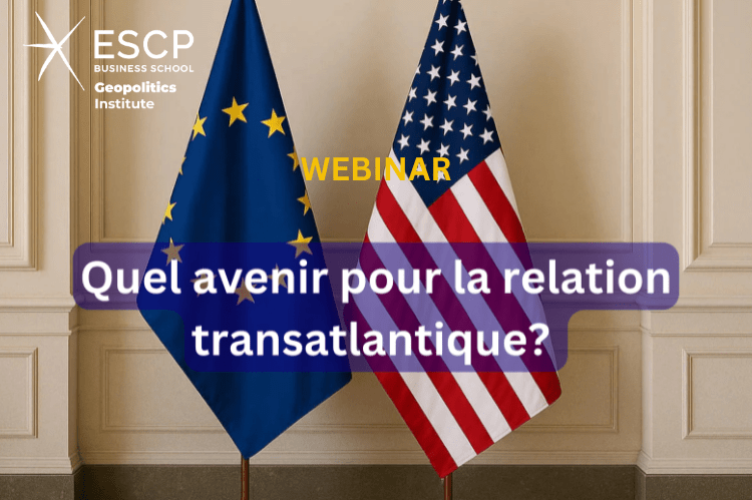
What future for the transatlantic relationship?
Introduction
The transatlantic relationship is undergoing a phase of profound transformation. As the United States redefines its strategic priorities, increasingly favours unilateral action and recentres its foreign policy around an openly asserted logic of power — as illustrated by the recent National Security Strategy — Europe is questioning the nature, resilience and underlying foundations of the transatlantic bond. The relative disengagement of the United States from the European theatre, the tariffs imposed on its allies, criticism of the European model, uncertainties surrounding support for Ukraine, the bypassing of traditional multilateral frameworks — NATO and the UN — as well as the multiplication of “solo” operations, all fuel the debate over the possible marginalisation, or even vassalisation, of Europe, and raise questions about the place still afforded to diplomacy in relations between allies.
Does the transatlantic alliance still have a future when US foreign policy appears to prioritise unilateralism, coercion and the assertion of power?
To analyse these developments and discuss their implications, Maxime Lefebvre and Vanessa Strauss-Kahn, Co-Directors of the ESCP Institute of Geopolitics, are pleased to organise a webinar on 13 January, with the participation of:
- Gilles Andréani, Honorary President of Chamber at the French Cour des comptes, Affiliate Professor at Sciences Po, former Director of the Policy Planning Staff at the French Ministry for Foreign Affairs
- Joachim Bitterlich, Affiliate Professor at ESCP, former Ambassador, former European, diplomatic and security policy adviser to Chancellor Helmut Kohl
This webinar will offer a strategic and forward-looking analysis of transatlantic relations, their current tensions and the possible scenarios for the future.
Webinar will be held in French. Registration is mandatory.
Regesieration form
Location
Organiser: ESCP Business School
on-line - France
MapDate
Start date: 13/01/2026
Start time: 6:00 PM
End time: 7:00 PM
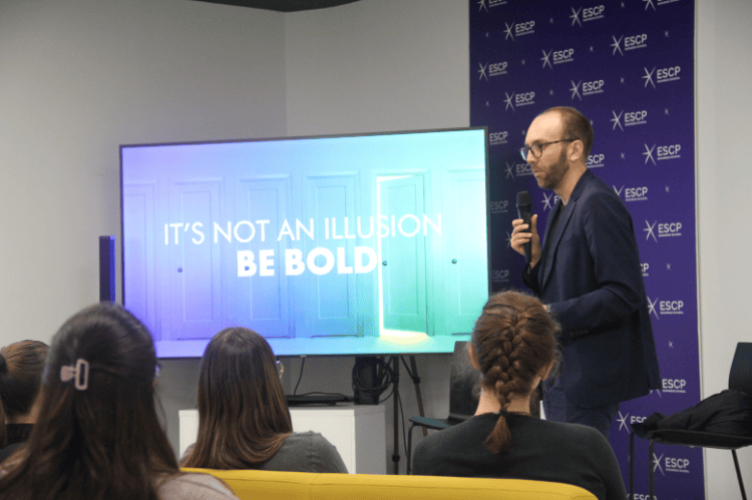
ESCP Madrid Accelerates Student Careers with High-Impact Industry Events and Exclusive Alumni Insight
ESCP Business School’s Madrid Campus has launched a strengthened sector-focused career strategy, offering students unprecedented access to industry leaders, top employers and high-achieving alumni.
From Banking & Finance to Consulting, Consumer Goods, Technology, Hospitality & Travel and beyond, the ESCP Career Centre is rolling out a series of vertical Career Insights events, designed to help Bachelor and Master students understand today’s job market from the inside and build meaningful professional connections.
Across the 2025–2026 academic year, hundreds of students have already benefited from dedicated sessions combining expert panels, recruitment insights, alumni testimonials and live networking opportunities—all essential for career readiness in a highly competitive global landscape.
A Year of High-Value Encounters: Finance, Consulting, Consumer Brands and More
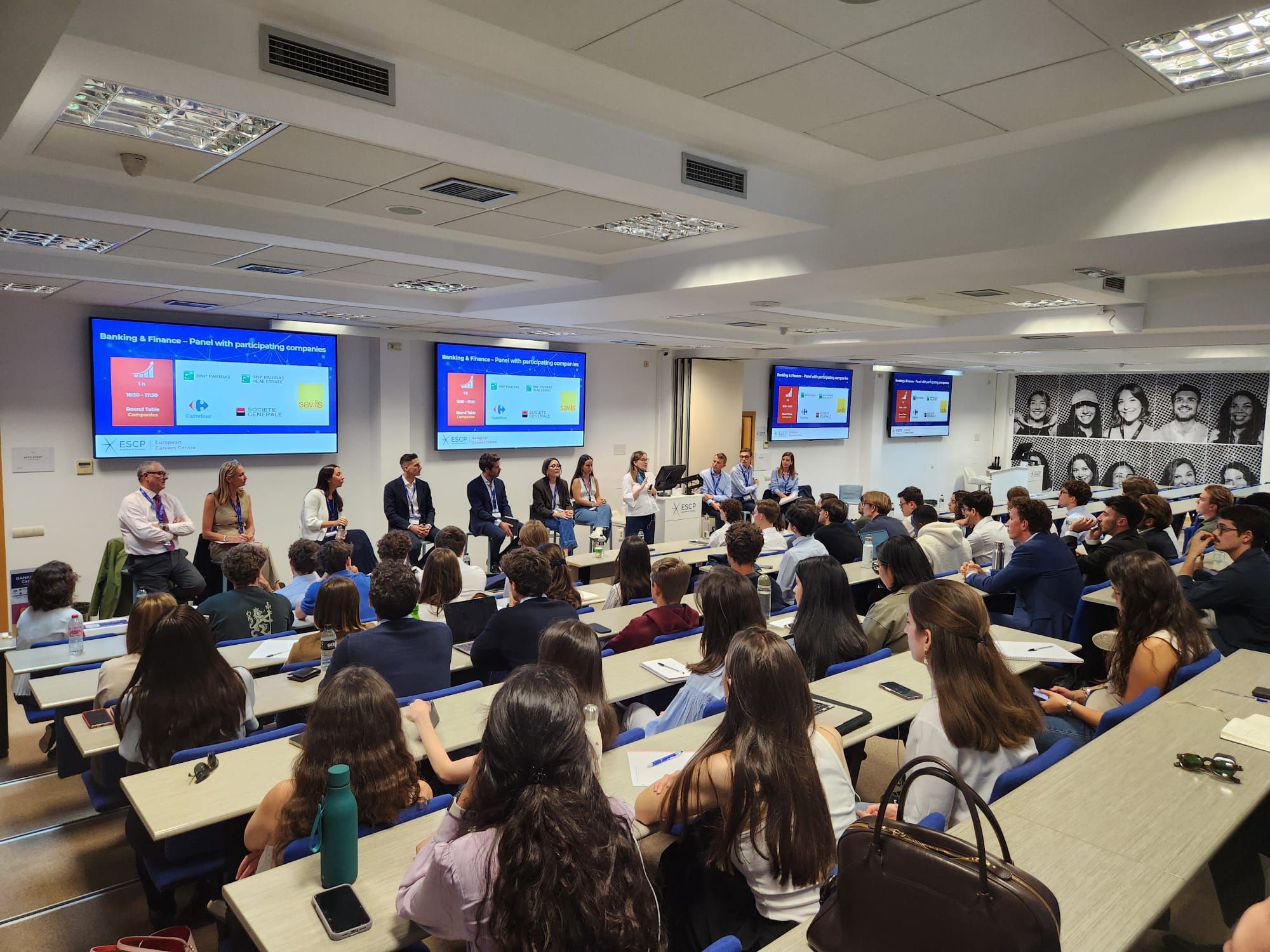
Banking & Finance Career Insights | 9 October
The series opened with an exceptionally well-attended Finance event, gathering over 90 students and leading professionals from BNP Paribas, Société Générale, Carrefour, Savills and BNP Paribas Real Estate.
Speakers shared recruitment trends, technical role expectations, and insights into careers in Investment Banking, Private Equity, Corporate Finance and Asset Management.
Our alumni community played a central role, with representatives from BNP Paribas, Jefferies, JB Capital, Amura Industrial and PwC offering first-hand advice on international finance careers—a powerful way for students to connect classroom learning with real-world trajectories.
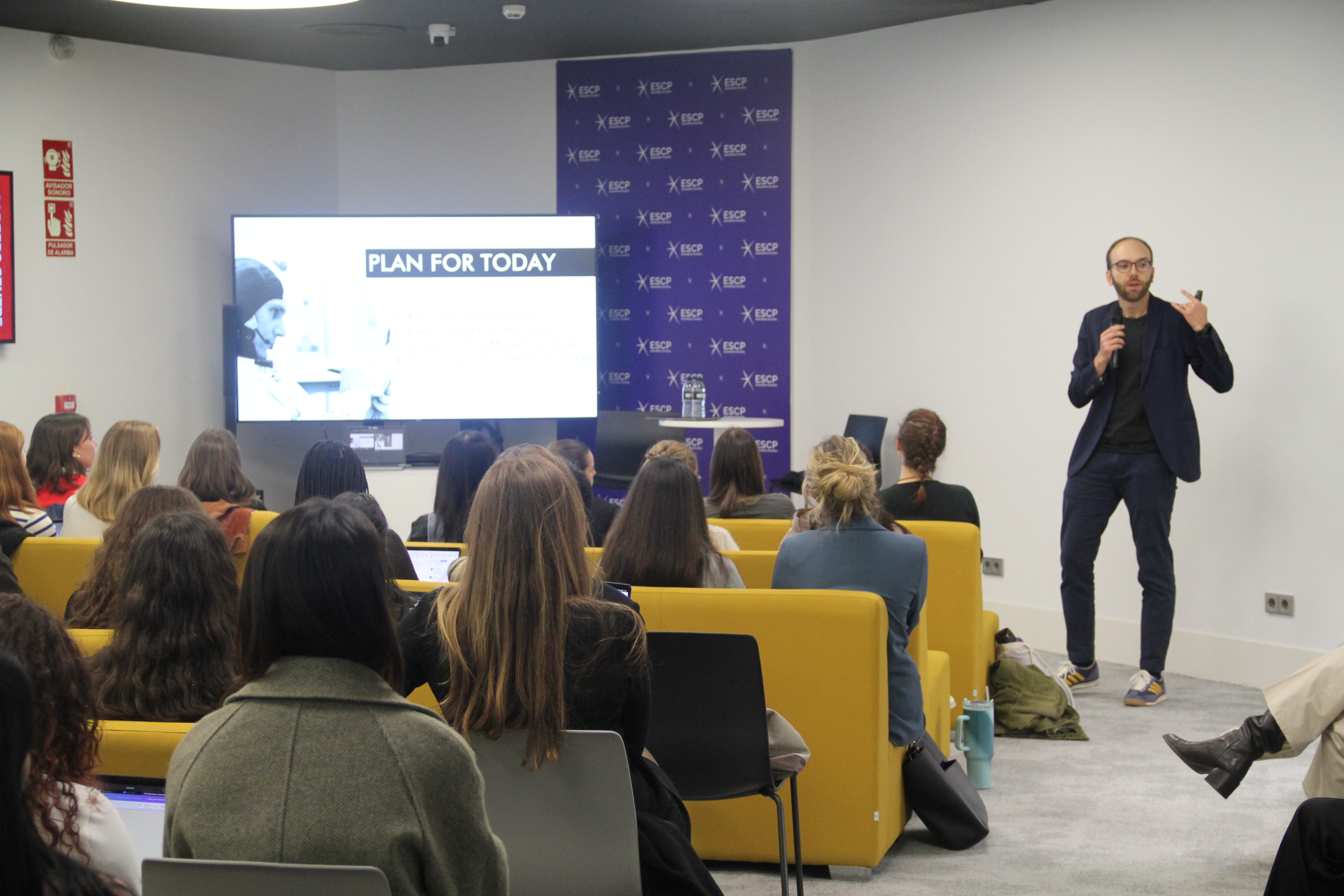
Careers Corner with Alumni | L'Oréal & La Roche-Posay | 6 November
Students gained insider knowledge from one of the world’s most influential consumer goods groups. Alumni and company representatives shared their experiences in marketing, product development, retail strategy and talent acquisition, giving students an authentic view of career paths in beauty, luxury and FMCG.
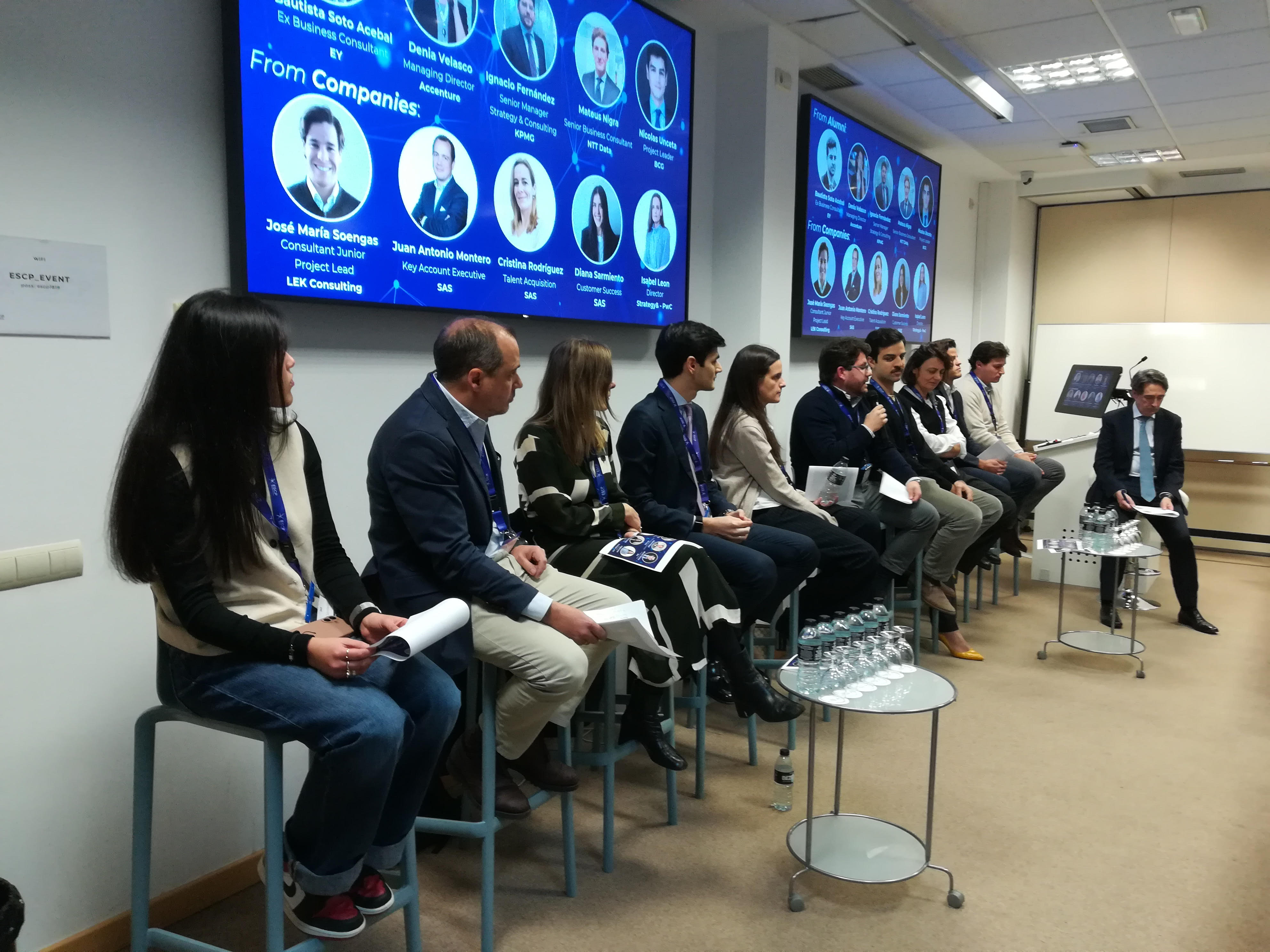
Consulting Career Insights | 3 December
Over 40 Bachelor and Master students joined this focused session on Consulting, featuring panellists from LEK Consulting, PwC Strategy&, SAS and NTT Data.
Professionals and alumni—including leaders from BCG, KPMG, Accenture and EY—offered clarity on:
- the skills firms look for,
- the consulting lifestyle,
- international career trajectories, and
- how to stand out during recruitment.
The event concluded with an energetic networking session, allowing students to ask questions directly and receive personalised guidance.
Looking Ahead: New Industry-Specific Events for 2026
As announced by the Career Centre team, the vertical approach will expand in 2026 with dedicated events in:
- Hospitality & Travel (Jan 2026 – including FITUR)
- Marketing & Digital Strategy (mid-2026)
- Careers Corner with Companies – Orange (13 January 2026)
- Madrid Career Fair (25 February 2026)
The Career Insights series reflects ESCP’s commitment to supporting students from their very first day on campus through graduation and beyond. The Career Centre’s objective is clear: to provide every student with the knowledge, connections and strategic preparation needed to enter the global job market with confidence.
Through curated events, one-to-one guidance, industry-specific sessions and strong alumni participation, students gain:
- direct exposure to real career paths,
- access to recruiters and hiring managers,
- a better understanding of industry expectations, and
- the opportunity to build a professional network early on.
- This comprehensive journey leads to one flagship milestone:
The Madrid Career Fair
A cross-campus highlight and one of ESCP’s most impactful recruitment platforms, the Career Fair brings together leading employers, HR specialists and students for a day dedicated to internships, graduate roles and meaningful connections. It is where the insights gathered throughout the year translate into tangible opportunities. With this integrated and forward-looking approach, ESCP Madrid continues to strengthen its career ecosystem—empowering students to navigate their professional future with clarity, ambition and a strong international support network.
Campuses