
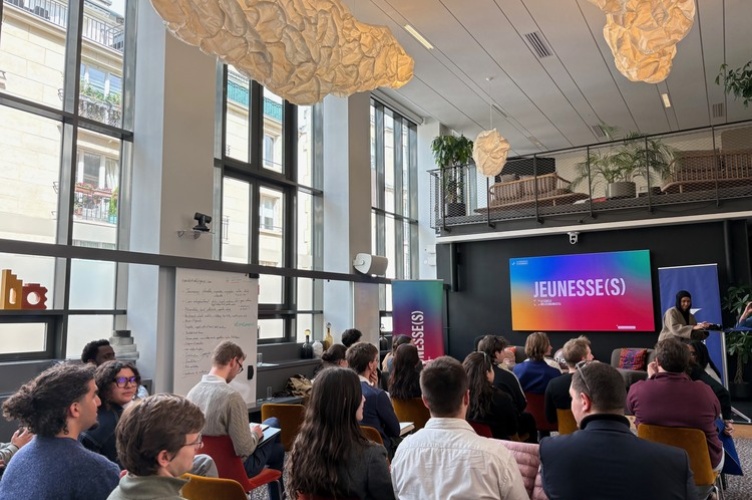
Six ESCP students and alumni are helping bring younger generations’ perspectives into the economic and social debates in Aix.
With institutions under pressure, international cooperation weakening and polarisation on the rise, how can societies move forward when traditional reference points begin to fade?
From 2 to 4 July, the 26th edition of the Rencontres Économiques d’Aix-en-Provence will place this question at the centre of the debate under the official theme “Navigating a world without reference points.” Organised by Le Cercle des économistes, the forum stands as Europe's largest free economic gathering.
Bringing together more than 420 speakers from 55 countries—including CEOs, Nobel laureates, and heads of state—the event aims to foster concrete, action-oriented solutions to the major challenges reshaping today’s world.
This year, six members of the ESCP community have been selected to join the Youth Programme, Programme Jeunesse(s), an initiative bringing together 140 young participants tasked with preparing the major themes that will shape six youth Agoras.
Representing a wide range of academic backgrounds and perspectives, the selected participants include:
- Carolina Maria Carra, Bachelor in Management (BSc)
- Ahmed Ali Bedjaoui, Bachelor in Management (BSc)
- Gaspard Botbol, MSc in International Sales Management
- Alexia Kindemba, Executive Master in Digital Innovation and Entrepreneurial Leadership (EMDEIL)
- Léo Police, graduate of the MSc in International Sustainability Management (2023)
- Irène Sandana, Master in Management (MiM) alumna (2022)
Ahead of the event, we asked some of our students why they applied, what inspired the topics they chose to explore during the Agora discussions, and what they hope to bring to the debate.
Moving from listening to contributing
For the ESCP students selected, Jeunesse(s) is a chance to take part in the conversations shaping their future. Analysing data from a nationwide youth survey alongside economic experts, the delegates actively contribute to and co-author policy solutions.
For Carolina Maria Carra, applying to the programme was a way to move from listening to contributing.
“This programme felt like more than simply listening to professionals or exchanging ideas on important topics. It was an opportunity to contribute my own perspective and make my voice count,” she says.
For Alexia Kindemba, the programme offered a similar opportunity for engagement.
“Young people should not only observe the transformations taking place in society. We should also take an active part in the reflections that accompany them,” she says.
That ambition is at the heart of Jeunesse(s): giving young people the space to test ideas, challenge assumptions and contribute to public debate.
Addressing the pressing challenges of our time
The themes chosen by Carolina and Alexia reflect two major questions for younger generations: how artificial intelligence will transform work, and how work itself can remain meaningful, fair and fulfilling.
Carolina chose Agora 4, “AI: friend or foe?”, which will explore the hopes and concerns raised by artificial intelligence.
“Jobs will certainly change. But will those jobs still exist? What will I need to know to be selected over someone else? What are the assets I still have as a human being in the job market?”
For Carolina, the discussions also showed how quickly AI is reshaping organisations from the ground up. “What surprised me most was the idea that AI is not being imposed on people from above. It started with people themselves, using these tools at home, which then forced industries to adapt.”
Alexia selected Agora 5, “Promoting youth development in the workplace”, which will examine how work can respond to the expectations of younger generations.
“The relationship to work is changing enormously. Several generations now work together, expectations are shifting, and the ways people find fulfilment are evolving too,” she says.
For her, the topic reaches beyond employment alone. It also raises questions around mental health, inclusion, work-life balance, recognition and the role companies can play in creating more fulfilling professional environments.
“Even if our generation talks a lot about fulfilment, meaning and work-life balance, remuneration remains central. Young people want to live well from their work and see their efforts recognised at their fair value.”
Gaspard Botbol has been appointed spokesperson for Agora 6, “Truly giving young people a voice?”, the final Youth Agora of the Rencontres, where he will help lead the discussion alongside other speakers and members of the scientific council.
Helping to shape tomorrow’s ideas
The selection of six ESCP students and alumni for Jeunesse(s) reflects the school’s commitment to preparing future leaders who can engage with complexity, listen across differences and contribute to public debate.
Their participation also speaks to the diversity of the ESCP community. From artificial intelligence and digital innovation to sustainability, management and international business, the selected students and alumni bring different academic paths and perspectives to shared questions about the future.
At a time when societies are searching for new reference points, their presence sends a clear message that young people are not waiting for tomorrow’s debates to be defined for them. They are already helping to shape the questions, priorities and choices that will define the future.
Campuses