
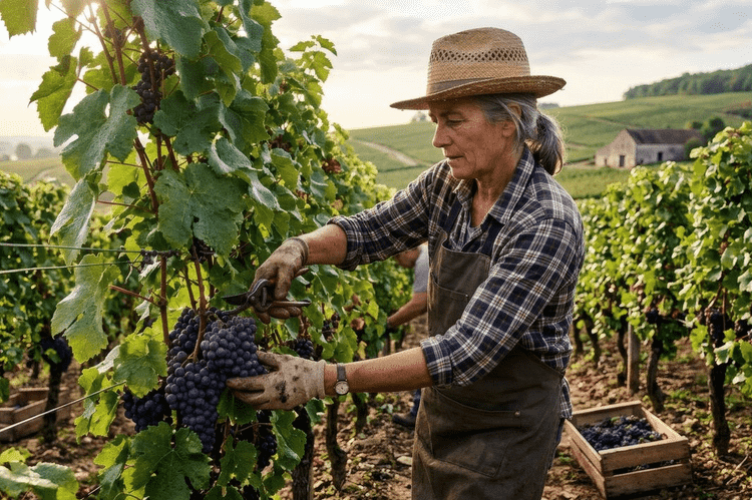
New ESCP research by Camille Doche examines French wine cooperatives to reveal why different forms of collective organisation can compete rather than reinforce one another.
Cooperation is often seen as a solution, to market failures, to sustainability challenges, to fragmented industries. But what if different forms of cooperation do not reinforce each other, but instead compete?
This is the starting point of new research by Camille Doche, Assistant Professor of Strategy at ESCP Business School, whose doctoral work was recently recognised as a finalist for the 2025 STR Outstanding Dissertation Award, one of the most prestigious distinctions in the field of strategy.
Focusing on the French wine industry, Camille examines how organisations rely on collective resources, shared systems such as cooperatives, as well as broader structures like appellations, which define quality and origin. Both are forms of cooperation, but they do not necessarily align.
Her findings reveal a dynamic that may appear counterintuitive. As producers gain access to valuable common resources such as AOC labelled land, they are more likely to leave cooperatives. In other words, one form of collective organisation can weaken another. Rather than accumulating benefits, these systems can compete, sometimes to the point of destabilising each other.
This challenges a core assumption in management and business policy, that collective solutions are inherently complementary. In practice, coordinating across different levels of cooperation, within organisations and across entire industries, can create tensions that reshape strategic choices.
The research also revisits what performance means in such contexts. In environments where shared resources are at risk of depletion, success is not always about maximising output. In some cases, it may mean producing less, in line with collective constraints designed to preserve long term value.
By combining fine grained data with innovative empirical methods, Camille’s work contributes to a growing effort to rethink how organisations collaborate, compete, and sustain the resources they depend on. Her research not only advances academic debates in strategy, but also offers practical insights for policymakers and industry actors seeking to design more resilient forms of collective organisation.
While grounded in agriculture, these insights extend beyond the wine sector. From platform economies to climate governance, organisations increasingly operate within overlapping systems of shared and common resources. Understanding how these systems interact, and sometimes conflict, is a strategic and business policy imperative.
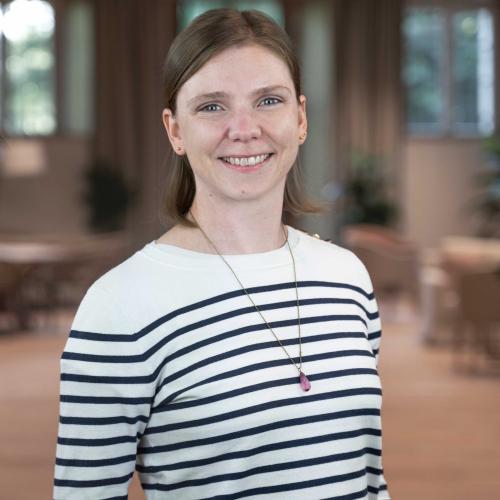 Camille Doche
Assistant Professor of Strategy
Campuses