
When do we truly feel European?
Let’s Walk is ESCP Business School’s conversation series where ideas come alive on the move. In this episode, host Anobla walks through the European Parliament with Yves Bertoncini to explore Europe’s identity, challenges, and future in a rapidly evolving global landscape.
From geopolitical tensions to internal divisions, this conversation dives into what it truly means to be European today — and what it will take to remain strong tomorrow.
When do we truly feel European?
For Bertoncini, being European is not just a political status — it’s a feeling shaped by experience. In this episode, he recalls how studying abroad helped him understand his identity more clearly, highlighting how distance can sharpen awareness of belonging.
Sometimes, you need to go far away to understand where you come from.
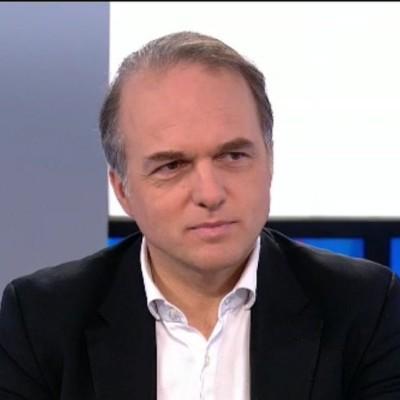 Yves Bertoncini
Affiliate Faculty of European and Public Affairs
This sense of identity is central to Europe’s future. Beyond institutions and policies, Europe is also about shared values, cultures, and the ability to connect across differences — what he calls “united in diversity.”
Understanding Europe’s power — and its limits
Standing inside the hemicycle of the European Parliament, during the Designing Europe seminar, Bertoncini emphasises how the European Union functions as a unique political system built on cooperation.
With 27 member states and diverse perspectives, decision-making requires negotiation, empathy, and communication. Unlike other global and regional powers, Europe must constantly balance unity with national interests.
While Europe holds strong economic influence — from trade to regulation — it still faces limitations in areas such as defence and diplomacy.
“Europe is a middle power,” he explains, “but it can become stronger if it acts together.”
Lessons in leadership and cooperation
Through his experience working with European leaders like Jacques Delors and Michel Barnier, Bertoncini highlights the importance of collective intelligence.
Europe’s model is not based on a single leader, but on dialogue, negotiation, and compromise. This approach, while complex, allows for more balanced and inclusive decision-making.
“We are stronger when we think together,” he says.
A future built together
Europe is not a fixed system — it is constantly evolving. Its future will depend on its ability to adapt, while staying true to its core values.
The key question remains:
Can Europe remain a global power in an increasingly
fragmented world?
For Bertoncini, the answer is clear — only by acting together.
Watch the full episode and discover all Let’s Walk conversations on the ESCP YouTube channel.
Featuring
Location
📍 European Parliament, Brussels, Belgium
Chapters


Next Episode
Episode 04
Coming Soon...
Campuses