
A look back on ESCP’s immersive seminar at the European Parliament
In a world shaped by heightened geopolitical tensions, technological competition, and shifting alliances, what economic strategies can secure a truly independent Europe?
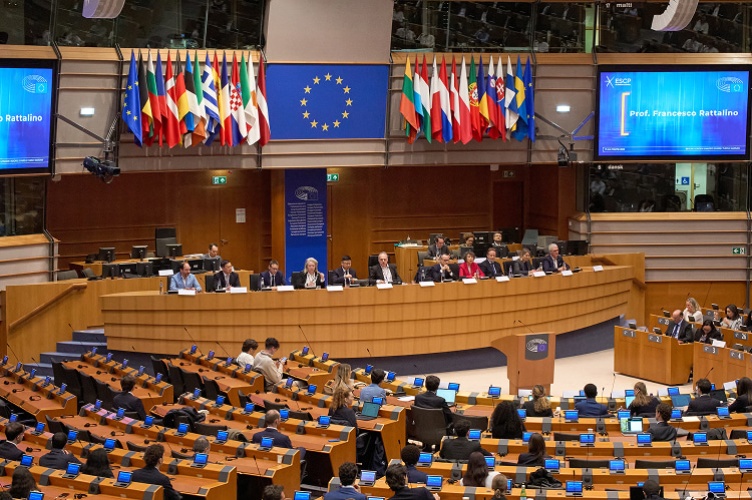
For 1,350+ ESCP Master in Management students, that question was central during Designing Europe 2026, the School’s flagship EU policy simulation which was held on 10-11 March at the European Parliament in Brussels.
Bringing together students from ESCP’s five European campuses — Berlin, London, Madrid, Paris, and Turin — the two-day seminar offered a rare opportunity to step inside the machinery of European policymaking.
Through negotiations, committee debates, and a plenary vote in the Parliament’s Hemicycle, students explored this year’s theme: “Europe’s Independence Moment: What Economic Strategies?,” a reflection of the major economic and geopolitical challenges currently facing the European Union.
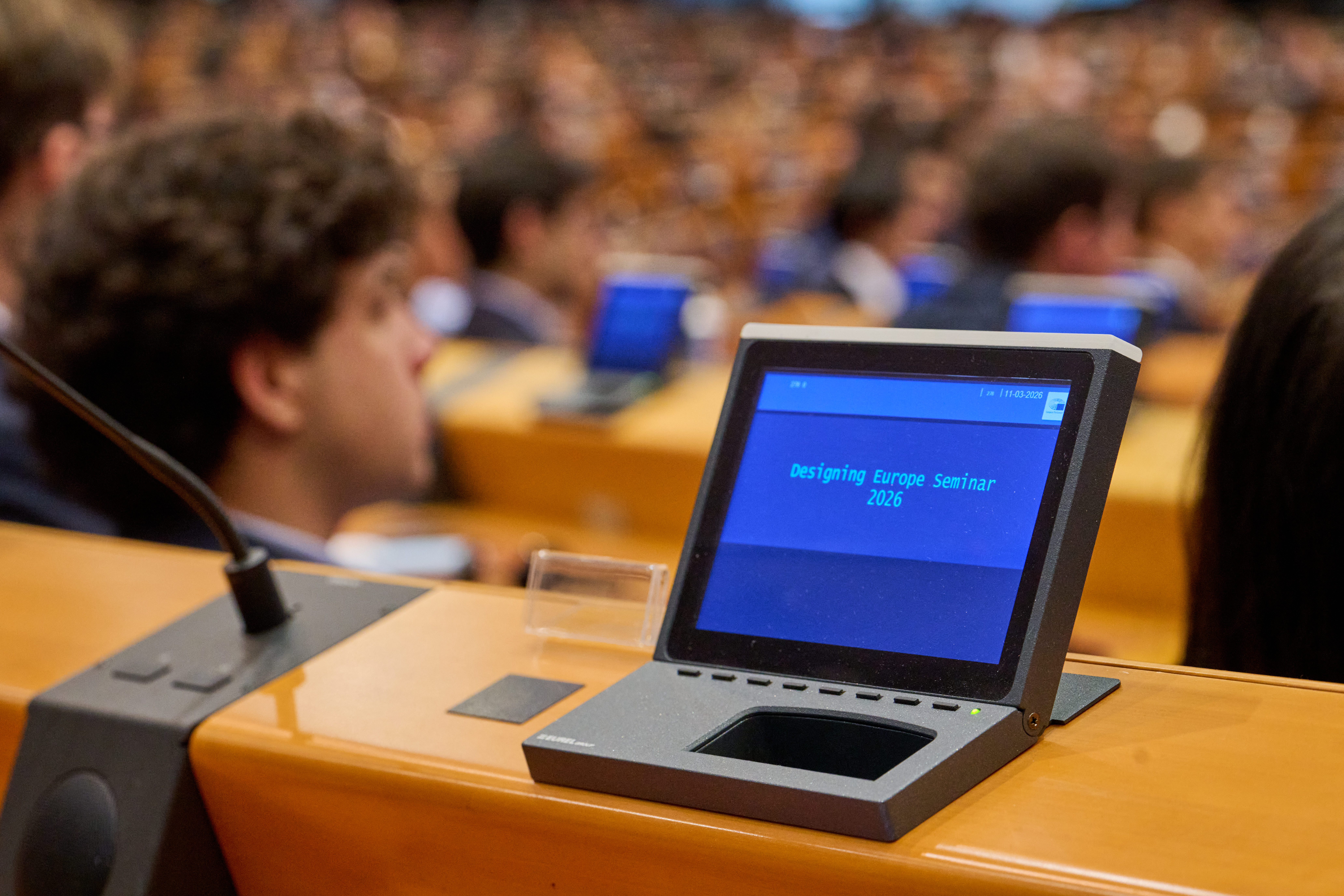
From the classroom to the Hemicycle
An immersive learning experience, Designing Europe introduces ESCP students to the functioning of EU institutions through a hands-on simulation of the legislative process. It is the culmination of a “learning by doing process” that Master in Management students began earlier this year shared Yves Bertoncini, Affiliate Professor at ESCP and pedagogical coordinator of the seminar.
Participants assume the roles of Members of the European Parliament, political groups, parliamentary committees, and stakeholder organisations. Working in delegations, they draft policy positions, negotiate amendments, and defend proposals in debates that mirror real parliamentary procedures.
The seminar opened with delegation workshops, where students worked with coaches and experts to develop draft resolutions on Europe’s economic strategy. Discussions focused on questions at the heart of today’s European agenda: how to strengthen industrial competitiveness, safeguard technological leadership, and balance economic security with sustainable development.
As in real European policymaking, compromise was central. Delegations representing different political priorities were required to negotiate, build alliances, and reconcile competing interests.
On day two in the Hemicycle, students representing business organisations, NGOs, and institutional actors presented their perspectives before political groups introduced draft resolutions and committees proposed amendments. The session unfolded through structured debates, negotiations, and votes, culminating in the adoption of a final resolution reflecting the students’ deliberations.
Today, you are not only simulating Europe, you are practicing responsibility.
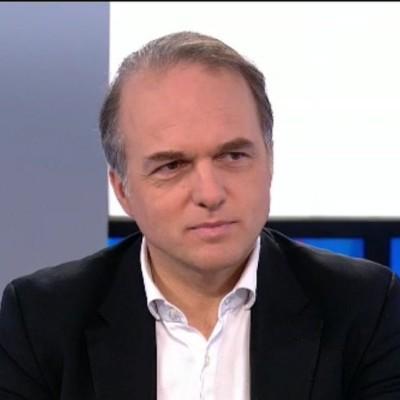 Yves Bertoncini
Affiliate Professor at ESCP and pedagogical coordinator of the seminar
Connecting business education and European policymaking
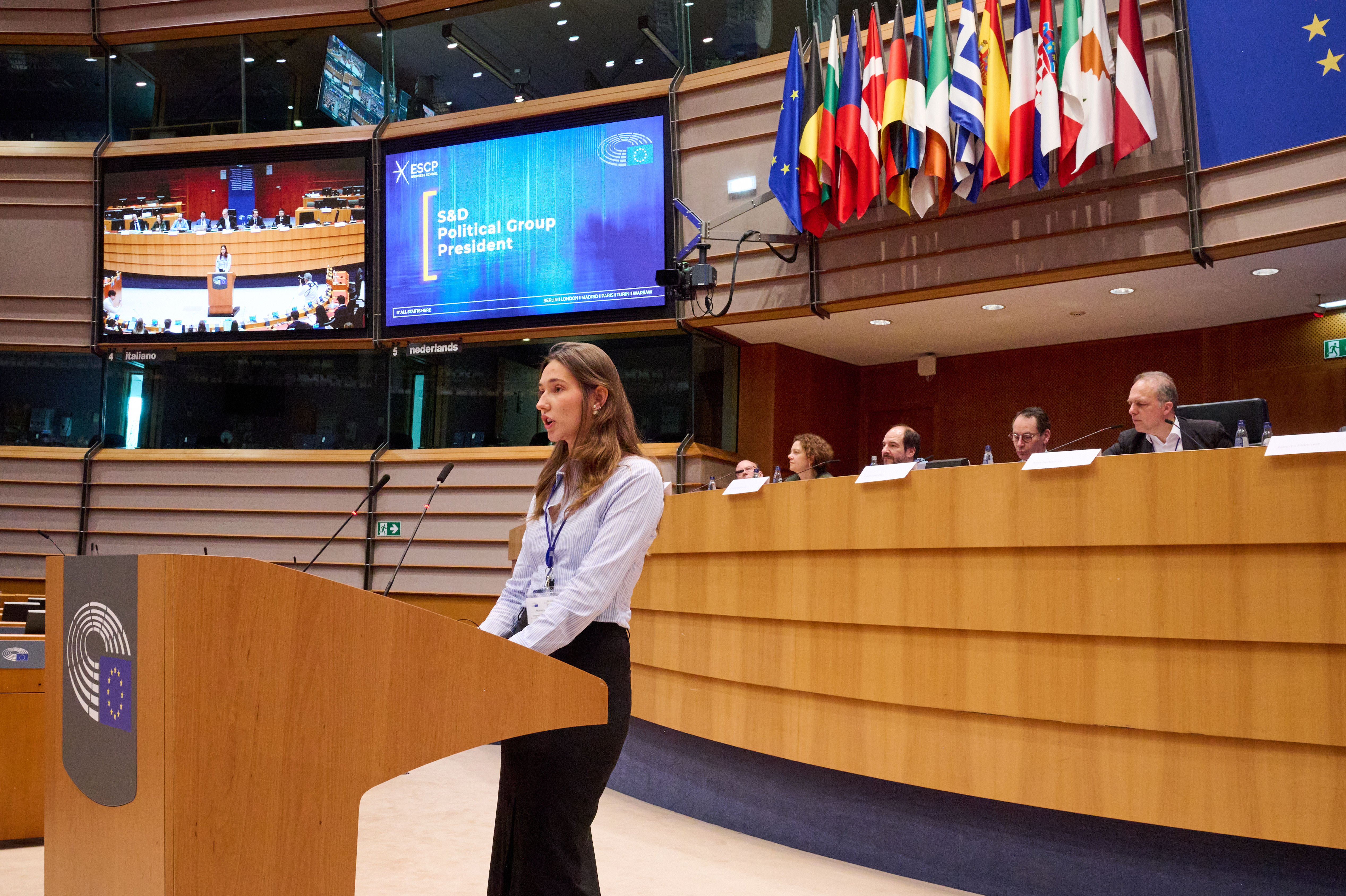
For ESCP, the Designing Europe seminar reflects the School’s longstanding commitment to European engagement, and the ever-growing importance of political literacy for future business leaders.
Future managers and entrepreneurs operate within an environment shaped by EU policies, regulation, and geopolitics. Understanding how those decisions are negotiated is therefore a critical leadership skill.
Francesco Rattalino, Executive Vice-President for Academic Affairs and Student Experience, framed the lesson in more human terms: “Politics is a profoundly human skill. What truly matters is learning how to disagree constructively and eventually reach consensus.”
That idea is becoming increasingly important to ESCP’s own vision of leadership in education. As the School looks ahead to the launch of the ESCP School of Governance by 2030, initiatives like Designing Europe point to a broader conviction: that future leaders will need to understand power as well as markets, institutions as well as strategy.
A European identity made tangible
The seminar also highlights ESCP’s uniquely European identity. With campuses across the continent and a diverse international student body, the School offers a learning environment that mirrors the collaborative spirit of the European project itself.
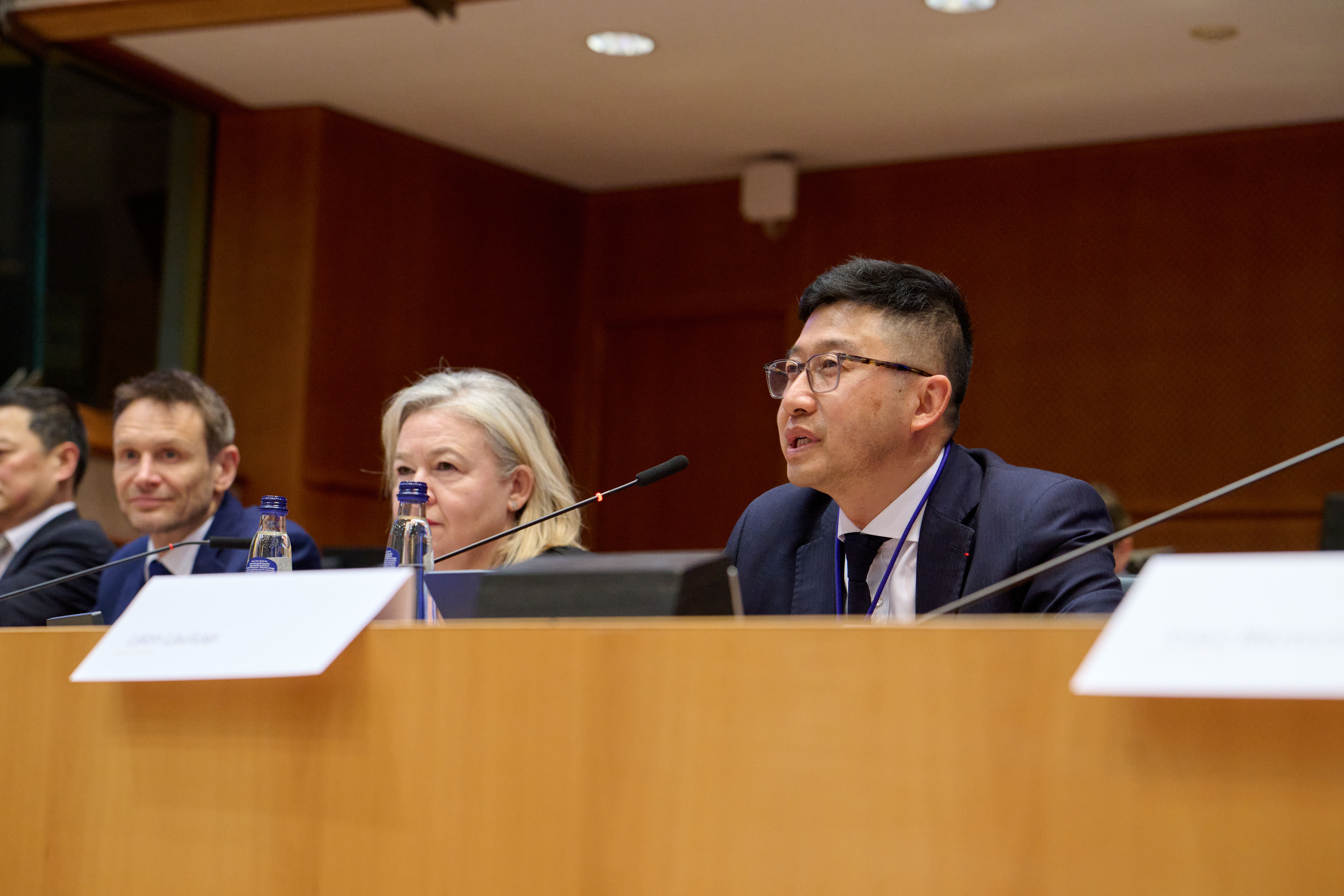
“At ESCP, Europe is our DNA,” said Dean Léon Laulusa, Executive President and Dean of ESCP. Opening the session, he highlighted the significance of the setting and the School’s European identity. “Look around you. This is Europe. This is what it means to be united in diversity — built on humanistic values such as tolerance, open-mindedness, and progress.”
For students, Designing Europe is a rare opportunity to enter the halls of European power in a way few others ever will, and to do so alongside peers from across the continent. Dean Laulusa underscored the singular nature of the moment. “Let me emphasise how exceptional this moment is. Very few institutions are granted access to this hemicycle every year. This is a testament to ESCP’s deep-rooted European identity.”
Preparing tomorrow’s leaders for Europe’s next chapter
At a time when Europe is redefining its economic strategy and global role, initiatives like Designing Europe play a vital role in preparing students to engage with these debates.
Beyond policy discussions, the experience encourages participants to develop negotiation skills, critical thinking, and cross-cultural understanding in a context that reflects the realities of European cooperation.
Designing Europe transforms theoretical knowledge into lived experience. Participants learn not only how European decisions are made, but why compromise, dialogue, and negotiation are central to the European project.
In the end, the seminar invites students to reflect on their own responsibility in shaping the future of the continent and how to become the kind of leaders who can successfully navigate the complexity ahead.
As Dean Laulusa put it:
The best leaders are not those who win debates. The best leaders are those who build consensus, drive progress, and create impact.
Campuses