
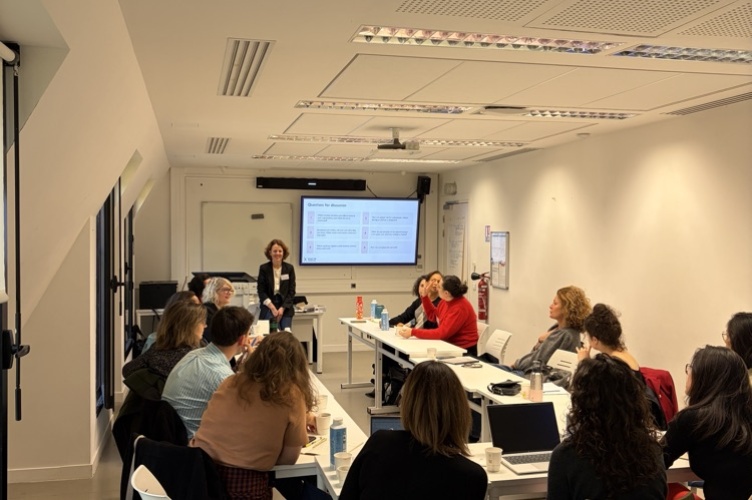
A workshop at ESCP's Paris campus shared the first findings of the Observatory of Invisible Identities and explored how schools and employers can respond.
Many students hide parts of who they are, and more of them do so as they get closer to their first job. That is one of the first findings of the Observatory of Invisible Identities, a research project led by ESCP's Leadership and Inclusive Management Institute. On 18 November 2026, the Institute brought researchers, ESCP staff and human resources (HR) leaders together on the Paris Montparnasse campus to discuss the results, and what schools and employers can do to make inclusion real for identities such as neurodiversity and mental health.
A research project on what others can't see
The Observatory of Invisible Identities was launched in 2025 by a team of nine researchers across ESCP's campuses. It studies how students experience identities that others can't see: invisible disabilities, neurodiversity, mental health, social origin, religious belief, sexual orientation and gender identity. For each one, it asks whether students reveal it, to whom, and what they expect from future employers. It is built on validated scientific scales and will run every year, so the team can track how things change over time.
From findings to action
Participants discussed the findings with ESCP's inclusion, disability and health teams, along with HR leaders, coaches and neurodiversity specialists. Several directions emerged:
- supporting students who need accommodations, with or without a formal diagnosis
- adapting teaching, for example by moving away from cold-calling and participation grades based on speaking up
- raising awareness among everyone, not only those directly affected
- creating safe spaces to talk, such as student-led discussion groups and open tables for students and staff
- using testimony from people who have turned a difficult path into a strength
What the first findings show
Prof. Géraldine Galindo and Dr. Vedika Lal presented the first results of the Observatory.
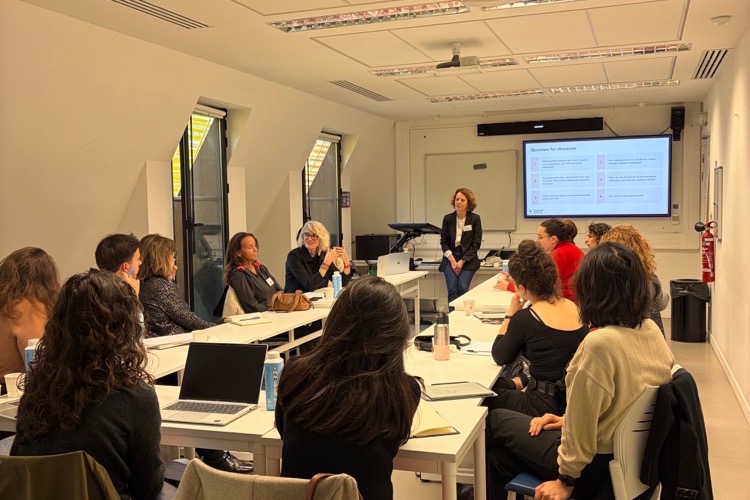 Participants from ESCP, HR and neurodiversity organisations exchange ideas on supporting students.
Masking increases as students approach the workplace
Many students choose to mask parts of who they are, and more of them do so as they prepare to enter the workplace. Fear of being labelled is a strong driver.
Neurodiversity often goes undiagnosed
Many students see themselves as neurodivergent, but far fewer have a formal diagnosis. Cost, family involvement and reluctance to be labelled all play a role.
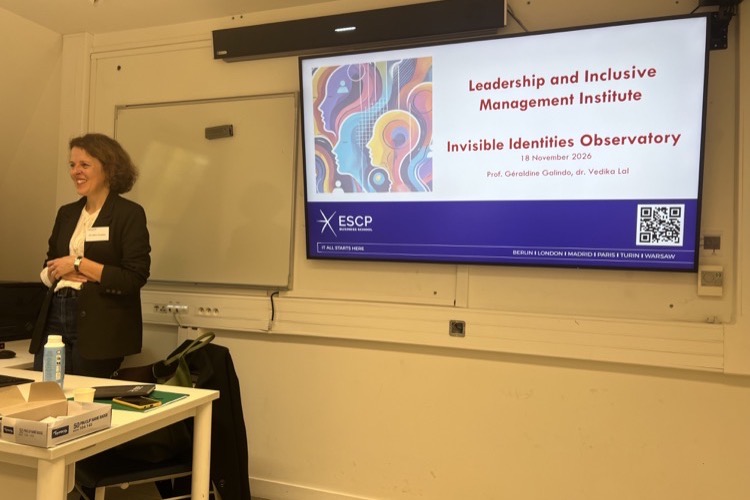 Prof. Géraldine Galindo opens the presentation of the Observatory's first findings.
Mental health, social codes and culture
In their written comments, students spoke about anxiety and depression. Students from minority backgrounds described the effort of adopting social codes that aren't their own, while international students described how differently these topics are treated in their home cultures.
Inclusion in practice matters more than policy
Few students choose an employer for its inclusion policy, especially in a tight job market. What they look for is inclusion in practice.
What's next for the Observatory
A second round of the survey is under way. It focuses on neuroinclusion and on how, when and to whom students choose to disclose. Read more on the topic in Why are future business leaders masking their invisible identities at work?, by Géraldine Galindo and Vedika Lal in The European Business Review.
Conclusion
Invisible identities shape how students study, look for jobs and start their careers. The Observatory will keep tracking these experiences every year.
Would your organisation like to take part? Contact Dr. Vedika Lal at vlal@escp.eu.
Relevant Links
Frequently Asked Questions (FAQs)
Through the AI 1000 Champions initiative, ESCP has enabled students, professors, researchers, and staff across six campuses to explore the responsible, real-world use of AI. Projects include GPT-powered classroom simulations, AI-supported dissertation coaching, workflow automation, and digital content strategy. ESCP recently expanded access to ChatGPT Edu to the entire community.
AI enhances data-driven thinking, boosts strategic agility, and prepares students for the technologies shaping modern business. It accelerates feedback cycles, strengthens research capacity, and cultivates essential digital, analytical, and leadership skills.
Responsible use is central to ESCP’s AI strategy. Faculty and staff are trained in ethical AI practices. Every project is evaluated for impact, equity, and alignment with academic values, ensuring that AI supports human decision-making rather than undermining it.
Yes. AI is integrated into academic programmes at ESCP. Students also engage with AI through research, innovation labs, and cross-disciplinary workshops.
Campuses