
The Greenprint series explores the distinctive sustainability identities of ESCP’s campuses, highlighting the people and initiatives shaping a shared vision for responsible leadership and collective impact.
Raffaella is an Accounting and Sustainability Assistant at ESCP’s Turin Campus and one of the campus Sustainability Representatives. Her sustainability-related work ranges from collecting and providing data used at the federal level to calculate the Turin Campus' carbon footprint to working with the other Sustainability Representatives, Barbara Trucato and Sara Guarino, on initiatives across the Campus.
Their different backgrounds allow them to approach sustainability from complementary perspectives, connecting different areas of the School and contributing to integrating sustainability into campus life in line with ESCP's broader sustainability strategy.
Sustainability is a shared responsibility, built by bringing together different perspectives and turning them into practical actions across campus life.
 Raffaella Di Stefano
 Accounting and Sustainability Assistant at ESCP’s Turin Campus
Sustainability team at the ESCP Madrid Campus
 Barbara Trucato
Management
Raffaella Di StefanoAccounting & Sustainability
 Sara Guarino
Student Experience
The local lens
Turin’s sustainability story is closely connected to the city around it. With a strong industrial heritage, Turin continues to evolve through innovation, urban regeneration and sustainable development. At ESCP Turin Campus, that relationship between heritage and change can be seen in the campus itself.
Inaugurated in 2024 in its new location, following the redevelopment of a historic building in the heart of Turin, the campus combines existing architectural heritage with contemporary design and energy-efficient infrastructure. Its sustainability features include 170 m² of photovoltaic panels, 50 m² of solar thermal panels, high-performance thermal insulation and energy-management systems designed to optimise consumption and improve comfort.
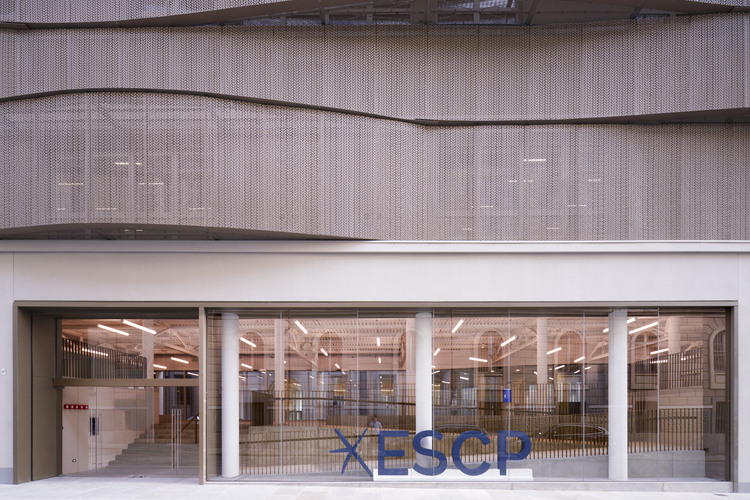 Courtesy of LAMM © Fabio Oggero
2025 / All rights reserved
Courtesy of LAMM © Fabio Oggero
2025 / All rights reserved
The project was named a finalist in the MIPIM Awards 2025, in the Best Cultural, Sports & Education Project category.
The campus’s central location also makes walking, cycling and public transport practical options for getting to and from ESCP. A partnership with a shared mobility provider offers another alternative for members of the community.
Together, these features make the physical campus an important part of how sustainability is experienced in Turin. Students encounter it not only through what they study, but through the building and city they move through every day.
Initiative Spotlight: Green Hackathon
Originally launched by the Turin Campus, the Green Hackathon was created to bring together students, faculty and business partners to develop innovative solutions to sustainability-related challenges.
Across its editions, the Green Hackathon involved international students, industry experts and leading companies. Working in teams, participants developed solutions aligned with the UN Sustainable Development Goals (SDGs), combining creativity, business thinking and sustainability.
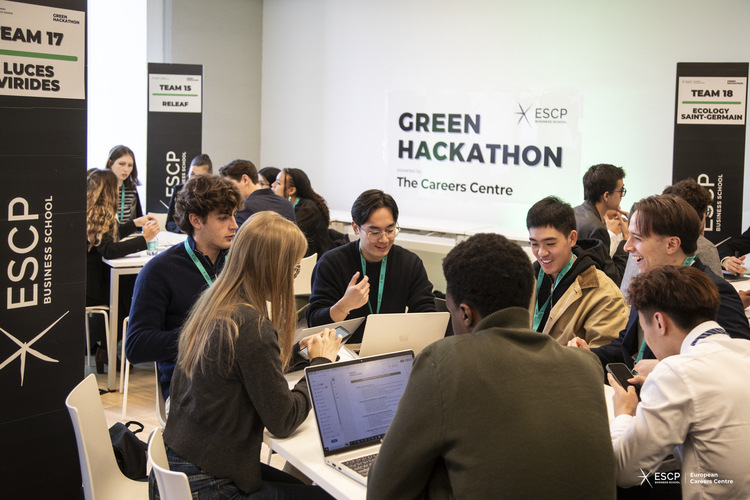
Beyond the individual solutions developed, the Green Hackathon offered a practical example of how students could explore sustainability through real-world problem solving, while strengthening collaboration between academia and the business community.
The initiative has extended its impact beyond Turin. Thanks to the support of the Turin Campus Company Relations team, an edition of the Green Hackathon was made possible at the Berlin Campus in 2026, organised by the student organisation Agora.
Over time, the format has evolved into the ESCP Hackathon, addressing wider business and innovation challenges. For the 2026 edition, the theme “AI x Impact” will invite students to explore how Artificial Intelligence can contribute to imagining sustainable future scenarios for the economy and society. In this way, sustainability remains connected to the Hackathon through a broader understanding of impact and the role innovation can play in shaping the future.
Engaging with the ESCP community
Sustainability extends from the campus into teaching, student activity and everyday operations.
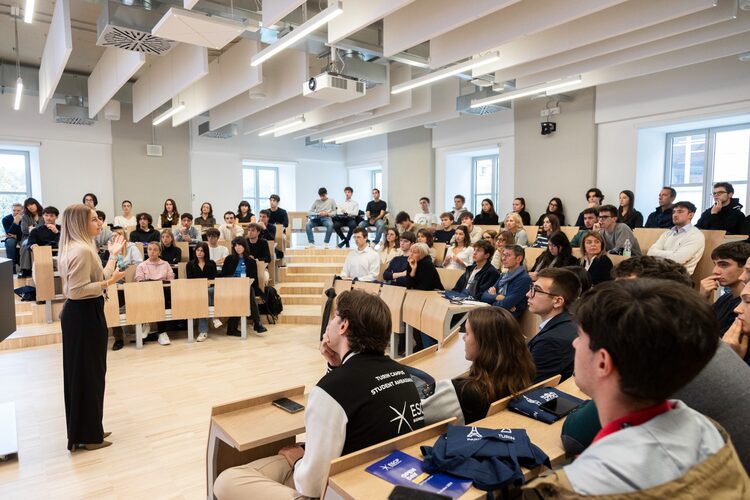
In the classroom, dedicated sustainability courses feature in the Bachelor in Management and Master in Management, while other programmes approach the subject through their industries. International Food & Beverage Management covers areas including sustainable agrifood systems, food waste and sustainability reporting; Luxury Management examines sustainable transformation and strategic integration; and the Executive MBA addresses sustainability reporting and non-financial disclosure.
Students also turn these ideas into action. GEA Sustainability organises initiatives including swap parties and campus sustainability challenges. Together with Girl Up ESCP and with support from the ESCP Foundation, it launched the Period Care Product Project, providing free sustainable menstrual products through dispensers across the campus.
Sustainability also influences everyday operations. The campus cafeteria pays attention to responsible food management and incorporates local sourcing and compostable and recyclable materials. Moreover, responsible choices also extend to the products and services offered on campus; campus vending machines are managed by a social enterprise creating employment opportunities for people with disabilities and others facing barriers to employment, while selected suppliers are chosen for their positive social and environmental mission.
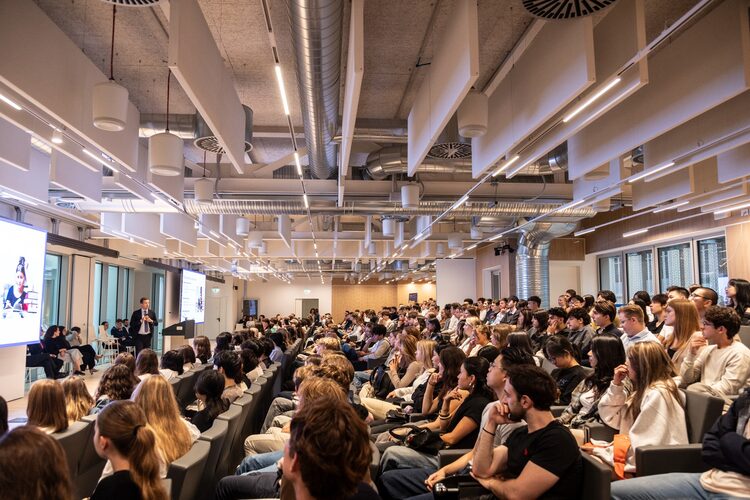
Faculty and professional staff are involved in interactive workshops such as Climate Fresk, which helps participants better understand the science behind climate change while encouraging discussion and action.
Alongside environmental awareness, the campus has also launched a wellbeing pilot programme to support the physical, mental and social wellbeing of staff through initiatives such as mindfulness sessions and Pilates.
What’s next?
One of the Turin Campus’s next priorities is to complete the pedestrianisation of the street in front of the campus, extending its sustainability approach into the surrounding neighbourhood.
Developed with local stakeholders, the project aims to transform the street into a safer, greener and more welcoming shared space, with more room for walking, outdoor activities and social interaction. Additional greenery and permeable surfaces will help improve the area’s resilience, support urban biodiversity, contribute to better air quality and mitigate the urban heat island effect. The aim is to create a people-centred public space and strengthen the connection between the campus, city and local community.
The academic dimension is also set to grow. The Turin Campus expects to welcome a new faculty member to the Sustainability Department, creating further opportunities for teaching, research, interdisciplinary collaboration and student engagement.
Relevant link
Campuses