
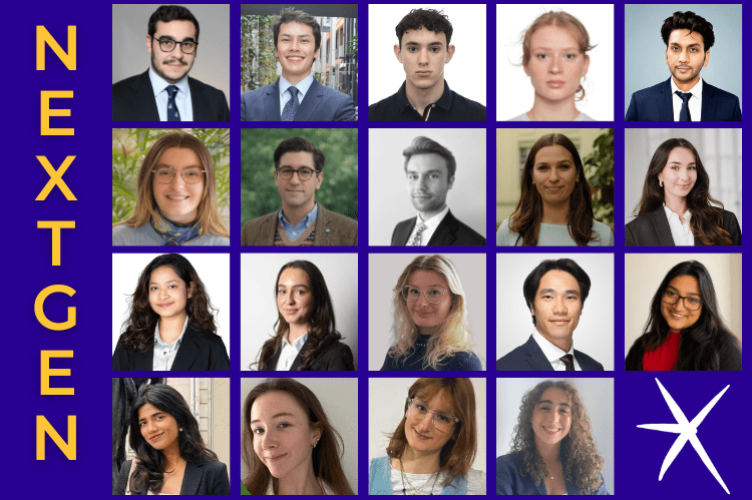
The new student governance committee will bring younger generation perspectives into ESCP’s sustainability strategy.
On 21 July 2026, students from across ESCP met for the first working session of the NextGen for Impact Committee, a new working group created to involve students more closely in the School’s sustainability and impact priorities.
Representing a diverse range of programmes and backgrounds, the 19 students will spend the next 12 months exploring a shared impact-related challenge and developing proposals with advisors, mentors and members of ESCP leadership.
The committee will add a new dimension to ESCP’s existing sustainability governance.
In 2025, ESCP launched its Sustainability Advisory Council, bringing external experts across climate science, activism, public policy, finance, tech, civil society and international development to help challenge and shape the School’s sustainability strategy.
“The NextGen committee is the next logical step for us after our Sustainability Advisory Council, which represents high-level experts and recognised professionals in society across a broad spectrum of topics,” shared Professor Gorgi Krlev, Associate Dean of Sustainability at ESCP. “NextGen allows us to have a more inclusive representation of our students on impact topics.”
Meet the NextGen for Impact Committee
The first NextGen for Impact cohort brings together 19 students from across ESCP:
Strengthening student input on sustainability
The first session helped to define the committee’s mandate and the key milestones for the year ahead. Two questions will guide their work over the coming year:
- How can ESCP and its students work together to achieve greater practical impact?
- Which strategic decisions have yet to fully incorporate the perspective of younger generations?
For Perrine Belot, a Bachelor in Management student, students have knowledge and experience that can contribute directly to these discussions. “Our generation is inevitably invested as we are taught about the stakes, the causes and the potential solutions,” she says. “It is up to us to use our knowledge, motivation and ideas to support sustainability initiatives at ESCP and beyond.”
That generational perspective is also central to member and PhD student Selim P. Geis, whose research examines how responsible management education can support sustainability transformation in organisations.
“Students inherit the consequences of decisions being made now, which gives them a different relationship to urgency and long-term thinking,” says Geis. “Therefore, it is crucial for a school serious about sustainability to design its transformation together with the people who will be most affected by its outcomes.”
From student perspectives to impact
ESCP’s 2026–2030 Bold & United strategic plan reinforces sustainability as one of the School’s priorities for the coming years through education, research, entrepreneurship, student engagement and impact measurement.
Sustainability is already a significant part of student life and learning at ESCP. NextGen will add a structured channel connecting student perspectives to sustainability discussions at the institutional level.
For Foster Ng, a Master in Management student, that dialogue should ultimately lead to quantifiable results. “I would like to see meaningful engagement between the Committee and ESCP leadership that demonstrates quantifiable change. As part of the inaugural cohort, it is a privilege to help set the tone for what we can achieve together.”
As the committee moves from its first discussions towards a shared area of focus, its task will be to turn student perspectives into proposals that can make a practical contribution to the School’s transformation.
Related link
Campuses