
Berlin Research News
Designing Business Models for Ecological, Social and Economic Value
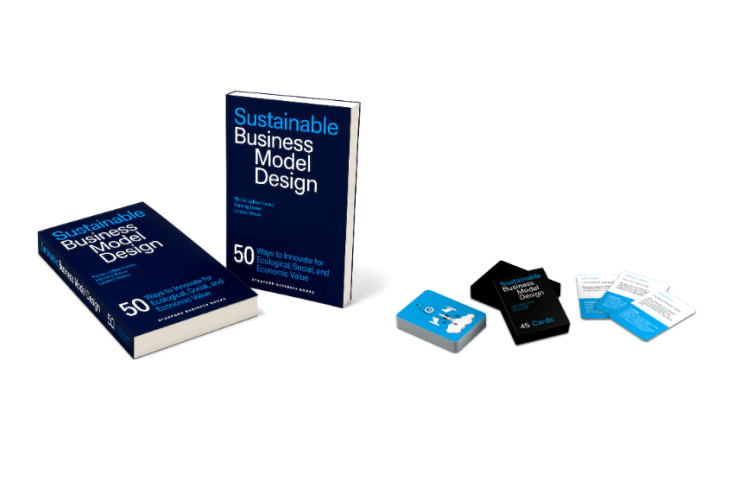
ESCP STAR hosts the launch of Sustainable Business Model Design: 50 Ways to Innovate for Ecological, Social, and Economic Value.
How can organisations create economic value while contributing to positive change for society and the planet?
This question shaped the book launch event for Sustainable Business Model Design: 50 Ways to Innovate for Ecological, Social, and Economic Value, held at ESCP Business School on 20 November 2026. The book, written by Florian Lüdeke-Freund, Henning Breuer and Lorenzo Massa, is published in its second edition by Stanford University Press.
The event brought together members of the ESCP community, researchers, students and practitioners to explore how sustainable business model innovation can become more systematic, practical and actionable.
From Value Capture to Sustainable Value Creation
Traditional business model thinking often focuses primarily on customer value, revenue and profit. Sustainable business model design expands this perspective. It asks organisations to consider how they create, deliver and capture value across three interconnected dimensions: economic, social and ecological.
This broader understanding of value creation is at the centre of the authors’ approach. Rather than treating sustainability as an additional activity or a separate responsibility, the book presents it as a challenge of business model design.
The event introduced the book’s framework, consisting of 50 sustainable business model patterns grouped into 11 categories, such as Pricing & Revenue, Ecodesign, and Ecosystems patterns. Each pattern describes a recurring challenge and offers a solution for addressing it. The patterns are not ready-made solutions to be copied. Instead, they provide business model design ideas that organisations can adapt and combine according to their specific contexts.
Combining Patterns to Address Complex Challenge
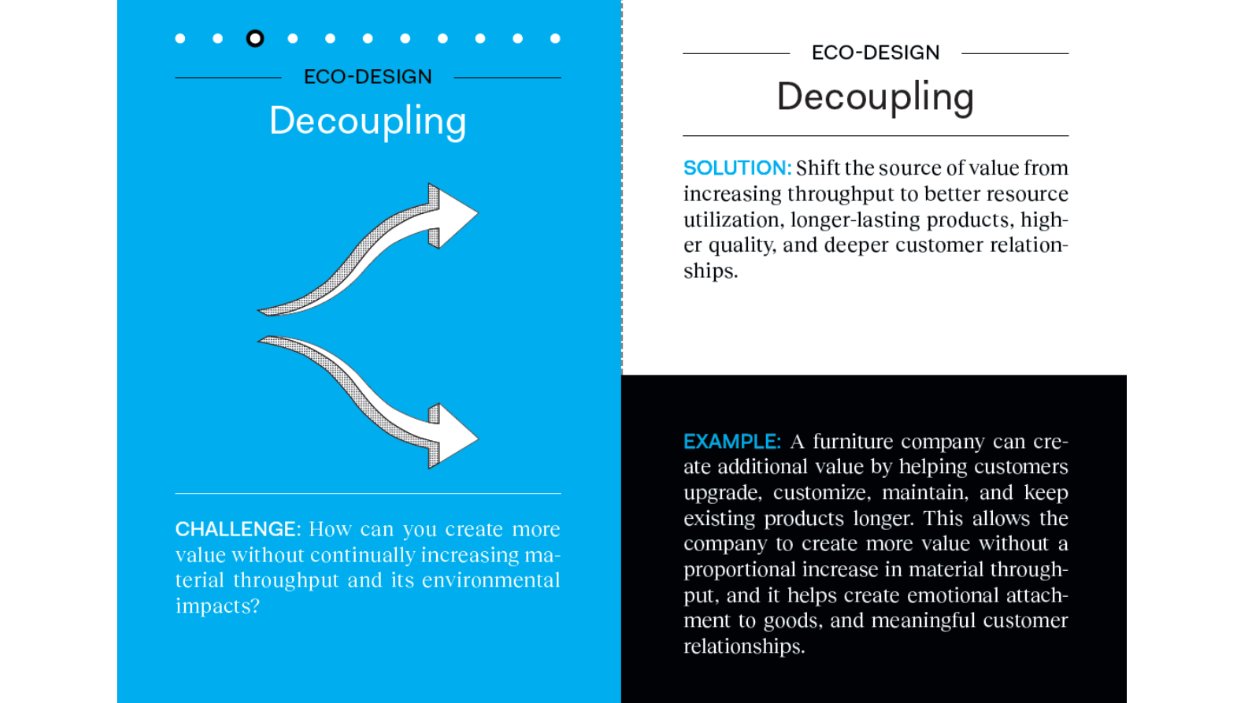
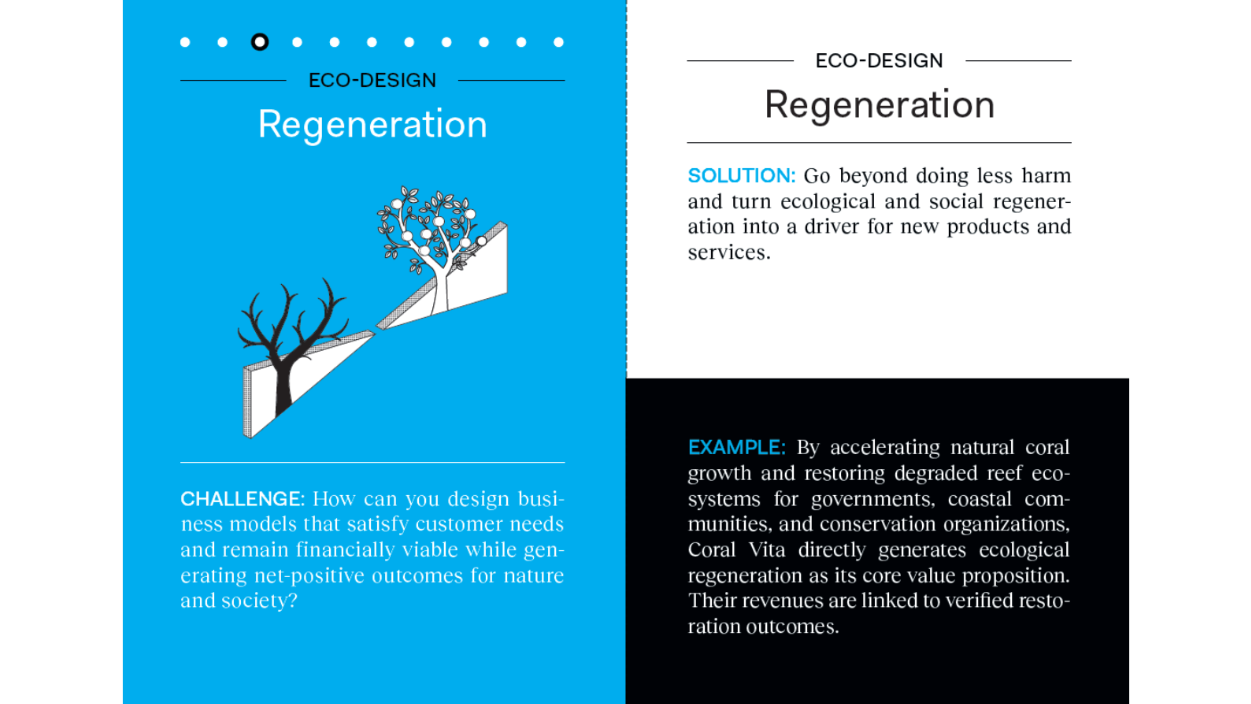
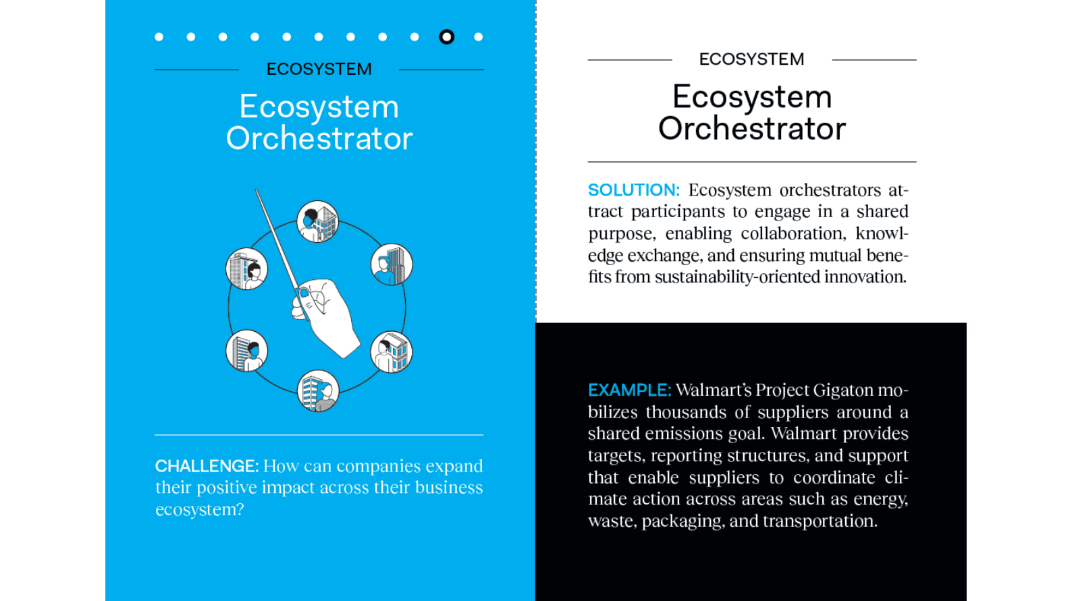
A central theme of the event was that sustainable transformation rarely depends on a single or isolated solution. The authors demonstrated how different patterns can be combined to develop new responses to complex sustainability challenges. Examples discussed included the combination of the Ecosystem Orchestrator, Decoupling and Regeneration patterns
The Ecosystem Orchestrator pattern can help organisations coordinate stakeholders, data, resources and capabilities across organisational boundaries. Decoupling can support the creation of value without a continuous increase in material throughput. Regeneration connects business activities with the restoration of ecological systems and the resilience of communities.
Together, these patterns can open up new possibilities for industries facing resource constraints, technological disruption and increasing expectations for transparency and sustainability.
One example discussed during the event focused on the future of the semiconductor industry. The scenario illustrated how shared infrastructure, trusted governance, interoperable data and regional investment could be combined to connect commercial success with ecological and social regeneration.
The example demonstrated an important principle: sustainable business model design is not only about improving existing products or processes. It can also involve rethinking relationships, infrastructures, revenue models and the wider ecosystems in which organisations operate.
From Patterns to Practice
The book’s approach is designed to support practical experimentation. Its method includes four steps: 1. understand the problem and define the strategic challenge, 2. screen and select patterns, 3. adapt and combine patterns and 4. model and refine new business models.
The event also presented a practical process that positions sustainable business model design as a portfolio of experiments rather than as a single linear exercise. Organisations can explore multiple possibilities, test their assumptions and develop the most promising concepts over time.
The authors emphasised the importance of human intelligence and creativity and the empowering effects that working with patterns can have, despite the increasing importance of artificial intelligence.
AI can support the process, for example, in preparing business model design pitches. But it cannot replace the creative power and contextual knowledge of human expert teams.
Connecting Research, Education and Practice
The event also highlighted the role of sustainable business model design in teaching and executive education.
The patterns offer a common language for discussing sustainability transformation across different levels of an organisation. They can support classroom learning, strategic workshops, executive education and collaborative work between companies and academic institutions.
The discussion became particularly valuable through the contributions of practitioners in the room. Participants raised questions, shared experiences from their organisations and reflected on how the patterns could be applied to real-world challenges.
These exchanges added an important practical dimension to the academic discussion. They also demonstrated the value of bringing together people with different forms of expertise: researchers developing concepts, educators translating them into learning experiences, and practitioners testing them in complex organisational environments.
Building Bridges Between Academia and Business
The book launch reflects the purpose of ESCP STAR: to create meaningful connections between research, education and practice in support of sustainable transformation.
Sustainability challenges cannot be addressed through theory alone. They require organisations to experiment with new ways of creating value, to work across ecosystems and to develop business models that respond to ecological and social realities.
Sustainable Business Model Design offers a structured vocabulary and a practical set of tools for this work. Its 50 patterns invite organisations to ask better questions, explore new possibilities and move from general sustainability ambitions towards concrete business model innovation.
Find out more about the book and the sustainable business model patterns.
Learn more about ESCP STAR.
Campuses