
IMPROBABLE - AN ART THINKING WORKSHOP - ONLINE EXHIBITION
VIRTUAL OPENING
Is it still possible to teach with the same teaching materials, management models and case studies?
Faced with ecological change, and the growing uncertainty due to the spread of the Covid-19 pandemic, there is an urgent need to move away from utilitarian education, which is focused on financial profitability. More than just recipes and ready-to-think method, students seek to understand. They criticize, question themselves and question us.
To meet these challenges, we choose a detour through art. The history of artists of the past century testifies to their ability to overturn certainties and reinvent normality.
From January 12 to 14, 2021, the Option E cohort of students from the ESCP Master in Management in partnership with Cottino Social Impact Campus will create works of art which reimagine the world in the context of Covid-19.
To support them in their journey, they will follow the Improbable seminar, a 3-day training course based on the Art Thinking method. This method, designed by Sylvain Bureau, makes it possible to create the improbable with certainty.
Led by artists and ESCP professors, participants will have access to conferences, creative workshops and mentoring sessions.
On January 14, the works will be presented and exhibited. Join us on zoom, from 6.30 to 8 p.m. (CET), and contribute to the dialogue and to the creation of these new worlds.
Because ready-made solutions do not exist, because certainties are shaking, we must imagine the improbable.
JOIN THE EVENT: zoom.us/j/97422421696?pwd=QXFiS1JvM3BDUW8reDJEc3duMjhMdz09
Art Thinking is a flexible method that makes creation accessible to as many people as possible; it is a hybrid of two disciplines, art and entrepreneurship, around 3 main phases – doing, criticizing and exhibiting – and 6 practices – giving, diverting, destroying, drifting, dialogue and disposition and that allows, not to do better what we already do, but to do otherwise to open up new possibilities for individuals and organizations" explains Professor Sylvain Bureau, aggregated of the Ecole Normale in economic sciences, doctor at Ecole Polytechnique and Scientific Director of the Jean-Baptiste Say Institut.
Professor Bureau designed Art Thinking: a method to create improbable with certainty. He teaches this method to managers, entrepreneurs and students with the Art Thinking Collective during the Improbable seminar at ESCP, the Ecole de Guerre, Centrale Supélec or School 42. He also trains facilitators in this method at Stanford, HEC Montréal, the University of Oulu in Finland and at Musashino Art University in Japan. Training is given in unique venues such as the Centre Pompidou, the Montreal Museum of Fine Arts and the Block House in Tokyo.
Location
Organiser: ESCP Turin Campus
Online - Worldwide
MapDate
Start date: 14/01/2021
Start time: 6:30 PM
End time: 8:00 PM
![© AccuHealth [copyright]](/sites/default/files/styles/home_listing/public/2020-11/357_InlineA_ACU_HD.jpg.rendition.3840.2560.jpg "© AccuHealth [copyright]")

You just graduated from high school and are wondering which professional path is the right fit for you? Choosing a study programme and a university is a very important decision for your future career and it is not an easy one.
If you are open-minded, interested in an international career in business and economics and ready for a new challenge the Bachelor in Management at ESCP might be an option for you.
Want to find out more? Join us online.
During this online info session our recruiters will take time to explain to you what it is like to study at ESCP and what we offer to our BSc in Management students. Of course you can ask all of your questions and we will answer them live.
Register here to meet us online and find out whether ESCP Business School is the right fit for you.
More info: bachelorberlin@escp.eu - www.escp.eu/bachelor
Location
Organiser: Berlin Campus
Online - Worldwide
MapDate
Start date: 29/01/2021
Start time: 5:00 PM
End time: 6:00 PM
![© LSE Business Review [copyright]](/sites/default/files/styles/event_news_une/public/2021-01/EU-AI-.jpg)
Campuses
![© EFMD [copyright]](/sites/default/files/styles/event_news_une/public/2021-01/Digitalisation-in-HE_Andreas-Kaplan-1024x539.jpg)
Campuses

The transformation of companies into agile and digital organizations has been playing a major role all around the globe and will continue even evermore. Therefore, we want you to give an inspiration of how this transformation can be managed successfully by inviting you to our online masterclass "It's the people, stupid! Food for thought why people & culture management might be more important than ever“ with our guest Johannes Burr, Head of Collaboration, Learning & Transformation at Axel Springer SE – People & Culture.
Johannes Burr will give an exclusive insight into Axel Springer’s transformation into the "leading digital media and technology company" and displays what it takes to transform successfully.
We invite you to join our online masterclass and take part in the discussion.
Register yourself here!
Speaker's bio
As part of the People & Culture management team at Axel Springer SE, Johannes Burr played a key role in the restructuring and realignment of the Group's central HR department, where he set the course for agile and modern HR work. Since mid-2013, he has been shaping, driving and shaping - initially as Head of Change Management and later in other HR management positions - the rapid transformation process from the formerly traditional publishing house to Europe's "leading digital media and technology company" in a management role. Certified as an Agile HR Manager and Scrum Master, his conviction to "be the change you want to see in others" motivates him to exemplify modern ways of working (such as agile working, social collaboration, self-organization and OKR) together with his teams and thus to set impulses for the further development towards a digital and agile company every day.
Do you want to know more about how to implement new work strategies in order to foster the transformation of your organization? Check our open programme "Designing New Work - HR as driver for innovation and change".
Location
Organiser: Berlin Campus
Online - Worldwide
MapDate
Start date: 11/02/2021
Start time: 6:30 PM
End time: 7:30 PM
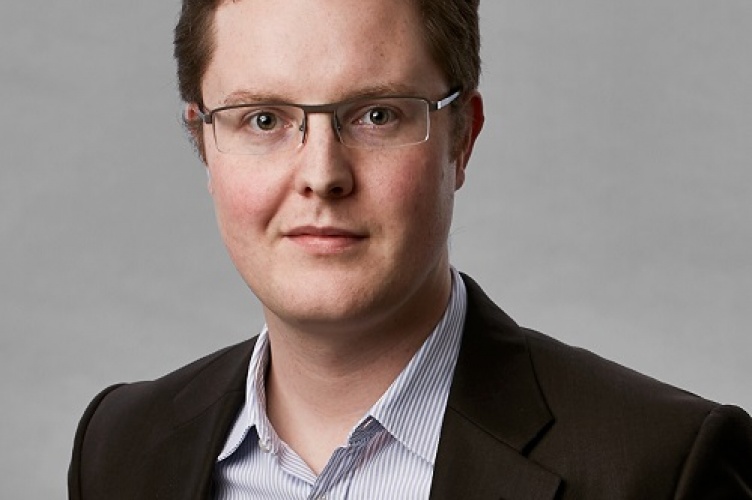
In this interview, Prof. Dr. Christoph Seckler, Assistant Professor, Chair of Entrepreneurial Strategy, analyses the ties between the corporate world and the entrepreneurial one. He explains how corporate managers could benefit from entrepreneurial skills and why an MBA could be the right choice for aspiring entrepreneurs.
Why should corporate managers think and act like entrepreneurs?
Good corporate managers have always been entrepreneurial. Being entrepreneurial means to explore opportunities and seize them effectively. This can mean to explore opportunities for new projects or to seize the chance of hiring good people for the team. These entrepreneurial capabilities will become even more important in an increasingly volatile and uncertain business environment.
What I think corporate managers can get inspired by is how entrepreneurs effectively explore and seize opportunities. The key principles are:
- learning quickly through smart experiments
- embracing failure as part of the game
- sharing novel ideas is more effective than keeping them secret
Can creating a start-up not replace formal education with rapid on-the-job-learning?
It is true that much can be learned as an entrepreneur. And the learning curve is steep. But the MBA experience is much broader. It allows participants to develop as people while acquiring the necessary skills, tools, and knowledge needed to succeed as an entrepreneur. So I think a very good combination is to do an MBA and to seize this opportunity to get to know like-minded students with whom you can found a start-up. This way you get the best of both worlds.
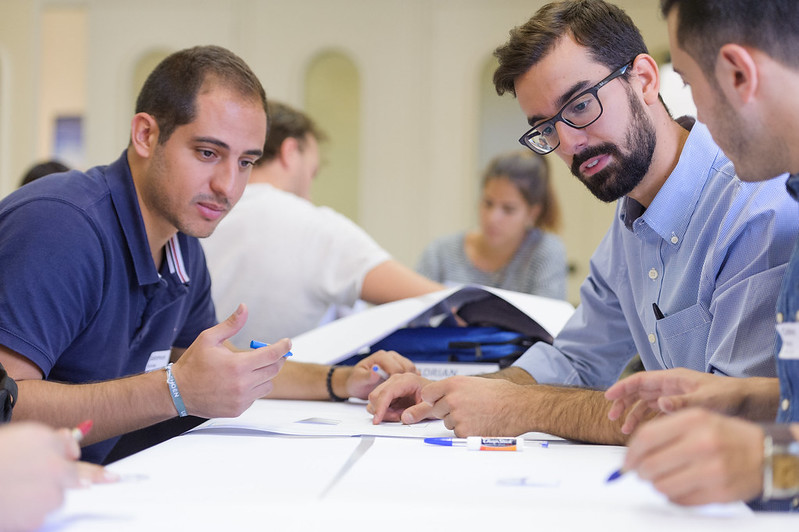
Does an MBA help founders succeed?
Definitely. I think that our MBA programme is very well suited to prepare founders to succeed. Research shows that successful founders are characterized by three things: the right knowledge and skills, personal networks, and the right mind-set. All three increase future founders’ capabilities of discovering, creating and seizing opportunities.
The curriculum of the MBA provides our students with the right knowledge and skills in our interactive education formats. MBA peers become invaluable advisors, co-founders, or future customers and professors become mentors. Finally, ESCP Business School fosters an entrepreneurial mind-set characterised by taking initiative, being collaborative and overcoming setbacks together.
What are the main and most important skills that you will gain from an MBA and that are vital to being a successful entrepreneur?
There are several skills that have been shown in research to be vital for successful entrepreneurs. Individual skills include problem solving skills, managing stress, and developing self-awareness. Other interpersonal skills include leadership skills, communication skills and building effective teams. These are the skills that we teach across different modules within the MBA in International Management.
You are teaching the Entrepreneurship course in the MBA. What is your focus, and can you tell us something about special features within the course?
The course is focused on helping our MBAs to develop as entrepreneurial leaders. We use an experiential learning approach to educate them in forming effective entrepreneurial teams, exploring business opportunities, validating business models and in successfully pitching their ideas to investors.
A special feature of the course is that it is co-taught with two remarkable colleagues: Jack Fuchs and Jörg Reckhenrich. Jack Fuchs is a Professor at Stanford University and an Angel Investor who brings his considerable knowledge and experience of the entrepreneurial environment of Silicon Valley. Jörg Reckhenrich is a highly qualified Coach and successful Founder as well as a wonderful artist from Berlin who shares his expertise on creative leadership. Together with Jack and Jörg, it is our aim to provide the MBA students with the right tools, skills and expertise needed to develop as effective entrepreneurial leaders.
What is in your opinion the impact of the pandemic on entrepreneurial businesses?
Countless new ventures find themselves in difficulty. Many go through a very tough period and it is good to see how entrepreneurs support each other in getting through that time.
At the same time, the pandemic has also created new opportunities. It has changed what people need, and it has also increased the development of advanced technologies to address these needs. So we are seeing different COVID-19 vaccines, innovative video-conferencing solutions, and novel ways of combining work and personal life. I am very curious to see what new business ideas and potentially whole new industries are going to emerge from that.
What is your advice for the aspiring entrepreneurs of today?
There have been few times in history in which it has been more exciting to become an entrepreneur. The current developments, particularly in digital technologies and in the field of sustainability will lead to many novel opportunities as well as challenges that entrepreneurs will have to tackle. By becoming an entrepreneur, you can seize these opportunities and tackle some of the most pressing challenges of our time.
At ESCP, we equip you with the right skills and knowledge, network, and mind-set to succeed as an entrepreneur.
The interview was led by Alison Masse, Programme Manager of the MBA in International Management at ESCP Berlin. If you want to know more about the programme, don't hesitate to reach out! (amasse@escp.eu | +493032007173)
Campuses
Transformation is today’s key challenge in business and society. Technology is disrupting existing business models and the adaptation to climate change is essential for the economic welfare of future generations. The Covid-19 pandemic has proven that agile organizations able to change and adapt processes and products can survive and even improve their market positioning. “Effectively dealing with these kinds of challenges requires a new generation of entrepreneurial leaders,” says Sven Scheid, Director of the U-SCHOOL programme. “For seven years U-SCHOOL has helped develop entrepreneurial leaders by providing them with the right tools, skills, and inspiration.”
The newly appointed Academic Directors of U-SCHOOL, Professor Peter Borchers and Professor Christoph Seckler designed the programme by showcasing an approach suited to evidence-based education: “We help you to develop an impactful project for your firm over four modules. While the project itself may help your firm to make transformation happen, working on the project will help you to develop as an entrepreneurial leader. We do not teach the fads or fashions of the day. We teach what has scientifically been shown to help organizations to manage transformation.”
ESCP professors from the Jean-Baptiste Say Institute and faculty teach together with entrepreneurs, senior executives and transformation experts like Marc Sasserath, Ulrich Schmitz, Karina Collis, Sebastian Fittko, Jörg Reckhenrich, Meike Müller, Christopher Kabakis, Sascha Wolff, Gunnar Graef, Nicola Breyer, Stephan Schwahlen and many more.
Campuses


As of 4 January 2021, Professor Andreas Kaplan, 43 years old, will take over as Dean of the Paris campus until the end of 2021. An assessment of this new organisation will then be carried out. He will operate under the responsibility of Professor Frank Bournois, Dean of ESCP.
"Our Management Board team, which will oversee his work, is glad to welcome him into this important mission. This task represents a further step in the Europeanisation of the School's operations. Gradually, the major areas of the Paris campus will be assessed in the light of a new organisation » says Frank Bournois.
With 6 campuses in Europe in Berlin, London, Madrid, Paris, Turin and Warsaw, ESCP is today the only truly pan-European business school. Each campus is recognised and accredited in its own country by national and/or local authorities.
Andreas Kaplan knows ESCP well from having held numerous federal and local responsibilities there. He graduated from the school in 2002 and has been a Professor of marketing at ESCP since 2008. Brand and Communications Director from 2012 to 2014 and Academic Director from 2014 to 2017, he has been Rector of the Berlin campus since April 2017. His research focuses on the analysis of the digital world, in particular social media and artificial intelligence. With several seminal articles and 30,000 citations on Google Scholar, Professor Kaplan was recently ranked among the top 2% of scientists worldwide by a study by the prestigious Stanford University.
"To lead the ESCP Campus in Paris after my time in my home country as Dean of its Berlin campus is highly symbolic for me. As a European convinced of the relevance of the Franco-German axis, I am very proud to embody this at ESCP, continuing my mission in France after a few years in Germany" adds Professor Kaplan.
The term of office of the Rector of the Berlin campus is coming to an end on April 2. In order to ensure a smooth succession without disrupting the work of the Berlin's teams, Andreas Kaplan will remain in office until his successor is nominated.