
![© MIT Sloan Management Review [copyright]](/sites/default/files/styles/event_news_une/public/2021-10/GEN-Meissner-AI-Decisions-1290x860-1.jpg)
Campuses

Speaker: Dr Mamdouh G. Salameh, International Oil Economist
Our planet is struggling to achieve net zero and prevent catastrophic events of climate change. Shifting the global economy onto renewables is key to fighting against climate change.
This event will discuss what is required by the energy systems and governments ecosystems from around the world to achieve this by 2050, including:
- Global outlook on the energy transition
- Latest on climate change
- Are net-zero emissions achievable by 2050?
- What will it take to bring a successful energy transition?
- The legal case against harassing the global oil and gas industry
- Oil and gas are here to stay
- The hype about EVs
- Is there a future for hydrogen?
- What are the key factors that could bend the curve back towards 1.5 degrees?
Registration
The event will take place on Zoom at 6:00pm BST on Tuesday, 19th October. Attendance is free of charge. To secure your place, please click here.
About Our Speaker
Dr Mamdouh G. Salameh is an international oil economist. He is acknowledged as one of the world’s leading experts on oil. He holds a PhD in Economics specialising in the economics and geopolitics of oil and energy. Dr Salameh is also a visiting professor of energy economics at the ESCP Business School in London.
Dr Salameh has presented papers to numerous international energy conferences on the economics and geopolitics of oil and energy and has been frequently invited to lecture on these topics at universities around the world. He has written four books on oil: ‘Is a Third Oil Crisis Inevitable?’ (published in London in April 1990); ‘Jordan’s Energy Prospects & Needs to the Year 2010: The Economic Viability of Extracting Oil from Shale’ (published in London in October 1998); ‘Over a Barrel’ (published in the UK in June 2004); and ‘What is Behind the Steep Decline in the Crude Oil Prices: Glut or Geopolitics?’ (published by the Arab Centre for Research & Policy Studies in Qatar in June 2015), as well as numerous research papers published in international Oil and Energy Journals.
Dr Salameh has undertaken research assignments for the US Department of Energy; the Institute of Energy Economics in Japan; the Indian Government; OPEC; the Canadian Energy Research Institute; Boston University, working on the Encyclopedia of Energy and Handbook of Energy; and the government of Jordan, amongst others. He regularly appears on TV to discuss oil prices and other developments in the global oil market.
Dr Salameh is a member of many International Institutes and Associations including the International Association for Energy Economics (IAEE) in the US, the British Institute of Energy Economics, the International Energy Foundation in Canada, and the International Institute for Strategic Studies (IISS) in London.
Participants

Dr Mamdouh G. Salameh
International Oil Economist & Visiting Professor

Dr Georgia Makridou
Academic Director, MSc in Energy Management
Location
Organiser: Energy Management Centre
Online - Worldwide
MapDate
Start date: 19/10/2021
Start time: 6:00 PM
End time: 8:00 PM
![© Burst - Shopify Partners [copyright]](/sites/default/files/styles/event_news_une/public/2021-10/LSE_Blasco%26Lee.jpg)
Campuses
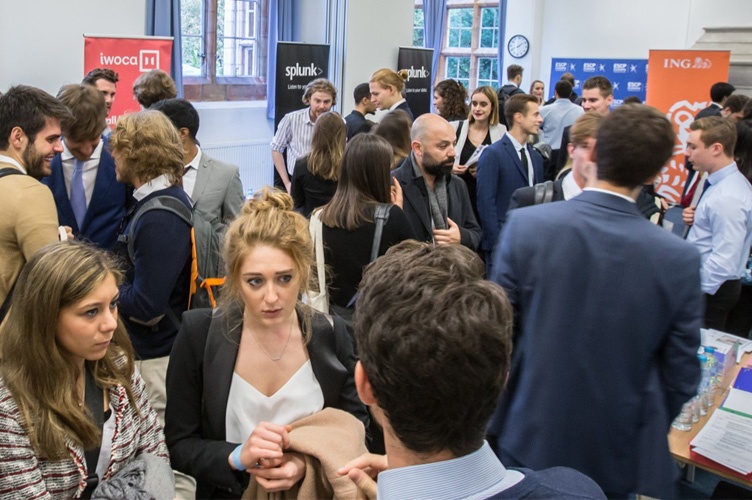
The London Campus Careers Service of ESCP is delighted to welcome you to the second edition of its Virtual Careers Fair.
Following on from the success of our very first Virtual Careers Fair in 2020, which saw a record number of students attend, we are looking forward to hosting you at the second iteration of our interactive online networking event.
This event is open to current ESCP students across all campuses and we invite you to participate and make the most of this opportunity. In addition to having virtual, one-to-one chats with representatives from different companies, our participating companies will be hosting a series of webinars and company presentations in the morning.
Before the Event
In order to make the most out of this event, please remember to complete your profile on the gethighered platform. Be sure to also upload your CV so employers take a look at it while you are engaging in virtual chats.
Agenda for the day
The event will go live from 8:00am BST to enable you to attend the company presentations and webinars hosted by participants, and to go through the different job opportunities offered. The schedule for webinars is as follows (all times BST):
- 09:00 - BPI, Business Performance Institute Company Presentation and Q&A
Attend the webinar to get the chance to hear more about who we are, what we do and opportunities to work with us. We will talk about our company purpose, typical client projects, our team and culture, and recruiting process.
- 9:30 - AlphaSights Company Presentation
Join an award-winning, high growth company. AlphaSights offers unparalleled professional development opportunities for graduates, with our employees becoming first-time managers roughly five years faster than elsewhere. Interested in how we do it? And why are we consistently named one of the best workplaces in the UK? Graduate Recruitment Associate, JP Conway will reveal all in this short webinar, before being available afterwards to speak one-on-one
- 10:00 - Babcock International Company Presentation
- 10:30 - Discover Amazon Operations
We are happy to announce the Discover Amazon Operations happening with ESCP and presented by Beatrice Lupi, our great Campus Recruiter. If you are currently studying or are about to graduate, join us to learn more about Amazon Operations. Please register for this webinar here.
- 11:30 - Bloomberg Company Presentation
Bloomberg is hosting an information session to give you an insight to our company culture and the roles that we have available. We look forward to meeting you at the session.
- 13:30 - 17:00
You will be able to initiate virtual one-to-one chats with representatives from all participating companies. You will have to initiate chats by clicking on the relevant company's virtual booth, and then selecting a representative to chat with. Companies will be able to initiate video chats with you during this time; however, this is optional and will not be activated until you have accepted this request.
A short break has been scheduled for companies between 15:00 and 15:30, during which time they may not be available to chat. If they are away, their chat will show as 'offline'.
Participating companies
Accuracy
Advancy
Amazon operations
AlphaSights
Babcock International
Balenciaga (available from 15:30 - 17:00 only)
Bloomberg
BPI - Business Performance Institute
MCF Corporate Finance
JellySmack
Splunk
Live Support
We will have live support available for you on the day between 08:30 - 09:30 BST and then again from 13:00 - 15:00 BST in case you experience any technical difficulties. You can access live support here.
We look forward to welcoming you to the event and hope that you will be able to make the most of it!
Location
Organiser: ESCP London Campus
Online - Worldwide
MapDate
Start date: 06/10/2021
Start time: 9:00 AM
End time: 5:00 PM
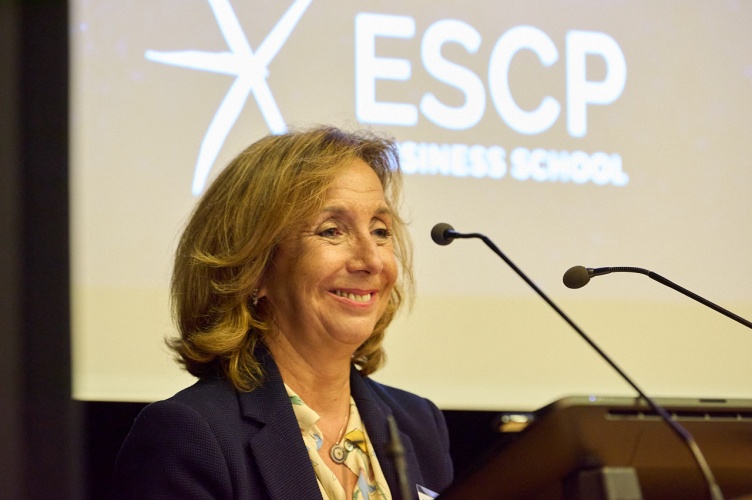
Laura has a PhD in Economics from UEM, Economist from UCM, MBA from IE, in addition, she studied the Higher Management Program at Ashridge University, and has a Master in International Trade from IEDE. Her career has been linked to marketing and sales in top-level multinationals.
She is also the author of the book Political Marketing 3: 0; How We Can, Citizens and Vox have changed the rules of the game.
What professional challenges does this new appointment represent for you?
Being Associate Dean of the ESCP MBA in International Management is an honour, a privilege and a great challenge, both professionally and personally. To lead an MBA that is taught in 5 cities: Paris, London, Madrid, Berlin and Turin, with students and professors of more than 30 different nationalities, accredited by the most prestigious international institutions and with a vocation to grow in number of students and in prestige, is the most important professional challenge of my career. It will also involve a great personal effort, since my team is mainly in Paris and I will continue to live in Madrid.
I trust that my professional experience in various positions in marketing in multinationals (Unilever, Kraft, Colgate, Altadis, among others) and my years as a teacher and director of various programs, will be complementary and help me face this challenge.
What are the professional opportunities of studying an MBA compared to other disciplines?
The main reason why students decide to study an MBA is to boost their professional career or to change their line of work (move from more specialised positions to more general management). To have a career of increasing responsibility it is necessary to have a global and international managerial profile, that is why an MBA studied abroad and, if possible, in more than 2 countries definitely pushes professional careers.
The practical training of the MBA, especially ESCPs´ in which 2 real consulting projects are carried out, for real companies, makes graduates have real experience in various industries, countries and scenarios, so, together with their previous experience, they acquire a level of preparation and innovative ideas that are recognised by employers and headhunters.
We need not to forget that the great difference of a prestigious MBA lies with the so-called “soft skills”. MBA students reinforce their leadership skills, we prepare them for decision-making and team leadership in diverse, changing and digital environments. The programme, teachers and activities are focused on students learning to work in international, sustainable environments. Digital and in permanent change.
An MBA helps students become entrepreneurs or have an entrepreneurial mindset.
And finally, an MBA allows you to create a unique network of contacts. The bonds that are created in an MBA last a lifetime. MBA Alumni help each other throughout their professional lives and it is quite common for opportunities to be offered amongst themselves.
We are living in a time where digitalisation absorbs and leads education at all levels. What influence does digitalisation have on an MBA?
It influences an MBA programme in every aspect. Other than taking digital related courses and knowledge, digitisation is transversal in all courses, since it encompasses all functions (marketing, finance, human resources, etc.) that are being affected by digitalisation.
We teach students to function in a digital world and they study in a digital environment.
What skills would you highlight from ESCP's MBA in International Management compared to other MBAs? What profile are you looking for in your students?
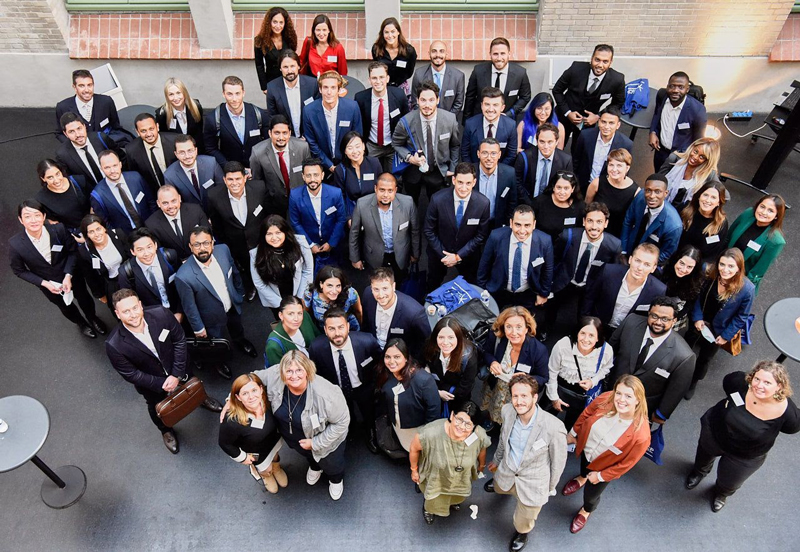
The Class of 2022
Photos by Thierry Foulon
The greatest competence, the one that really makes the difference compared to other MBAs, is knowing how to function and progress in a multicultural, digital and sustainable environment. We give our students the opportunity to study in 2 European countries, of their choice, and to do electives in other countries, on all of our campuses, including Warsaw.
Their day to day life is with students and teachers from more than 30 different nationalities and with personal and professional experiences on all continents and with different cultural and social environments.
Our students have an international vocation and digital and sustainable concerns.
Any advice you would give to professionals who are looking to pursue an MBA or are doubtful about doing an MBA versus a specialisation
The choice of which master's degree to study depends on the professional objective of the students, specialisation versus general ambition. If a student aspires to general managerial positions, if he aspires to a general, strategic, or similar direction, he must study an MBA, but if he wants to specialise in a function (marketing, finance, human resources, etc.) he must study a specialised master's degree.
Prof. Léon Laulusa, Executive Vice-President and Dean for Academic and International Affairs, adds: "We talk more about challenges than difficulties: our ambition is to make this excellent and innovative programme known internationally and to attract the world's elite to this MBA programme. “
Campuses
![© Adobe Stock - WITTAYA [copyright]](/sites/default/files/styles/event_news_une/public/2021-10/wittaya-adobestock_221681731-1187x742.jpg)
![© fauxel/Pexels [copyright]](/sites/default/files/styles/event_news_une/public/2021-10/Seckler_WEF.jpg)
Campuses
Campuses
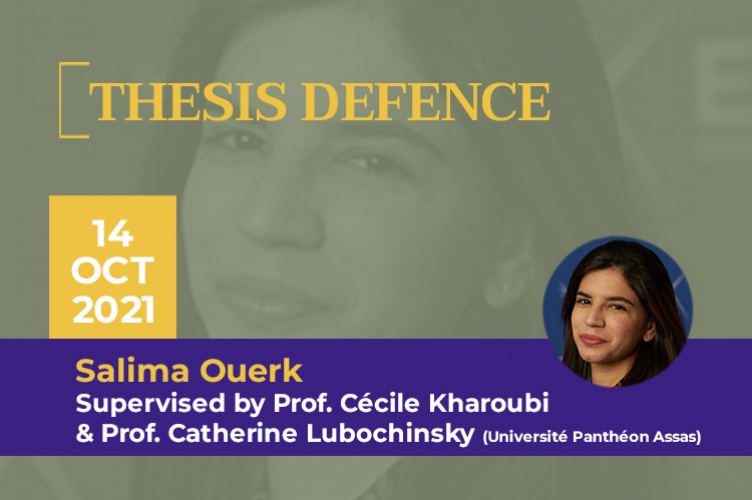
Thesis Defence
The Influence of Networks on Perceived Career Outcomes
Salima Ouerk, PhD candidate in the Paris Doctoral programme, will publicly defend her thesis in Management Sciences.
14 October 2021 – 1:30 p.m. (CEST)
ESCP Business School, Amphi GUY
Abstract
This thesis contributes to several debates on the capacity of central banks to respond to their main objectives in a context of zero lower bound, by providing new evidence within an empirical framework.
Firstly, this thesis proposes to assess the transmission mechanisms and the macroeconomic impact of unconventional monetary policy in the Euro Area. The analysis shows that ECB’s unconventional monetary policy measures have sustained the real economy even if the zero lower bound has decreased the efficiency of monetary policy and accentuated the heterogeneity of the Euro Area.
The second chapter studies the interaction between unconventional monetary policy and the behaviour of Euro Area banks by investigating the role of banks in transmission of unconventional monetary policy to emerging market economies. The results show that the ECB’s unconventional monetary policy influences the decisions made in the Euro Area banking system, which leads to an increase of banking outflows.
In turn, the rise of inflows into emerging market economies results in a significant response of financial variables, which proves that ECB’s unconventional monetary policy is a driver of the financial conditions of emerging market economies.
Moreover, the findings suggest that the monetary authorities of emerging market economies react to unconventional monetary policy independently from their exchange rate regime.
The final chapter of this thesis investigates the influence of ECB’s unconventional monetary policy on the credit distribution. Based on a French microeconomic credit dataset, the study highlights the fact that the credit is unequally distributed among households in France.
The analysis of the distribution of credit shows that the expansionary monetary policy increased the volume of mortgages at the bottom and the middle of the income distribution, but that was not enough to reduce the unequal distribution of credit.
Jury
Supervisor:
- Ms Cécile Kharoubi,
Professor, ESCP Business School - Ms Catherine Lubochinsky,
Professor, Université Panthéon Assas
Referees:
- Mr Christophe Boucher,
Professor of Universities, University Paris Ouest Nanterre - Mr Adrian Pop,
Professor, Maître de Conférence HDR, IAE de Nantes
Suffragants:
- Mr Julien Fouquau,
Professor, ESCP Business School
Location
Organiser: ESCP Business School
Paris - France
MapDate
Start date: 14/10/2021
Start time: 1:30 PM
End time: 6:00 PM