
Master in Sustainability Entrepreneurship and Innovation (MSc)
Student Oliver West talks about the Sustainable Lifestyles Venture with UNEP
 As part of ESCP’s Master in Sustainability Entrepreneurship and Innovation (now the Master in Impact Entrepreneurship), Oliver West participated in a key module co-developed with the UN Environment Programme (UNEP)—the Sustainable Lifestyles Venture (SLV) project. This year-long mandatory module challenges students to create profitable business ventures that also drive significant environmental impact, bridging the gap between entrepreneurial spirit and sustainable impact.
In this interview, Oliver shares his experiences working on the SLV project, where his team focused on the domestic energy industry. From conducting comprehensive research across the industry to pivoting their business model under tight deadlines, he reflects on the challenges and skills developed throughout the process. Oliver’s journey highlights how this unique programme equips students with the tools to innovate for a more sustainable future.
Tell us about yourself.
I was born in London and, when I was two years old, I moved to Studham, a tiny village in which I grew up. At 16, I left home to go to UWC Atlantic, an international boarding school (~96 nationalities between 350 students) on the South Coast of Wales. This was a very forward-thinking, mission-focused community which led me to discover my passion for sustainability.
For my undergraduate degree, I studied Liberal Arts and Sciences at Amsterdam University College, focusing on Environmental Economics and Policy.
What’s your personal experience/history with entrepreneurship? With sustainability?
My passion for sustainability began at UWC Atlantic. Living and learning with changemakers from all over the world, each with their own unique and progressive perspectives, sparked a belief that it is possible to enact positive social change through collaboration. I have viewed climate change and environmental degradation as the most pressing problem my generation needed to face and so it took my focus!
Entrepreneurship struck me a little later. Economics was always an academic interest of mine. The combination of my high school passion and academic interest led me to pursue a Bachelor’s centered on environmental economics. After my degree, I felt that although economics was a powerful retrospective tool, it lacked the precision to accurately predict the future. Without a tool that looks into the future, I felt unequipped to change it. This led me to look for a Master’s with a more direct link to impacting the future, and thus: entrepreneurship.
What made you want to study a master's degree at the intersection of sustainability and entrepreneurship?
I was motivated to continue my academic studies with entrepreneurship and sustainability because I believe businesses are uniquely positioned to positively impact the environment. Creating business models to tackle complex problems is crucial to encouraging the transition towards a sustainable economy. The global community needs new ideas and innovations that challenge the current unsustainable status quo most businesses work within. Learning the tools to create these models and progress these innovations was an attractive opportunity of this degree at ESCP.
Additionally, being in the world of entrepreneurship that demands creativity, planning, pragmatism, and perseverance is a prospect that appealed to me.
Can you walk us through your experience with the Sustainable Lifestyles Venture?
The Sustainable Lifestyles Venture (SLV) is a course co-created with the UN Environment Programme (UNEP) that lasts for the whole first year of the programme. The goal of the course is to create a sustainability entrepreneurship venture that is not only profitable but also impactful.
In the first term, we began the research phase. This involved talking to as many stakeholders as possible within our respective industries to understand their experiences. This was our window to gain insights from consumers, suppliers, distributors, producers, regulators, etc.
The challenge is to not immediately jump to problem identification but instead develop a deep understanding of the industry, which could later lead to uncovering the less obvious opportunities. This research was summarised into an ethnographic report due at the end of the first term.
My group (Ines Lepeu, Pierre Delfour-Given, Louise Doncieux, Markus Wiehl, and myself) worked on the domestic energy industry, encompassing energy production, distribution, supply, and consumption. We had the great opportunity to visit trade shows, conferences for policymakers, interview members of the local Berlin community and even visit an environmental house construction site and company office in the UK.
For the second term, each group consolidated their research by identifying the pain points and growth areas in the industry. Following this process, each group focuses on ideating potential value propositions and builds a rough business model around them.
After selecting their primary business model, each group tests the idea and business model directly. As some of these tests are validated, the idea becomes clearer. When some assumptions are tested and found to be untrue, the process begins again. At the end of this term in Paris, each group presented their business idea and the validation testing at the UNEP headquarters to receive their guidance and feedback.
Why did you choose to work on energy for this topic?
Energy resonated with me because I worked in the solar panel industry during my gap year between high school and my bachelor’s degree. Working in the ‘residential energy’ space was immediately attractive and an area I know has great potential for impact.
What was your biggest challenge during the project?
The biggest challenge was realising, towards the end of term 2, that our business idea was better suited to commercial clients rather than residential. Having to pivot without much time and validate our assumptions in a completely new field required a lot of work and flexibility.
What was your biggest learning or takeaway?
I learned a lot about how to create a sustainable business venture, such as: design thinking, Strategyzer business modelling, commercial ethnography, determining impact metrics, cash management, pitching and more.
However, despite all the entrepreneurial skills I gathered, I think the biggest takeaway was how to successfully navigate the interpersonal dynamics within an entrepreneurial team. Through working so closely with my SLV group, you inevitably see how your teammates react to uncertainty, high-intensity situations, celebrate big wins and move on after low points. Being able to acknowledge our individual differences and produce the best work together as a team is something I will take with me in my future career.
Campuses
MSc in Impact Entrepreneurship
Interview with alum Leo Angelini on his start-up and ESCP experiences
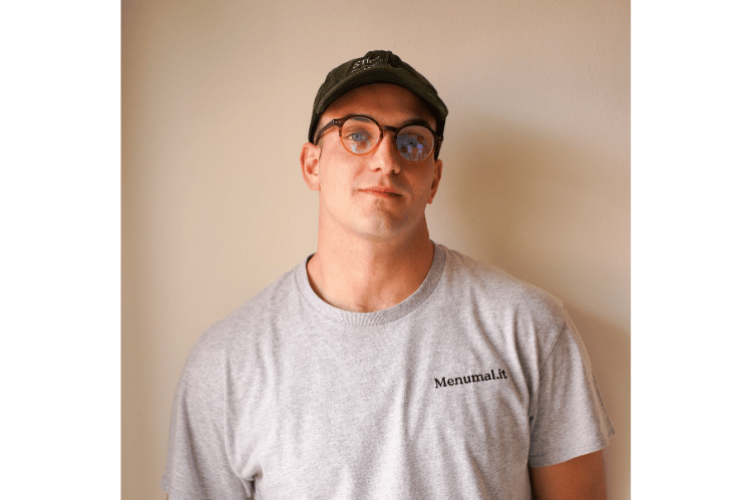
We spoke to Leopoldo Angelini, a passionate entrepreneur and a 2023 graduate of the MSc in Sustainability Entrepreneurship and Innovation (now the MSc in Impact Entrepreneurship). With a background shaped by an entrepreneurial upbringing, Leo has channeled his innovative mindset into creating Menumal, a cutting-edge digital menu software startup. Through the MSEI programme and his real-world experiences, he gained valuable insights into sustainability and entrepreneurship, which have been important in refining his vision and driving his venture forward.
Tell us about yourself.
I’m from Forte dei Marmi (Tuscany), Italy. I did my undergraduate degree in economics and business administration from Università Cattolica del Sacro Cuore, and was class of 2023 for the MSc in Sustainability Entrepreneurship & Innovation.What is your personal experience with entrepreneurship?
Growing up with an entrepreneurial father probably imprinted on me the mindset of a problem-solver instead of seeing tasks as modules. That’s where it all started. Since my teenage years, I always found ways to make my situation more comfortable, despite my parents never putting too much pressure on me. I went the extra mile for myself, for special interests or vices. That’s probably where my entrepreneurial traits were nurtured, allowing me to make some extra money and optimise things around me.How did you get interested in sustainability?
University projects were a chance to dive deeper into the real pains of real companies and to come up with concrete solutions after focusing for a long time on the most promising and under-observed problems. That’s why, after developing my skills in various conditions, I decided to tackle a significant problem in a specific sector of interest: the restaurant industry. I started with restaurant menus, and here I am with my start-up, Menumal.What's the goal of Menumal?
We’ve developed a very innovative digital menu software that allows business owners to solve many problems and highlight some hidden opportunities such as additional commercialization options. From the user’s point of view, the technology is both innovative and easy to use. When you start something from scratch, a vision exists but takes real shape the more time you focus on that specific sector. Things are going well, the team is on fire, and the objective is to dominate the digital menu industry, followed by the POS (Point of Sale) industry and then the “technology around restaurant” industry.Why study the MSEI (Master in Sustainability Entrepreneurship and Innovation)?
The MSEI was a chance to learn from an experimental journey, tracking the typical mistakes of previous startups and entrepreneurs while focusing on the sustainability sector. Sustainability not only involves coming up with impactful solutions related to carbon but also developing a mindset with a subconscious influence that shapes my way of thinking, ensuring that I am doing good even when I do not consciously plan it. I acquired a steadfast mindset to do things that scale, help the community, solve real problems, and are meant to last long and create more value over time.Can you share more about what you did in your Company Consultancy Project (CCP) and your internship/business project?
My group worked with the European Space Agency — great organization, great project and lots of freedom to discover. The group didn’t mesh well, but luckily we were offered positions in the company. Sadly I had already founded the company at that moment, and I didn’t allow myself a plan B — Menumal was ready to launch. I did the business development project instead of an internship, and I took the chance to focus on it and report the progress of my incubation period.
What kind of impact do you hope to have on business and society?
Menumal is my first company. It’s our very real calling card to prove to people, investors, schools and community that we model things well, and that others things that come afterwards will be just as good, but with a different range towards solving bigger, everyday problems. So the purpose is to impact people and inspire and transform threats into solutions and inspirational stories.
What would you recommend to students moving to Berlin to study?
Enjoy the parks, the spaces of the campus to gather, group up to fix global problems but starting with a micro-perspective. Engage with local startups, show off the most extrovert self and enjoy the outcome of it.
Campuses

Empowering Future Leaders
ESCP Business School's Bachelor in Management programme has once again demonstrated the success of its innovative Collective Projects initiative.
Promoted by ESCP with the support of the Fondazione Compagnia di San Paolo and Réseau Entreprendre Piemonte, the Collective Projects provide a strong bridge between local companies and a global and multicultural context. From November 2023 to April 2024, around 300 students, organised in 50 international teams, collaborated with 49 companies from the Piedmont region, covering a wide range of sectors from profit to non-profit and the public sector.
"The 2023/2024 edition of the Collective Projects can be considered a real success," said Prof. Daniele Battaglia, Academic Director of the Bachelor in Management programme at ESCP's Turin campus. "The strong participation of companies in the call for projects, combined with the enthusiasm and professionalism of the students involved in project development, has once again demonstrated how these projects can act as a catalyst for the growth and networking of the Piedmont ecosystem."
The students collaborated with companies and institutions, mainly located within the Turin and Piedmont ecosystem, but also from other regions of Italy, with the aim of creating ‘social welfare’ and spreading innovation in high social impact segments, such as health and physical well-being, social agriculture, education and training, access to services, social housing, and energy efficiency. This programme promotes a deeper integration of local companies into the international landscape, increasing opportunities for collaboration and driving innovation.
Driving Change
Under the guidance of Collective Projects Coordinator Isabella Ciampa, students addressed a diverse range of business challenges, including business development, marketing, internationalisation, fundraising, and knowledge management. Feedback from the companies involved was positive, highlighting the innovative ideas and practical solutions that the students brought to the table. Many company tutors commented on the students' ability to effectively apply theoretical knowledge in real-life situations. In this edition, out of 50 different projects, two teams stood out for their exceptional work. These teams worked on projects that focused on sustainability and inclusivity. Not only did they demonstrate their commitment to addressing pressing global issues, but they also exemplified the practical impact of the Collective Projects initiative:
- Group 12: Comprising Matthias Botlik, Katrina Hatem, Nathan Melki, Martina Ricceri, Mahmoud Joueidi, and Matteo Palazzo, this team collaborated with KelpEat, a company dedicated to promoting healthy and sustainable eating habits through innovative ocean-inspired snacks made from microalgae. Their efforts culminated in a comprehensive fundraising plan, which included an analysis of the European venture capital ecosystem.
- Group 30: This team, consisting of Claudia Meloni, Ziyun Chi, Johannes Bollhoff, Alessandro Bottigliero, Paulina Peterca, and Rupnanda Bhowmick, worked with Gruppo Pensionati Vanchiglietta APS at Vicina, a project focused on developing an app that provides vital information about urban environments for neurodivergent people, addressing factors such as lighting, crowd levels, and overall atmosphere. Their work involved conducting market research and formulating a business and fundraising plan.
Bridging Theory and Practice
At ESCP Business School, we firmly believe that theory is nothing without practice. This belief drives our commitment to innovative and collaborative projects that bridge the gap between academic learning and real-world application. The Collective Projects stand as a powerful example of this philosophy in action. Designed to immerse students in hands-on experiences, these projects foster meaningful collaboration between the business school and the vibrant local entrepreneurial ecosystem. Students gain insight into different sectors by working alongside local businesses and collaborating with a wide range of organisations, including start-ups and established companies, allowing them to experience the complexities of business first-hand. This interaction benefits students and provides companies with fresh perspectives and innovative solutions, creating a win-win scenario.
In addition, the Collective Projects are an opportunity for students to develop their leadership and management skills in a supportive environment. They learn the intricacies of teamwork, cross-cultural communication and project management while contributing to projects that have a positive impact on society. By combining academic rigour with practical application, we ensure that our students are knowledgeable and able to make a meaningful contribution to their future workplaces and communities.
Companies involved
Special thanks to all the companies involved: AgerTech, Agribpf srl – laBalocchina, Artàporter SBrl, Associazione Marketplace Specialist, Associazione Progetto Itaca Torino ETS – ODV, Bigbag Web Srl Società benefit, Blue Factory by ESCP Business School, Bmind, CAD One Srl, Dally Therapeutics, Digital Building Blocks APS, Digital4Export Srl, EF Brand, Empethy, EQUILIBREA S.S.D., Eurofork SpA, Evrika, FAIR ENOUGH, Feat. Ventures, Foglizzo Leather, Fondazione LINKS, Fondazione Piemonte Innova, Fondazione Piemontese per la Ricerca sul Cancro , Freecard Sas, FunniFin, Graziadio & C. SpA, Gruppo Pensionati Vanchiglietta APS, Guanxi, Guilds42 APS, Intesa, a Kyndryl Company, i-See Srl, KelpEat SRLS, Labinf Sistemi Srl, Maiora Solutions, Metroconsult, PHI Consulting Firm, Restworld Srl, SAPIN Società Applicazioni Industriali Spa, Sargomma Srl SB, Sintra Consulting Srl, Sunspeker, Synesthesia Srl SB, Talent Acquisition Partners Srl, The Doers, The Rooom Srl società benefit, The Spiritual Machine, Twiper Srl, Vanilla Rocket Srl, Vivaio Ventures Srl.
Next edition of the BSc Collective Projects
The call for applications is now open
Also, in the academic year 2024/2025, thanks to the support of the Fondazione Compagnia di San Paolo and in collaboration with Réseau Entreprendre Piemonte, the Collective Projects are ready to support local companies, start-ups, and third-sector organisations. More than 300 students will work on 60 projects to be launched this autumn. The call for applications for interested organisations is now available online.
Deadline: 30 September 2024.
Campuses
Related stories

News 31/07/2025
Collective Projects
ESCP chiama a collaborare startup e imprese ai BSc Collective Projects per un nuovo modello di Open Innovation
Il campus di Torino di ESCP Business School, in collaborazione con Réseau Entreprendre Piemonte e con il sostegno della Fondazione Compagnia di Sanpaolo, lancia la call for application rivolta ad enti, aziende e startup per partecipare ai Collective Projects 2025/2026.
Turin
News 08/05/2024
Scholarship opportunity
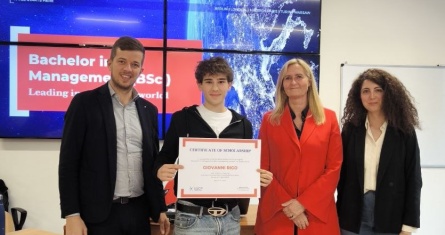
2024 BSc in Management - Scholarship Contest: Meet the winner Giovanni Rigo
For the seventh consecutive year, ESCP Turin Campus awarded a generous amount in scholarships to talented incoming and prospective ESCP BSc in Management students.
Turin
Master in Sustainability Entrepreneurship and Innovation (MSc)
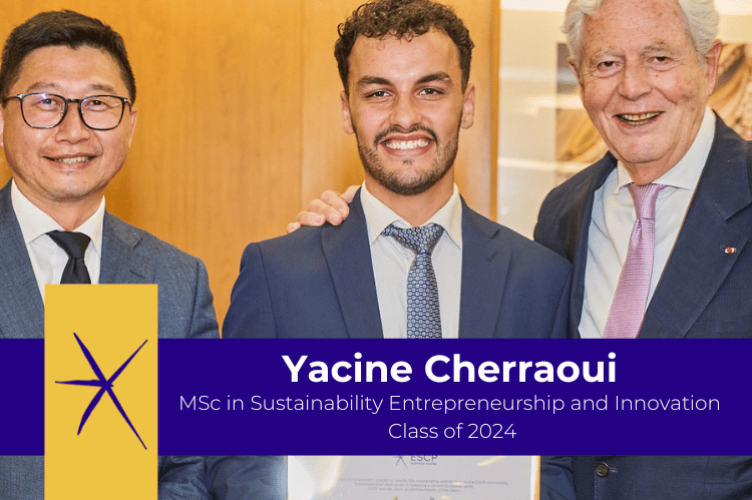
Meet our students: Yacine Cherraoui, Class of 2024
 Yacine is a current student in the MSc in Sustainability Entrepreneurship and Innovation (now the MSc in Impact Enterpreneurship), finishing up his second and final year in the programme. Yacine recently won the prestigious Dean’s Award, an honor given to top ESCP students for their exemplary achievements and commitment to the wider school community. In this interview, Yacine shares insights on his motivation to pursue this degree programme, experiences with the hands-on projects, and what he hopes for in the future.
Tell us about yourself.
My name is Yacine, and I am from France. Before joining ESCP Business School, I completed a bilingual double Bachelor of Science in Chemistry, with a minor in intercultural studies, from the French-German University (DFH-UFA) at the University of Upper Alsace in France and the Albert-Ludwigs-Universität Freiburg in Germany.
After earning my bachelor's degree, I worked at the innovation and investment hub Venture Lab of the Niterra Group in Berlin. There, I developed my knowledge and skills in both startup and corporate innovation ecosystems through venture-building activities in the fields of health, mobility, and climate tech.
In addition to my studies, I have consistently worked in various capacities, including tutoring underserved students, coordinating events, and taking on several volunteer roles. I am also passionate about martial arts and long-distance running.
You studied Chemistry in your Bachelor. How do you think your science background has helped you in your studies (and will help you in your future career)?
Chemistry, as the study of matter, holds a central position in science by establishing the groundwork for understanding different scientific fields. I therefore believe that having a background in chemistry has sharpened my analytical thinking, problem-solving skills, and attention to detail, all of which are crucial for addressing complex challenges in sustainability and entrepreneurship.
The Company Consultancy Projects provides hands-on experience working with a real company. Tell us about your CCP.
During the CCP, my team and I collaborated closely with the sustainability team at Weleda AG, the world’s leading manufacturer of certified natural cosmetics and anthroposophical pharmaceuticals, on their sustainability strategy. These experiences within the study program allowed me to apply our theoretical classroom knowledge to real-world practice.
What’s the impact you would like to make in today’s business world?
On a personal level, I believe that every individual's actions matter. I strive to contribute positively to society by rethinking how I live and make choices. By doing so, I aim to play a role in the collective effort to transform our world onto a sustainable and resilient path.
What made you want to study a degree at the intersection of sustainability and entrepreneurship?
With a background in natural science, I chose to study a degree at the intersection of sustainability and entrepreneurship to equip myself with the business acumen needed to create and develop new ventures that are technically and financially viable while having a net positive impact on both the natural environment and human societies.
The Sustainable Lifestyles Venture project (done in collaboration with the UN Environment Programme) is a significant part of the programme. Can you share what you did in the SLV project?
During the SLV project, my team and I developed a venture focused on retrofitting existing buildings with innovative green infrastructure, such as green roofs. Our goal was to create aesthetic solutions that transform the way roofs and buildings are built or retrofitted, contributing to the decarbonization of the construction industry. Our products and services were designed to enhance drainage systems, boost thermal and energy performance, and support wildlife habitats and air quality. We successfully continued the project after the SLV by securing a pilot project in Berlin.
How did it feel to study in Berlin and Paris? What are the benefits of studying in these two vibrant cities?
Although changing cities several times during the program can be challenging, both Berlin and Paris are incredible places to be. This experience allows you to immerse yourself in French and German culture, history, and work ecosystems, while also building beautiful friendships. It allows you to expand your professional network in two of Europe’s leading entrepreneurial cities.
To what kind of person would you recommend the MSEI programme? Do you have any tips for students starting in the programme?
Many factors come into play. I recommend this program to individuals who aspire to join a top European business school for its numerous benefits and who want to learn the fundamentals of sustainability, entrepreneurship, and innovation from experts. It is ideal for those looking to build or join leading ventures that will shape tomorrow’s world.
Campuses