
Exploring shared responsibilities across organisations, research, and education
On 7 January 2026, ESCP Business School’s Paris Champerret campus hosted a major event organised by the Leadership and Inclusive Management Institute, addressing a central and often contested question: Who is responsible for diversity?
Bringing together researchers, institutional leaders and practitioners, the event explored diversity, equity and inclusion (DEI) as a collective, structural and ongoing responsibility, one that cannot be reduced to isolated initiatives, managerial tools or individual goodwill. Across keynote discussions, research presentations and panels, participants highlighted the political, legal, organisational and educational dimensions that shape how diversity is defined, governed and enacted.
Re-situating DEI in its political and historical contexts
The day opened with around twenty research presentations addressing themes such as queerness, disability, identity disclosure and invisible differences. A shared insight quickly emerged: diversity is not only about individuals, but about the institutional frameworks that determine which differences are recognised, tolerated or silenced.
This perspective was central to the keynote address by Laure Bereni, research professor in sociology at the French National Centre for Scientific Research (CNRS), who provided a conceptual framework for the discussions that followed. Drawing on comparisons between France and the United States, she demonstrated that DEI is not a universal model that can simply be transferred across contexts.
Legal categories, dominant interpretations of equality and historical social struggles profoundly shape diversity policies. As a result, concepts such as inclusion, representation or equity can carry very different meanings depending on where and how they are implemented. DEI initiatives, far from being purely technical, are therefore inherently political and contested.
As Laure Bereni emphasised:
DEI programmes fundamentally depend on the social, legal and political pressures exerted on companies.
research professor in sociology at the French National Centre
This insight challenged the idea of “best practices” as neutral solutions, highlighting instead the need for organisations to critically examine the contexts in which DEI policies emerge.
Organisational responsibility: investors, law and corporate action
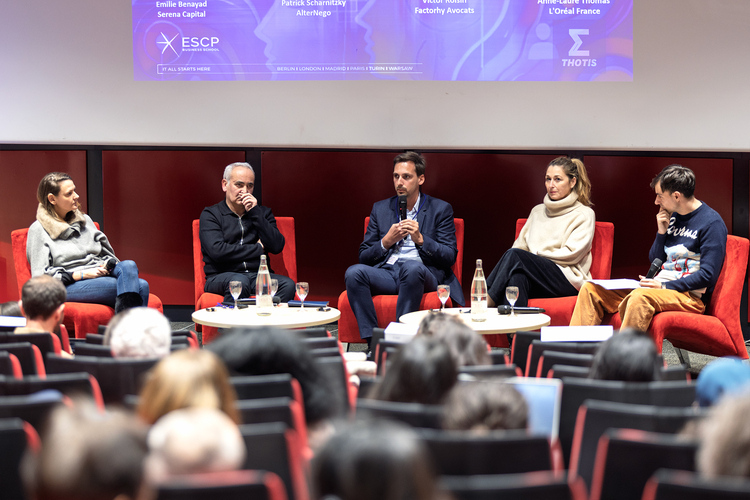
The first panel examined how responsibility for diversity is distributed within and around organisations, involving far more than HR departments alone.
- Patrick Scharnitzky shared key findings from the Observatoire de l’Inclusion, highlighting persistent gaps between stated commitments and actual outcomes, and underlining the importance of robust data to move beyond symbolic action.
- Emilie Benayad illustrated how venture capital and investment funds can exert significant influence on DEI practices across tens of thousands of employees, positioning financial actors as increasingly central to diversity agendas.
- Anne-Laure Thomas outlined L’Oréal’s long-standing and multifaceted commitments to diversity, showing how DEI can be embedded across strategy, governance and operations.
- Victor Roisin mapped the expanding legal and jurisprudential framework surrounding DEI, emphasising that diversity is increasingly anchored in regulation and legal accountability, rather than voluntary action alone.
Together, these contributions highlighted how DEI is becoming embedded in governance, compliance and accountability mechanisms, shaped by investors, regulators and senior leadership. Particular attention was paid to persistent structural inequalities, notably gender imbalance and the underrepresentation of women in science, technology and leadership roles.
Education, representation and the role of schools
The second panel focused on the responsibility of higher education institutions in shaping inclusive leadership and enabling informed, open debate.
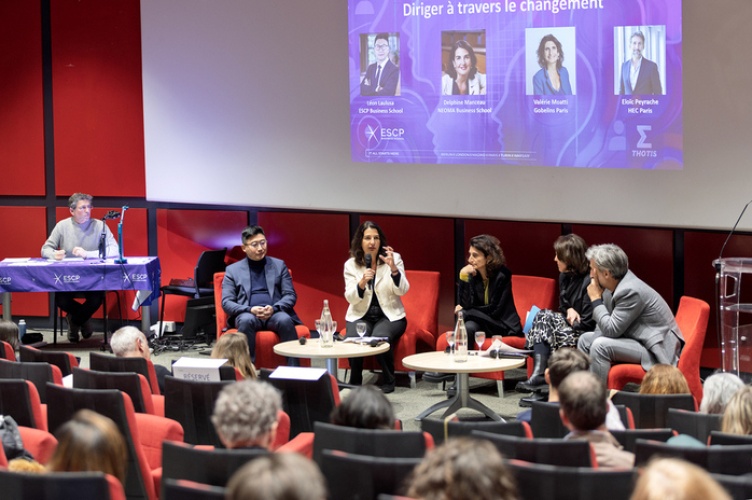
ESCP Dean Léon Laulusa, Delphine Manceau (NEOMA Business School), Valérie Moatti (Gobelins Paris) and Éloïc Peyrache (HEC Paris) reaffirmed their institutions’ commitments to diversity across student recruitment, curricula and research agendas.
Léon Laulusa articulated this vision clearly:
Not only do we teach diversity, but we offer diversity. At ESCP, we believe in Inclusion, Diversity, Excellence and Merit as fundamental and cardinal values.
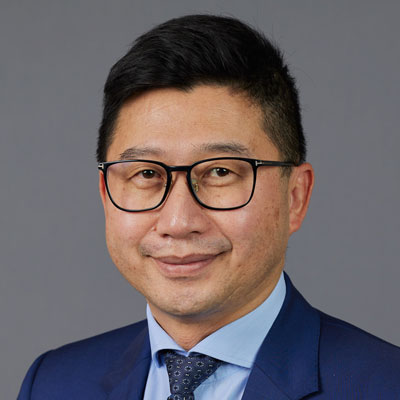 Léon Laulusa
Executive President and Dean at ESCP Business School
This statement challenged the persistent misconception that inclusion and excellence—or diversity and merit—are opposing goals, instead framing them as mutually reinforcing.
- Valérie Moatti shared insights into how students at Gobelins experience and perceive diversity, emphasising the importance of representation and lived experience in educational settings.
- Delphine Manceau, speaking as President of the Conférence des Grandes Écoles, highlighted a concerning trend: the continued decline in the proportion of women in engineering schools, underlining the fragility of progress on gender equality.
- Éloïc Peyrache stressed that schools must act as safe spaces where sensitive issues can be discussed openly and rigorously, contributing to depolarisation rather than reinforcing division.
The discussion underscored education’s role not in providing ready-made answers, but in equipping students with the intellectual tools needed to engage with complexity, disagreement and ethical responsibility.
Diversity as a collective and ongoing responsibility
Across keynote, panels and research presentations, one conclusion stood out clearly: diversity is a shared responsibility. It cannot be delegated to individuals, marginalised groups or diversity officers alone. Instead, it requires sustained engagement across organisations, education systems, research communities, legal frameworks and market actors.
DEI emerged not as a fixed destination, but as an ongoing process, one that involves questioning norms, confronting inequalities and accepting complexity. The day’s discussions were brought to life by the live illustrations of Gilles Rapaport, whose work captured both the tensions and aspirations at the heart of contemporary diversity debates.
Relevant Links
Campuses