

Resilience without borders: key takeaways from ESCP at ChangeNOW 2026
At ChangeNOW 2026, ESCP explored what resilience demands from leaders, institutions and students today.
Held from 30 March to 1 April 2026 at the Grand Palais in Paris, ChangeNOW brought together more than 40,000 participants, 10,000 companies and representatives from 140 countries. As an academic partner, ESCP helped create space for dialogue across the programme, connecting students, researchers, business leaders and changemakers.
At a time when geopolitical tensions are reshaping the sustainability agenda, ESCP used its presence at ChangeNOW to ask a pressing question: what does building resilience look like in an increasingly fragmented world? Across panels, student meet-ups and strategic discussions, one message came through clearly. Resilience is no longer only about absorbing shocks. It is about learning to adapt, collaborate and move forward together.
Building resilience as a collective and systemic challenge
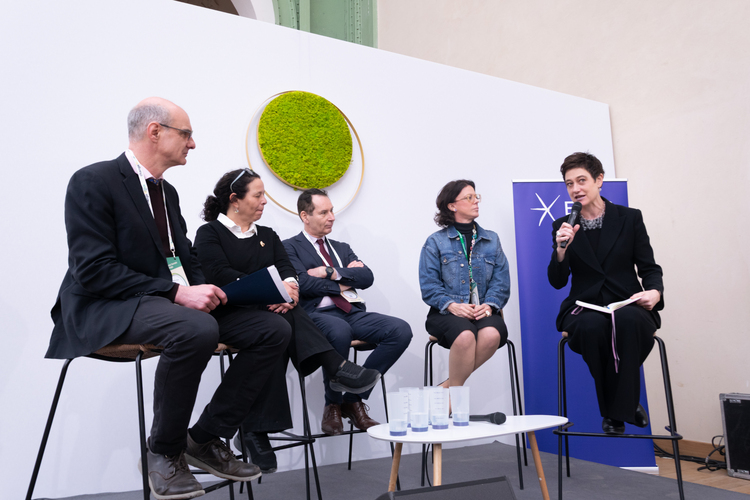
At the heart of ESCP’s programme was the panel “Resilience Without Borders: The Geopolitics of Interdependence and Impact on our Biosphere.”
Francesco Rattalino, Executive Vice-President in charge of Academic Affairs and Student Experience, opened the discussion with a call to rethink the term itself: “Resilience is no longer about bouncing back. We should look at bouncing forward.”
Moderated by Gorgi Krlev, Associate Dean for Sustainability at ESCP, the panel brought together voices from academia, policy and business:
- Kirsten Dunlop, CEO of Climate KIC
- Galit Kenan, Executive Director of the Jane Goodall Institute France
- Maxime Lefebvre, Co-Director of the ESCP Geopolitics Institute
- Alexandra Palt, President of WWF France and ESCP Global Executive PhD Candidate
- Federico Pasin, General Director of HEC Montréal
Together, they examined resilience not as an isolated response to crisis, but as a systemic challenge shaped by governance, geopolitics, leadership and education.
From recovery to transformation
For Kirsten Dunlop, resilience cannot be separated from renewal. “Resilience in a business, especially in the current context, is renewal. It is transformation, not the status quo.” Her intervention pushed the discussion beyond continuity and towards reinvention.
She also underlined the human dimension of transition: “We need to actively invest in what it means to be human before it is too late.” In this context, resilience is not only operational. It is cultural, social and deeply personal.
Why education matters
The conversation returned several times to the role of higher education in preparing future leaders. Federico Pasin pointed to a capability that is becoming essential across sectors
That idea resonated strongly with ESCP’s own educational mission. In a world defined by complexity and interdependence, institutions must help students build judgement, openness and the ability to work across differences.
The most important thing to offer our students is learning how to learn. A competence absolutely essential is the ability to create constructive dialogue with people that don’t think like you.
A common story in a divided world
From a geopolitical perspective, Maxime Lefebvre highlighted the tension between the need for global cooperation and the realities of political fragmentation – and why we must stay the course more than ever. “It is very important to preserve this common goal and make governments, businesses, and civil society work together.”
Galit Kenan extended that point by stressing the role of narrative. “We need a common story. We all need to agree about something and to dream about something together.” Without that shared direction, alignment becomes harder and collective action loses momentum.
She also made a more operational point: breakthrough impact often comes from opening systems to unexpected actors. In complex situations, solutions do not always come from traditional institutions or established ecosystems. They can emerge when new players are invited in and cross-sector collaboration becomes possible.
Rethinking leadership
Leadership also emerged as a central theme. Alexandra Palt challenged narrow definitions of performance and responsibility: “ We do not just need more competent leaders. We need leaders who want to be better people.”
In a volatile environment, that shift matters. Resilience depends not only on expertise, but also on values, integrity and the ability to make decisions with a long-term view.
Across the discussion, one idea held firm: resilience will be built collectively. It requires new ways of thinking, leading and working across boundaries.
The student perspective
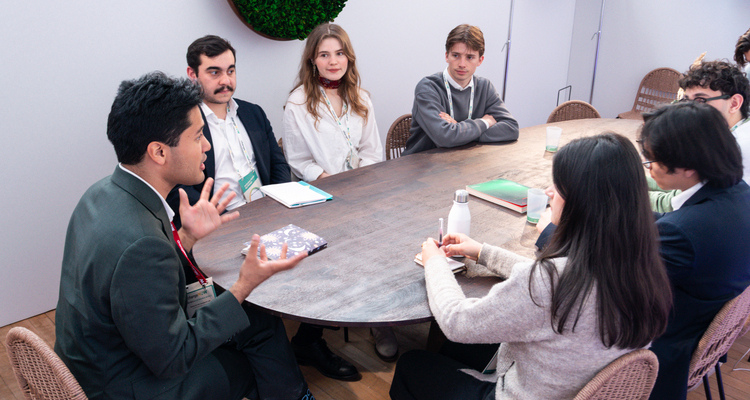
This year, ESCP introduced a dedicated pathway for the students attending ChangeNOW. Through curated meet-ups, students connected in small groups with experts in sustainability, innovation, and impact. These moments created space for deeper conversations and more candid exchanges.
Across panels, workshops, and conversations, ESCP students left ChangeNOW with a clearer view of what the transition demands:
The challenge is scaling what already works
“The solutions already exist. The real challenge now is to scale them by connecting those who innovate with those who can accelerate impact.”
- Martino Marletta, MSc in Impact Entrepreneurship
Innovation is moving faster
“The barrier to turning an idea into something tangible has never been lower.”
- van Leeuwen, Master in Management (MiM)
Alignment matters more than uniformity
“We don’t need homogenisation of actions, but we do need our goals to converge.”
- Maëlys Mel, MSc in International Sustainability Management
Sustainability is now a business imperative
“Corporate sustainability is ultimately about resilience. It is the strategic, cross-functional approach to managing risk, driving adaptation, and creating long-term value. There is no one-size-fits-all solution. Every context is different, which means solutions must be flexible and adaptable.”
- Ema Peres Matias, MSc in International Sustainability Management
Looking ahead: A student committee for ESCP
The conversations at ChangeNOW reinforced the scale of the challenge ahead, but also the importance of equipping students to work across business, policy and innovation.
For ESCP, one step forward is giving students a more direct role in shaping sustainability priorities within the institution and beyond. The Next Generation Committee on Sustainability and Impact, launched at ChangeNOW, will involve students in strategic sustainability discussions alongside leadership, as the Sustainability Advisory Council does from a more stakeholder perspective.
We want to amplify youth voices and make students work on the strategic issues shaping what we do as an institution.
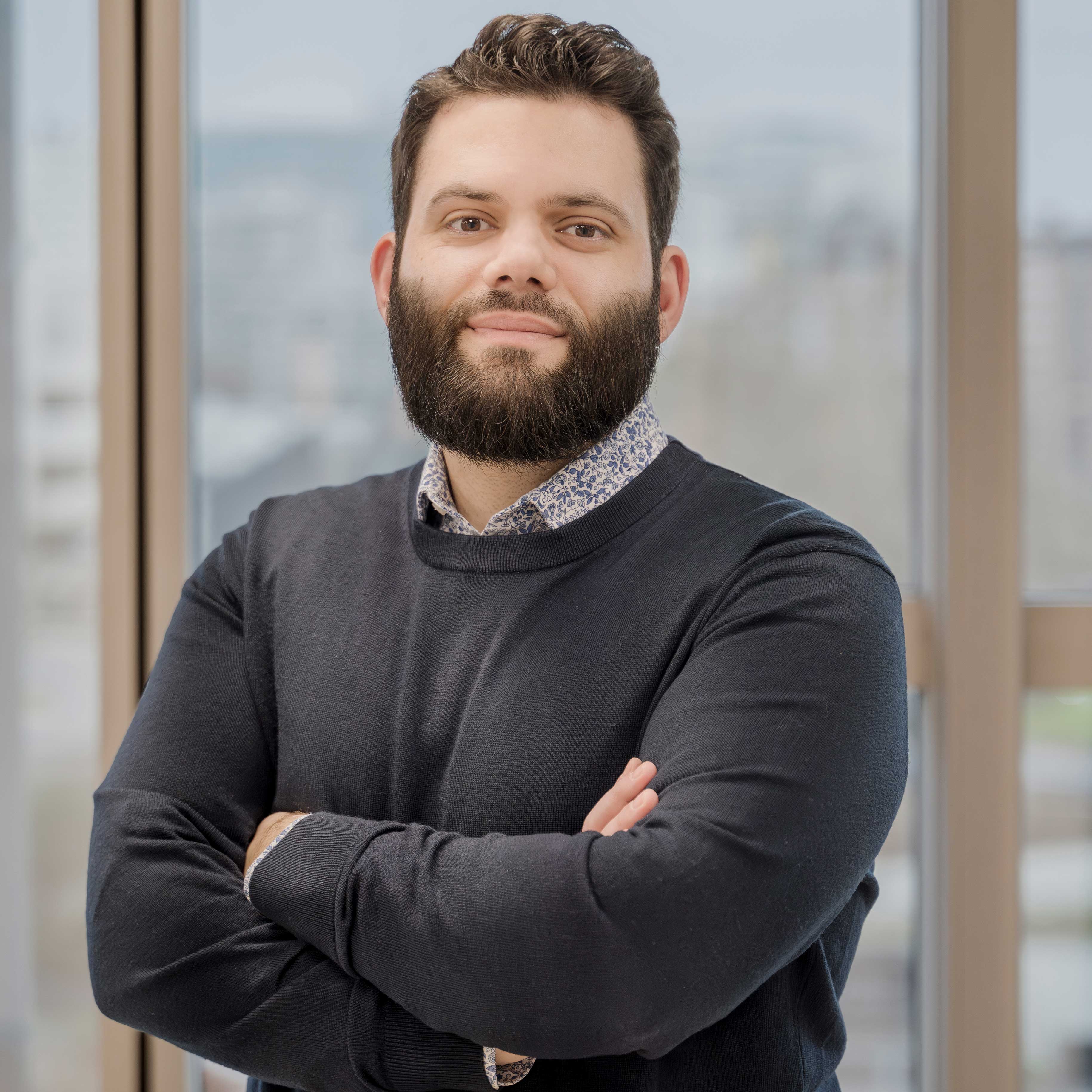 Gorgi Krlev
ESCP Associate Dean of Sustainability
Campuses