Laure Marty reflects on her experience in the Global Executive Ph.D. programme at ESCP
How does ESCP’s Global Executive Ph.D. change the way an experienced professional thinks, leads and makes decisions?
For Laure Marty, the answer took shape through four years of doctoral research grounded in professional practice. She recently defended her dissertation, Reorganizing from Within: Recalibrating Coordination in Entrepreneurial Ventures, which examines how scaling ventures move from strategic intent to coordinated execution when old routines stop working.
The Global Executive Ph.D. enables seasoned executives to step back from practice and conduct doctoral-level research within a rigorous academic framework. For Laure, that process changed her relationship with evidence, sharpened the way she distinguishes intuition from insight, and reshaped how she understands leadership in complex organisational settings.
In this Q&A, she reflects on the intellectual discipline required to turn professional experience into rigorous research, the challenges of moving between practice and scholarship, and why she now sees both as deeply connected.
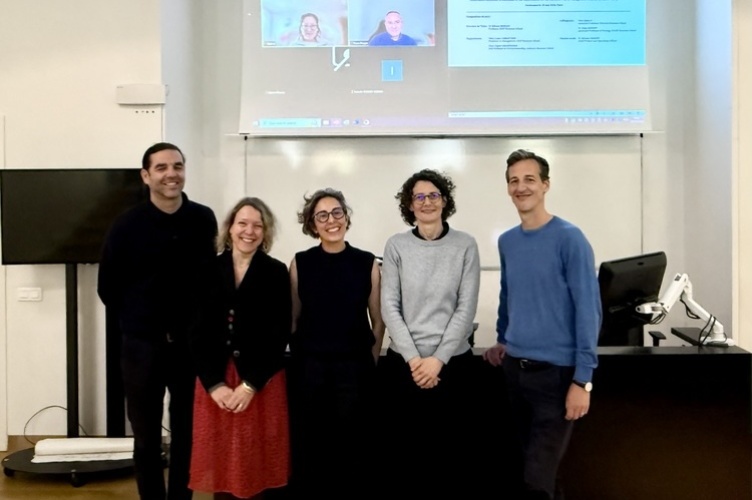
You defended your dissertation on 18 May. What did that moment feel like once it was finally over?
A mix of relief, gratitude and excitement.
Relief because a PhD is a long journey, especially when conducted alongside executive responsibilities, teaching, entrepreneurship and family life. Gratitude because this achievement is the result of many conversations, challenges and people who have supported me along the way. Four years is a once-in-a-lifetime marathon.
And excitement because the defence did not feel like an ending. Quite the opposite. The discussion with the jury opened new questions, new perspectives and new avenues for future research. I am actually working on the revision of a paper that is part of the thesis, based on the jury’s feedback.
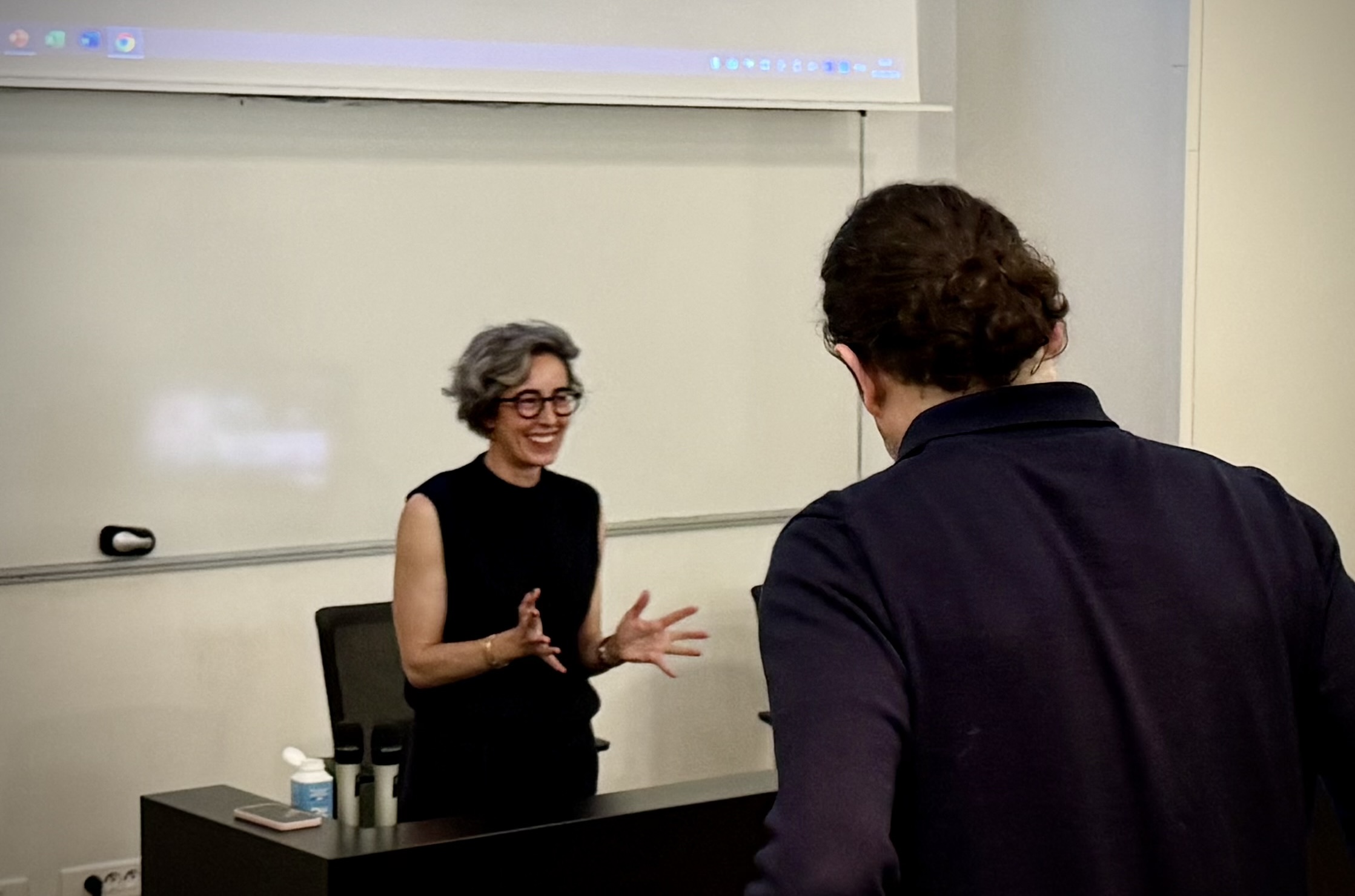
What I remember most from that day is the quality of the exchange. It was intellectually demanding, generous and energising. It reminded me why I started this journey in the first place: to better understand how organisations work and how people collectively make strategy and its execution happen in practice.
Looking back, what part of the Executive PhD journey challenged you the most personally or professionally?
Probably learning to live in two worlds at once.
As a practitioner, you are trained to act, decide and move forward despite uncertainty. As a researcher, you are trained to slow down, question assumptions, narrow your focus to very specific aspects of a phenomenon and carefully examine evidence before reaching conclusions.
Over time, I learned that the real value came from moving continuously between those two perspectives. The PhD taught me to zoom out and understand broader organisational patterns while also zooming in on the fine-grained details of everyday managerial work.
It also changed my relationship with data. Research requires rigour, patience and evidence. Bringing that mindset back into practice has strengthened the way I approach decisions, helping me distinguish intuition from observation and anecdote from insight.
Was there a point during the programme when your thinking fundamentally changed, either about leadership, research or yourself?
Yes. At some point, I stopped seeing research and practice as separate activities, despite the longstanding divide that often exists between the two worlds.
Initially, I thought I was bringing my professional experience into academia. Over time, I realised that research was transforming the way I practised leadership, just as practice was transforming the way I conducted research.
The experience taught me that leadership is often less about having answers and more about developing the ability to observe, frame and make sense of complex situations. It also reinforced my belief that some of the most valuable insights emerge from everyday interactions, routines and decisions that often go unnoticed.
This shift was strongly influenced by the Strategy-as-Practice perspective, developed by scholars such as Richard Whittington, which argues that strategy is not something organisations have but something people do. Rather than focusing only on plans, structures or performance outcomes, this perspective invites us to pay attention to the everyday actions and practices through which organisational futures are actually created.
That idea fundamentally changed the way I look at organisations. As both a researcher and a practitioner, I became increasingly interested in what happens between the PowerPoint slides, the strategy offsites and the formal processes: the conversations, decisions and small adjustments through which people collectively make strategy happen and craft the tools to execute the plan.
What advice would you give to someone considering an Executive PhD but wondering whether they are truly ready?
You will probably never feel completely ready, and that is perfectly normal. In fact, I would say it is a good sign.
An Executive PhD is not simply an academic qualification. It is a long-term commitment to curiosity, discipline and intellectual humility.
My advice would be to start with a question, or perhaps more accurately, a phenomenon, that genuinely matters to you, without feeling the need to define it too precisely from the outset. Some of the most interesting insights emerge from the field itself. The role of the researcher is not only to test existing ideas, but also to remain open to surprises, tensions and questions that reveal themselves along the way.
There will be moments when the workload feels overwhelming, and what sustains you is not the prospect of obtaining a degree but the desire to understand something deeply.
I would also encourage candidates not to underestimate the value of their professional experience. Some of the richest research questions emerge directly from practice. The Executive PhD creates a unique space where rigorous research and real-world challenges can genuinely inform one another, making it possible to generate insights that are both theoretically meaningful and deeply grounded in organisational reality.
Now that you have completed this chapter, what do you see as the next step in your journey?
The defence marks the end of a chapter, but certainly not the end of the research journey.
I plan to continue developing the work started during the PhD through publications and collaborations that further explore the relationship between entrepreneurship, strategy, organising and managerial practice.
More broadly, I am increasingly interested in how knowledge can be produced from within organisations. As a researcher who is also a practitioner, I have had the opportunity to study organisational phenomena while actively participating in them. This position offers a unique perspective on how organisations evolve over time, how decisions are made in practice and how change is experienced from the inside.
At a time when information and knowledge are becoming increasingly accessible through AI, I believe there is particular value in research grounded in long-term immersion and lived organisational experience.
Going forward, I hope to continue building bridges between rigorous research and the everyday realities faced by leaders, managers and entrepreneurs.
Discover how the Global Executive Ph.D. can help experienced professionals examine the questions that matter most to them and develop research that speaks to the realities of organisational life.
Campuses