
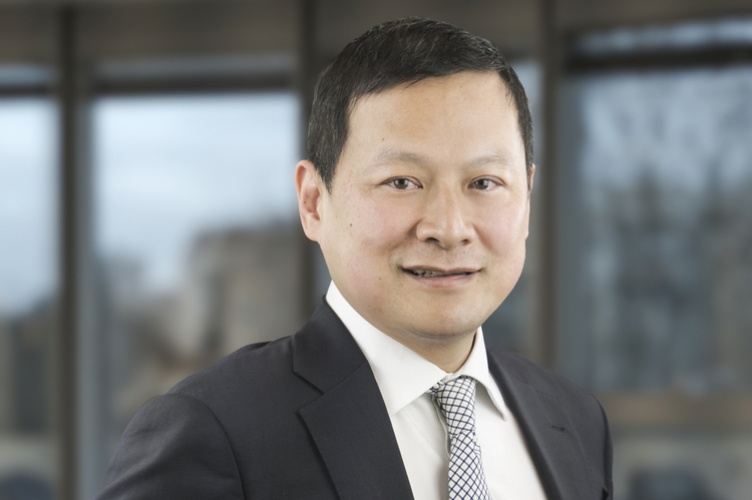
Pramuan Bunkanwanicha, Dean of Faculty, on hiring, research and teaching in a changing academic environment
Business school professors are under pressure – to teach students how to use artificial intelligence, make their research applicable outside academia and keep their knowledge up to date.
They are not just producing knowledge, but bringing it into the classroom and preparing students to use it in practice. At ESCP Business School, it is Pramuan Bunkanwanicha’s job to ensure faculty can do both. As Dean of Faculty, he oversees hiring and development, shaping a faculty capable of meeting those demands without compromising research standards.
Hiring for strategic expertise
Strategic hiring is a central part of Bunkanwanicha’s approach. “The idea is to maintain academic excellence and an international profile,” Bunkanwanicha says. “But at the same time, we need new expertise.”
Traditional academic strength remains essential, but institutions also need scholars who can engage with the emerging topics that are reshaping business and society.
ESCP plans to grow its faculty to around 300 members by 2030, recruiting 15 to 20 academics each year. The focus is not just on numbers, but on hiring in areas that reflect where ESCP believes management education is heading.
ESCP plans to launch two new institutions by 2030 as part of its Bold & United strategy: ESCP School of Technology in 2027 and ESCP School of Governance in 2029. “We need expertise in technological transformation, AI and environmental transformation,” he says.
The School is investing in expertise that helps students understand digital disruption, geopolitical uncertainty, public governance and the transition to more sustainable business models.
Supporting ESCP’s multi-campus growth
The school has grown in recent years, with rising student numbers and expansion across its European campuses. That has created more immediate pressures for professors.
“The increase of students in European campuses means we need to recruit in a very tangible way,” he says, pointing to growth in Madrid and Turin.
At the same time, ESCP’s international multi-campus model remains central to how it teaches. Faculty across campuses bring different perspectives into the classroom, shaping how students understand business in a European and global context. “I think ESCP has significantly more international faculty compared to other institutions,” Bunkanwanicha says.
The School is always working to further diversify the composition of its faculty. Women currently account for about 46 per cent. “We would love to achieve 50 per cent,” he shares. It reflects a wider recognition that the strength of ESCP's faculty is tied to the diversity of perspectives shaping research, teaching and institutional culture.
Research with impact
Bunkanwanicha is also focused on finding ways to extend the reach and impact of faculty research at ESCP. “Our faculty does a very high level of research,” he says. “But not just for publication.”
He points to the school’s Impact Papers, which aim to translate academic work into a more accessible and engaging format. “It allows people to read research in a more accessible language,” he says. “Our faculty contributes a lot to this.”
Through the LIGhTS research institutes, ESCP connects research with business and policy, fostering interdisciplinary work across areas such as leadership, innovation, geopolitics, technology and sustainability—ensuring academic insights translate into real-world impact.
The expectation is that research should move beyond journals and into practice. It needs to be understood and used outside academia to inform how businesses and organisations operate.
At ESCP, that ambition also extends to The Choice, the School’s media platform, where professors often share actionable insights from their research in a format designed for business leaders, decision-makers and a wider public audience.
Teaching in the age of AI
That movement towards more applied knowledge is visible in the classroom, too. Teaching today demands not only subject expertise, but the ability to adapt quickly as tools, industries and student expectations change. “The biggest challenge as a professor is to upskill and reskill,” Bunkanwanicha says. Faculty are expected to keep pace with changes in their field while also adapting how they teach.
In practice, that means responding to tools such as AI and rethinking how those tools are used in the classroom. Students, he notes, are already using AI in their daily work. The role of the professor is to guide that use says Bunkanwanicha. “How can they use it in effective and ethical ways to become responsible leaders?”
ESCP has responded by training almost all of its faculty in AI. “We have trained almost 100 per cent,” he says. “More than 50 per cent are AI champions.”
The school has also increased investment in faculty development more broadly. “We have regular training,” he says, including programmes developed with OpenAI. He notes that some professors are also sent to other institutions to share their insights.
The aim is to ensure that faculty are not only strong researchers but also effective teachers. In a fast-moving academic environment, faculty must also keep learning how to teach, how to adapt and how to connect their expertise to a changing world.
Leading faculty in a changing academic world
Bunkanwanicha’s advice for younger academics? “Be humble, but at the same time ambitious,” he says.
He also returns to the importance of intellectual flexibility and the need to keep learning. “We need to be ready to learn and unlearn when necessary,” he adds. “Our knowledge can change very quickly.”
In a field where expectations are shifting, he suggests, adaptability matters as much as expertise. The most valuable faculty members are not only knowledgeable; they are able to evolve. “We need dynamic faculty.”
We need to be ready to learn and unlearn when necessary. Our knowledge can change very quickly.
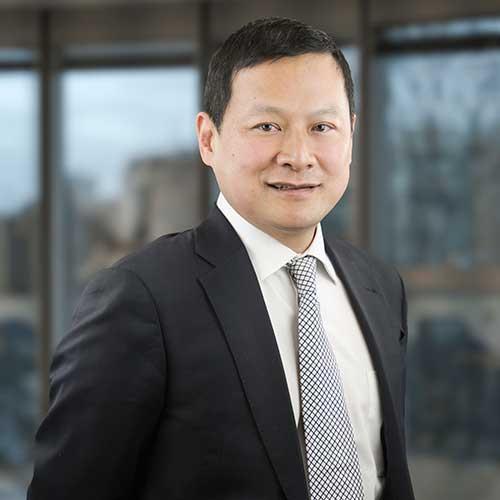 Pramuan Bunkanwanicha
Dean of Faculty
Relevant link
Campuses